Disclosure: airfryerkitchensupply.com is reader-supported. When you buy through links on our site, we may earn an affiliate commission at no extra cost to you.
Where to buy
Every pick below was cross-checked against the Amazon catalog before it earned a link, so the buying box stays simple: while comparing the best coffee makers that make both espresso and regular, start with the De’Longhi BCO430 Combination Pump Espresso and Drip Machine if you want the safest all-round choice, then compare the specialist picks underneath it. Prices move, so each pick links out with a prompt to check price on Amazon rather than a printed number that would be stale within weeks.
- De’Longhi BCO430 Combination Pump Espresso and Drip Machine — Best Overall: Check on Amazon — check price on Amazon
- De’Longhi COM530M All-in-One Combination Machine — Best Compact Combo: Check on Amazon — check price on Amazon
- De’Longhi All-in-One Espresso & Coffee Maker with Frother — Best for Milk Drinks: Check on Amazon — check price on Amazon
- Ninja Luxe Café Premier 3-in-1 Espresso Machine ES601 — Best Premium: Check on Amazon — check price on Amazon
- Ninja Espresso & Coffee Maker CFN601 — Best Capsule Combo: Check on Amazon — check price on Amazon
- Nespresso Vertuo Pop+ by De’Longhi — Best Compact Capsule: Check on Amazon — check price on Amazon
Finding the best coffee makers that make both espresso and regular coffee means deciding which of three honest designs you actually want: a true combination machine with a pump espresso side and a drip side sharing one body, a guided premium system that crafts both drink styles per cup, or a capsule machine whose pods span espresso through full mugs. All three appear below, because households mean very different things by ‘both’.
Every pick was verified against the Amazon catalog before receiving a link, and the spec boxes quote only verified listing facts. One warning up front: no combination machine beats a good dedicated machine at its own specialty — what these six buy you is one footprint, one purchase and both drinks, every morning.
In this guide
Quick Picks
De’Longhi BCO430 Combination Pump Espresso and Drip Machine — Best Overall. One machine, two brewing systems: a real pump espresso side with a frothing wand, and a full 10-cup drip side for the morning pot. Check on Amazon — check price on Amazon.
De’Longhi COM530M All-in-One Combination Machine — Best Compact Combo. The newer, tidier take on the De’Longhi combination idea — espresso and regular coffee from one 47-ounce all-in-one unit. Check on Amazon — check price on Amazon.
De’Longhi All-in-One Espresso & Coffee Maker with Frother — Best for Milk Drinks. The milk-drinker’s combo: a 15-bar espresso side with a frother for lattes and cappuccinos, alongside a 10-cup pot for regular coffee. Check on Amazon — check price on Amazon.
Ninja Luxe Café Premier 3-in-1 Espresso Machine ES601 — Best Premium. Ninja’s guided 3-in-1: espresso, filter-style coffee and cold drinks from one premium machine that actively helps you dial in each shot. Check on Amazon — check price on Amazon.
Ninja Espresso & Coffee Maker CFN601 — Best Capsule Combo. Capsule convenience on both sides: Nespresso-capsule espresso in three styles plus single-serve coffee, with a built-in frother. Check on Amazon — check price on Amazon.
Nespresso Vertuo Pop+ by De’Longhi — Best Compact Capsule. The smallest both-worlds answer: one-touch Vertuo capsules that brew everything from a short espresso to a full mug of coffee. Check on Amazon — check price on Amazon.
How These Picks Were Chosen
Candidates had to genuinely brew both drinks, not merely claim compatibility. Pump combination machines were checked for a real espresso side with a wand or frother; capsule machines had to span espresso and coffee sizes within their own system; guided systems had to brew a recognisable regular coffee, not only espresso variants.
The six survivors were then sorted by household reality: mixed drip-and-espresso families, milk-drink households, craft upgraders, convenience-first homes and solo drinkers. That is why the badges describe drinkers, not features — the best combination machine is the one whose compromises land on the drinks you make least.
Cost of ownership was weighed qualitatively throughout: capsule picks are cheap to run in effort and dearer per cup, pump combos demand descaling and practice, and guided premium machines front-load cost to save learning time.
The 6 Best coffee makers that make both espresso and regular

De’Longhi BCO430 Combination Pump Espresso and Drip Machine — Best Overall
Households split between espresso drinkers and drip drinkers usually end up owning two machines and resenting the counter space. The BCO430 is the classic answer: a pump-driven espresso brewer with a steam wand on one side and a complete 10-cup drip coffee maker on the other, sharing one footprint and one water routine. Neither side is a toy version of the other — the espresso side is a genuine pump machine you tamp and pull shots with, and the drip side brews a proper family pot.
Living with a combination machine means accepting shared compromises honestly. You learn two workflows instead of one, descaling covers both systems, and if one side ever needs repair the whole unit goes. In return you get the only arrangement in this list where a cappuccino and a full pot of regular coffee can genuinely happen in the same morning rush without a second appliance.
Strengths
- True pump espresso plus a full-size drip brewer in one footprint
- Frothing wand covers cappuccinos and lattes on the espresso side
- Ideal for mixed-preference households that refuse two machines
Trade-offs
- Two systems to learn, clean and descale
- A repair on one side benches the whole machine
- Espresso side rewards practice; it is not push-button automatic
| Spec (from verified listing) | Combination pump espresso and 10-cup drip machine with frothing wand per verified listing title |
|---|
Best for: mixed households that drink both espresso drinks and full drip pots / Not suited for: single-drink households who would use only one side
Check on Amazon — check price on Amazon.

De’Longhi COM530M All-in-One Combination Machine — Best Compact Combo
The COM530M is De’Longhi’s more modern answer to the same split household, packaging espresso and drip brewing into a cleaner all-in-one design. It suits kitchens that want the combination concept without the older, boxier combination silhouette, and its dual heating approach means the espresso side is not left waiting while the drip side works — a real quality-of-life detail on busy mornings.
As with every combo, judge it as two decent brewers sharing a home rather than as a specialist at either job. A dedicated espresso machine will give a keen home barista more control, and a dedicated drip brewer may be simpler to replace. But for the household that truly drinks both, every week, the COM530M’s balance of footprint, flexibility and familiarity is hard to argue with.
Strengths
- Modern all-in-one take on the espresso-plus-drip concept
- Dual heating keeps both drinks moving on busy mornings
- Smaller visual footprint than classic combination machines
Trade-offs
- Specialists will out-perform it on each side individually
- Shared systems mean shared maintenance
- Fewer long-term owner reports than the older BCO430 design
| Spec (from verified listing) | All-in-one combination coffee and espresso machine, 47 ounces per verified listing title |
|---|
Best for: style-conscious mixed households wanting one tidy unit / Not suited for: espresso specialists who want maximum shot control
Check on Amazon — check price on Amazon.
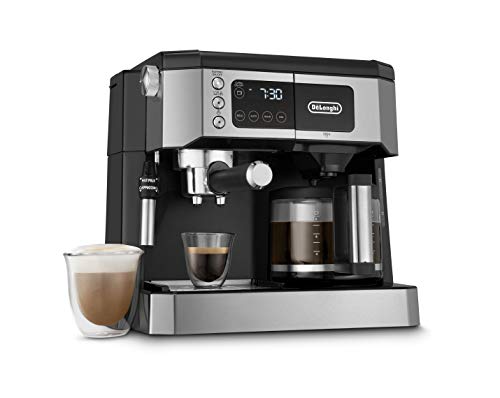
De’Longhi All-in-One Espresso & Coffee Maker with Frother — Best for Milk Drinks
If your household’s espresso drinking really means lattes and cappuccinos, this De’Longhi all-in-one is the combination to look at first. The verified listing spells out the formula: a 10-cup pot for regular coffee, a milk frother for the espresso side, a dual heating system so drinks do not queue behind each other, and 15-bar pump pressure doing the extraction work. It is the most complete milk-drink package among the true combination machines here.
The frother style is the honest caveat: panarello-style wands are forgiving and fast, but they produce a foamier texture than the fine microfoam a trained hand gets from a manual steam wand. For family lattes that is usually a fair trade. The drip side, meanwhile, is a straightforward, dependable pot brewer — exactly what the regular-coffee drinker in the house asked for.
Strengths
- Frother included — lattes and cappuccinos without extra purchases
- Dual heating system serves both drink types without waiting
- Full 10-cup pot keeps drip drinkers properly served
Trade-offs
- Frother texture is foam-forward rather than cafe microfoam
- Large feature set means a longer first-week learning curve
- Counter footprint is substantial
| Spec (from verified listing) | Espresso and coffee maker with 10-cup pot, milk frother, dual heating system and 15-bar pressure per verified listing title |
|---|
Best for: latte and cappuccino households that also brew regular pots / Not suited for: drinkers of straight espresso who never touch milk
Check on Amazon — check price on Amazon.
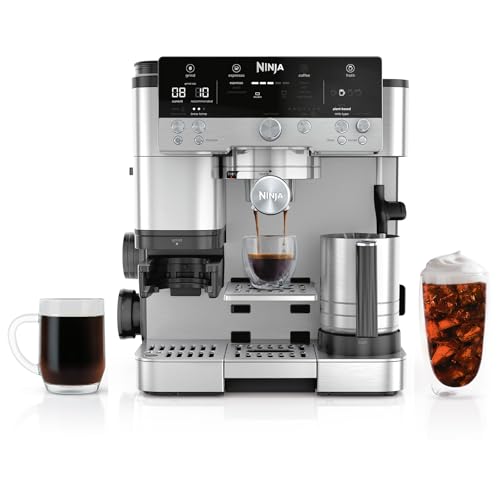
Ninja Luxe Café Premier 3-in-1 Espresso Machine ES601 — Best Premium
The Luxe Café Premier approaches the both-worlds problem from the espresso side and does it with technology. Its Barista Assist guidance helps you hit the right grind and dose, the dual froth system handles hot and cold milk drinks, and the 3-in-1 format spans espresso, regular coffee styles and cold drinks from a single, deliberately premium unit. For a household upgrading from pods and wanting real drinks without a long apprenticeship, it is the most hand-holding route here.
Premium guidance costs premium money, and the machine’s regular-coffee mode is a crafted single-serve style rather than a 10-cup pot for a crowd. Households that need volume drip for guests should look at the De’Longhi combos instead. Households that want each individual drink made well, with the machine coaching them, will find this the most satisfying pick in the list.
Strengths
- Guided assistance shortens the espresso learning curve dramatically
- Espresso, coffee styles and cold drinks in one system
- Dual froth covers hot lattes and iced milk drinks alike
Trade-offs
- Premium tier pricing
- Regular coffee is per-drink, not a full crowd-size pot
- Feature depth is wasted on purely drip-drinking homes
| Spec (from verified listing) | 3-in-1 espresso machine with guided Barista Assist Technology and dual froth system per verified listing title |
|---|
Best for: upgraders who want guided, cafe-style drinks at home / Not suited for: households whose regular coffee means a full 10-cup pot
Check on Amazon — check price on Amazon.
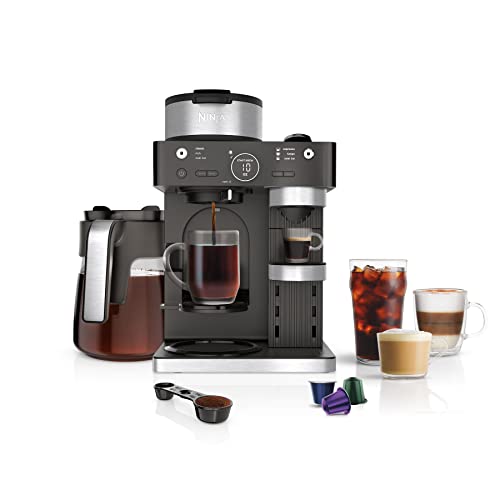
Ninja Espresso & Coffee Maker CFN601 — Best Capsule Combo
The CFN601 is the combination machine for people who love the idea of espresso and regular coffee but not the ritual of either. It takes Nespresso capsules for espresso — in three brew styles — and brews single-serve coffee on the other side, with a built-in frother rounding out lattes and cappuccinos. There is no grinding, no tamping and almost no cleanup, which is precisely the point for busy households.
Capsule systems trade per-cup cost and waste for that convenience, and the coffee side is single-serve rather than a pot. Purists will also note that capsule espresso, however good modern capsules get, is a different drink from a freshly tamped shot. If your household values speed and consistency over craft, those trades are easy to accept — this is the lowest-effort both-worlds machine in the roundup.
Strengths
- Fastest, cleanest route to both espresso and coffee
- Three espresso styles plus a built-in frother
- No grinder, tamping or grounds cleanup at all
Trade-offs
- Ongoing capsule cost and capsule waste
- Coffee side is single-serve only
- Less craft control than pump machines
| Spec (from verified listing) | Espresso and coffee maker compatible with Nespresso capsules, with 3 espresso brew styles, single-serve coffee and built-in frother per verified listing title |
|---|
Best for: busy households that want both drinks with zero ritual / Not suited for: home baristas who enjoy the espresso-making process
Check on Amazon — check price on Amazon.

Nespresso Vertuo Pop+ by De’Longhi — Best Compact Capsule
The Vertuo Pop+ collapses the whole espresso-versus-regular question into a single capsule system. Vertuo capsules come in sizes from espresso up to full coffee mugs, the machine reads each capsule and brews it accordingly, and the whole ritual is one button after a 30-second heat-up. Its compact body and side tank make it the only pick here that genuinely suits a small counter, a desk corner or a guest room.
The limits are the system’s limits: you are committed to Vertuo capsules specifically, there is no drip pot for a crowd, and milk drinks need a separate frother. But as a personal both-worlds machine — an espresso before work, a long coffee on the weekend, from the same small box — nothing else in this list is as effortless or as small.
Strengths
- One system covers espresso through full-mug coffee sizes
- 30-second heat-up and true one-touch operation
- Most compact footprint in this roundup
Trade-offs
- Locked to Vertuo capsules only
- No pot brewing for groups
- Milk drinks require a separate frother
| Spec (from verified listing) | Coffee and espresso machine with compact design, 25 fl. oz. side tank, 30-second heat-up and one-touch brewing per verified listing title |
|---|
Best for: solo drinkers and small kitchens wanting both styles simply / Not suited for: households brewing pots for several people
Check on Amazon — check price on Amazon.
Comparison Table
Compare these by drink pattern, not by feature count: pot drinkers need a De’Longhi combo, per-drink households can choose guidance or capsules, and solo drinkers should start with the smallest box. If you read one row closely, read the De’Longhi All-in-One Espresso & Coffee Maker with Frother (Check on Amazon) — it is the pick readers most often underestimate.
| Pick | Badge | Key spec | Best for |
|---|---|---|---|
| De’Longhi BCO430 Combination Pump Espresso and Drip Machine (Check on Amazon) | Best Overall | Espresso + 10-cup drip, frothing wand | mixed households that drink both espresso drinks and full drip pots |
| De’Longhi COM530M All-in-One Combination Machine (Check on Amazon) | Best Compact Combo | Combo espresso/drip, 47 oz | style-conscious mixed households wanting one tidy unit |
| De’Longhi All-in-One Espresso & Coffee Maker with Frother (Check on Amazon) | Best for Milk Drinks | 10-cup pot, frother, 15-bar pump | latte and cappuccino households that also brew regular pots |
| Ninja Luxe Café Premier 3-in-1 Espresso Machine ES601 (Check on Amazon) | Best Premium | 3-in-1, guided assist, dual froth | upgraders who want guided, cafe-style drinks at home |
| Ninja Espresso & Coffee Maker CFN601 (Check on Amazon) | Best Capsule Combo | Capsule espresso + coffee, frother | busy households that want both drinks with zero ritual |
| Nespresso Vertuo Pop+ by De’Longhi (Check on Amazon) | Best Compact Capsule | Vertuo coffee + espresso, one-touch | solo drinkers and small kitchens wanting both styles simply |
How to Choose a Coffee Maker That Makes Both Espresso and Regular
Start by counting drinks, not features. If your household brews a pot of regular coffee most mornings and espresso drinks a few times a week, a pump combination machine is the only format that serves both habits properly. If espresso drinks are the daily event and regular coffee is an occasional single cup, a guided system or capsule machine matches your real life better and will make the better espresso.
Then be honest about ritual. Pump espresso rewards practice: grind, dose, tamp, pull, steam. Some people love that craft; others abandon the machine by February. Capsule and guided systems exist to remove the craft while keeping the drink. Choose for the person you are on a tired Tuesday, not the hobbyist you are on a free Sunday.
Combination Machines vs Capsule Systems: the Real Trade
A combination machine owns its ingredients: any beans, any grind, ground coffee for the pot. Its per-cup cost stays low and its waste stays minimal, but it asks for counter space, cleaning across two systems and a learning curve on the espresso side. When one side eventually fails, the whole unit is affected — the structural risk of all-in-one design.
Capsule systems invert every term. The machine is smaller and cheaper to run in effort, each drink is consistent, and cleanup is seconds. In exchange you pay more per cup forever, generate capsule waste, and accept the capsule range your system offers. Neither answer is wrong; they are answers for different households, and this roundup deliberately includes both so the choice is yours rather than a manufacturer’s.
Milk, Pots and Other Details That Decide It
Milk is where combination machines diverge most. A manual steam wand makes the finest texture and demands the most skill; a panarello frother is fast and forgiving; a built-in froth system, as on the Ninja picks, removes technique almost entirely. If lattes are daily, rank the frothing system as highly as the brewing system.
Pot capacity is the other decider. Only the true drip-side combos brew a family pot; everything else makes regular coffee one serving at a time. Guests, brunches and work-from-home couples who drink mug after mug should weigh that heavily — refilling a single-serve machine five times is nobody’s idea of convenience.
How to Set Up and Use a Combination Coffee and Espresso Machine
A combo machine rewards a careful first setup, because you are really commissioning two brewers. Give the first morning thirty unhurried minutes.
- Unbox, remove all transit tape and tanks, and wash removable parts — carafe, portafilter, baskets, drip trays — in warm soapy water, then rinse and dry.
- Fill the reservoir with fresh filtered water and run a full water-only cycle through the drip side into the empty carafe, then discard it.
- Prime the espresso side per the manual: run water through the group head and steam wand until the flow runs clear and steady.
- Pull two practice shots with inexpensive beans and discard them; use them to learn the machine’s grind and tamp response.
- Steam a jug of water with a drop of milk to practise wand position before your first real latte.
- Set the drip side’s clock and auto-brew if you use it, and note the descaling interval for both systems in your calendar.
From then on, the habit that keeps combo machines happy is simple: fresh water daily, a quick wand purge after every milk drink, and descaling on schedule for both sides, not just the one you use most.
Common Buying Mistakes
Buying a combo for one drink. If you will never brew the other style, a dedicated machine does your actual drink better for the same money. Combination value only appears when both sides earn their keep.
Expecting cafe espresso on day one. Pump sides need dialled-in grind and a practised tamp. Budget the first bag of beans as tuition, or choose a guided or capsule pick instead.
Ignoring the pot question. Single-serve regular coffee frustrates pot households within a week. Count your household’s morning mugs before choosing the format.
Descaling only one system. Mineral scale builds in both heaters. Follow the schedule for the whole machine or the neglected side will fail first.
Skipping the frother decision. Milk drinkers live with the frothing system daily. Wand, panarello and automatic frothers produce different drinks and different workloads.
Final Recommendation
For the classic mixed household, the De’Longhi BCO430 remains the safest recommendation, with the COM530M as its tidier modern sibling and the frother-equipped all-in-one for latte families. The Ninja Luxe Café is the premium guided route, the CFN601 the capsule convenience play, and the Vertuo Pop+ the small-space answer. Match the format to your mornings and any of the six will serve both drinks well.
Start with the De’Longhi BCO430 Combination Pump Espresso and Drip Machine (Check on Amazon) if you want the safest first choice, or the De’Longhi COM530M All-in-One Combination Machine (Check on Amazon) if its badge matches your household more closely — check price on Amazon for either.
Keep exploring the same cluster before you decide: Best Coffee Makers That Make Espresso Best Coffee Makers That Use K Cups Best Coffee Makers That Make Hot And Iced Coffee Best Coffee Makers Timer Best Clean Edge Can Openers
One Machine or Two? the Honest Maths of Combination Brewing
The case for a combination machine is usually made on counter space, but the stronger case is behavioural: two separate machines create two maintenance routines, two descaling schedules, two reservoirs to fill and two appliances competing for the good outlet — and in real kitchens, the machine that is more work quietly stops being used. A combination unit collapses all of that into one routine. The household that drinks both styles weekly almost always drinks more of both, more happily, from one box than from two theoretically superior ones, one of which is gathering dust.
The counter-case deserves its due. Dedicated machines can be replaced independently, repaired independently and chosen without compromise — the best drip brewer and the best espresso machine will each beat the corresponding side of any combo. If one drink dominates your household by a wide margin, optimising for that drink with a dedicated machine and tolerating a simpler answer for the other is a rational strategy: a great drip brewer plus an occasional capsule espresso, for instance, serves many homes better than a mid-tier combo that splits its budget.
The deciding question is therefore not ‘which is better?’ but ‘what is our actual ratio?’ Track a fortnight of drinks. If espresso-based and regular coffee both appear most days, the combination machine is the honest answer and this guide’s De’Longhi and Ninja picks divide that answer by budget and milk habits. If one style is a weekend guest, buy for the daily drink and let the guest make do.
Espresso Terminology for Combination Shoppers
Combination listings are dense with terms that reward translation. ‘Pump’ espresso means water forced through ground coffee by an electric pump — the real method — as opposed to steam-driven toys that cannot reach proper extraction pressure. A ‘portafilter’ is the handled basket that holds the tamped grounds; its size and quality shape the shot. A ‘frothing wand’ or ‘steam wand’ textures milk; a ‘panarello’ is the assisted sleeve that makes foam easily with less finesse, and an automatic ‘froth system’ removes the jug work almost entirely.
On the drip side, ‘programmable’ means a clock and a scheduled start; ‘brew strength’ settings adjust the water’s contact time or flow to make a bolder pot; and a ‘thermal carafe’ holds heat by insulation where a ‘glass carafe’ needs a warming plate. ‘Dual heating’, which appears in this guide’s De’Longhi picks, means the espresso and drip sides can work without waiting for one shared heater — the difference between a smooth family breakfast and a queue at the machine.
None of these terms are decorations. Each one predicts something about your mornings: whether milk drinks need skill, whether both drinks can happen at once, whether the pot stays hot kindly. Read listings with that translation in hand and the combination market becomes unusually legible.
Setting Up a Two-Drink Household Routine
The households that thrive with combination machines share one trait: a small, settled routine. Water is refreshed daily, the drip side is loaded the night before only on workdays, the espresso side is used deliberately rather than continuously, and the steam wand is purged and wiped in the same motion as the drink being finished. None of this is discipline for its own sake — it is the difference between a machine that feels like a cafe and one that feels like a chore with a power cord.
Bean strategy matters more in a two-drink home than a one-drink home, because the same bag is rarely ideal for both. Many households settle on a versatile medium roast that behaves acceptably as both drip and espresso; households that care more keep two bags — a drip coffee bought for the pot, and a fresher, espresso-focused bag bought smaller and more often. Either approach works; what fails is the stale, forgotten bag asked to do both jobs badly.
Finally, descale as one machine, because it is one. The espresso side’s scale symptoms (slow shots, temperature wobble) and the drip side’s (slow brewing, cooler pots) appear at different rates, which tempts owners to treat them separately. Follow the manual’s schedule for the whole unit and both sides will age together gracefully — the true long-term promise of the combination format.
Milk Drinks, Decoded for Combination Buyers
Most ‘espresso drinkers’ in real households are milk drinkers — the espresso is the base, but the drink is a latte, a cappuccino or a flat white — so the milk system deserves the same scrutiny as the brewing system when you choose a combination machine. A manual steam wand, as on the BCO430, produces the finest, glossiest milk and demands the most from the person holding the jug. It rewards practice with cafe texture and punishes haste with bubbly foam. Neither outcome is the machine’s fault, which is exactly why households divide over it.
Assisted frothers — the panarello style on the frother-equipped De’Longhi all-in-one — narrow that range deliberately: less brilliance available, far less failure possible. The milk comes out foamy, hot and entirely pleasant, in about a minute, by whoever’s turn it is to make drinks. Built-in froth systems, as on the Ninja picks, remove the jug craft altogether and add cold foam for iced drinks, which no wand can do. Rank these by your household’s honest skill distribution: the best milk system is the one the least experienced regular user can succeed with on a weekday.
One practical note applies to every system: milk drinks double the washing-up. Wands need wiping and purging the second the jug comes off, automatic systems need their milk parts rinsed and refrigerated properly, and dried milk is the single most common cause of a combination machine smelling like a cafe bin. Budget the minute, every time, and the machine stays a pleasure.
Guests, Brunches and the Combination Machine’s Finest Hour
The combination machine’s value peaks when the house is full. A brunch table asks for exactly what a single-purpose machine cannot give: a pot of regular coffee that stays available for the drip drinkers, and espresso drinks made to order for the rest — a cappuccino for one guest, a straight shot for another, a latte for the host who has earned it. With a dedicated machine of either type, half the table gets a substitute. With the combo, everybody gets their drink, from one footprint, in one cleanup.
Working that room well is a small skill of its own. Brew the pot first and let it hold; it is the forgiving drink. Then run the espresso side as a short-order station, pulling shots in a rhythm and steaming milk in batches for two drinks at a time. Keep a second jug, a knock container for spent pucks and a cloth dedicated to the wand within arm’s reach, and the performance looks effortless because the preparation was not.
This is also the honest test of whether your household needs the format at all. If guests are rare and both drinks are personal, a smaller answer — the Vertuo Pop+ for one or two people — serves the same variety with a fraction of the machinery. Combination machines earn their counter in busy kitchens. Buy the bustle you actually have.
Combination Machines and resale-proof Satisfaction: Buying Once
Combination machines have a reputation for compromise that their owners, surveyed honestly, rarely share — because the compromise was the point. The household that buys a combo has usually already decided that variety and footprint outrank the last few percent of single-drink excellence, and machines chosen against a clear priority satisfy in a way that spec-sheet winners do not. The dissatisfied combo owners are almost always the ones who bought the format accidentally, expecting a specialist and receiving a generalist.
Buying once, in this category, means three checks. First, both sides must be real: a genuine pump on the espresso side, a genuine full-size brewer on the drip side — the picks in this guide were screened on exactly that. Second, the shared systems must be sane: one reservoir routine, one descaling regime, controls a guest can operate. Third, the brand must support the machine for years, because a two-in-one that cannot be serviced is two appliances’ worth of landfill waiting for one failure.
Meet those three checks and the combination machine stops being a compromise and becomes what it actually is: the correct engineering answer to a two-drink household, in one box, at one price, on one square of counter.
Water, Beans and the Shared Habits of a Two-Drink Machine
A combination machine drinks from one reservoir, which makes water quality a shared fate: the same filtered water that flatters the drip pot also protects the espresso side’s boiler from scale, and the same neglected tank disappoints both drinks at once. Households that adopt one water habit — fresh, filtered, refreshed daily — quietly upgrade every drink the machine makes. It is the cheapest quality decision available to a combo owner, and the one most often skipped because it belongs to neither side.
Beans follow a similar shared logic with one deliberate exception. Storage is common — sealed, cool, away from the machine’s own heat — but rotation should not be: the espresso side punishes stale beans far more visibly than the drip side does. Many two-drink households therefore feed the pot from the main bag and keep a smaller, fresher bag reserved for espresso, accepting one extra purchase rhythm in exchange for shots that taste alive. The drip drinker loses nothing; the espresso drinker gains the whole point of owning the machine.
When a Combination Machine Is the Wrong Purchase
Honesty requires naming the households this format fails. The single-drink household is the obvious one — a combo bought for variety that never materialises is a larger, costlier, more complicated version of the machine that was actually needed. The second is the true espresso obsessive, for whom the shot is a hobby with standards: that reader will outgrow any combo’s espresso side within a year and should start with a dedicated machine, letting regular coffee be handled by the simplest brewer that satisfies it.
The third is the household whose two drinks peak at the same moment every day — two adults, two different drinks, one narrow departure window, every weekday. Even dual-heating combos ask for a little choreography at that moment, and some of those households genuinely are better served by two modest dedicated machines working in parallel. None of these exceptions dents the format’s case for the majority; they exist so that the majority can recognise themselves by contrast.
The Combination Machine in the Morning Rush: a Minute-by-Minute
Six forty-five: the drip side, loaded the night before or started on arrival, begins the pot — the drink that forgives everything and waits patiently. Six fifty: the first drip drinker is served straight from the carafe, mid-brew if the machine pauses, and the espresso side comes on to heat. Six fifty-five: the espresso drinker’s shot is pulled while the drip drinker is on their second cup; the wand steams one jug of milk, which becomes a cappuccino now and will become a latte at seven-oh-five without a second heating cycle. Seven-ten: both drinks are done, the wand is wiped, the portafilter is knocked out, and the machine’s whole morning work is finished inside one cleanup.
That choreography is the combination format’s real product. No single moment in it is impossible with two machines — but two machines double the filling, the switching, the descaling and the counter choreography, and on a weekday those small frictions are exactly what rituals die of. The combo survives the rush because it asks for one routine, learned once, performed half-asleep.
Weekends stretch the same machine differently: a slow pot, shots pulled for pleasure rather than fuel, milk drinks for whoever wanders in. A format that serves the rush and the ritual without changing its nature is a format that stays. That, more than any specification, is why the households in this guide’s audience keep their combination machines for years.
Cleaning a Combination Machine Without Losing a Saturday
Combination machines have a cleaning reputation out of proportion to their reality, because owners imagine servicing two appliances. The weekly reality is one wipe-down, one drip tray, one portafilter rinse and one carafe wash — the same list as any single machine, plus a steam wand that takes thirty seconds. The monthly reality is a group-head rinse and a check of the drip side’s basket and spray head. The quarterly reality is the descale, done once, for the whole unit, on the manufacturer’s schedule. Totalled honestly, a combo asks perhaps ten extra minutes a month over a drip machine — the smallest line in this entire guide, and the one most often exaggerated by people who have never owned one.
The two habits that decide whether cleaning stays trivial are both about milk and minerals. Milk residue is a same-day problem: wipe and purge the wand or rinse the froth parts before they dry, every time, without exception. Mineral scale is a slow problem with a scheduled solution: descale on time and it never becomes the weekend-consuming resurrection project that neglected machines demand. Owners who keep those two appointments own a machine that looks, smells and brews like new for years; owners who miss them own the cautionary tales. The format is innocent in both stories.
A Final Word on Counter Space
Every combination machine in this guide should be measured before it is ordered — not the product-page dimensions alone, but the working envelope: room to swing the portafilter, room to lift the reservoir clear, room for the jug under the wand and the carafe under the spout, and headroom beneath the cabinets for all of it. Machines returned for size are almost never too big on paper; they are too big in the choreography. A tape measure and ninety seconds of mime at the counter where the machine will live prevent the single most common disappointment in this category, and cost nothing at all.
One Last Check Before You Order
Before the order is placed, run the household census one final time: count the espresso drinks and the regular coffees your home actually made last week, from memory, honestly. If both numbers are real, the combination machine is justified and this guide’s badges will steer you to the right one. If one number is a hope rather than a habit, buy for the habit and let the hope rent its drink from a cafe. Machines bought for real mornings get used for years; machines bought for imagined ones get listed for sale by spring.
Frequently Asked Questions
Can one machine really make good espresso and good drip coffee?
It can make genuinely good versions of both, with an honest caveat: dedicated specialists usually edge it out on their single drink. For most households the difference is smaller than the convenience gained.
What is the difference between a combination machine and a capsule system?
A combination machine brews ground coffee on both sides — a pump espresso side and a drip side. A capsule system uses pods for both espresso and coffee sizes, trading per-cup cost for speed and zero cleanup.
Do combination machines brew both drinks at the same time?
Models with dual heating systems can work on both sides without one waiting for the other. Single-heater designs may need a pause between steaming and brewing, so check the format if simultaneous drinks matter.
Is capsule espresso real espresso?
Capsule machines brew under pressure through a sealed dose of ground coffee, producing a recognisable espresso with crema-style foam. Freshly ground, hand-tamped shots offer more control and, to most enthusiasts, more depth.
How much counter space does a combo machine need?
Plan for roughly the footprint of a large drip brewer plus clearance to use the portafilter and wand, and vertical room to fill the reservoir. The capsule picks in this list are markedly smaller.
What maintenance does a two-in-one machine need?
Daily fresh water and wand purging, weekly washing of removable parts, and descaling of both systems on the manufacturer’s schedule. Group-head backflushing applies to pump models where the manual specifies it.


