Disclosure: airfryerkitchensupply.com is reader-supported. When you buy through links on our site, we may earn an affiliate commission at no extra cost to you.
Where to buy
Every machine in this guide to the best coffee makers for ice coffee is sold on Amazon, and each verified pick links to its listing so you can check the current price on Amazon. We do not print prices — they change too often to stay honest — and every model below was matched against Amazon’s product data feed for this site before it earned a link.
- Ninja Hot & Iced XL Coffee Maker CM371 — check the current price on Amazon
- Breville Precision Brewer BDC400 — check the current price on Amazon
- Keurig K-Iced — check the current price on Amazon
- Mr. Coffee Iced and Hot Coffee Maker — check the current price on Amazon
- Braun PureFlavor 14-Cup Programmable Coffee Maker — check the current price on Amazon
- QHH Cold Brew Coffee Maker 64 oz Mason Jar — check the current price on Amazon
The best coffee makers for ice coffee succeed or fail on one unglamorous variable: dilution. Iced coffee is a drink designed to melt its own foundation, so a brew that tastes perfect hot becomes watery by the third sip over ice — unless the machine was engineered for the problem. This roundup covers the three honest solutions: flash-chilled brewing (hot, concentrated coffee brewed directly over ice), rapid cold brew (a controlled cold process without the overnight wait), and true immersion cold brew (the patient original). Each pick below champions one of those methods at one size and budget.
What separates this list from ordinary drip machines with an ‘iced’ sticker is calibration. The over-ice modes here brew stronger and account for melt; the cold-brew options control time and temperature instead of hoping a fridge does it. Every machine was verified against Amazon’s product data for this site before earning a link, and we print no prices — check the current price on Amazon on any pick that fits your pattern.
One distinction before the picks: iced coffee is not the same drink as an iced latte. This guide is about coffee over ice — black, sweetened, or with a splash of milk. If your drink is espresso and a full glass of milk, the companion roundup on iced lattes (linked at the end) is your list. If your glass is coffee-first, read on.
In this guide
Quick Picks
- Best Overall: Ninja Hot & Iced XL Coffee Maker CM371 — best for iced drinkers who want both flash-chilled and cold-brew styles from grounds
- Best for Serious Iced and Cold Brew: Breville Precision Brewer BDC400 — best for recipe-minded drinkers who want engineered iced and cold brew at batch scale
- Best Pod Iced Coffee: Keurig K-Iced — best for pod households that drink iced coffee daily
- Best Budget Iced: Mr. Coffee Iced and Hot Coffee Maker — best for solo iced drinkers on a budget who want tumbler-perfect results
- Best Iced for a Crowd: Braun PureFlavor 14-Cup Programmable Coffee Maker — best for families and hosts who make iced coffee by the pitcher
- Best True Cold Brew: QHH Cold Brew Coffee Maker 64 oz Mason Jar — best for planners who want true cold brew smoothness at the lowest running cost
How These Picks Were Chosen
Candidates were verified against the site’s Amazon product feed — model, listing, and every printed spec — then screened on iced performance specifically: does the machine brew a dedicated over-ice or cold-brew cycle, is the recipe calibrated for dilution, and what batch sizes does it honestly serve? Ordinary machines whose only iced feature was a tall glass in the photograph were cut.
The six survivors cover pod and grounds formats, single tumblers and 14-cup pitchers, five-minute flash-chills and 24-hour steeps — because ‘iced coffee’ is three drinks wearing one name, and each deserves its champion.
The 6 Best Coffee Makers for Ice Coffee

Ninja Hot & Iced XL Coffee Maker CM371 — Best Overall
The CM371 suits the iced-coffee drinker who wants it both ways: a proper flash-chilled cup in minutes on a weekday, and a smooth cold brew when there is time to plan. It brews grounds, not pods, in sizes from a small cup to a full carafe. It does not suit pod loyalists or anyone who wants a machine that only does one thing simply.
Strengths
- Rapid Cold Brew produces smooth cold-brew-style coffee in a fraction of steeping time
- Over-ice brew style is calibrated to chill without watering down
- Eight sizes and four styles cover solo cups and full 12-cup carafes
Trade-offs
- Grounds-based: no pod shortcut for rushed mornings
- Cold brew from a rapid cycle is excellent, not identical to an 18-hour steep
- Large footprint for a machine many will use one way
| Capacity | 12-cup carafe, single-serve to travel mug |
| Styles | Classic, Rich, Over Ice, Cold Brew |
| Sizes | 8 brew sizes |
| Reservoir | Removable water reservoir |
Most ‘iced coffee makers’ are ordinary brewers with a marketing sticker; the CM371 is built around the two real methods. Over-ice brewing makes a hot, concentrated extraction that flash-chills on contact with a full glass of ice — bright, immediate, and properly strong because the recipe accounts for melt. Rapid Cold Brew takes the opposite path, using a controlled cold process to deliver the low-acid smoothness of cold brew without the overnight wait. Owning both in one grounds-based machine means the drinker is never choosing between the coffee they want and the time they have. The carafe side scales it to a household: a full over-ice batch for a hot afternoon is a genuinely social quantity of iced coffee.
Freeze coffee in an ice tray and use coffee ice for the over-ice style. The drink then chills and stays at strength to the last sip — the single easiest upgrade to any iced coffee routine, and this machine’s concentrated brew makes it sing.
CM371 ownership centers on freezer logistics as much as machine care: a standing tray of coffee ice, a shelf for the carafe, and grounds stocked for both the flash-chill weekday and the rapid cold brew weekend. The machine itself is standard Ninja ownership — removable reservoir, washable parts, a descale on schedule — with the addition that the cold-brew components want a rinse immediately after use, since cold coffee residue left standing turns stale faster than it looks. Households that build the freezer habit find the machine’s two methods stop being features and become the week’s rhythm.
Best for: iced drinkers who want both flash-chilled and cold-brew styles from grounds / Not suited for: pod households or one-button minimalists
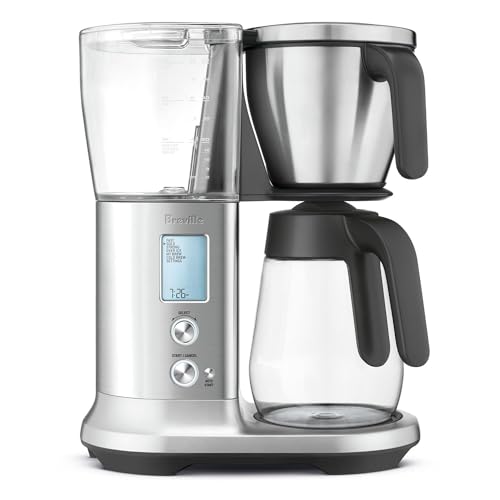
Breville Precision Brewer BDC400 — Best for Serious Iced and Cold Brew
The Precision Brewer suits the drinker who treats iced coffee as a recipe, not a refreshment — adjusting brew strength and flow so the chilled cup lands exactly right. It does not suit small counters, small budgets, or anyone who will only ever use one preset.
Strengths
- Dedicated Iced and Cold Brew modes alongside certified-standard Gold brewing
- Custom mode controls temperature, bloom and flow — dial the extraction for chilling
- 60 oz capacity brews iced coffee for a table, not just a glass
Trade-offs
- Premium tier and a large, tall chassis
- Menu depth demands a learning week
- Glass carafe: chill promptly, do not dawdle
| Capacity | 12-cup / 60 oz glass carafe |
| Modes | Gold, Fast, Strong, My Brew, Iced, Cold Brew |
| Control | Adjustable temperature, bloom time, flow rate |
| Use | Hot drip, over-ice and cold brew styles |
Iced coffee punishes weak extraction twice: dilution hides flaws in hot coffee that chilling exposes, and a thin brew becomes water the moment ice melts. The Precision Brewer’s answer is control. Brew the iced mode stronger and slightly hotter to survive the chill, or run a custom profile with a longer bloom for a dense cold-brew base that holds up in a tall glass with milk. No other machine in this roundup lets the drinker engineer the pre-chill extraction this precisely, and for households that also want a certified-standard hot pot on winter mornings, it consolidates two machines into one footprint — a big footprint, but one.
Keep a dedicated iced profile in My Brew once you find it: hotter, stronger, longer bloom. Naming the season’s settings means July’s perfect glass is reproducible in August instead of rediscovered.
The Precision Brewer’s iced ownership is a profile-keeper’s game: a saved iced setting, a saved cold-brew setting, and the discipline to brew the batch before the ice runs out. Its size means it owns its counter corner permanently, and its glass carafe wants prompt, gentle handling when ice is involved — brew onto ice in a separate vessel for large batches rather than shocking the carafe. Owners who treat it as the household’s beverage lab, hot and cold, report it displacing two other appliances; owners who wanted a button report the menu. Both are describing the same machine accurately.
Best for: recipe-minded drinkers who want engineered iced and cold brew at batch scale / Not suited for: preset-only users or compact kitchens

Keurig K-Iced — Best Pod Iced Coffee
The K-Iced suits the pod drinker whose order is ‘iced, always’ — one button brews hot-extracted coffee at iced strength over a full tumbler of ice. It does not suit carafe households, cold-brew purists, or anyone watching per-cup costs.
Strengths
- Brew Over Ice setting starts hot for extraction, then cools the stream for the glass
- Strong Brew button for a bolder base that survives dilution
- Accepts any K-Cup pod — the entire flavored-iced universe is compatible
Trade-offs
- Pod cost and pod waste, permanently
- Single servings only — a round for friends is a queue
- Flash-chilled style only; no true cold brew
| Format | Single-serve K-Cup pods |
| Sizes | 3 cup sizes |
| Reservoir | 42 oz removable |
| Feature | Brew Over Ice and Strong Brew |
Keurig’s iced answer is smarter than it first sounds. The Brew Over Ice cycle begins at full brewing temperature — because extraction needs heat even when the drink does not — then automatically reduces the temperature as the brew finishes, so the coffee hitting the ice is already cooling and the melt stays modest. Combined with the Strong setting, the result is a pod iced coffee that tastes like coffee at the bottom of the glass, which is precisely where pod iced coffee usually gives up. For the household already committed to pods, this is the correct Keurig for summer — and it still brews an ordinary hot cup when the weather turns.
Fill the tumbler completely with ice before brewing — the recipe assumes a full glass, and a half-filled one guarantees a diluted drink. Large, dense cubes melt slower than the small hollow kind and are worth the tray space.
K-Iced ownership is pod ownership with a seasonal accent: the pod stockpile tilts toward the strong and the flavored-for-ice varieties, the freezer keeps a tray of large cubes, and the machine’s own care is the standard Keurig descale and needle rinse. Its 42-ounce reservoir suits a two-cup-a-day iced habit without daily refills. The one discipline is ice supply — the machine’s calibration assumes a full glass, and a household that chronically under-ices will misjudge a good machine as a weak one.
Best for: pod households that drink iced coffee daily / Not suited for: batch drinkers or cold-brew devotees

Mr. Coffee Iced and Hot Coffee Maker — Best Budget Iced
This Mr. Coffee suits the budget iced drinker who measures in tumblers: it brews a concentrated single serving directly over ice into the included 22-ounce tumbler, using your own grounds in a reusable filter. It does not suit households, pod users, or anyone who wants a carafe option.
Strengths
- Purpose-built for one perfect iced tumbler — measured, concentrated, repeatable
- Reusable filter and your own grounds keep running costs at drip level
- Included 22 oz tumbler with lid and straw makes it a grab-and-go system
Trade-offs
- Strictly single-serve — second drink, second brew
- No cold brew mode; flash-chilled style only
- Compact and light build reflects its budget tier
| Format | Single-serve, grounds with reusable filter |
| Output | Up to 22 oz tumbler |
| Included | 22 oz tumbler, lid, straw, reusable filter |
| Modes | Iced and hot single servings |
The genius of this little machine is a ratio. Iced coffee fails at home mostly because people brew a normal cup and pour it over ice; Mr. Coffee instead brews a measured concentrate calibrated for the ice in the tumbler, so the finished drink lands at drinking strength. Because it uses grounds in a reusable filter, the per-drink cost stays at the lowest tier in this roundup and the flavor ceiling is set by your beans, not by a pod catalogue. It also brews a hot single cup, which makes it a complete personal coffee station for a dorm, a desk, or a small kitchen — as long as ‘personal’ is understood literally.
Pre-chill the tumbler in the freezer for ten minutes on very hot days. The concentrate then meets cold glass and full ice, and the drink stays at strength noticeably longer on a commute or a porch.
The Mr. Coffee’s ownership is almost comically light: a reusable filter to rinse, a tumbler to wash, a footprint that fits a dorm shelf. Its consumable is your own grounds, which makes its running cost the floor of the category and its flavor ceiling a function of your bean bag. The tumbler’s lid and straw want a brush occasionally — the only real care note — and the machine itself asks for a descale like any heater. For a single drinker, it is close to the theoretical minimum of appliance: one job, one serving, almost no trace.
Best for: solo iced drinkers on a budget who want tumbler-perfect results / Not suited for: households, hosts, or pod fans

Braun PureFlavor 14-Cup Programmable Coffee Maker — Best Iced for a Crowd
The PureFlavor suits the household that ices by the pitcher: fourteen cups, an Over Ice mode among its four brew options, and a timer so the batch is ready when the heat is. It does not suit solo drinkers or cold-brew purists.
Strengths
- Over Ice is a true brew option alongside Fast, Regular and Bold
- 14-cup scale makes pitcher-sized iced batches for families and gatherings
- FastBrew technology keeps big batches from taking big time
Trade-offs
- A lot of machine for a one-glass habit
- Glass carafe demands prompt chilling — brew, ice, refrigerate
- No dedicated cold-brew process
| Capacity | 14-cup FlavorCarafe |
| Options | Fast, Regular, Bold, Over Ice |
| Programming | 24-hour timer |
| Extras | FastBrew technology, warming plate |
Scale changes the iced-coffee problem. A single glass is a ratio exercise; a pitcher for six people on a hot afternoon is logistics — and the PureFlavor is the machine in this roundup built for the logistics. The Over Ice option concentrates the brew for dilution, the 14-cup carafe gives the batch somewhere to live, and FastBrew keeps the cycle short enough that a second pitcher is a plan rather than a project. Braun’s build quality at this tier is a quiet bonus: seals, hinges and carafe feel a class above the price. For the family that goes through iced coffee like lemonade in July, this is the pick.
Brew the over-ice batch directly onto ice in a separate pitcher rather than chilling the glass carafe — thermal shock is unkind to glass, and the drink reaches serving temperature faster with the ice in the vessel from the start.
Braun ownership at this tier is the German-mainstream experience: solid seals, a carafe that pours without drama, and controls that survive a decade of wet fingers. The PureFlavor’s iced role adds one care habit — rinse the carafe promptly after iced batches, since coffee chilled and then left standing in a warm kitchen ages faster than a hot pot does. The warming plate, irrelevant to iced service, still serves the household’s winter drip without complaint, which is the machine’s quiet second job.
Best for: families and hosts who make iced coffee by the pitcher / Not suited for: solo drinkers or cold-brew purists

QHH Cold Brew Coffee Maker 64 oz Mason Jar — Best True Cold Brew
The QHH suits the planner: the drinker who happily steeps overnight for the smoothest, sweetest, lowest-acid iced coffee there is, in a 64-ounce batch that lives in the fridge all week. It does not suit the spontaneous — there is no button that hurries it — or anyone without fridge shelf space for a tall jar.
Strengths
- True immersion cold brew: the smooth, naturally sweet cup electric shortcuts imitate
- 64 oz batch yields days of ready iced coffee or concentrate
- Stainless filter, airtight lid and pour spout — a complete, simple system
Trade-offs
- Needs 12–24 hours of steeping — planning is the price of admission
- Manual everything: no brew cycles, no settings, no timer
- Glass jar wants careful handling and a dedicated fridge spot
| Capacity | 64 oz mason jar pitcher |
| Method | Immersion cold brew, stainless steel filter |
| Lid | Airtight, leak-proof with pour spout |
| Power | None — manual steeping |
Every electric pick in this roundup is, in the end, negotiating with time. The QHH refuses to negotiate. Coarse grounds steep in cold water inside a fine stainless filter; hours later the jar holds a concentrate of remarkable smoothness — the chocolatey, low-acid cup that made cold brew famous — ready to cut with water or milk across days of mornings. The economics are unbeatable: no electricity, no pods, no parts to fail, and a per-glass cost at the floor of the category. It earns its place as the honest benchmark of this list: if you plan a day ahead, this simple jar makes iced coffee the expensive machines are trying to approximate.
Steep at a strong concentrate ratio and dilute per glass. Concentrate keeps its quality longer in the fridge than pre-diluted coffee, and each drinker can set their own strength at pouring time.
The QHH’s ownership is a fridge shelf and a rhythm: steep on the weekend, drink through the week, rinse the filter, repeat. The stainless filter wants a scrub with a bottle brush when the fines build up, and the glass jar wants the respect glass always wants. There is nothing to descale, nothing to update, nothing to repair — the entire maintenance schedule is washing a jar. Owners describe the ritual as the point: five unhurried minutes of making, in exchange for a week of instant iced coffee. In a roundup of appliances, it is the reminder that sometimes the machine is a jar and the technology is time.
Best for: planners who want true cold brew smoothness at the lowest running cost / Not suited for: spontaneous drinkers or the fridge-space-poor
Comparison Table
| Pick | Badge | Key spec | Best for |
|---|---|---|---|
| Ninja Hot & Iced XL Coffee Maker CM371 | Best Overall | 12-cup carafe, single-serve to travel mug | iced drinkers who want both flash-chilled and cold-brew styles from grounds |
| Breville Precision Brewer BDC400 | Best for Serious Iced and Cold Brew | 12-cup / 60 oz glass carafe | recipe-minded drinkers who want engineered iced and cold brew at batch scale |
| Keurig K-Iced | Best Pod Iced Coffee | Single-serve K-Cup pods | pod households that drink iced coffee daily |
| Mr. Coffee Iced and Hot Coffee Maker | Best Budget Iced | Single-serve, grounds with reusable filter | solo iced drinkers on a budget who want tumbler-perfect results |
| Braun PureFlavor 14-Cup Programmable Coffee Maker | Best Iced for a Crowd | 14-cup FlavorCarafe | families and hosts who make iced coffee by the pitcher |
| QHH Cold Brew Coffee Maker 64 oz Mason Jar | Best True Cold Brew | 64 oz mason jar pitcher | planners who want true cold brew smoothness at the lowest running cost |
How to Choose the Best Coffee Maker for Ice Coffee
Flash-Chilled, Rapid Cold Brew, or True Cold Brew: Know Your Method
Flash-chilled (over-ice) coffee is bright and aromatic — it tastes like the hot coffee it was, chilled in seconds — and it is ready when you are. True cold brew is the opposite profile: smooth, sweet, low in acid, and ready tomorrow. Rapid cold brew splits the difference, using a controlled process to approach the steeped profile in minutes rather than hours. Neither is ‘better’; they are different drinks. Acid-sensitive stomachs and make-ahead planners belong to cold brew. Immediacy and aroma belong to flash-chill. Drinkers who refuse to choose belong to the Ninja CM371, which does both.
The Dilution Math Every Iced Drinker Should Know
A full glass of ice will melt roughly a third of its volume into your drink during a leisurely serving. A machine calibrated for iced coffee compensates by brewing at about one-and-a-half times normal strength, so the finished glass lands at the strength you intended. You can imitate this on any brewer — more grounds, less water, brew over a full glass of ice — but dedicated modes do the math for you and, in the K-Iced’s case, even cool the stream mid-brew to slow the melt. When a review here says ‘calibrated,’ that compensation is what it means.
Ice Is an Ingredient, Not an Afterthought
Small, hollow, fast-melting ice is the silent saboteur of home iced coffee: it chills fast and dilutes faster. Large dense cubes from a proper tray melt slowly and keep the drink at strength. Coffee ice — yesterday’s brew frozen in a tray — eliminates dilution entirely and slightly intensifies the drink as it melts. And the glass matters: a pre-chilled, insulated tumbler keeps the ice working on the coffee instead of on the room. None of this costs much, and all of it together is worth more than the gap between the budget and premium picks in this roundup.
Batch Size: Tumbler Drinkers and Pitcher Households Live Differently
Solo iced drinkers are best served by single-serve machines that brew one calibrated tumbler — the Mr. Coffee and the K-Iced exist for them, and a carafe machine would mostly brew disappointment at small sizes. Households and hosts should think in pitchers: the Braun’s 14-cup over-ice batch or the QHH’s 64-ounce steep turn iced coffee from a per-person chore into a fridge staple. Be honest about which household you are; the wrong size is the most common reason iced machines end up in the cupboard by September.
Grounds or Pods for Iced Coffee
Pods win on speed and flavored variety — an iced vanilla or caramel is one pod away — and lose on per-cup cost and strength headroom. Grounds win on economics and on ceiling: your beans, your ratio, your concentrate. Cold brew belongs entirely to grounds; no pod system steeps. The middle path several households land on is a grounds machine for the daily pitcher plus coffee ice in the freezer, which quietly removes the only real advantage pods had — the drink is already made.
Japanese Iced Coffee: The Method Behind Flash-Chilling
The over-ice technique has a name and a heritage: Japanese iced coffee, developed in kissaten coffee houses, brews hot coffee directly onto ice so the aromatics that make a great hot cup are captured before they can fade. The contrast with the Western habit — brew a pot, let it cool, refrigerate, serve tomorrow — is stark in the glass: flash-chilled coffee tastes like the beans; day-old refrigerated coffee tastes like the fridge.
The method’s discipline is proportion. Part of the recipe’s water is in the glass as ice before brewing begins, and the brew itself is concentrated to finish at drinking strength as the ice melts. The machines in this roundup with dedicated over-ice modes automate exactly this split, which is why their results embarrass a standard brewer pouring over ice at random. Understanding the method also makes you dangerous with any machine: replace a third of the brew water with ice in the vessel, raise the grounds modestly, and brew directly onto it.
Cold Brew Chemistry: Why Time Tastes Smooth
Cold water extracts coffee slowly and selectively. The acidic and bitter compounds that hot water pulls eagerly are reluctant in the cold, while the sweet, chocolatey fractions dissolve given hours — which is why a properly steeped cold brew tastes almost pre-sweetened and why sensitive stomachs tolerate it better. Time is literally an ingredient: a four-hour steep and a twenty-hour steep of the same beans are measurably different drinks.
The practical corollaries matter for buyers. Cold brew rewards coarse grounds (fine grounds over-extract across long steeps and clog filters), patience with ratio experiments (concentrates typically brew strong and dilute at serving), and fridge discipline (a dated, sealed jar). The QHH pick in this roundup is the pure expression of the method; the Ninja’s rapid process is the engineered shortcut, trading a measure of depth for a same-hour result. Neither is cheating — they are different treaties with the same chemistry.
Sweetening and Dairy: Finishing Iced Coffee Properly
Granulated sugar in a cold drink is a texture problem wearing a sweetness costume — it sinks, resists, and sweetens the last sip at the expense of the first. The solutions are old and easy: sweeten the coffee while it is hot or freshly brewed, before chilling; or keep simple syrup (equal parts sugar and water, dissolved once) in the fridge, where it mixes instantly into cold drinks at a teaspoon’s notice. Brown sugar and honey syrups bring their own flavors and suit cold brew particularly well.
Dairy has its own physics. Milk poured into hot coffee over ice speeds the melt and thins the drink; added after the chill, it stays a distinct, pleasant layer. Cream floats and enriches; oat milk has become the default alternative for its cold stability. And a pinch of salt — genuinely, a pinch — in a bitter batch suppresses bitterness perception without tasting salty. These finishing details are where home iced coffee quietly passes café iced coffee, because the café is optimising for speed and you are optimising for one glass.
Iced Coffee for a Crowd: Batching Without Ruining It
Serving iced coffee to eight people exposes every weakness of the single-glass method: ice runs out, batches vary, and the maker spends the party brewing. The crowd system that works is a strong cold-brew concentrate made the day before — the QHH jar scaled up, or any large steep — held in the fridge as the party’s foundation. Guests dilute to taste with water or milk over fresh ice, which means every glass is both cold and personal, and the host is at the party.
If flash-chilled is the house style, the Braun PureFlavor’s 14-cup over-ice batch is the tool: brew it once, directly onto ice in a pitcher, and refrigerate the pitcher for service within a few hours. Either way, budget ice like an ingredient, not a garnish — a pound per four guests is a starting point, plus a separate bag of coffee ice if the afternoon is long. Warm iced coffee at a summer gathering is a logistics failure, never a recipe failure.
Storing Iced Coffee and Cold Brew Without Losing Them
Cold brew concentrate is the marathon runner of coffee storage: sealed and refrigerated, it holds its quality for about a week, with the first four days at its peak. Ready-to-drink dilutions fade faster — three days is the honest window — because dilution wakes the compounds that oxidation then works on. Flash-chilled iced coffee is a sprinter by contrast: it is a same-day drink, best within hours, and refrigerating it overnight spends exactly the aromatics the method exists to preserve.
Storage vessels matter at the margins that add up: fill containers close to the brim to limit the air headspace, seal them, and keep them at the back of the fridge where the temperature is steadiest. Label with the brew date and the ratio — future-you, staring at two identical jars on Thursday, will be grateful. None of this is preciousness; it is the difference between a home iced-coffee habit that delights and one that quietly gets abandoned by August.
Iced Coffee and Health-Conscious Drinkers: Sugar, Acid, and Control
Home iced coffee’s quiet advantage is control over the two things café drinks load by default: sweetness and portion. A café iced coffee often arrives pre-sweetened to a house standard; the home drinker sets the dose — or finds, as many do, that cold brew’s natural sweetness needs none at all. Acid-sensitive drinkers have a genuine lever here too: cold extraction produces a measurably gentler cup, and the rapid and true cold-brew picks in this roundup exist partly for stomachs that hot coffee argues with.
Caffeine control is the third lever: a home concentrate diluted to taste is a caffeine dial, letting the drinker hold the ritual constant while the dose varies by day. None of this requires special equipment beyond the picks above — it requires only noticing that the home version of this drink is the customisable one, and customising it on purpose.
Before You Buy: The One-Week Iced Coffee Diary
Iced coffee habits are more specific than drinkers realise, and a week of paying attention prevents the category’s classic mis-buys. Note, for one week: how many iced drinks the household actually makes, at what hours, in what sizes, and how many were planned versus spontaneous. The diary sorts buyers with unusual reliability. Mostly spontaneous single glasses point to the flash-chill machines. A predictable daily pitcher points to the Braun or the cold-brew jar. A mix — planned weekends, spontaneous weekdays — is the Ninja CM371’s exact design brief.
Note also what the drinks contain. Black-coffee drinkers should weight extraction quality and method purity; milk-and-syrup drinkers should weight convenience and consistency, because the additions forgive what they cover. And count the ice: a household that chronically runs out of ice will under-use any iced machine, so the diary should end with a freezer decision — trays, a bag habit, or coffee ice — made alongside the machine decision, not after it.
Buy against the diary and the machine matches the life; buy against the fantasy of the life and the machine joins the cupboard by September. Iced coffee is a habit category more than an appliance category, and the habit, honestly observed for seven days, is the best buying guide in this entire article — including this one.
Iced Coffee Around the World: Three Glasses Worth Copying
The home iced-coffee drinker has three national traditions worth stealing from. Vietnam’s cà phê đá drips strong coffee slowly onto condensed milk and ice — a method any drip machine approximates by brewing a concentrated batch over a glass that already holds the condensed milk. Greece’s frappé and freddo espresso culture proves that agitation is a texture tool: shaking a shot or a strong brew with ice builds the foam and chill that stirring never quite achieves, and a cocktail shaker beside any machine in this roundup unlocks it.
Japan contributes the flash-chill discipline this guide has already praised, plus a serving aesthetic worth adopting: the tall glass, the clear ice, the coffee poured last so the drink arrives layered. None of these traditions requires new hardware — they are techniques that ride on the machines above — and each one refreshes a home routine that has settled into a single recipe. Iced coffee is a world drink; your kitchen is allowed to travel.
How to Make Iced Coffee That Stays Strong to the Last Sip
- Start with a completely full glass or pitcher of ice — not half, not ‘some.’ Every calibrated recipe in this roundup assumes a full vessel of ice, and under-filling is the number one cause of watery results blamed on machines.
- Brew on the machine’s iced or over-ice setting if it has one; if it does not, increase the grounds by roughly half and reduce the brew water slightly, then brew directly over the ice so the coffee chills on contact instead of cooling slowly.
- Sweeten while the coffee is hot or freshly brewed, before chilling completes: sugar dissolves properly in the hot concentrate, while sweetening a cold finished drink leaves syrup at the bottom. Simple syrup is the cold-drink alternative that actually mixes.
- Add milk or cream last, after the coffee has chilled on the ice for a moment. Pouring milk into still-hot coffee over ice accelerates melting and muddles the flavor the calibration worked to protect.
- For cold brew batches, label the jar with the steep date and strength. Concentrate keeps well for days refrigerated, but a dated jar prevents the archaeological discoveries that put people off home cold brew.
Common Buying Mistakes
- Pouring hot coffee over a few cubes and calling it iced coffee. A normal-strength brew plus a token handful of ice equals brown water by minute five. Either brew calibrated concentrate or fill the glass fully — preferably both.
- Brewing a big hot pot and refrigerating it for later icing. Hot-brewed coffee oxidises as it sits, and yesterday’s refrigerated drip tastes stale in a way chilling cannot hide. Cold brew is the make-ahead method; flash-chill is the fresh one. Refrigerated drip is neither.
- Using small fast-melt ice. Ice-machine crescents and hollow cubes melt at double the rate of dense tray cubes. Your machine’s calibration assumed real ice; give it some.
- Forgetting that cold dulls sweetness and aroma. A chilled drink needs slightly more sweetness and a slightly bolder roast than the same drink hot. Adjust the recipe for the temperature you serve at, not the one you brewed at.
- Buying a single-serve machine for a pitcher household. Queuing four tumblers through a one-cup machine every afternoon gets old in a week. Match the machine’s honest batch size to the household’s honest demand.
Final Recommendation
The Ninja Hot & Iced XL CM371 is the iced-coffee recommendation for most drinkers: both real methods, grounds economics, and sizes from a cup to a carafe. Recipe engineers get the Breville Precision Brewer; pod households get the K-Iced; solo budget drinkers get the Mr. Coffee tumbler system; pitcher households get the Braun PureFlavor; and patient purists get the QHH jar and the best cold brew economics in the category.
If your iced drink is built on espresso and milk rather than coffee over ice, your list is the companion roundup: Best Coffee Makers For Iced Lattes. Also worth reading before you order: Best Coffee Makers For Home Use, Best Coffee Makers For Lazy People, Best Coffee Makers For College Dorms, and Best Coffee Makers For Drip Brewing.
Start your comparison with the three reader favourites: the Ninja Hot & Iced XL Coffee Maker CM371, the Breville Precision Brewer BDC400 and the Keurig K-Iced — check the current price on Amazon on each before you decide.
Frequently Asked Questions
What is the difference between iced coffee and cold brew?
Iced coffee is brewed hot and chilled — usually flash-chilled over ice — so it keeps the bright, aromatic profile of hot coffee. Cold brew is steeped in cold water for many hours, producing a smoother, sweeter, lower-acid drink. They are different beverages that happen to share a serving temperature.
Why does my homemade iced coffee taste watery?
Almost always dilution math: a normal-strength brew plus melting ice. Brew stronger (dedicated iced modes do this automatically), fill the glass completely with ice, use large dense cubes, and consider coffee ice for zero-dilution chilling.
Can I make iced coffee with a regular drip machine?
Yes, with adjustments: more grounds, a full glass of ice, and brewing directly over it. What a regular machine cannot do is the calibrated compensation automatically, and it cannot make true cold brew. If iced coffee is a daily drink, a dedicated mode is worth having.
Is rapid cold brew as good as overnight cold brew?
It is impressively close in smoothness and body, and far better than refrigerated hot coffee — but a long steep still edges it on depth. Most drinkers cannot tell them apart in a glass with milk; black-coffee purists planning ahead may still prefer the jar.
How long does homemade cold brew keep?
Refrigerated concentrate keeps its quality for about a week; diluted, ready-to-drink cold brew is best within a few days. Keep it sealed and cold, and date the jar — freshness discipline is the whole game with make-ahead coffee.
Are pods good for iced coffee?
The K-Iced shows they can be: a dedicated brew-over-ice cycle with a strong setting produces a genuinely good single glass with zero effort. The trade-offs are the standing pod ones — per-cup cost and waste — plus single servings only.


