Disclosure: airfryerkitchensupply.com is reader-supported. When you buy through links on our site, we may earn an affiliate commission at no extra cost to you.
Where to buy
Here is where to buy the best blenders for grinding recommended in this guide. Every linked model below was matched against Amazon catalog data before inclusion, and the short list is the same six picks reviewed in full further down. Start here if you already know your brief, or read the intro and buying guide first if you are still deciding — and check price on Amazon at the moment you order, because bundles and configurations change.
- Vitamix 5200 Professional-Grade Blender, 64 oz — Best Overall. Check the current price on Amazon before you order.
- Blendtec Total Blender Classic with FourSide Jar — Best for Dry Grinding Control. Check the current price on Amazon before you order.
- AMPOIA 2000W Blender with 28 oz Grinder Cup — Best with a Dedicated Grinder Cup. Check the current price on Amazon before you order.
- Preethi Eco Plus Mixer Grinder, 110-Volt — Best for Spices, Pastes and Small Batches. Check the current price on Amazon before you order.
- Ninja Kitchen System Pro BL770, 1500W — Best Value System. Check the current price on Amazon before you order.
- CRANDDI K85 Commercial Blender, 1500W, 80 oz — Best Commercial Grinding Power. Check the current price on Amazon before you order.
Grinding asks a blender to do the opposite of what smoothies demand. Instead of a wet vortex, you need dry material — spices, coffee, grains, nuts, flax, dried chillies — to keep striking the blades until it powders, without turning to paste, cooking itself with friction heat, or hiding in a damp clump under the blade assembly. The best blenders for grinding are the ones with the speed control, container options and honest power to manage that dry, violent little storm.
Set the expectation correctly first: a blender grinds well in small, dry batches with pulsing and shaking, and it will never match a dedicated burr grinder for espresso or a grain mill for flour at scale. What the picks below genuinely do is cover the home grinding jobs people actually have — spice blends, oat and rice flour in modest amounts, nut and seed meals, breadcrumb and coating crumbs, and coarse coffee — without buying three single-purpose machines.
Each pick was verified against Amazon catalog data for this site. Where a model includes a dedicated grinder cup or a mixer-grinder jar system, the review says so, because that accessory, more than raw wattage, is what separates a blender that can grind from a blender that grinds well. Dry technique matters as much as hardware, so read the how-to before your first batch of anything precious.
Key Takeaways
- Best Overall: Vitamix 5200 Professional-Grade Blender, 64 oz — Variable speed dial gives true low-to-high control, not just presets.
- Best for Dry Grinding Control: Blendtec Total Blender Classic with FourSide Jar — Ten speeds plus pulse give fine manual control for dry and wet work.
- Best with a Dedicated Grinder Cup: AMPOIA 2000W Blender with 28 oz Grinder Cup — Dedicated grinder cup keeps dry work out of the big pitcher.
- Every pick in this guide was verified against Amazon catalog data before inclusion; only verified models carry Amazon links.
- Match the machine to your real routine first and the headline specification second — fit decides satisfaction in this category.
In this guide
Quick Picks
The short version for best blenders for grinding: six picks, six different briefs. Each badge below is used again at the top of that pick’s full review, so you can jump straight to the model that matches your kitchen.
- Vitamix 5200 Professional-Grade Blender, 64 oz — Best Overall. Variable speed dial gives true low-to-high control, not just presets. Check price on Amazon.
- Blendtec Total Blender Classic with FourSide Jar — Best for Dry Grinding Control. Ten speeds plus pulse give fine manual control for dry and wet work. Check price on Amazon.
- AMPOIA 2000W Blender with 28 oz Grinder Cup — Best with a Dedicated Grinder Cup. Dedicated grinder cup keeps dry work out of the big pitcher. Check price on Amazon.
- Preethi Eco Plus Mixer Grinder, 110-Volt — Best for Spices, Pastes and Small Batches. Mixer-grinder format is purpose-built for dry spices and pastes. Check price on Amazon.
- Ninja Kitchen System Pro BL770, 1500W — Best Value System. Blender plus processor bowl covers chopping and dough in one system. Check price on Amazon.
- CRANDDI K85 Commercial Blender, 1500W, 80 oz — Best Commercial Grinding Power. Soundproof cover makes high-power blending far more neighbour-friendly. Check price on Amazon.
How These Picks Were Chosen
Our grinding criteria started with control. Pulsing and low variable speeds scored highest, because dry loads need short bursts, rests and redistribution, not one long blast that heats and pastes the batch. Container options came second: small cups and grinder jars keep a modest load on the blades, while a big pitcher alone strands a handful of spices under the assembly where nothing can reach them.
We then weighted build for impact work — blade design, jar toughness and motors that tolerate repeated short, hard cycles — and honesty about limits. Machines were marked down if their verified data suggested drinks-only design with no plausible dry workflow. Every ASIN below was matched to Amazon catalog data held for this site, and the specs quoted come only from that data.
The 6 Best Options: Best blenders for grinding Reviewed

Vitamix 5200 Professional-Grade Blender, 64 oz — Best Overall
This pick earns the badge Best Overall in our best blenders for grinding line-up. It suits buyers whose brief matches that badge closely, and it is included because its verified design — not its marketing — fits the job this article is about. Read the strengths and trade-offs together: every machine here gives something up, and the honest question is whether what it gives up is something your kitchen will ever miss.
Strengths
- Variable speed dial gives true low-to-high control, not just presets
- 64 oz container handles family batches in one blend
- Self-cleaning cycle makes daily use realistic on busy mornings
Trade-offs
- Tall container can be awkward under low wall cabinets
- Manual control means you learn timing by doing, not by program
- Premium tier positioning compared with basic blenders
| Specification | Verified detail |
|---|---|
| Container | 64 oz |
| Controls | Variable speed with high-speed switch |
| Blades | Stainless steel |
| Cleanup | Self-cleaning cycle |
In daily use, the Vitamix 5200 Professional-Grade Blender, 64 oz makes its case through consistency rather than novelty. It handles the core work of blenders for grinding — the work described in the buying guide below — with the control its specification promises, and its limitations show up exactly where the trade-offs above say they will, not as surprises a month later. That predictability is what a recommendation should buy you: a machine whose good days and bad days you can picture before it arrives, matched against the meals and drinks your household actually makes.
Ownership is the second half of the story. Cleaning follows the pattern set out in this guide — deal with residue promptly, treat coatings and seals as the manufacturer directs after the kind of work blenders for grinding involves, and the machine stays pleasant for years. Accessories and replacement containers are worth checking on the listing if your household is hard on equipment, because a popular, well-supported model is easier to keep in service than an obscure one, however strong its first impression.
Judged specifically on blenders for grinding, the detail that matters most is this: container — 64 oz. That single verified fact shapes how the Vitamix 5200 Professional-Grade Blender, 64 oz behaves on the work this article covers, and it is the reason this model holds the Best Overall badge while other strong machines in the line-up take different badges. Its second strength underlines the point: 64 oz container handles family batches in one blend. Buyers who care about that combination will feel the benefit in the first week; buyers who do not should be honest with themselves and look at the neighbouring picks, because paying for a badge your kitchen never uses is the quietest waste in this whole category.
Before you order, run three quick checks against your own kitchen. First, the honest limitation: tall container can be awkward under low wall cabinets — decide whether that touches your routine at all. Second, the physical fit for blenders for grinding: measure the counter or cupboard space this format needs, including room to open, lift or pull out whatever moves during use. Third, the household fit: if someone else will run this machine as often as you will, walk them through its controls in your head and ask whether the routine still sounds simple. A pick that passes all three checks on paper almost always pleases in person, and a pick that fails one usually annoys out of proportion to the failure.
Best for: buyers who want best overall performance for blenders for grinding. Not suited for: buyers whose main brief is a different pick’s badge in this guide, or whose kitchen cannot accommodate this model’s size and format.
Check on Amazon — check the current price on Amazon for the Vitamix 5200 Professional-Grade Blender, 64 oz.

Blendtec Total Blender Classic with FourSide Jar — Best for Dry Grinding Control
This pick earns the badge Best for Dry Grinding Control in our best blenders for grinding line-up. It suits buyers whose brief matches that badge closely, and it is included because its verified design — not its marketing — fits the job this article is about. Read the strengths and trade-offs together: every machine here gives something up, and the honest question is whether what it gives up is something your kitchen will ever miss.
Strengths
- Ten speeds plus pulse give fine manual control for dry and wet work
- Six cycles cover the repeat jobs most kitchens actually run
- FourSide jar is the classic, widely supported Blendtec format
Trade-offs
- Older control layout feels dated next to newer rivals
- High-speed runs are loud
- No tamper-based workflow; technique relies on jar geometry
| Specification | Verified detail |
|---|---|
| Jar | FourSide jar (75 oz* marking per Amazon title) |
| Speeds | 10 speeds with pulse |
| Cycles | 6 preprogrammed cycles |
In daily use, the Blendtec Total Blender Classic with FourSide Jar makes its case through consistency rather than novelty. It handles the core work of blenders for grinding — the work described in the buying guide below — with the control its specification promises, and its limitations show up exactly where the trade-offs above say they will, not as surprises a month later. That predictability is what a recommendation should buy you: a machine whose good days and bad days you can picture before it arrives, matched against the meals and drinks your household actually makes.
Ownership is the second half of the story. Cleaning follows the pattern set out in this guide — deal with residue promptly, treat coatings and seals as the manufacturer directs after the kind of work blenders for grinding involves, and the machine stays pleasant for years. Accessories and replacement containers are worth checking on the listing if your household is hard on equipment, because a popular, well-supported model is easier to keep in service than an obscure one, however strong its first impression.
Judged specifically on blenders for grinding, the detail that matters most is this: jar — FourSide jar (75 oz* marking per Amazon title). That single verified fact shapes how the Blendtec Total Blender Classic with FourSide Jar behaves on the work this article covers, and it is the reason this model holds the Best for Dry Grinding Control badge while other strong machines in the line-up take different badges. Its second strength underlines the point: six cycles cover the repeat jobs most kitchens actually run. Buyers who care about that combination will feel the benefit in the first week; buyers who do not should be honest with themselves and look at the neighbouring picks, because paying for a badge your kitchen never uses is the quietest waste in this whole category.
Before you order, run three quick checks against your own kitchen. First, the honest limitation: older control layout feels dated next to newer rivals — decide whether that touches your routine at all. Second, the physical fit for blenders for grinding: measure the counter or cupboard space this format needs, including room to open, lift or pull out whatever moves during use. Third, the household fit: if someone else will run this machine as often as you will, walk them through its controls in your head and ask whether the routine still sounds simple. A pick that passes all three checks on paper almost always pleases in person, and a pick that fails one usually annoys out of proportion to the failure.
Best for: buyers who want best for dry grinding control performance for blenders for grinding. Not suited for: buyers whose main brief is a different pick’s badge in this guide, or whose kitchen cannot accommodate this model’s size and format.
Check on Amazon — check the current price on Amazon for the Blendtec Total Blender Classic with FourSide Jar.

AMPOIA 2000W Blender with 28 oz Grinder Cup — Best with a Dedicated Grinder Cup
This pick earns the badge Best with a Dedicated Grinder Cup in our best blenders for grinding line-up. It suits buyers whose brief matches that badge closely, and it is included because its verified design — not its marketing — fits the job this article is about. Read the strengths and trade-offs together: every machine here gives something up, and the honest question is whether what it gives up is something your kitchen will ever miss.
Strengths
- Dedicated grinder cup keeps dry work out of the big pitcher
- High-speed motor suits short, intense grinding bursts
- Big pitcher still covers smoothies and frozen drinks
Trade-offs
- Grinder cup is small for large spice or grain batches
- Lesser-known brand support network than the big names
- High speed demands short bursts and rest intervals on dry loads
| Specification | Verified detail |
|---|---|
| Pitcher | 70 oz |
| Grinder | 28 oz grinder cup (per Amazon title) |
| Power | 2000W (per Amazon title) |
| Blade | 6-leaf blade |
In daily use, the AMPOIA 2000W Blender with 28 oz Grinder Cup makes its case through consistency rather than novelty. It handles the core work of blenders for grinding — the work described in the buying guide below — with the control its specification promises, and its limitations show up exactly where the trade-offs above say they will, not as surprises a month later. That predictability is what a recommendation should buy you: a machine whose good days and bad days you can picture before it arrives, matched against the meals and drinks your household actually makes.
Ownership is the second half of the story. Cleaning follows the pattern set out in this guide — deal with residue promptly, treat coatings and seals as the manufacturer directs after the kind of work blenders for grinding involves, and the machine stays pleasant for years. Accessories and replacement containers are worth checking on the listing if your household is hard on equipment, because a popular, well-supported model is easier to keep in service than an obscure one, however strong its first impression.
Judged specifically on blenders for grinding, the detail that matters most is this: pitcher — 70 oz. That single verified fact shapes how the AMPOIA 2000W Blender with 28 oz Grinder Cup behaves on the work this article covers, and it is the reason this model holds the Best with a Dedicated Grinder Cup badge while other strong machines in the line-up take different badges. Its second strength underlines the point: high-speed motor suits short, intense grinding bursts. Buyers who care about that combination will feel the benefit in the first week; buyers who do not should be honest with themselves and look at the neighbouring picks, because paying for a badge your kitchen never uses is the quietest waste in this whole category.
Before you order, run three quick checks against your own kitchen. First, the honest limitation: grinder cup is small for large spice or grain batches — decide whether that touches your routine at all. Second, the physical fit for blenders for grinding: measure the counter or cupboard space this format needs, including room to open, lift or pull out whatever moves during use. Third, the household fit: if someone else will run this machine as often as you will, walk them through its controls in your head and ask whether the routine still sounds simple. A pick that passes all three checks on paper almost always pleases in person, and a pick that fails one usually annoys out of proportion to the failure.
Best for: buyers who want best with a dedicated grinder cup performance for blenders for grinding. Not suited for: buyers whose main brief is a different pick’s badge in this guide, or whose kitchen cannot accommodate this model’s size and format.
Check on Amazon — check the current price on Amazon for the AMPOIA 2000W Blender with 28 oz Grinder Cup.
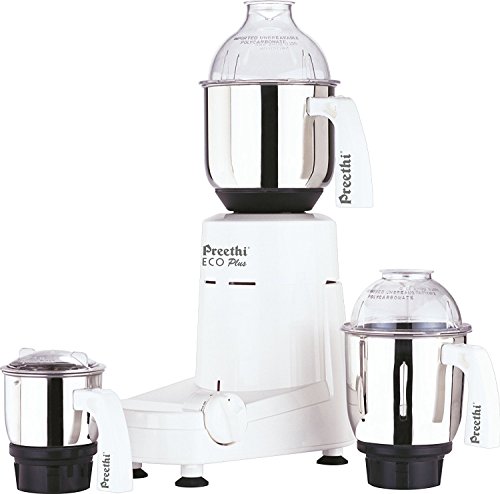
Preethi Eco Plus Mixer Grinder, 110-Volt — Best for Spices, Pastes and Small Batches
This pick earns the badge Best for Spices, Pastes and Small Batches in our best blenders for grinding line-up. It suits buyers whose brief matches that badge closely, and it is included because its verified design — not its marketing — fits the job this article is about. Read the strengths and trade-offs together: every machine here gives something up, and the honest question is whether what it gives up is something your kitchen will ever miss.
Strengths
- Mixer-grinder format is purpose-built for dry spices and pastes
- Small jars excel at the small batches blenders struggle with
- 110-volt version is made for USA and Canada use
Trade-offs
- Not a full-size smoothie blender; jar sizes are modest
- Different workflow from a countertop blender takes adjustment
- Check jar configuration on the listing before ordering
| Specification | Verified detail |
|---|---|
| Format | Mixer grinder, 110-volt for USA/Canada (per Amazon title) |
In daily use, the Preethi Eco Plus Mixer Grinder, 110-Volt makes its case through consistency rather than novelty. It handles the core work of blenders for grinding — the work described in the buying guide below — with the control its specification promises, and its limitations show up exactly where the trade-offs above say they will, not as surprises a month later. That predictability is what a recommendation should buy you: a machine whose good days and bad days you can picture before it arrives, matched against the meals and drinks your household actually makes.
Ownership is the second half of the story. Cleaning follows the pattern set out in this guide — deal with residue promptly, treat coatings and seals as the manufacturer directs after the kind of work blenders for grinding involves, and the machine stays pleasant for years. Accessories and replacement containers are worth checking on the listing if your household is hard on equipment, because a popular, well-supported model is easier to keep in service than an obscure one, however strong its first impression.
Judged specifically on blenders for grinding, the detail that matters most is this: format — Mixer grinder, 110-volt for USA/Canada (per Amazon title). That single verified fact shapes how the Preethi Eco Plus Mixer Grinder, 110-Volt behaves on the work this article covers, and it is the reason this model holds the Best for Spices, Pastes and Small Batches badge while other strong machines in the line-up take different badges. Its second strength underlines the point: small jars excel at the small batches blenders struggle with. Buyers who care about that combination will feel the benefit in the first week; buyers who do not should be honest with themselves and look at the neighbouring picks, because paying for a badge your kitchen never uses is the quietest waste in this whole category.
Before you order, run three quick checks against your own kitchen. First, the honest limitation: not a full-size smoothie blender; jar sizes are modest — decide whether that touches your routine at all. Second, the physical fit for blenders for grinding: measure the counter or cupboard space this format needs, including room to open, lift or pull out whatever moves during use. Third, the household fit: if someone else will run this machine as often as you will, walk them through its controls in your head and ask whether the routine still sounds simple. A pick that passes all three checks on paper almost always pleases in person, and a pick that fails one usually annoys out of proportion to the failure.
Best for: buyers who want best for spices, pastes and small batches performance for blenders for grinding. Not suited for: buyers whose main brief is a different pick’s badge in this guide, or whose kitchen cannot accommodate this model’s size and format.
Check on Amazon — check the current price on Amazon for the Preethi Eco Plus Mixer Grinder, 110-Volt.

Ninja Kitchen System Pro BL770, 1500W — Best Value System
This pick earns the badge Best Value System in our best blenders for grinding line-up. It suits buyers whose brief matches that badge closely, and it is included because its verified design — not its marketing — fits the job this article is about. Read the strengths and trade-offs together: every machine here gives something up, and the honest question is whether what it gives up is something your kitchen will ever miss.
Strengths
- Blender plus processor bowl covers chopping and dough in one system
- Two to-go cups make weekday single servings simple
- Strong value as a multi-appliance replacement
Trade-offs
- Many parts to wash and store after a full cooking session
- Processor bowl is not a substitute for a dedicated food processor on fine work
- Loud under hard frozen loads
| Specification | Verified detail |
|---|---|
| Power | 1500W |
| Pitcher | 72 oz |
| Processor bowl | 8-cup |
| Cups | (2) 16-oz cups |
In daily use, the Ninja Kitchen System Pro BL770, 1500W makes its case through consistency rather than novelty. It handles the core work of blenders for grinding — the work described in the buying guide below — with the control its specification promises, and its limitations show up exactly where the trade-offs above say they will, not as surprises a month later. That predictability is what a recommendation should buy you: a machine whose good days and bad days you can picture before it arrives, matched against the meals and drinks your household actually makes.
Ownership is the second half of the story. Cleaning follows the pattern set out in this guide — deal with residue promptly, treat coatings and seals as the manufacturer directs after the kind of work blenders for grinding involves, and the machine stays pleasant for years. Accessories and replacement containers are worth checking on the listing if your household is hard on equipment, because a popular, well-supported model is easier to keep in service than an obscure one, however strong its first impression.
Judged specifically on blenders for grinding, the detail that matters most is this: power — 1500W. That single verified fact shapes how the Ninja Kitchen System Pro BL770, 1500W behaves on the work this article covers, and it is the reason this model holds the Best Value System badge while other strong machines in the line-up take different badges. Its second strength underlines the point: two to-go cups make weekday single servings simple. Buyers who care about that combination will feel the benefit in the first week; buyers who do not should be honest with themselves and look at the neighbouring picks, because paying for a badge your kitchen never uses is the quietest waste in this whole category.
Before you order, run three quick checks against your own kitchen. First, the honest limitation: many parts to wash and store after a full cooking session — decide whether that touches your routine at all. Second, the physical fit for blenders for grinding: measure the counter or cupboard space this format needs, including room to open, lift or pull out whatever moves during use. Third, the household fit: if someone else will run this machine as often as you will, walk them through its controls in your head and ask whether the routine still sounds simple. A pick that passes all three checks on paper almost always pleases in person, and a pick that fails one usually annoys out of proportion to the failure.
Best for: buyers who want best value system performance for blenders for grinding. Not suited for: buyers whose main brief is a different pick’s badge in this guide, or whose kitchen cannot accommodate this model’s size and format.
Check on Amazon — check the current price on Amazon for the Ninja Kitchen System Pro BL770, 1500W.

CRANDDI K85 Commercial Blender, 1500W, 80 oz — Best Commercial Grinding Power
This pick earns the badge Best Commercial Grinding Power in our best blenders for grinding line-up. It suits buyers whose brief matches that badge closely, and it is included because its verified design — not its marketing — fits the job this article is about. Read the strengths and trade-offs together: every machine here gives something up, and the honest question is whether what it gives up is something your kitchen will ever miss.
Strengths
- Soundproof cover makes high-power blending far more neighbour-friendly
- Tamper included for thick, low-liquid loads
- 80 oz container suits cafe-style batch work at home
Trade-offs
- Commercial size is bulky on a home counter
- Cover adds a step to quick blends
- Overkill if you only make one small smoothie a day
| Specification | Verified detail |
|---|---|
| Container | 80 oz |
| Power | 1500W |
| Extras | Tamper and removable soundproof cover |
| Stated uses | Crushing ice, chopping, grinding, blending (per Amazon title) |
In daily use, the CRANDDI K85 Commercial Blender, 1500W, 80 oz makes its case through consistency rather than novelty. It handles the core work of blenders for grinding — the work described in the buying guide below — with the control its specification promises, and its limitations show up exactly where the trade-offs above say they will, not as surprises a month later. That predictability is what a recommendation should buy you: a machine whose good days and bad days you can picture before it arrives, matched against the meals and drinks your household actually makes.
Ownership is the second half of the story. Cleaning follows the pattern set out in this guide — deal with residue promptly, treat coatings and seals as the manufacturer directs after the kind of work blenders for grinding involves, and the machine stays pleasant for years. Accessories and replacement containers are worth checking on the listing if your household is hard on equipment, because a popular, well-supported model is easier to keep in service than an obscure one, however strong its first impression.
Judged specifically on blenders for grinding, the detail that matters most is this: container — 80 oz. That single verified fact shapes how the CRANDDI K85 Commercial Blender, 1500W, 80 oz behaves on the work this article covers, and it is the reason this model holds the Best Commercial Grinding Power badge while other strong machines in the line-up take different badges. Its second strength underlines the point: tamper included for thick, low-liquid loads. Buyers who care about that combination will feel the benefit in the first week; buyers who do not should be honest with themselves and look at the neighbouring picks, because paying for a badge your kitchen never uses is the quietest waste in this whole category.
Before you order, run three quick checks against your own kitchen. First, the honest limitation: commercial size is bulky on a home counter — decide whether that touches your routine at all. Second, the physical fit for blenders for grinding: measure the counter or cupboard space this format needs, including room to open, lift or pull out whatever moves during use. Third, the household fit: if someone else will run this machine as often as you will, walk them through its controls in your head and ask whether the routine still sounds simple. A pick that passes all three checks on paper almost always pleases in person, and a pick that fails one usually annoys out of proportion to the failure.
Best for: buyers who want best commercial grinding power performance for blenders for grinding. Not suited for: buyers whose main brief is a different pick’s badge in this guide, or whose kitchen cannot accommodate this model’s size and format.
Check on Amazon — check the current price on Amazon for the CRANDDI K85 Commercial Blender, 1500W, 80 oz.
Comparison Table
| Pick | Badge | Key spec | Best for |
|---|---|---|---|
| Vitamix 5200 Professional-Grade Blender, 64 oz | Best Overall | Container: 64 oz | Best Overall |
| Blendtec Total Blender Classic with FourSide Jar | Best for Dry Grinding Control | Jar: FourSide jar (75 oz* marking per Amazon title) | Best for Dry Grinding Control |
| AMPOIA 2000W Blender with 28 oz Grinder Cup | Best with a Dedicated Grinder Cup | Pitcher: 70 oz | Best with a Dedicated Grinder Cup |
| Preethi Eco Plus Mixer Grinder, 110-Volt | Best for Spices, Pastes and Small Batches | Format: Mixer grinder, 110-volt for USA/Canada (per Amazon title) | Best for Spices, Pastes and Small Batches |
| Ninja Kitchen System Pro BL770, 1500W | Best Value System | Power: 1500W | Best Value System |
| CRANDDI K85 Commercial Blender, 1500W, 80 oz | Best Commercial Grinding Power | Container: 80 oz | Best Commercial Grinding Power |
Use the table to shortlist, then read the full reviews before you decide: the badge tells you the brief, the key spec tells you the format, and the review tells you the trade-offs that a table cannot carry. Every model named here is one we would point a friend to for its specific badge — the choice between them is about fit for blenders for grinding, not about finding a single winner for every kitchen.
How to Choose the Best Blenders for Grinding: Small Loads, Short Bursts, Dry Jars
The physics of dry grinding rewards smallness. A cup or small jar keeps peppercorns, cumin or coffee beans bouncing through the blade path instead of settling in a dead layer. If you grind often and in small amounts, prioritise a system with a grinder cup or small jars — the AMPOIA and the Preethi in this guide exist for exactly that reason — over a famous pitcher blender with no small-container option.
Speed control is the second filter. Look for pulse plus a genuine low speed, so you can crack, shake and then powder in stages. Single-speed or program-only machines force you to work in crude on-off bursts and give uneven results: dust at the bottom, whole seeds at the top. Ten-speed and variable-dial machines earned their places here on control alone.
Heat is the hidden enemy. Friction in a dry load rises fast, and heat drives aroma out of spices and coffee and turns nuts toward butter. Choose a machine you can run in short bursts with rests, keep batches modest, and start with room-temperature, fully dry ingredients. If a jar feels warm, stop — the batch is telling you it has had enough.
What a Blender Can and Cannot Grind Well
In the can column: whole spices, dried chillies, flax and sesame, oats and rice for small flour batches, nuts for meal (stopping before butter), sugar for caster and icing textures, and coarse coffee for cold brew and cafetera-style brewing. These jobs suit the impact-and-pulse method and the picks above handle them with the technique in the how-to section.
In the cannot column: espresso-fine, uniform coffee (you need burrs for particle consistency), large flour milling, wet pastes in a dry-only cup, and anything rock-hard in quantity. A blender asked to do those jobs gives uneven results and takes real wear. Being honest about this boundary is why a mixer grinder and a dedicated grinder cup both appear here — format, not force, solves most home grinding.
Container care belongs in this decision too. Dry grinding micro-scratches plastic jars over time and strong spices perfume them for days. A separate small cup or jar for grinding keeps your smoothie pitcher clear, unscarred and free of last week’s garam masala — a practical reason to favour systems with more than one container.
Grinding Noise, Dust and Cleanup: The Unglamorous Truths
Dry grinding is loud and dusty. Lids must be held or locked exactly as the maker directs, because a vibrating dry load tests seals that a smoothie never does, and a cloud of chilli dust escaping at face height is a genuinely miserable experience. Grind pungent or hot ingredients last in a session, open the lid away from your face, and let dust settle a few seconds before you look in.
Cleanup is mercifully dry too: brush out powder, wipe with a dry or barely damp cloth, and only wash when changing ingredient families. Water left in a jar ruins the next dry batch, so if you do wash a grinding cup, dry it completely — a few minutes of air and a clean towel — before the next load goes in.
How to Use a Blender for Grinding: The Pulse, Shake and Rest Method
This method works on every pick in this guide and protects both the batch and the machine.
- Start bone dry: jar, blades and ingredients. Any moisture turns powder to paste and coats the walls instead of grinding.
- Load small — a modest handful to a shallow layer. If you cannot see the blades before you start, you have loaded too much for an even grind.
- Pulse in short bursts of a few seconds, not one long run. Between bursts, stop fully and let the load settle back onto the blades.
- Shake or tilt the sealed container between bursts to redistribute whole pieces from the top back into the blade path. This one habit fixes most uneven grinds.
- Rest the motor if the jar warms. Friction heat harms aroma and texture; thirty seconds of patience beats a scorched batch of spices.
- Check texture by touch, not by time. Spices should feel like sand or powder with no whole seeds; nut meal should be stopped while it is still dry and loose.
- Empty promptly into a sealed jar, brush the cup clean, and store ground spices away from heat and light to hold their aroma.
Common Buying Mistakes
Grinding a big load in a big pitcher. Volume is the enemy of evenness. Small loads in small containers grind finer, faster and with less heat.
Running one long continuous blast. Heat builds, nuts paste, spices lose aroma and motors strain. Pulse, shake and rest instead.
Grinding in a damp jar. Even a little water turns powder into wall plaster. Dry everything, every time.
Expecting espresso coffee from a blender. Blade grinding is uneven by nature. Enjoy it for coarse brews and read the coffee-specific guide in this cluster for the full picture.
Using the smoothie pitcher for chillies. Strong spices scratch and perfume plastic. Keep a separate cup or jar for pungent dry work.
Final Recommendation
If you want the shortest possible shortlist, start with these three and read their full reviews above: Vitamix 5200 Professional-Grade Blender, 64 oz (Best Overall), Blendtec Total Blender Classic with FourSide Jar (Best for Dry Grinding Control), AMPOIA 2000W Blender with 28 oz Grinder Cup (Best with a Dedicated Grinder Cup). One of those three fits the great majority of kitchens shopping this brief; the remaining picks exist for the specific needs their badges name.
For most homes, the Vitamix 5200 is the grinding-capable blender to build around: control, container ecosystem and sustained build. The Blendtec Total is the dry-control specialist, the AMPOIA is the pick if a dedicated grinder cup matters most, and the Preethi Eco Plus is the right tool for spice-and-paste households. The Ninja BL770 covers grinding as part of a value system, and the CRANDDI K85 is the commercial-power option for heavy, repeated work.
Match the format to your real grinding list, keep loads small and dry, and pulse rather than blast. Related guides in this cluster go deeper on the special cases: Best Blenders For Grinding Coffee for beans specifically, Best Blenders For Grinding Bones for the cooked-bone brief and its hard limits, Best Blenders For Smoothies for the wet side of the same machines, and Best Blenders for the full category.
Frequently Asked Questions
Can a blender really grind spices?
Yes — whole spices are one of the best blender grinding jobs, especially in a small cup or grinder jar with pulsing and shaking. Small batches come out fresher and stronger than pre-ground spices that have sat in a cupboard.
How fine can a blender grind?
Fine enough for spice powders, seed meals and small flour batches with a slightly rustic texture. It will not match a burr grinder for coffee uniformity or a mill for silky flour, and the reviews above are honest about that ceiling.
Why does my ground material clump or paste?
Usually moisture, overload or one long hot run. Dry the jar, halve the load, pulse in short bursts and rest between them. Nuts paste fastest, so stop nut meal while it still looks dry.
Do I need a special dry container?
Not strictly, but it helps a lot. A dedicated grinder cup or small jar keeps loads on the blades, protects your main pitcher from scratches and spice odours, and is why two picks in this guide are built around one.
Can I grind coffee beans in these blenders?
For coarse and medium brews — cold brew, French press, pour-over with patience on consistency — yes. For espresso, no blade device gives the uniform fine grind espresso needs; use a burr grinder for that job.
How do I clean a jar after grinding?
Brush out the powder, wipe dry, and wash only when switching ingredient families. If you wash it, dry it completely before the next dry batch, or the powder will clump on contact.

