Disclosure: airfryerkitchensupply.com is reader-supported. When you buy through links on our site, we may earn an affiliate commission at no extra cost to you.
Where to buy
Every pick below is sold on Amazon — use these links to check price on Amazon for each model: KitchenAid K400 Variable Speed Blender, Ninja Professional Blender 2.0 BR201AMZ, Vitamix Propel Series 510, nutribullet SmartSense Blender Combo NBF50700, Breville Fresh & Furious BBL620, Hamilton Beach Wave Crusher 54221.
Finding the best blenders for frappuccino is really about one thing: matching the machine to coffee, milk and ice blended to a smooth, sippable frozen consistency. A blender that breezes through soft fruit can stall, overheat or leave grit when the load turns dense and frozen, and a competition-grade crusher can be miserable overkill for a single morning serving. This guide sorts the verified options by the jobs they genuinely do best, so the machine you bring home fits the way you actually blend.
We built this shortlist only from models whose listings we could verify directly, and we judged them on the things that decide daily satisfaction with frappuccino-style frozen coffee drinks: how the jar circulates a stubborn load, whether the controls help or fight you, how realistic the cleaning routine is, and whether the capacity matches the servings you make. Wattage headlines are the least interesting part of that story, which is why each review below explains who a pick suits and — just as honestly — who should skip it.
In this guide
Quick Picks
Best Overall — KitchenAid K400 Variable Speed Blender, 56 oz: The K400 is the design-conscious pick that still blends like it means it. Check price on Amazon.
Best Crush Program — Ninja Professional Blender 2.0 BR201AMZ, 1200W, 72 oz: The Blender 2.0 BR201AMZ is Ninja’s updated take on its classic professional pitcher blender: 1200W, four speeds and an Auto-iQ Crush program tuned for smoothies and frozen drinks. Check price on Amazon.
Best Premium for Two — Vitamix Propel Series 510, 48 oz, Black: The Propel 510 is the right-sized Vitamix for one to three people. Check price on Amazon.
Best Automatic — nutribullet SmartSense Blender Combo NBF50700, 1400W: SmartSense is nutribullet’s flagship idea: load the jar, press one button, and the machine senses the load and adjusts speed, time and function itself. Check price on Amazon.
Best Torque for Thick Blends — Breville Fresh & Furious BBL620, Silver: Breville’s Fresh & Furious applies the brand’s usual polish to the everyday blender: a high-torque motor, multiple speeds, an auto-clean function and the kind of control layout that makes sense at 7 a.m. Check price on Amazon.
Best Budget — Hamilton Beach Wave Crusher 54221, 700W, 40 oz glass jar: The Wave Crusher pairs the same sensible 700W, 40 oz glass formula with Ice Sabre blades and fourteen functions. Check price on Amazon.
How These Picks Were Chosen
We started from the full field of countertop blenders, personal blenders and frozen-drink machines sold on Amazon, then verified each candidate model against its live listing before it could appear here — name, configuration and headline specifications all had to match. Models we could not verify were excluded rather than guessed at, and anything with a safety recall attached to the line was removed from consideration entirely.
From that verified field we selected for frappuccino-style frozen coffee drinks specifically. That meant weighting ice and frozen-load behaviour, jar circulation, and control design more heavily than raw speed counts or accessory lists. We deliberately kept one honest budget pick and one specialist pick in the mix, because the right answer for a daily heavy user and the right answer for an occasional user are rarely the same machine — and a guide that pretends otherwise is not helping you choose.
Finally, we checked each pick for a realistic ownership story: parts that can be cleaned without heroics, jars sized to real servings, and product lines with replacement cups, lids and seals available through normal channels. A blender is a five-to-ten-year appliance for most households, and the shortlist reflects that horizon.
The 6 Best blenders for frappuccino

KitchenAid K400 Variable Speed Blender, 56 oz — Best Overall
The K400 is the design-conscious pick that still blends like it means it. A variable-speed dial, a 56 oz jar and KitchenAid’s asymmetric blade design give it a smoother, quieter-feeling blend than the stacked-blade Ninjas, and it looks like an appliance you chose, not one you tolerated.
For daily smoothies and frozen coffee drinks, the K400’s strength is consistency: the jar and blade pull soft and frozen ingredients into an even texture without the violent first seconds of a crushing pitcher. Households that blend every morning tend to value that calm competence.
For frappuccino-style frozen coffee drinks specifically, the details line up well: the configuration above gives it the circulation and control this job demands, and its strengths below read like a checklist for coffee, milk and ice blended to a smooth, sippable frozen consistency. It is not a universal answer — its trade-offs are real, and they are listed just as plainly — but within its lane it is a machine we can recommend without caveats doing heavy lifting.
Strengths
- Refined variable-speed control and smooth finished texture
- 56 oz jar is a practical everyday size
- Countertop design and colours owners are happy to leave out
Trade-offs
- Not the ice-crushing brute of this list — work in stages with very hard loads
- No processor bowl or extra cups in this configuration
- Mid-to-premium tier (check price on Amazon)
| Specification | Detail |
|---|---|
| Jar | 56 oz |
| Controls | variable speed dial |
| Preset recipe programs per K400 line | ice crush, icy drinks, smoothie (see tamper variant listing) |
Best for: Daily smoothie and frozen-coffee households that care about design and texture / Not suited for: Party-scale frozen drink makers who need 72 oz plus.
Check on Amazon — check price on Amazon for the current listing.

Ninja Professional Blender 2.0 BR201AMZ, 1200W, 72 oz — Best Crush Program
The Blender 2.0 BR201AMZ is Ninja’s updated take on its classic professional pitcher blender: 1200W, four speeds and an Auto-iQ Crush program tuned for smoothies and frozen drinks. It sits neatly between the manual BL610 and the preset-heavier BN701.
For coffee-shop-style frozen drinks the Crush program is the headline — a timed pattern that attacks ice early, while it is still in big pieces, then smooths out. Four manual speeds remain for everything the program does not fit, which keeps the machine flexible beyond its specialty.
For frappuccino-style frozen coffee drinks specifically, the details line up well: the configuration above gives it the circulation and control this job demands, and its strengths below read like a checklist for coffee, milk and ice blended to a smooth, sippable frozen consistency. It is not a universal answer — its trade-offs are real, and they are listed just as plainly — but within its lane it is a machine we can recommend without caveats doing heavy lifting.
Strengths
- Auto-iQ Crush program aimed squarely at frozen drinks
- 1200W and a full 72 oz pitcher
- Four manual speeds keep it useful beyond the preset
Trade-offs
- No personal cups or processor bowl included
- Newer model line — fewer long-term owner reports than the BL610
- Mid-range tier (check price on Amazon)
| Specification | Detail |
|---|---|
| Power | 1200W (per listing title) |
| Pitcher | 72 oz |
| Auto-iQ Crush program | Auto-iQ Crush program |
| 4 speeds, dishwasher-safe parts | 4 speeds, dishwasher-safe parts |
Best for: Frozen coffee and smoothie drinkers who want a dedicated crush program / Not suited for: Households needing single-serve cups in the box.
Check on Amazon — check price on Amazon for the current listing.

Vitamix Propel Series 510, 48 oz, Black — Best Premium for Two
The Propel 510 is the right-sized Vitamix for one to three people. Its 48 oz container is large enough for a shared smoothie batch or a soup base, small enough that a single serving still forms a proper vortex instead of splashing up the walls of an oversized jar.
Three programs cover the everyday jobs — smoothies and frozen-style blends included — and the self-cleaning cycle means the jar rinses itself with warm water and a drop of soap. For smaller households that found the 64 oz models physically imposing, this is the same blending character in a calmer footprint.
For frappuccino-style frozen coffee drinks specifically, the details line up well: the configuration above gives it the circulation and control this job demands, and its strengths below read like a checklist for coffee, milk and ice blended to a smooth, sippable frozen consistency. It is not a universal answer — its trade-offs are real, and they are listed just as plainly — but within its lane it is a machine we can recommend without caveats doing heavy lifting.
Strengths
- 48 oz jar is the sweet spot for one to three servings
- Three programs plus self-cleaning keep weekday use effortless
- Full Vitamix variable-speed control for thick loads
Trade-offs
- 48 oz fills up fast when blending for four or more
- Fewer programs than the Propel 750
- Still a premium-tier purchase (check price on Amazon)
| Specification | Detail |
|---|---|
| Container | 48 oz |
| Programs | 3 programs |
| Controls | variable speed plus pulse, self-cleaning |
Best for: One to three person households wanting Vitamix power in a right-sized jar / Not suited for: Large families who routinely blend full 64 oz batches.
Check on Amazon — check price on Amazon for the current listing.

nutribullet SmartSense Blender Combo NBF50700, 1400W — Best Automatic
SmartSense is nutribullet’s flagship idea: load the jar, press one button, and the machine senses the load and adjusts speed, time and function itself. At 1400 watts it is also the brand’s most powerful blender, so the automation is backed by genuine force.
For mixed frozen produce — where one load is soft berries and the next is frozen mango and kale — that sensing cycle removes the guesswork that makes beginners under-blend one batch and over-blend the next. It is the most forgiving machine here for households still learning their blender.
For frappuccino-style frozen coffee drinks specifically, the details line up well: the configuration above gives it the circulation and control this job demands, and its strengths below read like a checklist for coffee, milk and ice blended to a smooth, sippable frozen consistency. It is not a universal answer — its trade-offs are real, and they are listed just as plainly — but within its lane it is a machine we can recommend without caveats doing heavy lifting.
Strengths
- Smart auto cycle adapts to the load automatically
- 1400W — nutribullet’s most powerful configuration
- Combo format covers pitcher and personal use
Trade-offs
- Automation means less manual fine control
- Flagship tier within the nutribullet line (check price on Amazon)
- Sensing works best with sensible load sizes
| Specification | Detail |
|---|---|
| Power | 1400W (per listing title) |
| Smart auto cycle adjusts speed, time and function | Smart auto cycle adjusts speed, time and function |
Best for: Households that want the machine to decide the cycle / Not suited for: Control-focused users who prefer a manual dial.
Check on Amazon — check price on Amazon for the current listing.
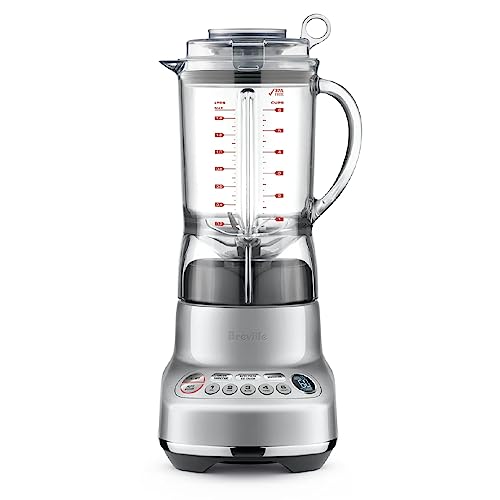
Breville Fresh & Furious BBL620, Silver — Best Torque for Thick Blends
Breville’s Fresh & Furious applies the brand’s usual polish to the everyday blender: a high-torque motor, multiple speeds, an auto-clean function and the kind of control layout that makes sense at 7 a.m. without reading a manual.
Torque is the underrated spec for frozen coffee and smoothie work — it is what keeps blades turning through a thickening load instead of stalling or bouncing. Paired with Breville’s jar design, the Fresh & Furious produces a notably even texture for a mid-premium machine.
For frappuccino-style frozen coffee drinks specifically, the details line up well: the configuration above gives it the circulation and control this job demands, and its strengths below read like a checklist for coffee, milk and ice blended to a smooth, sippable frozen consistency. It is not a universal answer — its trade-offs are real, and they are listed just as plainly — but within its lane it is a machine we can recommend without caveats doing heavy lifting.
Strengths
- High-torque motor keeps thick loads turning
- Auto-clean function simplifies the daily rinse
- Breville fit, finish and control clarity
Trade-offs
- Smaller ecosystem of extra jars than Ninja or nutribullet
- Premium-leaning tier (check price on Amazon)
- Not the maximum-capacity option here
| Specification | Detail |
|---|---|
| Model | BBL620SIL |
| High-torque motor (per listing title) | High-torque motor (per listing title) |
| Multiple speed settings; auto-clean function | Multiple speed settings; auto-clean function |
Best for: Daily frozen coffee and smoothie makers who value torque and polish / Not suited for: Party-batch households needing 72 oz plus.
Check on Amazon — check price on Amazon for the current listing.

Hamilton Beach Wave Crusher 54221, 700W, 40 oz glass jar — Best Budget
The Wave Crusher pairs the same sensible 700W, 40 oz glass formula with Ice Sabre blades and fourteen functions. It is aimed at smoothie households that want a glass jar and a few more one-touch options than the Power Elite offers.
In practice the two Hamilton Beach models are siblings; the Wave Crusher’s blade design and function count make it the slightly better frozen-drink bet of the pair, provided you still respect the tier: liquid first, frozen ingredients in stages, and realistic batch sizes.
For frappuccino-style frozen coffee drinks specifically, the details line up well: the configuration above gives it the circulation and control this job demands, and its strengths below read like a checklist for coffee, milk and ice blended to a smooth, sippable frozen consistency. It is not a universal answer — its trade-offs are real, and they are listed just as plainly — but within its lane it is a machine we can recommend without caveats doing heavy lifting.
Strengths
- Ice Sabre blades designed for frozen duty
- Glass jar, 14 functions, budget tier
- Compact footprint for small kitchens
Trade-offs
- Same 700W ceiling — stage hard loads
- 40 oz limits batch size
- Not a Vitamix-class texture on fibrous greens
| Specification | Detail |
|---|---|
| Power | 700W (per listing title) |
| Jar | 40 oz glass |
| 14 functions; Ice Sabre blades | 14 functions; Ice Sabre blades |
Best for: Small households wanting a glass-jar smoothie blender on a budget / Not suited for: High-volume or very hard frozen blending.
Check on Amazon — check price on Amazon for the current listing.
Comparison Table
| Pick | Badge | Key spec | Best for |
|---|---|---|---|
| KitchenAid K400 Variable Speed Blender, 56 oz | Best Overall | Jar: 56 oz | Daily smoothie and frozen-coffee households that care about design and texture |
| Ninja Professional Blender 2.0 BR201AMZ, 1200W, 72 oz | Best Crush Program | Power: 1200W (per listing title) | Frozen coffee and smoothie drinkers who want a dedicated crush program |
| Vitamix Propel Series 510, 48 oz, Black | Best Premium for Two | Container: 48 oz | One to three person households wanting Vitamix power in a right-sized jar |
| nutribullet SmartSense Blender Combo NBF50700, 1400W | Best Automatic | Power: 1400W (per listing title) | Households that want the machine to decide the cycle |
| Breville Fresh & Furious BBL620, Silver | Best Torque for Thick Blends | Model: BBL620SIL | Daily frozen coffee and smoothie makers who value torque and polish |
| Hamilton Beach Wave Crusher 54221, 700W, 40 oz glass jar | Best Budget | Power: 700W (per listing title) | Small households wanting a glass-jar smoothie blender on a budget |
How to Choose the Right Blender for Frappuccino-style frozen coffee drinks
Start with the load, not the motor
The load decides everything. Coffee, milk and ice blended to a smooth, sippable frozen consistency punishes weak circulation far more than it punishes modest wattage, so judge machines by jar shape, blade design and control range before you compare power figures. A well-shaped jar on a mid-power base will out-blend a badly shaped jar on a stronger one, because blending is circulation first and cutting second.
Jar size should match your real serving, not your biggest party
Buy for the batch you make four times a week, not the one you make twice a year. Oversized jars blend small servings badly — the load spreads thin and escapes the blades — while undersized jars force double batches for family servings. The picks here span personal cups through 76 oz jars precisely so you can match the vessel to your routine honestly.
Controls: presets, dials, or both?
Presets earn their place when a cycle needs rhythm — pulsing, ramping and resting — as frozen loads do. Dials earn theirs when you want to stop exactly at a texture. Several picks here offer both, and that combination is the safest choice for households whose frappuccino-style frozen coffee drinks routine varies from day to day. Pure single-button machines are fine only if your routine never varies.
Budget tiers, in plain terms
Without printing prices that change constantly, the tiers behave like this: budget picks handle soft and lightly frozen work if you stage the load; mid-range picks add real frozen capacity, better jars and presets; premium picks add circulation quality, quieter operation, finer finished texture and longer working life. Decide which tier your frequency justifies — daily users almost always belong a tier higher than they first assume — then check price on Amazon for the specific pick that fits.
Cleaning and parts are part of the purchase
Every day you own the machine, you will clean it. Self-cleaning cycles, dishwasher-safe jars and available replacement seals are not luxuries; they are the difference between a blender that lives on the counter and one that migrates to a cupboard and dies there. Weight these features as heavily as blending performance when you choose.
How to Blend a Frappuccino-Style Drink That Stays Smooth to the Last Sip
Step 1. Brew double-strength coffee or pull espresso, then chill it fully — warm coffee is the number one cause of watery results.
Step 2. Add milk, sweetener and any syrups to the jar first, then the chilled coffee, so the liquid base is complete before ice arrives.
Step 3. Add ice last, roughly a glassful per serving, and start with three firm pulses to crack it into blendable pieces.
Step 4. Run the smoothie or crush cycle, or blend on high, until the pitch of the motor evens out and the surface looks uniformly creamy.
Step 5. Check consistency with a spoon: it should ribbon, not slump. Too thin means more ice; too thick means a splash of milk and five more seconds.
Step 6. Pour at once into a chilled glass and drink promptly — the emulsion is at its best in the first few minutes.
Two habits make every step above work better. First, respect the first ten seconds: most blending failures are decided while the load is either folding into a vortex or digging an air pocket, and a calm low-speed start prevents the second outcome. Second, clean immediately — the thirty seconds a self-clean cycle takes right after use replaces ten minutes of soaking and scraping later, and it keeps flavours from one job out of the next.
Before You Buy: A Short Checklist for Frappuccino-style frozen coffee drinks
Run through this checklist with your actual kitchen and routine in mind before you commit to any pick above. It takes two minutes, and it prevents the specific disappointments that most often follow a blender purchase — nearly all of which are about fit, not about blending power.
Measure the space first. Note the height under your cabinets, the depth of the counter where the machine will live, and whether the assembled jar clears everything with room to lift the lid. Write the numbers down and compare them with the assembled dimensions on the listing, not the box dimensions.
Count your real servings. Decide the batch you will make most often for your work on frappuccino-style frozen coffee drinks, in ounces, and match the jar or cup to that number. If two batch sizes dominate your life — a solo weekday serving and a shared weekend one — favour a combo pick with both vessels included rather than compromising on one jar.
Decide your control style honestly. If you will blend while doing three other things, presets and automatic cycles will serve you better than the finest manual dial. If you enjoy steering a blend to an exact texture, the opposite is true. Neither preference is wrong; buying against your own preference is what creates regret.
Plan where the parts will live. List every vessel, lid and attachment the pick includes, and name the cupboard or drawer each one will occupy. If you cannot name the homes, choose the simpler pick. Versatility you cannot store becomes clutter, and clutter becomes a machine you stop using.
Check the cleaning story. Confirm the jar is dishwasher safe or has a self-cleaning cycle, that the seal can be removed for a weekly wash, and that you own a brush that reaches under the blades. The thirty seconds this check takes predicts your satisfaction six months from now better than any performance figure.
Confirm the exact configuration on the listing. Model lines reuse names across bundles with different jars, cups and programs. Before ordering, match the configuration in the review above — jar size, included cups, program list — against the live listing, and check price on Amazon there, since bundles and listings change over time.
Think about the second user. If anyone else in the household will run this machine, ask whether they would find the controls obvious at a glance. A pick the whole household can operate gets used several times more often than a pick only its buyer understands, and use is what repays the purchase.
What Daily Use Teaches You About Frappuccino-style frozen coffee drinks
A practical detail that separates satisfying machines from frustrating ones is how the jar behaves at low speed. Frappuccino-style frozen coffee drinks loads rarely start out moving; they sit in a dense mass while the blades spin underneath. A blender that can crawl — turning slowly enough to fold the mass down without flinging it up the walls — gives the load time to become a vortex. Machines that jump straight to violence tend to dig a hole around the blades and then spin uselessly inside it, which is why the ramp from low to high appears in every how-to section of this guide. When you test a new machine at home, that first ten seconds tells you more about its design than any specification sheet: watch whether the surface of the load starts to move as one body, and listen for the motor note dropping as the blades actually bite. Those two signals predict your daily experience far better than peak wattage printed on a box.
Blade geometry deserves more attention than it usually gets. Stacked-blade pitchers attack a load at several heights, which is brilliant for ice and frozen fruit but can leave a coarse finish on fibrous material if you stop early. Single-plane blades in a well-shaped jar rely on the vortex to bring everything down to one cutting zone, which rewards patience with a finer texture. Neither design is simply better — they suit different habits. If your frappuccino-style frozen coffee drinks routine is fast, icy and forgiving, stacked blades will make you happy. If you chase silkiness and are willing to run a full cycle, the vortex designs earn their keep. What matters is matching the geometry to the texture you actually drink, because you will notice that texture every single day you own the machine.
Noise is the specification nobody lists honestly and everybody lives with. A blender working hard on frappuccino-style frozen coffee drinks loads will be loud; the differences are in pitch and duration. Machines with sound management, heavier bases and better jar seating take the edge off, and shorter effective cycles help as much as any enclosure — a blender that finishes in forty seconds disturbs a household less than a quieter one that needs two minutes. If you blend early, think about where the machine sits: a corner counter reflects sound, a mat under the base absorbs vibration, and closing the kitchen door matters more than most product features. These small environmental choices are free, and they apply to every pick in this guide equally.
Cleaning is where blender ownership is won or lost over months. Every pick here was chosen partly for a realistic cleaning story: self-cleaning cycles, dishwasher-safe parts, or jars that rinse clean without a brush expedition under the blades. The honest routine is unglamorous — rinse immediately, self-clean with warm water and a drop of soap after sticky or savoury loads, and hand-wash seals weekly so yesterday’s frappuccino-style frozen coffee drinks never flavours tomorrow’s. Blade assemblies that come apart need extra care and extra drying; fixed assemblies need a bottle brush and respect. Decide which routine you will actually follow, because the best blender in this list is still the one that is clean and ready on your counter tomorrow morning.
Think about the total cost of ownership in qualitative terms rather than headline numbers. A machine in a higher tier that you use daily for years costs you less per blend than a budget machine replaced twice — and the budget picks here were chosen because they are the exceptions that hold up for their intended, lighter workloads. Extra cups, spare jars and replacement seals all exist within these product lines, which matters when a household grows into a machine. Availability of parts through the brand’s normal channels is a quiet form of value that only becomes visible the first time a lid cracks, and it is one reason established lines dominate this roundup over anonymous high-wattage newcomers.
Counter space and storage shape satisfaction as much as blending does. Measure three things before you buy: the height of the assembled machine under your cabinets, the footprint with its cord managed, and where the extra vessels will live. Kitchen systems earn their versatility with parts — bowls, cups, lids and blades that need a home. If that home does not exist, a superb system becomes daily clutter, and a simpler pitcher blender would have made you happier. The picks in this guide span that whole spectrum deliberately, from single-jar minimalism to full systems, so the right answer depends on your kitchen’s geography as honestly as on your recipes.
Heat management is a real constraint on hard blending that marketing never mentions. A motor working through frappuccino-style frozen coffee drinks loads converts effort into heat, and thick loads with little liquid give that heat nowhere to go. Sensible machines protect themselves; sensible owners help by working in full cycles with short rests between back-to-back batches, rather than running one endless blend. If a jar of frozen mixture needs three cycles, give it three cycles with thirty seconds of rest, and the texture will actually improve — each rest lets partially blended material settle back onto the blades. This is also why the how-to sections in this guide sequence ingredients the way they do: a load that circulates from the first seconds generates far less heat than one the blades have to excavate.
Jar material shapes daily life more than most buyers expect. Glass is heavy, stable on the counter, resistant to stains and odours, and honest about what is happening inside — but it can break, and a full large glass jar is a genuine lift. Modern Tritan-style plastics are light, tough and increasingly clear, at the cost of eventual clouding if they live in a dishwasher. Stainless and insulated designs hide the load, which some users love and others hate. For frappuccino-style frozen coffee drinks work, where you judge doneness by watching the vortex and the surface texture, visibility is a functional feature, not a cosmetic one, and it is worth weighing alongside capacity when you compare the picks.
Lids and seals are the unglamorous parts that decide whether a blender feels premium after a year. A lid that seals positively keeps a full jar of liquid from redecorating your ceiling when the vortex surges, and a removable centre cap lets you add ingredients — or a tamper — mid-blend. Seals collect residue, so the weekly habit of removing and washing them matters for flavour purity, especially if your machine alternates between savoury and sweet work. When you compare picks, look at the lid design in the listing photos with the same seriousness you give the motor: it is the part your hands will judge every single day.
Serving maths prevents most capacity disappointment. A smoothie serving is typically twelve to sixteen ounces once blended, because frozen fruit and ice lose volume as they liquefy and incorporate air. A 72 oz pitcher therefore serves four generously, not six; a 48 oz jar serves three; a 24 oz personal cup is one large serving, not two small ones. Work backwards from your household’s real headcount at breakfast or your typical guest count, and the right jar size usually chooses itself. Buying one size up for the occasional crowd sounds prudent, but remember the trade: oversized jars circulate small everyday loads poorly, and it is the everyday load you will blend hundreds of times.
Freezing technique upstream of the blender decides half of blending quality. Freeze fruit in a single layer on a tray before bagging it, and the pieces stay separate instead of welding into a single iceberg that no blade geometry can circulate. Portion bags matched to your jar — one bag, one batch — remove guesswork on rushed mornings. Label bags with contents and date, because frozen mango and frozen peach are indistinguishable at 7 a.m. and the difference matters to the recipe. None of this costs money, and all of it makes every pick in this guide perform closer to its best, which is more than can be said for most accessory purchases.
Troubleshooting follows a short decision tree worth memorising. If the load will not circulate, add liquid in splashes and drop the speed before you raise it. If the texture is gritty, blend longer at high speed rather than adding liquid — time breaks down fibre, liquid only dilutes it. If the result is thin, the next batch needs more frozen material or less liquid, in that order. If the motor smells hot, stop, rest the machine, and split the batch. And if a blend tastes faintly of the last job, the seal and lid need a proper wash, not a longer rinse. Ninety percent of blender disappointment resolves somewhere on that tree.
Ownership support separates brands quietly. Established lines keep replacement jars, lids, blade assemblies and seals available for years, publish manuals and cleaning guidance openly, and answer for their drive couplings — the part under the most mechanical stress in the whole machine. When a pick here comes from a long-running line, that history is part of what you are buying, and it is a rational reason to prefer a proven model over a newer one with a bigger wattage claim. Check the listing for the brand’s own store presence and parts language; it tells you how the company expects the machine to be maintained.
Where the blender lives changes how much you use it. A machine stored in a cupboard gets used weekly; a machine living on the counter gets used daily, and frequency is what turns a purchase into a habit that justifies itself. If counter space is the constraint, favour the pick whose footprint and height fit your kitchen permanently over the theoretically better machine that will be exiled to storage. Several picks here are deliberately compact for their class. Measure the space, be honest about the habit, and let those two facts arbitrate between otherwise close contenders.
Finally, think about who else will use the machine. Preset programs are a kindness to teenagers, partners and guests who did not read the manual: one button, a sensible cycle, a good result. Manual dials reward the household’s one enthusiast and quietly frustrate everyone else. Mixed households are exactly why several picks here combine both control styles. The best blender for frappuccino-style frozen coffee drinks in a real home is the one every member of that home can operate confidently, because a machine only one person dares to touch is a machine that sits idle most of the week.
A note on expectations for texture: home blenders, including every pick here, produce excellent results for frappuccino-style frozen coffee drinks when the load is sized and sequenced properly, but texture is a range, not a switch. The difference between a good home result and a great one is usually thirty extra seconds of blending, a splash less liquid, or fruit frozen in smaller pieces — technique variables, not equipment variables. That is encouraging news: it means the machine you choose from this shortlist, used with the method sections above, will get you most of the way to the best result this category can produce, and your skill with it will keep improving for months.
Common Buying Mistakes
Buying on peak wattage alone. Peak figures describe a moment, not a working blend. Jar design, blade geometry and control range decide your daily result far more than the biggest number on the box.
Choosing a jar for the party, not the weekday. The oversized pitcher that impresses at purchase often blends your actual single serving badly. Match the vessel to your routine, and let big-batch days use two batches.
Ignoring the cleaning routine. If the jar is awkward to wash, you will stop using the machine. Self-clean cycles and dishwasher-safe parts are performance features in real life.
Loading frozen ingredients first. Frozen-first loading strands the blades in a solid mass with no liquid to start circulation. Liquid first, frozen last, every time.
Expecting one machine to be best at everything. Specialists exist for a reason. A frozen-drink machine makes bar texture a blender cannot, and a blender does a hundred jobs the specialist cannot. Buy for your dominant use.
Skipping the cabinet measurement. Tall jars and assembled bases collide with real kitchens. Thirty seconds with a tape measure prevents the most common return in this category.
Final Recommendation
If you buy one machine from this list, make it the KitchenAid K400 Variable Speed Blender, 56 oz — it earned the top badge for frappuccino-style frozen coffee drinks because it handles coffee, milk and ice blended to a smooth, sippable frozen consistency with the fewest compromises. If its trade-offs clash with your kitchen, the Ninja Professional Blender 2.0 BR201AMZ, 1200W, 72 oz is the strongest alternative lane, and the budget pick in the Quick Picks is the honest choice for lighter routines. Whichever you choose, check price on Amazon on the live listing before you decide, since listings and configurations change.
Keep exploring the cluster before you buy: Best Blenders For Frappes · Best Blenders For Frozen Drinks And Smoothies · Best Blenders For Frozen Fruit Smoothies · Best Blenders For Food And Smoothies · Best Blenders For Frozen Fruit And Veggies
Frequently Asked Questions
What coffee works best in a frappuccino-style drink?
Strong, chilled coffee. Double-strength brewed coffee or espresso both work; weak coffee disappears under the milk and ice. Chill it first so it does not melt your ice.
Why is my homemade version icier than the cafe one?
Cafes use a base syrup that helps the emulsion and very fine blending. At home, blend longer than feels necessary, use enough liquid, and let the cycle finish — under-blending is the usual cause of coarse ice.
Can I use ice cubes from a tray instead of bought ice?
Yes. Tray cubes are denser and harder, so give them a few pulses first and expect a slightly longer blend. Crushed or smaller cubes blend faster and finer.
How do I make it dairy-free?
Swap in your preferred plant milk and check your syrups. Oat-based options tend to keep the creamiest texture in frozen drinks, and the blending method stays exactly the same.
Can I make a batch for several people?
Yes — scale everything proportionally and stay under the jar’s max fill line. A 72 oz pitcher handles a round for a group; a 40 oz jar is better split into two batches.
What if my blender stalls on the ice?
Stop, let the load settle, add a splash of milk and pulse again. Stalling is a circulation problem: liquid first and ice in two additions fixes nearly every case.


