Disclosure: airfryerkitchensupply.com is reader-supported. When you buy through links on our site, we may earn an affiliate commission at no extra cost to you.
Where to buy
Shopping for the best blenders for dosa batter comes down to verified models and honest trade-offs. Dosa batter is the most demanding everyday job a home blender can be given — thick, heavy, long-running and unforgiving of weak motors — so buying the exact verified model matters. Every linked pick below was confirmed. Use the links in this section, Quick Picks and each review to check price on Amazon and confirm the configuration.
- Preethi Eco Plus Mixer Grinder, 110-Volt for USA/Canada — check price on Amazon
- Vitamix 5200 Professional-Grade Blender, 64 oz, Black — check price on Amazon
- Vitamix Propel Series 750, 64 oz, Black — check price on Amazon
- Vitamix Ascent X5, 48 oz, Brushed Stainless — check price on Amazon
- Blendtec Total Blender Classic, FourSide Jar — check price on Amazon
- Ninja Kitchen System Pro BL770, 1500W, 72 oz + 8-cup processor — check price on Amazon
The best blenders for dosa batter must do something most blenders are never asked to do: grind soaked rice and urad dal into a smooth, pourable batter, in batches big enough to ferment for a family’s week of breakfasts, without overheating the batter or the motor. In South Indian kitchens this job belongs to the wet grinder and the mixer-grinder; outside India, a high-performance blender is the realistic substitute — but only some blenders survive the work, and the difference between a machine that makes silky batter and one that leaves gritty rice fragments is entirely about sustained torque, jar design and heat management.
This guide is honest about the hierarchy. A dedicated mixer-grinder — represented here by a verified Preethi model — remains the most authentic tool for the job. The high-performance blenders that follow are the best substitutes, each assessed on the criteria that matter for batter: how fine the rice grinds, how the thick load circulates, how much you can make per batch, and how the machine handles the long grinding times batter demands compared with a 60-second smoothie.
Technique matters as much as machinery, and this guide covers it fully: soaking times, water discipline, grinding order, resting the motor, and fermenting the finished batter. Buy a pick from this list and follow the how-to, and dosas with proper lace edges and crisp centres are a realistic weekday outcome rather than a restaurant memory.
In this guide
Quick Picks
Six verified machines assessed purely on batter: fineness, batch size, circulation and heat. The mixer-grinder leads on authenticity; the high-performance blenders lead on versatility. Badges match the reviews.
- Preethi Eco Plus Mixer Grinder, 110-Volt for USA/Canada — Best Authentic Choice: the genuine Indian mixer-grinder, wired for North America — the tool this job was invented for. — Check on Amazon
- Vitamix 5200 Professional-Grade Blender, 64 oz, Black — Best Blender for Batter: the strongest blender substitute — tall jar, staged speeds and the torque to grind rice properly. — Check on Amazon
- Vitamix Propel Series 750, 64 oz, Black — Best for Large Batches: a low-profile 64 oz Vitamix whose wide jar suits the biggest family batter batches. — Check on Amazon
- Vitamix Ascent X5, 48 oz, Brushed Stainless — Best Premium Programs: the flagship route: 48 oz of program-rich Vitamix power for couples and small families. — Check on Amazon
- Blendtec Total Blender Classic, FourSide Jar — Best Hands-Free Batter: preprogrammed cycles and a square jar — repeatable batter with less standing over the machine. — Check on Amazon
- Ninja Kitchen System Pro BL770, 1500W, 72 oz + 8-cup processor — Best Value System: a big stacked-blade pitcher plus a processor bowl — the budget route into credible batter and chutneys. — Check on Amazon
How These Picks Were Chosen
Picks were chosen on batter-specific criteria: sustained torque under a thick, heavy load; jar geometry that keeps dense batter folding over the blades; realistic batch capacity for family fermentation; and a design that tolerates grinding times measured in minutes, not seconds. Every model was verified; only confirmed models carry buy links.
We included the one category most blender guides ignore — a genuine Indian mixer-grinder built for this exact job — because honesty about dosa batter demands it. The remaining picks are the blenders with the strongest claim to substitute for one, ranked by how close their batter comes to the real thing.
Heat was a deciding factor. Overheated batter ferments badly and overheated motors cut out mid-batch, so machines were favoured for staged grinding, rest-friendly workflows and jars that let you work in the dal-first, rice-second order that produces the lightest dosas.
The 6 Best Blenders for Dosa Batter
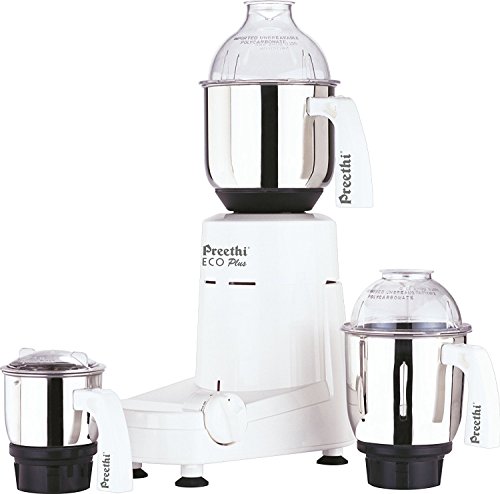
1. Preethi Eco Plus Mixer Grinder, 110-Volt for USA/Canada — Best Authentic Choice
If dosa batter is a weekly staple rather than an occasional project, the honest first recommendation is not a blender at all. The Preethi Eco Plus is a mixer-grinder — the appliance category Indian kitchens actually use for batter — in a 110-volt version made for the USA and Canada. Its jars and grinding action are designed for soaked rice and dal in a way no smoothie blender is, and its chutney jar alone justifies it to anyone who cooks South Indian food regularly.
Key specs
- Voltage: 110V for USA/Canada (Amazon title)
- Type: Mixer grinder (Amazon title)
Strengths
- Purpose-built for batter: fineness and texture are its home ground
- Multiple jars cover batter, chutneys and dry spice grinding in one appliance
- Correct voltage for North American kitchens — no converter gamble
Trade-offs
- A specialist: it will not replace a blender for smoothies and frozen drinks
- Smaller jars mean batter in more batches than a big blender
- Less familiar format for cooks outside the Indian kitchen tradition
The difference shows in the batter itself. A mixer-grinder’s jars keep a thick load in constant contact with the grinding surface, so rice reaches the fine, slightly fluffy consistency that ferments into light, crisp dosas, and urad dal whips into the airy foam that gives the batter its lift. Owners who make batter weekly consistently report that the format, not raw power, is what they had been missing. The trade is versatility: keep a blender for smoothies, or accept the Preethi as a specialist alongside one.
For the diaspora kitchen making batter every week, this is the pick that ends the search. Buy it for the job it was born for.
Best for: weekly batter makers and South Indian home kitchens / Not suited for: anyone wanting one machine for batter and smoothies alike
Check the current price on Amazon

2. Vitamix 5200 Professional-Grade Blender, 64 oz, Black — Best Blender for Batter
Among true blenders, the 5200 is the dosa benchmark. Its tall jar keeps thick batter folding downward, its variable speed lets you start a heavy load gently and finish it fine, and its motor sustains the several-minute grinds that rice demands without the thermal drama of lesser machines. Generations of diaspora cooks have settled on this exact machine for batter, and the reasons are visible in the result: smooth rice, properly aerated dal, and a batter that ferments like it should.
Key specs
- Container: 64 oz (Amazon title)
- Controls: Variable speed, high-speed switch (Amazon title)
- Blades: Stainless steel (Amazon title)
Strengths
- Sustained torque handles long rice grinds without stalling
- Tall jar circulates thick batter better than wide rivals
- Variable speed suits the staged dal-then-rice method
Trade-offs
- Premium price for a job a mixer-grinder does natively
- Long grinds still need motor rests on the largest batches
- Tall jar is a storage commitment in small kitchens
Use it the way experienced owners do: grind urad dal first with minimal cold water until it is pale and fluffy, tip it out, then grind rice in two loads with rests, combining at the end with salt and water to a pouring consistency. The 5200’s reward for that discipline is batter nearly indistinguishable from wet-grinder output — fine enough for crisp, lacy dosas and thick enough for proper idlis from the same batch. No other blender in this guide matches that combination of fineness and batch size.
Best for: households wanting one premium machine for batter and everything else / Not suited for: purists making batter several times a week — see the Preethi
Check the current price on Amazon

3. Vitamix Propel Series 750, 64 oz, Black — Best for Large Batches
The Propel 750 trades the 5200’s tall jar for a low-profile 64 oz container that slides under cabinets, and for batter the wider jar has one clear virtue: capacity per batch for big families fermenting a week’s worth at once. The grinding quality is the same Vitamix class — fine rice, aerated dal — with programs that then earn their keep on the smoothies and soups that fill the rest of the week.
Key specs
- Container: 64 oz low-profile (Amazon title)
- Programs: 4 programs (Amazon title)
- Controls: Variable speed and pulse (Amazon title)
Strengths
- Full 64 oz batches suit large-family fermentation
- Low-profile jar stores under standard cabinets
- Same sustained grinding class as the 5200
Trade-offs
- Wider jar needs fuller loads to circulate thick batter well
- Very small test batches are better made in the 5200’s jar shape
- Programs do not help batter itself — manual control does the work
In practice the 750 asks for one adjustment: keep batches generous. A half-load of rice in the wide jar rides the walls; a proper batch folds and grinds beautifully. Families who fill the jar anyway will notice no compromise at all, and will gain the under-cabinet storage and the programs. It is the family-scale Vitamix answer to batter, chosen by batch size rather than by any difference in the finished dosa.
Best for: large families fermenting big weekly batter batches / Not suited for: small households making a litre at a time
Check the current price on Amazon

4. Vitamix Ascent X5, 48 oz, Brushed Stainless — Best Premium Programs
The Ascent X5 is the premium expression of the Vitamix idea — ten programs, self-detecting containers and a 48 oz jar — and for batter it brings the same grinding authority as its siblings in a size better matched to couples and small families. Batter batches are right-sized rather than cavernous, the manual control is fully present under the programs, and the finished rice grind is as fine as anything in this guide.
Key specs
- Container: 48 oz (Amazon title)
- Programs: 10 programs (Amazon title)
- Features: Self-detect containers, self-cleaning program (Amazon title)
Strengths
- Right-sized 48 oz batches for small households
- Full manual control for batter plus programs for everything else
- Self-cleaning helps with batter’s clingy residue
Trade-offs
- Flagship pricing for a 48 oz machine
- Smaller batches than the 64 oz picks for big families
- Program richness is wasted if batter and smoothies are all you make
Choose the X5 if your kitchen values the complete modern package and your batter batches are modest: a weekend batch for two, ground dal-first in the 48 oz jar, ferments into days of dosas and idlis with no compromise in texture. The self-cleaning program deserves its mention — batter film is stubborn, and a machine that loosens it in a minute gets washed properly instead of eventually. It is a luxury pick, honestly labelled, and for the small household that wants one beautiful machine it is the right luxury.
Best for: couples and small families wanting flagship features with their batter / Not suited for: large families or value-first buyers
Check the current price on Amazon

5. Blendtec Total Blender Classic, FourSide Jar — Best Hands-Free Batter
The Blendtec Classic offers batter makers something the Vitamix line does not: cycles. Its six preprogrammed programs and ten speeds let you develop a repeatable batter routine — the same timed sequence for dal, the same for rice — and its square jar keeps a thick load knocking back toward the blades. The blunt blade is also the most forgiving here for cooks worried about batter work punishing their machine.
Key specs
- Jar: FourSide jar (Amazon title)
- Controls: 10 speeds with pulse (Amazon title)
- Cycles: Six preprogrammed cycles (Amazon title)
Strengths
- Repeatable cycles make weekly batter a routine, not a performance
- Square jar keeps thick loads circulating
- Durable blunt-blade design tolerates heavy work
Trade-offs
- Rice fineness can need an extra cycle versus the Vitamix pair
- Wide jar wants a decent minimum batch
- Loud under sustained load
The Blendtec method is cycles plus patience: run the dal through repeated cycles with scant cold water until fluffy, rest the machine, then work the rice in stages, scraping once between cycles. The result is very good batter — smooth, fermentable, entirely dosa-worthy — with a fractionally less silken rice grind than the 5200 at its best. For cooks who value pressing a button and prepping the chutney meanwhile, that is the right exchange, and the Classic’s long service record in heavy home use supports the choice.
Best for: routine-driven cooks who want repeatable, semi-hands-free batter / Not suited for: those chasing the absolute finest rice grind
Check the current price on Amazon

6. Ninja Kitchen System Pro BL770, 1500W, 72 oz + 8-cup processor — Best Value System
The BL770 is the value entry in this guide, and its batter case rests on the stacked-blade pitcher: blades at several heights keep a thick load engaged in a way single-blade budget blenders cannot. It will not match the fineness of the Vitamix pair or the authenticity of the Preethi, but with soaked ingredients, staged grinding and rests, it produces batter that makes genuinely good dosas — and its processor bowl handles coconut chutney, the dosa’s essential partner, in the same appliance.
Key specs
- Pitcher: 72 oz (Amazon title)
- Processor: 8-cup processor bowl (Amazon title)
- Power: 1500W (Amazon title)
Strengths
- Stacked blades engage thick batter throughout the pitcher
- Processor bowl covers chutneys and accompaniments
- By far the friendliest tier in this guide for the capability
Trade-offs
- Rice grind is good, not silken — expect a slightly heartier dosa
- Long grinds need strict rests to protect the motor
- Large system footprint for a value pick
Set the BL770 up for success: soak longer than usual so the rice starts softer, grind dal first until genuinely fluffy, work rice in two half-batches with rests, and combine with patience. The dosas that result are honest and satisfying — crisp, flavourful, a clear step above any batter from a standard blender — and for a household making batter twice a month rather than twice a week, the value logic is compelling. Buy it as a system for Indian breakfasts, not as a Vitamix substitute, and it will please you.
Best for: occasional batter makers wanting one affordable system for batter and chutney / Not suited for: weekly makers who will outgrow its fineness ceiling
Check the current price on Amazon
Comparison Table
| Pick | Badge | Key spec | Best for |
|---|---|---|---|
| Preethi Eco Plus Mixer Grinder, 110-Volt for USA/Canada | Best Authentic Choice | Mixer grinder, 110V USA/Canada | weekly batter makers and South Indian home kitchens |
| Vitamix 5200 Professional-Grade Blender, 64 oz, Black | Best Blender for Batter | 64 oz tall jar, variable speed | households wanting one premium machine for batter and everything else |
| Vitamix Propel Series 750, 64 oz, Black | Best for Large Batches | 64 oz, 4 programs, variable speed | large families fermenting big weekly batter batches |
| Vitamix Ascent X5, 48 oz, Brushed Stainless | Best Premium Programs | 48 oz, 10 programs, self-detect | couples and small families wanting flagship features with their batter |
| Blendtec Total Blender Classic, FourSide Jar | Best Hands-Free Batter | FourSide jar, 6 cycles, 10 speeds | routine-driven cooks who want repeatable, semi-hands-free batter |
| Ninja Kitchen System Pro BL770, 1500W, 72 oz + 8-cup processor | Best Value System | 72 oz + 8-cup processor, 1500W | occasional batter makers wanting one affordable system for batter and chutney |
How to Choose a Blender for Dosa Batter
Blender, mixer-grinder or wet grinder?
Three appliances claim this job. The stone wet grinder is the traditional gold standard and the bulkiest. The mixer-grinder is the modern Indian kitchen’s everyday answer — compact, purpose-built jars, excellent batter. The high-performance blender is the Western kitchen’s substitute — versatile, powerful, and very good at batter when chosen and used correctly. Choose by frequency: weekly batter argues for the mixer-grinder; batter plus smoothies plus everything else argues for a Vitamix-class blender; occasional batter argues for value systems or the mixer-grinder’s low effort.
Torque and time, not smoothie speed
- Batter loads are thick and grinds are long — sustained torque matters more than peak smoothie power
- Jar geometry must keep dense batter folding onto the blades; tall jars and square jars both help
- Batch size must match your fermentation habit — too small wastes effort, too large defeats circulation
- Heat management is a feature: staged grinding and rests protect both batter quality and the motor
Dal is the test, rice is the grind
Anyone’s machine can eventually grind rice. Urad dal is the subtler test: it must be whipped pale and fluffy with minimal water, because that aeration is what lifts the batter and crisps the dosa. Judge every pick — and your own technique — by the dal first. If the dal is fluffy, the dosas will follow.
Voltage and sourcing honesty
Imported mixer-grinders in the wrong voltage are a common and expensive mistake. The Preethi pick here is the 110-volt version built for the USA and Canada, verified in the Amazon listing — the only responsible way to buy this category outside India. Whatever you choose, confirm voltage in the listing before ordering.
How to Make Dosa Batter in a Blender, Step by Step
Machinery is half the recipe. This method is written for the blender picks in this guide and works, with jar-size adjustments, for the mixer-grinder too.
- Wash and soak rice and urad dal separately — roughly 4 parts rice to 1 part dal — for at least 6 hours or overnight; add a teaspoon of fenugreek seeds to the dal
- Drain, keeping the soaking water for grinding adjustments
- Grind the dal first with just enough cold water to move — a few tablespoons at a time — until it is pale, smooth and fluffy enough to hold soft peaks; tip it into your fermentation bowl
- Rest the motor briefly, then grind the rice in batches with water added gradually, until smooth with the faintest grain when rubbed between fingers
- Combine rice into dal with salt, mix thoroughly by hand — hand-mixing genuinely aids fermentation — and adjust to a thick pouring consistency
- Cover and ferment in a warm, undisturbed spot for 8–14 hours until risen, bubbly and pleasantly sour
- Refrigerate and use within several days, thinning portions as needed; never re-blend fermented batter — stir gently to keep the air
Heat discipline runs through every step: cold water, staged grinding and rests keep the batter below the temperature where fermentation flavours suffer, and keep the motor below the temperature where it protects itself by stopping mid-batch.
Troubleshooting Batter: Gritty, Flat or Sour in the Wrong Way
Gritty batter means under-ground rice: soak longer, grind in smaller batches, and add water more gradually so the load stays in the grinding zone. Flat, unrisen batter is usually temperature or salt timing — ferment somewhere genuinely warm, and if your kitchen is cold, expect the long end of the window; a switched-off oven with the light on is the classic solution. Over-sour batter fermented too long or too warm: refrigerate earlier next time, and rescue the current batch as uthappam with onion and chilli, where sourness is a virtue. Dosas that stick usually indict the pan and its seasoning, not the batter — but batter that is too thin will tear however good the pan is, so hold back the last of the water until you see the consistency in the bowl.
Beyond Dosa: What Else This Batter Does
A good batch is a week’s platform, not a single breakfast. The same batter makes idlis on day one (thickest, freshest batter), crisp dosas through the middle of the week, paniyarams in a dimpled pan, and uthappams with the last, sourest portion. That range is why batch size and fermentation quality matter so much in choosing a machine: you are not buying a dosa appliance, you are buying a South Indian breakfast system, and the picks in this guide were judged on exactly that basis.
Choosing Rice and Dal: Ingredients Decide Half the Batter
Machines get the blame for batter that ingredients decided. For rice, the traditional choice is a parboiled or idli rice where available; failing that, a short or medium-grain rice grinds finer and ferments kinder than long, aromatic varieties, which belong in pilaf rather than batter. Basmati makes an acceptable dosa in a pinch but a noticeably less crisp one. For dal, whole skinned urad — gota — whips fluffier than split, because the whole lentil’s structure aerates better; if only split is available, expect a slightly denser batter and compensate with a longer, colder grind. Fenugreek is not optional decoration: a teaspoon in the dal soak measurably improves fermentation, colour and the batter’s pleasant sourness.
Water is an ingredient too. Very hard water can slow fermentation; heavily chlorinated water, left standing in an open jug for an hour before use, behaves better. None of this requires shopping theatre — it requires noticing that the same machine produces different batter from different rice, and adjusting the ingredient before blaming the motor. The cooks whose batter is famous in their families are rarely the ones with the best grinder; they are the ones whose rice, dal and soak never change.
Fermentation in Real Kitchens: Cold Flats, Hot Summers
Fermentation is batter’s second making, and kitchens conspire against it in both directions. In a cold flat, batter can sit for a day and barely rise: the remedies are warmth engineering — the switched-off oven with its light on, a spot near (never on) a radiator, a bowl wrapped in a towel inside a larger bowl of warm water — and patience, because a slow ferment often tastes better than a fast one. In a hot summer kitchen the danger reverses: batter can over-ferment while you sleep, turning aggressively sour and thin. Ferment it in the coolest corner, check it earlier than the recipe says, and refrigerate the moment it has risen and smells pleasantly tangy rather than sharp.
Salt timing is the family’s favourite argument, so here is the honest summary: salt added before fermentation slightly slows it in cold kitchens and makes no practical difference in warm ones; generations add it after grinding and ferment successfully either way. Choose one method, keep it constant, and your batter will be predictable — and predictability, across a winter of Tuesday dosas, is worth more than winning the argument.
The Dosa Itself: Pan, Heat and the Pour
Perfect batter in a badly handled pan still disappoints, so this guide closes the loop. The pan should be heavy — seasoned cast iron is the traditional and best answer — heated until a sprinkle of water dances, then wiped with a halved onion or a lightly oiled cloth, a ritual that both seasons and temperature-checks the surface. Pour a ladle of batter in the centre and spiral outward in one confident motion; confidence is a technique here, because a hesitant spiral tears. A drizzle of oil or ghee around the edges, patience until the edges lift and crisp on their own, and no flipping for a classic crisp dosa — the top cooks by steam while the bottom turns to lace and gold. If dosas stick, the pan is too cold, too hot or under-seasoned far more often than the batter is wrong. Master the pan and the batter you ground in any pick from this guide will perform like it came from a wet grinder — which is the compliment this entire category exists to earn.
Idli From the Same Batter: The Second Breakfast
Every batter batch in this guide is secretly two breakfasts, because the same grind that pours into dosas steams into idlis — the soft, white cakes that are South India’s other gift to the morning. Idli wants the batter at its thickest and freshest: take the portion for idlis before thinning the rest for dosa, ideally on the first morning after fermentation, when the rise is at its most vigorous. Steam in moulds for ten to twelve minutes, rest briefly, and unmould with a wet spoon. The texture is the batter’s report card: a fine grind and a fluffy dal produce idlis that tear like sponge cake; a coarse grind or flat dal produces the dense discs that give homemade idli an unfair reputation. Cooks troubleshooting idli should therefore look backward to the grinding stage — to the picks, the soak and the dal-first method in this guide — rather than to the steamer, which is almost never the culprit. A machine that makes batter fine enough for crisp dosas and airy enough for soft idlis has passed the category’s complete examination, and the shortlist here was assembled to pass exactly that.
Storing, Sharing and Scaling Batter Like a Household That Lives on It
Batter-keeping households develop systems, and new makers benefit from stealing them whole. Store the fermented batter in the largest vessel it will ferment in, with headroom for the rise, and refrigerate it in that same vessel — transferring knocks out air and invites contamination. Take out only the portion each morning needs, letting the master batch stay cold and undisturbed; batter treated this way keeps its quality for the better part of a week, souring gradually into the uthappam phase rather than spoiling. Scale recipes by ratio, never by memory: weigh or measure the rice and dal once, write the household’s version on the fridge, and the batter becomes reproducible across seasons and machines. Sharing is the culture’s own tradition — a jar of fresh batter given to a neighbour, a new student or a homesick colleague is a recognised act of care in the diaspora — and a household with a reliable machine and a written ratio becomes the kind of kitchen that can perform that kindness on demand. That, more than any specification, is what the best blender for dosa batter is actually for.
Regional Variations the Same Batter Can Travel To
Master the base batter and a map of variations opens without a single new technique. Add a portion of cooked rice to the soak and the dosas turn softer and more golden, in the style many Tamil households prefer for tiffin. Grind in a handful of poha — flattened rice — and the batter gains a lightness that suits idli above all. Ferment a portion further and fry it thick with onion, chilli and curry leaf and you have uthappam; ladle it into a dimpled pan with oil and you have paniyaram, crisp outside and steamed within; thin it, season it with cumin and pepper and cook it lacy and brittle and you are in rava-dosa territory’s neighbour, the pesarattu’s green-moong cousin being one dal-swap away. None of these requires a different machine — they require the same fine grind, the same fluffy dal and the same fermentation judgement this guide has described, applied with confidence. That is the deepest reason to buy the batter machine properly, whether it is the Preethi or a Vitamix pick: you are not buying breakfast, you are buying a repertoire, and repertoires repay their tools for years.
Teaching Batter to the Next Cook
Batter is traditionally taught hand to hand, and a household with a reliable machine should pass the skill on deliberately, because it does not transmit itself. Teach the soak first — the ratios written down, the fenugreek remembered — then the dal grind, with the learner’s fingers checking fluffiness, because batter is learned by touch more than by eye. Teach the rests and the cold water as respect for the machine and the ferment alike. Teach the ferment’s smell at three stages — raw, ready, too far — the way wine is taught, by comparison. And teach the first dosa on the pan as a ceremony rather than a test, with the understanding that the first one is always for the pan, never for the plate; every tradition in this cuisine knows the first dosa is an offering to the process. A learner taught that way becomes, within a month of Sundays, a batter maker — and the machine on the counter becomes what it was in the houses this food comes from: not an appliance, but a member of the household’s working furniture, with a job, a rhythm and a successor learning its trade.
Buying Day Checklist for Batter Machines
The batter checklist begins where this guide began: with frequency. If batter is a weekly ritual in your kitchen, the Preethi mixer-grinder is the honest first choice and the blenders are the alternatives; if batter shares the machine with smoothies, soups and everything else, the Vitamix picks earn their premium; if batter is a monthly pleasure, the Blendtec’s routine or the Ninja system’s value will serve without regret. Write your frequency down before shopping, because every disappointment in this category is a frequency mismatch wearing a disguise. Second on the list: voltage, verified in the listing, non-negotiable. Third: batch size against family size, since batter is fermented in batches and the jar must match the batch your household actually eats in a week.
When the machine arrives, make the first batter small and the expectations kind. Soak overnight, grind dal first, and judge the result by the dal’s fluffiness and the rice’s fineness rubbed between finger and thumb — not by the first dosa, which belongs to the pan’s learning curve as much as to the batter. Ferment it warm, note the hours it took in your kitchen’s real temperature, and write the household record on the fridge: ratio, soak, grind order, ferment time. That record is the true product of the first month; once it exists, batter stops being a project and becomes a routine that a busy week can hold.
Keep the machine’s life easy in return. Batter residue rinsed immediately is a moment’s work; batter residue dried overnight is a punishment, and it also sours in the jar’s crevices in a way that can flavour the next batch — the one hygiene rule this cuisine insists on. Dry the jars fully before storage, and if the machine will sit idle between Sunday batches, store it clean, dry and assembled loosely rather than sealed with its last rinse trapped inside.
And buy the ingredients in the same spirit: a sack of the rice your household has chosen, urad dal in the form that whips best, fenugreek that is actually in the cupboard. Batter fails more often from a missing teaspoon of fenugreek or the wrong rice than from any motor ever sold. Choose by frequency, verify the voltage, learn the first batch by touch, keep the machine rinsed and the record written — and the dosas, idlis and uthappams that follow will make the decision look, in retrospect, like the easiest one your kitchen ever made.
A Note on Cost, Value and the Restaurant Comparison
Batter machines look expensive until they are compared with the alternative they replace. A household eating dosas out twice a month spends, across a year, a multiple of even the premium picks’ price — and eats them on the restaurant’s schedule, at the restaurant’s crispness, without idlis on Sunday. The home batch, by contrast, costs a few handfuls of rice and dal per week and produces breakfasts for days, with the batter’s by-products — uthappam from the last sour portion, paniyaram for the children’s boxes — arriving effectively free. The mixer-grinder makes that arithmetic at the lowest machine cost; the Vitamix picks make it while also being the household’s blender for everything else, which is the honest way to read their premium. What neither arithmetic survives is the unused machine: batter made twice and abandoned is the category’s only true waste. Buy for the frequency you wrote down, keep the fridge record, and the machine crosses from purchase to institution somewhere around the tenth batch — after which nobody in the household can remember breakfast before it, which is the traditional sign that a kitchen tool has been fully adopted.
Common Buying Mistakes
Batter failures are blamed on machines that are usually innocent. These are the errors that actually cause them.
- Grinding rice and dal together. They need different water and different handling. Dal first, fluffy; rice second, fine; combine by hand.
- Filling the jar and hoping. Thick batter in an over-full jar rides above the blades and overheats. Work in batches with rests.
- Adding all the water at once. Watery loads splash instead of grinding, and the rice never gets fine. Add gradually, tablespoons at a time.
- Skipping the fenugreek or the hand-mixing. Fenugreek aids fermentation and colour; hand-mixing distributes the natural yeasts. Small steps, visible difference.
- Blending fermented batter again. You will knock out the air you waited 12 hours to create. Stir gently and pour.
- Buying a 220V mixer-grinder for a 110V kitchen. The classic diaspora mistake. Verify voltage in the listing — the Preethi pick here is the correct-voltage version.
Fix those six and the gap between a good blender and a purpose-built grinder narrows to the point where only weekly makers need to care about it.
Final Recommendation
If dosa batter is a weekly ritual, buy the Preethi Eco Plus and end the debate — it is the authentic tool, in the correct voltage. If you want one machine for batter and the whole blender repertoire, the Vitamix 5200 is the finest blender for the job, the Propel 750 serves big families, the Ascent X5 serves small households in flagship style, the Blendtec Classic makes the routine repeatable, and the Ninja BL770 opens the door at a value tier with its chutney-making processor included.
Whichever you choose: soak well, grind dal first, respect the rests, and ferment warm. The dosas will tell you that you chose correctly.
Ready to buy? Start with our top three: Preethi Eco Plus Mixer Grinder, 110-Volt for USA/Canada, Vitamix 5200 Professional-Grade Blender, 64 oz, Black, Vitamix Propel Series 750, 64 oz, Black — each link goes to the verified Amazon listing so you can check the current price and confirm the exact model.
Keep exploring the cluster: Best Blenders For Smoothies Best Blenders For Crushing Nuts And Seeds Best Blenders For Everyday Use Best Blenders For Soups Best Blenders For Frozen Fruit
Related guides
Frequently Asked Questions
Can a regular blender make dosa batter?
A standard mid-range blender can make a small, acceptable batch with long soaking and patience, but it will struggle with fineness and heat on family batches. The high-performance picks here — and above all the mixer-grinder — exist because batter is a genuinely demanding job, not a smoothie variation.
How long does dosa batter take to grind in a blender?
Expect roughly 5–8 minutes of staged grinding for the dal and 8–12 minutes for the rice in batches, plus rests — around half an hour of attended work for a family batch. A mixer-grinder is somewhat quicker per batch; a wet grinder is slower but almost unattended.
Why grind urad dal separately and first?
Dal must be whipped fluffy with minimal water to aerate the batter — that trapped air is what makes dosas crisp and light and idlis soft. Ground together with rice, it can never reach that texture, and the batter ferments flatter.
What is the right rice-to-dal ratio?
A common starting point is 4:1 rice to urad dal by volume for crisp dosas, moving toward 3:1 for softer results or better idlis. Adjust after your first batch: more dal means softer and spongier; more rice means crisper and more fragile.
How do I stop the blender overheating during batter grinding?
Grind in batches, rest the motor a few minutes between them, use cold water, and never fill the jar beyond a comfortable working load. If the base feels hot or smells stressed, stop — a rested machine finishes the batch; a forced one may not.
Can I freeze dosa batter?
Yes — freeze it after fermentation in portions, thaw overnight in the fridge, and stir gently before use. Texture is best in the first days refrigerated, but frozen batter remains entirely serviceable for dosas and uthappams.

