Disclosure: airfryerkitchensupply.com is reader-supported. When you buy through links on our site, we may earn an affiliate commission at no extra cost to you.
Where to buy
This shortlist covers the best blenders below 200 dollars that we would spend our own money on. The blenders below 200 dollars in this box are the models we verified against Amazon’s catalog data for this guide. This tier is promoted constantly, so models drift in and out of it with sales — use the links to check the current price on Amazon and confirm the model you want is inside the budget on the day you buy.
- Ninja Professional Plus Blender BN701 — Best Overall Below 200: Check the current price on Amazon
- nutribullet Full-Size Blender Combo NBF50500 — Best Versatility: Check the current price on Amazon
- Ninja Professional Blender BL610 — Best Value Full-Size: Check the current price on Amazon
- Oster Pro 1200 Blender — Best Glass Jar: Check the current price on Amazon
- nutribullet Pro 900 — Best Personal Blender: Check the current price on Amazon
- Hamilton Beach Power Elite 58148A — Best on a Tight Budget: Check the current price on Amazon
A note on how this guide treats the budget line: we selected established models that sit in the below-200 tier as their normal home, not premium machines that touch it for a weekend sale. If a price check shows a pick has drifted above the line, the next pick down the list is your substitute.
The best blenders below 200 dollars are far better than they used to be. This is the tier where the serious home features live — 1000-watt-plus motors, stacked or winged blades, Auto-iQ style presets and full-size pitchers — without the professional-tier prices of the flagship machines. For smoothies, frozen drinks, soups and sauces, a well-chosen blender below 200 will do everything most households ever ask, and the six below are the strongest of the current crop.
We built this list by verifying models against Amazon’s catalog data and then being strict about what the tier should deliver. Every pick here crushes ice credibly, handles frozen fruit without stalling, and comes from a maker with replacement parts and a real warranty. We left out the no-name high-wattage machines that flood this price band, because their motors and jars rarely survive a year of daily use, and a cheap blender replaced twice is not cheap.
One honest warning about shopping this tier: prices move. Models step over and under the 200 line with promotions, bundle changes and color variants. Treat this guide as a shortlist of the right models, then check the current price on Amazon for the exact configuration you want. If our top pick is over the line on the day you shop, the second and third picks are close enough in performance that you lose very little by taking whichever is in budget.
In this guide
Quick Picks
Best Overall Below 200 — Ninja Professional Plus Blender BN701
The strongest full-size blender that normally lives in this tier: 1400 peak watts, stacked crushing blades, three Auto-iQ presets and a 72 oz pitcher for family batches. Check on Amazon
Best Versatility — nutribullet Full-Size Blender Combo NBF50500
A 1200W base that runs both a 64 oz family pitcher and a 24 oz personal tumbler, so weekday shakes and weekend batches come from the same machine. Check on Amazon
Best Value Full-Size — Ninja Professional Blender BL610
The long-running value champion: 1000 watts, a 72 oz pitcher and the same stacked-blade crushing design, usually priced comfortably inside the tier with room to spare. Check on Amazon
Best Glass Jar — Oster Pro 1200 Blender
A traditional blender done properly: a glass jar, an all-metal drive, a blade that reverses direction to pull food down, and a 24 oz smoothie cup in the box. Check on Amazon
Best Personal Blender — nutribullet Pro 900
The personal blender for people who outgrew the weak ones: 900 watts that actually break down frozen fruit and seeds, with 32 oz and 24 oz cups and a pulse function. Check on Amazon
Best on a Tight Budget — Hamilton Beach Power Elite 58148A
The budget-friendly honest blender in the tier: a 700W motor, a 40 oz glass jar and a wave-action design that keeps mixtures moving. Spend the savings on better ingredients. Check on Amazon
How These Picks Were Chosen
Selection started with power and blade design, the two things that separate this tier from the budget shelf below it. Every pick runs at least 1000 watts in its class or demonstrates equivalent crushing performance, and every pick uses a blade and jar design that forms a real vortex with frozen loads. From there we weighed pitcher size, single-serve options, cleaning, noise and the maker’s track record for parts and support.
Every model name and number was cross-checked against Amazon’s catalog data on 2026-11-21, and only confirmed models carry purchase links. We excluded machines with active recalls, models whose below-200 status depends on a single clearance listing, and personal blenders too weak for ice — a below-200 budget spent on a machine that cannot crush ice is money wasted for most buyers.
The six picks deliberately span the tier’s shapes: two full-size Ninja systems with presets, a versatile blender combo, a glass-jar traditionalist, a premium personal blender and a rock-bottom budget option that still earns its place. Whatever your kitchen looks like, one of them fits it.
We also applied a household-reality filter: every pick had to be a machine we could imagine a non-enthusiast using happily for years, with controls that need no manual after the first week and parts that go in a dishwasher or rinse in seconds. Blenders fail households by friction more often than by power, and this tier is where friction is won or lost.
The 6 Best Blenders Below 200

Ninja Professional Plus Blender BN701 — Best Overall Below 200
The BN701 is what the below-200 tier looks like at its best. Ninja’s stacked blade column cuts frozen ingredients at every level of the 72 oz pitcher, the motor has enough headroom to keep a full frozen load moving, and the three Auto-iQ presets automate the pulse patterns that most people get wrong by hand. For a family making smoothies and frozen drinks several times a week, nothing else at this level is as complete.
Strengths
- Serious crushing power that handles full pitchers of ice and frozen fruit
- Auto-iQ presets remove the guesswork from smoothies and frozen drinks
- Dishwasher-safe parts and a pitcher sized for real family batches
Trade-offs
- Loud under load, as all powerful crushers are
- Large footprint and a tall profile on the counter
- Texture ceiling below the professional tier for nut butters and very fine purees
| Motor | 1400W peak |
| Pitcher | 72 oz |
| Programs | 3 Auto-iQ presets |
What elevates the BN701 above the cheaper Ninjas is stamina under a full load. Half-full, almost everything in this tier blends well. Fill the pitcher with ice, frozen fruit and liquid to the max line and weaker machines stall into an air pocket; the BN701 keeps the vortex turning, which is the difference between a 45-second smoothie and a five-minute stop-and-stir session. If your household blends for three or more people at once, this is the pick.
Its limits are the class limits. It is a power-and-presets machine, not a finesse machine: no variable-speed dial for delicate work, no tamper for ultra-thick mixtures, and a noise level that will wake the house. Within the below-200 brief, though, those are the right compromises — you are buying reliable frozen performance and capacity, and on those terms it leads the tier.
Best for: families who blend full pitchers of smoothies and frozen drinks several times a week / Not suited for: single users who mostly make one cup, or buyers who want quiet, finesse blending

nutribullet Full-Size Blender Combo NBF50500 — Best Versatility
The Blender Combo solves the most common household split: one person wants a quick personal shake, everyone else wants a family smoothie batch. Its 1200W base drives a full-size 64 oz pitcher and a 24 oz tumbler with equal competence, and the extractor-style blades are particularly good at breaking down fibrous greens and frozen fruit into drinkable smoothies.
Strengths
- Pitcher and personal cup on one base covers nearly every household routine
- Strong 1200W performance on frozen fruit and leafy greens
- Simple controls that new users master in one session
Trade-offs
- No preset programs comparable to Ninja’s Auto-iQ
- Pitcher is plastic, which will cloud slowly with ice use
- Lid and cup seals need regular checks as they age
| Motor | 1200W |
| Pitcher | 64 oz |
| Cup | 24 oz tumbler cup |
The combo format is this machine’s whole argument, and it is a good one. Most households do not need two blenders, but they do need two batch sizes, and swapping vessels on one base is cheaper and smaller than any alternative. The tumbler workflow — blend, swap the blade for a lid, take it with you — is genuinely faster on a weekday morning than decanting from a pitcher, and the pitcher handles the weekend batch without the motor feeling strained.
Against the Ninja above, the nutribullet trades presets for simplicity and a slightly better fine blend on greens-heavy smoothies. Against the personal-only option below, it trades a little portability for a lot of capacity. It is the natural pick for mixed households, and the one we would hand to a buyer who cannot decide between a personal and a full-size blender — because it is both.
Best for: mixed households that make both single shakes and family batches / Not suited for: preset lovers, or buyers who want a glass pitcher
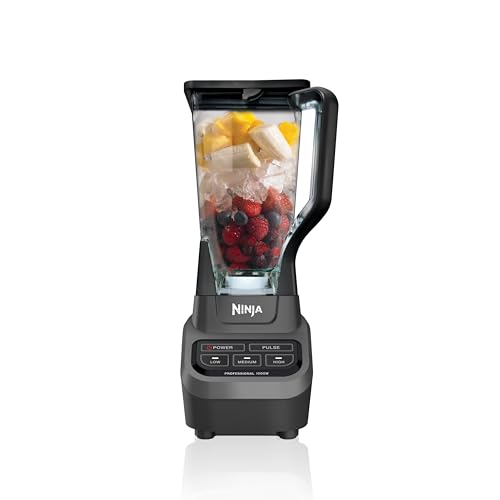
Ninja Professional Blender BL610 — Best Value Full-Size
The BL610 has been the default recommendation in this tier for years, and it still earns its place. You give up the newer model’s extra power and presets; you keep the essential thing — the stacked Total Crushing blade column in a big 72 oz pitcher, driven by a 1000-watt motor that has proven itself in millions of kitchens. If it is priced well below the BN701 on the day you shop, the performance gap is smaller than the price gap.
Strengths
- Proven design with a long track record and easy replacement parts
- Same stacked-blade ice crushing as the pricier Ninjas
- Usually the cheapest route to a genuine 72 oz crushing blender
Trade-offs
- Manual speeds only; no Auto-iQ presets
- 1000W motor works harder on maximum frozen loads
- Design and controls feel a generation old, because they are
| Motor | 1000W |
| Pitcher | 72 oz |
| Technology | Total Crushing stacked blades |
Think of the BL610 as the tier’s benchmark: the machine every other below-200 blender is measured against. Its crushing performance on ice and frozen drinks remains genuinely good — the stacked blades do the work that wattage does in lesser designs — and its simplicity is a feature for many buyers. Three speeds and a pulse, nothing to learn, nothing to break in the control panel.
The reason it sits third rather than first is the full-load test. At maximum frozen capacity the newer BN701’s extra headroom shows, and preset users will miss Auto-iQ. But value is a ratio, not a spec sheet: when this model is discounted — which is often — it delivers perhaps ninety percent of the top pick’s real-world performance for a clearly lower spend. Check both prices before deciding.
Best for: value hunters who want proven full-size crushing without presets / Not suited for: buyers who want the strongest motor and one-button programs
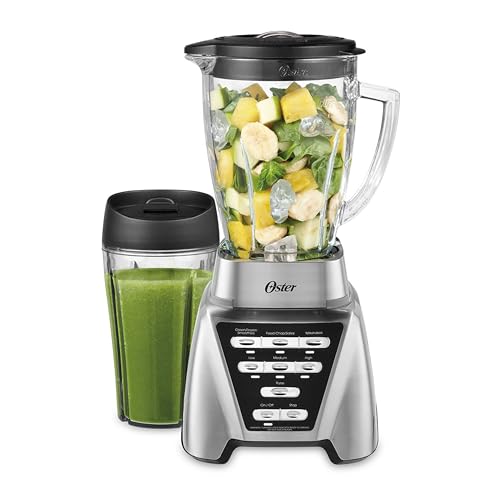
Oster Pro 1200 Blender — Best Glass Jar
Buyers who distrust plastic pitchers and preset-heavy designs should look at the Oster Pro 1200. It pairs a glass jar with a dual-direction blade — the blade reverses to drag ingredients down instead of flinging them up — and an all-metal drive system of the kind that made Oster’s name. A 24 oz smoothie cup in the box covers the personal-blend use case too.
Strengths
- Glass jar stays clear and resists stains and odors for years
- Dual-direction blade reduces the stop-and-stir cycle
- All-metal drive and a brand with deep parts availability
Trade-offs
- Glass jar is heavier and smaller than the big plastic pitchers here
- Seven speeds but no smart presets
- Less raw crushing violence than the stacked-blade Ninjas
| Jar | Glass jar |
| Speeds | 7 speeds |
| Blade | Dual-direction blade technology |
| Included | 24 oz smoothie cup |
The dual-direction blade is a quietly clever answer to the oldest blender complaint: food riding above the blades. By reversing, the Oster pulls the mixture back down through the cutting zone, which makes it unusually good at salsas, sauces and medium-thickness smoothies where texture control matters more than raw power. Combined with the glass jar — the pick for anyone who blends tomato sauces, turmeric or anything else that stains plastic — it is the traditionalist’s blender in this tier.
On pure ice punishment it finishes behind the Ninjas; the blade design favors circulation over fracture. Frozen-drink households blending daily should rank the BN701 or BL610 higher. But for mixed kitchen work — soups, sauces, smoothies, occasional ice — the Oster’s build quality and jar material make it the below-200 pick most likely to be handed down rather than thrown out.
Best for: cooks who want a glass jar, metal drive and versatile everyday blending / Not suited for: heavy frozen-drink households that need maximum crushing power

nutribullet Pro 900 — Best Personal Blender
If your blending life is one smoothie at a time, a personal blender beats a full-size machine on speed, cleanup and counter space — and the Pro 900 is the strongest of the breed that stays in this tier. Its 900-watt motor and extractor blades handle frozen fruit, ice and fibrous greens that stall lesser personal blenders, and the two cup sizes cover a snack shake and a meal-replacement blend.
Strengths
- Real 900W power in a personal format; frozen fruit is no problem
- Blend-and-go cups minimize washing up
- Pulse function adds control most personal blenders lack
Trade-offs
- Maximum batch is one generous serving; no family capacity
- Cups and seals are wear items that need replacing over time
- Not suited to hot liquids or large soup batches
| Motor | 900W |
| Cups | 32 oz and 24 oz cups |
| Functions | Blend and pulse |
The Pro 900’s advantage is workflow. On a weekday morning the entire process — fill cup, blend for under a minute, swap blade for a drinking lid, rinse the blade — takes less time than making coffee. That speed is why personal blenders have the highest actual usage rates of any category here, and usage is the metric that matters: the best blender is the one you use daily, and this format removes every excuse.
Its ceiling is equally clear. One serving at a time, no hot soup, no party batches, and a reliance on cups and gaskets that wear. Households should treat it as either a solo user’s main blender or a complement to a full-size machine, not a replacement for one. Judged on its own terms — personal smoothies, done fast, done well — it leads the tier.
Best for: solo smoothie drinkers who value speed and minimal cleanup / Not suited for: families, entertainers, or anyone blending hot liquids

Hamilton Beach Power Elite 58148A — Best on a Tight Budget
Sometimes the right blender below 200 is the one far below it. The Power Elite pairs a 700-watt motor with a glass jar — a combination almost unheard of at its price point — and a wave-action jar design that folds ingredients toward the blades. It will not match the Ninjas on frozen loads, but for smoothies with modest ice, shakes, sauces and purees, it does the work at a fraction of the tier’s ceiling.
Strengths
- Glass jar at a budget price, resisting stains and odors
- Wave Action system improves circulation in a simple design
- Leaves most of the 200 budget unspent for other kitchen needs
Trade-offs
- 700W is the weakest motor here; heavy ice loads need staging and liquid
- 40 oz jar limits batch size
- Expect a shorter service life under daily heavy use
| Motor | 700W |
| Jar | 40 oz glass jar |
| Functions | 12 blending functions |
The technique for happiness with this blender is the one from our how-to section below: liquid first, frozen ingredients in stages, pulses before continuous blending. Treated that way it makes perfectly good smoothies and frozen drinks for one or two people, and the glass jar keeps it pleasant to own long after plastic rivals have clouded. For a first apartment, a vacation home, or a household testing whether smoothies fit their life, it is the sensible spend.
What you give up is headroom and longevity. There is no reserve power for a packed jar of ice, and budget motors wear faster when pushed daily. Buy it knowing that, use it within its design, and it is excellent value. Buy it as a daily family crusher and you will be back in this tier within a couple of years — still, possibly, having spent less in total than one premium machine.
Best for: budget shoppers, first apartments and light smoothie routines / Not suited for: daily heavy users or families blending for four or more
Comparison Table
| Pick | Badge | Key spec | Best for |
|---|---|---|---|
| Ninja Professional Plus Blender BN701 | Best Overall Below 200 | 1400W peak, 72 oz pitcher, 3 Auto-iQ presets | families who blend full pitchers of smoothies and frozen drinks several times a week |
| nutribullet Full-Size Blender Combo NBF50500 | Best Versatility | 1200W, 64 oz pitcher plus 24 oz tumbler | mixed households that make both single shakes and family batches |
| Ninja Professional Blender BL610 | Best Value Full-Size | 1000W, 72 oz pitcher, Total Crushing technology | value hunters who want proven full-size crushing without presets |
| Oster Pro 1200 Blender | Best Glass Jar | Glass jar, 7 speeds, dual-direction blade, 24 oz smoothie cup included | cooks who want a glass jar, metal drive and versatile everyday blending |
| nutribullet Pro 900 | Best Personal Blender | 900W, 32 oz and 24 oz cups, pulse function | solo smoothie drinkers who value speed and minimal cleanup |
| Hamilton Beach Power Elite 58148A | Best on a Tight Budget | 700W, 40 oz glass jar, 12 functions | budget shoppers, first apartments and light smoothie routines |
How to Choose the Best Blenders Below 200
Start with the motor-and-blade pair, not the feature list. In this tier, the designs that crush well share a pattern: at least 1000 watts in the full-size class and a blade system engineered to circulate frozen loads — stacked columns, winged blades or reversing blades. A 700-watt machine with a smart jar can out-blend a careless 1200-watt design, but as a rule, below-200 money should buy both power and geometry.
Next, match the vessel to your batch. Full pitchers of 64–72 oz serve families and meal preppers; personal cups serve solo routines with unmatched speed and cleanup. The combo machines exist precisely because many households need both, and in this tier they are often the smartest single purchase. Glass jars suit cooks who blend staining or hot-adjacent ingredients and value longevity of appearance; plastic suits anyone prioritizing size and weight.
The features actually worth paying for
In this tier, three features earn their money: a dedicated pulse or crush program that automates ice work, dishwasher-safe parts that protect the daily habit, and a warranty from a maker that sells replacement jars, blades and gaskets separately. Features that rarely earn their money include long lists of speed settings you will never use, touchscreens, and bundled accessories — extra cups and tampers you did not ask for — that inflate the price toward the tier ceiling.
Finally, verify the tier on the day. Prices in this band move weekly. A pick that is below 200 today can sit above it next month and vice versa, so treat the shortlist as the decision and the price check as the confirmation.
Full-Size, Personal or Combo: Picking Your Format
Full-size blenders are batch machines. They earn their counter space when three or more servings happen at once, when soups and sauces join the menu, or when frozen drinks for guests are a regular event. Their weakness is the single small smoothie: a 20 oz blend in a 72 oz pitcher forms a weak vortex and takes longer to clean than it took to drink.
Personal blenders invert the trade. Nothing beats them for a daily solo shake — fastest cycle, least washing, smallest footprint — and nothing about them scales. Combo systems split the difference with one motor and two vessel sizes, and for mixed households they are usually the correct answer in this tier, provided the base is strong enough to do both jobs without compromise, as the 1200W pick on this list is.
A practical test: count servings per week in your house. Under five servings, all for one person, buy personal. Over ten servings or any regular group blending, buy full-size. In between, or split between one daily user and weekend family use, buy the combo.
Making a Below-200 Blender Last
Longevity in this tier is mostly about not abusing the motor. Blend with enough liquid, stage frozen ingredients instead of dumping them, and stop when the sound evens out rather than running extra minutes that only heat the mixture and the motor. Let a hard-worked machine rest a few minutes between back-to-back full batches; thermal protection saves motors from dying, but repeated overheating still ages them.
Care for the wear parts. Gaskets and seals are the first things to age: rinse them, dry them, and replace them when they flatten or crack — they are cheap, and a leaking seal stresses everything else. Keep blades out of prolonged soaking, dry the jar before storing it with the lid off, and descale the base vents of dust every few months. A below-200 blender treated this way routinely outlasts a neglected premium one.
Reading Blender Specs Like an Engineer
The spec sheet in this tier is a minefield of flattering measurements, and three translations will protect you. First, watts: “peak” wattage is measured at the motor’s most favorable instant and can be nearly double the sustained figure; treat peak numbers as class markers only, and give more weight to brands that also publish a plain wattage. Second, capacity: a “72 oz pitcher” describes the vessel to the brim, while the usable blending maximum is the marked max-fill line, often three-quarters of that, and the comfortable frozen maximum is lower still. Third, speed counts: fourteen speeds on a dial usually means one motor and a resistor’s worth of difference between adjacent settings; two well-chosen speeds plus a pulse will outperform them in real blending.
What the spec sheet rarely tells you matters more: blade thickness and geometry, whether the drive coupling is metal or plastic, whether the jar is one molded piece or an assembly with a removable blade (assemblies clean better and leak eventually; one-piece jars never leak and clean worse), and the warranty’s fine print about what counts as commercial use. In this tier, the makers in this guide publish parts lists and sell jars and gaskets separately — treat that as a spec, because it predicts your fifth year of ownership better than any wattage figure.
A useful final check is the replacement-jar price. Makers who expect their blenders to last price jars reasonably and keep them in stock; makers who treat the blender as disposable price the jar at nearly the machine’s cost. Five minutes comparing parts pages tells you which kind of company you are buying from, and in the below-200 tier that difference is the whole game.
The Two-Week Test: Judging Your New Blender
Returns windows exist because spec sheets cannot tell you how a blender fits your life, so use the first two weeks deliberately. In week one, run your three real recipes — not test smoothies from the manual, but your actual breakfast blend, your actual frozen drink, your actual soup or sauce. Note what needed a second cycle, what needed stirring, and what the cleanup actually took in minutes rather than impressions. A machine that needs help on your recipes will need it forever; a machine that handles them will only get easier as your technique settles.
In week two, test the ownership details. Run the dishwasher cycle and check the seals. Blend at your real hour of the morning and ask honestly whether the noise is livable. Store the machine where it will actually live and count how many seconds retrieving and reassembling it takes, because that friction, multiplied by hundreds of uses, predicts whether it gets used. Try the smallest batch you will ever make and the largest, since both extremes expose weaknesses the middle hides.
If the machine fails your recipes or your routine, return it inside the window and take the next pick from this list — that is a successful process, not a failed purchase. The below-200 tier is deep enough that nobody needs to keep a blender that merely almost works, and the discipline of testing beats another month of reading reviews.
The Tier Above and Below: When to Leave This Budget
Knowing when not to buy in this tier is as valuable as the picks. The tier below — the sub-100 shelf — is where blenders go to be regretted: motors that stall on frozen fruit, jars that crack, and parts that do not exist. There are honest exceptions for the lightest use, and our budget pick gestures at that territory, but as a rule the step from the cheapest shelf to this tier buys more real performance per dollar than any other step in the blender market. If your budget is straining at the bottom of this tier, it is worth waiting for a promotion rather than dropping below it.
The tier above — the professional flagships — buys three things this tier cannot: the finest textures in blending (truly silky nut butters, flours, and purees), duty cycles measured in decades, and control systems like tampers and precision dials. Whether those are worth two to three times the money depends entirely on whether your cooking asks for them weekly. Smoothie and frozen-drink households almost never need them. Home bakers milling flour, cooks making nut butters, and twice-daily power users genuinely do.
A useful way to frame the decision is by cost per year of service. A well-chosen blender in this tier serving four years costs a modest annual sum for daily drinks; a flagship serving twelve years can actually undercut it annually — but only if you keep it twelve years and use its extra abilities. Buyers who upgrade appliances for novelty should stay in this tier and enjoy the value; buyers who keep tools for a decade and cook ambitiously should consider the flagship a legitimate alternative rather than an extravagance.
This guide’s picks were chosen to make staying in the tier satisfying: none of them feels like a compromise for the jobs most households actually do. Leave the tier for a reason you can name — a recipe, a volume, a duty cycle — not for a spec you cannot.
Blending for Households: Kids, Guests and Special Diets
Household blending has constraints that solo reviews ignore. For families with children, the practical features are a locking lid that little hands cannot defeat mid-blend, a jar light enough to pour one-handed while holding a cup, and a noise level survivable at breakfast — every full-size pick here is loud, so the household routine, not the machine, usually adapts: blend the night before where the recipe allows, or accept the morning roar as the price of fresh. Personal blenders earn a second look in family kitchens for the opposite reason: teenagers will actually use a blend-and-go cup, and a machine used beats a better machine ignored.
For guests, capacity and ice performance are the whole game, and this tier handles both: a 72 oz pitcher of frozen drinks in one cycle is precisely the party trick these machines were built for. The serving habit that separates smooth hosts from frazzled ones is staging — ingredients measured, ice ready, garnishes cut — so the blender runs in short bursts instead of becoming the evening’s bottleneck.
Special diets stress different specs. Green smoothies for a health routine need the fine blending of fibrous leaves that separates the stronger picks here from the budget end. Dairy-free and vegan cooking leans on nut and oat milks, which this tier makes adequately in small batches with soaking and straining. Baby and toddler food is puree work any pick handles, with the personal formats suiting the small volumes. Allergy households should note the one genuine rule: a blender that processes nuts needs scrupulous cleaning before it makes food for a nut-allergic family member, and many such households keep a dedicated personal blender — cheap insurance this tier makes affordable.
None of these needs requires leaving the below-200 tier. They require choosing within it by the right criterion — capacity, format or fine-blend strength — which is exactly how the badges in this guide are assigned.
How to Get Professional Results From a Below-200 Blender
Technique closes most of the gap between this tier and the professional machines. These are the habits that make a mid-priced blender produce smoothies and frozen drinks people assume came from a flagship model.
- Layer in the right order. Liquid first, then powders and soft ingredients, then leafy greens, then frozen fruit and ice on top. The liquid starts the vortex and the heavy frozen layer presses everything down into it.
- Use the pulse-then-run rhythm. Pulse four to six times to fracture ice and frozen chunks, then run continuously. Jumping straight to high speed throws ingredients up the jar walls where the blades cannot reach them.
- Respect the two-thirds line. Frozen loads expand as they aerate. A jar filled past two-thirds will leave the top unblended and strain the motor; two smaller batches beat one overloaded one.
- Blend to sound, not to time. A finished blend sounds even and lower-pitched, with no rattling chunks. Most smoothies are done in 45–60 seconds; running longer only warms and thins them.
- Add a spoonful of fat or fiber for texture. A little yogurt, nut butter, banana or oats transforms a watery blend into a creamy one — texture problems are usually recipe problems, not blender problems.
- Clean in the moment. Rinse immediately, or blend warm water with a drop of soap for twenty seconds. A jar cleaned in the moment never develops the film and odors that make people dread using their blender.
Master these six habits and the practical difference between your below-200 machine and a flagship narrows to the hardest jobs — nut butters, flour milling and decade-long durability — which most households rarely need.
Common Buying Mistakes
Assuming the tier price is fixed. Models cross the 200 line in both directions with promotions and bundles. Always check the current price on Amazon for the exact model and color before deciding a pick is in or out of budget.
Buying peak wattage without checking blade design. A big peak number with a flat blade and a wide jar will leave chunks. Blade geometry and jar shape decide frozen performance; wattage supports them, not replaces them.
Spending the whole budget on the blender and nothing on ingredients. A mid-tier blender with fresh, ripe produce outperforms a flagship fed with freezer-burned fruit. If the choice is tight, take the value pick and upgrade the grocery list.
Choosing a personal blender for a family, or a full-size for one person. Format mismatch is the most common regret in this tier. Count your weekly servings honestly and buy the vessel size that matches them.
Ignoring replacement parts. A blender whose jar, blade and gaskets are sold separately can serve for many years. One with no parts support is disposable, whatever its warranty card says.
Final Recommendation
The short answer: the Ninja BN701 is the best blender below 200 for most households, with the nutribullet Blender Combo a step behind and ahead if your routine splits between personal shakes and family batches. The BL610 is the value alternative when its price dips, the Oster Pro 1200 is the glass-jar traditionalist’s pick, the nutribullet Pro 900 owns the solo routine, and the Hamilton Beach Power Elite proves how little you can spend and still blend honestly.
Check the current price on Amazon for your top two candidates before you commit — in this tier, the week you buy can matter as much as the model you choose.
If you are torn between two picks, choose by the vessel you will use most, not the motor you admire most: the pitcher or cup in your hand every morning decides your satisfaction long after the spec sheet is forgotten. Then run the two-week test described above, and keep the machine only if it passes your recipes, not ours.
One more consideration for households on the fence between this tier and a personal-only setup: measure your actual smoothie, once, in a measuring jug. Most people guess their serving at half its real size, and that single measurement has settled more blender decisions than any review — including this one. If your real shake is 20 ounces or more, the personal formats in this guide will frustrate you daily no matter how strong their motors are, and the full-size and combo picks will feel like they were designed around your kitchen. If it is 12 ounces, the opposite is true, and the big pitchers become the overkill. The tier rewards buyers who know their own numbers, and the most important number in blending is the one nobody prints on a box: yours.
Keep exploring the cluster: Best Blenders And Ice Crushers Best Blenders And Juicers Best Blenders Bodybuilding Best Blenders Breville Chef Best 1000 Watt Blenders
Frequently Asked Questions
Is a blender below 200 good enough for daily smoothies?
Yes, if you choose one of the strong designs in this tier. A 1000-watt-plus full-size model or a 900-watt personal blender handles daily smoothies with frozen fruit and greens comfortably. What the tier does not buy is professional durability under commercial-style abuse or the finest nut-butter textures.
Why do prices for the same blender vary so much?
Color variants, bundled accessories, seasonal promotions and retailer competition all move prices in this band, sometimes by a third. That is why this guide recommends models rather than quoting prices: check the current price on Amazon for the exact configuration before you buy.
Glass jar or plastic jar at this price?
Glass stays clear, resists stains and odors and feels premium, but tops out smaller and heavier. Plastic pitchers are larger, lighter and safer if dropped, but cloud slowly with ice abrasion. Cooks who blend sauces and staining ingredients lean glass; families blending big frozen batches lean plastic.
What wattage do I need to crush ice?
For full-size blenders, look for roughly 1000 watts or more combined with a blade design built for circulation — stacked, winged or reversing blades. Personal blenders crush well from about 900 watts because the vessel is small. Wattage alone, without the right blade and jar, does not guarantee smooth results.
Can a below-200 blender make nut butter or hot soup?
It can approximate both with patience: nut butter needs added oil, scraping and rest cycles, and hot soup should be blended in small, vented batches of warm — not boiling — ingredients, or heated after blending. If either job is weekly for you, the professional tier above this budget is the honest recommendation.
How long should a blender in this tier last?
With daily use and basic care, a well-chosen model from an established maker should serve three to five years or more; lighter use stretches that considerably. Longevity depends mostly on not overloading frozen loads and on replacing cheap wear parts like gaskets before they cause leaks.
Are refurbished blenders in this tier worth it?
Manufacturer-refurbished models from the brands in this guide can be excellent value, usually with a shorter warranty. Check that the jar, blade and gaskets are complete and that the refurbisher is the maker or an authorized channel. Avoid third-party “renewed” listings with no stated warranty — in this tier the savings rarely justify the risk.
Do I need a tamper or extra accessories?
Not for the core jobs of this tier. A tamper helps only with very thick, low-liquid mixtures, and most below-200 recipes are liquid-based. Spend accessory money first on a second cup or jar in the format you use most; convenience accessories get used, specialty ones mostly get stored.


