Disclosure: airfryerkitchensupply.com is reader-supported. When you buy through links on our site, we may earn an affiliate commission at no extra cost to you.
Where to buy
Every blanket in this guide to the best blankets for hammock indoor use is a current listing we verified through Amazon’s own catalogue data. Throws vary by colour and size within the same listing, so buy by the full product name, confirm the size and colourway on the listing page, and check price on Amazon before you order. For hammock use, the size line matters more than the colour — read the dimensions before falling for a shade.
- Love’s cabin 100% Cotton Muslin Blanket Throw, Dark Blue – check price on Amazon; choose the listing sold or shipped by Amazon or the brand store where available.
- Del Mex Classic Mexican Blanket, Tan – check price on Amazon; choose the listing sold or shipped by Amazon or the brand store where available.
- Bedsure 100% Cotton Muslin Blanket Throw, Linen Beige – check price on Amazon; choose the listing sold or shipped by Amazon or the brand store where available.
- Utopia Bedding 100% Cotton Waffle Blanket, Queen White – check price on Amazon; choose the listing sold or shipped by Amazon or the brand store where available.
- Exclusivo Mezcla Fleece Throw Blanket, Forest Green – check price on Amazon; choose the listing sold or shipped by Amazon or the brand store where available.
- PAVILIA Sherpa Fleece Throw Blanket, Maroon Red – check price on Amazon; choose the listing sold or shipped by Amazon or the brand store where available.
Finding the best blankets for hammock indoor use is a different exercise from buying a throw for a sofa, because a hammock changes the physics of staying warm and comfortable. On a sofa, a blanket traps heat against cushions that insulate you from below. In a hammock, your body weight compresses whatever is beneath you, air circulates under the fabric, and the blanket’s real jobs multiply: it must insulate without bulk, stay in place on a curved, shifting surface instead of sliding to the low point, add a soft layer between you and hammock cords or weave, and breathe well enough for a long read or nap in a heated room. Indoor hammocking — reading nooks, bedroom hammocks, dorm and apartment setups — runs warm by outdoor standards, which is why this guide leads with breathable cotton muslin and woven blankets and treats the fleeces as the cold-room specialists rather than the defaults.
Texture is the underrated specification. A hammock blanket with a slightly grippy, natural-fibre surface settles into the curve and moves with you; a slick, silky throw behaves like it is trying to escape, pooling at your feet every time you shift. Size works differently too: the blanket should be long enough to tuck under your feet and pull to your chin while lying diagonally — the comfortable position in any gathered-end hammock — without so much excess width that it drapes over the edges and pulls itself off. The six picks below span that logic from airy six-layer muslin to full sherpa warmth, so the right answer depends on your room’s temperature and your hammock’s fabric, and the buying guide explains how to match them.
In this guide
Quick Picks
- Best Overall – Love’s cabin Cotton Muslin Throw: six layers of breathable cotton gauze at 50 x 60 inches — soft, grippy, washable and warm enough for indoor rooms without overheating.
- Best Traditional Woven – Del Mex Classic Mexican Blanket: an authentic woven falsa throw at 70 x 50 inches whose textured weave grips hammock fabric and shrugs off daily use.
- Best Soft Layering Pick – Bedsure Cotton Muslin Blanket: a four-layer gauze throw in a calm linen beige, ideal as the light layer for warm rooms and summer naps.
- Best Full Coverage – Utopia Bedding Cotton Waffle Blanket: a queen-size 90 x 90 inch cotton waffle weave for cocooning, sharing, or lining the whole hammock bed.
- Best Warm Fleece – Exclusivo Mezcla Fleece Throw: double-sided brushed flannel fleece at 50 x 70 inches for cool rooms and winter reading sessions.
- Best Cosy Winter Pick – PAVILIA Sherpa Fleece Throw: plush fleece with a sherpa reverse at 50 x 60 inches, the warmest wrap here for cold corners and draughty rooms.
How These Picks Were Chosen
We selected for the hammock use case specifically, not for throws in general. The first filter was surface behaviour: natural-fibre and textured weaves that stay put on hammock fabric outranked slick synthetics, however soft. The second was thermal range for indoor reality — most indoor hammocks live in rooms between cool and warm, so breathable cotton dominates the top of this guide, with fleece included deliberately for cold rooms, basements and winter. Third was size discipline: throws around 50 x 60 to 50 x 70 inches suit a single diagonal lounger, while the queen waffle blanket covers the special cases of sharing, lining and full cocooning. Fourth was care: hammock blankets live hard, casual lives — snacks, pets, naps — so every pick here is machine washable.
Every product was cross-checked against Amazon’s catalogue data for this site, and only confirmed listings carry purchase links. Prices are never printed because they change constantly; check price on Amazon when you buy. Where a blanket appears in this guide in one colour, the listing family typically offers others — the recommendation is for the blanket’s construction, not the shade.
The 6 Best Blankets for a Hammock Indoors
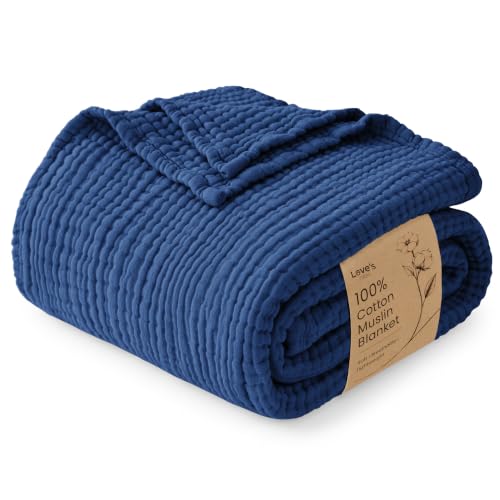
Love’s cabin 100% Cotton Muslin Blanket Throw – Best Overall
Muslin is the hammock insider’s fabric, and this six-layer cotton gauze throw shows why. Six layers of loosely woven 100% cotton muslin at 50 x 60 inches trap warmth in their crinkled air pockets while breathing freely — the combination a hammock needs, since the fabric under you provides no insulation and the room air does the rest. The gauze texture grips hammock cotton and polyester weaves instead of sliding, the throw softens with every wash, and its weight is present without being hot. It suits the year-round indoor hammock: reading, napping and evening lounging in normally heated rooms. It does not suit a genuinely cold room on its own, where it becomes the base layer under a fleece rather than the whole answer.
Strengths
- Six-layer muslin balances warmth and breathability better than any other construction here.
- Natural cotton texture stays in place on hammock fabric through position changes.
- Gets softer with washing and tolerates frequent laundering gracefully.
Trade-offs
- Not warm enough alone for unheated rooms or winter basements.
- Muslin’s open weave can catch on rough hammock hardware or jewellery if handled carelessly.
- The crinkled gauze look is casual rather than tailored.
The way to use this blanket explains its top ranking: spread it along the hammock’s diagonal before you get in, so a layer sits beneath your back and legs as well as over you, defeating the cold-from-below effect that ruins hammock naps. Pulled up to the chin with feet tucked into its end, it makes a complete indoor microclimate at normal room temperatures — which is precisely the brief. If your hammock lives in an average room and you buy one blanket from this guide, this is the one.
Best for: year-round indoor hammock lounging and napping in heated rooms. / Not suited for: cold rooms as a sole layer.
Check the current price on Amazon
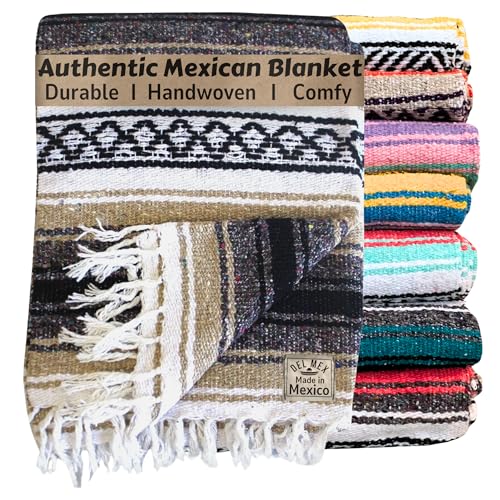
Del Mex Classic Mexican Blanket – Best Traditional Woven
The falsa blanket and the hammock are natural partners — both come from the same culture of woven, hard-wearing leisure — and the Del Mex Classic, an authentic woven throw at 70 x 50 inches, brings a texture nothing else here matches. The woven falsa surface has genuine grip: it keys into hammock weave, stays where you arrange it, and tolerates being sat on, spilled on and washed on repeat without showing its age. The extra length over standard throws suits taller loungers and full foot-to-chin coverage on the diagonal. It suits bohemian rooms, heavy daily use and anyone whose hammock doubles as the household’s favourite seat. It does not suit buyers chasing cloud-soft plushness; this is a woven workhorse, softening over time rather than arriving soft.
Strengths
- The grippiest surface in the guide; it simply does not slide in the hammock.
- Generous 70-inch length for tall users and full diagonal coverage.
- Extremely durable weave that improves with washing and hides daily wear.
Trade-offs
- Firmer hand-feel than muslin or fleece, especially when new.
- Woven blankets breathe well but insulate modestly in cold rooms.
- The traditional striped styling is a definite aesthetic commitment.
There is a reason woven blankets live permanently in so many hammocks: they become part of the setup, spread as a liner that softens corded hammocks, protects fabric hammocks from shoes and zippers, and then wraps the lounger without ceremony. Buy it as equipment rather than decor and it will outlast softer rivals by years. In a Mayan-style or Brazilian hammock especially, the falsa feels less like an accessory and more like the missing original component.
Best for: daily-use hammocks, corded hammocks needing a liner, and tall loungers. / Not suited for: plushness seekers.
Check the current price on Amazon

Bedsure 100% Cotton Muslin Blanket – Best Soft Layering Pick
Bedsure’s four-layer cotton muslin throw is the lighter sibling of our top pick: the same breathable gauze idea at four layers instead of six, in a quiet linen beige, sized as a large throw for adults. That makes it the warm-room specialist — the blanket for summer hammock naps, sunrooms and anyone who runs hot and finds even cotton throws too much by July. It is also the natural layering piece: over a sheet in summer, under a fleece in winter, or doubled as a pillow-end wrap. It suits hot sleepers, warm climates and layering strategists. It does not suit a cool room as the only blanket; four layers of gauze is a whisper of insulation by design.
Strengths
- The most breathable option here; near-impossible to overheat under indoors.
- Four-layer muslin drapes closely, following the hammock’s curve without bulk.
- Neutral styling disappears into calm, natural-fibre rooms.
Trade-offs
- Minimal insulation — a warm-room and layering piece, not a winter blanket.
- Light colour shows snack and pet evidence readily.
- Same muslin care note: keep it clear of snags and rough hardware.
Layering is how experienced hammock users actually regulate temperature, because a hammock session drifts — you settle in warm from activity and cool as you relax toward sleep. A four-layer muslin as the base, with a fleece within arm’s reach for the second hour, beats any single heavy blanket. Bought in that spirit, the Bedsure is not the lesser muslin; it is the precise one for its half of the year.
Best for: warm rooms, summer naps, hot sleepers and layering systems. / Not suited for: cold rooms alone.
Check the current price on Amazon

Utopia Bedding 100% Cotton Waffle Blanket – Best Full Coverage
Sometimes the hammock brief is not a throw at all but a full blanket: two people, a wide fabric hammock used as a floating daybed, or a lounger who wants to be wrapped completely, cocoon-style, with blanket under, over and around. The Utopia Bedding waffle blanket answers at queen size — 90 x 90 inches of 100% cotton in a waffle weave that traps warmth in its textured cells while staying breathable. Spread as a liner, it converts a big hammock into a soft nest; folded, it is a generous single wrap with material to spare for tucking. It suits wide hammocks, couples and cocooners. It does not suit a small single hammock, where its excess fabric becomes a management problem, or anyone wanting a light summer layer.
Strengths
- Queen dimensions enable true cocooning and two-person coverage.
- Waffle weave adds warmth without weight and breathes better than flat cotton.
- Works as a full hammock liner, softening and protecting the whole bed.
Trade-offs
- Too much blanket for compact hammocks; excess drapes and pulls.
- A full cotton blanket is a bigger wash load than a throw.
- White shows hammock-room life quickly; treat it as a working blanket.
The cocoon use case deserves respect: in a wide Brazilian or Nicaraguan hammock, a full blanket turns the setup into something closer to a suspended bed than a seat, and for reading marathons or afternoon sleep that is a genuinely different and better experience. The waffle texture, like the falsa’s weave, grips rather than slides, which is what makes the arrangement stable instead of a wrestling match. Buy it for the big hammock and the long session.
Best for: wide hammocks, sharing and full-wrap cocooning. / Not suited for: small single hammocks.
Check the current price on Amazon

Exclusivo Mezcla Fleece Throw Blanket – Best Warm Fleece
When the hammock room runs cold — a basement setup, a draughty sunroom in winter, a house kept cool — fleece takes over from cotton, and the Exclusivo Mezcla is the sensible fleece: double-sided brushed flannel at a generous 50 x 70 inches, lightweight for its warmth and machine washable without drama. Brushed flannel fleece has a short, grippy nap that behaves better in a hammock than long-pile decorative throws, staying draped over the curve instead of creeping. It suits winter readers, cold-room hammocks and anyone who feels the chill through cotton by the second chapter. It does not suit warm rooms, where it will be kicked off within the half hour, or hot sleepers at any season.
Strengths
- Real warmth at light weight, in the longer 70-inch throw format.
- Brushed flannel surface drapes and stays better than long-pile throws.
- Easy care and quick drying suit a blanket in constant rotation.
Trade-offs
- Too warm for heated rooms at the cosier end of normal.
- Synthetic fleece can build static in dry winter air.
- Less breathable than the cotton picks for long naps.
The fleece strategy in a hammock is to pair it with a cotton layer beneath — muslin against the hammock, fleece on top — because the cotton manages the contact layer and the fleece carries the insulation, and the pair together regulate better than fleece alone against skin and fabric. Bought as the winter half of that system, the Exclusivo Mezcla is exactly priced and specced for the job.
Best for: cold rooms, winter sessions and the top layer of a two-blanket system. / Not suited for: warm rooms or hot sleepers.
Check the current price on Amazon

PAVILIA Sherpa Fleece Throw Blanket – Best Cosy Winter Pick
The PAVILIA is the maximum-comfort entry: a plush fleece face with a sherpa reverse at 50 x 60 inches, the blanket equivalent of a warm hug, for the hammock corner that serves as the house’s winter retreat. Sherpa’s deep texture traps the most still air of any construction here, and the reversible design lets you choose plush against you or sherpa against you depending on the evening. It suits cold-sensitive loungers, evening movie hammocks in cool rooms and anyone whose hammock time is a deliberate warmth ritual. It does not suit warm sleepers, summer, or precision layering — this is a blanket you commit to for the session.
Strengths
- The warmest wrap in the guide, with two distinct textures in one blanket.
- Plush hand-feel makes it the comfort-first choice for evening lounging.
- Standard throw size manages well in single hammocks without excess drape.
Trade-offs
- Easily too hot in normally heated rooms.
- Deep pile needs a proper wash-and-dry routine to stay lofty.
- Bulkier in the hammock than the cotton picks; less suited to diagonal fine-tuning.
Every hammock household in a cold climate ends up with one blanket like this — the one that comes out when the room is chilly and the plan is to be in the hammock for a film’s length. The PAVILIA fills that role with the best texture in the guide. Just respect its season: stored for winter and layered over cotton, it is a pleasure; used in July, it is a sauna with sleeves missing.
Best for: winter evenings, cold-sensitive loungers and maximum cosiness. / Not suited for: warm rooms or summer use.
Check the current price on Amazon
Comparison Table
| Pick | Badge | Key spec | Best for |
|---|---|---|---|
| Love’s cabin Cotton Muslin Throw | Best Overall | 6-layer cotton muslin, 50 x 60 in | Year-round heated-room hammocking |
| Del Mex Classic Mexican Blanket | Best Traditional Woven | Woven falsa, 70 x 50 in | Grip, durability and hammock lining |
| Bedsure Cotton Muslin Blanket | Best Soft Layering Pick | 4-layer cotton muslin throw | Warm rooms and layering |
| Utopia Bedding Cotton Waffle Blanket | Best Full Coverage | Cotton waffle, queen 90 x 90 in | Cocooning and wide hammocks |
| Exclusivo Mezcla Fleece Throw | Best Warm Fleece | Brushed flannel fleece, 50 x 70 in | Cold rooms and winter reading |
| PAVILIA Sherpa Fleece Throw | Best Cosy Winter Pick | Fleece + sherpa reverse, 50 x 60 in | Maximum winter cosiness |
How to Choose a Blanket for Indoor Hammock Use
Start with your room’s honest temperature across the hours you actually hammock. A heated living room in the evening is a muslin room; a basement or sunroom that sits noticeably cooler is fleece territory; a hammock used across seasons wants the layered pair, cotton below and fleece above, which is why this guide’s picks are designed to combine. Buyers who skip this step and purchase on softness alone end up with a beautiful blanket that spends its life on the arm of the sofa because it is wrong for the room by five degrees.
Next, match the blanket to the hammock’s surface. Rope and corded hammocks need a liner blanket almost regardless of temperature — the falsa or a muslin spread beneath you stops cords pressing and clothing snagging — while fabric hammocks pair with anything. Then think about grip: cotton weaves, waffle textures and brushed flannel hold the curve; satin-backed and long silky throws slide, and in a hammock sliding is not a minor annoyance but the difference between a settled nap and a constant low-level negotiation with your bedding. Size follows your style: 50 x 60 inches is the versatile single, 50 x 70 serves taller loungers, and the queen blanket is a deliberate choice for wide hammocks and cocooning, not a default.
Finally, plan care and rotation. Hammock blankets absorb the full casual life of the house — drinks, snacks, pets, children — so machine washability is non-negotiable and every pick here has it. Cotton muslin improves with washing; fleece wants a gentle cycle and low heat to keep its loft; woven falsas are nearly indestructible but appreciate a shake-out between washes. Two blankets in rotation — one in the hammock, one in the wash — is the setup that keeps the nook always ready, which is the real luxury an indoor hammock is for.
How to Arrange a Blanket in an Indoor Hammock
Technique turns a good blanket into a good nap. Lay the blanket along the hammock’s diagonal — the same diagonal your body will take — before getting in, with roughly a third of its length positioned where your back and legs will rest. Settle in slowly, letting the blanket wrap the underside first; that under-layer is what defeats the cool air circulating beneath the hammock, which is the main reason hammock naps chill people in warm rooms. Then fold the remaining length over your front, tuck the foot end beneath your feet rather than leaving it loose, and pull the top edge to chin height. In a gathered-end hammock this creates a stable cocoon that moves as one piece when you shift.
For layered setups, order matters: grippy cotton against the hammock, insulation on top. The cotton layer stays anchored; the fleece, which slides more readily, is pinned between you and the cotton rather than against the hammock fabric. Leave one arm’s worth of top edge untucked so you can regulate — hammock sessions cool in phases as your body relaxes, and the ability to add or shed a layer without sitting up is what keeps a nap unbroken. When you get out, leave the blanket spread in the hammock rather than balled in the corner; it airs, it stays shaped to the curve, and the nook looks ready, which quietly guarantees it gets used again tomorrow.
Matching the Blanket to Your Hammock Type
Hammocks differ more than their blankets do, and the pairing matters. Gathered-end fabric hammocks — Brazilian and Nicaraguan styles — cradle the body in a cocoon of cloth, and they pair with almost any blanket here; the fabric already softens contact, so the blanket’s job is purely thermal, and the muslins excel. Mayan hammocks, woven from thin cord into a net, breathe beautifully and press their weave into the lounger; they ask for a liner blanket as a comfort layer in their own right, which is the falsa’s home ground, with a thermal layer added above it in cool rooms. Rope hammocks, the American classic, are the most demanding: their thick cords are the least forgiving surface in the category, and a substantial blanket beneath you — the falsa again, or the folded waffle blanket — is close to mandatory for sessions beyond twenty minutes.
Spreader-bar hammocks hold their bed flat and open, which changes blanket behaviour completely: nothing cocoons, edges are exposed, and blankets slide toward the ground rather than pooling at a low point. Here the grippy textures matter most, generous sizes help because you can tuck edges beneath you on a flat bed, and in cool weather the under-layer is even more important because the flat bed exposes your underside fully to moving air. Stand hammocks indoors — the apartment-friendly frames — behave like whichever hammock they carry, with one addition: the frame’s bars are hard neighbours, and a blanket with enough size to buffer your shoulder or hip from an accidental bar contact earns its keep. Read your hammock first, then re-read this guide’s picks; the right answer is a pairing, not a product.
Blanket Weight, Warmth and the Indoor Reality Check
Blanket marketing loves the vocabulary of outdoor survival, but an indoor hammock lives in a gentler world, and calibrating to it saves money and sweat. In a room held at ordinary heated temperatures, the thermal problem is mild and specific: still air beneath the hammock and your own cooling as you relax. A medium cotton layer — the six-layer muslin class — solves that problem for most people for most of the year, and anything heavier is for the hours when the room itself is allowed to go cold. This is why so many hammock owners who bought expedition-weight blankets end up using them as cushions: the blanket was honest, the brief was wrong.
Weight also changes how a blanket behaves in the curve. Heavy blankets hold their arrangement superbly — gravity is a kind of grip — but they press the hammock’s shape flatter and can make the cocoon feel like a swaddle you negotiate rather than a nest you settle into. Light blankets drape and follow but need the under-layer anchoring technique from the arrangement section to stay honest. The practical sweet spot for a single indoor blanket is the middle: enough body to stay, enough drape to follow. Judge candidates in those terms — room temperature first, hammock type second, weight and texture third — and the softness that seduces in a shop becomes what it should be, the tiebreaker rather than the decision.
Common Buying Mistakes
The most common mistake is buying a sofa throw for a hammock: slippery decorative throws that pool at the low point within minutes, chosen for how they photograph rather than how they grip. Second is buying for the wrong season — a sherpa for a warm room or gauze for a cold basement — because softness was judged in a shop instead of temperature at home. Third is size errors in both directions: a skimpy throw that leaves feet or shoulders out on the diagonal, or a huge blanket whose overhanging edges drag it off the hammock entirely. Fourth is ignoring the under-layer problem and blaming the blanket for a chill that comes from beneath, which no top blanket alone can fix. Fifth is choosing delicate, dry-clean textiles for the hardest-working casual seat in the house. Each mistake is avoided by the same discipline: decide the room, the hammock surface and the layer plan first, and let the blanket be chosen last.
Washing and Storing Hammock Blankets, by Fabric
Hammock blankets earn their comfort honestly and should be washed like the working textiles they are, with each fabric in this guide asking a slightly different kindness. Cotton muslin — the Love’s cabin and Bedsure throws — washes in warm water with ordinary detergent, tolerates frequent laundering, and emerges softer each time; its crinkle is structural, so skip the iron and embrace the texture, and dry it fully before storage because its layered construction holds moisture longer than a flat weave. The woven falsa asks even less: it is the blanket you can wash without thinking, though a gentle cycle preserves its fringe and colours longest, and it rewards an occasional outdoor shake that returns its weave to order. The cotton waffle blanket behaves like quality cotton bedding generally — wash warm, dry on medium, and expect the cells to plump back with the first use.
Fleece and sherpa want the gentle end of the machine’s repertoire: cool to warm water, a mild detergent, no fabric softener — softeners coat synthetic fibres and flatten the very loft you bought — and low drying heat or line drying to keep the pile standing. Wash fleece separately from cotton where you can, because fleece sheds microfibres early in its life and cotton lint clings to sherpa. Storage for all of them follows one rule: clean, fully dry, folded loosely in a breathable place. A hammock blanket stored damp in a sealed box announces itself in spring in a way no wash fully forgives, while one stored aired and loose is ready the day the hammock mood returns. Treat the rotation kindly — one in the hammock, one in the wash, one resting — and the set will serve for years of naps.
The Indoor Hammock Nook: Building the Whole Setup Around the Blanket
A blanket performs inside a setup, and the nook around the hammock decides half of every session’s comfort. Light is the first element: a reading lamp positioned to fall over your shoulder into the hammock’s curve, on a warm dimmer setting, turns the blanket-and-book arrangement into an evening ritual rather than a nap that ambushes you. The second element is reach: a side table or wall shelf at the hammock’s edge, at the height your hand naturally falls, for the drink, the book and the glasses — because the perfectly arranged blanket cocoon should never have to be dismantled for a sip of water. Hooks or a basket within reach hold the second blanket of the layering system, so the temperature adjustment the arrangement section describes is an arm’s movement, not an expedition.
The third element is the floor beneath. Indoor hammocks hang over hard floors that punish dropped phones and bare feet at midnight; a rug under the hammock softens both, catches the blanket’s edge if it slips, and visually declares the nook as a room within the room. Sound is the fourth: the nook near a speaker or a quiet corner outperforms the nook beside the television’s blast, and a blanket over the ears is a poor substitute for a well-chosen wall. None of this costs much, and all of it multiplies the blanket’s work — which is why experienced indoor hammock owners talk about their setup the way sailors talk about a berth. Build the nook once, and every blanket in this guide performs a class above its price inside it.
Final Recommendation
For most indoor hammocks in normally heated rooms, start with the Love’s cabin six-layer muslin — it is the blanket this category revolves around. Add the Del Mex falsa if your hammock is corded or your use is daily and rough, and the Bedsure muslin for warm rooms and layering. Wide hammocks and cocooners should go straight to the Utopia waffle blanket, while cold rooms belong to the Exclusivo Mezcla fleece and, at maximum cosiness, the PAVILIA sherpa. Layer cotton under fleece and the set covers the whole year. Related guides: Best Blankets For Camping, Best Cotton Blankets, Best Throw Blankets For Couches, Best Hammocks For Indoors and Best Weighted Blankets For Adults.
One Blanket or Two: Building the Year-Round Hammock Set
The households happiest with their hammocks rarely own one perfect blanket; they own a small, deliberate set whose members rotate by season and laundry day. The classic build is three pieces. The anchor is a breathable cotton for the long middle of the year — the six-layer muslin class — which handles spring, autumn and every ordinary evening between. The second piece is the liner-grip specialist, the woven falsa, which lives in corded and Mayan hammocks nearly permanently and doubles as the summer’s only layer when the room is warm. The third is the winter insulation, a fleece in the Exclusivo Mezcla’s class with the sherpa held in reserve for the coldest rooms and the longest films. Together the three cover every night the house can produce, and each is cheap enough, in the way of this category, that the set costs less than many single prestige throws that would fail two of the three jobs.
Building the set in the right order matters more than building it completely. Start with the anchor cotton, because it serves the most nights and teaches you your own hammock habits — how warm you run, how long you stay, whether you nap or read. Add the piece your experience asks for: the falsa when cords press or the blanket slides, the fleece when the second hour chills you, the four-layer muslin when summer makes even the anchor too much. Each addition is then a diagnosis answered rather than a guess purchased. Households that buy the full set on day one often discover one piece never leaves the basket; households that build by evidence end with a set in which everything is used, washed and used again — which is the entire, unglamorous definition of value in a hammock nook.
Blankets for Reading, Working and Everything Between Naps
The indoor hammock has quietly become a workstation and a reading chair as much as a bed, and each activity asks something slightly different of its blanket. Reading wants the blanket high and the arms free: a throw that tucks under the body and across the legs while leaving shoulders and hands clear, which is the muslin class’s natural arrangement, the book held above a warm lap for hours. Laptop work in a hammock — a real habit in dorms and small apartments — wants even less across the torso and more beneath, because the machine provides its own warmth and the sitter’s need is the under-layer against the hammock’s cooling underside; the falsa as a pure liner is the professional choice here. Film watching in the evening is the nap’s cousin and takes the full arrangement, fleece included, since stillness and darkness cool a body exactly as sleep does.
The practical lesson is that one blanket arranged three ways serves all three activities, provided it has the size to tuck and the grip to stay — which returns the decision, as every section of this guide eventually does, to the anchor cotton throw and its woven companions. Buy the blanket that arranges well, and the hammock becomes the most versatile seat in the house rather than a single-purpose nap machine competing with the sofa.
A word, finally, about sharing. The indoor hammock is usually bought as a personal retreat and immediately becomes the most contested seat in the home, and the blanket drawer feels the pressure first: partners borrow the muslin for the sofa, children requisition the falsa for forts, guests are offered the fleece and keep it until checkout. Households that survive this happily label the hammock’s own blanket — by colour, by shelf, by unspoken law — and let the rest of the throws circulate freely. It sounds like a small domestic treaty, and it is, but the nook’s magic depends on its readiness: a hammock whose blanket is always there, arranged and waiting, gets used daily, while one that must be provisioned before every session slowly becomes furniture. Protect the anchor blanket’s post, rotate the others without mercy, and the retreat stays a retreat.
Pets, inevitably, complete the picture. A cat will find the hammock’s blanket within the hour and a dog will campaign for the space beneath it, and the blankets in this guide were chosen partly for surviving that affection: cotton weaves that wash without ceremony, fleeces that release hair in the wash rather than keeping it as a souvenir, textures without loops delicate enough for claws to ruin in a weekend. If the household’s animals are committed hammock citizens, the falsa as a sacrificial liner over the softer layers is the veteran’s arrangement — the pet sleeps on the blanket that can take it, and the sleeper keeps the muslin’s softness one layer down. Everyone gets the nap they came for.
And when the hammock itself is new — strung this week in a spare room or a dorm — let the blanket be part of the christening rather than an afterthought bought in the first cold week of October. The first sessions set the household’s habits: a blanket already in the curve teaches everyone that the hammock is a finished place, ready at any hour, rather than a frame awaiting its accessories. Start with the anchor, arrange it along the diagonal before the first sit, and the nook begins its life complete — which, as every section of this guide has argued from a different direction, is the whole secret of an indoor hammock that actually gets used.
Frequently Asked Questions
Why do I get cold in a hammock even in a warm room?
Because your body weight compresses the insulation beneath you while air circulates under the hammock fabric, carrying heat away from your back and legs. The fix is a blanket layer under you as well as over you — spread the blanket along the diagonal before getting in, as the arrangement section describes.
What size blanket is best for a single indoor hammock?
A throw around 50 x 60 inches suits most single users lying diagonally; taller loungers do better with a 50 x 70 inch format for full foot-to-chin coverage. Queen-size blankets are for wide hammocks, sharing or deliberate cocooning, not the default single setup.
Is cotton or fleece better for a hammock?
Cotton — especially muslin and woven textures — is better for heated rooms and as the contact layer, because it breathes and grips hammock fabric. Fleece is better as the insulation layer in cold rooms. The strongest all-year system is cotton below, fleece above.
Can I use a regular sofa throw in a hammock?
You can, but many sofa throws are finished with slick, decorative surfaces that slide to the hammock’s low point as you move. Textured cotton, waffle weaves and brushed flannel stay arranged far better. If your existing throw has a grippy texture, try it before buying.
How do I stop a blanket sliding off the hammock?
Use more of it under you: a third of the blanket beneath your body anchors the rest. Choose grippy natural textures, tuck the foot end under your feet, and avoid overhanging edges that use their own weight to pull the blanket down.
Are these blankets machine washable?
Yes — washability was a selection rule for this guide, because hammock blankets live a snack-and-pet life. Follow each label: muslin and falsa blankets wash straightforwardly and soften with age, while fleece and sherpa keep their loft best on gentle cycles with low drying heat.


