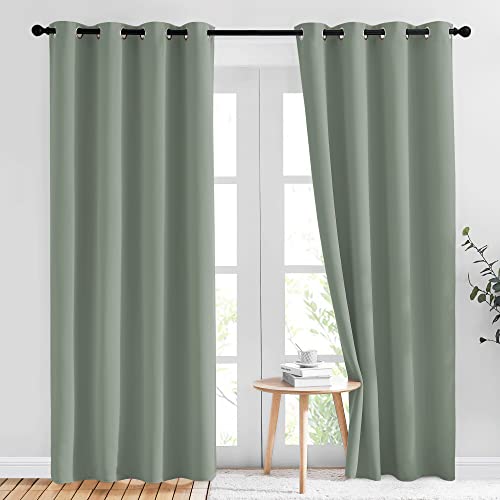
Where to buy
Check the latest price, availability and delivery on Amazon. We may earn a commission from qualifying purchases.
- Best overall: TWOPAGES Liz Linen Custom Curtain with Blackout Lining, 1 Panel — Check on Amazon
- HPD Half Price Drapes Signature Velvet Blackout Curtain, 100″W x 108″L, 1 Panel — Check on Amazon
- Vision Home Pinch Pleated Full Blackout Curtains, 40″W x 84″L, 2 Panels — Check on Amazon
- SwitchBot Curtain 3 (Rod) Automatic Curtain Opener, 1 Motor — Check on Amazon
See 2 more Amazon options
- Topfinel Pinch Pleat 100% Blackout Linen Curtains, 52″W x 90″L, 2 Panels — Check on Amazon
- NICETOWN 100% Blackout Curtains with Black Liner, 52″W x 84″L, 2 Panels — Check on Amazon
Read the full guide ↓
Disclosure: As an Amazon Associate, airfryerkitchensupply.com earns from qualifying purchases. Links to Amazon on this page are affiliate links; they cost you nothing extra. Listing details such as price and availability change often, so check the current Amazon listing before you buy.
A small bedroom concentrates the blackout curtain problem. The window is usually close to the bed — often directly beside the pillow — so every edge leak lands where you sleep. There is rarely spare wall or floor: a rod cannot always run wide, a long drop may land on a radiator, a desk or the bed itself, and pooled fabric is floor space the room does not have. And the window wall is a large share of the room’s total wall, so the wrong curtain shrinks the room all day. Four hundred dollars does not change the first fact of this category: on Amazon, true darkness is available at the accessible end of the range, and no curtain at any price blocks the light that comes around the edges — that is installation, and installation is free. So a $400 budget in a small bedroom is an allocation decision, and the small room simplifies it. Most small bedrooms have one window that matters, sometimes two. The honest question is whether to do the one window perfectly — made-to-order panels cut to its exact measurements — or to do every window well and spend the rest on the one genuinely new capability at this tier: a motor that closes the curtains on a schedule, so the blackout you bought gets used.
So the six picks below are judged by small-room standards and organized as ways to spend. For most small bedrooms we would start with the TWOPAGES Liz custom panel: at this budget, a configured blackout-lined pair for one window can fit within the frame, which finally buys the whole window the workroom way — exact width, exact drop, nothing puddled and nothing wasted. And if the curtains stay open because closing them is a chore, the SwitchBot motor changes the habit rather than the fabric.
In this guide
Quick Picks
Short on time? Each row below names a buyer type and the product that suits it, with a link to the listing. Note the configuration: two picks are pairs, two are single panels, one is a made-to-order panel, and one is a motor that moves curtains you hang separately.
| Buyer type | Pick | Why it stands out | Link |
|---|---|---|---|
| Best overall | TWOPAGES Liz Linen Custom Curtain with Blackout Lining, 1 Panel | Made to your window’s exact width and length; at this budget a configured pair for one window can fit — check price on Amazon | Check on Amazon |
| Best velvet, one wide window | HPD Half Price Drapes Signature Velvet Blackout Curtain, 100″W x 108″L, 1 Panel | One extra-wide lined velvet panel per opening — check price on Amazon | Check on Amazon |
| Best premium ready-made | Vision Home Pinch Pleated Full Blackout Curtains, 40″W x 84″L, 2 Panels | A narrower 40-inch pair that suits small windows, with flocked blackout lining and weighted hems — check price on Amazon | Check on Amazon |
| Best automation | SwitchBot Curtain 3 (Rod) Automatic Curtain Opener, 1 Motor | Clips onto your existing rod and closes the curtains on a timer — check price on Amazon | Check on Amazon |
| Best tailored look, both windows | Topfinel Pinch Pleat 100% Blackout Linen Curtains, 52″W x 90″L, 2 Panels | Lined pinch pleats sold as a pair, at the accessible end of this tier — check price on Amazon | Check on Amazon |
| Best true blackout, most accessible | NICETOWN 100% Blackout Curtains with Black Liner, 52″W x 84″L, 2 Panels | A sewn-in black liner makes even pale colors fully dark beside the bed, at the accessible end of this tier — check price on Amazon | Check on Amazon |
How These Picks Were Chosen
The first filter was the budget, applied to the configuration you would actually buy. Every product below is a real Amazon listing whose relevant configuration — a pair, a single panel, a made-to-order panel in a typical bedroom size, or the motors for one window — fits within this guide’s $400 budget frame in the United States; at this tier the interesting question is how the budget divides, so each review describes plainly what a whole window involves in that product. Curtain listings quote the smallest, plainest version of themselves first: the headline configuration is usually the narrowest width, the shortest drop and, on custom listings, no lining at all. Check the current price on Amazon for the exact configuration you need, because the configured version is rarely the headline version.
The second filter was the word “blackout” itself, which the curtain industry uses loosely enough to be nearly meaningless. Five of the six picks block light by construction: a sewn-in black liner (the NICETOWN), a plush blackout lining behind velvet (the HPD), a flocked blackout lining behind a linen-blend face (the Vision Home), a lined pinch pleat (the Topfinel), or a blackout lining you select on a made-to-order panel (the TWOPAGES). The sixth pick, the SwitchBot motor, blocks no light at all and is here for a stated reason: at this budget the binding constraint on most blackout setups is not fabric but behavior — curtains that are never closed block nothing — and automation is the one purchase here that addresses that directly. Anything whose blackout claim we could not trace to a construction detail was left out. One famous name, TWOPAGES’ Patti panel in genuine Belgian flax linen, is named but not linked: repeated checks found no featured offer for its Amazon listing.
The third filter is the small room itself. Every pick was re-judged at close range. Does the construction block light when the sleeper’s head is two feet from the glass? Does the panel’s width and length respect a room with no spare inches — or demand fullness, puddling and wall space the room does not have? Does the color and fabric keep the room feeling its size in daylight, or turn the biggest wall into a cave? At this tier the re-judgment cuts one way: the premium a small room should pay for is exact fit, because a small room cannot absorb a ready-made panel’s compromises the way a large one can. We did not hang these curtains ourselves. We compared maker listings, specification pages and independent roundups, and favored the qualities that actually separate purchases here: liner-based blocking, exact or honestly-sized configurations, headers that seal at the top, weight that holds a panel flat against the wall beside a bed, and — for the custom pick — what a measuring error costs when returns are off the table.
The 6 Best Blackout Curtains for Small Bedrooms Under $400
TWOPAGES Liz Linen Custom Curtain with Blackout Lining, 1 Panel
Who it suits: Small bedrooms with one window that ready-made sizes fit badly — narrow, off-center, shorter than standard, tucked into a dormer or alcove — and anyone who wants that window done the workroom way: measured, pleated, lined, finished.
The Liz works the way curtains used to be bought: you give the workroom your measurements and they make the panel. On Amazon’s TWOPAGES storefront you choose the width and length, one of eight header styles (pinch pleat, goblet, tab top, back tab, rod pocket, flat hook and two grommet finishes), and — the decision this guide cares about — the lining. The options run from unlined, which the brand itself says filters only about 60 percent of light, through privacy and room-darkening linings up to blackout and thermal blackout. Order it with the blackout or thermal blackout lining and the Liz becomes a genuine blackout curtain with a linen-blend face in 38 colors, its pleats memory-trained so the folds hang in even columns. At the $200 tier, for a small bedroom, this was a one-panel decision; at $400 it becomes a whole-window one, and that is the honest reason it tops this guide.
In a small bedroom, made-to-order fit is not a luxury detail — it is the whole point, for three reasons. First, exact length ends the worst curtain compromise: a ready-made drop two inches too long puddles onto floor space you do not have, while one two inches short leaves a light slot at the bottom, at the height of a bed pushed against the window wall. A Liz panel ordered to skim your floor — or to the exact in-between length below the sill and clear of the radiator — does neither. Second, exact width means you buy the fullness your window needs, one and a half to two times the glass, not a standard panel’s extra fabric bunching on a narrow window. Third, the flat-hook header on a ceiling-mounted track: in a small room with little wall above the frame, a ceiling track lets the curtain cover the wall from ceiling to floor, sealing the top edge and making the window wall read as one calm surface. With usually one window that matters, the per-panel economics that make custom extravagant across a whole house become reasonable here.
Custom ordering needs one caveat stated plainly: the final cost is a formula, not a single figure — it builds from the base panel plus size, header and lining choices, times the number of panels. The unlined base configuration sits at the accessible end of that range, while the blackout-lined, made-to-measure panel this guide recommends sits toward the premium end of the tier. At this budget a configured pair for one window can fit within the frame, with the measuring risk described below as the real cost of admission. Note the small-room advantage inside that formula: because the configuration grows with every inch, a small window’s panels sit at the more favorable end of the range. A wall of glass can carry a pair past this budget on this product alone, which is a fact about made-to-order, not a defect in it. Check price on Amazon for your exact measurements before you commit.
- Made to your exact width and length — no puddling, no short drop, no wasted fullness.
- Lining is a real choice: select blackout or thermal blackout for a true blackout curtain, not a room darkener.
- At this budget the configured pair can fit: a blackout-lined pair for one window sits at the premium end of this tier — check price on Amazon for your measurements.
Honest limitation: It is sold per panel, made to order with a production wait, and — as the listing states — returns are not accepted for non-quality issues, so a measuring error is yours to keep. In a small room that cuts both ways: the fit is perfect if you measure well, and there is no spare wall to hide a mistake. The headline base configuration also excludes the lining this guide is recommending; budget for the configured panel, not the entry configuration.
Choose it if your small bedroom has one window worth doing exactly right, and you can measure carefully twice. Skip it if your windows are standard and several — the ready-made picks below dress them far more affordably; check price on Amazon to compare — or if your measurements are a guess; buy a returnable ready-made pair first and measure against it.

HPD Half Price Drapes Signature Velvet Blackout Curtain, 100″W x 108″L, 1 Panel
Who it suits: The minority of small bedrooms whose one window is genuinely wide — a slider, a picture window, or a wall of glass in a small footprint — and who want it covered in a single sweep of lined velvet, with budget left over.
Half Price Drapes built its name on drapery fabrics and constructions that used to be trade-only, sold direct to consumers. The Signature Velvet is its flagship — a polyester velvet face with a plush blackout lining behind it, described in coverage of this exact panel as 100 percent blackout. The configuration linked here is a single panel 100 inches wide by 108 inches long, wide enough to dress a sliding door or a wide bedroom window as one continuous sweep of velvet instead of two panels meeting in a gap-toothed middle. Its header is a grommet top, so it slides open and closed daily without a fight. Velvet earns its place here on physics as much as looks: it is the heaviest common curtain fabric, hangs in straight columns that seal against the wall, and the pile swallows stray light. Beside a bed, that weight is a genuine asset — a heavy panel does not billow, shift or gap when the bed is made or the window is cracked open at night.
Now the small-room judgment, honestly, because this is the pick where the angle matters most. For a standard small-bedroom window — 36 to 48 inches of glass — this panel is too much curtain: deep, bunched folds projecting into the room, a dark mass occupying the entire window wall, and a 108-inch drop that must be hemmed or puddled. Velvet’s cave effect is real in a small room: a wall of dark pile makes the room read smaller and moodier. Where the panel earns its place is the small room with the opposite problem — a modest footprint wrapped around one oversized opening. There, two standard panels would meet in a gap-toothed middle directly above the pillow, and one continuous velvet sweep is not an indulgence but the correct construction. Treat it as a considered purchase in the middle of this tier. In a small room, one panel is usually the whole buy — and this budget can still leave room for a properly anchored rod and a NICETOWN pair for a second window. Check the current price on Amazon before you plan the rest of the spend around it.
- A single 100-inch-wide panel covers sliders and wide windows without a center gap over the bed.
- Velvet face over a plush blackout lining — the heaviest, most light-sealing construction in this guide.
- Sits in the middle of this tier, so the panel plus a second window can still fit this budget — check price on Amazon.
Honest limitation: Sold per panel, and the panel is genuinely heavy, so it wants a properly anchored rod; the grommet header also leaves the usual row of small light gaps along the top unless the rod is mounted high and wide. In a small room the limitation doubles: honestly oversized for a standard window, where its folds and dark pile will crowd the room and shrink it visually.
Choose it if your small bedroom’s one window is wide and you want it dressed in a single piece of velvet. Skip it if your window is standard width — the standard 50-inch Signature Velvet panels cover those for less, with less cave — or if your rod is a tension rod that will bow under the weight.

Vision Home Pinch Pleated Full Blackout Curtains, 40″W x 84″L, 2 Panels
Who it suits: Small bedrooms with narrow windows — the 36 to 44 inch openings that standard 52-inch pairs swamp — and buyers who want the most finished ready-made construction here: weighted hems, permanent pleats, a flocked blackout lining, in a pale linen blend.
Vision Home is the premium end of ready-made on Amazon. The face is a linen blend — the listing specifies 90 percent recycled polyester and 10 percent linen — and behind it sits a separate blackout lining with a flocked finish, so the blocking is done by a layer, not by the face fabric’s density. Each panel carries seven permanent pinch pleats and a weighted bottom hem, the unglamorous detail that separates curtains that hang in columns from curtains that flare at the bottom like a skirt. Hooks are in the box, the header also offers a back-tab option, and the brand cites independent testing reporting no detected formaldehyde. For a small room, the headline is the size grid. The linked configuration is a 40-inch-wide pair — noticeably narrower than the standard 52-inch pairs elsewhere in this guide — which means less bunching, less projection into the room and less wall eaten on both sides of a narrow window. The line also runs to 60-inch-wide single panels and lengths up to 120 inches.
Its position in the tier is precise: a premium ready-made pair, above the accessible pairs below and well below a configured custom pair — check the current price on Amazon for the size you need, and confirm the configuration, since the line’s larger sizes are sold per panel. For the small-room allocation, two windows in this construction are the premium-ready-made version of the two-windows-done-well plan.
- A 40-inch pair sized for narrow windows — less bunching and less wall lost than standard 52-inch pairs.
- Flocked blackout lining behind a pale linen-blend face — full darkness without the cave effect.
- Weighted bottom hems and seven permanent pleats per panel; hooks included, back-tab option on the same line — check price on Amazon.
Honest limitation: The line’s larger configurations are per-panel — the pair configuration that makes this pick good value does not apply to the 60-inch singles, so check the current price on Amazon for the exact size. The face is also a linen look and feel, not the natural-fiber article.
Choose it if your small windows are narrow and you want the most finished ready-made pair here, in one window or two. Skip it if the standard sizes in the Topfinel below fit your windows and your eye — the darkness is the same, and the difference is finish and fit, not light.

SwitchBot Curtain 3 (Rod) Automatic Curtain Opener, 1 Motor
Who it suits: Small bedrooms where the window is within arm’s reach of the bed and the curtains still stay open — hung perfectly, then left through a bright morning because closing them is a chore — and anyone who wants the room dark at a set hour and bright at wake-up.
This is the one pick in the guide that is not a curtain, included openly, because it buys the one thing no fabric at any price can: consistency. The Curtain 3 is a small motorized unit that clips onto an existing curtain rod — the linked version is the rod model — and drives the panel along it. The maker’s specifications rate it for curtains up to about 8 kilograms per unit, with a quiet mode for bedroom use; it runs on a rechargeable battery, works over Bluetooth with the SwitchBot app and timers out of the box, and adds voice and Wi-Fi control via the brand’s hub, sold separately. Set a schedule once — close at bedtime, open gradually at wake-up — and the blackout setup you already own performs every day instead of on the days you remember. In a small room two details matter more than anywhere: the quiet mode is not a footnote when the motor sits three feet from the pillow, and the room’s one window is usually its one rod, so a single window’s worth of motors finishes the job. A pair of panels needs a motor each.
Motorizing one two-panel window sits in the middle of this tier — check price on Amazon for the single motor and the multi-motor packs. That is the small-room hybrid: a motorized main window, plus a NICETOWN or Topfinel pair on it or on a second window, fits comfortably within this budget, with part of the budget honestly unspent. No other pick here changes what the room does while you are asleep; this one does, which is why it earns a slot in a curtain guide despite containing no cloth.
- Clips onto your existing rod and panels — no new curtains, no track installation, no wiring.
- Timers close the curtains at night and open them at wake-up; quiet mode matters beside the bed; rated for curtains up to about 8 kg per unit.
- Mid-tier positioning for a two-panel window’s worth of motors — check price on Amazon.
Honest limitation: It blocks no light by itself — it motorizes curtains you must still buy and hang well — and a two-panel window needs two motors, not one. Voice and Wi-Fi control require the brand’s hub, sold separately, the battery needs periodic recharging, and heavy lined panels near the weight limit on a long rod are the setup most likely to test it.
Choose it if the curtains you already own are good and the routine is what fails. Skip it if your current curtains are the problem — thin, short or unlined — because motorizing a bad curtain gives you a punctual bad curtain; fix the fabric first with the picks above or below.

Topfinel Pinch Pleat 100% Blackout Linen Curtains, 52″W x 90″L, 2 Panels
Who it suits: Small bedrooms with two windows to dress, or one window and a firm preference for ready-made — the tailored, pleated-front look in a lined pair that can be returned if the color is wrong.
The Topfinel is the ready-made answer to the TWOPAGES at the top of this guide: a faux-linen panel with sewn pinch pleats, a blackout lining, and hooks and rings in the box, sold as a pair rather than by the panel. The pleats are the point. A grommet curtain waves; a pinch pleat curtain falls in set columns that make a bedroom look dressed rather than covered, and in a small room that discipline matters — the window wall is always in view, and even columns read as calm where bunched fabric reads as clutter. The configuration linked here is the 52 by 90 inch pair in Birch, a warm neutral that keeps a small room light in the daytime; the back-tab alternative in the same listing lets you thread the rod through hidden loops — in a small room, back tabs also pull the panel closer to the wall, narrowing the side gap beside the bed.
Its position at the accessible end of this tier is what makes it the volume pick, sold by the brand’s own store — check price on Amazon for the size you need. The small-room point is simple: two windows dressed in matching, lined, pleated pairs use only a modest share of this budget, leaving the rest for a motor, a rod, or the bed itself. One honest check before you order: the 90-inch drop against your ceiling. In a small room with an 8-foot ceiling, 90 inches can puddle, and puddling is exactly what a small floor cannot spare — measure the drop you can actually use, and hem rather than pool. The difference from the TWOPAGES is not the silhouette in a photograph; it is that the Liz is cut to your window with your choice of lining, and the Topfinel comes in the sizes it comes in.
- Sewn pinch pleats with hooks and rings included — the tailored look, ready-made, sold as a pair.
- Lined blackout construction behind a faux-linen face; back-tab hanging option on the same listing pulls panels closer to the wall.
- At the accessible end of this tier for the 52 x 90 pair — check price on Amazon; two small windows stay well within this budget.
Honest limitation: The pleats arrive needing arrangement and a steam, the size grid is fixed — if your window falls between lengths you will hem or puddle — and panels hung on rings sit off the wall, so side light leakage at pillow distance needs the overlap discipline described later in this guide.
Choose it if your windows are standard and there are two of them, or you want the pleated look this week at a pair price. Skip it if one window is an in-between size that matters — that window is the TWOPAGES’ job — or you want a natural-fiber face; this is a convincing faux linen, and it stays faux under your hand.

NICETOWN 100% Blackout Curtains with Black Liner, 52″W x 84″L, 2 Panels
Who it suits: Small bedrooms where the window sits beside or behind the bed — day sleepers, night-shift workers and anyone whose pillow is close enough to the glass to read by a streetlight’s leak.
Most blackout curtains ask the face fabric to do the blocking, which is why pale colors fail: a beige triple-weave glows at sunrise, two feet from your face in a small room. NICETOWN’s lined line removes the face fabric from the equation. Each panel is two layers of woven polyester — about 230 GSM apiece, roughly 460 GSM combined — with a black liner sewn in between, so the panel blocks light completely regardless of whether the front is white, beige or forest green. That color freedom is a small-room feature: you can choose the pale front that keeps a small room feeling its size in daylight and still get a genuinely dark room at night, instead of choosing between a cave and a glow. The configuration linked here is the standard bedroom one — two 52 by 84 panels, grommet top with 1.6-inch rings — at the accessible end of this tier.
At this tier the NICETOWN is the small room’s allocation anchor: this budget covers both windows with room to spare — or, more usefully, one pair here becomes the fabric half of the hybrid, with a SwitchBot motor set making the room dark, pale and self-closing well within this budget. Everything else about this curtain serves the window beside a bed. The weight that makes the panels a handful to hang is the same weight that holds them flat against the wall, narrowing the side gaps light leaks through — and at pillow distance, the side gap is the leak that matters, because it aims a bright vertical line directly at the sleeper. The grommet header is the plainest here, chosen because these panels get opened and closed every day.
- A sewn-in black liner delivers full blackout in any color, including the pale neutrals that keep a small room feeling its size.
- Two-layer construction at roughly 460 GSM combined — the heaviest ready-made pair in this guide, and it hangs flat beside a bed.
- At the accessible end of this tier for the 52 x 84 pair — check price on Amazon; the fabric half of an automated small room, well within budget with motors.
Honest limitation: Care is the tax on that liner: the lined panels are hand wash or dry clean only, where unlined curtains go in the machine — and in a small room, curtains live close to the bed and gather dust accordingly. The grommet top also leaks a dotted row of light along the header on bright mornings unless the rod is mounted well above the frame; the liner blacks out the fabric, not the installation.
Choose it if total darkness at pillow distance, at the most accessible position in this tier, in a room-brightening color is the brief. Skip it if you want a natural-fiber look, a pleated header, or a curtain you can machine wash without thinking about it — or if there is only one window and it deserves better theatre than a grommet top.

Comparison Table
| Product | Type | Best use | Link |
|---|---|---|---|
| TWOPAGES Liz Linen Custom Curtain | Made-to-order panel, blackout lining option | One small-room window done exactly right — check price on Amazon | Check on Amazon |
| HPD Signature Velvet Blackout, 100″W x 108″L | Extra-wide velvet single panel | One wide window or slider in a single sweep — check price on Amazon | Check on Amazon |
| Vision Home Pinch Pleat Full Blackout, 40″W x 84″L | Linen-blend pair, flocked lining | The most finished ready-made pair, sized for narrow windows — check price on Amazon | Check on Amazon |
| SwitchBot Curtain 3 (Rod) | Retrofit curtain motor | Automating the room’s one window — check price on Amazon | Check on Amazon |
| Topfinel Pinch Pleat Blackout, 52″W x 90″L | Lined pinch pleat pair | The tailored look on both windows, at the accessible end of the tier — check price on Amazon | Check on Amazon |
| NICETOWN 100% Blackout with Black Liner, 52″W x 84″L | Black-lined pair | Total darkness in any color beside the bed, at the accessible end of the tier — check price on Amazon | Check on Amazon |
How to Choose Blackout Curtains for a Small Bedroom Under $400
- Allocate before you shop. Decide which honest spend this is — one window done perfectly, every window done well, or one window automated — because the right product differs in each case.
- Measure the window, then measure the room’s spare inches. A small room may not allow a rod 8 inches past the frame or a drop that clears the furniture under the window. Know your real mounting space first.
- Read the configuration before the price. Per panel or per pair, and which width and length? A single panel and a pair are not comparable until you know how many panels your window needs and what each one measures — check the current price on Amazon for the full configuration, not the headline.
- Ask what does the blocking. A sewn-in liner — black, white or flocked — blocks light regardless of face color, which is what lets a small room stay pale. An unlined triple-weave blocks by density and works far better in dark colors. If a listing will not say which construction it is, assume the weaker one.
- Buy width at 1.5 to 2 times the window — and no more. Fullness seals the edges and overlaps the middle, but in a small room excess fabric is bulk you live inside. A custom panel, a 40-inch pair or a correctly sized pair beats an oversized panel bunched onto a narrow window.
- For custom, measure like it is final — because it is. Made-to-order panels are not returnable for fit. Measure the rod or track, not the window; measure twice, in two places; if the room is mid-renovation, buy one returnable ready-made pair first and let the custom order follow the finished room.
- Decide sill length versus floor length on purpose. Floor length seals the bottom edge; sill length frees the wall and floor under the window for the bed, desk or radiator that is probably there. Neither is a default.
- Choose the header for the seal, not just the look. A ceiling track with pinch pleats or flat hooks seals the top completely and suits small rooms with little wall above the frame. Grommets slide daily and leak a dotted line at the top. Back tabs sit close to the wall and narrow the side gap. Motors need panels that glide.
- Weigh the panel, then the rod. Lined and velvet panels are heavy, and a motorized pair adds its own load limit. A rod anchored into studs or proper wall plugs is part of the purchase; a tension rod under a lined pair is a countdown to meeting it on the bed.
- Decide the liner color from both sides of the glass. Black liners block marginally more and show black through the window, which some landlords and HOAs prohibit. White and flocked liners look uniform from outside and disappear against a pale wall.
- Check the care label before the color. Lined curtains are frequently hand wash or dry clean only, and small-room curtains hang close to the bed, gathering dust faster than any in the house.
One Window Done Perfectly, or Two Done Cheaply: The Small-Room Allocation
The first allocation is concentration: spend nearly all of it on the one window that defines the room. Two TWOPAGES Liz panels in the thermal blackout lining, configured for the room’s window, can take up most of this budget on one opening — check price on Amazon for your measurements — spent the workroom way: exact width, exact drop, sewn pleats, a lining chosen on purpose. In a small bedroom this allocation is stronger than anywhere else: there is usually only one window, close to the bed, so its fit failures are the ones you sleep next to. This is the right shape of spend when the room has one problem window. It is the wrong shape when the room’s windows are standard, because then the custom premium buys fit you did not need.
The second allocation is coverage, and in a small room it is strikingly affordable. Two windows in the Topfinel’s lined pinch pleats use only a modest share of the budget; the Vision Home’s more finished construction sits higher per window while staying well within the frame; the NICETOWN’s black-lined pairs sit at the most accessible end of all. A small bedroom where every window goes properly dark, in matching pleats and colors chosen for the room, is a genuinely premium outcome — it spends its premium on repetition instead of on any single panel, and leaves most of a $400 budget unspent — the allocation most small rooms should choose.
The third allocation is the hybrid, and for a small bedroom it may be the best one: automate the one window and cover it plainly. A SwitchBot motor set for a two-panel window — check price on Amazon — on the room’s rod, plus a NICETOWN or Topfinel pair on that window, fits comfortably within this budget. What the hybrid buys that neither pure allocation does is a routine: the room closes itself at bedtime and opens itself at wake-up, every day, including the days you come home too tired to care — and the motor’s quiet mode works three feet from the pillow without becoming the thing that wakes you. Blackout curtains only work when they are closed; at $400 the budget can pay for the closing.
The Window Beside the Bed: Sealing the Edges at Pillow Distance
In a large bedroom, a mediocre blackout installation fails politely: a halo at the edges, a glow at the top. In a small bedroom the same installation fails at point-blank range. When the window is beside or behind the bed, the side gap between panel and wall is a bright vertical line at exactly pillow height, the header leak falls across the bed, and the short hem’s light slot lands on the sleeper rather than the floor across the room. This is why small-room blackout is an installation discipline before it is a shopping decision — the fabric is the one part of the system already solved at the accessible end of the range.
The fixes are the same four edges as anywhere, executed within a small room’s limits. At the top, mount the rod as high as the wall allows — or better, use a ceiling-mounted track, which closes the top edge entirely. At the sides, extend the rod past the frame as far as the wall allows so the panel’s edge rests against wall, not glass; a wraparound rod that curves back to the wall closes the side gap almost entirely. In the middle, the panels must overlap: at 1.5 to 2 times the window’s width — and no more, in a small room — the folds interlock instead of straining to meet. At the bottom, the panel should touch the floor or the sill; a floating hem is a light slot aimed at the pillow. Weight is an ally: the heavy lined pairs hang still against the wall, while a light panel gets pushed out of position nightly. And the final seal is behavioral: a motor on a schedule closes the edges every night. Judge every pick by how it behaves at two feet.
The Cave Effect at $400: Spending More Without Shrinking the Room
Every blackout curtain is two products: the one that performs at night and the one that decorates the room all day. In a small bedroom the second dominates, because the window wall may be a third of the room’s visible surface and the curtain is the largest single textile in it. A wall of dark, heavy fabric absorbs daylight and lamplight alike, pulls the wall visually toward the bed, and makes a small room feel smaller, lower and moodier — the cave effect. A bigger budget makes this trap easier to fall into: the premium fabrics at this tier — velvet above all — deepen any color they are made in. For some sleepers that enclosure is the point. For many small rooms it is a slow daily tax on the space, paid every hour the curtains are open as much as closed.
The escape is construction, not compromise. The cave effect is a property of the face fabric; darkness is a property of the liner — and the two are independent. A black-lined NICETOWN pair in white or beige blocks light completely while presenting a pale, room-brightening face. The Vision Home puts a linen-blend face over a flocked liner for the same trick with finish and texture, and its 40-inch width keeps the textile’s footprint smaller. Velvet is where the choice becomes real: the HPD in a deep color is a cave you choose, magnificent and enclosing — chosen as design, for a wide window, with open eyes, rather than drifted into. The practical rule is simple: decide how the room should feel at noon before you decide how dark it must be at midnight, then buy the liner that delivers the midnight without surrendering the noon. At $400 both decisions can be made deliberately; what you cannot afford is a dark room by accident of a color chart.
Common Buying Mistakes
Final Recommendation
- Most buyers: TWOPAGES Liz Linen Custom Curtain with Blackout Lining — one window, done exactly right.
- One wide window or slider: HPD Half Price Drapes Signature Velvet Blackout Curtain, 100″W x 108″L.
- The most finished ready-made pair: Vision Home Pinch Pleated Full Blackout Curtains, 40″W x 84″L, 2 Panels.
- Curtains that close themselves: SwitchBot Curtain 3 (Rod) Automatic Curtain Opener.
- The tailored look, both windows: Topfinel Pinch Pleat 100% Blackout Linen Curtains, 52″W x 90″L, 2 Panels.
- Pure darkness beside the bed, most accessible pick: NICETOWN 100% Blackout Curtains with Black Liner, 52″W x 84″L, 2 Panels.
Our top two are the TWOPAGES Liz and the HPD Signature Velvet, because between them they cover the two honest reasons to spend at the premium end on a single window in a small bedroom: an opening standard sizes cannot dress without wasting scarce inches, and one wide opening that deserves a single sweep of lined velvet. The Liz is the workroom option — your measurements, your lining, sewn pleats, an exact hem — and at this budget it can cover the pair. The HPD is the material option: it belongs over wide glass, not over a standard window it would swamp. But the finding of this guide is that most small bedrooms should allocate before they admire. The NICETOWN pair and the Topfinel pair, both at the accessible end of this tier, deliver the darkness and the tailored look respectively — check price on Amazon for each; two windows of either leave most of the budget unspent; a SwitchBot set delivers the routine; and the Liz delivers the one window that deserves it. Measure honestly, check the current price on Amazon for the full configuration rather than the headline, mount the rod high and as wide as the room allows, and spend the $400 where the room — not the budget — asks for it.
Frequently Asked Questions
Do blackout curtains really block 100 percent of light?
A lined curtain can block essentially all the light that hits the fabric — that is what the black, white or flocked liner is for, in any face color. What no curtain blocks by itself is the light that travels around it: over the top, in at the sides, under a short hem. In a small bedroom that edge light matters more than anywhere, because the window is usually close to the bed. “100 percent blackout” describes the panel; the room only gets there when the installation — width at 1.5 to 2 times the window, a high and wide rod or a ceiling track, panels that meet and reach the floor or sill — closes the edges.
What does $400 actually buy in a small bedroom that $200 does not?
Combinations and completion, not darker fabric. At $200 the custom option was one panel; at $400 the configured custom pair can fit whole, both of a small room’s windows can be dressed in the premium ready-made construction, and a motorized window enters the budget. Darkness tops out at the accessible end of the range; everything above it is fit, fabric, coverage and automation.
Are custom curtains worth it for a small bedroom?
More than for any other room, if there is one main window. A small room cannot absorb a ready-made panel’s compromises — the extra width bunches, the extra length puddles, the short drop leaks at pillow height. A made-to-order panel like the TWOPAGES Liz is cut to the opening with your lining and header, and at this budget the pair can fit where the $200 tier could only stretch to a panel. The conditions are real: sold per panel, made to order, and not returnable for a measuring mistake.
Should I do one window perfectly or two windows cheaply?
Count the windows the room actually has and ask which failure you sleep next to. If there is one window and it is beside the bed, perfection is the right buy: its leaks are the ones at pillow distance, and the configured custom pair exists for exactly it. If there are two windows, coverage usually wins — two windows dressed in lined pairs from the accessible to premium ready-made end of this tier will darken the room more completely than one perfect window and one bare one, and the leftover budget can still motorize the window beside the bed.
Should small-bedroom curtains be sill length or floor length?
It depends on what stands under the window. Floor length seals the bottom edge and makes the room feel taller, and it wins where the wall below is clear. Where a bed, desk, dresser or radiator stands under the window — the common small-room layout — a clean sill-length panel usually darkens better in practice, because a floor-length panel draped over furniture bunches and leaks anyway. A custom panel can be ordered to the exact in-between length; if you buy ready-made, hem rather than puddle.
Will blackout curtains make my small room feel smaller?
The dark ones can. A wall of dark fabric absorbs light all day and pulls the window wall visually inward — the cave effect — and premium dark fabrics like velvet deepen it. The fix is to separate the two jobs: darkness comes from the liner, not the face color. A black-lined pair in white or beige, or a linen-blend face over a flocked liner, blocks light completely while keeping the room pale. Choose a dark, heavy curtain only if the enclosed, cocoon feeling is what you actually want.
Are motorized curtain openers worth it in a small bedroom?
For the room’s one window, they solve the problem fabric cannot: curtains that are never closed block nothing. A retrofit motor like the SwitchBot Curtain 3 clips onto the rod you already have, runs on a schedule — closed at bedtime, open at wake-up — and sits in the middle of this tier for a two-panel window; check price on Amazon for the configuration you need. The maker’s quiet mode matters when the motor is feet from the pillow, and a one-window room needs only that window’s motors. Judge it by your habits: if your curtains already get closed daily by hand, the motor buys convenience; if they hang open for weeks, it buys the entire point of owning blackout curtains.
- Best Blackout Curtains Under $400
- Best Blackout Curtains For Small Bedrooms Under $200
- Best Blackout Curtains For Apartments Under $400
- Best Blackout Curtains Under $700
- Best Bedside Lamp Under $400
- Best Bed Sheet Set Under $400
Related Guides
- Best Blackout Curtains For Small Bedrooms Under $30
- Best Blackout Curtains For Small Bedrooms Under $75
- Best Blackout Curtains For Small Bedrooms Under $100
- Best Blackout Curtains For Small Bedrooms Under $200
- Best Blackout Curtains For Small Bedrooms Under $700