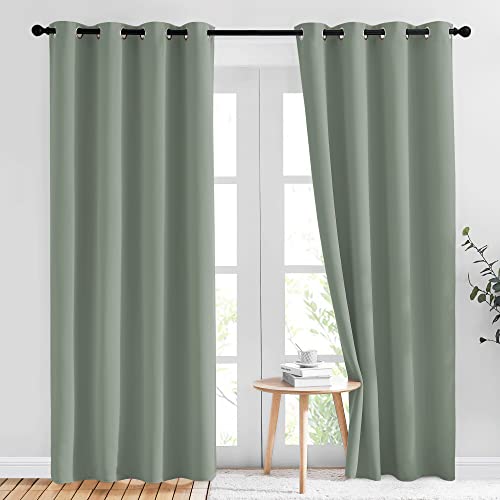
Where to buy
Check the latest price, availability and delivery on Amazon. Orders are placed on Amazon. We may earn a commission from qualifying purchases.
- Best overall: TWOPAGES Liz Linen Custom Curtain with Blackout Lining, 1 Panel — Check on Amazon
- HPD Half Price Drapes Signature Velvet Blackout Curtain, 100″W x 108″L, 1 Panel — Check on Amazon
- Topfinel Pinch Pleat 100% Blackout Linen Curtains, 52″W x 90″L, 2 Panels — Check on Amazon
- NICETOWN 100% Blackout Curtains with Black Liner, 52″W x 84″L, 2 Panels — Check on Amazon
See 2 more Amazon options
- H.VERSAILTEX Linen 100% Blackout Curtains, 52″W x 96″L, 2 Panels — Check on Amazon
- Dchola Velvet Curtains, 52″W x 84″L, 2 Panels — Check on Amazon
Read the full guide ↓
Disclosure: As an Amazon Associate, airfryerkitchensupply.com earns from qualifying purchases. Links to Amazon on this page are affiliate links; they cost you nothing extra. Listing details such as price and availability change often, so check the current Amazon listing before you buy.
A guest room makes one promise the rest of the house does not: sleep as well here as you do at home, or better. The window is where that promise is usually broken — guests sleep in an unfamiliar bed, often after travel, often on a schedule that is not yours: the in-laws who want to sleep past seven, the friend off a red-eye who needs a nap at noon, the grandchild who goes down at six while the sun is still up. Sheers cannot keep that promise, and guests will not complain; they will just sleep badly and say the visit was lovely. Blackout curtains are the host’s fix, made once, in advance — hang them, fix the edge leaks, and the room goes dark when a guest closes them, with nothing to adjust or figure out.
Two hundred dollars is a strange budget for that job, and this guide will be honest about why. On Amazon, darkness itself is cheap: the lined NICETOWN pair below blocks light about as completely as fabric can, and the pleated Topfinel pair does it in a tailored hang — check price on Amazon for both. No curtain at the top of this budget makes a guest room darker than those do. What the extra money buys is fit, fabric and form — a made-to-order TWOPAGES panel cut to your exact window with sewn pinch pleats and a blackout lining, the way a hotel window is built; a single extra-wide sweep of lined velvet from HPD for the guest room with a sliding door; or the same darkness spread across the whole room, second window included, with money left for a proper rod. The six picks below are organized by what the money is for, and judged the way a guest room is used: how it reads from the doorway, how dark it is at noon, and how gracefully it serves a room that may not be a guest room forever.
In this guide
Quick Picks
Short on time, or comparing several options at once? Each row below names the guest-room job and the product that suits it, with a link to the listing. Note the configuration as you read: three of these picks are sold as a pair, two as a single panel, and one as a made-to-order panel cut to your measurements — in this category, that is never safe to assume.
| Buyer type | Pick | Why it stands out | Link |
|---|---|---|---|
| Best overall for guest rooms | TWOPAGES Liz Linen Custom Curtain with Blackout Lining, 1 Panel | The hotel construction — made-to-order size, sewn pinch pleats, a real blackout lining; configured panels sit at the upper end of this budget by size — check the current price on Amazon | Check on Amazon |
| Best boutique velvet | HPD Half Price Drapes Signature Velvet Blackout Curtain, 100″W x 108″L, 1 Panel | One extra-wide velvet panel with a plush blackout lining covers a slider or wide window in a single sweep; check price on Amazon | Check on Amazon |
| Best ready-made pinch pleat | Topfinel Pinch Pleat 100% Blackout Linen Curtains, 52″W x 90″L, 2 Panels | The tailored pleated look, lined and sold as a returnable pair, check price on Amazon | Check on Amazon |
| Best for guests who sleep in | NICETOWN 100% Blackout Curtains with Black Liner, 52″W x 84″L, 2 Panels | A sewn-in black liner makes even pale colors fully dark — true darkness at noon — check price on Amazon | Check on Amazon |
| Best linen look, long drops | H.VERSAILTEX Linen 100% Blackout Curtains, 52″W x 96″L, 2 Panels | Real linen-blend face with a white blackout liner, in lengths to 108 inches, check price on Amazon | Check on Amazon |
| Best velvet pair on a budget | Dchola Velvet Curtains, 52″W x 84″L, 2 Panels | Two soft velvet panels — check price on Amazon — with the honest caveat, printed in its own listing, that they darken (65–85%) rather than fully black out | Check on Amazon |
How These Picks Were Chosen
The first filter was the budget, applied to the configuration you would actually buy. Every product below is a real Amazon listing whose relevant configuration — a pair, a single panel, or a made-to-order panel in a typical bedroom size — sells at or under $200 in the United States. That sounds simple and is not, because curtain listings quote the smallest, plainest version of themselves: the headline price is usually the narrowest width, the shortest drop and, on custom listings, no lining at all. Prices change often, so this guide points you to check the current price on Amazon for each pick rather than printing a figure that will go stale.
The second filter was the word “blackout” itself, which the industry uses loosely. We separated the six picks into two honest classes. True blackout means a separate opaque layer does the work: a sewn-in black liner (the NICETOWN), a white blackout liner behind a linen-blend face (the H.VERSAILTEX), a plush blackout lining behind velvet (the HPD), a lined pinch pleat (the Topfinel), or a blackout lining you select on a made-to-order panel (the TWOPAGES). Room darkening means the fabric alone slows the light — and one pick, the Dchola velvet pair, is included in that class openly, because its own listing text rates it at 65 to 85 percent light blocking. In a guest room that distinction is not pedantry: it is the difference between a guest who sleeps until ten and a guest who is awake with the sun, being polite about it.
On top of those filters, this variant applied the guest-room tests. A guest room is used in bursts and judged whole, so we favored curtains a host installs once and forgets: no guest should ever have to learn a curtain. We weighted the doorway test — the spare room is the room a visitor takes in from the threshold, in daylight — and the noon test, because guests sleep at hours the household does not. And we weighted flexibility more heavily than for a primary bedroom: guest rooms change purpose more than any room, so returnability and the ability to move to another window are real virtues here, counted openly against the made-to-order pick. We compared maker listings, specification pages and independent roundups, and favored the qualities that separate curtains in this tier: whether the blackout comes from a liner or a hope, whether you are buying one panel or two, and the weight of the finished panel — because in blackout curtains, weight is most of the mechanism.
The 6 Best Blackout Curtains for Guest Rooms Under $200
TWOPAGES Liz Linen Custom Curtain with Blackout Lining, 1 Panel
Who it suits: Hosts whose guest room window defeats standard sizes — too wide, too tall, or a sliding door — and hosts who want the window finished the way a good hotel finishes it: measured once, made once, and then never thought about again.
The Liz is the one product in this guide that works the way curtains used to be bought: you give the workroom your measurements and they make the panel. On Amazon’s TWOPAGES storefront you choose the width and length, one of eight header styles (pinch pleat, goblet, tab top, back tab, rod pocket, flat hook and two grommet finishes), and — the decision this guide cares about — the lining. The options run from unlined, which the brand itself says filters only about 60 percent of light, through privacy and room-darkening linings up to blackout and thermal blackout. Order it with the blackout or thermal blackout lining and the Liz becomes a genuine blackout curtain with a linen-blend face in 38 colors, its pleats memory-trained so the folds hang in even columns instead of the crumpled accordion a cheap pleated panel arrives as. For a guest room, that hang is the hospitality: the window reads dressed from the doorway, and because the panel was cut to the opening, it overlaps the frame the way ready-made sizes approximate and rarely achieve.
Pricing for a custom panel needs the caveat stated plainly. The starting configuration is the plainest, smallest version, and the cost climbs with every inch of width and length and with the lining you add — a blackout-lined Liz in a standard bedroom size sits at the upper end of this tier, and a wide window needing two full panels can carry you past this guide’s budget on this product alone, so check the current price on Amazon for your exact configuration before you commit. For a guest room there is a second planning fact: made-to-order means a production wait, so this is a curtain you order weeks before a visit is on the calendar, not the week your guests announce one.
- Made to your exact width and length, with eight header styles including pinch pleat and a ceiling-track-friendly flat hook.
- Lining is a real choice: select blackout or thermal blackout and the panel is a true blackout curtain, not a room darkener.
- Memory-trained pleats and 38 linen-blend colors — the closest thing on Amazon to a curtain workroom, and the hotel hang in a guest room.
Honest limitation: It is sold per panel, made to order with a production wait, and — as the listing states — returns are not accepted for non-quality issues, so a measuring error is yours to keep. In a guest room that cuts deeper than anywhere else in the house: this is the room most likely to become a nursery, an office or a teenager’s room, and a panel cut and pleated for this exact window fits no other. The headline starting price also excludes the lining this guide is recommending; budget for the configured panel, not the starting configuration.
Choose it if your guest room’s window defeats standard sizes, the room’s purpose is settled, and you want one window done properly and permanently. Skip it if guests are coming soon, the room may change purpose in the next few years, or your measurements are a guess — start with a returnable ready-made pair instead.

HPD Half Price Drapes Signature Velvet Blackout Curtain, 100″W x 108″L, 1 Panel
Who it suits: Guest rooms with sliding doors or genuinely wide windows, and hosts who want the room to feel like a boutique hotel the moment a guest opens the door — weight, matte depth and hush, in one sweep of velvet.
Half Price Drapes built its name on drapery fabrics and constructions that used to be trade-only, sold at consumer prices. The Signature Velvet is its flagship — a polyester velvet face with a plush blackout lining behind it, which deal coverage of this exact extra-wide panel describes as 100 percent blackout. The configuration linked here is the statement one: a single panel 100 inches wide by 108 inches long, wide enough to dress a sliding door or a wide guest-room window as one continuous sweep of velvet instead of two panels meeting in a gap-toothed middle. That single sweep is a guest-room virtue beyond looks: there is no center gap for a sleeping-in guest to wake to, and nothing for a visitor to arrange, overlap or figure out — they draw one curtain and the room goes dark. Velvet earns its place here on physics as much as looks: it is heavy, hangs in straight columns that seal against the wall, and swallows stray light. The header on this extra-wide version is a grommet top, so it slides open and closed daily without a fight.
Positioned as a premium single panel in this tier, the HPD is priced per panel — check the current price on Amazon before you plan around it. For a guest room, a pair is often academic: one extra-wide panel is the whole point of the configuration, and one panel is the intended way to dress a slider or wide window within this budget. A pair is a decision to make with the live price in front of you.
- A single 100-inch-wide panel covers sliders and wide windows without a center gap — nothing for a guest to arrange.
- Velvet face over a plush blackout lining — the heaviest, most light-sealing construction in this guide.
- Sold per panel at the premium end of this tier — check the current price on Amazon.
Honest limitation: Sold per panel, and a pair can exceed this budget; the panel is also genuinely heavy, so it wants a properly anchored rod — the host’s one installation job is to anchor it like it matters, because it does. The grommet header leaves the usual row of small light gaps along the top unless the rod is mounted high and wide, which the host should do before the first guest, not after the first complaint that never comes.
Choose it if your guest room has one wide or tall opening and you want it dressed in a single, serious piece of velvet. Skip it if the windows are standard width — the standard 50-inch Signature Velvet panels cover those — or if your rod is a tension rod that will bow under the weight.

Topfinel Pinch Pleat 100% Blackout Linen Curtains, 52″W x 90″L, 2 Panels
Who it suits: Hosts who want the tailored, pleated-front look of the TWOPAGES above — neat columns, no grommet rings — without the made-to-order commitment: a lined, ready-made pair that ships like an ordinary Amazon order and can go back if the room’s plans change.
The Topfinel is the ready-made answer to the custom panel: a faux-linen panel with sewn pinch pleats, a blackout lining, and hooks and rings in the box, sold as a pair. The pleats are the point. A grommet curtain waves; a pinch pleat curtain falls in set columns that make a room look dressed rather than covered, and this product made that look a mass-market Amazon category — a popular seller in window curtain panels, widely recommended as the ready-made stand-in for far pricier pleated drapery. For a guest room specifically, it threads the needle the custom panel cannot: it delivers the boutique hang, it arrives in days rather than after a production wait, and it is returnable — which matters in the one room whose future is genuinely uncertain. If the guest room becomes a nursery next year, these panels move to another window or go back; a made-to-measure panel does neither. The configuration linked here is the 52 by 90 inch pair in Birch, a warm neutral; the back-tab alternative in the same listing lets you thread the rod through hidden loops if you prefer the panels to sit still rather than glide on rings.
Its positioning is the pleasant surprise of the guide: a lined, pleated pair at the value end of this tier — check price on Amazon. Pricing on this line moves by size, so check the current price for the configuration you need. The honest framing is that you are paying ready-made money for a lined, pleated pair, and the difference between this and the TWOPAGES is not the silhouette in a photograph; it is that the Liz is cut to your window with your choice of lining, and the Topfinel comes in the sizes it comes in.
- Sewn pinch pleats with hooks and rings included — the tailored, hotel-style look, ready-made, sold as a pair.
- Lined blackout construction behind a faux-linen face; back-tab hanging option on the same listing.
- A lined pair at the value end of this tier — check price on Amazon; a popular seller in its category — and returnable, unlike the custom pick.
Honest limitation: The pleats arrive needing arrangement and a steam — a host’s job to do before guests arrive, not a guest’s first impression to fix — the size grid is fixed, so if your window falls between lengths you will hem or puddle, and pinch pleat panels hung on rings sit off the wall, so side light leakage needs the overlap discipline described later in this guide.
Choose it if you want the pleated boutique look this week, at a pair price, in a standard size, with the option to change your mind. Skip it if your window is an in-between size, or you want a natural-fiber face — this is a convincing faux linen, and it stays faux under your hand.

NICETOWN 100% Blackout Curtains with Black Liner, 52″W x 84″L, 2 Panels
Who it suits: Hosts whose guests genuinely sleep in daylight — visiting night-shift family, travelers crossing time zones, new parents catching up on sleep, teenagers on holiday hours — in a guest room that is probably decorated in the pale colors cheap blackout curtains fail in.
Most blackout curtains ask the face fabric to do the blocking, which is why pale colors fail. NICETOWN’s lined line removes the face fabric from the equation: each panel is two layers of woven polyester — about 230 GSM apiece, roughly 460 GSM combined — with a black liner sewn in between, so it blocks light completely whether the front is white, beige or forest green. That construction is why this line, of all the curtains in this guide, is the one independent roundups keep naming for people who need a room genuinely dark at noon. The configuration linked here is the standard bedroom one — two 52 by 84 panels in white, grommet top with 1.6-inch rings — check price on Amazon. The weight is a second benefit: heavy panels hang flatter, narrowing the side gaps light leaks through.
The grommet header is the plainest here, chosen because these panels get opened and closed every day by someone who has never touched them before — a guest should never have to learn a curtain. Its value-tier positioning makes the honest point this tier keeps making: if your guest needs darkness, darkness sits at the value end. The trade-off is care, and in a guest room it mostly evaporates: the lined panels are hand wash or dry clean only, where unlined curtains go in the machine, but a guest room’s curtains are washed a few times a year rather than monthly, so the specialist pick’s main cost is one a host rarely actually pays.
- A sewn-in black liner delivers full blackout in any color, including the whites and pale neutrals guest rooms actually wear.
- Two-layer construction at roughly 460 GSM combined — the heaviest ready-made pair in this guide, and it hangs flat like it.
- A value-tier lined pair — check the current price on Amazon.
Honest limitation: Care is the tax on that liner: the lined panels are hand wash or dry clean only, so the pre-visit freshen-up is a shake and an airing rather than a machine cycle. The grommet top also leaks a dotted row of light along the header on bright mornings unless the rod is mounted well above the frame — the liner blacks out the fabric, not the installation, and the installation is the host’s job to finish in advance.
Choose it if total darkness for a sleeping-in guest, at the lowest honest price, is the brief. Skip it if you want a natural-fiber look, a pleated header, or a curtain you can machine wash without thinking about it.

H.VERSAILTEX Linen 100% Blackout Curtains, 52″W x 96″L, 2 Panels
Who it suits: Hosts whose guest room is a converted space — the attic room, the over-garage spare, the high-ceilinged back bedroom — with tall windows, who want a light-colored curtain that still blacks out and reads tidy from the street the room probably faces.
H.VERSAILTEX takes the opposite route from the NICETOWN: instead of a black liner, it backs a linen-blend face — 30 percent linen and 70 percent polyester, with a slubbed texture — with a white blackout liner. The result is rare in this tier: a pale, natural-looking panel that genuinely darkens a room, in a fabric with actual linen in it. The white liner also matters from outside: black-lined curtains show black through the glass, while a white backing reads as an ordinary, tidy curtain from the curb — the version of your house guests see on arrival. The brand notes GRS certification for recycled content, and the panels hang from nickel grommets sized for standard rods.
The configuration linked here is the 52 by 96 pair in Heathered Natural — the 96-inch drop that tall-window guest rooms actually need — and the line sits firmly in value territory — check price on Amazon. Lengths run to 108 inches, which makes this an honest value way in the guide to dress a tall window. Two cautions keep it below the top spots: the face is a blend, so the hand-feel is linen-adjacent rather than linen, and a white liner is the slightly less absolute blocker on the brightest west-facing glass. When you change size or color on the listing, confirm the title still describes the lined linen version: the brand’s older unlined linen-look panels are a different, weaker product wearing a similar name.
- A real linen blend face (30 percent linen) over a white blackout liner — pale curtains that actually darken.
- Lengths to 108 inches at the value end of this tier — check price on Amazon for the 96-inch pair.
- White liner presents a uniform, ordinary look from the street; GRS-certified recycled content.
Honest limitation: It is a blend, not the full linen experience, the grommet header is as plain as headers get, and white liners can show dust and handling marks sooner than black ones — these want a gentler wash routine than their price suggests, which in a little-used guest room is a fair trade and in a busy one is a chore.
Choose it if your guest room windows are taller than 84 inches or you want the natural, pale look without giving up blackout. Skip it if you want pinch pleats, a formal room, or the absolute maximum block on a brutal west-facing window — the black-lined NICETOWN is the safer tool there.

Dchola Velvet Curtains, 52″W x 84″L, 2 Panels
Who it suits: Hosts whose guest room leads a double life — an office, a craft room, a reading room with a daybed — and who want the velvet look for the room’s everyday life, in a room that faces north or sits shaded, where the job is glare and privacy more than cave darkness.
This pick carries its caveat on its forehead: the Dchola pair is listed in Amazon’s blackout category, and its own listing text rates its light blocking at 65 to 85 percent. That is room darkening, not blackout — a bright outline and a gentle glow at dawn for a guest who traveled to see you. What you get — for the 52 by 84 pair in olive green, one of a dozen colors; check price on Amazon — is two genuinely plush velvet panels with a back-tab header that hides the rod and lets the fabric fall in the uninterrupted columns velvet is bought for. The back tab suits a room that stays dressed: the panels sit still and formal rather than sliding daily, which is how a dual-purpose room’s curtains mostly live. In a north-facing spare room, or behind a liner or shade at the glass, that trade is entirely rational.
Judge it against the right rival, and be honest about which guest you are hosting. The HPD above is what velvet looks like when it is built to black out: a lined, heavyweight, per-panel product at the premium end of this tier. The Dchola is what velvet looks like when it is built to look like velvet: an unlined pair at the value end of this tier. Both are honest products; only one of them belongs in a room where a jet-lagged guest sleeps until noon. If your guest room’s visitors keep ordinary hours and its window is shaded, this pair gives it the richest face in the guide for its tier. If anyone will ever need to sleep in daylight in that room, buy the NICETOWN and let the velvet go.
- Two plush velvet panels with a hidden back-tab header — check price on Amazon.
- Deep, saturated colors — the linked configuration is olive green — that read far above their tier from the doorway.
- Heavy folds give real privacy and glare control for the dual-purpose room’s daytime life.
Honest limitation: By its own listing’s figures it blocks 65 to 85 percent of light, so it is not a blackout curtain for sleep purposes whatever the category label says — do not put a daylight sleeper behind it alone. It is also unlined, so the thermal benefit is the fabric’s weight alone.
Choose it if velvet atmosphere is the goal, the room is shaded or north-facing, and no guest will need to sleep through a bright morning behind it. Skip it if you need true blackout — take the HPD for velvet that blocks, or the NICETOWN for darkness in a similar tier.

Comparison Table
| Product | Type | Best use | Link |
|---|---|---|---|
| TWOPAGES Liz Linen Custom Curtain | Made-to-order panel, blackout lining option | The hotel window, cut to an awkward guest-room opening, at the upper end of this budget per panel configured — check price on Amazon | Check on Amazon |
| HPD Signature Velvet Blackout, 100″W x 108″L | Extra-wide velvet single panel | Sliders and wide windows in one sweep, check price on Amazon | Check on Amazon |
| Topfinel Pinch Pleat Blackout, 52″W x 90″L | Lined pinch pleat pair | The tailored look, ready-made and returnable, check price on Amazon | Check on Amazon |
| NICETOWN 100% Blackout with Black Liner, 52″W x 84″L | Black-lined pair | Total darkness for sleeping-in guests, in any color, check price on Amazon | Check on Amazon |
| H.VERSAILTEX Linen 100% Blackout, 52″W x 96″L | Linen-blend pair, white liner | Pale natural look in long drops for tall spare-room windows, check price on Amazon | Check on Amazon |
| Dchola Velvet Curtains, 52″W x 84″L | Velvet pair, room darkening | Velvet atmosphere for the dual-purpose room, check price on Amazon | Check on Amazon |
How to Choose Blackout Curtains for a Guest Room Under $200
- Read the configuration before the price. Per panel or per pair, and which width and length? A single panel and a pair are not comparable until you know how many panels your window needs and what each one measures.
- Ask what does the blocking. A sewn-in liner — black or white — blocks light regardless of the face color, which is what frees a pale guest room to go properly dark. An unlined fabric blocks by density and by color. If a listing will not say which construction it is, assume the weaker one.
- Decide custom versus ready-made by the room’s future, not its present. A made-to-order panel is non-returnable and cut for one window. If the guest room’s purpose is settled for years, that permanence is a feature; if a nursery or office is even possibly next, a returnable ready-made pair keeps the room’s options — and yours — open.
- Install before anyone arrives — and test at noon. The host’s whole advantage is preparation. Hang the curtains a week early, close them at midday, and look at the window from the bed: the leaks you can see at noon are the ones that will wake your guest at six. Fix the mount then, not during the visit.
- Mount high and wide. Set the rod 4 to 6 inches above the frame and 6 to 8 inches past it on each side, and let the panels fall to the floor or just break on it. Most “blackout” complaints — from guests too polite to make them — are edge leaks, not fabric failures.
- Buy width at 1.5 to 2 times the window. Curtains pulled flat block the glass and leak at every edge. Fullness is not decoration — the folds are what overlap the frame, meet in the middle and seal the sides, and they are also what makes the window pass the doorway test.
- Match the header to a stranger’s habits. Your guests do not know your curtains. Grommets slide with one sweep and need no explanation; pinch pleats on a track seal the top best and look the most tailored; back tabs sit still and suit a room that mostly stays dressed.
- Decide the liner color from the street side. Black liners block marginally more and show black through the glass. White liners look uniform from outside and satisfy most landlords and HOAs. A guest room is often the front room — decide which face the street, and arriving guests, should see.
- Check the care label like it is part of the hosting. A guest room’s curtains collect dust between visits. Lined curtains are frequently hand wash or dry clean only; in a room washed a few times a year that is a small tax, and in a dual-purpose room washed monthly it decides the purchase.
- Spend the budget where it is visible. At this tier the money buys fit, fabric and headers, not darkness. Put the custom or velvet money on the guest room’s main window and dress a second window with the value-tier lined pairs without a flicker of guilt.
The Boutique-Hotel Window: Lined Pleats, Ceiling Tracks and the Overlap
Every traveler knows the room that sleeps best is rarely the one with the best mattress — it is the hotel room whose window disappears at noon. That effect is not a fabric; it is a system a guest room can copy. The curtain is lined, so the color is free to be pale. It hangs from pinch pleats on a track, often ceiling-mounted, so there is no gap at the top. It is cut wide enough to overlap in the middle and rest against the walls, and long enough to meet the floor. Nothing about that system is exotic, and two of the six picks in this guide are simply its two ends of this tier: the TWOPAGES Liz is the system made to order, cut to your window with your lining and your header, and the Topfinel is the same silhouette ready-made, lined and pleated — check price on Amazon.
What the hotel system understands is that the guest never operates the machinery: you pull the curtain and the room performs. A host can deliver that with any pick here, provided the preparation happens before the visit — rod mounted high and wide, pleats steamed, overlap checked from the pillow at midday. The boutique feel is a window a stranger can darken completely, in one motion, half asleep. Choose the construction that gives your room that, and the face fabric is free to be chosen for the doorway.
A Room That May Change Purpose: Custom Permanence vs Ready-Made Flexibility
Here is the consideration this budget raises in a guest room and almost nowhere else. The guest room is the most temporary permanent room you own: a bedroom this year; a nursery, office, teenager’s room or parent’s room in some year not far off, and its window treatment is the purchase most likely to be stranded by the change. That future should discipline how the $200 is spent, because the picks sit at opposite ends of the commitment scale. At one end, the TWOPAGES Liz is made to your measurements, pleated to your header, lined to your choice — and, as its listing states, not returnable for non-quality issues. It is a wonderful curtain for the window it was cut for, and it fits no other window in your house. If the room changes purpose, the panel’s value changes with it, and either way the decision was made at the guest room’s measuring tape.
At the other end, the ready-made pairs — the Topfinel, the NICETOWN and the H.VERSAILTEX, all at the value end of this tier — are the flexible option. They come in standard sizes because most windows are standard, they can be returned if the color is wrong, and when the room changes purpose they move: to the new guest room, to a child’s bedroom that has just discovered it needs darkness, to the window over the stairs. Even the HPD’s extra-wide panel, for all its drama, is a returnable, resalable object rather than a made-to-measure commitment. None of this argues against custom in a guest room whose window genuinely defeats standard sizes and whose purpose is settled — an awkward window in a permanent spare room is the Liz’s exact brief. It argues for honesty about which room you actually have. If there is a real chance the room turns over in the next few years, buy the darkness ready-made, keep the difference, and let the custom budget wait for a room whose future is written in something firmer than pencil.
What $200 Actually Buys a Guest Room: One Statement Window, or the Whole Room
It is worth doing the arithmetic out loud, because it changes what a sensible host buys. Darkness tops out early and cheap in this category: the lined NICETOWN pair and the lined, pleated Topfinel pair, both at the value end of this tier, have already delivered essentially all the light blocking fabric can deliver, and no curtain at any price blocks the light that comes around the edges — that is installation, and it is free. So a $200 guest-room budget is not really a curtain budget. It is an allocation, and there are three honest shapes for it.
The first shape is the statement window: one opening done the way a workroom would do it. A blackout-lined TWOPAGES panel, configured for a standard bedroom window, can take up much of this budget on its own — buying fit and finish rather than darkness; check the current price on Amazon for your configuration. The HPD belongs to this shape too: one extra-wide velvet panel dresses a slider in a single sweep, and a pair should be checked against this budget on the live listing while making the same point. The second shape is the whole room: the NICETOWN lined pair for the window your guests sleep behind, plus the Topfinel pleated pair for the second window, both at the value end of this tier, leaves room in the budget for a third opening such as the H.VERSAILTEX 96-inch pair and for the wider, higher rod that does more for real darkness than any fabric upgrade. The third shape is the dual-purpose room’s: one true-blackout pair where sleep happens, and the Dchola velvet’s face where the room spends its daytime life — with the honest understanding, printed in the Dchola’s own listing, that the velvet side of the room darkens rather than blacks out.
What none of the money should buy is the assumption underneath the budget itself: that a premium pair of panels makes a guest sleep better than a value-tier pair. It does not. It makes the room look better from the doorway, fit an awkward window better, and hang better for a decade — all real goods, and all goods a host is entitled to buy. Just buy them knowingly. Measure the window honestly, check the full configuration rather than the headline, mount the rod high and wide, test the room at noon from the pillow, and spend the $200 only where the window — or the room’s settled future — asks for it.
Common Buying Mistakes
- Assuming a $200 budget buys a darker room, and paying a premium for the same blackout a value-tier lined pair delivers.
- Ordering a custom, non-returnable panel from estimated measurements. Made-to-order curtains punish a guessed inch; measure twice, or buy a returnable pair first.
- Committing custom money to a room that may become a nursery or an office — a panel cut for one window fits no other, and guest rooms change purpose more than any room in the house.
- Reading a per-panel price as a pair price, and receiving half a window’s worth of curtain the week guests arrive.
- Comparing headline listings across different sizes — a shorter pair and a longer pair are different products, not the same product at a deal.
- Putting a room-darkening velvet — however pretty, however “blackout” its category label — in front of a guest who needs to sleep in daylight, and learning about the 65–85% figure from their morning face.
- Mounting the rod at the frame instead of above and beyond it, then blaming the fabric for the light halo your guest woke to.
- Hanging a heavy lined or velvet panel on a tension rod or into bare drywall, and meeting it on the floor a week later — hopefully not during a visit.
- Forgetting the street side: black liners show black through the glass, which some landlords and HOAs prohibit — check before you order, especially for the front room your guests see on arrival.
- Installing the curtains the morning guests arrive, with no noon test — the one inspection that would have found the leaks while there was still time to fix the mount.
Final Recommendation
- Most guest rooms with an awkward window: TWOPAGES Liz Linen Custom Curtain with Blackout Lining.
- Wide windows, sliders and the boutique look: HPD Half Price Drapes Signature Velvet Blackout Curtain, 100″W x 108″L.
- The tailored look, ready-made and flexible: Topfinel Pinch Pleat 100% Blackout Linen Curtains, 52″W x 90″L, 2 Panels.
- Guests who sleep in, lowest honest price: NICETOWN 100% Blackout Curtains with Black Liner, 52″W x 84″L, 2 Panels.
- Pale and natural, tall windows: H.VERSAILTEX Linen 100% Blackout Curtains, 52″W x 96″L, 2 Panels.
- Velvet atmosphere for the dual-purpose room: Dchola Velvet Curtains, 52″W x 84″L, 2 Panels.
Our top two are the TWOPAGES Liz and the HPD Signature Velvet, because between them they cover the two honest reasons to spend real money on a guest room window: an opening that standard sizes cannot dress, and a fabric with genuine presence that a guest feels the moment the door opens. The Liz is the workroom option — your measurements, your lining, sewn pleats — and the HPD is the material option, a single sweep of lined velvet wide enough for a door. But the finding of this guide, stated as plainly as we can state it, is that most hosts should buy neither first. The NICETOWN pair gives a sleeping-in guest the darkest room in this guide, and the Topfinel pair gives the room the boutique hang, returnable and ready-made — together they sit at the value end of this $200 budget, and the difference buys a great deal of bedding. Measure your window honestly, decide honestly whether the room’s purpose is settled, hang everything a week before your guests arrive, and test it at noon from the pillow.
Frequently Asked Questions
Do I really need to spend $200 on guest room curtains?
No, and this guide would rather tell you that than sell you up. Darkness tops out at the value end of this tier — the lined NICETOWN and the pleated Topfinel deliver essentially all the light blocking fabric can. The $200 budget becomes useful when the job grows: a window standard sizes cannot fit, a velvet sweep for a sliding door, two or three windows in one room, or a taller rod mounted the way hotels mount theirs. Spend on fit, fabric and coverage before you spend on panels.
Are custom curtains worth it for a guest room?
For one window that ready-made sizes fit badly — extra wide, extra tall, or a sliding door — and a room whose purpose is settled, yes: the TWOPAGES Liz is cut to the opening, with the lining and header you choose, and it will hang correctly where a standard pair would strain or fall short. For a standard window, or a room that may become a nursery or office, no: the panel is non-returnable and fits no other window, while a lined ready-made pinch pleat pair like the Topfinel delivers the same silhouette and the same darkness at the value end of this tier, well below the configured custom end, and can be returned if the color is wrong.
Will blackout curtains help a jet-lagged guest rest?
A dark, quiet-feeling room is simply more comfortable for resting at odd hours, and guests arriving across time zones often want to nap in daylight or sleep past a bright morning. These are comfort products, not treatments — they will not fix anyone’s body clock — but removing the daylight removes the most common reason a daytime rest fails. If a guest’s sleep problems persist at home, that is a conversation for a clinician, not a curtain.
What do hotels use to make rooms so dark?
A system rather than a fabric: a lined curtain — a decorative face with an opaque layer behind it — hung from pinch pleats on a track, often ceiling-mounted, cut wide enough to overlap in the middle and rest against the walls, and long enough to meet the floor. You can copy every element at home. The TWOPAGES Liz is that construction made to order; the Topfinel is its ready-made silhouette; and the rest is the host’s preparation — a high, wide mount and a midday test from the pillow before anyone arrives.
One wide panel or a pair for a wide guest-room window?
Both work, and they feel different. A single extra-wide panel like the 100-inch HPD dresses a slider or wide window in one sweep with no center gap for a guest to arrange — the simpler experience for a visitor, sold per panel — check the current price on Amazon. A pair of standard panels opens from the middle in the familiar way, and can move to other windows later; two HPD panels can straddle this guide’s budget, so check the live listing before assuming the pair fits it.
Can I machine wash these curtains between guests?
Some, and it tracks construction. Unlined curtains usually can. Lined curtains usually cannot — the NICETOWN lined pair in this guide is hand wash or dry clean only, because machine agitation can crack, pucker or delaminate the layers. In a guest room washed a few times a year, that is a small tax and a shake-and-air freshen-up usually suffices; in a dual-purpose room washed monthly, read the care line before you order and weight it as heavily as the color.
What if the guest room is also my office?
Then flexibility is the specification. Buy ready-made and returnable — a lined pair like the NICETOWN for the sleeping corner’s darkness, mounted on grommets a guest can sweep without instructions — and let the room’s daytime face be chosen for glare and looks, which is where a velvet pair like the Dchola earns its place, honestly labeled as room darkening. Save the made-to-order money for a room whose job is not going to change, because a custom panel is the one purchase in this guide that cannot follow the room into its next life.
How wide should guest room curtains be?
Total fabric width of 1.5 to 2 times the window or rod width, so the panels still fold when closed. For a 60-inch window that means 90 to 120 inches of curtain — typically two 52-inch panels at the modest end. Bought at exactly the window’s width, curtains hang flat, leak at every edge and cannot overlap in the middle; fullness is a light-blocking feature, not a styling extra, and it is also what makes the window look dressed rather than stretched when your guest first walks in.
- Best Blackout Curtains Under $100
- Best Blackout Curtains Under $400
- Best Blackout Curtains For Apartments Under $200
- Best Blackout Curtains For Small Bedrooms Under $200
- Best Bedside Lamp For Guest Rooms Under $200
- Best Bed Sheet Set For Guest Rooms Under $200
Related Guides
- Best Blackout Curtains For Guest Rooms Under $30
- Best Blackout Curtains For Guest Rooms Under $75
- Best Blackout Curtains For Guest Rooms Under $100
- Best Blackout Curtains For Guest Rooms Under $400
- Best Blackout Curtains For Guest Rooms Under $700