A home bar beverage fridge has to do more than chill cans. It often sits under a counter, so it needs a front-venting design, a good-looking glass door and shelves that hold bottles, mixers, wine and the odd keg-sized item. The best ones blend into cabinetry and keep drinks at an even temperature.
The six beverage fridges below are well-known undercounter and built-in style coolers from established appliance brands. We have not used these products ourselves, so confirm width, cutout size, venting and door swing on the current listing before you buy. A built-in cooler needs the right ventilation, so read the install notes carefully.
As an Amazon Associate we earn from qualifying purchases. Links below are affiliate links, and they do not change the product information we give.
What to Look For
| Feature | Why it matters |
|---|---|
| Front venting | Built-in coolers need to breathe from the front, not the back |
| Width | Common widths are 15 and 24 inches, so check the cutout |
| Shelving | Adjustable or sliding shelves fit bottles and mixers |
| Door and trim | Stainless or glass doors suit a bar look |
| Lighting | Interior lights show off bottles and set a mood |
In this guide
Specs at a Glance
| Fridge | Type | Style | Notes |
|---|---|---|---|
| U-Line Beverage Center | Built-in | Premium undercounter | Several models; check the width |
| Perlick Undercounter Beverage Center | Built-in | Premium undercounter | Check the listing for size |
| Summit Beverage Center | Built-in or freestanding | Undercounter | Check the model shown |
| Allavino Beverage Center | Built-in | Undercounter | Check the model shown |
| NewAir Built-In Beverage Fridge | Built-in | Undercounter | Check the model shown |
| KoolMore Beverage Cooler | Freestanding or built-in | Commercial-style | Check the model shown |
Home bar planning starts with the cabinet. Measure the opening width, height and depth, and check whether the cooler is made to sit in a closed cabinet or needs open air at the back. Decide on the door style and whether you want the finish to match other appliances. Think about shelf layout, since bottles of mixers, wine and cans have different heights, and look at lighting if the cooler will be on display. A dedicated outlet and a level floor will help the cooler run well.
The 6 Best Beverage Fridges for Home Bars

Top pickBest for a finished home bar
1. U-Line Beverage Center
U-Line is a specialist in built-in beverage and ice appliances, and its beverage centers are made for bar installs. They tend to sit at the premium end. Check the exact model and width on the listing.
Suits: a finished home bar. Strengths: a built-in specialist. Weaknesses: a high price class. Skip it if you want a budget cooler.

Best for serious entertainers
2. Perlick Undercounter Beverage Center
Perlick makes bar equipment used in both homes and commercial settings, with undercounter beverage centers in several finishes. Confirm the model, size and any outdoor rating on the listing.
Suits: serious entertainers. Strengths: bar-industry roots. Weaknesses: premium cost. Skip it if you want a simple cooler.
View Perlick Undercounter Beverage Center on Amazon

Best for mid-range home bars
3. Summit Beverage Center
Summit sells a wide range of compact and built-in coolers, many designed for under-counter spaces. They cover several widths. Check the listing for the model, finish and installation notes.
Suits: mid-range home bars. Strengths: many sizes. Weaknesses: a large lineup. Skip it if you want a single clear model.


Best for mixed wine and drinks
4. Allavino Beverage Center
Allavino focuses on wine and beverage coolers with stainless or glass fronts, some with wood-style shelves. Check the exact model and width on the listing.
Suits: mixed wine and drinks. Strengths: an attractive build. Weaknesses: higher cost. Skip it if you only chill cans.

Best for a mid-range cabinet install
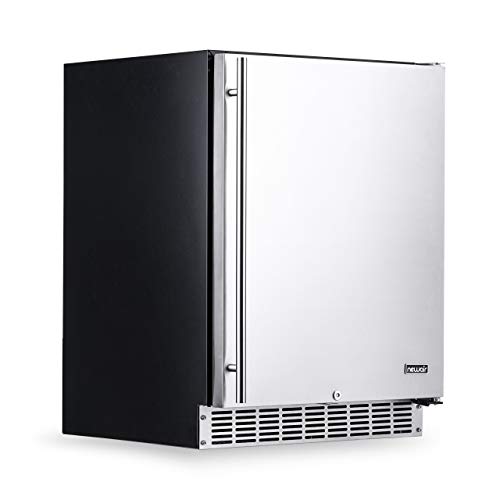
5. NewAir Built-In Beverage Fridge
NewAir offers beverage coolers designed to fit into a cabinet opening, with front venting and glass doors. Verify the venting design and size on the listing.
Suits: a mid-range cabinet install. Strengths: a built-in design at moderate cost. Weaknesses: model details vary. Skip it if you want a premium specialist.


Best for a bar-style display
6. KoolMore Beverage Cooler
KoolMore sells commercial-style coolers, including back-bar and display models, which can work in a home bar. Many are larger and heavier, so check the dimensions and power needs.
Suits: a bar-style display. Strengths: a commercial look. Weaknesses: bulky. Skip it if you have limited space.

Care and Setup
- Measure the cutout, including depth and height, before ordering.
- Keep the front vent clear of anything that blocks airflow.
- Let the unit rest upright before powering it on.
- Clean the door seal and shelves regularly.
- Place it on a level surface with a dedicated outlet.
Mistakes to Avoid
- Installing a rear-venting cooler into a tight cabinet.
- Ignoring the door swing.
- Skipping a ventilation check.
- Buying for looks without checking capacity.
- Using an indoor unit outside.
Planning the Cutout and Clearances
A bar fridge that does not fit properly is the most common regret, so start with the opening. Measure the width at the front, the middle and the back, because cabinets are rarely perfectly square. Do the same for height, from the floor or plinth to the underside of the countertop, and for depth from the wall to the front edge of the cabinet face. Use the smallest figure in each case when comparing with the product specifications.
Next, read the clearance notes. Built-in coolers typically list minimum gaps at the sides, top and rear, and these gaps exist so the unit can cool itself. Front-venting models usually need an open grille at the base and no solid panel covering it. Leave room for the cord and plug, and confirm the outlet position will not force the unit to sit crooked.
Think about the floor as well. Hardwood, tile and bar platforms may not be level, and many units have adjustable feet to compensate. Check whether leveling feet are included and how much adjustment they allow. Finally, plan the route into the room. Door frames, stairs and tight corners can limit what you can carry in, and removing the door before moving may be necessary. When in doubt, ask the seller or maker for the installation manual before ordering.
Door Styles, Glass and Swing
The door shapes how the fridge looks and how it behaves. Glass doors show off bottles and suit bars where display is part of the point, but they let in more light and, depending on the glazing, may be less insulating than solid doors. Look for descriptions of double-pane or UV-resistant glass, and keep the unit out of direct sunlight. Solid stainless or panel-ready doors suit cabinetry that blends in and can hide a cluttered interior.
Door swing matters in tight spaces. A door that opens into a hallway, a walkway or a nearby appliance will annoy you daily. Reversible hinges let you change the swing during installation, and some models are shipped with the hinge on a particular side. Confirm that the swing can be changed before buying if your layout demands it.
Check the handle and latch. Full-length handles are easy to grab but protrude into the room, while recessed grips keep the front flush. A lock helps if children visit or if the fridge holds alcohol you want to secure. Also look at the seal: it should compress evenly and spring back, because a loose gasket wastes energy and lets in warm air. Bar fridges open often, so a door that closes smoothly and holds shut is worth more than a fancy trim.
Shelving, Layout and What You Actually Store
Capacity numbers can mislead, because they are often counted in standard cans. Bottles, tall mixers, wine and larger formats stack differently. Before buying, list the drinks you keep most and estimate how many of each you want chilled. Mixers and tonic bottles need shelf height, whereas cans fit well on narrow sliding trays.
Shelf design affects daily use. Removable and adjustable shelves let you rearrange as your stock changes, while wooden or smooth-glide shelves make bottles easy to slide out. Full-width wire shelves can scratch labels and vibrate bottles. If you plan to store wine, check whether any shelves are designed for horizontal bottles and what the cooler’s temperature range is, since beverage coolers and wine coolers target different temperatures.
Consider flexibility. Some models include a door-storage area, a bottom drawer for fruit and garnishes, or a removable cabinet insert. A clear layout helps guests find their drinks without holding the door open. Leave some empty space too: packing every shelf tightly blocks airflow and causes uneven cooling. If you host often, a larger capacity than you think you need reduces the hassle of restocking, but only if the cutout can accommodate it.
Temperature, Noise and Running Costs
Home bars are often social spaces, so noise matters. Compressor models run in cycles and produce a hum, while thermoelectric designs are quieter but struggle in warm rooms. Read the listing for the cooling type, and picture the unit running next to a seating area in the evening. A fridge in an enclosed cabinet will sound louder than one in open air.
Look at the temperature range and control. Digital controls with a display let you set an exact number, while analog dials are simpler and easier to repair but less precise. A range that suits both beer and sparkling wine is useful. If the unit must run in a garage or outdoor area, check whether the maker approves of the ambient temperature, because many indoor units lose performance in heat or cold.
Energy use is worth a glance. Look for an efficiency statement in the listing or manual and remember that a fridge with a lot of glass, frequent opening and a warm room will use more power. Keep the unit away from ovens and dishwashers, clean the condenser area as recommended, and avoid overfilling. Warm drinks added all at once make the compressor work harder, so stagger restocking when possible.
Installation Checks Before Power-On
Once the unit is in place, take a few minutes to confirm everything is sound before you load drinks. Check that the cabinet or floor is level and that the unit does not rock. Verify that nothing blocks the front vent, such as a kick plate that is too tight or a rug. If the maker advises letting the unit stand upright for a period after transport, follow that rule so the refrigerant settles.
Plug it into a dedicated outlet if the manual advises it, and avoid extension cords or power strips that can overheat. Set the temperature at the starting point suggested in the manual and let the interior settle before filling it. Run it empty for a few hours and listen for rattling, then adjust the leveling feet or move loose items.
Clean the interior and shelves with a mild soap solution before first use, and wipe the gasket. Set a reminder to inspect the vent and condenser area every few months, since dust build-up reduces cooling. If the unit sits in a bar area with spills, wipe the door seal regularly to prevent sticky residue and mold. Signs that service or replacement may be needed include the compressor running constantly, ice forming in odd places, condensation on the glass, or drinks that stay warm despite normal settings.
Beverage Fridge Terms Explained
Beverage fridges look like small refrigerators, but their listings use terms that differ from the usual. The glossary below explains the key words, so you can match a unit to your home bar and your drinks.
- Built-in and freestanding: a built-in unit is designed to sit flush under a counter with front ventilation, while a freestanding unit needs space around it for air.
- Front ventilation: vents at the front that allow a unit to sit snugly between cabinets. Check this before putting a fridge in a tight space.
- Can capacity: the number of standard cans the maker says will fit. Bottles and larger containers take more space.
- Adjustable shelves: shelves that move or slide out to fit different bottle heights.
- Glass door and UV protection: a transparent door to display contents. Some are treated to reduce light exposure.
- Temperature range: the settings the unit supports. Beverage fridges often run a little warmer than food refrigerators.
- Door reversibility: the ability to switch the hinge side to suit your layout.
Choosing a Fridge by the Way You Entertain
You mostly stock cans and bottles for guests
Look at can capacity and shelf flexibility. A unit that holds a mix of cans, bottles and mixers makes sense for casual gatherings.
You host cocktail evenings
You may want space for mixers, garnishes and larger bottles. Check the shelf spacing and whether the fridge keeps a steady temperature.
You have a finished basement or a bar area
Think about how much noise is acceptable and whether the unit sits behind a counter. Built-in models with front ventilation fit flush into cabinetry.
You put the fridge in a garage or outdoor space
Check the maker’s stated temperature range for the environment. Not every unit is designed for outdoor use or extreme conditions.
Built-In and Freestanding Compared
| Question | Built-in | Freestanding |
|---|---|---|
| Ventilation | Front, so it can sit flush | Rear or sides, needs clearance |
| Look | Blends with cabinets | Stands apart |
| Flexibility | Fixed spot | Easier to move |
| Installation | Careful measuring needed | Plug and place |
Placement, Power and Ventilation
A beverage fridge needs a level surface and, for freestanding models, the clearances the manual describes around the back and sides. Plug it into a grounded outlet and avoid extension cords. Keep it away from ovens, direct sunlight and other heat sources. If the unit is to be built in, confirm that it has front ventilation, and measure the opening carefully, allowing for the door swing.
Let the unit stand upright for the time the maker recommends after delivery before turning it on, since moving it can disturb internal fluids. If you are uncertain about the outlet or the circuit, consult a licensed electrician. Never block the vents, and keep the interior neat so air can move.
Stocking and Organizing
Group drinks by type, with sodas and mixers on one shelf and bottles on another. Keep the items you reach for most at eye level. Do not overfill, since air needs to circulate for steady cooling. Wipe up spills promptly, and clean the interior with a mild solution on the schedule the maker suggests. For wine or other special beverages, check the maker’s guidance on temperature settings.
Reading a Beverage Fridge Listing
Check the exterior and interior dimensions, the ventilation type and the door hinge options. Look at the shelf configuration, the lighting and the lock if any. Read the noise information and the temperature range. See the warranty summary and the delivery arrangements. Compare the capacity claim with the pictures, because can counts assume ideal stacking. Finally, read the return terms.
A beverage fridge is often a showpiece, so consider the look as well as the function. A neat, well-lit interior makes a home bar feel inviting, and a quiet motor keeps conversation comfortable.
Mistakes That Make a Bar Fridge Underperform
Most disappointment comes from placement. A freestanding unit pushed tight against a wall cannot shed heat and may run constantly, so keep the clearances in the manual. Packing the shelves from top to bottom blocks airflow and leaves warm pockets. Loading a large quantity of warm drinks all at once also strains the cooling system, so stage the loading over a few hours.
Another error is ignoring the room. A bar in a hot garage or a sunny sunroom asks more of the cooling system, and not every model suits those places. Finally, forgetting to clean the interior and the door seal leads to odors and weak sealing. A quick wipe once a month keeps the fridge fresh, and a glance at the seal catches wear early.
How to Judge beverage fridges for home bars Beyond Capacity Claims
Capacity numbers for drink fridges are usually quoted in standard cans, which is a useful starting point and a misleading finishing point. Bottles, tall cans, growlers and wine all steal space in ways a can count never shows, so start instead with what you actually drink. Lay out a typical restock: the mix of cans, bottles and cartons your household or guests go through in a week, and picture it inside the shelving layouts described in the picks above. The best of the beverage fridges for home bars is the one where your real mix stands upright, visible and reachable, not the one with the biggest number on the box.
Temperature behaviour matters more for drinks than most buyers expect. A fridge that swings warm every time the door opens will leave the last row of cans disappointing even if the first row is icy, and glass-front models work harder in sunny rooms than solid-door ones. As you read the picks, favour designs that recover their temperature quickly and let you set a precise target for what you serve most. Beer, soft drinks, sparkling water and wine each have their own happy range, and a unit that holds a steady middle ground serves mixed loads better than one that simply gets as cold as possible.
Placement shapes the whole experience. A beverage fridge under a counter needs ventilation in the direction the design expects, a model for a games room needs to run quietly enough not to compete with conversation, and a unit for a home bar needs a door and handle that work smoothly when your hands are full. Think, too, about who opens it: a fridge used by guests all evening benefits from clear interior lighting and shelves that stop bottles rolling, while one used by the family every day benefits from a door that survives being opened a hundred times a week without complaint.
Finally, weigh running costs and noise alongside the purchase decision. A drink fridge runs around the clock like any refrigerator, so an efficient, well-sealed cabinet quietly earns its keep, and a unit placed beside seating should be judged at night, in a quiet room, not in a busy showroom. Check how the shelves remove for cleaning, whether the door can be reversed if your layout changes, and how the finish handles fingerprints. These practical details decide whether the fridge stays a pleasure or becomes background irritation.
Matching beverage fridges for home bars to the Room They Serve
In a home bar, the fridge is part of the ritual, and presentation counts alongside performance. Bottles should be visible without opening the door for long, shelves should handle a mix of tall mixers and short cans, and the unit should hold its temperature through an evening of frequent opening. The picks above that lean toward display suit this role, especially where lighting shows off labels rather than glaring off glass. Plan the restock rhythm as well: a bar fridge works best when it is refilled in one go after an event rather than topped up can by can through the week.
A games room asks for something slightly different: capacity for a crowd, tolerance for constant opening, and noise low enough to disappear under a film or a match. Here, the sturdier, higher-volume picks in this guide come into their own, and a door that seals positively matters because it will be closed by distracted people mid-conversation. Think about placement away from screens so the compressor hum and the light spill from a glass door do not pull eyes from the game, and leave enough clearance that the unit can shed heat during a long session.
For everyday family use, a beverage fridge earns its place by freeing the main refrigerator. Drinks are the bulkiest, most frequently grabbed items in most kitchens, and moving them out gives food room to breathe and stops the main door standing open while someone decides. In that role, the mid-sized picks above are usually the sweet spot: big enough to hold the weekly shop of juice, milk alternatives and soft drinks, small enough to tuck into a utility corner. Set a house rule for what lives there, or the overflow fridge quietly becomes a second everything fridge.
In an office, a bedroom or a small apartment, the brief narrows to quiet, compact and undemanding. The smallest picks in this guide suit a desk-side or bedside role, holding a modest rotation of cans and bottles without dominating the room. Measure the spot honestly, including the space the door needs to swing, and remember that a tiny fridge still needs air around it. Placed well, it disappears into the furniture; placed in a sealed cupboard, it will run hot, loud and thirsty, which is a placement problem rather than a product fault.
Setting Up a Beverage Fridge for Its Best Life
Setup starts with position and patience. Place the unit on a level surface with the clearance its design requires, especially at the back and sides where heat escapes, and let it stand for a while after any tilt during delivery so the refrigerant system settles before its first run. Plug it directly into a wall socket rather than a crowded power strip, switch it on empty, and let it pull down to temperature before loading. A fridge loaded while still warm inside takes far longer to chill everything, and the first cans you test will unfairly disappoint you.
Load with airflow in mind. Cold air needs paths between bottles and cans, so resist the temptation to pack every gap on day one; a slightly looser load chills faster and more evenly than a solid wall of aluminium. Stand bottles upright where the shelf height allows, keep the coldest zone for the drinks you serve straight from the fridge, and leave the door shelves, where temperatures wander most, for sturdy items that forgive a few degrees. After the first full load, check the temperature again the next day, because a full cabinet behaves differently from an empty one.
Spend a few minutes on the details that prevent future annoyances. Level the unit so the door closes with a soft pull rather than swinging open, adjust shelves before they are loaded rather than after, and wipe the gasket clean so it seals along its full length. If the door can be reversed, decide now, while the fridge is empty and accessible, whether the swing suits the room. These small acts take ten minutes at setup and save a year of minor irritation, which is the best trade in appliance ownership.
Give the fridge a week of normal life before you judge it. Note whether the back row chills as well as the front, whether frost gathers anywhere it should not, and whether the sound of the compressor bothers anyone in the room at quiet times. Small fixes solve most of it: a shelf moved, a vent unblocked, a slight temperature adjustment, a felt pad under a corner. Only a problem that survives those simple steps deserves escalation, and by then you will have clear observations to describe rather than a vague sense that something is off.
Cleaning and Care for Drink Fridges
Drink fridges live a sticky life. Sugary spills, condensation from cold bottles and the occasional leaking can all migrate into shelf seams and door seals, so a quick monthly wipe-down is the core of good care. Empty one shelf at a time, wash removable shelves and racks in warm soapy water, dry them fully, and wipe the interior walls before reloading. Cleaning a section at a time means the rest of your drinks stay cold and the job never grows into a full-empty ordeal you keep postponing.
The door gasket deserves its own attention, because it is both the seal that holds the cold and the surface most often grabbed by sticky hands. Wipe it with warm water and a soft cloth, working into the folds, and check that it grips evenly by closing the door on a banknote at several points. A gasket that seals well keeps the compressor’s workload down, which keeps noise down and running costs down with it. If the door has a glass panel, clean it with a soft cloth and a gentle glass cleaner so the view that sold you the fridge stays worth looking at.
Every few months, deal with the dust you cannot see. Pull the unit forward if you safely can and vacuum the coils and vents, because a drink fridge that cannot shed heat will run longer cycles and chill less evenly. Check the drip tray and drain if your model has them, and clear any build-up before it becomes a smell. While the fridge is out, inspect the floor beneath for signs of leaks or condensation damage, especially on wood. Ten minutes of this, a few times a year, is most of what separates a fridge that ages gracefully from one that fades early.
Odours in a beverage fridge usually come from one forgotten spill or one ancient bottle rather than from the appliance itself. If a smell survives a normal clean, empty the unit, wash every removable part, wipe the interior including shelf runners, and leave the door open for a few hours with the power off. An open container of baking soda placed where air moves will handle the residue. When you reload, check dates as you go; drink fridges are notorious for hiding a veteran can at the back that nobody remembers buying.
Troubleshooting Beverage Fridge Frustrations
The most common complaint is uneven chilling: frost on the back row, lukewarm cans at the front. Before blaming the fridge, check the loading. Bottles packed tight against the back wall sit in the coldest blast and can even freeze, while a solid block of cans at the front starves the interior of airflow. Spread the load, leave small gaps, and keep the interior vents uncovered. Then give the unit a full day to settle before judging, because temperature problems measured an hour after a big restock are usually just physics catching up.
Noise is the second classic. A beverage fridge near seating will be heard, so distinguish normal sounds, a soft compressor hum and gentle fan movement, from fixable ones. Rattling usually means the cabinet touches a wall or counter, a shelf is loose, or bottles are vibrating against each other; buzzing often means the unit is not level. Work through position, levelling and shelf fit first. A fridge that is quiet on a hard kitchen floor can sing on a hollow wooden one, and a simple mat underneath sometimes ends the concert entirely.
Condensation on a glass door or around the frame is usually the room talking, not the fridge failing. Humid air, frequent opening and a cold interior guarantee some fogging in summer; persistent dripping, though, points to a door left ajar or a gasket that is not sealing. Run the banknote test around the seal, look for a bottle holding the door a fraction open, and wipe the gasket clean of the sticky film that slowly builds up from drink handling. Most condensation mysteries end at the gasket.
When a beverage fridge truly underperforms, the pattern shows in its running behaviour. A compressor that almost never stops, temperatures that drift despite a stable setting, and heavy frost returning soon after a clean all suggest the system is struggling beyond what rearrangement can fix. Note when the change began and what changed with it, a move, a heatwave, a new alcove, because that timeline is the most useful thing you can hand to anyone diagnosing it. Replacing on your own schedule, informed by the picks above, beats replacing in a rush before guests arrive.
How the Picks in This Guide Compare
With several strong options above, the useful comparison is not a league table but a matching exercise: each pick suits a slightly different household, and the sections you have just read give you the criteria to match them. Use the notes below alongside the individual reviews earlier in this guide, where the details of each model are set out in full.
Consider the U-Line Beverage Center the considered choice for buyers who value the qualities its section of this guide emphasises. Its natural comparison is with the picks nearest to it in this lineup: read those reviews side by side, note where their approaches differ, and let your own pattern of use arbitrate. A difference that looks small on paper, in layout, in operation or in care, becomes large when it is repeated every day for years.
The Perlick Undercounter Beverage Center earns its place here by serving a particular kind of owner especially well, and its review above names that owner plainly. If you recognise yourself there, it deserves to be a finalist; if you do not, the honest move is to pass it by for a pick whose strengths point at your life instead. Guides can rank features, but only you can rank your own habits, and this pick rewards the buyer who does that ranking before ordering rather than after delivery.
For the Summit Beverage Center, the deciding questions are the practical ones this guide returns to throughout: does it fit the space you measured, does it suit the load you described, and does its care routine match the time you will genuinely give it. Where the answer to all three is yes, it is very likely the right choice, whatever its position in the running order above, because position reflects the order of presentation, not a verdict on your particular home.
The Allavino Beverage Center suits readers whose priorities line up with the strengths set out in its review above, and it is worth placing high on your shortlist if that description sounds like your household. Compare it against the alternatives on the criteria that matter most in daily use, how it fits your space, how it behaves under your typical load, and how easily it lives alongside your existing routine, rather than on any single headline feature.
Consider the NewAir Built-In Beverage Fridge the considered choice for buyers who value the qualities its section of this guide emphasises. Its natural comparison is with the picks nearest to it in this lineup: read those reviews side by side, note where their approaches differ, and let your own pattern of use arbitrate. A difference that looks small on paper, in layout, in operation or in care, becomes large when it is repeated every day for years.
The KoolMore Beverage Cooler earns its place here by serving a particular kind of owner especially well, and its review above names that owner plainly. If you recognise yourself there, it deserves to be a finalist; if you do not, the honest move is to pass it by for a pick whose strengths point at your life instead. Guides can rank features, but only you can rank your own habits, and this pick rewards the buyer who does that ranking before ordering rather than after delivery.
If you are torn between two picks, decide by the week rather than the occasion: picture an ordinary Tuesday with each one in your home, at the hour you will actually use it, and the right answer usually becomes obvious. Special occasions can be adapted to almost any good equipment, but ordinary days cannot be adapted at all, and it is ordinary days, repeated for years, that decide whether a purchase was wise. That is the standard every pick in this guide was chosen against, and it is the standard worth holding your final choice to as well.
Ownership Notes Worth Keeping
Think about the restock route as well as the fridge itself. A unit placed a long carry from where shopping enters the house will be refilled reluctantly and run half-empty, while one placed on the natural path from door to kitchen stays stocked almost without effort. The same logic applies to empties: if returning bottles and cans is easy, the fridge stays tidy; if it is a chore, clutter gathers on top of the cabinet. Placement decisions made on day one quietly shape habits for years.
If the fridge will serve guests, do a dress rehearsal before the first real event: load it as you would for a party, let it chill fully, and open it as often as a busy evening demands. You will learn quickly whether the temperature holds, whether the shelves handle your bottle mix, and whether the light and layout help people help themselves. Adjusting shelves and settings after a rehearsal is calm work; discovering the same lessons mid-party is not.
Keep the manual, in paper or digital form, somewhere you can find it on a difficult day rather than in the packaging that left with the delivery. Most ownership questions, from cleaning sequences to what a particular sound means, are answered in those pages in the maker’s own words, and they are answered there first because the maker knows the design’s intentions. A photograph of the model plate, stored with the manual, saves an awkward contortion behind or beneath the appliance if you ever need to identify the exact version you own.
Beverage Fridges for Home Bars FAQ
What width is common for a bar cooler?
15 and 24 inch widths are common. Check the cutout size for yours.
Why does front venting matter?
Built-in coolers push heat out the front, so they can sit flush in cabinets.
Can I use a freestanding model under a counter?
Only if the maker says it is safe, since it may need rear airflow.
Are these good for wine too?
Many hold both, but wine coolers keep a warmer, steadier range. Check the listing.
How much clearance does a built-in beverage fridge need?
It varies by model, so check the installation manual. Front-venting units usually need the grille kept clear and small gaps at the sides and top.
Is a glass door a problem for keeping drinks cold?
Glass doors are normal on these units, but they can let in more heat than solid doors. Keep the fridge out of direct sun and make sure the door seals fully.
Can I store wine in a beverage fridge?
Many hold wine, but beverage coolers usually run colder than wine coolers. Check the temperature range if you plan to store wine for more than a short time.
Why is my bar fridge running all the time?
Common causes include a warm room, blocked vents, an overfilled interior, or a worn door seal. Check those first, and contact the maker if the problem continues.
Should I choose a compressor or a thermoelectric model?
Compressor models cool more strongly and suit warm rooms or heavy use. Thermoelectric designs are quieter but work best in cooler spaces with lighter loads.
Can I use a bar fridge in a garage?
Only if the maker approves the ambient temperature range. Many indoor units struggle in hot or freezing garages, so check the manual before choosing.
How often should I clean the shelves and seal?
A wipe every few weeks keeps sticky spills in check, and a deeper clean every few months is a good habit. Follow your manual for specifics.
What temperature should I set for mixed drinks?
Aim for a middle setting that serves your most frequent drink well, then arrange the cabinet around it: the coldest zone for drinks you serve straight and cold, the door and upper areas for items that forgive a little warmth. A mixed load is always a compromise, so let your favourite drink set the target rather than chasing a number that suits nothing you own. Give any change a full day to settle before judging, because a loaded cabinet moves slowly.
Can a beverage fridge replace my main refrigerator for drinks?
For drinks alone, yes, and that is exactly the job these units are built for. They hold cans and bottles at serving temperature, free space in the main fridge, and keep the kitchen door closed during parties and family evenings. They are not designed for perishable food storage, so keep milk, meat and leftovers in the main refrigerator where temperature control is stricter and more even. Used in its lane, a beverage fridge is one of the most satisfying small appliances in the house.
Why do bottles at the back sometimes freeze?
The back wall is where the coldest air enters, and items resting against it or blocking the vents sit in that blast continuously. Move delicate bottles a little forward, leave a gap at the vents, and raise the temperature setting by one step if freezing persists. Freezing is rarely a fault; it is usually a sign the fridge is doing its job enthusiastically in one spot, and a small rearrangement spreads the cold more fairly.
Is a glass door or a solid door better?
Each suits a different room. A glass door turns the fridge into part of the display and lets guests find their drink without opening it, which saves cold air during events; it also shows clutter and works a little harder in bright, warm rooms. A solid door hides a mixed load, insulates well and usually suits utility spaces and family corners. Choose by where the fridge will live and who will look at it, because you will see that door every day.
How often should I defrost or clean a beverage fridge?
Most modern drink fridges need no manual defrosting in normal use; if frost builds steadily, treat it as a signal to check the door seal and your loading habits rather than as routine maintenance. Cleaning, though, is routine: a quick interior wipe monthly and a deeper clean a few times a year keep spills, odours and sticky gaskets from accumulating. The full routine is in the care section above and takes less time than a single restock run.
Can I build a beverage fridge into cabinetry?
Only if the model is designed for it. Fridges vent heat in a specific direction, and a design that breathes through the back and sides will overheat in a sealed cabinet no matter how neatly it fits. If built-in installation is your plan, choose from the picks above with that placement in mind, follow the stated clearances exactly, and confirm the door swing against neighbouring handles and drawers before ordering. The tape measure is the cheapest insurance in the whole purchase.
The Short Version
For a premium built-in, the U-Line. For bar-industry quality, the Perlick. For a wide range, the Summit. For wine and drinks, the Allavino. For a moderate built-in, the NewAir. For a commercial look, the KoolMore.

