Disclosure: airfryerkitchensupply.com is reader-supported. When you buy through links on our site, we may earn an affiliate commission at no extra cost to you.
Where to buy
This guide verifies the best barbeque grills to buy shortlist model by model. If you are standing in the decision, not the research, this shortlist is the answer: six grills across gas, charcoal, pellet and portable that we would point a friend to today, each verified in Amazon’s catalog for this site with a live link to the exact model.
- Weber Spirit E-310 Gas Grill — Check the current price on Amazon
- Weber Original Kettle Premium Charcoal Grill 22-Inch — Check the current price on Amazon
- Traeger Pro 22 Wood Pellet Grill & Smoker — Check the current price on Amazon
- Weber Genesis E-415 Gas Grill — Check the current price on Amazon
- Charbroil Classic 3-Burner Propane Gas Grill — Check the current price on Amazon
- Coleman RoadTrip 285 Portable Propane Grill — Check the current price on Amazon
Most grill guides drown you in forty options. This one answers the simpler question behind the best barbeque grills to buy: if you are spending your own money this season, which grills — by fuel and by job — actually deserve it? Six picks follow, one per real-world role: the gas grill most families should buy, the charcoal classic, the pellet smoker-grill, the premium upgrade, the honest budget option and the portable that travels. Each was verified model by model before any link was added.
The uncomfortable truth of grill buying is that fuel matters more than features. Gas is convenience and control. Charcoal is flavour and ritual at the lowest buy-in. Pellets automate smoke. Choose the fuel that matches your weeknights, and the model choice inside that fuel becomes almost easy — which is why this guide organises its verdicts by role rather than by spec sheet.
A note on honesty: no grill here is best at everything, and each review names who should skip it. A premium grill you use twice a year is a worse buy than a budget grill you use weekly. Read the roles, recognise your own cooking, and buy the match.
Buying well also means refusing the two classic distractions. The first is the feature auction — rotisserie kits, lights, bottle openers and app integrations stacked onto a mediocre firebox. The second is size theatre, where a grill is sold by the burger count it can hold in a photograph rather than the dinner it can cook on a Tuesday. The six picks below were chosen against both distractions: firebox, grates and support first, and capacity matched to real households.
And a word about the word ‘best’. In this guide it means best buy for a defined role, verified as a real, purchasable model, with its compromises printed beside its strengths. If a pick’s ‘not suited for’ line describes you, that is the guide working as intended — cross it off and take the next role’s champion. A shortlist you can eliminate from is more useful than a ranking you must obey.
Key Takeaways
- Buy fuel by lifestyle first: gas for weeknights, charcoal for craft, pellets for scheduled barbecue.
- One pick per role beats forty options: family gas, charcoal classic, pellet, premium, budget, portable.
- Parts availability is the ownership test — if burners and grates are orderable, the grill was built to be kept.
- Size for your regular cook, not your biggest party; batch for the crowd.
- A cover, a thermometer and proper seasoning on day one protect the whole purchase.
In this guide
Quick Picks
Best Gas Grill to Buy — Weber Spirit E-310 Gas Grill: Three burners, porcelain-enamelled cast-iron grates and Weber’s support network — the default answer when a family asks which gas grill to buy, full stop. Check the current price on Amazon
Best Charcoal Grill to Buy — Weber Original Kettle Premium Charcoal Grill 22-Inch: The 22-inch kettle, upgraded with a hinged grate, ash catcher and thermometer — still the best value in all of grilling, and the charcoal buy to beat. Check the current price on Amazon
Best Pellet Grill to Buy — Traeger Pro 22 Wood Pellet Grill & Smoker: The pellet buy for people who want barbecue on a schedule: dial a temperature, trust the probe, and serve brisket without spending the day managing fire. Check the current price on Amazon
Best Premium Gas to Buy — Weber Genesis E-415 Gas Grill: Four PureBlu burners in Weber’s larger Genesis frame — the upgrade buy when the Spirit feels small and the patio is a genuine second kitchen. Check the current price on Amazon
Best Budget Grill to Buy — Charbroil Classic 3-Burner Propane Gas Grill: 30,000 BTU across three burners and 360 square inches at an entry tier — the honest budget buy for first grills, small families and rental patios. Check the current price on Amazon
Best Portable Grill to Buy — Coleman RoadTrip 285 Portable Propane Grill: Three burners, 20,000 BTU and a stand that folds for the car — the portable buy for tailgates, campsites and balconies where a full grill cannot live. Check the current price on Amazon
How These Picks Were Chosen
Every pick was confirmed against Amazon’s catalog through this site’s product data — exact model, fuel and configuration — before inclusion. We then applied a buyer’s test rather than a reviewer’s: would we recommend this, at its tier, to a friend who will own it for five years?
That test favours parts availability, grate quality and temperature control over headline burners and novelty features. It also produced one deliberate rule: exactly one pick per role, so the guide makes decisions instead of listing inventory. Prices and ratings fluctuate and are excluded; check the current price on Amazon for the pick that fits your role.
The 6 Best Barbeque Grills to Buy

Weber Spirit E-310 Gas Grill — Best Gas Grill to Buy
The E-310 is the buy for the mainstream family: big enough for a dozen burgers, controlled enough for chicken and vegetables, supported enough to own for a decade. Skip it only if you need a side burner or sear station built in — its siblings add those at higher tiers.
Strengths
- Three-burner control makes two-zone cooking easy
- Cast-iron grates sear and mark food properly
- Weber parts and support make long ownership realistic
Trade-offs
- No side burner or dedicated sear zone at this tier
- Premium over no-name grills of similar size
- Assembly takes a careful hour or so
| Fuel | Propane |
| Burners | 3 |
| Grates | Porcelain-enamelled cast iron (per listing) |
The Spirit formula has endured because it gets the fundamentals right in the right order: even heat, honest grates, reliable ignition, and a company that will sell you a burner tube in year seven. The E-310’s three burners are the sweet spot — enough zones for direct-plus-indirect cooking without paying for width you will not use.
Snap-Jet ignition and the Weber Works accessory rails modernise the package without gimmickry. If your brief is ‘buy me a gas grill that just works for years’, this conversation is short, and it ends here.
Buy the cover and a spare set of flavorizer bars over the grill’s life and the E-310 will outlast two budget grills — which is why, per year of ownership, the premium pick is frequently the cheaper buy. That arithmetic is the core of this entire guide.
Spirit ownership is the benchmark for painless: grates brushed warm, flavorizer bars replaced when they eventually thin, an igniter every several years, and a cover doing the silent work between cooks. Weber’s parts diagrams by model make ordering exact, and the E-310’s popularity means advice and spares are everywhere. This is what buying once, properly, feels like in practice.
Best for: most families buying one gas grill for years / Not suited for: buyers needing a built-in side burner
Check the current price on Amazon to see the exact configuration, included parts and current availability for this model.

Weber Original Kettle Premium Charcoal Grill 22-Inch — Best Charcoal Grill to Buy
The Kettle Premium suits anyone who wants real charcoal flavour and a cooker that can grill, roast and smoke with technique. New cooks learn fire craft on it; experts keep one forever beside fancier machines. It is not for cooks who want push-button weeknights.
Strengths
- Unmatched versatility per dollar: grill, roast, smoke
- Premium touches: hinged grate, enclosed ash catcher, lid thermometer
- One-Touch vent system makes temperature control learnable and repeatable
Trade-offs
- Charcoal means setup and ash chores gas cooks skip
- 22-inch grate is snug for very large parties
- Smoking capacity is technique-dependent, not automatic
| Fuel | Charcoal |
| Size | 22-inch |
| Features | Built-in thermometer (per listing) |
Every grill culture on earth has a kettle story, because the design is simply correct: a deep bowl, controllable vents top and bottom, and a lid that turns the whole thing into an oven. The Premium trim fixes the base kettle’s annoyances — ash management, grate access, temperature visibility — without changing the formula.
With a two-zone fire it roasts a chicken beautifully; with a snake of charcoal it smokes for hours; wide open it sears as hard as charcoal allows. If budget forced one grill for everything, this is the one experienced cooks name first.
Accessories multiply a kettle: a chimney starter is mandatory, a slow-burn charcoal arrangement and a hinged-grate-friendly water pan turn it into a credible smoker, and a cast-iron grate insert upgrades searing. Buy the kettle first, learn it for a season, then add only what your cooking asks for.
Kettle ownership borders on immortal. The bowl and lid enamel shrug off decades; grates and ash sweepers are the consumables, replaced in minutes at small cost. Keep ash from sitting wet in the bowl and the kettle will outlive the patio. It is the only pick here your children may plausibly inherit in working order — a strange, true thing to say about the cheapest serious grill in the guide.
Best for: charcoal flavour lovers and learners / Not suited for: push-button weeknight convenience seekers
Check the current price on Amazon to see the exact configuration, included parts and current availability for this model.

Traeger Pro 22 Wood Pellet Grill & Smoker — Best Pellet Grill to Buy
Buy the Pro 22 if your life has jobs, kids and a Saturday that cannot orbit a firebox. It smokes, roasts and bakes with oven-like steadiness. Live-fire romantics and off-grid cooks should choose charcoal instead.
Strengths
- Automatic pellet feed holds temperature for hours
- Meat probe makes doneness a fact, not a guess
- 572 sq in fits family barbecue without party-size bulk
Trade-offs
- Milder smoke than wood-burning offsets
- Requires electricity and dry pellet storage
- Searing is adequate, not spectacular
| Fuel | Wood pellets |
| Cooking area | 572 sq in (per listing) |
| Hopper | 18 lb (per listing) |
Pellet grills sell time. The Pro 22 returns the hours an offset demands and spends them on consistency: the same ribs, the same result, on a Tuesday. For most households that trade — a little smoke intensity for a lot of reliability — is the correct purchase, which is why this model anchors the pellet category here.
As with any appliance-grade cooker, care is electrical and mechanical: dry pellets, a vacuumed firepot, a covered hopper. Owners who do those small things report years of uneventful, delicious service.
A pellet grill also quietly becomes an outdoor oven in summer: pizzas, casseroles and baked beans all cook without heating the kitchen. Many owners find that second job, not the smoking, justifies the purchase by August.
Pro 22 ownership is pellet discipline: dry fuel, vacuumed firepot, clear grease path, covered electronics. Traeger’s support network makes controllers, auger motors and igniters orderable when years eventually demand them. Owners who treat it as an appliance — serviced, sheltered — get appliance reliability. The hopper’s appetite is the only surprise, and only in winter.
Best for: busy families wanting real barbecue on schedule / Not suited for: off-grid or live-fire purist cooking
Check the current price on Amazon to see the exact configuration, included parts and current availability for this model.

Weber Genesis E-415 Gas Grill — Best Premium Gas to Buy
The Genesis E-415 is for entertainers and serious home cooks: more grate space, four-burner flexibility and premium construction. Small households will not use its capacity enough to justify the step up from the Spirit.
Strengths
- Four burners give true multi-zone cooking for big menus
- PureBlu burner design aims at even, consistent flames
- Genesis frame and grates feel a class above mid-tier rivals
Trade-offs
- Premium tier pricing and a larger footprint
- Capacity is wasted on couple-sized cooking
- Heavier assembly and placement effort
| Fuel | Propane |
| Burners | 4 PureBlu (per listing) |
| Grates | Porcelain-enamelled cast iron (per listing) |
The Genesis earns its premium in the unglamorous places: burner tubes that light evenly end to end, a firebox that does not flex, grates with real mass. Four burners let you run a genuine restaurant-style line — sear zone, roast zone, hold zone — for a patio full of guests without breaking rhythm.
If the Spirit is the sensible family car, the Genesis is the one with the bigger engine and the nicer cabin. Buy it when you entertain monthly or cook for six-plus weekly; otherwise its little brother is the smarter spend.
Plan placement before purchase: the Genesis wants level ground, clearance from siding, and a cover that fits its width. Measure the gate and the patio door too — premium grills are wide, and delivery-day surprises are a genre of their own.
Genesis ownership is Spirit ownership at scale: the same parts philosophy, the same cover-and-brush rhythm, with a bigger grease system to keep ahead of during entertaining season. The E-415’s construction means wear parts arrive later and matter less; most owners’ decade story is grates, bars and one igniter. For a grill bought to anchor a patio kitchen, that is exactly the brief.
Best for: entertainers and large-family cooks / Not suited for: small households watching budget
Check the current price on Amazon to see the exact configuration, included parts and current availability for this model.

Charbroil Classic 3-Burner Propane Gas Grill — Best Budget Grill to Buy
The Classic 3-Burner suits first-time buyers, couples and small families who grill weekly in season and want gas convenience without a premium outlay. Heavy entertainers and decade-keepers should step up a tier.
Strengths
- Three burners still allow two-zone cooking
- Compact footprint fits ordinary patios
- Side shelves give basic prep space without a cart’s bulk
Trade-offs
- Porcelain-coated grates need gentle tools and care
- Lighter construction than mid and premium tiers
- No cabinet, so the tank sits in view
| Fuel | Propane |
| Burners | 3, 30,000 BTU (per listing) |
| Cooking area | 360 sq in (per listing) |
Budget grills fail buyers when they pretend to be premium. The Classic makes no such claim: it is a straightforward three-burner that lights, cooks evenly enough for burgers, chicken and vegetables, and asks little money for the privilege. For a first grill or a second home, that honesty is exactly right.
Care decides its lifespan. Keep porcelain-coated grates oiled and unscraped by metal, cover the grill, and it will cook happily for seasons. Treat it as disposable and it will oblige — the tier rewards owners, not neglect.
One upgrade transforms budget grills: a decent instant-read thermometer. Heat distribution at this tier is good but not perfect, and cooking to temperature instead of guessing hides a multitude of hot spots.
Classic ownership is care in proportion to price: the grill asks for a cover, oiled grates and an annual burner brush-out, and gives seasons of honest service in exchange. Charbroil’s parts availability at this tier is the quiet reason it anchors the budget role — a replacement grate in year three costs little and resets the grill’s life. Neglect reverses the bargain quickly, as the review warned.
Best for: first-time buyers and small families / Not suited for: large parties or decade-long keeping
Check the current price on Amazon to see the exact configuration, included parts and current availability for this model.
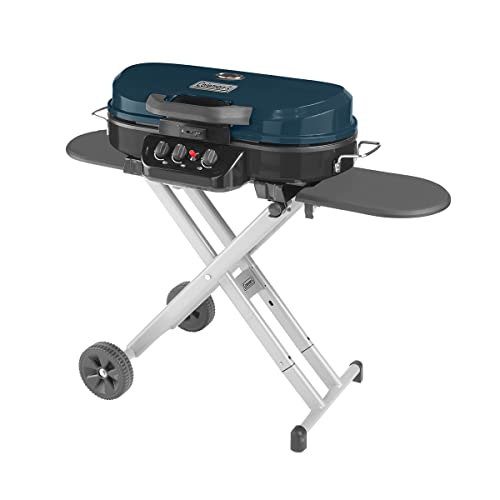
Coleman RoadTrip 285 Portable Propane Grill — Best Portable Grill to Buy
The RoadTrip 285 is the buy for mobile cooks: tailgaters, campers, apartment balconies and picnic devotees. Its three burners cook like a real grill, not a camping apology. Backyard hosts with space should buy a full-size pick instead.
Strengths
- Three burners and real output, rare in portables
- Instastart ignition and a stand that sets up fast
- Swappable cooktops on this platform suit griddle breakfasts
Trade-offs
- Portable grates and grease management need post-trip cleaning
- Uses small propane bottles or a hose to a bulk tank
- Not a substitute for full-size capacity at home parties
| Fuel | Propane |
| Burners | 3, 20,000 BTU (per listing) |
| Ignition | Instastart (per listing) |
Most portable grills are one-burner compromises. The RoadTrip’s three burners create actual zones — sear on one side, hold on the other — which is why it cooks like the grill at home and travels like luggage. For apartment dwellers banned from full-size grills, it is often the best grill they are allowed to own.
Grease is the portable tax: clean the drip system after trips, not before the next one, and the RoadTrip stays pleasant. Owners who build that five-minute habit get years from it.
Add the hose adapter for a standard propane tank and the RoadTrip doubles as a balcony grill all season, then returns to one-pound bottles for travel. That dual life is why it outsells single-purpose portables.
RoadTrip ownership is trip discipline: clean the grease system when you get home, not when you next leave; dry the grates before storage; keep a spare bottle or the tank adapter in the kit. Coleman’s portable parts — grates, regulators — are findable, and the stand’s hinges want an occasional wipe of campsite grit. Five minutes per trip is the whole contract.
Best for: tailgating, camping and balcony cooking / Not suited for: large home parties
Check the current price on Amazon to see the exact configuration, included parts and current availability for this model.
Comparison Table
| Pick | Badge | Key spec | Best for |
|---|---|---|---|
| Weber Spirit E-310 Gas Grill — Check the current price on Amazon | Best Gas Grill to Buy | 3-burner propane, cast-iron grates | most families buying one gas grill for years |
| Weber Original Kettle Premium Charcoal Grill 22-Inch — Check the current price on Amazon | Best Charcoal Grill to Buy | 22-inch charcoal kettle, thermometer | charcoal flavour lovers and learners |
| Traeger Pro 22 Wood Pellet Grill & Smoker — Check the current price on Amazon | Best Pellet Grill to Buy | Pellet, 572 sq in, meat probe | busy families wanting real barbecue on schedule |
| Weber Genesis E-415 Gas Grill — Check the current price on Amazon | Best Premium Gas to Buy | 4-burner premium propane | entertainers and large-family cooks |
| Charbroil Classic 3-Burner Propane Gas Grill — Check the current price on Amazon | Best Budget Grill to Buy | 3-burner budget propane, 360 sq in | first-time buyers and small families |
| Coleman RoadTrip 285 Portable Propane Grill — Check the current price on Amazon | Best Portable Grill to Buy | 3-burner portable, 20,000 BTU | tailgating, camping and balcony cooking |
How to Choose Among the Best Barbeque Grills to Buy
Decide fuel by lifestyle, not by food photography. If weeknight speed decides whether you grill at all, buy gas. If flavour and craft are the hobby, buy charcoal. If barbecue is the goal but time is scarce, buy pellets. Every other decision — size, burners, brand — is secondary to that one, and getting it right is why some grills get used 100 times a year and others become patio furniture.
Then size for your 80-percent cook, not your biggest party. A grill that fits Tuesday’s chicken and Saturday’s family burgers will be used constantly; borrow or batch-cook for the one annual crowd. Finally, spend on the ownership layer: a fitted cover, a chimney for charcoal or dry pellet storage, and a thermometer. Those unglamorous purchases protect the glamorous one.
New versus stepping up a tier
First-time buyers often ask whether to start cheap or buy once. The honest split: if you are unsure grilling is your hobby, the budget Charbroil in this guide is a rational trial. If you already know you grill weekly, the mid and premium picks cost less per year than replacing a budget grill twice — and cook better every single time.
The warranty and parts test
Before buying any grill, search for its replacement burners, grates and igniters. If parts are listed and available, the brand expects the grill to live. If they are not, you are buying a disposable appliance at a durable-goods price. Every pick in this guide passes that test to some degree; the Weber picks pass it best.
What a Good Grill Actually Costs to Own
Beyond the purchase, budget for fuel (propane refills, charcoal or pellets), a cover, grate brushes and the occasional wear part — flavorizer bars, igniters, gaskets. Gas and pellet grills also reward a spare tank or spare bag of pellets so a cook never dies mid-service. None of this is large money, but owners who plan for it keep grills cooking for a decade, while owners who do not tend to blame the grill in year three.
Gas, Charcoal or Pellet: The 10-Minute Decision
Gas grills light in seconds, control heat with knobs and clean up fast; their flavour comes from drippings vaporising on bars or grates, and it is good — just not smoky. Charcoal grills take 20 minutes to light, demand vent craft, and repay it with the deepest grill flavour and the highest searing heat per dollar. Pellet grills split the difference: wood-fired flavour with oven manners, at the cost of electricity, moving parts and milder smoke.
Your cooking calendar decides. Two weeknight cooks a week points to gas. Weekend ritual cooking points to charcoal. Long barbecue cooks without the ritual point to pellets. Many happy owners eventually run two — a gas grill for Tuesdays and a kettle or pellet for Saturdays — and this guide’s picks pair up exactly that way.
How to Set Up a New Grill for Its First Cook
Whatever you buy from this guide, the first hour decides the first impression. Follow the same sequence experienced owners use.
- Assemble on a level surface, keep every fastener finger-tight until the frame is square, then tighten in sequence. Wobbly grills are usually assembly order, not bad parts.
- Leak-test gas connections with soapy water before the first light. Bubbles mean stop, tighten and retest — never guess with gas.
- Burn the grill empty at high heat for 20 to 30 minutes to clear manufacturing oils, then let it cool and oil the grates lightly.
- Season cast iron and steel grates with a thin coat of high-heat oil and another heat cycle; this first layer is the start of a non-stick, rust-resistant surface.
- Cook something forgiving first — chicken thighs, burgers, sausages — and learn your grill’s hot spots before attempting a costly centrepiece.
- Register the warranty, photograph the model plate, and store the manual with your grill tools. Future-you, ordering a part in year five, says thanks.
Finally, place the grill with clearance from siding and overhangs, on ground that will not mind grease, and fit the cover once the grill is fully cold. Good placement and a cover do more for lifespan than any feature on the box.
The Two-Grill Household: Why Many Buyers End Up Pairing
Read enough owner stories and a pattern emerges: the happiest grillers own two complementary cookers, not one flagship. A gas grill handles the weeknight volume — fast, clean, controlled — while a kettle, pellet grill or griddle owns the weekend’s pleasures. The pairing works because each machine is bought for its strength without apology, instead of one machine apologising for everything.
This guide’s picks pair deliberately. The Spirit E-310 plus the Kettle Premium covers gas convenience and charcoal craft for less than many single premium grills. The Traeger plus the RoadTrip covers home barbecue and travel. Even the budget path pairs: the Charbroil Classic now, a kettle later, and a household is equipped for a decade of varied cooking.
If you are buying your first grill today, buy the one that fits this month’s life — but know that a second, complementary cooker is not extravagance. It is how outdoor cooking actually grows, one honest speciality at a time.
Grill Materials, Decoded for Buyers
Fireboxes and lids come in porcelain-enamelled steel (durable, repairable, the mainstream premium choice), stainless steel (grade matters: thicker, low-magnetic grades resist rust best; thin decorative stainless is a finish, not armour), cast aluminium (rust-proof and excellent where offered), and painted steel (the budget standard, dependent on covers and care). None of these is automatically best — execution and thickness decide — but the ranking above is the right prior when comparing two grills at a tier.
Grates matter more daily. Cast iron sears and lasts with oiling; porcelain-enamelled cast iron adds rust resistance with a chip risk if abused by metal tools; stainless rod is low-maintenance and long-lived at premium tiers; porcelain-coated steel is the budget workhorse that rewards gentle tools. Every pick in this guide names its grate material in its specs so the comparison is explicit.
Burners are the third material story: stainless tube burners dominate and last well when their ports stay clean; cast burners hold heat beautifully in some designs; infrared emitters trade cleaning effort for evenness. A buyer’s rule covers all three: if the brand sells the burner as a spare part, the grill was designed to be kept.
When to Buy: Seasons, Sales and Stock
Grill pricing breathes with the calendar. The deepest discounts traditionally arrive at the end of the grilling season and around major holiday sales events, while spring launches carry full prices and the best stock. None of that changes which grill you should buy — it changes when the same grill costs less. This guide deliberately separates the two decisions: choose the model by role and fit, then let the calendar choose the week.
Two cautions belong with sale hunting. First, a discounted grill that misses your fuel or size needs is not a bargain at any price; the role test in this guide comes first. Second, clearance models occasionally lose parts support sooner than current lines — one more reason the picks here favour established, well-supported models whose spares will outlast the sale that sold them.
Whenever you buy, budget the same order for the unglamorous essentials: cover, fuel, thermometer and, for charcoal, a chimney starter. A grill bought with its support kit cooks on day one; a grill bought alone waits a week for its accessories and loses its first impression.
How This Shortlist Was Kept Honest
A ‘best to buy’ list earns trust by what it excludes and by printing compromises beside strengths. Every pick here carries a ‘not suited for’ line written as plainly as its praise, because a recommendation that fits everyone fits no one. The list also refuses the common corruptions: no pick is here for its novelty, its size theatre or its feature count, and no pick’s tier is disguised — the budget option reads as a budget option, with its care contract printed.
The verification discipline matters as much as the taste. Each model was confirmed as a real, purchasable listing before it could be recommended, with its configuration taken from the listing itself. That sounds basic; in an internet full of guides recommending discontinued or misnamed models, it is the difference between a shortlist and a rumour.
Finally, the list is built to age gracefully. Prices will move, ratings will drift, and next year’s models will arrive — but roles endure. Families will still need the reliable gas grill, learners the kettle, the busy the pellet. Revisit the roles when you shop, even if the specific models have refreshed, and the method of this guide keeps working.
The First Month With a New Grill: Habits That Set Its Life
Week one is assembly, burn-in and a forgiving first cook, as the setup guide in this article describes. Week two is the hot-spot map: grill a tray of plain bread slices or a batch of chicken thighs across the whole grate and note where colour comes fast and where it lags. That map, learned once, quietly improves every cook for the life of the grill — and almost nobody does it, which is why it is worth printing.
Weeks three and four are for range: one lid-down roast, one two-zone cook, one session at the grill’s speciality — the kettle’s smoke, the pellet’s low-and-slow, the portable’s away game. By the end of the month you know your grill’s character the way you know a car’s, and the manual can go in the drawer where it belongs.
Close the month with the ownership rhythm installed: brush after cooks, grease checked, cover fitted, fuel reserve in place, and a note of the model number in your phone. A grill that receives its first month properly almost always receives its first decade properly — habits, like seasoning, are laid down early and then simply maintained.
Accessories Worth Buying in the Same Order
Four items belong in the same purchase as any grill in this guide, because each protects either the food or the machine from day one. The fitted cover protects the machine from the weather that does most of the damage grills ever suffer. The instant-read thermometer protects the food from the guesswork that ruins more dinners than any equipment flaw. The chimney starter, for charcoal buyers, protects the flavour from lighting fluid and the cook from uneven fires. And the first fuel reserve — the spare tank, the second bag of pellets, the extra bag of charcoal — protects the second cook from the first cook’s appetite.
Beyond those four, let the cooking write the list. A cast-iron skillet extends gas and pellet grills into searing and sautéing; a griddle plate does the same at larger scale. A quality brush matched to your grate material — never steel wire on porcelain coatings — keeps the cooking surface honest. Heat-safe gloves pay for themselves the first time a whole chicken needs moving. Each of these answers a problem you will actually meet within the first month.
Resist the bundle trap: kits of twenty tools contain four you need and sixteen that drawer. Buy the four founding items well, then add single tools as cooks demand them. The total spend ends lower, the quality ends higher, and every object at your station has a job — the same discipline this guide applied to the grills themselves.
One more purchase deserves mention because nobody makes it: a small notebook or a notes app habit for the grill. Fuel used, settings, weather, timings, verdicts. Five cooks of notes will teach you more about your specific grill than any guide, including this one, because your grill, your climate and your palate are the variables that actually decide dinner.
One last buying principle deserves its own paragraph, because it protects every role in this guide: buy the grill you can picture yourself cleaning. Every design here — gas, charcoal, pellet, portable — has a five-to-fifteen-minute care ritual, and the ritual only happens if it fits your temperament. Tidy cooks thrive with any of them; cooks who hate maintenance should weight the simplest machines — the kettle, the Spirit — and be honest that a pellet grill’s firepot or an offset’s ash is a relationship they are choosing, not a surprise they are owed.
And when the choice still feels hard between two roles, choose by the next twelve months, not the next twelve years. The grill that serves this year’s apartment, this year’s family size and this year’s budget can be sold, gifted or promoted to second-grill duty when life changes — as the two-grill pattern in this guide describes. A purchase that fits now and teaches you your own cooking is never wasted, even when it is eventually replaced by the grill it taught you to want.
Common Buying Mistakes
Buying features before fuel. A sear station will not fix a fuel choice that does not fit your life. Fuel first, features second.
Sizing for the annual party. Oversized grills heat slowly and eat fuel on weeknights. Size for the regular cook; batch for the crowd.
Skipping the cover. Weather, not cooking, kills most grills. A fitted cover is the cheapest lifespan you can buy.
Judging by burner count alone. Four weak burners lose to three good ones. Grate material and heat evenness matter more.
Never checking parts availability. If burners and grates cannot be replaced, the grill is disposable. Check before you buy, not after it fails.
Final Recommendation
If you want one answer: families buy the Weber Spirit E-310, flavour-first cooks buy the Kettle Premium, barbecue lovers buy the Traeger Pro 22, entertainers step up to the Genesis E-415, first-timers start with the Charbroil Classic, and travellers take the Coleman RoadTrip. Each is the strongest buy in its role, verified and linked above.
Choose by the cooking you will actually do, season the grill properly on day one, and keep it covered. That combination — right fuel, right size, basic care — is the whole secret behind grills that serve for a decade.
Ready to compare the leading options directly? Start with Check the current price on Amazon for our top pick, Check the current price on Amazon for the runner-up, and Check the current price on Amazon for the third-ranked model — each link opens the exact listing this guide verified.
Related guides in this series: Best Barbecue Grills With Side Burner, Best Barbecue Smoker Grills, Best Barbeques Grills, Best Bargain Bbq Grills Propane, Best Bargain Gas Grills.
Frequently Asked Questions
What is the best type of grill to buy for a beginner?
A three-burner gas grill like the Spirit E-310 or the budget Charbroil Classic: instant ignition, knob control and easy cleanup build the habit. Charcoal is cheaper and teaches more, but asks more patience.
Is a pellet grill worth buying over gas?
If you want barbecue — ribs, brisket, pulled pork — regularly, yes: pellets automate the long cooks gas cannot do well. If you mainly grill fast weeknight food, gas is simpler and cheaper to run.
How long should a good grill last?
With a cover and basic care, premium gas grills commonly serve a decade, mid-tier grills five to eight years, and kettles effectively indefinitely with grate replacements. Budget grills give a few seasons of honest service.
Do I need a side burner or sear station?
Only if your menus use them: sauces and sides argue for a side burner, steakhouse crusts for a sear zone. They are useful options, not essentials, and this guide’s core picks deliberately cover the basics first.
What size grill do most families need?
Roughly 350 to 550 square inches of main cooking space with three or four burners covers family dinners and modest parties. Bigger is only better if you regularly cook for eight or more.
Should I buy a portable grill as my only grill?
If space or rules forbid a full-size grill, a strong portable like the RoadTrip 285 is a genuinely good only grill. If you have a patio, a full-size pick will cook more, more easily.
Should I buy a grill with a warranty longer than average?
A long warranty signals the maker’s confidence, but parts availability matters more in practice: a grill whose burners and grates are orderable in year six beats a paper warranty on a grill with no spares. The picks here were screened on exactly that basis.
Is it worth buying a grill cover from the same brand?
Fit is what matters, not the logo. A cover that matches the grill’s dimensions, vents moisture and stays on in wind protects any brand’s grill. Ill-fitting cheap covers that trap damp can do more harm than good.
Gas grill or charcoal grill for a first home?
If the household will grill on weeknights, gas — its speed builds the habit. If weekends and flavour are the point and budget is tight, the kettle is the best first grill in this guide and possibly in grilling.


