Disclosure: airfryerkitchensupply.com is reader-supported. When you buy through links on our site, we may earn an affiliate commission at no extra cost to you.
Where to buy
Every pillow in this guide to the best back side pillows is sold through Amazon and was verified against the live Amazon catalogue before it earned a place here. Start with the Coop Home Goods Cool+ Adjustable Pillow if you split your night between your back and your side, or the QUEEN ROSE S-Shaped Body Pillow if you are a committed side sleeper. We never print product prices — they change too often to stay honest — so use the check-price links throughout.
The Best Back Side Pillows: One Pillow, Two Positions, No Compromises You Can Feel
The search for the best back side pillows starts with a geometry problem. A back sleeper needs a pillow low and supportive enough to keep the head in line with the spine — too high and the chin tips toward the chest all night. A side sleeper needs the opposite: enough loft and firmness to fill the gap between ear and mattress so the neck stays level. Most people are not one or the other; they are both, in rotation, all night. A pillow bought for a single position therefore fails half the night, every night, and the failure shows up as the 3 a.m. pillow-flip, the folded pillow, the arm tucked underneath as a shim.
The six pillows in this guide attack that problem from different directions. Two are adjustable — you add or remove fill until the loft serves both positions. Two are shaped — contoured memory foam whose different zones serve the back at the centre and the side at the edges. One is a classic plush hotel-style pillow that splits the difference through sheer scrunchable versatility. And one is a full body pillow, because for dedicated side sleepers the pillow question is not just about the head. Every pick is framed in comfort terms — support, alignment, temperature, feel — because that is what a pillow can honestly promise.
Every product below was cross-checked against its manufacturer’s Amazon listing, and only listing-confirmed pillows carry buying links. Certifications and constructions mentioned are those stated in the listings themselves; where a listing did not verify a detail, we left it out of the spec box rather than guess.
On tiers, the pillow market rewards spending with unusual honesty. The accessible tier buys you plush fibre and nightly arranging. The mid tier buys engineered foam and cooling. The premium tier buys adjustability and certified materials — the two features that most reliably convert into better sleep for a two-position sleeper. If your budget forces a single upgrade from the pillow you have, spend it on the mechanism that fixes your geometry, not on a plusher version of the same wrong shape.
In this guide
Quick Picks
- Best Overall: Coop Home Goods Cool+ Adjustable Pillow — adjustable shredded memory foam with cooling gel, tuned by you for back and side. Check the current price on Amazon
- Best for Combination Sleepers: Coop Home Goods Eden Bed Pillow — medium-soft adjustable fill that forgives position changes all night. Check the current price on Amazon
- Best Value Pair: Beckham Hotel Collection Bed Pillows, Queen Set of 2 — plush down-alternative pillows for back, stomach or side sleepers. Check the current price on Amazon
- Best Contour Design: Ultra Pain Relief Cooling Cervical Pillow — an adjustable ergonomic contour in memory foam with a cooling feel. Check the current price on Amazon
- Best for Back Sleepers: Osteo Cervical Pillow — a hollow-centre contour design that cradles the head for back sleeping. Check the current price on Amazon
- Best Body Pillow for Side Sleepers: QUEEN ROSE Body Pillow, Cooling S-Shaped — full-body support with a soft cooling cover. Check the current price on Amazon
How These Picks Were Chosen
The first criterion was dual-position competence, tested by design logic rather than marketing claims. For adjustable pillows, that meant genuinely accessible fill — a pillow you can open and tune in minutes, with enough supplied fill to reach side-sleeper loft. For contour pillows, it meant a shape with distinct zones: a lower centre for the back of the head and higher sides for the shoulder gap. For the classic pillow, it meant a fill that can be scrunched thicker for side sleeping and flattened for back sleeping without going lumpy. Any pillow that only served one position well was cut, however excellent it was at that one job — the search promises both.
Second was material credibility. Memory foam quality varies enormously, so certifications stated in listings — CertiPUR-US and GREENGUARD Gold on the Coop picks — counted as real signals about foam content and emissions in a product your face touches for eight hours. Third was temperature: foam sleeps warm by nature, so cooling covers, gel infusions and breathable fills earned their badges honestly rather than as decoration. Fourth was care practicality — washable covers and fills that survive laundering — because a pillow you cannot clean is a pillow on a countdown. Finally, every pick had to be a verifiable, current listing; the pillow market is full of white-label near-duplicates, and we kept the names we could confirm.
We also weighted the unglamorous test of the second month. Many pillows impress on night one and disappoint by week six, when fills settle, foams soften and covers have been washed twice. Picks whose constructions are known to hold their character — quality foams, renewable adjustable fills, washable builds — were ranked for the sleeper you will be in month three, not the shopper you are today.
The 6 Best Back Side Pillows

Coop Home Goods Cool+ Adjustable Pillow — Best Overall
The Cool+ is the strongest answer to the two-position problem because it refuses to guess your loft. Its plus-shaped shredded memory foam fill, infused with cooling gel, can be added to or removed through the pillow’s access zipper until the height is right — and “right” for a back-and-side sleeper means the middle setting most fixed pillows never offer. Its listing states CertiPUR-US and GREENGUARD Gold certifications. It suits combination sleepers, couples with different preferences buying the same pillow, and anyone who has returned a fixed pillow for being almost right. It does not suit sleepers who hate any setup — there is a tuning evening involved — or purists who want a solid foam slab.
Strengths
- Adjustable loft solves the back-versus-side height conflict directly — one pillow, tuned to your frame.
- Cooling gel fill and a cool-feel design address memory foam’s warmth problem.
- Certifications stated in the listing — CertiPUR-US and GREENGUARD Gold — back the foam’s credentials.
Trade-offs
- Requires an adjustment period: expect two or three nights of small fill changes to find your setting.
- Shredded fill feels different from solid foam — more mouldable, less sculpted.
- Premium tier within this guide; the adjustability and certifications are the cost.
- Fill: Adjustable shredded memory foam with cooling gel
- Size: Queen
- Certifications (per listing): CertiPUR-US, GREENGUARD Gold
The deeper virtue of adjustability is that it survives change. Your ideal loft at thirty-five is not your ideal loft at fifty; a new mattress changes the equation again, because a softer mattress lets your shoulder sink and demands a lower pillow for side sleeping. A fixed pillow is a bet that none of that moves. The Cool+ simply re-tunes — a handful of fill out when the new mattress arrives, a handful back in if your sleep style shifts. The cooling side of the design is the other half of its overall win: shredded fill already breathes better than a solid slab, and the gel infusion plus cool-touch positioning make it the foam pillow least likely to drive a hot sleeper back to polyester. If you buy one pillow from this guide, buy the one that can become the pillow you need.
Best for: combination sleepers and anyone between pillow sizes / Not suited for: zero-setup buyers or solid-foam purists


Coop Home Goods Eden Bed Pillow — Best for Combination Sleepers
The Eden is Coop’s softer-spoken adjustable: a medium-soft memory foam pillow, listed for back, stomach and side sleepers, with the same adjust-it-yourself philosophy in a plusher register and GREENGUARD Gold and CertiPUR-US credentials stated in its listing. It suits restless sleepers who cycle through every position including their stomach — the true combination sleepers — and anyone who found the Cool+ concept right but wants a gentler feel. It does not suit committed side sleepers with broad shoulders who need maximum loft and firmness; the Eden’s medium-soft character has a ceiling.
Strengths
- Adjustable fill in a medium-soft feel — the most forgiving pillow here for position-changers.
- Works across back, side and stomach positions, the widest brief in the guide.
- Cooling gel memory foam construction with certifications stated in the listing.
Trade-offs
- Medium-soft means broad-shouldered side sleepers may bottom out at maximum fill.
- Same tuning-in period as any adjustable pillow.
- Softness is a preference, not a universal good — firm-pillow loyalists should look at the contours.
- Fill: Adjustable memory foam with cooling gel
- Feel: Medium-soft
- Certifications (per listing): CertiPUR-US, GREENGUARD Gold
Combination sleepers are the majority of sleepers, and they are the worst served by position-specific marketing. A pillow engineered purely for side sleeping is a wedge under a back sleeper’s head; a back pillow vanishes under a side sleeper’s shoulder. The Eden’s medium-soft adjustability is the compromise engineered properly: enough fill range to matter, a feel that yields when you roll onto your back and supports when you settle on your side, and none of the hard zoning that punishes a stomach-sleeping interlude. Think of it as the pillow for people whose sleep style is “yes.” If that is you — and statistically it probably is — the Eden is the safest recommendation in this guide after the Cool+.
Best for: restless, all-position sleepers / Not suited for: broad-shouldered side-only sleepers wanting maximum firmness

Beckham Hotel Collection Bed Pillows, Queen Set of 2 — Best Value Pair
The Beckham set is the classic answer: two plush down-alternative pillows, listed for back, stomach or side sleepers, washable, with the hotel-pillow feel most people picture when they picture a good pillow. It suits households equipping a bed — or two beds — at an accessible tier, guest rooms, and sleepers who prefer to shape their pillow by hand each night. It does not suit anyone needing precise, repeatable loft: a scrunchable pillow is re-invented nightly, which is its charm and its limit.
Strengths
- Two pillows in the set — the natural way most beds are actually bought.
- Down-alternative plush fill shapes by hand: scrunch thick for side, flatten for back.
- Washable construction suits real household maintenance and allergy-conscious routines.
Trade-offs
- No fixed structure — support depends on how you arrange it each night.
- Plush fills compress over time faster than quality foam; expect a shorter prime.
- One loft character for both pillows — no per-sleeper tuning like the adjustable picks.
- Fill: Down alternative
- Pack: Set of 2, queen size
- Positions (per listing): Back, stomach or side
There is a reason the hotel pillow endures: it asks nothing and adapts to everything. For back-and-side sleepers whose positions are more “mostly back, sometimes side” — or the reverse — a plush pillow you can punch into shape genuinely solves the geometry, because the fill migrates to where your hand puts it. The Beckham set executes that format with a fill that stays lofty longer than bargain polyester and a washable build that keeps the pair fresh through guest seasons and illness weeks. It is also the rational way to discover your own preferences: live with the set for a month and you will learn whether you crave structure (move to the contours) or adjustability (move to the Coops) — knowledge worth having before a premium purchase.
Best for: equipping beds at an accessible tier, guests, preference-discovery / Not suited for: sleepers needing fixed, sculpted support

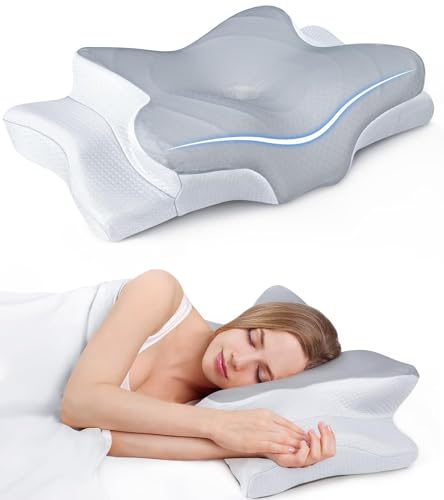
Ultra Pain Relief Cooling Cervical Pillow — Best Contour Design
This contour pillow takes the shaped approach: an ergonomic memory foam form with different heights across its surface — lower where the back of the head rests, higher where a side sleeper’s neck needs filling — in an adjustable design with a cooling feel. It suits sleepers who want the pillow to hold the geometry for them rather than tuning fill, and back-and-side switchers who roll between the zones the shape provides. It does not suit stomach sleepers, for whom any contour is an obstacle, or anyone who moves far across the pillow at night — contours reward sleepers who stay near the centre.
Strengths
- Zoned contour: the shape itself serves back and side positions differently.
- Adjustable height design lets you set the contour’s scale to your frame.
- Cooling design counters the warmth solid memory foam usually brings.
Trade-offs
- Contours are polarising — a one-to-two-week adaptation is normal, and some sleepers never convert.
- Not a stomach-sleeping pillow in any configuration.
- Solid foam feel is firmer and less cuddly than the adjustable or plush picks.
- Fill: Memory foam, ergonomic contour
- Design: Adjustable cervical contour with cooling feel
- Positions: Back and side
The contour philosophy is consistency. An adjustable pillow can be tuned perfectly and then slowly drift as fill shifts; a plush pillow is remade nightly. A contour is the same shape at 11 p.m. and 5 a.m., which is why converts to the format tend to stay converted — the pillow removes a variable from sleep. The adjustable height on this model softens the format’s usual all-or-nothing problem, letting smaller and larger frames scale the same design. Give it the honest trial: a fortnight, not a night. Contour pillows feel strange before they feel right, because they are asking your neck to rest in a position your old pillow never offered. If the fortnight ends in loyalty, you have found the lowest-maintenance support in this guide.
Best for: structure-seeking back and side sleepers who stay centred / Not suited for: stomach sleepers or wide-ranging movers
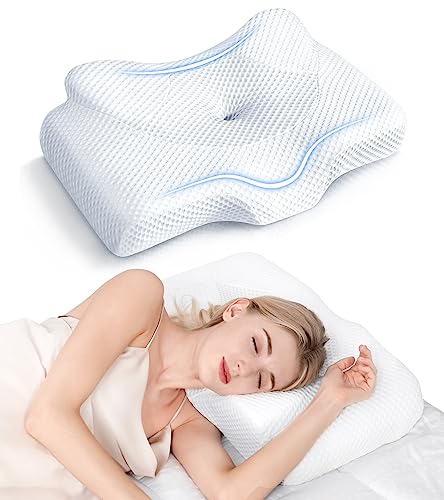
Osteo Cervical Pillow — Best for Back Sleepers
The Osteo’s signature is its hollow centre: a memory foam contour with a cradle that lets the back of the head settle in, framed by support for the neck, with an adjustable build and a cooling case. For back-and-side sleepers whose primary position is the back — side is the excursion, not the home — that cradle is the most considered design here. It suits back-dominant sleepers who wake with their pillow migrated or their head rolled to an angle. It does not suit side-dominant sleepers with wide shoulders, whose loft needs outscale what a back-first contour provides.
Strengths
- Hollow-centre cradle keeps a back sleeper’s head settled and centred.
- Adjustable design lets you scale support rather than accept a fixed height.
- Cooling case addresses foam warmth at the surface, where it is felt.
Trade-offs
- Back-first design: side sleeping is served, but it is not the pillow’s home position.
- Contour adaptation period applies, as with all shaped foam.
- The cradle feel is distinctive — sleepers who love to sprawl across a pillow will resist it.
- Fill: Memory foam
- Design: Hollow-centre cervical contour, adjustable
- Case: Cooling
Back sleeping is the position pillows most often ruin with kindness: a big soft pillow feels luxurious at lights-out and spends the night pushing the head forward. The Osteo’s hollow centre inverts that — the head rests in the cradle at a natural height while the neck roll does the supporting, so the pillow’s comfort and its alignment finally agree. For the back-dominant sleeper who tours onto their side for part of the night, the raised sides of the contour provide the excursion support without compromising the home position. If your sleep data — or your partner’s testimony — says you are a back sleeper who strays, this is the most purposeful design in the guide.
Best for: back-dominant sleepers who stray to their side / Not suited for: side-dominant or broad-shouldered sleepers

QUEEN ROSE Body Pillow for Side Sleepers, Cooling S-Shaped — Best Body Pillow for Side Sleepers
For committed side sleepers, the head pillow is only half the system — the knees, hips and top arm need somewhere to go, and that somewhere is a body pillow. The QUEEN ROSE is an S-shaped full-body pillow with a soft cooling cover, designed to be hugged: support along the front of the body from chest to knees in one continuous curve. It suits side-dominant sleepers, back-and-side sleepers whose side hours are long, and anyone who currently builds a pillow fort nightly. It does not suit back-dominant sleepers — a body pillow in bed is furniture you navigate around — or small beds shared with a partner who did not agree to a third occupant.
Strengths
- Full-body support aligns the side-sleeping chain: head pillow above, knees and arm supported below.
- S-shape follows the body’s front naturally for hugging sleepers.
- Cooling cover keeps a large-contact-area pillow from sleeping hot.
Trade-offs
- Occupies serious bed real estate — measure your side of the bed honestly.
- Not a back-sleeping tool; it serves the side position specifically.
- Large covers and fills are a bigger laundry event than a standard pillow.
- Format: S-shaped full body pillow
- Cover: Soft cooling
- Position: Side sleeping support
The body pillow completes the side sleeper’s geometry in a way no head pillow can. Side sleeping fails from the bottom up as often as from the top down: the top knee drops, the hips rotate, the top arm drags the shoulder forward, and the neck — resting on a perfectly good pillow — ends up compensating for all of it. A body pillow interrupts that chain at every link. The S-curve here matters because a straight bolster forces a choice between hugging high or supporting the knees; the curve does both along one line. Pair it with a competent head pillow — the Coop Cool+ at side loft is the natural partner — and a side sleeper’s whole posture is finally engineered rather than improvised. Just negotiate the bed space first.
Best for: side-dominant sleepers and pillow-fort builders / Not suited for: back-dominant sleepers or small shared beds
Comparison Table
| Pick | Badge | Key spec | Best for |
|---|---|---|---|
| Coop Cool+ Adjustable Pillow | Best Overall | Adjustable shredded foam + cooling gel | Back-and-side tuning, hot sleepers |
| Coop Eden Bed Pillow | Best for Combination Sleepers | Adjustable, medium-soft | All-position restless sleepers |
| Beckham Hotel Collection Set of 2 | Best Value Pair | Down alternative, washable, pair | Equipping beds, guests |
| Ultra Pain Relief Cooling Cervical Pillow | Best Contour Design | Zoned memory foam contour, adjustable | Structure seekers, centred sleepers |
| Osteo Cervical Pillow | Best for Back Sleepers | Hollow-centre contour, cooling case | Back-dominant sleepers |
| QUEEN ROSE S-Shaped Body Pillow | Best Body Pillow for Side Sleepers | Full-body S-curve, cooling cover | Side-dominant sleepers |
How to Choose a Pillow for Back and Side Sleeping
Start by auditing your actual positions, not your intentions. Most people over-report back sleeping and under-report side sleeping; if you share a bed, your partner’s account is the accurate one, and if you sleep alone, the position you wake in is the honest data. The audit decides the architecture. Roughly even split: adjustable, led by the Cool+ or the Eden. Back-dominant with side excursions: a contour with a back-first design, like the Osteo. Side-dominant with back excursions: a higher-loft adjustable or a contour with tall sides, plus serious consideration of the body pillow. Mostly undecided and equipping a household: the Beckham pair buys you data cheaply.
Loft is the second decision, and it is a measurement, not a vibe. For side sleeping, the pillow must fill the distance from your ear to the outside of your shoulder, compressed — broad shoulders need more, narrow frames less, and a soft mattress that lets the shoulder sink needs less than a firm one. For back sleeping, the pillow should support the neck’s curve without lifting the head into a chin-tuck; thinner than your side loft, always. This is why fixed single-loft pillows are a gamble for dual-position sleepers and why adjustability keeps winning this category: the correct answer is a range, and only an adjustable pillow sells you the range.
Firmness follows loft. Side sleeping wants firmer support that does not collapse at 3 a.m.; back sleeping wants medium support that cradles without pushing. Temperature is the final filter: foam offers the best support engineering and the worst natural breathability, so hot sleepers should insist on the mitigations — shredded fill, gel infusion, cooling covers — that the picks here carry, or choose the down-alternative route and accept its shorter prime. Whatever you buy, give it a real trial measured in weeks, and change one variable at a time.
One more practical filter: the trial and return terms matter more for pillows than for almost any other purchase, because no specification sheet can tell you how a pillow behaves under your head at hour six. Favour sellers and brands whose return policies let you sleep on the decision — literally — and keep the packaging until the trial ends. A pillow is a multi-year, every-night object; an extra week of certainty before committing is worth more than any small saving from a final-sale listing.
How to Set Up Your Pillow: Loft Tuning and the Two-Week Trial
If you bought an adjustable pillow, tune it deliberately. Start at the supplied fill level and sleep three nights before touching it — first impressions of loft are unreliable because your neck is comparing against the old pillow’s failures. Then adjust in small handfuls, changing only fill, and give each change two nights. Tune for the side position first, since it has the stricter requirement: on your side, your head should feel level, neither tipping down toward the mattress nor propped up at an angle. Then check the back position; if the back feels pushed forward, remove a little and re-check the side. The right setting is the one where both positions pass, and for most frames it sits between the extremes the pillow allows.
Contour pillows have a different setup: orientation and patience. The contour’s higher edge goes under the neck, the cradle or lower zone under the head — sleeping on a contour backwards is the most common reason people conclude contours do not work. Then commit to the adaptation honestly. Nights one to three feel foreign. By night seven most sleepers know whether the shape suits their frame. Judging a contour on night one is like judging shoes in the shop doorway. Whichever style you chose, keep the old pillow out of the bed during the trial; a fallback within arm’s reach guarantees you never adapt to the new one.
Back Sleeping vs Side Sleeping: What Your Pillow Is Actually Doing
It helps to understand the two jobs mechanically. In back sleeping, the pillow’s task is to support the neck’s natural curve while letting the head rest near mattress level — the spine above the shoulders should continue the line of the spine below them. Too much pillow flexes the neck forward all night; too little lets the head fall back and the neck flatten. The comfort signals are simple: you should be able to breathe easily, swallow comfortably, and feel the support in the neck rather than pressure at the back of the skull.
In side sleeping, the task is gap-filling under load. Your shoulder holds your torso off the mattress, and the pillow must occupy the space between mattress and head so the neck stays parallel to the bed. The failure modes are visible in a mirror: head tipped down means too little loft or a fill that collapsed; head propped up means too much. Side sleeping also loads the rest of the chain — which is why the body pillow exists in this guide — but the head pillow’s part is that single, level span. A pillow that performs both jobs is not a compromise; it is two correct heights in one object, achieved by fill you can move, zones a shape provides, or plush you can arrange. That is the whole design brief behind every pick here.
Pillow Materials Compared: Shredded Foam, Solid Foam and Down Alternative
Shredded memory foam, the fill in both Coop picks, behaves like a hybrid of foam and fibre: it moulds like foam but can be moved, added and removed like fill. That movability is why it owns the adjustable category — and why it feels different from the solid slab people picture as memory foam. Its airflow is better than solid foam’s, its loft is whatever you set, and its weakness is drift: over months the fill can redistribute, and a fluff in the dryer or a manual shake restores the arrangement. For back-and-side sleepers it is the most adaptable material in this guide.
Solid memory foam, the contours’ material, trades adaptability for repeatability. The shape is the engineering: zones, cradles and neck rolls positioned by the designer rather than discovered by you. It holds its geometry for years, responds with that slow foam settle, and asks for the adaptation week in exchange. Its natural weaknesses are heat — answered here by cooling designs — and intolerance of stomach sleeping. Down alternative, the Beckham fill, is the opposite pole: no engineering at all, just plush fibres you arrange nightly. It sleeps coolest, washes easiest, feels most like the pillows most people grew up with, and tires fastest. None of the three is the best material; each is the best answer to a different sleeper’s priorities, which is why this guide keeps all three in play.
The Second-Pillow System: Completing the Setup
A head pillow, however good, is not the whole sleep system for dual-position sleepers, and the accessories deserve an honest paragraph. Side sleepers benefit from something between the knees — the body pillow covers this, but a small standard pillow works too — because it keeps the top leg from dragging the hips into rotation. Back sleepers who read in bed benefit from the head pillow being relieved of that duty: a wedge or a stacked spare for reading, then the sleep pillow alone for sleeping, extends the sleep pillow’s life and your comfort in both activities. The Beckham pair quietly enables this system thinking — one pillow to sleep on, one to deploy — which is part of why a simple pair remains in a guide full of engineered alternatives.
What not to do is stack two full pillows for sleeping height. Two pillows create a hinge at the neck and an unstable surface that shifts all night; the correct route to more height is a higher-loft single pillow or an adjustable with more fill. Similarly, resist sleeping on the body pillow as a head pillow: its density and height are tuned for hugging, not for the neck. Every object in the system has one job; the comfort comes from the division of labour.
Pillow Care: Washing, Fluffing and Extending the Prime
A pillow lives against your face, absorbing what faces produce, and its care routine decides both hygiene and lifespan. The protector is the foundation: a washable pillow protector, laundered every few weeks, intercepts most of what would otherwise enter the fill, and it is far easier to wash than any pillow in this guide. Pillowcases change weekly with the sheets; the protector is the layer people forget, and forgetting it halves a pillow’s pleasant life.
For the pillows themselves, follow their constructions. Down-alternative pillows like the Beckham pair are the wash-friendly ones — machine washable per their listing, and a tumble dry restores their loft; wash in pairs to balance the machine. Shredded foam pillows should generally keep their inner fill out of the wash — wash the covers and protectors, air the fill, and use a dryer fluff cycle only as the maker directs. Solid foam contours must never be machine washed; the foam tears when waterlogged. Spot-clean, wash the case, and air the core. Sunlight and fresh air are the universal refreshers: a pillow aired on a dry day smells and feels newer than any spray makes it.
Fluffing is the daily micro-habit. A thirty-second shake and punch each morning redistributes shredded and fibre fills, dries surface moisture from the night, and measurably extends the period before a fill feels tired. When a fill does tire, adjustable pillows offer the graceful exit: top up with fresh fill rather than replacing the whole pillow. That renewability is a quiet part of the Coop value case — the pillow’s prime is not a fixed countdown but a maintained state.
Store spare fill, when your adjustable pillow ships with extra, in its bag in a dry cupboard rather than discarding it; the handful you remove during tuning is exactly the handful you will want back if your mattress, weight or sleep style changes next year.
Couples With Different Sleep Styles: Two Pillows, One Bed
Shared beds usually contain two different sleep systems pretending to be one. One partner is a back sleeper who wants a low contour; the other is a side sleeper who needs loft and a body pillow besides. The matching-set instinct — two identical pillows for the photograph — serves the photograph. The functional answer is to buy per sleeper: the contour for the back sleeper, the adjustable set high for the side sleeper, identical pillowcases over both to keep the bed looking like a set. Adjustable pillows are the diplomat’s choice here, because two Coops can be tuned to opposite ends of the loft range while still matching on the bed — the one scenario where the matching instinct and the functional answer coincide.
Temperature differences follow the same logic. A hot sleeper and a cold sleeper sharing a bed should not share a pillow material: the cooling designs exist for one side of the bed, the plush down alternative is perfectly happy on the other. And if one partner’s pillow keeps migrating — the classic sign of a wrong loft being compensated by theft — treat the migration as data. Beds settle into honesty over time; buy for the sleepers you have, in the positions they actually keep, and the 3 a.m. pillow negotiations quietly end.
Common Buying Mistakes
- Buying for the position you wish you slept in. Audit the position you actually wake in and buy for that reality.
- Choosing loft by feel in a shop. Thirty seconds of hand-pressing tells you nothing; loft must be judged lying down, on your own mattress, over nights.
- Ignoring the mattress. A soft mattress swallows your shoulder and lowers your side-sleeping loft need; a firm one raises it. Pillow and mattress are one system.
- Judging a contour pillow on the first night. Contours need an adaptation week. Quitting on night one is the category’s most common false verdict.
- Keeping a pillow past its prime. Fills compress and foams tire. A pillow that no longer recovers its shape is no longer the pillow you chose — replace it.
- Skipping the washable cover. The pillow closest to your face should be the easiest textile in the bed to launder. Protect it and wash the protector.
Final Recommendation
Most back-and-side sleepers should buy the Coop Cool+ and tune it — adjustability is the honest answer to a two-position brief. Choose the Coop Eden if your sleeping includes stomach spells and a softer feel, the Beckham pair to equip a bed while you learn your preferences, the Ultra contour if you want shape-held consistency, or the Osteo if your back is home base. Side-dominant sleepers should add the QUEEN ROSE body pillow to complete the system. For more sleep gear, see Best Pillows For Side Sleepers, Best Pillows For Back Sleepers, Best Memory Foam Pillows, Best Cooling Pillows, Best Body Pillows and Best Adjustable Pillows.
Related guides
Frequently Asked Questions
What pillow height is best for back and side sleeping?
Side sleeping needs the higher setting — enough compressed loft to fill the ear-to-shoulder gap and keep the neck level. Back sleeping needs less, just supporting the neck’s curve without pushing the head forward. Because one pillow must do both, adjustable loft is the practical answer: tune it to pass the side test first, then confirm the back position still feels neutral.
Is memory foam or down alternative better for combination sleepers?
Memory foam — especially adjustable shredded foam — offers more precise, repeatable support and holds its loft through the night. Down alternative is softer, cooler and scrunchable, but compresses and needs reshaping. Combination sleepers who want consistency choose foam; those who want a plush, mould-by-hand feel choose down alternative and accept the nightly arrangement.
How long does it take to get used to a contour pillow?
Typically about a week. The first nights feel unfamiliar because the shape holds your head and neck in a set position rather than letting you nest. Most sleepers who persist through the adaptation become loyal to the consistency; if a full week brings no comfort, the contour’s scale likely does not match your frame.
Do cooling pillows actually sleep cooler?
The honest answer is: cooler at the surface, for longer. Gel infusions, shredded fills that let air move, and cool-touch covers all delay the heat build-up that solid foam suffers from, and for most hot sleepers that delay spans the whole night. No pillow refrigerates; the good ones simply stop being the warmest part of the bed.
When should I replace my pillow?
When it stops recovering its shape — fold it and see whether it springs back — or when you start compensating: folding it double, stacking it, or waking to rearrange it nightly. Quality foam pillows serve for years; plush fibre fills tire sooner. A pillow you are fighting is a pillow that has already given you its verdict.
Can one pillow really work for both back and side sleeping?
Yes, if it provides two effective heights — through adjustable fill you set once, contour zones shaped for each position, or plush fill you arrange. What cannot work is a single fixed loft chosen at random. Every pick in this guide was selected because its design answers both positions deliberately.
Should side sleepers put a pillow between their knees?
It genuinely helps the position: a pillow between the knees keeps the top leg level, which stops the hips rotating and the lower back twisting through the night. A body pillow like the QUEEN ROSE builds that support into the same object you hug; a spare standard pillow does the job on its own. Either way, side sleepers who try it rarely go back.
What size pillow should I buy — standard, queen or king?
Match the pillow to your bed and your movement. Queen is the versatile default for most sleepers and the size most picks here come in. Restless sleepers who travel across the pillow benefit from the extra width of a king; smaller frames on smaller beds are often happiest with standard. The loft and fill matter more than the footprint — size is about staying on the pillow, not about support.
Why do I keep waking up with my arm under the pillow?
Because your body is improvising the loft your pillow lacks. The arm-as-shim is the most reliable diagnostic in this category: it means the side-sleeping height is too low or the fill collapses by mid-night. Raise the loft — more fill in an adjustable, or a firmer design — and the arm retires from duty.
Are expensive pillows worth it for back and side sleepers?
At the point where the money buys adjustability or certified foam, generally yes — those features solve the actual two-position problem rather than decorating it. Past that point, returns diminish quickly: the best pillow is the one whose height and firmness match your frame, and a well-chosen mid-tier adjustable will outperform a luxury fixed pillow of the wrong loft every night of the year.

