Disclosure: airfryerkitchensupply.com is reader-supported. When you buy through links on our site, we may earn an affiliate commission at no extra cost to you.
Where to buy
Shopping for best argentinian grills? The fastest way to buy any grill in this guide is through Amazon, where the verified picks below are listed with current configuration details. Use these links to check price on Amazon and confirm the exact model, fuel type and included accessories before ordering:
- Brand-Man Santa Maria Grill Argentine with Brasero (Best Overall): Check on Amazon
- Backyard Discovery Argentine Santa Maria Heritage Grill (Best for Entertaining): Check on Amazon
- BIG HORN Santa Maria Grill (Large) (Best Mid-Range): Check on Amazon
- Argentine Santa Maria Grill with Adjustable Height Grates (Green Party) (Best Alternative Full-Size): Check on Amazon
- MCP Island Grills Built-In/Tabletop Parrilla with Rotisserie (Best Built-In Project): Check on Amazon
- BIG HORN Portable Santa Maria Grill (Best Portable): Check on Amazon
Argentinian grills are sold in small numbers by specialist makers, and listings change configuration between batches — a brasero or plancha included this season may be an option next season. Check price on Amazon and read the current listing’s included-parts list carefully before ordering any pick below.
Ask an Argentinian what the best argentinian grills are and the answer starts with a correction: the grill is a parrilla, the event is an asado, and the equipment matters less than the embers. This guide respects that order of priorities while still doing the shopper’s job — because the equipment does matter, and a badly built parrilla with a warping grate and a firebox that rusts in two seasons will frustrate exactly the slow, social cooking the tradition is built on.
An asado is structured like a meal in acts. The fire is lit long before anyone is hungry. Provoleta — grilled provolone — opens, with chorizo and morcilla; sweetbreads and chinchulines follow for the committed; then the main cuts, vacío, entraña, asado de tira, cooked slowly over embers and rested properly. The grill that serves this meal needs a steady ember supply, a grate that adjusts without drama, and room to hold finished courses while the next one cooks.
The six picks below were each verified as currently listed. They emphasise different parts of the tradition — the built-in brasero, the V-grate, the plancha, portability — and the reviews say plainly which kind of asador each one serves. If the near-identical keyword ‘argentine grills’ brought you here, the companion guide in this series approaches the same grills from the Santa Maria angle; this one stays with the Argentinian original.
In this guide
Quick Picks — The Best Argentinian Grills at a Glance
Six verified parrillas and parrilla systems, chosen for how they serve a real asado — courses, embers and all — rather than for spec-sheet size.
Brand-Man Santa Maria Grill Argentine with Brasero — Best Overall: The brasero changes the character of a long asado. Instead of one fire that peaks and fades under the food, you run two: a making fire and a cooking bed. Embers are harvested as they mature, so the bed under a vacío in i… Check on Amazon
Backyard Discovery Argentine Santa Maria Heritage Grill — Best for Entertaining: Staging is the hidden problem of course cooking — finished chorizo needs somewhere warm and dignified to wait while the entraña finishes. The integrated table and hooks solve it at the grill, keeping the asador at the fi… Check on Amazon
BIG HORN Santa Maria Grill (Large) — Best Mid-Range: Without a brasero, the technique adapts: build the fire at one end of the firebox, cook over embers raked from it at the other. It works — generations cooked exactly so — and the generous grate gives the room the method … Check on Amazon
Argentine Santa Maria Grill with Adjustable Height Grates (Green Party) — Best Alternative Full-Size: Folding staging solves the renter-adjacent problem: table when the asado runs, folded away when the patio must be a patio again. The adjustable grate covers the essential technique, hooks handle the traditional hanging w… Check on Amazon
MCP Island Grills Built-In/Tabletop Parrilla with Rotisserie — Best Built-In Project: Built-in cooking changes the buying logic. The grill becomes architecture, so materials — stainless body, quality grate stock — and the rotisserie system matter more than portability or price tier. This unit is specified… Check on Amazon
BIG HORN Portable Santa Maria Grill — Best Portable: The rotating grates compensate cleverly for the small bed: food moves through the heat instead of the cook rebuilding the fire’s geography. The rotisserie turns a chicken into the centrepiece it deserves to be. Capacity … Check on Amazon
How These Picks Were Chosen
Verification came first: every pick has a confirmed current listing found through the site’s product data feed, with the model matched to its listing title. In a niche where famous names sell through importers and waiting lists, that check is what separates a buying guide from a wish list, and any grill that could not be verified is named only as context, never linked.
The judging criteria follow the asado itself. Ember supply: is there a brasero, or room to run a reserve fire? Grate control: does the height adjust smoothly, mid-cook, with food on it? Fat management: V-grate or flat? Course capacity: can finished food hold warm while the next act cooks? And construction: will the firebox and grate survive years of ember heat?
Tier positions are given in words — entry, mid-range, premium — because small-batch steel goods reprice often, and a printed number would mislead within months. The listing is the only honest place for the figure.
The 6 Best Argentinian Grills — Full Reviews
Reviews are written from the asador’s position: fire first, grate second, food always. Each states who the grill serves at a real asado and where it will annoy that same person.

Brand-Man Santa Maria Grill Argentine with Brasero — Best Overall
Best Overall. For the cook who wants the Argentinian arrangement exactly as it is practised — brasero at the side, embers raked beneath, V-grate above — this is the most complete verified option.
The brasero changes the character of a long asado. Instead of one fire that peaks and fades under the food, you run two: a making fire and a cooking bed. Embers are harvested as they mature, so the bed under a vacío in its second hour is as even as it was for the provoleta. That steadiness is the difference between asado as a technique and grilling that merely happens outdoors.
The supporting details hold up their end: firebrick to buffer the bed, a griddle section for the items that grates mistreat, skewers and hooks in the box. The commitment it asks — space, tier, learning — is the commitment of the tradition itself. Buy it as a practitioner, not as a souvenir.
Strengths
- Built-in brasero keeps clean embers coming for hours
- V-grate channels fat away — gentler smoke on long cooks
- Firebrick firebox steadies heat between ember rakings
Trade-offs
- Premium tier, and worth it only if you cook the full method
- The brasero workflow must be learned, not improvised
- Occupies serious patio territory
Key specs: Brasero, adjustable V-grate, griddle, fire brick, skewers, S-hooks
Check on Amazon — check price on Amazon before you order, since configurations and included accessories change.
Best for: practising asadores cooking full multi-course asados / Not suited for: casual grillers who want push-button convenience

Backyard Discovery Argentine Santa Maria Heritage Grill — Best for Entertaining
Best for Entertaining. An asado is a party with a fire at its centre, and the Heritage is built like it knows that: the table, the hooks and the capacity are host’s tools, not spec padding.
Staging is the hidden problem of course cooking — finished chorizo needs somewhere warm and dignified to wait while the entraña finishes. The integrated table and hooks solve it at the grill, keeping the asador at the fire and in the conversation instead of running to a kitchen. Firebrick evens the bed for the big cuts that justify the gathering.
It is, unapologetically, a station. Renters and small patios should admire it and buy smaller; homeowners who host will use every part of it every single asado, which is the only value test that matters at this tier.
Strengths
- Work table built in — courses stage where they are cooked
- Firebrick lining forgives uneven ember beds
- Capacity suits the full guest list without relays
Trade-offs
- The largest footprint in this guide
- Assembly is a project, not a task
- Premium tier
Key specs: Adjustable grates, fire bricks, acacia table, S-hooks
Check on Amazon — check price on Amazon before you order, since configurations and included accessories change.
Best for: homeowners who host asado regularly for groups / Not suited for: anyone short on outdoor space

BIG HORN Santa Maria Grill (Large) — Best Mid-Range
Best Mid-Range. The step-up pick: full asado geometry, honest materials, and a tier that leaves budget for the meat — which, over a season, costs more than the grill.
Without a brasero, the technique adapts: build the fire at one end of the firebox, cook over embers raked from it at the other. It works — generations cooked exactly so — and the generous grate gives the room the method needs. Height adjustment is smooth enough to use as the primary control it is meant to be.
What the tier omits is longevity insurance: no brick, thinner protection against the firebox’s hard life. Oil it, empty ash cold, cover it. Treated as a tool rather than an appliance, it will cook asados for years and teach everything the premium models would.
Strengths
- The essential mechanism at a mid-range tier
- Full-size grate runs courses without crowding
- Storage keeps the wood pile at the fire
Trade-offs
- No brasero — run a reserve corner instead
- No firebrick lining
- Steel care is part of ownership
Key specs: Adjustable-height grate, under-grill storage
Check on Amazon — check price on Amazon before you order, since configurations and included accessories change.
Best for: learners ready for full-size asado at a sensible tier / Not suited for: cooks who neglect maintenance — buy gas instead

Argentine Santa Maria Grill with Adjustable Height Grates (Green Party) — Best Alternative Full-Size
Best Alternative Full-Size. A credible alternative full-size parrilla whose foldable table is a smarter feature than it first appears.
Folding staging solves the renter-adjacent problem: table when the asado runs, folded away when the patio must be a patio again. The adjustable grate covers the essential technique, hooks handle the traditional hanging work, and the firebox takes wood or charcoal without preference.
As with every small-maker grill here, buy with eyes open: confirm the current listing’s configuration, expect functional rather than jewellery-grade finishing, and plan on the standard steel-care routine. Within those honest terms, it cooks the real meal.
Strengths
- Foldable front table adds staging without permanent bulk
- S-hooks included for hanging and holding cuts
- Full live-fire geometry with adjustable height
Trade-offs
- Smaller maker — support is direct and personal-scale
- No brasero or firebrick at this configuration
- Verify included parts on the current listing
Key specs: Adjustable grates, S-hooks, foldable front table
Check on Amazon — check price on Amazon before you order, since configurations and included accessories change.
Best for: buyers who want full-size asado with flexible staging / Not suited for: buyers who need big-brand dealer support
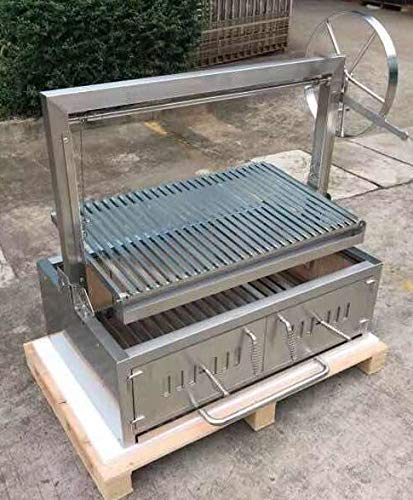
MCP Island Grills Built-In/Tabletop Parrilla with Rotisserie — Best Built-In Project
Best Built-In Project. The project pick: a stainless parrilla core with rotisserie, made to be built into a permanent outdoor kitchen.
Built-in cooking changes the buying logic. The grill becomes architecture, so materials — stainless body, quality grate stock — and the rotisserie system matter more than portability or price tier. This unit is specified for that life: corrosion-resistant where it counts and designed to sit in masonry or on a substantial table.
It is included for completeness and flagged honestly: most readers should buy a freestanding grill from this guide instead. For the reader mid-design of an outdoor kitchen with an asado heart, it is the verified starting point — confirm dimensions against your build before ordering, as returns on built-ins are nobody’s friend.
Strengths
- Stainless construction specified for permanent installation
- Rotisserie spit adds the whole-roast repertoire
- Built-in or tabletop deployment
Trade-offs
- Premium tier by a wide margin
- A project purchase — surround and installation are on you
- Overkill for anyone not building permanently
Key specs: Stainless #430 body, #304 grates, rotisserie spit
Check on Amazon — check price on Amazon before you order, since configurations and included accessories change.
Best for: permanent outdoor-kitchen builders / Not suited for: freestanding-grill shoppers — the other five picks serve you better
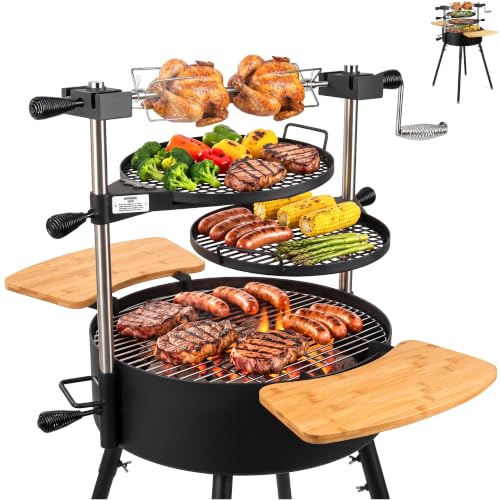
BIG HORN Portable Santa Maria Grill — Best Portable
Best Portable. Not every asado happens at home. This portable parrilla takes the ember-and-height method to the beach house, the campsite and the small balcony garden.
The rotating grates compensate cleverly for the small bed: food moves through the heat instead of the cook rebuilding the fire’s geography. The rotisserie turns a chicken into the centrepiece it deserves to be. Capacity is the stated limit — cook for two to four, in courses, and it shines.
For a small household it may be all the parrilla ever needed. For learners it is the school. Either way it is the most Argentinian cooking available at an entry tier, and the guide recommends it without the usual portable-product apologies.
Strengths
- The method, portable: embers plus height control anywhere
- Rotisserie at a size where it is genuinely useful
- Entry tier — the cheapest way to learn the style
Trade-offs
- Courses for a crowd become relays
- Build is lighter than full-size models
- Small firebox needs more frequent ember attention
Key specs: Adjustable height, rotating grates, rotisserie, portable
Check on Amazon — check price on Amazon before you order, since configurations and included accessories change.
Best for: small households, campers and learners / Not suited for: hosts of large gatherings
Comparison Table — Best Argentinian Grills
| Pick | Badge | Key spec | Best for |
|---|---|---|---|
| Brand-Man Santa Maria Grill Argentine with Brasero | Best Overall | Brasero, adjustable V-grate, griddle, fire brick, skewers, S-hooks | asadores who run the full traditional course sequence |
| Backyard Discovery Argentine Santa Maria Heritage Grill | Best for Entertaining | Adjustable grates, fire bricks, acacia table, S-hooks | hosts whose asado is a standing social event |
| BIG HORN Santa Maria Grill (Large) | Best Mid-Range | Adjustable-height grate, under-grill storage | learners stepping up to a full-size parrilla |
| Argentine Santa Maria Grill with Adjustable Height Grates (Green Party) | Best Alternative Full-Size | Adjustable grates, S-hooks, foldable front table | buyers comparing full-size options beyond the headline brands |
| MCP Island Grills Built-In/Tabletop Parrilla with Rotisserie | Best Built-In Project | Stainless #430 body, #304 grates, rotisserie spit | homeowners building a permanent outdoor kitchen |
| BIG HORN Portable Santa Maria Grill | Best Portable | Adjustable height, rotating grates, rotisserie, portable | travelling asadores and small households |
Read the table as a map, not a ranking: every pick here earned its place for a stated household, and the badge column tells you which household that is. Specifications are limited to details verified in the product listings; confirm the current configuration before ordering.
How to Choose the Best Argentinian Grills for Your Asado
Choose by the asado you actually cook. A couple cooking entraña and vegetables monthly needs the portable or mid-range pick and nothing more. A household running monthly multi-course asados for ten people needs brasero capacity and staging — the top two picks exist for them. The grill is the cheap part of asado over five years; the meat is not, so leave budget for both.
Inspect the three working parts in any listing: the grate-lift mechanism (chain, cable or crank — all work if smooth and lockable), the grate (V-channel for fatty course cooking, flat bar for marking), and the firebox (brick-lined or heavy steel, with ash management you can live with). Accessories — plancha, hooks, skewers — are genuinely useful in this cuisine, not garnish, and kits that include them price better than adding later.
Plan the installation before the purchase. These grills are heavy, hot and smoky in the honest way of wood fires: a non-flammable surface, distance from fences and eaves, and a wood store within reach. Renters should confirm open-fire rules before falling in love with any pick here.
Quebracho, Embers and the Order of the Asado
Fuel is an ingredient in Argentinian cooking. Quebracho blanco is the traditional wood — dense, long-burning, mild in smoke. Abroad, oak is the closest common substitute; lump charcoal is the pragmatic everyday choice and the recommended learning fuel. What matters is not the species but the state: cook over embers, not flame, and keep a reserve fire producing the next batch.
The order of service is a heat-management strategy disguised as tradition. Quick, forgiving items first while the bed is young; fatty sausages whose drippings season the fire; then the great cuts low and slow as the bed matures. Salting is coarse and confident, chimichurri is made fresh, and nothing is rushed — least of all the resting of the main cut, which is where impatience ruins more asados than any equipment flaw.
New asadores should keep a notebook for the first season: wood used, time to embers, grate heights per cut. The method has few variables, and a season of notes turns them from mysteries into reflexes.
The Asador’s Toolkit: What You Actually Need
Beyond the grill itself, asado runs on a short list of tools, and quality here outranks quantity. A long-handled pala — the flat shovel for moving embers — is the first purchase; it is the instrument the whole method is played with. Long tongs that can lift a vacío without piercing it come second, and a heavy carving knife with a long blade third, because asado is sliced at the grill, in front of the guests, as part of the ceremony.
A cast-iron pan or provoleta dish earns its place immediately, as does a sturdy board that lives at the grill for resting and slicing. Hooks for hanging cuts and a wire brush for the grate complete the working set. Everything else — thermometers included — is optional refinement; the tradition ran for generations on fire judgment, and the hand test at grate level remains its primary instrument.
Buy tools in the order you will feel their absence: shovel before the first cook, tongs with the grill, the rest across the first season. A small kit of correct tools outperforms a drawer of gadgets at every single asado.
Chimichurri and Sal Parrillera: The Two Seasonings
Argentinian asado seasoning is a discipline of restraint: coarse salt and chimichurri, applied with confidence and nothing to prove. Sal parrillera — a medium-coarse salt — is worked into the meat before or during cooking depending on the cut and the cook’s school; both schools produce great asado, and the argument between them is one of the tradition’s favourite sports. What is not debated is coarseness: fine table salt cakes and over-seasons the surface.
Chimichurri is made fresh, ideally the morning of the asado: parsley, oregano, garlic, chilli, vinegar and oil, rested long enough for the flavours to marry but never refrigerated into dullness. It is served at the table, not cooked on the meat, and a second, spicier batch for the brave is a host’s kindness. The sauce’s brightness is the design — it cuts the richness the fire creates.
Beyond these two, the table needs little: good bread, a salad with acid, and wine or whatever the company drinks. Asado’s flavour architecture is smoke, salt, fat and acid in balance, and every addition should justify itself against that clarity.
Learning the Fire: A First Season Curriculum
The first cook should be deliberately humble: chorizo, provoleta and chicken, on lump charcoal, with the single goal of watching a fire become embers and learning how long that takes with your fuel in your grill. Take notes. The second cook adds a forgiving main — vacío — and practices the reserve fire: keeping tomorrow’s embers coming while today’s cook.
By the fourth or fifth asado, the skills separate into their permanent order: fire first, grate height second, seasoning third, everything else commentary. Common early failures are all fire failures — cooking over flame, running out of embers, beds too thick and fierce for large cuts — and they are all cured by the same medicine: start earlier, build the reserve, rake thinner than instinct suggests.
Keep the notebook for a full season: fuel, weather, timings, heights, results. Asado looks effortless in practiced hands because a season of small corrections lives in those hands. Your notebook is how the corrections accumulate — it is the cheapest masterclass in this entire guide.
Parrilla vs Santa Maria: Choosing Your Tradition
Readers comparing this guide with its Argentine companion will notice the same grills wearing two names, and the overlap is honest: Santa Maria cooking is the Californian branch of the same gaucho root, carried north with cattle culture and centred on the crank-raised grate over oak. The Argentinian original adds the brasero’s ember discipline and the V-grate’s fat management as standard practice rather than options.
The practical difference for a buyer is emphasis. If your cooking dreams are tri-tip over red oak with the grate flying up and down, the Santa Maria framing — and the portable and value picks — serves you. If your dreams are the full course sequence of an asado with a brasero working at your side, this guide’s brasero-equipped leaders are your shortlist. The grills themselves cross over completely; only the menu changes.
Either way, the purchase logic is identical: mechanism, firebox, grate, in that order, sized to your real gatherings and honest about your maintenance habits. Traditions differ in seasoning; they agree entirely on embers.
Key Takeaways for Argentinian Grill Buyers
The brasero is the tradition’s engine, the V-grate its refinement, and the adjustable height its control. A grill with all three reproduces the Argentinian workflow completely; a grill with height alone still cooks a fine asado with a reserve corner of fire. Decide which level of the tradition you are buying into, and let that decision — not a feature list — choose the pick.
Courses are capacity. A mid-size parrilla run in the traditional sequence feeds more people, better, than a giant grate loaded once. When you size your purchase, count your courses and your holding space, not just your grate’s square inches — the Heritage’s table and the Green Party’s folding shelf exist because staging is a real constraint.
Salt coarsely, sauce freshly, rest patiently, and keep the notebook for a season. The equipment in this guide is verified and capable; the asado that comes off it will be exactly as good as the fire discipline behind it, which is the most Argentinian sentence in this entire guide.
Regional Notes: How Asado Varies
Asado is national but not uniform. In the Pampas cattle country the cuts are grand and the fires are quebracho; in Patagonia, lamb cooked al asador — splayed on a cross by the fire — is the ceremony; in the cities, the parrilla is smaller, the courses tighter, and the balcony-sized adaptations inventive. A home buyer abroad is joining the urban branch of the tradition, and the grills in this guide are sized accordingly.
The wine country of Mendoza adds its own grammar — slower afternoons, Malbec as a structural element — while the northern provinces lean spicier and quicker. None of this changes the equipment by a single bolt. It changes the menu, the pacing and the conversation, which is a useful reminder of where asado’s variety actually lives: not in the steel, but around it.
For the home asador, the lesson is permission: the tradition is a framework, not a script. Cook the cuts your market sells well, in the order the fire dictates, with the people you have. Authenticity in asado is a property of attention, not of imports.
A Complete Asado Timeline, Hour by Hour
Ninety minutes before eating: the fire starts — brasero if you have one, reserve corner if you do not — and the meat comes out to lose its chill and take its coarse salt. Chimichurri, made in the morning, sits at room temperature. Salads are dressed later; bread is sliced later; everything that can wait, waits, because the fire will not.
Sixty minutes out: the first embers glow. Provoleta and vegetables open the service while the ember supply builds behind them. The cook learns today’s fire in this hour — how this batch of fuel burns, how the wind leans, how high the grate wants to sit — and every later course is cooked with that knowledge.
Thirty minutes out: chorizo and morcilla, then achuras for the table that wants them. Finished food holds at the cool edge or on the hooks. The main cut goes on now if it is thick, earlier if it is grand: vacío and tira are placed toward the heat on their fat or bone side and left largely alone, because asado’s turning is measured in tens of minutes, not in fidgets.
At service: the main cut rests — properly, a quarter of its cooking time — while the final sausages and the bread take the grate. Slicing happens at the board by the fire, pieces passed directly, the cook eating standing, which tradition insists is the best seat in the house. The fire burns down under supervision as the table slows.
Read the timeline as a buying guide and it repeats this guide’s criteria in another language: continuous embers, calm height control, staging for finished courses, and steel that shrugs at three hours of heat. That is the whole specification of an Argentinian grill, and it always was.
Troubleshooting an Asado: Problems and Corrections
Problem: guests are hungry and the main cut is not ready. This is a scheduling failure wearing a cooking costume: the fire started late or the cut went on after the sausages instead of alongside them. Correct it today with the holding zone — serve the courses slower, add grilled bread and vegetables, and let the cut finish honestly. Correct it permanently in the notebook: the main cut’s start time is derived from its thickness and the sitting time, counted backwards, never guessed forwards.
Problem: the entraña is tough. Skirt steak punishes two errors — overcooking past its narrow window and slicing with the grain. Cook it fast over a fierce bed to a blushing interior, rest it briefly, and slice thinly across the grain at a bias. The cut that seems chewy is almost always a slicing diagram away from tenderness, and learning its grain is a one-time lesson with lifetime dividends.
Problem: provoleta collapses or sticks. The cheese was too young, the pan too cool, or the slice too thin. Use a firm, aged provolone at honest thickness, heat the cast-iron pan properly before the cheese lands, and dust the slice lightly with flour or oregano as many asadores do. A provoleta that holds its shape and crisps at the edges is a technique, and the technique is temperature plus patience.
Problem: the fire tastes of the last cook. Old fat and ash in the firebox flavour a new fire before food arrives. The correction is the shutdown discipline this guide repeats: ash out cold, grate brushed and oiled, channels cleared. An asado begins with the previous asado’s housekeeping, and the cooks who internalise that sentence stop troubleshooting altogether.
Asado Etiquette: The Social Contract of the Fire
The asador cooks; the guests do not help at the grill. This is not arrogance but structure — one hand on the fire keeps the timetable coherent — and the guests’ role is the equally structured one of company, conversation and the occasional delivered drink. Visitors who understand the division enjoy the afternoon more, because the fire’s corner becomes a theatre with a single, calm performer.
Applause for the asador — un aplauso para el asador — is the tradition’s formal thank-you, offered when the main cut is served. Hosts new to the custom should accept it with the seriousness it deserves: it recognises that one person spent the afternoon working while everyone else celebrated, and that the work was the celebration’s engine.
Pacing is politeness. Courses arrive when they arrive; nobody asks the fire to hurry, and the asador never apologises for the timetable the embers set. Guests who need certainty about dinner time are gently educated by the first asado they attend — and usually become its strongest defenders by the second.
Leftovers are handled with the same generosity as the meal: the best remaining slices are pressed on departing guests, because an asado that ends with the host hoarding vacío has misunderstood its own purpose. The fire fed everyone; the table sends everyone home fed. That is the whole etiquette, and it is enough.
The Asador’s Pantry and Cellar Notes
An asado pantry is short by design: coarse salt in quantity, dried oregano and parsley for chimichurri, garlic, chilli flakes, a honest vinegar and a neutral oil, plus flour for the provoleta’s dusting and good bread bought the same day. Everything on that list is used at every asado, and nothing else is missed — the tradition’s flavour system is fire, fat, salt and acid, and the pantry exists to serve those four, not to audition beside them.
Wine, where it is served, follows the same logic of fit rather than ceremony: a sturdy red with the tannin to stand beside beef fat is the classic Mendoza answer, but the asado predates the pairing rules and survives every substitution a table prefers — beer in summer, whatever the guests actually drink in all seasons. The host’s duty is abundance and cold, in that order; the label is the guests’ conversation, not the cook’s exam.
Dessert closes simply because the meal was not simple: grilled fruit from the dying fire, or the classic vigilante — cheese with quince or sweet-potato paste — that asks nothing of the kitchen at all. Coffee is strong and late. The pantry’s restraint, from salt to dessert, is the asado’s final lesson in where quality lives: in the fire and the meat, attended properly, with everything else in a supporting role it never tries to steal.
One Last Word on Salt
It deserves its own short section because it is the asado’s most argued detail: salt the main cuts before the fire, as one school insists, so the seasoning penetrates and the surface dries toward its crust — or salt during and after, as the other school counters, so the meat’s juices stay its own. Both produce excellent asado; both produce fierce partisans. The beginner’s answer is to pick one method for a full season, learn its results honestly, and only then experiment — because a variable changed weekly teaches nothing.
What is not argued: the salt is coarse, the hand is confident, and the meat is never washed of it. Sal parrillera’s medium grain is the tradition’s measure — fine salt cakes and over-seasons, rock salt under-seasons and falls. Abroad, a coarse kosher or sea salt of similar grain is the faithful substitute, and it is already in most kitchens. The smallest ingredient carries the largest opinion, which tells you everything about asado’s values.
How to Run an Asado: From First Fire to Final Course
Step one: light the fire early — earlier than feels reasonable. Ninety minutes before the main cut, the brasero or reserve fire should be lit. Guests arrive to a working fire, not to a host wrestling with kindling.
Step two: open with provoleta and vegetables over a moderate bed while the ember supply builds. This course forgives everything and teaches you today’s fire — every wood batch burns a little differently.
Step three: cook sausages and achuras next, letting their fat wake the fire up, and hold finished items at the grate’s cool edge or on hooks. Keep the reserve fire producing; an asado that runs out of embers in hour two is a planning failure, not bad luck.
Step four: give the main cuts the mature bed and the long, low cook. Raise the grate, turn rarely, salt coarsely, and judge by touch and time rather than by cutting into the meat to look. Rest the finished cut properly — a quarter of its cooking time is not too much for the largest pieces.
Step five: close the fire down with the same care you opened it. Burn down under supervision, spread embers to cool, and dispose of ash only when fully cold, into metal. Clean and oil the grate while the evening is still warm; tomorrow’s asado starts with today’s shutdown.
Common Buying Mistakes
Treating the parrilla like a gas grill. Lighting at six and eating at six-thirty is not asado. The fire’s timetable governs the meal; plan the afternoon around it.
Cooking over flame. Blackened, sooty exteriors and raw centres come from impatience. Embers — glowing, grey-flecked, flameless — are the cooking medium.
Buying capacity instead of workflow. A giant grate without a brasero or reserve plan starves mid-meal. Ember supply beats grate area every time.
Neglecting the steel. Ash left in the box, grates left unoiled, covers left off — the firebox dies by inches. Ten minutes per cook is the maintenance budget; pay it.
Skipping the rest. Cutting a vacío the moment it leaves the grate pours its juices onto the board. Rest it. The tradition is centuries old because it works.
Final Recommendation
The Brand-Man is this guide’s Best Overall for Argentinian grills because its brasero, V-grate and firebrick reproduce the traditional workflow most completely in a verified listing. Hosts who entertain at scale should take the Backyard Discovery Heritage for its table and capacity. Best Argentine Grills
The large BIG HORN is the sensible mid-range step-up, the Green Party model the flexible-staging alternative, the MCP the built-in project core, and the portable BIG HORN the entry point and travel companion. Each serves a real kind of asador; none pretends to serve all of them. Best Backyard Bbq Grills
Whichever you choose, commit to the embers. The grill is equipment; the asado is a practice — and it is the practice, repeated over seasons, that makes the food extraordinary. Best Asian Grills Best Apartment Patio Grills
Quick recap with links:
- Brand-Man Santa Maria Grill Argentine with Brasero (Best Overall): Check on Amazon
- Backyard Discovery Argentine Santa Maria Heritage Grill (Best for Entertaining): Check on Amazon
- BIG HORN Santa Maria Grill (Large) (Best Mid-Range): Check on Amazon
Frequently Asked Questions
What does parrilla mean?
Both the grill and the style of cooking on it: food cooked over wood embers on a height-adjustable grate. The word also describes the restaurants built around the method. When Argentinians say asado, they mean the whole event — fire, courses, company and time.
What cuts are essential for a first asado?
Start with chorizo and morcilla, a provoleta, and one forgiving main — vacío (flap/flank) or a thick entraña (skirt). Add achuras like sweetbreads once your ember management is confident. Chicken cooked slowly skin-down is another traditional and forgiving option.
Can I cook asado with charcoal instead of wood?
Yes — lump charcoal is widely used in Argentina itself for everyday asados, reserving wood for occasions. It produces clean embers with less smoke management. Avoid briquettes with additives and never use lighter fluid; both flavour the food badly.
Why do Argentinian grills have V-shaped grates?
The V channels catch rendered fat and drain it to a collection point instead of letting it drip onto the embers. Over long cooks of fatty cuts, that means less flare-up, less acrid smoke on the meat, and a cleaner flavour — the signature of the style.
How do I control temperature without a dial?
With ember quantity and grate height. More embers raked beneath means more heat; raising the grate cools the cook without touching the fire. The hand test at grate level — how many seconds you can hold your palm there — is the traditional thermometer, and it becomes instinct quickly.
Is a parrilla suitable for weeknight cooking?
Honestly, it is a weekend instrument: the fire alone wants an hour. For weeknights, most parrilla owners keep a small gas or electric grill for speed — several appear in the apartment patio guide in this series — and save the asado for when time is the ingredient they have most of.


