Where to buy
Check the latest price, availability and delivery on Amazon. Orders are placed on Amazon. We may earn a commission from qualifying purchases.
- Best powered option for a single renter: Twin XL Electric Adjustable Bed Base with Wireless Remote — Check on Amazon
- Debercu Bed Frame Support System, 3 Cross Rails and 6 Adjustable Legs — Check on Amazon
- Fixirons Carbon Steel Bed Risers, Adjustable 3.2–11.2 Inch — Check on Amazon
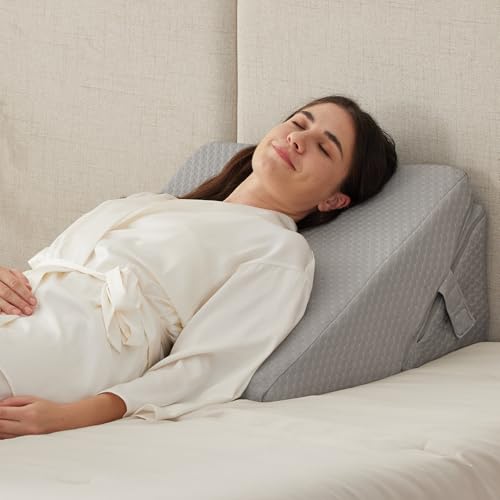
- Kolbs Memory Foam Adjustable Bed Wedge Pillow — Check on Amazon
See 2 more Amazon options
- WSOFRLAC 4-Piece Wedge Pillow Set, Adjustable 9 & 12 Inch — Check on Amazon
- KingPavonini Adjustable Bed Rail, ASTM Compliant — Check on Amazon
Read the full guide ↓
Disclosure: As an Amazon Associate, airfryerkitchensupply.com earns from qualifying purchases. Links to Amazon on this page are affiliate links; they cost you nothing extra. Listing details such as price and availability change often, so check the current Amazon listing before you buy.
Two hundred dollars is the first budget in this category where the word “adjustable” can mean a motor — and even here, it only just can. After tiers of risers, legs and wedges, a renter with $200 faces the genuine decision this guide is built around: stretch for a first real powered base, in a small size, from an unbranded listing — or stay manual and buy the premium end of everything, steel risers, a full support system, a proper wedge. Both answers are defensible, and which one is right depends less on the products than on your lease. A powered base is a 70-to-100-pound piece of electric furniture that has to survive your stairwell twice, hum through a thin floor at midnight, and leave with you when the lease ends. Premium manual gear asks none of those questions. This guide compares both routes honestly and tells you where each one wins.
First, the honesty note, because at this budget it has a twist. A powered base under $200 exists only at the edges: in Twin XL, the single-sleeper size, from generic listings without a brand’s warranty behind them. The one we found is a stretch pick that can sit slightly over this guide’s headline budget, so check the current price on Amazon before you rely on it fitting the budget, rather than assuming it rounds down. Branded Twin XL bases from names you would recognize sit in a higher premium tier, and powered Full and Queen bases sit higher again. Everything else in this guide — the support system, the steel risers, the wedges, the rail — sits comfortably inside this budget, most of it in the budget to mid-range tiers. So read this as a fork in the road: one pick for the renter who wants motors and accepts the compromises, five for the renter who would rather have the best of the manual world.
In this guide
Quick Picks
Short on time, or comparing several options at once? Each row below names a renter type and the product that suits it, with a link to the listing.
| Buyer type | Pick | Why it stands out | Link |
|---|---|---|---|
| Best powered option (single sleepers) | Twin XL Electric Adjustable Bed Base with Wireless Remote | Real motors, head and foot incline, zero-gravity preset — the only powered route near this budget | Check on Amazon |
| Best for a failing frame | Debercu Bed Frame Support System, 3 Cross Rails and 6 Legs | Rebuilds the whole underside of the bed instead of propping one weak point | Check on Amazon |
| Best for storage | Fixirons Carbon Steel Bed Risers, Adjustable 3.2–11.2 Inch | Powder-coated steel lift up to 11.2 inches that survives every move | Check on Amazon |
| Best premium wedge | Kolbs Memory Foam Adjustable Bed Wedge Pillow | An established wedge brand, with adjustable 9 and 12 inch heights | Check on Amazon |
| Best for studio living | WSOFRLAC 4-Piece Wedge Pillow Set, Adjustable 9 & 12 Inch | Four pieces rearrange for sleeping, reading and working on the bed | Check on Amazon |
| Best for getting in and out | KingPavonini Adjustable Bed Rail, ASTM Compliant | Tool-free assist rail built to a published safety standard | Check on Amazon |
How These Picks Were Chosen
The budget was applied the way a renter actually spends it: as a ceiling for the whole purchase, with the powered pick’s exception declared rather than hidden. Five of the six products below are real Amazon listings in the budget to mid-range tiers for this guide in the United States — most comfortably within this budget. The powered base is included because it is the only genuine motorized option anywhere near this tier, and its review tells you to check the current price on Amazon in the first paragraph. If it is sitting well above this budget when you read this, the honest conclusion is that no powered base belongs in this guide that week, and the manual picks are the guide.
We did not use these products ourselves. We read the maker listings, specification pages and deal coverage, and compared incline ranges, motor and remote details where they exist, materials, load ratings, height ranges and fit dimensions. We also treated brand as information: at the manual tiers a maker’s name matters little, but a powered base is an electrical appliance with moving parts, so the powered review weighs the absence of a verified warranty and published capacity as the real costs of its budget-tier positioning — because they are. Where a manual pick advertises a headline load figure that stretches credibility, the review says so and judges the steel and the geometry instead.
Two apartment filters sat on top of all of that, and at $200 they sharpen. The first is the building filter: everything here is freestanding furniture that touches nothing structural — but the powered base adds weight, a power cord and motor noise to the equation, so its review covers stairwell and elevator carry, floor protection and thin-floor etiquette in detail. The second is the exit filter: a purchase at this level has to survive move-out. Manual gear packs into a tote; a powered base needs a vehicle, a second pair of hands and a plan, and its resale value as a generic listing is poor. If your lease has eight months left, that arithmetic belongs in the decision before the motors seduce you.
The 6 Best Adjustable Bed Frames for Apartments Under $200
Twin XL Electric Adjustable Bed Base with Wireless Remote (Generic Listing)
Who it suits: A single renter in a studio or small one-bedroom, sleeping on a Twin XL, who wants real powered adjustment now and accepts what its budget-tier positioning leaves out.
This is the pick that changes what the guide is about, so it gets the full disclosure first: it is an unbranded Amazon listing that can sit just over this guide’s budget line — check the current price on Amazon before ordering — and no verified warranty information or confirmed weight capacity accompanies it. What you get for that money is the genuine article mechanically: a metal-frame Twin XL base with independent head and foot incline driven by electric motors, a wireless remote, and zero-gravity and anti-snore presets — the head raised a few degrees for quieter nights, the full neutral-posture position for reading and working. Two years ago this feature set cost substantially more even in this size. In a studio, where the bed is the sofa, the desk and the cinema seat, powered positioning is not a luxury flourish; it is the difference between a bed you sleep in and a bed you live in.
The apartment realities deserve the same prominence as the features. Bases in this class typically weigh somewhere between 70 and 100 pounds and arrive in a box roughly as long as the bed itself: measure your elevator, your stairwell turn and your hallway before ordering, and plan on a second person for the carry, because this is not a one-arm trip up three flights. Once installed it needs a wall outlet within cord reach and a flexible mattress — memory foam, latex and most hybrids bend with the base, while a stiff traditional innerspring fights it. Run the motors and there is a low hum; through a thin floor at 1 a.m. that hum has an audience, so the etiquette is to set your position before the building sleeps and to stand the legs on pads or a rug, which also spreads the concentrated leg loads that can dent soft flooring. None of this is a reason to refuse the product. All of it is a reason to buy it with open eyes and a lease long enough to justify the carry.
- The only genuine powered adjustment anywhere near this budget: independent head and foot incline by remote.
- Zero-gravity and anti-snore presets cover the positions most buyers actually use nightly.
- Twin XL footprint suits studios and single renters; two of them would form a split king later.
Honest limitation: It can sit above this guide’s budget line — check the current price on Amazon — as a generic listing with no verified warranty and no confirmed capacity rating, and it serves one sleeper in one size only; Full and Queen powered bases sit in substantially higher tiers.
Choose it if you sleep solo on a Twin XL, your lease has a year or more to run, and powered positioning is the thing you actually want. Skip it if you share the bed, your lease is short, or an appliance with no warranty behind it would worry you awake — the manual picks below are excellent and sit in lower tiers.

Debercu Bed Frame Support System — 3 Cross Rails and 6 Adjustable Legs
Who it suits: Renters whose frame has failed underneath them — the bed that wobbles, dips in the middle and makes a decent mattress feel worn out — and who would rather rebuild it than replace it.
Against the powered pick, this system is the opposite philosophy at a similar moment in the budget: no motors, no remote, just structure. Three steel cross rails span the frame and six adjustable legs carry them, spreading the load across the whole underside instead of leaving the center of the mattress to survive on bowing slats. The legs set the system between about 5.9 and 11 inches from the floor to where the box spring or mattress support rests, and the range covers full, queen, king and California king beds in metal, wood or upholstered frames. The result is the closest thing in any of these guides to a new bed: a frame that creaked at every turn goes quiet, a mattress aging into a valley gets a level platform and its remaining life back, and the bed stops transmitting your movements through the floor — support and silence are the same purchase, because a bed that cannot flex cannot squeak, and in a thin-floored building that is a neighbor-relations feature.
Check the configuration before you buy, a warning carried over from our research at lower tiers: the listing sells this system in several sizes, and the larger four- and five-rail configurations sit higher within this guide’s budget range, so check which configuration is in your cart and check the current price on Amazon before checkout, because the featured version on the listing changes. The rental details are sound: the system assembles under and around your own frame, asks nothing of the walls or floor beyond standing on it, arrives as rails and legs one person can carry upstairs, and leaves the same way. Assembly is the biggest job in this guide — set aside the better part of an hour, mattress off, ideally with help for the lifting — and if the frame came furnished with the apartment, it is the landlord’s property, so get a written okay before fastening anything to it, or take the risers below instead.
- Three cross rails plus six legs support the whole bed, not just its center point.
- Height adjusts across roughly 5.9 to 11 inches to suit different frames.
- Fits full, queen, king and California king frames in metal, wood or upholstery.
Honest limitation: It is support equipment only — it will not lift a bed for storage, raise a sleeper’s head, or move at the touch of a button — and it is the most involved installation in this guide.
Choose it if your mattress sags because the frame’s support has failed and the frame is yours. Skip it if the bed is landlord-supplied and unmodifiable, or your problem is storage height or head elevation rather than support.

Fixirons Carbon Steel Bed Risers, Adjustable 3.2–11.2 Inch (Set of 4)
Who it suits: Renters who want under-bed storage to be a real system rather than a squeeze — and who are done with plastic risers that creak, flex and eventually crack.
The material is the story. These risers are powder-coated carbon steel, and the adjustment is built into the set: configurations give you 3.2, 5.1, 8.1 or 11.2 inches of lift from the same four pieces, which means one purchase covers the whole arc of apartment life — a modest 3.2 inches in a low-ceilinged first place, the full 11.2 in a studio where the space under the bed has to swallow luggage, bins and everything the closet cannot. At the taller settings a queen bed gains the kind of clearance that turns dead space into the apartment’s second closet, and the steel construction makes the lift feel like furniture rather than camping equipment: no flex when you sit on the edge, no creak when you roll over, and a finish that reads as intentional in a room that is also your living room. Check the current price on Amazon. The set also makes an honest budget point for this tier: you do not have to spend at the top of the budget to solve the problem, and a renter who pairs this with the wedge set below has transformed both ends of the bed while staying in the manual, budget-friendly tier.
Two honest notes. The maker advertises a capacity of 10,000 lb, which is a headline claim rather than a figure any home test produced — treat it as marketing; the real information is that the risers are steel, thick-walled and rated far beyond what a bed will ask of them. And this is a set of four, in the roughly 2.3-inch-diameter leg fit documented in our research: measure your frame’s legs or posts before ordering, and if your frame has center legs, budget for support at every load-bearing point rather than lifting four corners and leaving the middle behind. For a renter, the closing argument is the move: steel risers nest into a small stack, shrug off a truck ride, and will lift the bed in your next apartment at whatever height that room wants — the exact opposite of the powered pick’s moving day.
- Carbon steel construction — the lift feels permanent, not provisional.
- Four heights from one set: 3.2, 5.1, 8.1 or 11.2 inches.
- Powder-coated finish suits beds that live in multi-use rooms, and the set packs small for moving.
Honest limitation: The advertised 10,000 lb capacity is a maker claim to be read as marketing, and the set of four only covers four legs — wide frames with center support need more.
Choose it if storage is the priority and you want risers you will still own in five years. Skip it if your bed legs are wider than the documented fit, or your frame is a platform with no legs to lift.

Kolbs Memory Foam Adjustable Bed Wedge Pillow
Who it suits: Renters who want the sleeper raised rather than the bed — for reading, reflux comfort or recovery — and who would rather buy the established brand’s wedge than the cheapest triangle on the page.
At the lower tiers of this category the wedges were competent generics. At this tier the sensible wedge purchase is the name brand, and Kolbs is one of the established names in this niche: a memory foam wedge that adjusts between 9 and 12 inch heights, with a plush velvet-feel cover, sold by a maker whose range is built around post-surgery and incline-sleep products. That specialization shows in the details that matter on night thirty rather than night one — foam that holds its angle instead of slowly flattening at a hinge, a cover that survives washing, and sizing meant for adult shoulders rather than a travel pillow scaled up. If the powered pick tempts you mainly because you want your head raised at the touch of something, this is the honest manual equivalent: set the incline once, and it is there every night with no motor, no cord and no hum through the floorboards.
The rental logic is the same as every wedge’s, and it is the strongest in this guide: a wedge touches nothing. No frame modification, no floor contact, no permission, no mark at move-out — and when the move comes it travels in a fraction of the space the powered base demands, in a car rather than a van. Two cautions carry over from our other guides. A wedge is a comfort product, not a medical device: it does not treat reflux disease or sleep apnea, and if a clinician has specified a sleeping angle, check with them before substituting a consumer product. And check the current price on Amazon before ordering — Kolbs wedges live in the premium-manual tier well inside this budget, but confirm the size and the live listing before ordering. Side sleepers should start on the 9-inch setting, where the shoulder can settle, and everyone should give firm foam a few nights before judging it.
- Adjustable between 9 and 12 inch inclines — start gentle, step up only if needed.
- Memory foam with a plush velvet-feel cover, from an established wedge specialist.
- The most landlord-proof pick in this guide: it touches nothing and moves in a car.
Honest limitation: It raises one sleeper, not the bed, and only at the head end — no foot incline, no storage, no support for a failing frame.
Choose it if head elevation is the whole goal and you want the brand-name version of it. Skip it if you and a partner both want elevation from one purchase, or your real problem is underneath the bed.
WSOFRLAC 4-Piece Wedge Pillow Set, Adjustable 9 & 12 Inch
Who it suits: Studio and one-room renters whose bed doubles as sofa, desk and reading chair — the people who need the top of the bed to do several jobs a day.
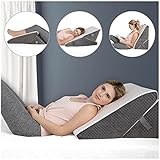
A single wedge is a ramp; this is a system. The WSOFRLAC set builds four memory foam pieces around an adjustable main wedge that sets at a 9-inch or a 12-inch incline, with a separate head pillow and additional pieces that rearrange for the jobs apartment beds actually do: a backrest for working against the wall, leg elevation after a shift on your feet, knee support under the main ramp for reading. Set against the powered pick, this is the other way to make a studio bed multifunctional — the base changes position with motors, the wedge set changes shape by hand — and for renters who work from the bed daily, the rearrangable version is arguably the more flexible tool, because it also becomes a sofa back and a leg rest, shapes no powered base can make. The foam is memory foam over a supportive core, so the incline feels cushioned at the surface without collapsing the way cheap single-density wedges do.
Check the current price on Amazon. In this guide it is the value pick outright for its budget-friendly tier: pair it with the Fixirons risers above and you have upgraded the bed at both ends — storage underneath, comfort on top — while staying in the manual tier, with both pieces car-portable at move-out. The standing cautions apply: it raises one sleeper rather than the bed, the full set takes up real closet space when none of it is in use, and the comfort-not-medical rule holds — it does not treat reflux disease or sleep apnea, and a clinician’s specified angle outranks a product listing. Vacuum-packed foam needs a day or two to expand fully, so judge the feel after that window, not in the first hour.
- Four pieces rearrange for sleeping, reading, working and leg elevation.
- Two working inclines — 9 or 12 inches — plus a separate head pillow.
- Budget-friendly tier for this guide: the value pick, so check the current price on Amazon — and it packs small for moving.
Honest limitation: It raises one sleeper, not the bed, and the full set takes up real closet space when none of it is in use.
Choose it if your bed is also your sofa and desk and the sleeper is the project. Skip it if your actual problem is storage, height or a sagging frame — the picks above it in this guide are yours.

KingPavonini Adjustable Bed Rail, ASTM Compliant (Model BM03-1)
Who it suits: Anyone whose raised or powered bed needs to stay easy to get out of — sore knees, a recovering injury, or parents staying over who should not have to climb down from a lifted mattress.
Every height change in this guide creates a problem it cannot solve: the higher the bed, the harder the exit. That applies to risers, and it applies just as much to the powered pick, whose whole deck sits on legs above the floor. This rail is the answer, and it earns its place in an adjustable-bed guide honestly — it is the product that makes height adjustment usable for the people who need support most. The rail is stainless steel, compliant with the ASTM safety standard for adult portable bed rails, with an adjustable length of about 28.7 to 34.7 inches, a handle height that sets roughly between 17.6 and 20.9 inches above the mattress platform, and a maker rating of 400 lb in the listing. There is a non-slip ergonomic grip and a storage pocket for the phone, glasses and remote that otherwise migrate under pillows — on a powered bed, that pocket is also where the remote should live, clipped within reach instead of down the side of the mattress. It suits mattresses roughly 3 to 12 inches thick, per the product data.
For a renter, the installation is the headline: tool-free. The rail secures under and around the mattress without screws, clamps that bite furniture, or any contact with the building — fit it in minutes when a parent visits, remove it without a trace when they leave. Check the current price on Amazon — it sits in the budget-friendly tier for this guide, and what the money buys over no-name rails is the safety standard itself: an ASTM-compliant rail from a maker that publishes its dimensions is a categorically different purchase from an unrated tube. Keep the standard caution in view: it is an assist handle, not a fall-prevention device or a restraint, and it fits one side of the bed — two sleepers who both need support need one each.
- ASTM-compliant safety standard — the serious version of a bed rail.
- Tool-free installation: nothing screwed, clamped or marked, ideal for rentals and guests.
- Adjustable length and handle height, with a storage pocket that gives the powered base’s remote a home.
Honest limitation: It is an assist rail, not a fall-prevention device, and it fits one side of the bed — two sleepers who both need support need one each.
Choose it if a raised or powered bed needs to stay easy to leave, for you or for guests. Skip it if nobody in the home has trouble getting up — spend the money on support or storage instead.

Comparison Table
| Product | Type | Best use | Link |
|---|---|---|---|
| Twin XL Electric Adjustable Bed Base (Generic Listing) | Powered base, Twin XL | Real motorized positioning for a single renter | Check on Amazon |
| Debercu Bed Frame Support System | Cross rails + 6 legs | Rebuilding a failing frame’s support | Check on Amazon |
| Fixirons Carbon Steel Bed Risers | Steel risers | Permanent-feeling lift and maximum storage | Check on Amazon |
| Kolbs Memory Foam Adjustable Bed Wedge Pillow | Brand-name wedge | Head elevation at 9 or 12 inches | Check on Amazon |
| WSOFRLAC 4-Piece Wedge Pillow Set, 9 & 12 Inch | Adjustable wedge system | Sleeping, reading and working in bed | Check on Amazon |
| KingPavonini Adjustable Bed Rail, BM03-1 | Assist rail | Safe exits from a raised or powered bed | Check on Amazon |
How to Choose an Adjustable Bed Frame for an Apartment Under $200
- Decide the route before the products. This budget contains a fork: one powered base for one sleeper, or the premium manual tier. Choose the route that fits your lease and your bed size first; the product choice follows from it.
- Count the sleepers, honestly. The powered route at this money is Twin XL only. Two people means two bases as a split king, or a Full or Queen powered base in a higher premium tier — either way, it has left this budget, and the manual picks become the guide again.
- Measure the route in, not just the room. A powered base arrives in a box about as long as the bed and typically weighs 70 to 100 pounds in this class. Measure the elevator, stairwell turn and hallway, and recruit a second carrier before the delivery day, not during it.
- Check your mattress can bend. Powered bases need foam, latex or a flexible hybrid. A stiff traditional innerspring will fight the incline and can be damaged by it — if your mattress cannot flex, the powered route is closed regardless of budget.
- Weigh the warranty you are not getting. Branded bases carry multi-year coverage on motors and electronics; a generic listing may carry none that can be verified. Decide in advance what a dead motor in month nine would mean for you, and let that answer vote.
- Start with your lease, not the listings. A powered base is freestanding furniture and breaks no standard lease rule — but check clauses on heavy items, and remember that support gear which screws into a frame needs a landlord’s written okay when the frame came with the apartment.
- Budget for silence as well as motion. Pads or a rug under every leg protect the floor and deaden both motor hum and frame flex for the neighbor below. In an apartment, quiet is not a luxury feature; it is how deposits and good neighbors survive.
- Do the load arithmetic anyway. Frame or base, plus mattress, plus sleepers, against the maker’s stated capacity — and where a listing publishes no capacity at all, as with the generic powered base, treat that silence as a specification in itself.
- Match manual spending to the diagnosed problem. Sound but low: risers. Dipping in the middle: a support system. Sleeper needs the change: a wedge. Raised bed, hard exit: a rail. Money spent on the wrong mechanism is clutter at any tier.
- Keep the packaging until the second week. Foam needs a day or two to expand, a powered base needs a few nights of position changes to reveal a noisy motor, and returns from a walk-up are enough of a project without hunting for a box.
Powered or Premium Manual? The $200 Decision
Strip the marketing away and the two routes buy different things. The powered route buys change during the night: positions you adjust from bed, a head end that rises when the snoring starts, a reading angle that is exact rather than approximate. It buys that change for one sleeper, in one size, from a maker whose name you will not recognize, with a carry-in and a carry-out that each need two people and a vehicle. The manual route buys permanence and coverage: steel that will outlast several leases, a support system that fixes the bed you already own, wedges that rearrange for work and rest, and a rail that makes height safe — all of it car-portable, all of it repairable by replacement rather than by a service call that may not exist. Renters who have lived both ways tend to land on a rule of thumb: buy motors for a bed you expect to keep in one home for years, and buy premium manual gear for a bed that moves when the lease says so.
There is also a legitimate middle answer, and this guide’s pick list is built to allow it: spend at the manual tier now, properly — the support system if the frame is failing, or the risers and wedge set if it is sound — and let the powered question wait for the lease, the bed size and the higher premium tier where branded bases live. A powered base bought one tier too early, in the wrong size, from a listing with no warranty, is the most expensive version of this purchase there is. The manual gear is not a consolation prize in the meantime; it is the equipment that makes the current apartment work, and most of it — the rail, the wedge, the risers — stays useful alongside a powered base later, because none of their jobs disappear when motors arrive.
Living With a Motor in a Thin-Floored Building
A powered base changes your relationship with the building in three small ways, all manageable and all worth knowing before the box arrives. The first is noise. Modern base motors are genuinely quiet at the bed itself, but a floor is a sounding board: vibration travels down through the legs, and a position change at 1 a.m. announces itself to the unit below as a low hum. The fixes are the same ones this guide prescribes for manual gear — pads or a low-pile rug under every leg, which absorb vibration and protect the flooring in the same gesture — plus a habit: set your sleeping position before the building’s quiet hours and save the experiments for the evening. The second is power. The base needs an outlet within cord reach that is not already hosting the apartment’s entire entertainment system, the cord must not cross a walkway, and a base that flattens itself during an outage on battery backup is a feature worth checking for on the listing, because a bed stuck at an angle in a blackout is a memorable night.
The third is permission, and it is mostly reassuring. A powered base is furniture: it bolts to nothing, plumbs into nothing and alters nothing, so standard leases have nothing to say about it. The exceptions are furnished apartments, where replacing the supplied frame with your own base is a change worth a written okay, and older buildings with clauses about unusually heavy items — a base plus mattress plus sleeper concentrates real weight on six small legs, which is another argument for pads spreading the load. Tell the landlord nothing needs telling, keep the supplied frame stored if it was theirs, and the deposit conversation at move-out stays exactly as boring as it should be.
The Move-Out Math: What a Powered Base Costs You Later
Every apartment purchase has two costs: the one at checkout and the one at the end of the lease. Manual gear’s second cost, in effort, is close to nothing — the risers nest into a tote, the wedge set compresses into a bag, the rail lifts off in minutes, and all of it rides in whatever vehicle was already coming. A powered base’s second cost is real: it is a two-person carry down the same stairwell it came up, a vehicle with roughly seven feet of load length, and — if the next home cannot take it — a resale listing for a generic appliance with no warranty to transfer, which in most cities means giving it away to whoever will carry it out. None of that makes the powered pick wrong. It makes the lease the deciding document: with two or more years in a place you like, the carry-out effort is spread over a long stay and the nightly positioning wins easily. With eight months left and a probable move, the same base is an expensive short-term rental with a heavy exit effort, and the premium manual route is not the cautious choice — it is the correct one.
Run the same math in the other direction before dismissing the manual tier as the temporary option. The Debercu system, the Fixirons risers and the KingPavonini rail are not placeholders for a real bed; they are the top of their categories, built from steel and to standards, and they will be serving in your third apartment when a budget powered base’s remote has long since vanished down the side of some mattress. Renters furnish on a moving clock. Buy the equipment whose second cost you can afford, at the tier your lease justifies, and this budget — whichever route you take through it — is money well finished rather than money spent twice.
Common Buying Mistakes
- Assuming “under $200” buys a branded powered base in a couple’s size. At this money, powered means Twin XL and generic — Full and Queen powered bases start far above this budget.
- Rounding a price that sits just over the line down to “under $200” in your head and buying the exception as if it were the rule. If the powered pick is above the line when you check it, believe the listing, not the guide’s headline.
- Ordering a powered base before measuring the stairwell, elevator and hallway — and meeting the box, and the problem, on delivery day.
- Putting a stiff innerspring mattress on a powered base and expecting it to bend. Mattress compatibility closes the powered route for many renters before price does.
- Ignoring the warranty gap. A generic base with no verified coverage is a fair purchase only if a dead motor in year one would annoy you rather than strand you.
- Letting a headboard-height riser stack turn the bed into a climbing wall, then blaming the risers instead of budgeting the assist rail alongside the lift.
- Screwing legs or rails into a landlord-supplied frame before checking the lease or getting a written okay.
- Dragging a loaded bed — or a powered base — sideways during fitting and putting the one avoidable scratch into a landlord’s hardwood floor. Always lift, never slide.
- Blaming frame hardware when the mattress itself is worn out — check the sleeping surface on a level, supported frame before spending on either.
- Buying for this lease’s bed in a size the next home will not want, then paying the move-out math on equipment that fits nowhere else.
Final Recommendation
- Single renters who want motors: Twin XL Electric Adjustable Bed Base (generic listing) — check the current price on Amazon and read its warranty caveats first.
- Failing, sagging frames: Debercu Bed Frame Support System.
- Storage hunters: Fixirons Carbon Steel Bed Risers.
- Head elevation, brand-name version: Kolbs Memory Foam Adjustable Bed Wedge Pillow.
- Beds that double as sofa and desk: WSOFRLAC 4-Piece Wedge Pillow Set.
- Raised or powered beds that need an easy exit: KingPavonini Adjustable Bed Rail, BM03-1.
Our honest top recommendation depends on the lease, and this guide will not pretend otherwise. If you sleep alone on a Twin XL, expect to stay a year or more, and your mattress can bend, the powered base is the purchase this budget exists for — read its review’s caveats, check its live price, and accept the generic-listing trade knowingly. For everyone else, the strongest buy in this guide is the Debercu support system if your frame is failing, or the Fixirons risers paired with the WSOFRLAC wedge set if it is sound: two-ended transformation, steel and foam, in the budget-friendly manual tier and with none of the move-out cost. Renters working to a tighter budget should also see Best Adjustable Bed Frame For Apartments Under $100, and those still deciding whether any of this beats a new frame can start with Best Adjustable Bed Frame Under $200. Measure the route in, count every leg and sleeper, put pads on the list with the parts, and check the live price before you order.
Frequently Asked Questions
Can you really buy a powered adjustable bed frame for under $200?
Only just, and only at the edges. The single powered option we found near this budget is an unbranded Twin XL base that can sit slightly over the line — check the current price on Amazon — with branded Twin XL bases in a higher premium tier and Full and Queen powered bases above that. If a listing promises a branded, couple-sized powered base under $200, read it very carefully before believing it.
Is a generic powered base a risky purchase?
It carries risks a branded base does not: no verified warranty, no confirmed capacity rating in the coverage we found, and uncertain parts support if a motor fails. The mechanics are standard and it sits in a genuinely low tier, so it is a reasonable purchase for a solo renter with a long lease who prices those risks in — and a poor one for anyone who would be stranded by a dead motor.
Will a powered base get me in trouble with my landlord?
Almost certainly not. It is freestanding furniture that modifies nothing, so standard leases have nothing to object to. The exceptions: furnished apartments, where swapping out the supplied frame deserves a written okay, and rare heavy-item clauses in older buildings. Use pads under the legs to protect the floor and keep the supplied frame stored if it was the landlord’s.
How noisy is a powered base in an apartment?
Quiet at the bed, audible through the floor if you let it be. Motor vibration travels down the legs into the structure, so stand the base on pads or a low-pile rug and set your sleeping position before the building’s quiet hours. A base you adjust at 8 p.m. bothers no one; the same adjustment at 1 a.m. has an audience below.
What mattress works on a powered base?
Memory foam, latex and most hybrid mattresses are designed to flex with a base. A stiff traditional innerspring is not, and forcing it to bend can damage it. Check the mattress maker’s guidance before ordering the base — if your mattress cannot flex, spend this budget on the manual picks instead, which work with any mattress because they never ask it to bend.
What if I move out in under a year?
Then the manual route wins on arithmetic. A powered base costs a two-person carry and a long vehicle at move-out and resells poorly as a generic appliance, while the risers, wedge set and rail in this guide pack into a car and keep working at the next address. Buy motors when the lease gives them time to pay you back.
- Best Adjustable Bed Frame Under $200
- Best Adjustable Bed Frame For Apartments Under $100
- Best Adjustable Bed Frame For Apartments Under $75
- Best Adjustable Bed Frame Under $100
- Best Bed Frame For Apartments Under $200
- Best Adjustable Bed Frame For Small Bedrooms Under $200
Related Guides
- Best Adjustable Bed Frame For Apartments Under $30
- Best Adjustable Bed Frame For Apartments Under $75
- Best Adjustable Bed Frame For Apartments Under $100
- Best Adjustable Bed Frame For Apartments Under $400
- Best Adjustable Bed Frame For Apartments Under $700