Disclosure: airfryerkitchensupply.com is reader-supported. When you buy through links on our site, we may earn an affiliate commission at no extra cost to you.
Where to buy
The fastest way to buy any pick in this guide is through Amazon, where stock and configurations change often, so check the current price on Amazon on the product page rather than relying on any number printed elsewhere. These are the six verified picks in this guide:
- Crock-Pot Manual Slow Cooker, 3-Quart — Check on Amazon
- GreenLife 3.5QT Ceramic Nonstick Slow Cooker (Turquoise) — Check on Amazon
- Hamilton Beach 3-Quart Slow Cooker (33231) — Check on Amazon
- Paris Hilton 3.5-Quart Manual Slow Cooker (White) — Check on Amazon
- Better Chef Oval Slow Cooker, 3-Quart (Black) — Check on Amazon
- ICOOK 3.5 Quart Slow Cooker (Ivory White) — Check on Amazon
Availability in this category moves quickly, especially for seasonal colors and smaller brands. If a first choice is out of stock, the alternatives in the same guide are ranked so that the next pick down is a sensible substitute, not a compromise.
Comparing the best 3 to 3.5 slow cookers is really one decision wearing six badges: do you take the compact end of the range or the roomy end? Half a quart sounds trivial on a spec sheet, but in a crock it is the difference between a stew that fits with headroom and one that bubbles at the rim, between leftovers for tomorrow and a meal that ends tonight. This guide puts the strongest verified models from both ends side by side so you can make that call with your own recipes in mind.
At 3 quarts, the picks are Crock-Pot’s benchmark manual cooker, Hamilton Beach’s value workhorse and Better Chef’s oval shape specialist. At 3.5 quarts, GreenLife brings a cooktop-safe ceramic nonstick pot, Paris Hilton pairs stoneware with styling, and ICOOK delivers the capacity at a value price. Every model was verified against its maker’s listing, and each review states its size plainly — no rounding a 3-quart up or a 3.5 down to make the range look tidier than it is.
Our honest advice, argued in full in the buying guide: choose 3 quarts if your household is three people, your storage is tight and your cooking is soups and stews; choose 3.5 quarts if you are four people, batch cook, or cook roasts with vegetables around them. Households genuinely split between the two should take the half quart — an underfilled 3.5 still cooks well, while an overfilled 3.0 only makes a mess.
In this guide
Quick Picks
If you only read one section, read this one. These are the six best 3 to 3.5 quart slow cookers worth your money, each with a distinct badge so you can match the pick to your situation in seconds:
- Crock-Pot Manual Slow Cooker, 3-Quart — Best 3-Quart Pick. The lower end of the range, done by the benchmark brand. Check on Amazon
- GreenLife 3.5QT Ceramic Nonstick Slow Cooker (Turquoise) — Best 3.5-Quart Pick. The top of the range with the most versatile pot. Check on Amazon
- Hamilton Beach 3-Quart Slow Cooker (33231) — Best Value in the Range. The sensible budget anchor at the 3-quart end. Check on Amazon
- Paris Hilton 3.5-Quart Manual Slow Cooker (White) — Best Styled 3.5-Quart Pick. Family size with a designed finish. Check on Amazon
- Better Chef Oval Slow Cooker, 3-Quart (Black) — Best Oval in the Range. Solid-food cooking at the 3-quart end. Check on Amazon
- ICOOK 3.5 Quart Slow Cooker (Ivory White) — Best Budget 3.5-Quart Pick. Top-of-range capacity at a value position. Check on Amazon
How These Picks Were Chosen
Every product in this guide was verified against Amazon’s own catalog data for this site before it was written about: the model name, capacity and headline features in each review come from the maker’s verified listing, not from memory or third-party summaries. Products that could not be verified were written about without a purchase link or left out entirely, and this guide says so where that happened.
The criteria, in order, were: honest capacity for the 3 to 3.5 quart class named in the search; the features that decide daily satisfaction in this category, as set out in the buying guide below; build and care practicality, including whether the parts you wash are dishwasher safe; and a spread of badges so that different households — not just the average one — can find their pick. Where this size class is thin or confusing in the real market, the reviews say that plainly rather than padding the list with products that do not belong.
The 6 Best 3 to 3.5 Quart Slow Cookers
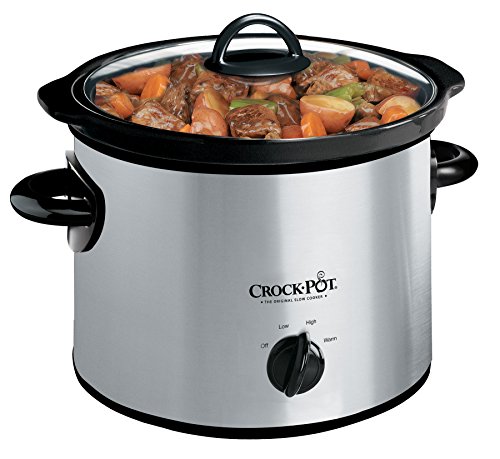
Crock-Pot Manual Slow Cooker, 3-Quart — Best 3-Quart Pick
At the 3-quart end of this range, Crock-Pot’s manual cooker is the reference: oven-safe removable stoneware, High, Low and Warm settings, and a serves-3-plus rating. It is the choice when your household is three people, your batches are stews and soups, and you want the smallest cooker that still behaves like a family appliance. Everything else in this guide should be compared against it on value.
Strengths
- Oven-safe stoneware adds baking and finishing options
- Proven design from the category’s defining brand
- Compact end of the range, so storage is easiest here
Trade-offs
- Least headroom in this guide for batch cooking
- No timer or automatic Warm switch
- Round shape only
| Capacity | 3 quart, serves 3+ people (per listing) |
| Crock | Removable stoneware, oven safe (per listing) |
| Settings | High, Low and Warm |
In daily use, the Crock-Pot Manual Slow Cooker, 3-Quart behaves the way a cooker in this class should: it comes up to a gentle simmer without drama and holds it steadily, which is what makes small-batch slow cooking forgiving. The practical advantage of the 3 to 3.5 quart format shows up on weeknights, when a modest stew or a small roast cooks in a vessel that does not need a quart of extra liquid just to cover the food. Cleanup is the other half of ownership, and a removable crock that can go straight into the sink or dishwasher is why cookers like this get used three times a week instead of three times a year.
There is a learning curve with the Crock-Pot Manual Slow Cooker, 3-Quart, but it is a short one: two or three cooks to learn how its Low and High settings map to your recipes, and how full you like the crock for your household’s dishes. After that, the cooker disappears into routine, which is the highest compliment a slow cooker can earn. Seasoning is the skill that grows with it — long cooking softens herbs and spices, so confident cooks finish dishes at the end with fresh herbs, acid and heat rather than front-loading everything. A 3 to 3.5 quart cooker rewards that technique because small batches concentrate flavor quickly.
Best for: Households of three who cook soups, stews and small roasts / Not suited for: Batch cooks, who should take the 3.5-quart picks instead

GreenLife 3.5QT Ceramic Nonstick Slow Cooker (Turquoise) — Best 3.5-Quart Pick
At 3.5 quarts, GreenLife’s cooker is the modern option: a PFAS-free ceramic nonstick pot listed as cooktop and oven safe, three heat settings, and a light body that is easy to handle full. The extra half quart over 3-quart models is the difference between a stew that fits and a stew that spills, and the sear-first pot is a capability no stoneware rival here matches. For most buyers in this range, this is the head of the class.
Strengths
- Cooktop-safe pot enables proper browning before slow cooking
- Extra half quart gives real headroom for family batches
- Lightweight design is easy to lift, wash and store
Trade-offs
- Nonstick coating requires gentle utensils and washing
- Less heat-soak than heavy stoneware once cooking ends
- Bright color will not match every kitchen
| Capacity | 3.5 quart |
| Pot | Ceramic nonstick, PFAS-free (per listing) |
| Pot use | Cooktop and oven safe (per listing) |
| Settings | 3 heat settings: Low, High, Warm |
| Finish | Turquoise |
What separates the GreenLife 3.5QT Ceramic Nonstick Slow Cooker (Turquoise) from generic small cookers is the accumulation of small, correct decisions rather than any headline feature. Heat distribution around a small crock is harder to get right than it looks, because the element is close to the food on every side; models that cycle gently produce tender results, while aggressive ones scorch sauces at the edges. Owners of 3 to 3.5 quart cookers also tend to cook a tighter repertoire — soups, braises, oatmeal, dips — and this model covers that repertoire without forcing workarounds.
Versatility is easy to oversell in this category, but the GreenLife 3.5QT Ceramic Nonstick Slow Cooker (Turquoise) covers more ground than its size suggests. Beyond stews and soups, a cooker like this handles steel-cut oatmeal overnight, mulled drinks for a gathering, warm dips held at serving temperature, and small batches of stock from a chicken carcass. What it will not do is sear, crisp or bake with any browning, and no slow cooker will. Judge it as a gentle-heat specialist: within that specialty, a well-chosen 3 to 3.5 quart model is one of the highest-use appliances a small kitchen can own.
Best for: Families of four and cooks who brown meat before slow cooking / Not suited for: Stoneware traditionalists who dislike coated pots
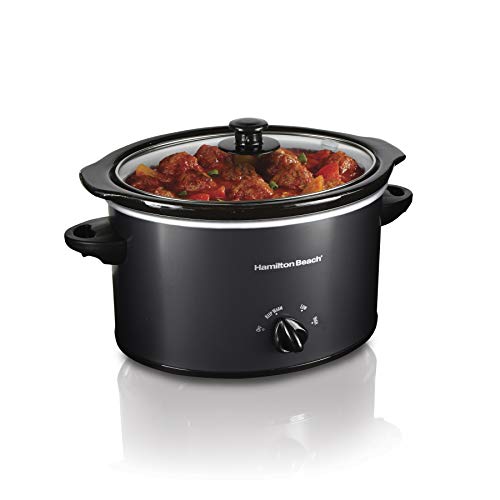
Hamilton Beach 3-Quart Slow Cooker (33231) — Best Value in the Range
Hamilton Beach’s 33231 anchors the value end of this range: a 3-quart cooker with a dishwasher-safe crock and lid and a matte black finish, from a brand with national parts and support. It does not pretend to be premium, and that honesty is its appeal — a family-starter cooker that cleans up in the dishwasher and leaves budget room for a second, larger cooker later if batch cooking takes off.
Strengths
- Lowest-effort cleanup in this guide
- Trusted brand backing at a value position
- Matte black finish hides the evidence of weekly use
Trade-offs
- Fewest features of any pick here
- No timer, no programming, no oven-safe claims to rely on
- Plain design that will not elevate a styled kitchen
| Capacity | 3 quart |
| Care | Dishwasher-safe crock and lid (per listing) |
| Model | 33231 |
| Finish | Matte black |
Think about the Hamilton Beach 3-Quart Slow Cooker (33231) as a countertop habit rather than an appliance purchase. Its footprint at this size is small enough to live out permanently, and permanent residence is what turns slow cooking into a routine: ingredients in before work, dinner ready without a second thought. The controls ask nothing of you, which is precisely the point. Where it asks for compromise, it is in capacity headroom, and that compromise is shared by every cooker in the 3 to 3.5 quart class rather than being a flaw of this model in particular.
Look closer at the ownership details and the Hamilton Beach 3-Quart Slow Cooker (33231) holds up well. The lid fit is the quiet determinant of slow cooker performance, because a lid that rocks leaks the steam the method depends on; glass lids in this class generally sit flat and let you monitor a cook without opening anything. The crock’s glaze is the other long-term factor: a smooth, intact glaze releases food and resists staining for years, while a crazed or chipped surface is the signal to retire the crock. None of this appears on a spec sheet, which is why this guide weighs care and construction details as heavily as settings when assigning badges at the 3 to 3.5 quart size.
Best for: First family cookers, second cookers and rental kitchens / Not suited for: Feature seekers who want searing pots or smart controls
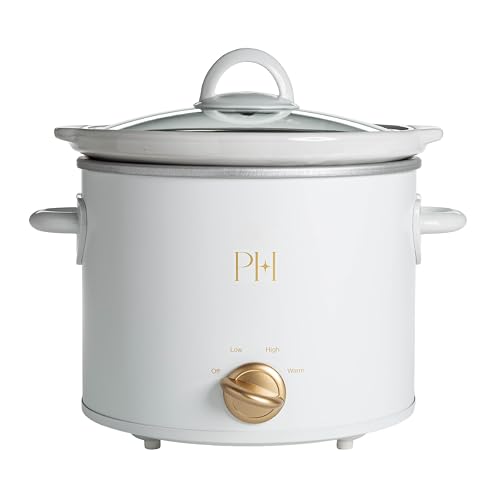
Paris Hilton 3.5-Quart Manual Slow Cooker (White) — Best Styled 3.5-Quart Pick
Paris Hilton’s 3.5-quart model brings real stoneware to the styled end of the range: a naturally nonstick stoneware ceramic insert, Low, High and Warm settings, and dishwasher-safe parts in white. At the top of this guide’s size range it offers the batch headroom batch cooks want, in a finish chosen for kitchens that are photographed as often as they are cooked in. The engineering underneath is conventional, which is a compliment.
Strengths
- Stoneware insert at full 3.5-quart family size
- Clean white styling for bright kitchens
- Dishwasher-safe parts keep the size practical
Trade-offs
- White shows cooking stains over time
- Manual dial only, no timer functions
- Celebrity branding divides opinion
| Capacity | 3.5 quart |
| Insert | Stoneware ceramic, naturally nonstick (per listing) |
| Settings | Three settings: Low, High, Warm |
| Care | Dishwasher safe (per listing) |
| Finish | White |
In daily use, the Paris Hilton 3.5-Quart Manual Slow Cooker (White) behaves the way a cooker in this class should: it comes up to a gentle simmer without drama and holds it steadily, which is what makes small-batch slow cooking forgiving. The practical advantage of the 3 to 3.5 quart format shows up on weeknights, when a modest stew or a small roast cooks in a vessel that does not need a quart of extra liquid just to cover the food. Cleanup is the other half of ownership, and a removable crock that can go straight into the sink or dishwasher is why cookers like this get used three times a week instead of three times a year.
There is a learning curve with the Paris Hilton 3.5-Quart Manual Slow Cooker (White), but it is a short one: two or three cooks to learn how its Low and High settings map to your recipes, and how full you like the crock for your household’s dishes. After that, the cooker disappears into routine, which is the highest compliment a slow cooker can earn. Seasoning is the skill that grows with it — long cooking softens herbs and spices, so confident cooks finish dishes at the end with fresh herbs, acid and heat rather than front-loading everything. A 3 to 3.5 quart cooker rewards that technique because small batches concentrate flavor quickly.
Best for: Styled kitchens cooking for three to four people / Not suited for: Timer-dependent cooks with unpredictable schedules

Better Chef Oval Slow Cooker, 3-Quart (Black) — Best Oval in the Range
Better Chef’s oval is the shape specialist of this range: a 3-quart enamel stoneware insert in an oval body with three temperature settings, side handles and a glass lid. Whole small chickens and pork shoulders fit an oval properly, and no round 3.5-quart cooker can change that geometry. If your cooking is meat-led, this 3-quart oval will outperform larger round rivals on the dishes that matter to you.
Strengths
- Oval layout fits whole birds and roasts flat
- Enamel stoneware insert is durable and easy to clean
- Side handles assist with a full crock
Trade-offs
- Wider footprint than round rivals of similar capacity
- Smaller brand support than the biggest names
- Manual settings only
| Capacity | 3 quart |
| Shape | Oval |
| Insert | Enamel stoneware (per listing) |
| Settings | 3 temperature settings |
| Handles | Side handles (per listing) |
What separates the Better Chef Oval Slow Cooker, 3-Quart (Black) from generic small cookers is the accumulation of small, correct decisions rather than any headline feature. Heat distribution around a small crock is harder to get right than it looks, because the element is close to the food on every side; models that cycle gently produce tender results, while aggressive ones scorch sauces at the edges. Owners of 3 to 3.5 quart cookers also tend to cook a tighter repertoire — soups, braises, oatmeal, dips — and this model covers that repertoire without forcing workarounds.
Versatility is easy to oversell in this category, but the Better Chef Oval Slow Cooker, 3-Quart (Black) covers more ground than its size suggests. Beyond stews and soups, a cooker like this handles steel-cut oatmeal overnight, mulled drinks for a gathering, warm dips held at serving temperature, and small batches of stock from a chicken carcass. What it will not do is sear, crisp or bake with any browning, and no slow cooker will. Judge it as a gentle-heat specialist: within that specialty, a well-chosen 3 to 3.5 quart model is one of the highest-use appliances a small kitchen can own.
Best for: Meat-first cooks in households of three or four / Not suited for: Soup and stew specialists who stir often
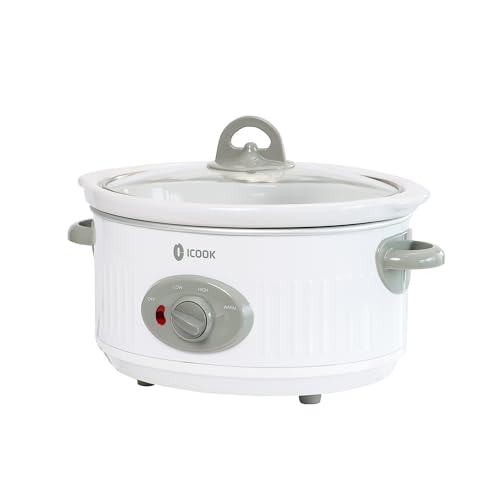
ICOOK 3.5 Quart Slow Cooker (Ivory White) — Best Budget 3.5-Quart Pick
ICOOK’s 3.5-quart cooker is the budget route to the top of this range: three heat settings, a removable ceramic pot, tempered glass lid and cool-touch handles in ivory white. It lacks the GreenLife’s cooktop-safe pot and the Paris Hilton line’s styling, but it delivers the capacity and the core cooking function for noticeably less commitment. For a first 3.5-quart cooker or an event-day second cooker, that trade is rational.
Strengths
- Full 3.5-quart capacity at a value position
- Removable ceramic pot and glass lid are dishwasher safe
- Cool-touch handles suit a frequently moved cooker
Trade-offs
- Basic fit and finish compared with premium rivals
- No advanced features of any kind
- Smaller brand documentation and support
| Capacity | 3.5 quart |
| Pot | Removable ceramic pot (per listing) |
| Lid | Tempered glass |
| Settings | 3 heat settings |
| Handles | Cool touch (per listing) |
Think about the ICOOK 3.5 Quart Slow Cooker (Ivory White) as a countertop habit rather than an appliance purchase. Its footprint at this size is small enough to live out permanently, and permanent residence is what turns slow cooking into a routine: ingredients in before work, dinner ready without a second thought. The controls ask nothing of you, which is precisely the point. Where it asks for compromise, it is in capacity headroom, and that compromise is shared by every cooker in the 3 to 3.5 quart class rather than being a flaw of this model in particular.
Look closer at the ownership details and the ICOOK 3.5 Quart Slow Cooker (Ivory White) holds up well. The lid fit is the quiet determinant of slow cooker performance, because a lid that rocks leaks the steam the method depends on; glass lids in this class generally sit flat and let you monitor a cook without opening anything. The crock’s glaze is the other long-term factor: a smooth, intact glaze releases food and resists staining for years, while a crazed or chipped surface is the signal to retire the crock. None of this appears on a spec sheet, which is why this guide weighs care and construction details as heavily as settings when assigning badges at the 3 to 3.5 quart size.
Best for: Budget buyers who need 3.5 quarts of capacity / Not suited for: Cooks who want a sear-capable or styled premium model
Comparison Table
All six picks side by side. Capacity and feature claims are taken from each maker’s verified listing, and where a pick sits deliberately outside the headline size, the table says so rather than hiding it.
| Pick | Badge | Key spec | Best for |
|---|---|---|---|
| Crock-Pot Manual Slow Cooker, 3-Quart (Check on Amazon) | Best 3-Quart Pick | 3 qt stoneware, High/Low/Warm | The lower end of the range, done by the benchmark brand |
| GreenLife 3.5QT Ceramic Nonstick Slow Cooker (Turquoise) (Check on Amazon) | Best 3.5-Quart Pick | 3.5 qt ceramic nonstick, cooktop/oven safe pot | The top of the range with the most versatile pot |
| Hamilton Beach 3-Quart Slow Cooker (33231) (Check on Amazon) | Best Value in the Range | 3 qt, dishwasher-safe crock and lid | The sensible budget anchor at the 3-quart end |
| Paris Hilton 3.5-Quart Manual Slow Cooker (White) (Check on Amazon) | Best Styled 3.5-Quart Pick | 3.5 qt stoneware insert, 3 settings | Family size with a designed finish |
| Better Chef Oval Slow Cooker, 3-Quart (Black) (Check on Amazon) | Best Oval in the Range | 3 qt oval, enamel stoneware insert | Solid-food cooking at the 3-quart end |
| ICOOK 3.5 Quart Slow Cooker (Ivory White) (Check on Amazon) | Best Budget 3.5-Quart Pick | 3.5 qt, 3 heat settings, ceramic pot | Top-of-range capacity at a value position |
How to Choose the Right Slow Cooker in the 3 to 3.5 Quart Range
Capacity and fill level come first
The single most important decision with a 3 to 3.5 quart slow cooker is whether the size matches how you actually cook. Slow cookers work best between half and two-thirds full: underfilled food cooks too fast and dries at the edges, while an overfilled crock can spill and cook unevenly. Think in meals, not quarts. Picture your two or three most common dishes, estimate their volume honestly, and choose the cooker that holds those dishes in the sweet spot. Every pick in this guide sits in the 3 to 3.5 quart class, so the real choice is shape, controls and crock material rather than raw size.
Shape: round versus oval
Round crocks suit soups, stews, dips and oatmeal, and they heat evenly for liquid dishes. Oval crocks fit small roasts, whole chickens at the larger end of this class, and casseroles more naturally. At 3 to 3.5 quart, the difference is practical rather than cosmetic: an oval gives you layout flexibility for solid foods, while a round pot is usually a little easier to stir, store and fit in the sink. If your cooking is mostly liquid-based, save the money and go round; if you cook small joints of meat, oval earns its place.
Controls: manual dial versus programmable
Most cookers in this size class use a simple manual dial with Low, High and Warm, and there is real virtue in that simplicity: no electronics to fail, nothing to program, and a control that still works with wet hands. Programmable models add a timer that switches to Warm when cooking ends, which matters if your workday runs longer than your recipe. Be honest about your schedule. If you are home to switch the cooker off, manual is enough; if your return time is unpredictable, the automatic switch to Warm prevents overcooked dinners.
Crock material and care
Glazed stoneware is the standard at this size: it holds heat well, goes from cooker to table gracefully, and most examples here are dishwasher safe and some are oven safe for finishing a dish under a broiler. Ceramic nonstick crocks, like the GreenLife design in this guide where it appears, are lighter and release food more easily but prefer gentler handling. Whichever you choose, avoid thermal shock: let a hot crock cool before rinsing, and never set a hot crock on a cold stone counter.
Lids, handles and the details that age well
A glass lid lets you check food without dumping heat, and it should sit flat with no rocking. Cool-touch handles matter more than they sound, because a full crock is heavy relative to its size and you will carry it with oven mitts at least once. Cord length and storage shape decide whether the cooker lives on the counter or in a cupboard. These small things, not headline features, are what separate a cooker you use weekly from one that gathers dust.
How to Choose and Use a 3 to 3.5 Quart Slow Cooker
Step 1: Fill the crock the right amount
Fill the stoneware between half and two-thirds full. Too little liquid lets small batches scorch at the edges; too much can bubble over the rim on High. For 3 to 3.5 quart cookers this matters more than on big models, because a small crock heats through quickly and has less thermal mass to buffer mistakes.
Step 2: Layer ingredients in the right order
Put dense root vegetables at the bottom, closest to the heat, then meat, then softer vegetables and liquids on top. Dairy, fresh herbs and quick-cooking greens go in during the last 30 to 60 minutes so they do not split, darken or turn bitter over a long cook.
Step 3: Resist lifting the lid
Every peek dumps the built-up steam and heat, and a small cooker can need 15 to 20 extra minutes to recover. Use the glass lid to check progress, and only open it when you are adding late ingredients or checking doneness near the end of the cooking window.
Step 4: Check doneness with temperature, not just time
Recipes give ranges because room temperature, ingredient size and fill level all shift the result. Poultry should reach a safe internal temperature, beef roasts should probe tender rather than merely hot, and beans should be fully soft with no chalky center before serving.
Step 5: Cool, store and clean safely
Move leftovers to shallow containers within two hours rather than storing food in a hot crock. Let the stoneware cool before washing so a cold sink does not shock hot ceramic, then wash the crock and lid in warm soapy water or the dishwasher if the maker lists them as dishwasher safe.
Common Buying Mistakes
Buying the size for a holiday instead of the week
A cooker bought for the biggest meal of the year spends fifty weeks being wrong for daily cooking. At 3 to 3.5 quart, you are choosing a daily-driver size; if you occasionally need more, a second inexpensive cooker for events beats living with an oversized crock that underfills and dries out normal meals.
Underfilling a small crock and blaming the cooker
A 3 to 3.5 quart cooker still needs to be at least half full to cook evenly. A single chicken breast rattling around in a small crock will overcook at the edges. Add vegetables and liquid around small portions, or cook a full recipe and freeze the extra in portions.
Cooking everything on High to save time
High is for getting a dish to a simmer faster, not for better results. Lean meats, dairy-based dishes and anything delicate turn tough or split when rushed. Plan for Low, and use High for the dishes that genuinely suit it, like beans and sturdy stews.
Ignoring the gasket-free basics: lid fit and crock cracks
Slow cookers have no gasket, but the lid must sit flat and the crock must be free of hairline cracks. A warped lid leaks the heat and moisture the whole method depends on, and a cracked crock can fail under heat. Inspect both when a cooker starts behaving strangely before assuming the heating element is dying.
Leaving food on Warm for half a day
Warm holds cooked food hot for serving; it is not a storage mode. Food quality declines and safety margins shrink the longer it sits. Cook, serve, and refrigerate leftovers in shallow containers within two hours.
Before You Buy: A Final Checklist
- Confirm the size basis. Check the exact capacity statement in the pick’s spec box above, because this category’s headline numbers are not all measured the same way.
- Measure your space. Check the footprint against your counter and the storage spot you actually have, including room for the lid to open or lift clear.
- Match the pick to your three most common meals. Not the most ambitious meal you can imagine — the ordinary ones you cook every week.
- Plan the cleanup. Confirm which parts are dishwasher safe in the verified listing, and be honest about whether you will hand-wash a pot every time.
- Check the current price on Amazon on the product page. Prices and stock in this category move often, and the listing is the only number that counts.
Run through those five checks and the right pick in this guide usually identifies itself. If two picks still tie, choose the one whose trade-offs you mind least — you will live with the trade-offs daily, while the strengths quickly become invisible.
What actually fits in a 3 to 3.5 quart slow cooker
Capacity numbers become real when you translate them into food. A 3 to 3.5 quart crock holds a stew built on a modest cut of meat plus vegetables and liquid, a batch of soup with room to stir, or a family portion of pulled meat with sauce. It will not hold a large whole chicken plus vegetables, a double batch of chili for a party, or a big bone-in roast — and pretending otherwise is how buyers end up disappointed. Match the cooker to the meals you make monthly, and let party cooking be the job of a second, larger cooker you borrow or own cheaply.
Batch cooking and leftovers at this size
A 3 to 3.5 quart cooker is a natural meal-prep tool for small households: cook once, eat twice, and freeze a third portion flat in a bag for a future weeknight. Soups, braises and shredded meats freeze and reheat better than almost anything else you can make, and they are precisely the dishes this size handles best. Label portions with the date and the dish, rotate the freezer stock monthly, and the small cooker quietly becomes the reason weeknight dinners stop being a daily decision.
Energy and running costs in perspective
Slow cookers sip electricity compared with heating a whole oven for one small dish, and a 3 to 3.5 quart model sits at the frugal end of even that frugal category. The practical consequence is that long, gentle cooking is cheap enough to be an everyday habit rather than a weekend project. It also means the cooker earns its place in small homes, rentals and RVs where running a full oven heats the whole living space — a hidden cost in summer that a countertop cooker avoids entirely.
Getting the seasoning right in small batches
Small batches concentrate seasoning mistakes, so taste and adjust at the end rather than salting heavily at the start. Slow cooking mutes herbs and spices over hours; add dried herbs early for depth, but keep fresh herbs, citrus and sharp finishes for the last half hour. A splash of vinegar or lemon at serving wakes up a long-cooked stew more reliably than any extra hour of cooking, and a pinch of sugar balances tomato-heavy dishes that taste harsh after a full day in the crock.
Seasoning, timing and the last half hour
The most common disappointment with a 3 to 3.5 quart slow cooker is food that tastes flat despite good ingredients, and the cause is almost always timing rather than the cooker. Long, gentle heat rounds off sharp flavors: garlic mellows, chili heat fades, fresh herbs disappear entirely. Build the base with dried spices, aromatics and tomato or stock at the start, then reserve a finishing kit — fresh herbs, lemon or vinegar, a knob of butter or a drizzle of good oil, a pinch of something hot — for the last thirty minutes or the serving bowl. That single habit lifts small-batch slow cooking more than any upgrade in hardware, and it costs nothing.
Two-cooker strategies for small households
Many small households end up owning two slow cookers: a 3 to 3.5 quart model for daily meals and a larger one borrowed from storage for gatherings, or two small ones so a main and a side can cook at once. This is not excess; small cookers are inexpensive, store inside each other’s cupboard space more easily than one giant model, and match portion sizes better across the week. If you entertain a few times a year, the second-cooker strategy beats upsizing your daily cooker and living with underfilled, fast-cooking batches for the other fifty weeks.
When to replace a slow cooker
A slow cooker is ready for replacement when the crock is chipped or crazed, when the lid no longer sits flat, or when the base cycles so aggressively that sauces scorch on Low. Heating elements rarely die outright; they drift. If a cooker that once behaved starts burning food at the edges on the same recipes, that is drift, and no technique fixes it. The good news is that at the 3 to 3.5 quart size, replacement is one of the cheapest appliance decisions in the kitchen, and the picks in this guide are the current verified options.
A note on cooking times in small crocks
Published slow cooker recipes assume a large, well-filled crock, and a 3 to 3.5 quart cooker bends those assumptions in predictable ways. Small volumes heat through faster, so lean meats and vegetables reach tenderness earlier than the recipe’s range suggests, while dried beans and tough braising cuts still need nearly the full time because tenderness is chemistry, not just temperature. The working approach is to check at the early end of any range the first time you cook a dish in this size, note the result on the recipe, and trust your notes thereafter. Within a month, your recipe file will be calibrated to your cooker, which is when small slow cooking becomes genuinely effortless.
Counter space, storage and living with a small cooker
A 3 to 3.5 quart slow cooker is one of the easiest appliances to live with, but placement still matters. It needs a heat-safe surface, a little clearance around the base vents, and a socket that is not shared with a kettle or toaster on the same circuit at the same moment. In storage, the lid can sit inverted in the crock to save height, with a cloth between glass and glaze to prevent chips. Cooks who give a small cooker a permanent counter spot use it several times a week; cooks who bury it in a deep cupboard use it monthly. If you have the counter corner, claim it — the habit is worth more than the space.
Final Recommendation
Start with the Crock-Pot Manual Slow Cooker, 3-Quart, our Best 3-Quart Pick pick: it is the model we would buy for the widest range of households searching for best 3 to 3.5 slow cookers. If its particular strengths do not match your situation, the GreenLife 3.5QT Ceramic Nonstick Slow Cooker (Turquoise) (Best 3.5-Quart Pick) is the alternative we would choose next, and every other pick in this guide exists because it serves a specific household better than either of those two. Check on Amazon / Check on Amazon
Still deciding between neighboring sizes or formats? Compare the related guides in this series: Best 3 Quart Slow Cookers, Best 3.5 Slow Cookers, Best 2 Quart Slow Cookers. Sizes in this category sit close together, and ten minutes with the comparison tables in those guides is the cheapest way to avoid buying the wrong capacity.
Frequently Asked Questions
How many people does a 3 to 3.5 quart slow cooker feed?
As a working rule, plan on roughly one quart of capacity per person for a main dish with modest portions, and a little less per person when the meal includes hearty sides. A 3 to 3.5 quart cooker suits the household size this guide focuses on, especially for soups, stews and braises where the crock is filled between half and two-thirds. If you regularly cook for a crowd or want large leftovers, size up; if you mostly cook for one or two, this size avoids the dried edges that come from underfilling a big crock.
Can I leave a 3 to 3.5 quart slow cooker on while I am out?
Modern slow cookers are designed for unattended cooking on a stable, heat-safe counter away from walls and paper, and the Low and Warm settings are the ones intended for long stretches. That said, follow the manual for your model, keep the cord undamaged and clear of the hot body, and never run any heating appliance on a circuit that already trips breakers. If being away all day is your main use, a programmable model that switches to Warm automatically is the safer pattern.
Why is my food watery after slow cooking?
Slow cookers trap nearly all moisture, so ingredients release liquid that has nowhere to evaporate. Vegetables, frozen meat and even onions add more water than most recipes expect. Use a little less added liquid than a stovetop version of the same dish, leave the lid closed so you are not tempted to compensate by overcooking, and if the sauce is thin at the end, simmer it briefly in the removable crock on the stove only if the maker rates the crock for stovetop use, or reduce it in a separate pan.
Can I put the crock in the oven or dishwasher?
Many stoneware crocks in this size are listed as oven safe and dishwasher safe, and several picks in this guide say so in their verified listings. The heating base, however, should never be immersed or put in the dishwasher. Always confirm the exact model’s care instructions, let hot stoneware cool before washing to avoid thermal shock, and check for chips, because a chipped crock should be retired rather than used under heat.
What is the difference between Low, High and Warm?
On most manual cookers, Low and High reach a similar final simmering temperature; High simply gets there faster. Warm is a holding setting meant to keep cooked food hot for serving, not to cook raw ingredients safely from cold. As a rough conversion, a recipe written for Low usually takes about half as long on High, though dense roasts and beans are more forgiving of the longer, gentler Low cycle.
How do I stop small batches from overcooking?
Small crocks heat through faster, so check doneness at the early end of the recipe’s range, choose Low for lean meats that dry out, and fill the crock at least half full so there is enough thermal mass. Adding a little extra liquid and cutting ingredients into even pieces also helps. If a dish finishes early, switch to Warm rather than letting it continue cooking on Low.


