Disclosure: airfryerkitchensupply.com is reader-supported. When you buy through links on our site, we may earn an affiliate commission at no extra cost to you.
Finding the best 0.8 gpf toilets means sorting real flush engineering from headline numbers, and that is exactly where this guide starts. Every pick here is judged first on whether it truly delivers a 0.8 flush — as a single flush or as the light setting of a dual-flush design — and only then on comfort, cleaning and installation. Be honest with yourself before you start: 0.8 GPF is an extreme specification. It is well below the federal 1.6 ceiling and below the 1.28 WaterSense benchmark, and the market reflects that. Most products at this volume are specialist bowls, dual-flush light settings, or complete toilets from water-conservation brands rather than the mainstream lines you will find in every merchant. That scarcity is not a flaw in your search; it is the reality of the category, and this guide names it where it matters instead of padding the list with 1.28 toilets relabelled as ultra-low.
Where to buy
The confirmed picks in this guide are sold through Amazon, where you can check the current price on Amazon for each model, confirm the exact rough-in, bowl shape and seat inclusion on the listing, and arrange delivery of a heavy ceramic fixture to your door. Start with these confirmed options:
- Niagara Stealth 0.8 GPF Elongated Bowl — Best Overall: Check the current price on Amazon
- DeerValley Compact One-Piece Dual Flush 0.8/1.28 GPF Toilet — Best Dual-Flush Alternative: Check the current price on Amazon
- Swiss Madison Eclair One-Piece Dual-Flush 0.8/1.28 GPF Toilet — Best Modern Design: Check the current price on Amazon
- Niagara Stealth 0.8 GPF Rear-Outlet Elongated Bowl — Best for Rear-Outlet Plumbing: Check the current price on Amazon
- CANEST T01 Dual Flush 0.9/1.28 GPF Toilet — Best Comfort Height: Check the current price on Amazon
- A True Single-Flush 0.8 GPF Complete Toilet — Best Brief on Paper — Unlinked: described without a link below, with no purchase link, because a matching listing could not be confirmed.
Always re-check the listing for the configuration you intend to order. Toilets in the same family often share a name across different rough-ins, lever sides, seat inclusions and flush volumes, and the wrong variant is an expensive, heavy mistake to return.
In this guide
Quick Picks
- Best Overall: Niagara Stealth 0.8 GPF Elongated Bowl — The lowest single flush volume in this roundup, built around vacuum-assist style Stealth technology rather than a conventional flapper — Check the current price on Amazon
- Best Dual-Flush Alternative: DeerValley Compact One-Piece Dual Flush 0.8/1.28 GPF Toilet — The light flush is a true 0.8 GPF, so liquid-only trips use the minimum in this roundup — Check the current price on Amazon
- Best Modern Design: Swiss Madison Eclair One-Piece Dual-Flush 0.8/1.28 GPF Toilet — Square one-piece silhouette looks distinctly more modern than a traditional two-piece — Check the current price on Amazon
- Best for Rear-Outlet Plumbing: Niagara Stealth 0.8 GPF Rear-Outlet Elongated Bowl — One of the very few rear-outlet options at this flush volume, useful for specific remodel layouts — Check the current price on Amazon
- Best Comfort Height: CANEST T01 Dual Flush 0.9/1.28 GPF Toilet — Light flush sits close to the ultra-low target while keeping a conventional siphonic design — Check the current price on Amazon
- Best Brief on Paper — Unlinked: A True Single-Flush 0.8 GPF Complete Toilet — On paper this is the ideal brief: every flush, solid or liquid, at the ultra-low volume — no link, no confirmed listing
How These Picks Were Chosen
Every product named with a purchase link in this guide was checked through the site’s own Amazon product listings for this site, matching the brand, model and flush volume in the listing title to the toilet being recommended. If a product could not be matched with confidence, it was not given a link. That rule matters especially for a category like best 0.8 gpf toilets, where similar model names cover different rough-ins and flush volumes, and where some headline volumes describe only the light setting of a dual-flush design rather than the toilet’s full flush.
Beyond verification, picks were judged on ultra-low water use, bowl shape and height for the households most likely to buy them, cleaning effort in weekly use, seat inclusion, and long-term parts support. Recalled or unsafe products were excluded. No fixed prices and no fixed review figures are printed in this guide, because both change constantly; use the Amazon links to check the current price on Amazon for the exact configuration you want, and judge popularity signals on the live listing rather than from numbers frozen into an article.
The 6 Best Options for Best 0.8 Gpf Toilets
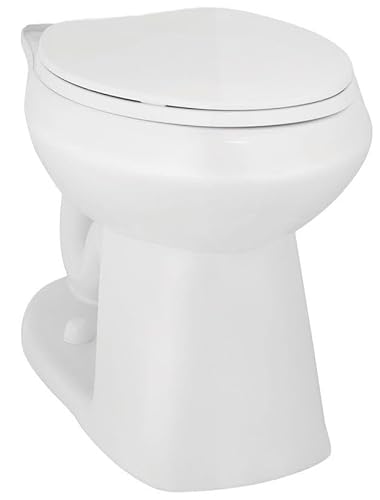
Niagara Stealth 0.8 GPF Elongated Bowl — Best Overall
This pick earns its badge — Best Overall — because of how it handles ultra-low water use. The lowest single flush volume in this roundup, built around vacuum-assist style Stealth technology rather than a conventional flapper. It will suit households whose priorities match that strength directly, and the analysis below is deliberately plain about where it gives ground, because a toilet is a ten-to-twenty-year purchase and the trade-offs matter more than the launch-day impressions. Read the verdict line at the end of this section if you are deciding quickly; read the whole section if this is the toilet going into your primary bathroom.
Strengths
- The lowest single flush volume in this roundup, built around vacuum-assist style Stealth technology rather than a conventional flapper
- Elongated bowl shape gives more seating room than a round front at the same rough-in
- A genuine ultra-high-efficiency option for water-bill and septic-conscious households
Trade-offs
- Sold on Amazon as a bowl listing, so you must confirm the matching tank and seat before ordering a complete installation
- Rear-outlet and component variants in the same family are easy to confuse — check the exact configuration twice
- Parts support is narrower than the big three brands, so keep the model paperwork after installation
Verified specifications from the listing: Flush volume: 0.8 GPF as listed / Bowl shape: Elongated as listed / Brand: Niagara Conservation.
In daily use, the questions that decide satisfaction with the Niagara Stealth 0.8 GPF Elongated Bowl are predictable. Does its bowl shape suit the people using it most? Does its height help or hinder them? How long does a weekly clean actually take around its base and under its rim? And when a seal or valve eventually wears, how easily can you get the part? This pick answers those questions well for its intended buyer and less well for others, which is exactly what the strengths and trade-offs above are for. Compare it against the pick immediately above and below it in this list — in most bathrooms, the real contest is between two or three of these six, not all six.
Best for: buyers who prioritise ultra-low water use and want the best overall option in this category / Not suited for: buyers whose rough-in, bowl-shape or cleaning priorities point to a different pick in this guide.
Check the current price on Amazon

DeerValley Compact One-Piece Dual Flush 0.8/1.28 GPF Toilet — Best Dual-Flush Alternative
This pick earns its badge — Best Dual-Flush Alternative — because of how it handles ultra-low water use. The light flush is a true 0.8 GPF, so liquid-only trips use the minimum in this roundup. It will suit households whose priorities match that strength directly, and the analysis below is deliberately plain about where it gives ground, because a toilet is a ten-to-twenty-year purchase and the trade-offs matter more than the launch-day impressions. Read the verdict line at the end of this section if you are deciding quickly; read the whole section if this is the toilet going into your primary bathroom.
Strengths
- The light flush is a true 0.8 GPF, so liquid-only trips use the minimum in this roundup
- Compact one-piece body suits small bathrooms where a full-size two-piece feels crowded
- Soft-close seat is included in the listing rather than sold as an add-on
Trade-offs
- The full flush is 1.28, not 0.8 — households wanting every flush at 0.8 should look at the Niagara models
- Value-brand parts and support are not the same as a legacy brand dealer network
- Compact proportions can feel short for taller users despite the elongated claim in some variants
Verified specifications from the listing: Flush volume: Dual flush 0.8/1.28 GPF as listed / Rough-in: 12 inch as listed / Seat: Soft close as listed.
In daily use, the questions that decide satisfaction with the DeerValley Compact One-Piece Dual Flush 0.8/1.28 GPF Toilet are predictable. Does its bowl shape suit the people using it most? Does its height help or hinder them? How long does a weekly clean actually take around its base and under its rim? And when a seal or valve eventually wears, how easily can you get the part? This pick answers those questions well for its intended buyer and less well for others, which is exactly what the strengths and trade-offs above are for. Compare it against the pick immediately above and below it in this list — in most bathrooms, the real contest is between two or three of these six, not all six.
Best for: buyers who prioritise ultra-low water use and want the best dual-flush alternative option in this category / Not suited for: buyers whose rough-in, bowl-shape or cleaning priorities point to a different pick in this guide.
Check the current price on Amazon

Swiss Madison Eclair One-Piece Dual-Flush 0.8/1.28 GPF Toilet — Best Modern Design
This pick earns its badge — Best Modern Design — because of how it handles ultra-low water use. Square one-piece silhouette looks distinctly more modern than a traditional two-piece. It will suit households whose priorities match that strength directly, and the analysis below is deliberately plain about where it gives ground, because a toilet is a ten-to-twenty-year purchase and the trade-offs matter more than the launch-day impressions. Read the verdict line at the end of this section if you are deciding quickly; read the whole section if this is the toilet going into your primary bathroom.
Strengths
- Square one-piece silhouette looks distinctly more modern than a traditional two-piece
- Light flush matches the 0.8 target while the full flush gives a fallback for solids
- One-piece body removes the tank-to-bowl seam that collects grime
Trade-offs
- Square bowls limit replacement seat choice compared with standard elongated seats
- The 0.8 figure is the light flush only, not the toilet’s only flush volume
- Styling-led brands can discontinue colours and seats faster than plumbing-led brands
Verified specifications from the listing: Flush volume: Dual-flush 0.8/1.28 gpf as listed / Shape: Square as listed / Construction: One-piece as listed.
In daily use, the questions that decide satisfaction with the Swiss Madison Eclair One-Piece Dual-Flush 0.8/1.28 GPF Toilet are predictable. Does its bowl shape suit the people using it most? Does its height help or hinder them? How long does a weekly clean actually take around its base and under its rim? And when a seal or valve eventually wears, how easily can you get the part? This pick answers those questions well for its intended buyer and less well for others, which is exactly what the strengths and trade-offs above are for. Compare it against the pick immediately above and below it in this list — in most bathrooms, the real contest is between two or three of these six, not all six.
Best for: buyers who prioritise ultra-low water use and want the best modern design option in this category / Not suited for: buyers whose rough-in, bowl-shape or cleaning priorities point to a different pick in this guide.
Check the current price on Amazon

Niagara Stealth 0.8 GPF Rear-Outlet Elongated Bowl — Best for Rear-Outlet Plumbing
This pick earns its badge — Best for Rear-Outlet Plumbing — because of how it handles ultra-low water use. One of the very few rear-outlet options at this flush volume, useful for specific remodel layouts. It will suit households whose priorities match that strength directly, and the analysis below is deliberately plain about where it gives ground, because a toilet is a ten-to-twenty-year purchase and the trade-offs matter more than the launch-day impressions. Read the verdict line at the end of this section if you are deciding quickly; read the whole section if this is the toilet going into your primary bathroom.
Strengths
- One of the very few rear-outlet options at this flush volume, useful for specific remodel layouts
- WaterSense-labelled high-efficiency positioning in the listing title
- Elongated shape rather than a cramped round front
Trade-offs
- Rear-outlet plumbing is not interchangeable with a standard floor flange — this only suits homes plumbed for it
- Again a bowl listing rather than a guaranteed complete toilet in a single box
- Niche configuration means a plumber unfamiliar with the model may need extra time
Verified specifications from the listing: Flush volume: 0.8 gpf as listed / Outlet: Rear outlet as listed / Bowl shape: Elongated as listed.
In daily use, the questions that decide satisfaction with the Niagara Stealth 0.8 GPF Rear-Outlet Elongated Bowl are predictable. Does its bowl shape suit the people using it most? Does its height help or hinder them? How long does a weekly clean actually take around its base and under its rim? And when a seal or valve eventually wears, how easily can you get the part? This pick answers those questions well for its intended buyer and less well for others, which is exactly what the strengths and trade-offs above are for. Compare it against the pick immediately above and below it in this list — in most bathrooms, the real contest is between two or three of these six, not all six.
Best for: buyers who prioritise ultra-low water use and want the best for rear-outlet plumbing option in this category / Not suited for: buyers whose rough-in, bowl-shape or cleaning priorities point to a different pick in this guide.
Check the current price on Amazon

CANEST T01 Dual Flush 0.9/1.28 GPF Toilet — Best Comfort Height
This pick earns its badge — Best Comfort Height — because of how it handles ultra-low water use. Light flush sits close to the ultra-low target while keeping a conventional siphonic design. It will suit households whose priorities match that strength directly, and the analysis below is deliberately plain about where it gives ground, because a toilet is a ten-to-twenty-year purchase and the trade-offs matter more than the launch-day impressions. Read the verdict line at the end of this section if you are deciding quickly; read the whole section if this is the toilet going into your primary bathroom.
Strengths
- Light flush sits close to the ultra-low target while keeping a conventional siphonic design
- Skirted-style one-piece body is easier to wipe down than an exposed trapway
- Comfort-height positioning in the listing suits taller users and ageing in place
Trade-offs
- Light flush is 0.9, not a true 0.8, so it does not fully match an ultra-low brief
- Newer brand with a shorter track record than the legacy names in this guide
- Dual-flush actuator parts are model-specific if they ever need replacing
Verified specifications from the listing: Flush volume: Dual flush 0.9/1.28 GPF as listed / Rough-in: 12 inch as listed / Seat: Soft-close as listed.
In daily use, the questions that decide satisfaction with the CANEST T01 Dual Flush 0.9/1.28 GPF Toilet are predictable. Does its bowl shape suit the people using it most? Does its height help or hinder them? How long does a weekly clean actually take around its base and under its rim? And when a seal or valve eventually wears, how easily can you get the part? This pick answers those questions well for its intended buyer and less well for others, which is exactly what the strengths and trade-offs above are for. Compare it against the pick immediately above and below it in this list — in most bathrooms, the real contest is between two or three of these six, not all six.
Best for: buyers who prioritise ultra-low water use and want the best comfort height option in this category / Not suited for: buyers whose rough-in, bowl-shape or cleaning priorities point to a different pick in this guide.
Check the current price on Amazon
A True Single-Flush 0.8 GPF Complete Toilet — Best Brief on Paper — no link
This pick earns its badge — Best Brief on Paper — Unlinked — because of how it handles ultra-low water use. On paper this is the ideal brief: every flush, solid or liquid, at the ultra-low volume. It will suit households whose priorities match that strength directly, and the analysis below is deliberately plain about where it gives ground, because a toilet is a ten-to-twenty-year purchase and the trade-offs matter more than the launch-day impressions. Read the verdict line at the end of this section if you are deciding quickly; read the whole section if this is the toilet going into your primary bathroom.
Strengths
- On paper this is the ideal brief: every flush, solid or liquid, at the ultra-low volume
- When available from established ultra-high-efficiency lines, these models suit off-grid, septic and strict water-budget homes
- No dual-flush decision for guests — one simple operation
Trade-offs
- Complete, conventional 0.8 single-flush toilets are genuinely scarce on Amazon US at the time of writing
- Most listings at this volume are bowls, tanks or dual-flush light settings rather than a complete toilet in one box
- We could not confirm a further complete model matching this brief through the site’s Amazon product listings, so this slot stays not linked rather than inventing a product
In daily use, the questions that decide satisfaction with the A True Single-Flush 0.8 GPF Complete Toilet are predictable. Does its bowl shape suit the people using it most? Does its height help or hinder them? How long does a weekly clean actually take around its base and under its rim? And when a seal or valve eventually wears, how easily can you get the part? This pick answers those questions well for its intended buyer and less well for others, which is exactly what the strengths and trade-offs above are for. Compare it against the pick immediately above and below it in this list — in most bathrooms, the real contest is between two or three of these six, not all six.
Best for: buyers whose brief matches this description exactly and who are willing to wait or search specialist suppliers / Not suited for: buyers who need a confirmed, orderable toilet today — choose one of the linked picks above instead.
Comparison Table
| Pick | Badge | Key spec | Best for |
|---|---|---|---|
| Niagara Stealth 0.8 GPF Elongated Bowl | Best Overall | Flush volume: 0.8 GPF as listed / Bowl shape: Elongated as listed / Brand: Niagara Conservation | ultra-low water use |
| DeerValley Compact One-Piece Dual Flush 0.8/1.28 GPF Toilet | Best Dual-Flush Alternative | Flush volume: Dual flush 0.8/1.28 GPF as listed / Rough-in: 12 inch as listed / Seat: Soft close as listed | ultra-low water use |
| Swiss Madison Eclair One-Piece Dual-Flush 0.8/1.28 GPF Toilet | Best Modern Design | Flush volume: Dual-flush 0.8/1.28 gpf as listed / Shape: Square as listed / Construction: One-piece as listed | ultra-low water use |
| Niagara Stealth 0.8 GPF Rear-Outlet Elongated Bowl | Best for Rear-Outlet Plumbing | Flush volume: 0.8 gpf as listed / Outlet: Rear outlet as listed / Bowl shape: Elongated as listed | ultra-low water use |
| CANEST T01 Dual Flush 0.9/1.28 GPF Toilet | Best Comfort Height | Flush volume: Dual flush 0.9/1.28 GPF as listed / Rough-in: 12 inch as listed / Seat: Soft-close as listed | ultra-low water use |
| A True Single-Flush 0.8 GPF Complete Toilet | Best Brief on Paper — no link | Unlinked — no confirmed listing | ultra-low water use |
How to Choose the Right Option Among the Best 0.8 Gpf Toilets
Measure your rough-in before anything else. It is the distance from the finished wall to the centre of the floor flange bolts, and it decides which toilets physically fit your bathroom. Most modern homes use the standard measurement, but older properties, remodels with thickened wall finishes and some compact rooms use smaller rough-ins, while a small number use larger ones. A toilet bought for the wrong rough-in either will not reach the flange or will sit so far from the wall that the tank cannot be supported properly. No flush performance figure compensates for a toilet that does not fit, so this measurement comes first in every responsible buying process.
Bowl shape is a comfort decision you will feel every day. Elongated bowls give most adults more support and are the default in primary bathrooms, while round-front bowls save precious inches in powder rooms and small rental bathrooms. Square bowls, offered by a few design-led brands, look striking but narrow your replacement seat options considerably. If two people in the household disagree, prioritise the person who uses that bathroom most, and remember that a compact elongated design often splits the difference better than either extreme. Seat shape must match bowl shape exactly when you eventually replace the seat.
Height deserves more attention than most buyers give it. Standard-height bowls suit shorter users and children, while comfort, chair, universal and right-height designs — all roughly describing a taller bowl — make sitting and standing easier for taller adults and for anyone with knee, hip or mobility concerns. Very tall bowls can leave shorter users with their feet unsupported, which is uncomfortable and, for children, impractical. Many households solve this by choosing the taller height in the primary bathroom and keeping a standard height in a family bathroom. Think in terms of who uses the room daily, not who visits occasionally.
Cleaning effort is designed in, not added later. An exposed trapway has curves, bolt caps and a floor junction that collect dust and require a cloth worked around them. A skirted or one-piece body presents a mostly flat surface that a single wipe covers. Inside the bowl, a quality glaze reduces how much waste sticks and how hard you need to scrub, and rim design decides whether water reaches the whole bowl surface. If you clean your own bathroom, weight these traits heavily; the difference is minutes every week, every year you own the toilet, which adds up to far more than any small difference in purchase tier.
Flush engineering matters more than the headline volume. Two toilets with identical gallons-per-flush figures can perform very differently depending on how the water is delivered: rim jets that scour, a siphon that pulls the bowl clear, a large flush valve that dumps water quickly, or a canister that lifts fully. Where a listing states a bulk-clearing test score, treat it as a useful signal rather than a guarantee, because your drain line, venting and water pressure all influence real results. What you want is a toilet whose design gives the water a job to do in the bowl, not simply a larger tank.
Water use should be calculated honestly. A household’s saving from a lower flush volume is real but modest per person, and it disappears entirely if a weak toilet needs a second flush. That is why this programme consistently recommends matching the volume to the plumbing: ultra-low and dual-flush designs shine on modern, well-pitched drains and septic systems where volume itself is the constraint, while full-volume designs earn their water in older homes where the drain run needs the push. Count your household size, your water and sewer pricing structure, and whether you are on septic, then choose — the arithmetic is personal, not universal.
Installation is straightforward but unforgiving of shortcuts. The flange should sit at the right height relative to the finished floor, the seal — wax or silicone — must be new and correctly seated, and the toilet should be set in one confident motion rather than rocked into place. Shims correct a slightly uneven floor; caulk belongs around the front and sides of the base with the back left open so a future leak reveals itself instead of hiding under the fixture. Tighten bolts evenly and gently: ceramic cracks from enthusiasm far more often than from use. If any of that sounds unfamiliar, a plumber’s short visit is cheaper than a rotted subfloor.
Parts availability is the hidden long-term cost. Fill valves, flush valves, canister seals, dual-flush actuators and seats all wear eventually. Legacy brands publish parts widely and merchants stock them; newer value brands usually require ordering the exact model-specific part online. Neither is a deal-breaker, but you should know which you are buying. Keep the model number, take a photograph of the inside of the tank or the actuator before you need it, and store any spare seals the manufacturer includes. The toilet itself will likely outlast two or three sets of internal parts, so serviceability is a genuine buying criterion.
Do not ignore the seat. Whether a seat is included, whether it soft-closes, how it attaches and whether it removes for cleaning all affect daily satisfaction more than most specification sheets admit. A seat-less listing is not a flaw, but it is an extra purchase and an extra compatibility check — elongated, round and square seats are not interchangeable, and some one-piece and smart designs need their own seat geometry. If a household member uses a raised seat, a bidet attachment or a child seat, confirm compatibility with the bowl and hinge design before the toilet is bolted down, not after.
Finally, think about the room as a system. A toilet that protrudes further changes clearance in front of the bowl, which building guidance treats as important for comfort and accessibility. Tank width affects whether shelving or cabinets above the toilet work. A top-button flush changes how a toilet looks against a wall of storage. Even the lever side matters if the toilet sits beside a vanity or a wall. The best toilet for your bathroom is the one whose volume, shape, height, cleaning profile and physical footprint all suit the same room — which is why this guide keeps returning to fit before features.
Understanding Flush Volume: What the Numbers in Best 0.8 Gpf Toilets Really Mean
Gallons per flush, usually shortened to GPF, is the volume of water a toilet uses in a single full flush. Dual-flush toilets complicate the figure because they publish two numbers: a light flush for liquid waste and a full flush for solids. When you compare categories, compare full flush to full flush, and treat a light-flush figure as a bonus for the many daily flushes that are liquid-only. Averages quoted by manufacturers for dual-flush models assume a usage pattern that may not match your household, especially with children or guests who simply press the bigger button every time.
The regulatory backdrop explains why the categories in this programme exist. Older toilets used far more water per flush. The modern federal ceiling settled at 1.6, and the voluntary WaterSense high-efficiency benchmark settled at 1.28 — twenty percent below that ceiling, with a bulk-clearing requirement attached. Below that sit the niche figures this batch also covers: 1.2, which never became a standard tier, and 0.8, which is specialist ultra-high-efficiency territory. Neither niche figure is automatically better. Each is a tool for a particular plumbing and water-use situation, and the guides in this batch say plainly when the mainstream figure is the smarter buy.
Septic households should think in total daily volume rather than per-flush bragging rights. A lower flush volume reduces the hydraulic load on the tank and drain field across hundreds of flushes, which is a genuine benefit, provided the toilet still clears in one flush. Well and water-restricted households reason similarly. By contrast, a home with a long, flat drain run may find that very low volumes leave waste stranded in the line, creating the blockages the buyer was trying to avoid. Your drain geometry is part of the specification, even though it never appears on a product box.
How to Measure, Install and Set Up Your New Toilet
Start before the new toilet arrives. Measure the rough-in from the finished wall to the flange bolts, check the flange height and condition, measure the space from the flange centre to each side wall, and photograph the water supply position. Shut off and drain the old toilet fully, disconnect the supply, and remove it with help — wet ceramic is heavier and more awkward than it looks. Scrape the old seal completely, inspect the flange for cracks, and dry-fit the new bowl before committing to a new seal.
Set the new seal, lower the bowl onto the bolts in one motion, and press down evenly with body weight rather than rocking. Fit washers and nuts and tighten alternately, a little at a time, until the bowl is secure with no movement — then stop, because over-tightening cracks ceramic. Shim any slight unevenness, reconnect the supply with a new flexible line if the old one shows any wear, refill, and flush several times while checking every junction with a dry hand or tissue. Fit the seat last, confirm it is centred, and only then caulk the front and sides of the base, leaving the back open.
During the first week, check for the quiet problems: a fill valve that runs on briefly at random usually means a sealing issue inside the tank or cistern mechanism, condensation in humid weather is normal but pooling water is not, and any rocking means the setting needs attention before the seal is damaged. Keep the installation paperwork and the exact model code. If anything in this process reveals a damaged flange, a corroded shut-off or a drain problem, pause and call a plumber — those are plumbing repairs, not toilet-installation steps, and forcing past them is how small jobs become floor replacements.
Consider who maintains the bathroom over the long term. If the toilet is for a rental property, prioritise widely available parts, a conventional lever and a design a tenant cannot easily misuse; dual-flush buttons and smart features create support calls. If it is for a home you plan to age in, prioritise height, a shape that accepts accessories, and a seat system that can be changed as needs change. The same flush volume serves both briefs, but the right model within the category is different, and buying for the actual use case is the cheapest decision you will make in the whole project.
Think about noise and timing as well. Some flush systems are brisk and audible, others are slower and quieter, and in a home with an en-suite bathroom used at night that difference is felt daily. Tank refill speed, soft-close seats and lids, and the sound of a dual-flush actuator all shape the experience. None of these appear in a gallons-per-flush headline, yet they are the details owners mention years later. If the bathroom adjoins a bedroom, weight them accordingly and favour the designs described above as siphonic, soft-closing or integrated.
Budget in tiers rather than in single products. The search itself defines the flush-volume tier you are shopping in; within it, money mostly buys format, glaze, seat inclusion, brand support and styling, not extra water performance. A sensible approach is to set your tier by those ownership traits, buy the best-fitting pick inside it, and reserve part of the budget for installation consumables — a new supply line, a quality seal, shims and, if the listing is seat-less, the seat. Spending the whole budget on the ceramic and nothing on the installation is a false economy that shows up as leaks and call-backs.
Accessibility deserves a paragraph of its own. Grab bars, raised seats and transfer space all interact with the toilet you choose, and a bowl height that helps one person can hinder another. If anyone in the household has changing mobility, favour the picks above with comfort or chair heights and elongated bowls, leave the clear floor space the room allows, and consider how a bidet seat or raised accessory would attach before the toilet is fixed in place. Planning for access at purchase time is far cheaper than adapting a bathroom around the wrong fixture later.
Durability is mostly about what you cannot see. Vitreous china bodies last for decades; the wear parts are seals, valves, hinges and actuators. A toilet that feels slightly less exciting in a showroom but uses common, well-documented internals will usually be the cheaper and calmer ten-year ownership experience. That is why several reviews above weigh parts support as heavily as flush design, and why keeping the exact model code — not just the brand — is the single most useful record you can store after installation.
Common Buying Mistakes
- Ordering by flush volume alone and discovering the rough-in, bowl shape or height is wrong for the room — fit failures are the most common and most expensive mistake in this category.
- Counting a dual-flush light setting as the toilet’s only volume, then being surprised that solids use the full flush. Compare full-flush figures across models.
- Assuming a listing includes a seat, a wax ring or mounting hardware without reading the box contents — several picks in this very guide are sold less seat by design.
- Buying a square or compact bowl for its looks without checking replacement seat availability and whether taller household members can use it comfortably.
- Ignoring drain condition. A new toilet cannot fix a damaged, blocked or badly vented drain line, and blaming the fixture delays the real repair.
- Over-tightening mounting bolts or rocking a bowl into place and cracking the ceramic or breaking the seal — patience during installation is a performance feature.
- Choosing the tallest bowl for every bathroom, including the one children use, instead of matching height to the room’s actual daily users.
Final Recommendation
For most buyers searching for best 0.8 gpf toilets, start with the Niagara Stealth 0.8 GPF Elongated Bowl. Check the current price on Amazon It is the pick that best balances ultra-low water use with fit, cleaning and long-term ownership. If its shape, height or format does not suit your room, the DeerValley Compact One-Piece Dual Flush 0.8/1.28 GPF Toilet is the most sensible next step rather than a compromise. Check the current price on Amazon A strong third direction is the Swiss Madison Eclair One-Piece Dual-Flush 0.8/1.28 GPF Toilet, which leads the list on its own badge trait. Check the current price on Amazon Work through the remaining picks by the one trait you care about most — cleaning, compactness, rough-in or clearing power — and ignore the rest of the list without guilt. A shortlist of two, checked against your measurements, beats a shortlist of six checked against nothing.
Related guides in this programme: Best 1.2 Gallon Toilets / Best 1.2 Toilets / Best 1.28 Gallon Toilets / Best 1.28 Gallon Toilets For No Clogging / Best 1.28 Gpf Toilets
Related guides
Frequently Asked Questions
Is the flush volume in best 0.8 gpf toilets the full flush or a light flush?
Always check. Single-flush toilets publish one figure, which is their full and only flush. Dual-flush toilets publish two, and honest comparisons use the full-flush figure, treating the light flush as a saving on liquid-only trips. This guide states both figures wherever the listing gives them.
Will a lower-volume toilet clog more often?
Not automatically. Clearing depends on flush engineering, trapway design, glaze and your drain line as much as on volume. A well-engineered high-efficiency toilet on a healthy drain clears in one flush; a poor toilet at any volume, or any toilet on a damaged drain, will disappoint. That is why the no-clogging guide in this batch ranks by design signals, not by volume alone.
What rough-in do I need?
Measure from the finished wall to the centre of your existing flange bolts. Match the toilet to that measurement exactly — standard is the most common, with smaller and larger variants for specific rooms. Several picks in this programme exist specifically for non-standard rough-ins, and their listings state the figure.
Is a one-piece or two-piece toilet better?
Neither is universally better. One-piece and skirted designs clean faster and look cleaner; two-piece designs are lighter to install, often simpler to service, and dominate the legacy brands’ ranges. Choose by cleaning patience, installation help and parts preference rather than by fashion.
Do these toilets include a seat?
Some do and some are explicitly sold less seat — the reviews above flag inclusion wherever the listing states it. If a seat is included, check whether it soft-closes; if it is not, budget for a matching seat in the correct bowl shape and confirm hinge compatibility before the toilet arrives.
When should I call a plumber instead of installing it myself?
Call one if the flange is cracked or below floor level, the shut-off valve does not fully close, the floor around the old toilet is soft or stained from a hidden leak, or the drain itself is slow in other fixtures. Those are plumbing problems that a new toilet will expose, not solve.


