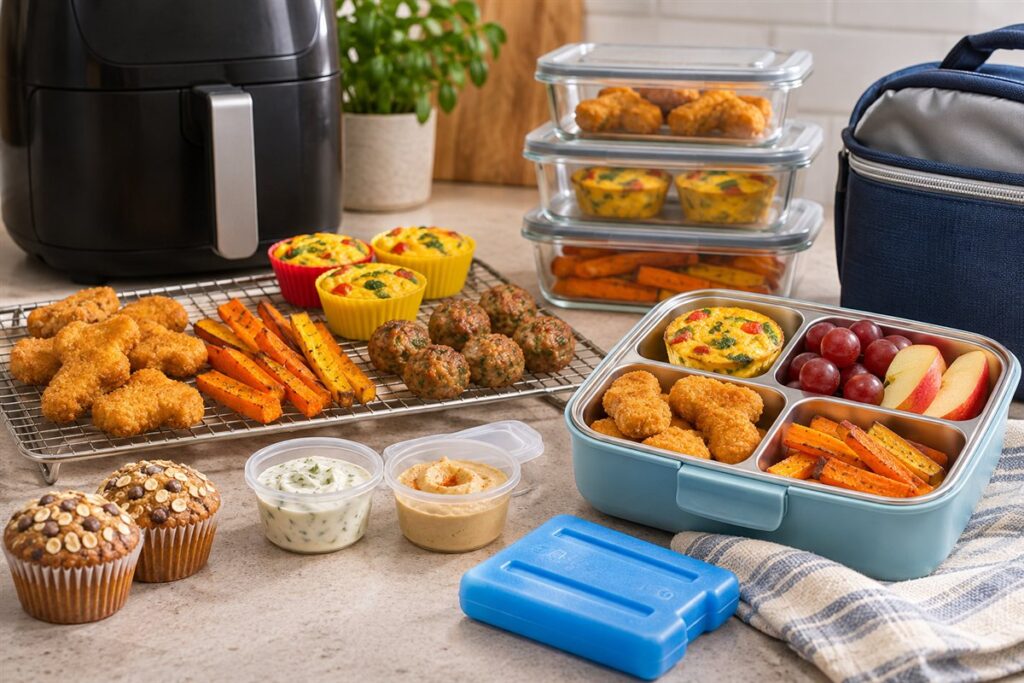
An air fryer can prepare lunchbox foods in small batches, such as nuggets, mini quiches, roasted vegetables and bite-sized bakes. The key is cooling and packing them well so they still taste good hours later. This guide covers categories, method, and packing habits.
Foods That Pack Well
Choose items that hold their shape and taste fine at room temperature or after a quick reheat at lunchtime.
- Chicken or tofu nuggets, cut small and evenly
- Mini frittatas or egg cups baked in silicone cups
- Roasted vegetable sticks, such as carrots or sweet potato
- Small turkey or bean meatballs
- Pita or tortilla chips for dipping
- Muffins or oat bites for a sweet side
Cut food into small, even pieces so it cooks quickly and fits neatly into containers.
Cook, Cool, Pack
- Cook in a single layer until cooked through, checking the middle of larger pieces.
- Spread the food on a rack or plate so steam can escape.
- Let it cool before closing the lid, which prevents soggy coatings.
- Pack dips and sauces in separate small containers.
- Keep the lunchbox cold with an ice pack, and follow local food-handling guidance.
Loose Timing Guide
| Item | Rough time | Packing note |
|---|---|---|
| Nuggets | 8 to 14 minutes | Cool fully, pack with dip on the side |
| Egg cups | 8 to 15 minutes | Chill, then reheat or eat cold |
| Vegetable sticks | 10 to 18 minutes | Good at room temperature |
| Muffins | 10 to 16 minutes | Cool on a rack first |
Times depend on size and model, so check your maker’s guide and test early for doneness.
Batch Prep for the Week
One cooking session on a weekend can cover several lunches. Make two or three components, such as a protein, a vegetable and a small bake, then mix and match during the week. Store cooked food in covered containers in the refrigerator and use it within the time suggested by local food safety guidance. Reheat in the air fryer for a few minutes to bring back some crunch, making sure it is hot all the way through.
Keep Variety in the Rotation
Lunchboxes get boring when the same items repeat daily. Change the seasoning more than the method: one batch of nuggets can be plain, another lightly spiced, another coated in crushed cereal or breadcrumbs. Add a fresh side such as sliced fruit, cucumber, or cheese cubes, and rotate dips between yogurt, hummus, and a mild tomato sauce.
Food Safety for Packed Lunches
A lunchbox can sit for hours before it is opened, so safety deserves attention. Cook food thoroughly, then cool it quickly before packing. Spread it out on a plate or rack so heat escapes, and avoid sealing warm food in a closed container, which traps steam and encourages bacterial growth. Check current food safety guidance for how long perishable food can stay at room temperature.
Keep cold foods cold with an insulated bag and an ice pack, and keep hot foods hot with a properly insulated food jar that has been pre-warmed with hot water. Cooked chicken, eggs, dairy and rice dishes are the sort of items where temperature control matters most. If you cannot keep them at a safe temperature, choose foods that are safer at room temperature, such as baked vegetable sticks, breads and crackers.
Pack utensils and wash containers daily. Wash hands before preparing food, and keep raw and cooked foods apart. For children, teach them not to share food if allergies are a concern. Discard uneaten perishable items at the end of the day rather than bringing them home to reheat. If you are in doubt about any food, do not eat it.
Keeping Textures Appealing Until Lunchtime
The biggest complaint about packed lunches is sogginess. Steam is the enemy, so cool food on a rack and use containers with a little ventilation for crisp items if the lid design allows. Keep wet and dry components separate: sauces and dips in small containers, crunchy items away from moist ones.
Some foods hold texture better than others. Baked vegetable sticks, mini meatballs, egg cups and muffins stay pleasant when cool. Breaded foods lose their crunch, but a short reheat at lunchtime, if you have access to an oven or air fryer, can bring some of it back. Otherwise, accept that they will be softer and choose fillings that taste good that way.
- Use paper towel or a clean cloth to absorb extra moisture at the bottom of a container.
- Pack salad greens separately from warm items.
- Choose dense breads over light ones for sandwiches.
- Roast vegetables a bit longer for a firmer bite.
Test a new item at home a day early to see how it holds up after hours in the box.
Choosing Containers and Lunchbox Gear
The right container makes lunch easier. Compartmented boxes keep foods apart, which prevents flavors and textures mingling. Leak-resistant lids are worthwhile for sauces. Small separate cups with lids are handy for dips and dressings. Insulated food jars hold warm foods, while insulated bags with an ice pack keep cold items safe.
Material choices include plastic, glass, stainless steel and silicone. Glass is easy to clean but heavy and breakable, which may not suit children. Stainless steel is durable and does not retain odors, but may not be suitable for the microwave. Plastic is light, but check for labels that say it is food-safe and heat-safe if you plan to reheat. Always check the care instructions on the product.
Consider who will carry and open the box. Young children need lids they can handle, and adults commuting may need something that fits a bag. Measure your bag and the fridge shelf if you will store boxes there. Replace containers with cracks, warped lids or lingering odors. A few good-quality containers are better than a large stack of mismatched ones.
Packing for Different Ages and Appetites
Children and adults want different things from lunch. Younger children often prefer small, finger-friendly foods in varied colors, and they may avoid mixed dishes. Offer a few components they can pick from, including a protein, a fruit or vegetable and something starchy. Cut food small enough to avoid choking hazards for the child’s age.
Adults may want more filling meals that keep them going through the afternoon. Build lunches around protein and fiber, and add a snack for later. Variety prevents boredom, so rotate through different flavors across the week. Having a few standby items, such as nuts (if allowed), fruit or yogurt, helps on days when the main item runs short.
Check school or workplace rules about allergens before packing. Some schools restrict certain foods, so confirm what is permitted. Involve children in choosing and packing, which often makes them more likely to eat the food. Pay attention to what comes home uneaten and adjust. If a child has special dietary needs, speak with a qualified professional about balanced choices, and avoid relying on general ideas for medical conditions.
Reheating and Lunchtime Options
Whether you can reheat at lunchtime changes what you pack. If a microwave is available, use microwave-safe containers and cover food loosely so steam can escape. Stir or rotate for even heating and make sure it is steaming hot throughout. If you have no heating option, pack foods that are good cold or at room temperature.
Insulated jars can keep soups, stews and pasta warm until lunch if you pre-heat the jar with hot water and fill it with piping-hot food. Seal tightly and keep the jar upright. Test how long yours keeps food hot before relying on it, and follow safety guidance on how long perishable food should stay warm.
For air fryer lunches that you reheat at home, use short bursts and check often. A few minutes can restore crispness to nuggets, wedges or pastries. Do not reheat the same portion more than once. If you freeze lunch components, thaw them safely in the refrigerator. Keep notes on what reheats well, and build your rotation around those foods so lunch is something to look forward to.
FAQ
Will crispy foods stay crispy in a lunchbox?
Not completely, because steam softens coatings. Cooling food before packing and leaving the container slightly vented helps, and a quick reheat can refresh texture.
Which containers work best?
Choose containers with separate compartments or small dip cups. Choose sizes that match your portions so food does not shift and get crushed.
How long can packed lunch sit before it is unsafe?
Perishable food should not sit at room temperature for long, and the limit is shorter in hot weather. Check current food safety guidance and use an ice pack for anything perishable.
Can I freeze lunchbox components?
Many cooked items freeze well, such as meatballs, muffins and egg cups. Cool them first, freeze in a single layer, label the container and thaw in the refrigerator.
How do I stop sandwiches from getting soggy?
Keep wet ingredients away from the bread, use a barrier such as a lettuce leaf or a spread, and pack sauces separately. Dense bread holds up better.
Are nuts safe to include?
Only if the school or workplace allows them and no one in the group has an allergy. Check the rules first and read labels on snacks.
Should I warm food before packing it?
Warm food should be cooled before packing in a regular box. If you use an insulated jar, pre-heat the jar and fill it with piping-hot food.
How do I get picky eaters to eat lunch?
Offer small portions of familiar foods with one new item at a time, and let them help choose. Avoid pressure and adjust based on what comes home.
How do I keep containers from smelling?
Wash them soon after use, dry them fully and air them out. Replace any that hold odors despite washing.
The Short Version
Cook small, even pieces, cool them before packing, and keep dips separate. Batch a few components on one day and mix them through the week. Treat all timing as a loose range and follow food-handling advice.