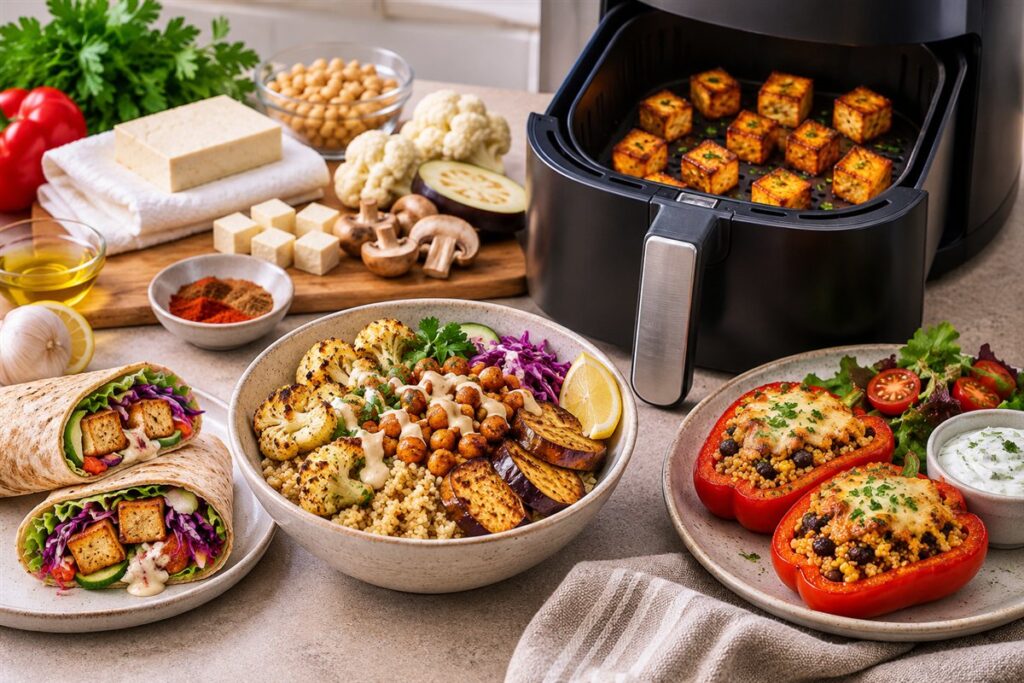
Meatless meals work well in an air fryer because vegetables, tofu and legumes all brown nicely in hot moving air. The trick is to combine a main element with a sauce or grain so the plate feels complete. These are categories and methods, not full recipes, with loose ranges to adjust.
Main Elements to Build Around
- Pressed tofu, cubed or sliced, with a light coating of cornflour or seasoning
- Tempeh slices, brushed with a simple marinade
- Chickpea or bean patties, formed firmly so they hold together
- Thick cauliflower or eggplant slices
- Halved mushrooms with herbs
- Stuffed peppers or squash filled with grains and beans
Getting Good Browning
Moisture is the enemy of browning. A few habits make a clear difference.
- Press tofu between towels for a while before cutting.
- Pat vegetables dry after washing.
- Use a light coating of oil, not a heavy pour.
- Leave space between pieces so air can move.
- Shake or flip once partway through.
Loose Timing Ranges
| Food | Rough time | Cue |
|---|---|---|
| Tofu cubes | 12 to 20 minutes | Golden, firm edges |
| Bean patties | 10 to 16 minutes | Set and browned, flip once |
| Cauliflower slices | 12 to 20 minutes | Tender with browned spots |
| Mushrooms | 8 to 14 minutes | Shrunken and deep in color |
| Stuffed peppers | 15 to 25 minutes | Soft walls, hot filling |
Your model, basket size and food thickness all matter, so treat these as a rough guide.
Round Out the Plate
Pair the cooked element with a base and a sauce. Rice, quinoa, couscous or flatbread give substance. Sauces made from yogurt or tahini, a squeeze of lemon, or a spoonful of chili paste lift simple food. Add a fresh element such as chopped herbs, sliced cucumber or shredded cabbage for contrast.
- Bowl format: grain, roasted vegetables, a protein element, sauce
- Wrap format: warm flatbread, tofu or bean patty, crunchy salad
- Plate format: stuffed vegetable, side salad, simple dip
Flavor Directions to Rotate
Because the base method stays the same, flavor does most of the variety work. Try a smoky direction with paprika and cumin, a bright direction with lemon, garlic and parsley, or a savory direction with soy sauce, ginger and sesame. Marinate tofu or tempeh for a short while first, then pat off the excess so the surface can brown. Sweet glazes belong near the end of cooking, since sugars darken quickly in the hot air.
Leftover cooked grains and roasted vegetables also combine into next-day salads or wraps, which keeps waste low and lunches simple.
Building Protein Balance Without Meat
A meatless plate feels satisfying when it has a clear source of protein and some fat and fiber alongside it. In the air fryer, the easy protein options are tofu, tempeh, beans, chickpeas, lentil-based patties and, if you eat them, eggs and cheese. Mixing two sources in one meal, such as chickpeas on a grain bowl with yogurt sauce, usually makes a more filling dinner than a single vegetable would.
Think about the role each element plays. A crisp element gives texture, a creamy element gives richness, and a fresh element cuts through both. Tofu or chickpeas can provide the crisp part, a yogurt or tahini sauce the creamy part, and herbs, pickled onion or shredded cabbage the fresh part.
If you are cooking for people with specific dietary needs, read the ingredient labels of any packaged items such as veggie burgers or plant-based nuggets, since recipes vary between products. Check the package for cooking directions in the air fryer, and use them as your starting point. If you are unsure whether you are getting a balanced diet from meatless meals, a registered dietitian or doctor is a better source of advice than a general cooking guide.
Vegetables That Need Special Handling
Not all vegetables behave alike. Dense ones such as potatoes, carrots and squash take longer and benefit from smaller, even pieces. Watery ones such as zucchini, mushrooms and tomatoes release moisture and can steam instead of brown if they are crowded. Leafy ones such as kale and cabbage crisp quickly at the edges and can burn, so they need a light coating and early checking.
- Broccoli and cauliflower: cut florets to a similar size, dry them after washing and expect the small bits to darken first.
- Eggplant: it absorbs oil quickly, so brush lightly and consider salting and draining first to reduce moisture.
- Zucchini: cut thicker rounds or spears to prevent a mushy result, and cook in a single layer.
- Kale and cabbage: tear or slice small, toss with a little oil, and watch closely so the edges do not scorch.
- Peppers and onions: they soften and sweeten, and tend to cook faster than root vegetables.
When cooking mixed vegetables together, group by cooking speed. Start the denser pieces first and add quick-cooking ones later, or cook them in separate batches.
Meal Prep and Batch Cooking for the Week
Meatless food can be well suited to batch cooking, especially when you separate the components. Cook grains once, roast a couple of vegetable trays in the air fryer, prepare a sauce and store everything in separate containers. Then assemble bowls or wraps through the week rather than reheating a single mixed dish.
Some components keep their texture better than others. Roasted root vegetables and baked bean patties reheat well, while delicate leafy greens and breaded items lose crispness. A quick return to the air fryer can bring back some crunch for patties and tofu, though not always completely. Keep wet sauces and fresh toppings separate until serving.
Cool cooked food promptly and store it in covered containers in the refrigerator. Follow standard food safety guidance on how long cooked leftovers are good to eat, and when in doubt, throw it out. Label containers with the day they were made. If you freeze patties or cooked beans, thaw them in the refrigerator and reheat until hot throughout. A small rotation of two or three main elements and two sauces gives surprising variety without much extra work.
Using Frozen and Packaged Meatless Foods
Frozen veggie burgers, nuggets, falafel and similar items are convenient, and many can go in the air fryer. Always begin with the package directions, because the maker knows the product’s thickness and ingredients. If the package only has oven instructions, use them as a rough starting point and check often, since air fryers usually cook faster than ovens.
Cook frozen items in a single layer with space between pieces. Overcrowding traps steam and gives a pale, soft surface. If the item has a coating, avoid spraying heavily with oil unless the package says to, and be careful with sprays on nonstick baskets, as the maker’s guide may advise against certain products. Turn the pieces once and look at the color to judge progress.
Check that the center is hot all the way through, especially for thick patties. A thermometer helps if you want to be sure, and the package may list a target temperature. Read the label for allergens and ingredients, since plant-based products can contain soy, gluten, nuts or dairy. Treat packaged foods as a base and add fresh vegetables, a sauce or a salad so the meal is more than a single beige item.
Troubleshooting Common Meatless Problems
When plant-based food goes wrong in the air fryer, the cause is usually moisture, heat or handling. Patties that crumble are often too wet or not packed firmly, and chilling them before cooking helps them hold together. Tofu that sticks to the basket may need a lighter coating of oil or a better-preheated basket. Vegetables that turn soggy were most likely crowded or not dried.
- Dry or tough results: shorten the cook, lower the setting a little, or add a sauce after cooking.
- Burnt edges, raw centers: cut pieces smaller or more evenly, and reduce the heat slightly so the inside has time to cook.
- Bland flavor: season earlier and add a finishing element such as lemon juice, herbs or a spicy sauce after cooking.
- Sticking: use a light oil film, avoid moving the food too soon and allow a crust to form before flipping.
Keep notes on what works with your particular model. Because basket sizes and airflow vary, a result that is perfect in one machine may need a minute more or less in another. Make one change at a time so you can tell what helped.
FAQ
Why does my tofu come out chewy?
Extra moisture and a long cooking time can make it tough. Press it well, cut it small, and check early so it browns without drying out.
Can I use canned beans?
Yes. Drain and rinse them, then dry them thoroughly before seasoning or forming patties.
What is a good meatless main for beginners?
Cubed tofu or chickpeas are forgiving and need little prep. Dry them well, coat lightly with oil and seasoning, and shake the basket partway through.
How do I keep bean patties from falling apart?
Pack the mixture firmly, include a binder if the recipe calls for one, and chill the patties before cooking. Handle them gently and flip only once.
Can I cook mixed vegetables together?
Yes, if they cook at a similar pace. Otherwise, start denser pieces first and add quick-cooking ones later, or cook in separate batches.
Do veggie burgers from the freezer need thawing?
Many can be cooked from frozen, but follow the package directions for your product. Check that the center is hot before serving.
Why are my roasted vegetables soggy?
Common causes are crowding the basket, not drying the vegetables after washing, or using too much oil. Spread pieces in a single layer and cook in batches if needed.
Can I reheat leftovers in the air fryer?
Yes, and it often restores crispness better than a microwave. Use a short cook, check often and make sure food is hot throughout.
How can I add more flavor without a lot of oil?
Use spices, citrus, herbs, vinegar, or sauces added at the end. A dry spice rub on a lightly oiled surface goes a long way.
Are plant-based products safe for all diets?
Not necessarily. Read the ingredient list for allergens such as soy, gluten, nuts or dairy, and check with a health professional if you have specific needs.
The Short Version
Choose a main element, dry it well, cook it in a single layer, and round out the plate with a grain and a sauce. Use the ranges as loose guides and check doneness yourself for your own unit.