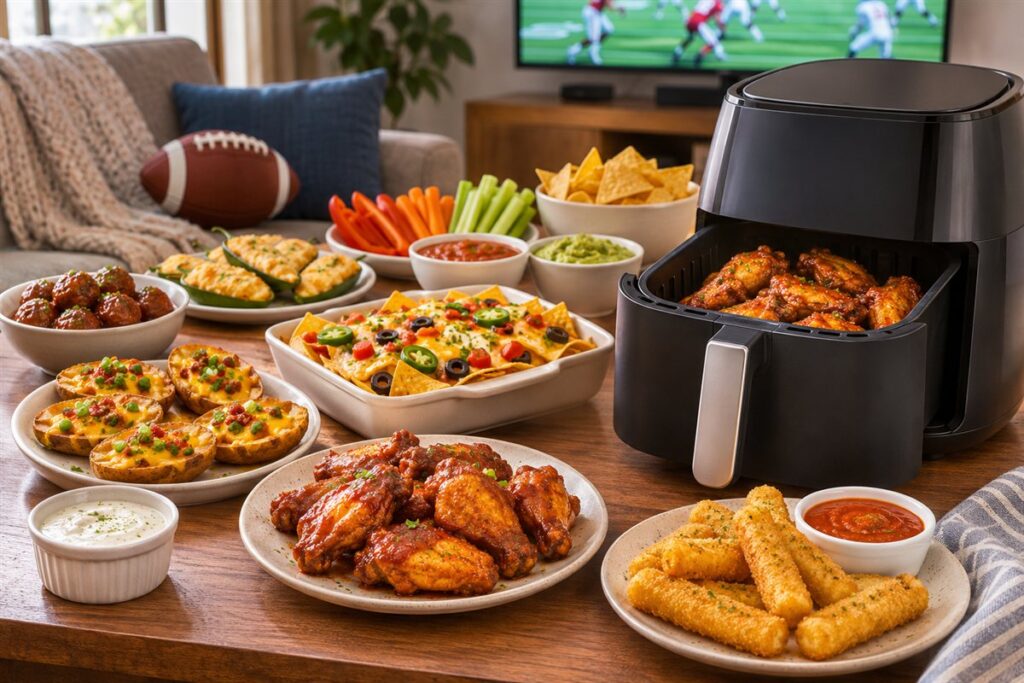
Game day food is about volume, speed and finger-friendly shapes, which suits an air fryer well. Wings, loaded potato bites, nachos and dippers all cook in short rounds, so you can keep up with the crowd without missing the action. Here are categories, method tips and a rough schedule.
The Classic Lineup
Most spreads include a few core types. Mix hot items from the basket with cold dips and a fresh platter.
- Wings and drumettes with a sauce tossed on after cooking
- Potato skins or wedges with toppings added near the end
- Jalapeno poppers or stuffed peppers
- Sheet-style nachos in a small oven-safe dish that fits the basket
- Pretzel bites, mozzarella sticks and other frozen favorites
- Meatballs or sausage bites with a dipping sauce
How to Handle Wings
Wings are the headliner of many menus, so a few method notes help. Pat them very dry, which helps the skin brown. Cook in a single layer with space between pieces, and flip or shake partway through. A rough range is 20 to 30 minutes at medium-high heat, but size matters. Check that they are cooked through using a thermometer and standard food safety guidance, then toss with sauce in a bowl.
A Sample Schedule
- Before guests arrive: set out dips, chips and cut vegetables.
- One hour before kickoff: cook meatballs and poppers, which hold well.
- Near kickoff: cook wings in two rounds and keep the first round warm.
- At halftime: run a quick round of nachos or mozzarella sticks.
- Late in the game: reheat anything left over in short bursts.
| Food | Rough time | Best served |
|---|---|---|
| Wings | 20 to 30 minutes | Right after saucing |
| Mozzarella sticks | 5 to 8 minutes | Immediately |
| Nachos | 3 to 6 minutes | Straight from the dish |
| Meatballs | 8 to 14 minutes | Warm, with sauce |
Keeping Things Moving
Use a tray in a low oven to hold finished food, and give the basket a quick wipe between greasy rounds to limit smoke. Put guests in charge of drinks and dips so you only handle the hot work. Keep napkins and small plates within reach, since this food is messy by design.
Cold Sides Balance the Menu
Not everything needs to come out of the basket. A tray of raw vegetables, a bowl of chips, sliced fruit and two or three dips fill the table and give you breathing room between rounds. Make dips the day before when possible, so the flavors blend and you have one less task on game day.
Sauces, Seasonings and Dips
Sauces do much of the work on a game day menu, and most of them can be made in advance. Dry rubs and seasoning blends coat wings, wedges and nuts before cooking, while wet sauces are better tossed on afterward so the surface stays crisp. Keep sticky or sugary sauces for the last minute, as they can darken fast in hot circulating air.
Offer a range of heat levels so that everyone has something to enjoy. A mild option, a medium one and a hotter one will cover most tastes, and labeling the bowls avoids surprises. Cool dips such as yogurt-herb, a creamy dressing-style dip or a simple salsa balance spicy food. Prepare them ahead and keep them chilled until serving.
- Toss wings and bites in sauce in a large bowl, not in the basket.
- Keep dip bowls small and refill from the refrigerator.
- Use separate spoons for each sauce to avoid cross contamination.
- Check labels for allergens, since many sauces contain dairy, nuts or soy.
Make more sauce than you think you need, since guests tend to dip generously.
Vegetarian and Lighter Plates
Not everyone at a game day gathering wants wings and nachos, so it helps to include some meat-free and lighter choices. Cauliflower florets, tossed in a seasoning and cooked until browned, take well to sauces. Stuffed mushrooms, breaded zucchini sticks and roasted chickpeas give crunch and variety. Plant-based nuggets and mini spring rolls are available frozen, and they cook quickly in the basket.
Fresh platters play a bigger role than you might expect. Sliced peppers, celery, carrots, cucumber and cherry tomatoes, set beside dips, give guests something refreshing between rounds. Fruit also works, especially on warm days. A bean-based dip or hummus-style spread adds protein for those who skip meat.
Think about dietary needs as you plan. Ask guests ahead of time about allergies, and keep the basket clean when preparing allergen-free items. Cook those first, using clean tools. Mark dishes clearly. A balanced menu keeps the table interesting and makes sure everyone eats well, even if they are not following the food closely.
Serving Setup and Traffic Flow
Where you put the food shapes how smoothly the day goes. Place the hot items near the kitchen so they can be refilled quickly, and put drinks and cold dishes in another spot so guests do not crowd one area. A side table with plates, napkins and utensils reduces lines. Provide small plates and plenty of napkins, because the food is sticky.
Use warming trays, insulated dishes or a low oven to keep food hot, and avoid leaving perishable food out for a long time. Serve in smaller portions and refill, which keeps items fresher and safer. Set out bins for trash and bones so cleanup is easy.
Keep the air fryer itself away from the guest area. Hot surfaces and cords are hazards in a crowded room, so position it where only the cook needs to reach it. If children are present, keep them clear and make sure they know the unit is hot. A helper to carry food out lets the cook focus on the next batch, and gives you a chance to see some of the game as well.
Scaling Up for a Bigger Crowd
When the guest list grows, the basket becomes the bottleneck. Estimate how much each person might eat, then work out how many rounds you will need based on your basket’s capacity. Remember that overloading the basket gives poor results, so it is better to run an extra batch than to cram everything in.
Choose items that hold well or that can be prepared elsewhere. Use the oven, a slow cooker or a stovetop for some dishes, so the air fryer is not carrying everything. Cold foods and no-cook items fill space on the table at no cost to your schedule. Frozen appetizers reduce preparation time, and you can cook them in rounds throughout the game.
If you have two units, you can double throughput, but check that they are on separate outlets or circuits as the manual advises, and that the kitchen is not overloaded. Write a timeline and tick items off as they come out. Ask guests to bring a dish, which spreads the work. Stay realistic about what you can serve hot, and let the rest be room temperature or cold.
Cleaning Up After the Game
Game day food tends to be greasy and sauce-heavy, so plan the cleanup. Between batches, tip out crumbs and wipe up grease from the bottom of the drawer, because built-up fat can smoke. After the last batch, let the unit cool completely before cleaning.
Soak the basket, tray and any accessories in warm soapy water, then scrub gently with a soft sponge or brush. Sauces with sugar can bake onto surfaces, so a longer soak helps. Wipe the interior with a damp cloth and dry everything before storing. Never immerse the main body or let water reach the heating element.
Deal with leftovers promptly. Cool them and refrigerate in shallow containers within the time recommended by food safety guidance. Reheat in short bursts until steaming hot. Discard anything that has sat out too long. Wash dip bowls and serving utensils as soon as possible, as dried sauces are harder to remove. Finally, wipe nearby counters and walls where grease may have settled, so the kitchen is ready for the next gathering.
FAQ
How do I keep wings from getting soggy?
Dry them well before cooking, avoid crowding, and toss with sauce only when you are ready to serve.
Can I cook frozen snacks straight from the freezer?
Most packaged items are made for that, so follow the label. Adjust the time for your model and check that the center is hot.
When should I toss wings in sauce?
After cooking, in a large bowl, so the skin stays crisp while cooking. Serve straight away for the best texture.
How many wings should I plan per person?
It depends on what else is on the table and how hungry the guests are. When wings are the main attraction, plan generously, and cook extra if the menu is small.
Can I prepare snacks the day before?
Many items can be prepared ahead, such as dips, cut vegetables and seasoned meatballs. Cook them on the day for best texture and follow safe storage guidance.
What can I do if the basket cannot keep up?
Add oven-cooked or no-cook dishes, use frozen items that cook fast and cook in staged rounds. Keep finished food warm in a low oven.
How do I keep nachos from getting soggy?
Use sturdy chips, add toppings near the end and serve right away. Keep wet toppings like salsa on the side.
Is it safe to leave food out during the whole game?
Perishable foods should not sit out for long periods. Serve in small portions and refill, and refrigerate leftovers promptly.
Can I use two air fryers at once?
Often yes, but check the manual about electrical load and use separate outlets as advised. Do not overload extension cords.
The Short Version
Mix hot basket items with cold dips, cook in rounds, and time the quick items for halftime. Use the ranges as loose guides and always check doneness. A simple schedule means you spend more time watching the game.