Yakitori is grilled chicken on skewers, and the ideal grill is long, narrow and charcoal-fueled, with the heat just below the skewer ends. That shape lets you rest the sticks across the sides so the meat cooks over the coals while the handles stay clear of the fire.
The six options below include true Japanese-style konro designs, cast iron hibachis and compact portable grills that work for skewers. We have not used these grills ourselves, and we avoid sizes we cannot confirm. Check the current listing for dimensions and what is included, since some are sold without grates or skewers.
As an Amazon Associate we earn from qualifying purchases. Links below are affiliate links, and they do not change the product information we give.
What to Look For
| Feature | Why it matters |
|---|---|
| Shape | A narrow, rectangular grill lets skewers rest across the rim |
| Fuel | Charcoal, and especially binchotan, gives the classic yakitori flavor |
| Airflow | Adjustable vents control how hot the coals burn |
| Material | Cast iron and ceramic hold heat; thin steel cools quickly |
In this guide
Specs at a Glance
| Grill | Material | Style | Best for |
|---|---|---|---|
| Lodge Sportsman’s Grill | Cast iron | Hibachi style | Patio skewers |
| Marsh Allen cast iron hibachi | Cast iron | Hibachi style | Compact tabletop use |
| Weber Go-Anywhere | Steel with porcelain finish | Portable rectangular | Camping and travel |
| Cuisinart CCG-190 portable charcoal grill | Steel | Portable tabletop | Small balconies |
| Japanese shichirin konro | Ceramic or clay | Traditional konro | Binchotan fans |
| Stainless yakitori grill | Stainless steel | Long narrow box | Skewer-specific cooking |
The 6 Best Yakitori Grills

Top pickBest for patio skewers and small meals
1. Lodge Sportsman’s Grill
A cast iron hibachi-style charcoal grill with a hinged body, a draft door and a grate near the coals. Cast iron holds heat well. The hinged body makes it simple to add coals and tend the fire.
Suits: patio skewers and small meals. Strengths: strong heat retention. Weaknesses: it is heavy for its size. Skip it if you want a lightweight unit to carry.


Best for compact tabletop cooking
2. Marsh Allen cast iron hibachi
A small cast iron hibachi that works as a compact tabletop charcoal grill. Its narrow shape suits skewers laid across the top. Check the listing for the grate size and finish.
Suits: compact tabletop cooking. Strengths: a traditional hibachi layout. Weaknesses: the finish and sizing vary across versions. Skip it if you want a modern lightweight design.

Best for camping and travel
3. Weber Go-Anywhere
A portable rectangular charcoal grill with folding legs that clamp the lid for carrying. The shape lets you line up skewers, though the grate height is fixed. Its lid also keeps the coals dry when packed.
Suits: camping and travel. Strengths: portable and quick to set up. Weaknesses: it is not a dedicated yakitori grill. Skip it if you want to adjust the grate height.

Best for small balconies and picnics
4. Cuisinart CCG-190 portable charcoal grill
A compact portable charcoal grill with a lid and carry handle. It is a small tabletop option for a balcony or a trip. Check local rules before using charcoal on a balcony.
Suits: small balconies and picnics. Strengths: a lid and a compact build. Weaknesses: its round shape is less skewer-friendly. Skip it if you want a long narrow grill.
View Cuisinart CCG-190 portable charcoal grill on Amazon

Best for binchotan lovers and authenticity seekers
5. Japanese shichirin konro
A traditional Japanese tabletop charcoal grill, usually made of clay or ceramic and often used with binchotan charcoal. The long rectangular models are closest to a true yakitori setup. Pick a length that suits the number of skewers you cook at once.
Suits: binchotan lovers and authenticity seekers. Strengths: the classic yakitori shape and heat. Weaknesses: ceramic can crack if handled roughly. Skip it if you want a rugged camp tool.


Best for cooks who want a skewer-first design
6. Stainless yakitori grill
A long stainless steel box grill with slots or ledges that hold skewers above the coals. Many are sold under generic names, so read the listing carefully. Look for removable ash trays and adjustable airflow.
Suits: cooks who want a skewer-first design. Strengths: a shape made for skewers. Weaknesses: quality varies between sellers. Skip it if you want an established brand name.

Care and Setup
- Let coals burn out fully and cool before emptying ash.
- Season cast iron lightly with oil after cleaning.
- Keep ceramic konro dry and away from sudden heat shocks.
- Soak wooden skewers briefly so the ends do not burn.
Mistakes to Avoid
- Cooking over flames instead of steady hot coals.
- Using thick cuts that cook unevenly on skewers.
- Setting a ceramic grill on a cold, damp surface.
- Grilling indoors or on a closed balcony without ventilation.
Grill Width and Skewer Length
The most useful measurement on a yakitori grill is the gap between the two long sides, because that is the span your skewers must cross. If the grill is wider than your skewers, the ends fall in, and if it is far narrower, the meat sits too close to the sides and the handles get hot. Match the grill width to the skewer length you plan to use, and check the listing for the cooking surface measurement rather than the outer size of the body.
Skewer type matters as well. Bamboo skewers are inexpensive and disposable, and many cooks soak them briefly so the ends do not burn. Metal skewers last longer and conduct heat, which can cook the meat from the inside but also heat the handle. Flat metal skewers can keep food from spinning when you turn them.
- Check the interior width of the grill against the skewer length.
- Leave handle ends clear of the heat.
- Think about how many skewers you want to cook at once.
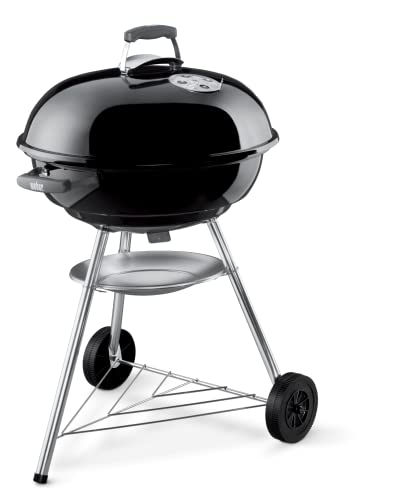
Round grills are less convenient for this style because the skewers have to cross the curve. If you already own a round or kettle grill, you can still use it for skewers, but expect to lay them differently. Product listings may not include a skewer length, so check what is included and what you will need to buy.
Charcoal Types and Fire Management
Fuel affects flavor, burn time and effort. Binchotan is a type of hardwood charcoal often associated with yakitori for its steady, clean heat. Lump charcoal is made from natural wood and lights quickly. Briquettes burn more evenly but may include binders, so check the bag. Which one suits you depends on budget, availability and how long you plan to cook.
Whatever you choose, build the fire so that you have hotter and cooler areas. Pile the coals more heavily on one side, or leave a part of the grill with fewer coals, so you can move skewers away from flare-ups. Chicken pieces need to cook through, so steady heat is better than roaring flames.
Use dry fuel and give it time to light fully before adding food. A chimney starter is a common way to light charcoal without lighter fluid, and you should follow its instructions. Avoid adding fluid to a fire that is already lit.
Control airflow with vents if your grill has them. More air means a hotter fire, and less air means a slower burn. Let the coals settle to a glowing, ash-covered state before cooking. Always keep a safe distance from flames, and keep water or sand nearby for safety.
Heat Retention and Airflow by Material
Materials shape how a grill heats and cools. Cast iron holds heat well and can cook evenly, but it is heavy and can rust if left damp. Ceramic and clay hold heat and insulate the outside, but they can crack from sudden temperature changes or a knock. Thin steel heats quickly and is light, though it can lose heat faster and may warp over time.
Airflow is just as important. A grill with adjustable vents or a draft door gives you control, while an open box has fewer options. A removable ash tray makes cleaning easier. Check the listing for a description of the vents and the grate height, and whether the grate can be moved.
- Cast iron: steady heat, heavy, needs to be kept dry and oiled.
- Ceramic: good insulation, careful handling, avoid thermal shock.
- Thin steel: light and portable, quicker to cool.
- Stainless steel: resists rust, though quality varies by seller.
Heat from the coals to the food also depends on how far apart they are. A shallow firebox puts the food closer to the heat, which can burn the outside quickly. A deeper box gives you more distance. Look for a design that lets you adjust or at least understand this distance.
Safe Use on Patios and Balconies
Charcoal produces carbon monoxide, so use a charcoal grill outdoors only, in an open, ventilated place. Never use one inside a house, garage, tent or enclosed porch. Keep it on a flat, stable, non-flammable surface, away from walls, railings, overhanging branches and anything that can catch fire. A heat-safe mat or a paving stone under a tabletop grill can help protect a surface.
Balconies are a special case. Many buildings, leases and local rules restrict open flame or charcoal on a balcony, so check yours before buying. If charcoal is not allowed, an electric alternative might be a better choice, though it will not give the same flavor.
Use long tongs and heat-resistant gloves, and keep children and pets away. Never move a hot grill. Let the coals burn out completely and cool, which can take several hours, then dispose of ash in a metal container as local guidance recommends. Do not put hot coals in a trash bag or a plastic bin. Keep a bucket of water or a bag of sand nearby, and read the manufacturer’s safety instructions, because they take priority over general tips.
Cooking Technique for Better Skewers
Good skewers start with even pieces. Cut the chicken into similar-sized chunks so they cook at the same rate, and thread them snugly without crushing. Alternating meat with pieces of vegetable such as scallion can add flavor and spacing. Leave room at the end of each skewer for a handle.
Salt and sauce timing matter. Seasoning with salt before cooking helps flavor, while sweet sauces can burn if they go on too early, so many cooks brush them on near the end. Marinades and tare recipes vary, so follow a recipe you trust.
Place skewers over steady heat and turn them often. Watch for flare-ups from dripping fat, and move skewers to a cooler area if flames jump. Cook chicken until it is cooked through. Use a food thermometer to confirm doneness, and follow current food safety guidance for poultry.
- Pat meat dry so it browns.
- Soak bamboo skewers briefly to protect the ends.
- Rest the cooked skewers briefly before serving.
- Clean the grate while it is still warm, using a brush.
After cooking, let everything cool, empty the ash, and dry the grill. A little oil on cast iron helps protect it.
A Checklist for Choosing a Yakitori Grill
Yakitori grills look simple, a narrow box with a fire inside and skewers resting across the top, but the small details decide whether an evening of grilling feels easy or fiddly. Before you settle on a model, work through these questions with the maker’s specification page in front of you.
- Where will it be used? Most charcoal grills of this type are intended for outdoor use only, so think about a patio, a yard or a balcony where the building rules and the maker’s instructions both allow open fires.
- How many skewers do you usually cook at once? A longer grill suits a crowd, while a short one is easier to store.
- Does the listing give the interior length and width, not just the outer size? The usable grilling area is what counts for your skewers.
- Is there a way to adjust the distance between the coals and the food, or to control airflow with a vent or a lid?
- What is the body made of, and does the maker describe the thickness or finish?
- How will you handle ash after cooking? A removable tray or a simple tip-out design is easier than scooping from a deep box.
- Does the grill come with a stand, or will it sit on a table that must tolerate heat?
Comparing Three Common Body Styles
Yakitori-style grills come in a few shapes. Each makes a different trade between portability, heat retention and convenience. The table offers a general comparison, so use the maker’s details for any specific model.
| Body style | Typical strengths | Points to consider |
|---|---|---|
| Lightweight metal box | Easy to carry and quick to set out | Thin walls may lose heat faster and need more attention to the fire |
| Heavy cast or thick metal body | Holds heat steadily | Heavy to move and slow to cool down |
| Ceramic-style or insulated body | Good heat retention and steady cooking | Fragile parts and a higher weight |
Prepping Skewers Before the Fire Is Ready
The best yakitori evenings are won before the charcoal is lit. Cut ingredients into pieces of similar size so they cook at a similar pace, and thread them onto skewers with a little space between each piece. Keep raw items in the refrigerator until you are ready to cook, and use separate boards and tools for raw and cooked foods. Soak wooden skewers in water if the maker or recipe advises it, and keep a spray bottle or a damp cloth nearby for handling the ends.
Arrange everything on a tray in the order you plan to cook it, with the items that need the longest time first. A small bowl of sauce and a brush make glazing easy, but only use sauce that has not touched raw meat, or set aside a portion for basting first.
A Short Glossary of Yakitori Terms
- Hibachi: a traditional heating box, used loosely to describe small charcoal grills.
- Kushi: the skewer used to hold the food.
- Tare: a sweet and savory glaze brushed on during cooking.
- Shio: a simple salt seasoning, often applied before grilling.
- Binchotan: a dense type of charcoal known for steady heat, if the maker says it is suitable.
- Damper: a vent that controls airflow and therefore the heat of the fire.
When to Follow the Manual and When to Ask for Help
For lighting, fuel quantities, safe distances and cooling, the maker’s manual is the authority. Charcoal produces carbon monoxide, so use it only in the places the maker permits, which is generally outdoors with good ventilation, and never inside a home or an enclosed space. Follow local fire guidance, keep a bucket of sand or a suitable extinguisher near the grill, and let ashes cool completely before disposal. If a grill is cracked, warped or unstable, stop using it and contact the maker.
Planning the Fire Layout for Even Skewers
A narrow grill works best when you think of the fire as having zones. Pile the coals deeper at one end and thinner at the other, and you gain a hot side for quick searing and a gentler side for finishing or resting. Skewers that are close to the coals cook fast, so they need turning more often, while those on the cooler side give you time to glaze or to chat with guests. Rotate skewers from one zone to another as they cook, and keep a clear space on the grate where finished skewers can rest briefly.
Leave the grill to settle before you cook. Let the charcoal burn until it is covered in ash and the flames have died down, following the maker’s guidance on lighting and on safe distances from walls and furniture. Never use accelerants unless the maker allows them, and keep children and pets at a respectful distance throughout.
Choosing a Yakitori grill With a Clearer Eye: The Criteria That Deserve a Second Look
The opening sections of this guide cover the headline points to check when you compare yakitori grills. This section slows down and looks at the same decision from the owner’s side: not what a yakitori grill promises on the day it arrives, but how the choice plays out across months of grilling skewers over high, focused heat, a few at a time, in the Japanese style. Reading it before you settle on a pick will help you use the product sections above more sharply, because you will know which details in each description actually matter for your household and which are simply nice to have.
Fit and space, measured honestly
Start with the number of skewers you realistically cook at once, the fuel type that suits where you will use it and a surface that can take serious heat. Measure twice, in the unhurried way that feels excessive, and write the numbers down rather than trusting memory. Allow for the unglamorous details too: how the yakitori grill is reached, what sits around it in the counter, table or outdoor cooking spot, and whether the space you have measured is the space that will still be there once everything else is back in place. Most disappointing purchases in this category are not bad products; they are good products matched to the wrong space, and nearly all of them could have been avoided with a tape measure and ten quiet minutes before ordering.
Performance where it counts
Next, think about a narrow, intense heat zone that sears skewers quickly while the handles stay cool enough to turn them constantly. Headline claims are easy to compare and often the least useful guide, because daily satisfaction comes from consistency: the tenth use behaving like the first, and the result staying predictable when conditions are less than perfect. As you read the pick-by-pick sections above, keep returning to this question — does this option perform in the specific way my routine actually demands, or is it strong in ways I will rarely call on? A yakitori grill that is merely good at everything but exactly right for your main job usually beats a more impressive all-rounder.
Everyday ease, not first-day impressions
Consider turning and moving skewers along the grill to manage doneness, and ash or drip management during a busy session. Ease of use rarely appears in a feature list, yet it decides whether a yakitori grill becomes part of your routine or an obstacle you work around. Picture the busiest, messiest moment of normal use — not a calm demonstration — and ask whether the design still helps you then. Small frictions repeat: a control that needs two attempts, a part that is awkward to lift, a routine that takes a minute longer than it should. Multiplied across a year of regular use, those small frictions are the difference between a purchase you recommend to friends and one you quietly stop using.
Cleaning and upkeep you will actually do
Be honest about fat and tare sauce that carbonise on the grill body and grate bars during high-heat cooking. Every yakitori grill in this guide asks for some upkeep, and the realistic question is not whether the cleaning is easy in theory but whether it fits the time and patience you genuinely have. Short, regular attention almost always beats occasional heroic deep cleans, both for results and for how long the product lasts. As you compare the picks, favour the design whose upkeep matches your habits — a slightly simpler model you keep clean will outperform a sophisticated one you neglect, every single time.
Safety and the people around you
Finally, think about very hot surfaces in a small footprint, charcoal handling, ventilation and keeping skewer tips and handles under control. Safety in this category is mostly a matter of habits and placement rather than dramatic risks: where the yakitori grill sits, who can reach it, and whether your routine includes the small checks that keep everything sound. Read the safety notes in each product section above with your own household in mind — the presence of children, pets, elderly relatives or simply a busy, distracted cook changes which precautions matter most. A few minutes spent setting things up safely at the start is repaid every time you use the yakitori grill without thinking about it.
Putting It to Work: How a Yakitori grill Fits Real Routines
Specifications describe a yakitori grill; routines reveal one. The scenarios below describe the situations readers most often have in mind when they shop for yakitori grills, and what each situation rewards. Find the scenario closest to your life and weight it heavily: a pick that shines in your scenario is a better buy than a pick that wins on a comparison table but belongs to somebody else’s routine. Many households recognise themselves in two scenarios at once, in which case the overlap between them is usually where the right choice sits.
An evening of skewers for friends
This is about small batches cooked to order while people gather around the grill. In this situation, the yakitori grill is not an occasional tool but part of a repeating pattern, so reliability and ease matter more than novelty. Look again at the picks above and ask which of them is described in terms that match this pattern: steady performance across a long session, straightforward handling when you are busy, and upkeep that can keep pace with frequent use. It is also worth thinking about what happens on the busiest version of this day, not the average one, because a yakitori grill chosen for the average day is the one that lets you down precisely when the stakes are highest — guests waiting, a deadline looming or a car packed and ready to leave.
Practising classic chicken skewers at home
This is about thigh, skin and negima-style skewers where turning technique is the skill being learned. In this situation, the yakitori grill is not an occasional tool but part of a repeating pattern, so reliability and ease matter more than novelty. Look again at the picks above and ask which of them is described in terms that match this pattern: steady performance across a long session, straightforward handling when you are busy, and upkeep that can keep pace with frequent use. It is also worth thinking about what happens on the busiest version of this day, not the average one, because a yakitori grill chosen for the average day is the one that lets you down precisely when the stakes are highest — guests waiting, a deadline looming or a car packed and ready to leave.
Mixed skewers beyond chicken
This is about vegetables, mushrooms and other small items that suit fierce, brief heat. In this situation, the yakitori grill is not an occasional tool but part of a repeating pattern, so reliability and ease matter more than novelty. Look again at the picks above and ask which of them is described in terms that match this pattern: steady performance across a long session, straightforward handling when you are busy, and upkeep that can keep pace with frequent use. It is also worth thinking about what happens on the busiest version of this day, not the average one, because a yakitori grill chosen for the average day is the one that lets you down precisely when the stakes are highest — guests waiting, a deadline looming or a car packed and ready to leave.
Compact cooking spaces
This is about balconies and small patios where a full-size grill makes no sense, subject to local rules. In this situation, the yakitori grill is not an occasional tool but part of a repeating pattern, so reliability and ease matter more than novelty. Look again at the picks above and ask which of them is described in terms that match this pattern: steady performance across a long session, straightforward handling when you are busy, and upkeep that can keep pace with frequent use. It is also worth thinking about what happens on the busiest version of this day, not the average one, because a yakitori grill chosen for the average day is the one that lets you down precisely when the stakes are highest — guests waiting, a deadline looming or a car packed and ready to leave.
Day-to-Day Use, Cleaning and Care in More Detail
The care sections earlier in this guide give the essentials. What follows is the longer view: how to build the small habits that keep a yakitori grill performing well, how to clean it without turning the job into a chore you avoid, and how to store and look after it between uses. None of this requires specialist products or skills — it requires doing simple things regularly, which is unglamorous and entirely effective.
The first uses set the pattern
When your yakitori grill is new, take the first use slowly. Read the maker’s instructions properly — not as a formality, but because the details that matter, from first setup to what not to do, are specific to your model and are not repeated anywhere else. Run through the basic routine once without time pressure, notice what feels awkward, and adjust your setup while the stakes are low. Owners who give a new yakitori grill one unhurried first session almost always have a smoother first month than owners who debut it in front of an audience or a deadline.
A cleaning rhythm that sticks
For cleaning, little and often is the whole secret. Deal with fat and tare sauce that carbonise on the grill body and grate bars during high-heat cooking while traces are fresh and the job takes minutes; leave them and the same job becomes the kind of task that gets postponed indefinitely. Keep the basic supplies you need within reach of where the yakitori grill lives, use only cleaning methods and products the maker allows for the surfaces involved, and let everything dry fully before the next use or before storage. If several people share the yakitori grill, agree on the rhythm out loud — most neglected equipment belongs to everyone in theory and nobody in practice.
Storage and the time between uses
What happens between uses shapes a yakitori grill’s life as much as the uses themselves. Store it and its accessories together, dry and protected from knocks, dust and damp, in a place that does not require a struggle to reach — equipment stored awkwardly gets used reluctantly. Before a longer break, a proper clean and a quick check of the parts that wear, loosen or perish means the yakitori grill comes back to service ready rather than needing rescue. When you return to it, a brief inspection before the first use catches the small problems — a frayed edge, a loose fitting, a part left dirty — while they are still small.
Knowing what is normal and what is not
Every yakitori grill develops a familiar pattern of sounds, smells, timings and behaviour, and learning that pattern is a genuine skill. Once you know what normal looks like, changes announce themselves early: a new noise, a slower result, a part that no longer sits as it did. Most changes have simple causes covered in the troubleshooting spirit of this guide — something needs cleaning, adjusting or replacing as a consumable. The ones that do not respond to the simple checks are the ones to hand to a professional, and catching them early is usually what keeps a repair minor.
How the Picks in This Guide Compare With Each Other
Readers often ask for a simple ranking of the yakitori grills above, but the honest comparison is about fit. Each pick in this guide earned its place for a slightly different reader, and the sections describing them already contain everything needed to separate them: who each one suits, the strengths highlighted, and the honest limitation mentioned alongside. The notes below show how to run that comparison for yourself, pick by pick, so the final choice rests on your priorities rather than on a generic verdict.
Consider the Lodge Sportsman’s Grill. Return to its section above and note three things in order: the reader it is described as suiting, the strength the guide emphasises most, and the limitation it openly flags. Then hold those three points against the criteria and scenarios earlier on this page. If the reader it suits sounds like you, and its flagged limitation touches something you rarely do, it belongs on your shortlist even if another pick looks stronger on paper. If the limitation sits squarely in your main routine, that is the comparison doing its job — cross it off without regret and move to the next pick, because a yakitori grill whose weakness meets your most common use will disappoint you weekly, however good its strengths are.
Consider the Marsh Allen cast iron hibachi. Return to its section above and note three things in order: the reader it is described as suiting, the strength the guide emphasises most, and the limitation it openly flags. Then hold those three points against the criteria and scenarios earlier on this page. If the reader it suits sounds like you, and its flagged limitation touches something you rarely do, it belongs on your shortlist even if another pick looks stronger on paper. If the limitation sits squarely in your main routine, that is the comparison doing its job — cross it off without regret and move to the next pick, because a yakitori grill whose weakness meets your most common use will disappoint you weekly, however good its strengths are.
Consider the Weber Go-Anywhere. Return to its section above and note three things in order: the reader it is described as suiting, the strength the guide emphasises most, and the limitation it openly flags. Then hold those three points against the criteria and scenarios earlier on this page. If the reader it suits sounds like you, and its flagged limitation touches something you rarely do, it belongs on your shortlist even if another pick looks stronger on paper. If the limitation sits squarely in your main routine, that is the comparison doing its job — cross it off without regret and move to the next pick, because a yakitori grill whose weakness meets your most common use will disappoint you weekly, however good its strengths are.
Consider the Cuisinart CCG-190 portable charcoal grill. Return to its section above and note three things in order: the reader it is described as suiting, the strength the guide emphasises most, and the limitation it openly flags. Then hold those three points against the criteria and scenarios earlier on this page. If the reader it suits sounds like you, and its flagged limitation touches something you rarely do, it belongs on your shortlist even if another pick looks stronger on paper. If the limitation sits squarely in your main routine, that is the comparison doing its job — cross it off without regret and move to the next pick, because a yakitori grill whose weakness meets your most common use will disappoint you weekly, however good its strengths are.
Consider the Japanese shichirin konro. Return to its section above and note three things in order: the reader it is described as suiting, the strength the guide emphasises most, and the limitation it openly flags. Then hold those three points against the criteria and scenarios earlier on this page. If the reader it suits sounds like you, and its flagged limitation touches something you rarely do, it belongs on your shortlist even if another pick looks stronger on paper. If the limitation sits squarely in your main routine, that is the comparison doing its job — cross it off without regret and move to the next pick, because a yakitori grill whose weakness meets your most common use will disappoint you weekly, however good its strengths are.
Consider the Stainless yakitori grill. Return to its section above and note three things in order: the reader it is described as suiting, the strength the guide emphasises most, and the limitation it openly flags. Then hold those three points against the criteria and scenarios earlier on this page. If the reader it suits sounds like you, and its flagged limitation touches something you rarely do, it belongs on your shortlist even if another pick looks stronger on paper. If the limitation sits squarely in your main routine, that is the comparison doing its job — cross it off without regret and move to the next pick, because a yakitori grill whose weakness meets your most common use will disappoint you weekly, however good its strengths are.
Two further checks sharpen any shortlist. First, compare upkeep: the picks differ in how much routine attention they ask for, and the one whose care routine matches your habits will still be performing well long after a needier rival has been neglected. Second, compare the whole purchase, not just the unit — the accessories, consumables, replacement parts and storage the yakitori grill needs over its life. A pick that looks like the premium choice sometimes asks the least over time, and the reverse is just as common. Decide with both checks done and you will rarely need to second-guess the order.
The Longer View: Owning One Well
A yakitori grill is one of those purchases whose value compounds quietly. The first month is about learning it; the first year is about the routine settling around it; after that, it simply becomes how things are done in your home. Owners who get the most from yakitori grills share a few traits that have nothing to do with which model they bought. They keep the basic accessories and consumables in stock so a missing item never cancels a plan. They do the small cleaning and checking jobs on rhythm rather than on memory. And they revisit their setup occasionally — as households, tastes and routines change, the way a yakitori grill is used can change with them, and a small rearrangement sometimes unlocks value that was there all along.
It is also worth keeping a light record, even if only mentally, of what works for you: the settings, timings, arrangements or combinations that produced your best results. The guides and product sections can start you off, but your own notes — adjusted for your space, your ingredients, your car, your collection, your people — are what turn a good yakitori grill into the right one. When the time eventually comes to replace it, that record tells you exactly which of the criteria in this guide mattered in practice, and the next purchase becomes the easiest one you have made in this category.
Yakitori Grill FAQ
What charcoal works best for yakitori?
Binchotan is the classic choice for steady, clean heat, though standard lump charcoal is also widely used.
Do I need a special grill for yakitori?
No, but a long narrow grill makes skewers easier to handle.
Can I use a hibachi for yakitori?
Yes. Hibachi-style grills are a common substitute, and the narrow shape suits skewers.
How wide should a yakitori grill be?
Choose a grill whose cooking surface is a bit narrower than your skewers, so the ends rest on the sides and stay clear of the coals. Check the listing for the inside measurement. Match it to the skewer length you plan to use.
Are bamboo or metal skewers better?
Bamboo skewers are cheap and disposable, and are often soaked briefly to protect the ends. Metal skewers are reusable but can get hot to handle. Pick based on how often you cook and how you like to clean up.
Can I cook yakitori on a gas grill?
You can cook skewers on a gas grill, but the flavor and heat style differ from charcoal. A narrow charcoal grill is the traditional setup. Use whatever you have safely and adjust the heat.
How do I stop flare-ups?
Trim excess fat, keep coals in two zones, and move skewers to the cooler side when flames jump. Avoid spraying water on a hot fire. Keep the lid or vents set according to the maker's guidance.
How long do I need to wait before cleaning the grill?
Wait until the coals are completely out and the grill is cool, which can take several hours. Then empty the ash into a metal container. Never dispose of warm ash in a trash bag.
How do I know chicken is cooked through?
Use a food thermometer and follow current food safety guidance for poultry. Cut a thick piece open to check that the juices run clear and the center is no longer pink. Skewered pieces of different sizes may need different times.
Is a cast iron grill hard to maintain?
It needs to be kept dry and lightly oiled after cleaning to prevent rust. It is heavy, so choose a spot to leave it. With basic care, many cooks find it manageable.
What makes yakitori different from ordinary grilling?
Scale and attention. The grill is narrow, the heat is fierce and each skewer is turned frequently and finished individually rather than left in a batch. That focus is the appeal: you are cooking a few skewers at a time, properly, instead of a grate full of food all at once.
Which charcoal suits a yakitori grill best?
Dense charcoal that burns hot and clean with little smoke of its own is the traditional choice, and the sections above discuss what each pick is used with. Whatever you choose, let it settle to an even, glowing bed before the first skewer; skewers cook too fast to forgive a fire that is still changing.
How do I stop skewers sticking or spinning?
Bamboo skewers benefit from soaking so they scorch less, and food should be threaded so it sits flat and cannot roll. A hot, clean cooking surface and a moment’s patience before the first turn stop most sticking; flat skewers, where the design allows, stop the spinning.
When should tare sauce be applied?
Near the end. Tare is sweet and burns quickly over fierce heat, so it goes on for the final turns to glaze rather than char. Brushing early is the most common beginner mistake and the easiest to fix: cook the skewer, then sauce it.
Can vegetables really keep up with meat on such a hot grill?
Yes, with cutting that matches the heat — pieces sized so the outside chars as the inside cooks. Dense vegetables may need to start earlier or sit at the grill’s gentler edge. Mushrooms, spring onions and peppers are natural fits for the format.
How do I clean the grill after a saucy session?
Burn off what you can while the grill is still hot, then, once cool, brush the bars and empty ash and drips. Tare residue carbonises hard if left, so a short clean straight after cooking is worth far more than a heroic one next month.
The Short Version
For a cast iron hibachi, the Lodge Sportsman’s Grill. For a tabletop hibachi, the Marsh Allen. For travel, the Weber Go-Anywhere. For a small balcony, the Cuisinart CCG-190. For the classic setup, a Japanese shichirin konro. For skewer-first design, a stainless yakitori grill.