Hard water leaves scale on heating elements, spray arms and glassware, and a commercial dishwasher feels the damage faster because it runs many cycles each day. Softening the incoming water protects the machine, improves rinsing and cuts down on spotting.
The six picks below mix whole-house salt-based softeners with a descaler and a salt supply, since a commercial unit often needs an upstream softener. We have not used these products ourselves, so confirm capacity, flow rate and the dishwasher maker’s requirements on the current listing before buying.
As an Amazon Associate we earn from qualifying purchases. Links below are affiliate links, and they do not change the product information we give.
What to Look For
| Feature | Why it matters |
|---|---|
| Capacity | Higher grain capacity means longer runs between regenerations |
| Flow rate | Match the softener to peak demand in a busy kitchen |
| Regeneration | Metered valves regenerate only when needed |
| Salt supply | Pellets or crystals keep the brine tank steady |
| Dishwasher specs | Read your dishwasher manual for hardness limits |
| Installation | Plan for a drain and bypass valve and professional plumbing |
| Warranty | Compare tank and valve coverage in the listing |
In this guide
Specs at a Glance
| Product | Type | Notes | Use |
|---|---|---|---|
| Fleck 5600SXT softener | Salt-based softener | Metered valve | Whole-line |
| Whirlpool WHES40E | Salt-based softener | Home-focused model | Small kitchens |
| SpringWell salt-based softener | Salt-based softener | Whole-house unit | Check capacity |
| Pelican salt-based softener | Salt-based softener | Whole-house unit | Check capacity |
| AquaSure Harmony Series | Salt-based softener | Whole-house unit | Check capacity |
| Morton System Saver pellets | Softener salt | Pellets | Supply item |
The 6 Best Water Softeners for Commercial Dishwashers
Top pickBest for commercial kitchens
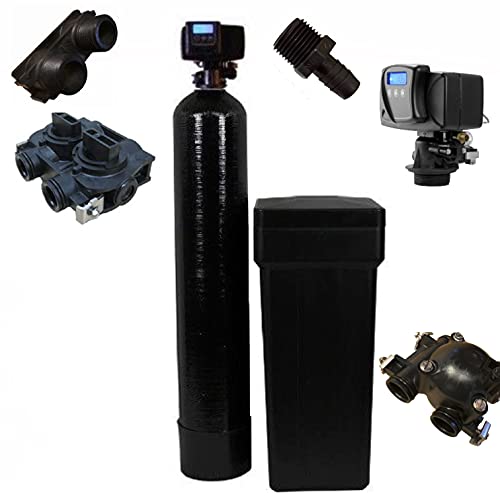
1. Fleck 5600SXT Water Softener
A widely used valve and tank package that plumbers and small commercial owners know well. The control valve is common, so parts and service are easy to find. Ask a plumber to size the tank and valve for your peak flow.
Suits: commercial kitchens. Strengths: a service-friendly valve. Weaknesses: sizing needs care. Skip it if you want an all-in-one unit.
Best for small cafes with low volume
2. Whirlpool WHES40E Water Softener
A home-focused softener from a major brand. It can work for a light-duty small kitchen, though a busy foodservice site may outgrow it quickly. Check the flow rate against your dishwasher’s needs.
Suits: small cafes with low volume. Strengths: brand support. Weaknesses: may not meet heavy demand. Skip it if you run a busy restaurant.
View Whirlpool WHES40E Water Softener on Amazon
Best for small shops
3. SpringWell Salt-Based Water Softener
A whole-house salt softener from a company that markets directly to homeowners. It can supply a small shop, provided capacity matches your demand. Confirm the warranty terms before you commit.
Suits: small shops. Strengths: a clear sizing choice. Weaknesses: not made for foodservice. Skip it if you need a commercial warranty.
View SpringWell Salt-Based Water Softener on Amazon
Best for mid-size shops
4. Pelican Salt-Based Water Softener
A whole-house softener that comes in several capacities. Check the listing carefully to pick a size that matches your kitchen’s daily water use. Bigger tanks regenerate less often.
Suits: mid-size shops. Strengths: several capacity options. Weaknesses: a large unit to install. Skip it if you have a tight space.
View Pelican Salt-Based Water Softener on Amazon

Best for budget-aware buyers
5. AquaSure Harmony Series Water Softener
A salt-based whole-house softener available in a range of capacities. It is a good option to compare against the other brands on this list. Read the listing closely to see which capacity and valve type you get.
Suits: budget-aware buyers. Strengths: several capacities. Weaknesses: less known in commercial use. Skip it if you want a proven foodservice brand.

Best for every salt-based softener
6. Morton System Saver Water Softener Pellets
Salt pellets for the brine tank of a softener. The right salt keeps the system running smoothly, and pellets stay clean in storage. Buy enough for a few refills so the brine tank never runs empty.
Suits: every salt-based softener. Strengths: a widely sold salt. Weaknesses: an extra supply to buy. Skip it if you use a salt-free system.
View Morton System Saver Water Softener Pellets on Amazon
Care and Setup
- Check the brine tank each week and top up the salt.
- Break up salt bridges if they form.
- Flush and sanitize the system as the maker advises.
- Test water hardness on a regular schedule.
- Keep a log of salt refills and regeneration dates.
Mistakes to Avoid
- Undersizing the softener for peak demand.
- Skipping the dishwasher makerx27s hardness limits.
- Forgetting the bypass valve.
- Using the wrong salt type.
- Ignoring the dishwasher maker’s water quality guidance.
How Hard Water Affects a Commercial Dishwasher
Hardness comes from dissolved calcium and magnesium. When water is heated, those minerals can separate out and form a crusty layer on heating elements, inside pipes and on spray arm nozzles. A commercial dishwasher heats water repeatedly through the day, so scale can build faster than it would in a household machine.
The effects show up in several places. Scale on a heating element makes it work harder to reach temperature. Blocked nozzles weaken the spray pattern, so plates may come out with residue. Glassware can look cloudy or spotted after drying. Detergent and rinse aid may also perform less well in hard water, which can tempt operators to use more chemical than needed.
A softener addresses this by exchanging hardness minerals for sodium or potassium in a resin bed. The tank then regenerates using a salt brine to refresh the resin. It does not filter out everything in the water, so it is not a replacement for a sediment or carbon filter if your water also has chlorine, taste or particle concerns.
- Look inside the machine for white or tan crust on elements and nozzles as an early warning sign.
- Check the water utility’s report or use a test kit to get an actual hardness number.
- Read the dishwasher manual, since many makers state a target hardness range and may tie warranty terms to water quality.
Treat the manual and the dishwasher maker’s service team as the final word on what the machine needs. The softener should be sized to meet that requirement, not just to match a general rule of thumb.
Sizing by Peak Flow and Daily Water Use
Two different numbers drive sizing: how much hardness the softener can remove before regenerating, and how fast water can pass through without losing performance. Capacity is usually expressed in grains. Flow rate is the volume the system can deliver at once. A kitchen can run out of one while having plenty of the other.
To estimate capacity, think about daily water use and the hardness of the supply. Harder water and heavier use mean the resin is exhausted sooner. A unit that regenerates too often wastes salt and water, and one that is too small may let hard water slip through between regenerations. Ask a plumber or water treatment professional to run the numbers using your actual hardness and your dishwasher’s consumption figures from the manual.
Flow matters during rush periods. If the dishwasher, a prep sink and a hand sink draw water at the same time, a softener with a restrictive valve can cause pressure drops. Check the listing for the maximum service flow rate and compare it to the combined demand of the fixtures it will serve.
- Decide whether you will soften the whole building or only the line feeding the dishwasher.
- Ask about a metered valve, which regenerates based on actual use rather than a fixed schedule.
- Consider a twin-tank design only if your kitchen cannot tolerate any downtime during regeneration, and confirm availability with a professional.
When in doubt, size up modestly, since a slightly larger unit regenerates less often.
Softener Types and Related Treatment Options
Salt-based ion exchange softeners are the standard answer for hard water in kitchens because they actually remove hardness minerals. They need a steady supply of salt and a drain for regeneration wastewater. Check local rules, as some areas restrict discharge from softeners.
Salt-free systems and descalers work differently. They are generally described as changing how scale forms rather than removing the minerals. Whether that is enough for a commercial dishwasher depends on the machine maker’s requirements, so confirm in the manual or with the manufacturer before choosing one. Do not assume the two types are interchangeable.
Some kitchens also use a dedicated treatment cartridge or filter system specified for commercial warewashers. These are sized and configured by the machine maker or a water treatment supplier, and they may handle chlorine, taste or scale control in a package. If your dishwasher is leased or under a service agreement, ask the provider what they allow.
- Salt-based units suit sites with significant hardness and a drain nearby.
- Whole-building systems protect water heaters and other equipment but need more capacity.
- Point-of-use systems treat only the dishwasher line and can be smaller.
Home-oriented softeners can work for very light duty, but they are not built around foodservice demand. If you run a busy kitchen, compare the warranty language and the support options before deciding whether a residential model fits.
Installation Planning and Plumbing Checks
A softener is a plumbing project as much as an equipment purchase. Plan where it will sit, how the incoming and outgoing lines will connect and where the drain will run. Locate the unit near a drain, a power outlet for the control valve and enough clearance to open the brine tank and refill salt.
Include a bypass valve so the softener can be isolated for service without shutting off water to the whole kitchen. Many sites also add a sampling point after the softener, which makes testing easier. A qualified plumber should handle connections, and they can confirm local code requirements, including backflow considerations.
Consider the room itself. Floors may need protection from salt and water, and the area should be reachable by delivery staff carrying heavy salt bags. A space that freezes in winter can damage equipment, so check the manual for temperature limits.
- Confirm incoming water pressure is within the range the softener lists.
- Check that the drain line can handle the regeneration flow.
- Label the shutoff and bypass valves so staff know what they do.
- Keep the manual, programming settings and service contact together.
After installation, test the water at the dishwasher inlet to confirm hardness is where the machine needs it. Record the setup so any later technician can see what was configured.
Ongoing Checks and Signs to Service or Replace
Softeners reward routine attention. Look at the brine tank regularly, keep the salt level above the water line, and use the salt type the manufacturer specifies. Different salts suit different systems, so check the manual before buying in bulk.
Test treated water on a schedule rather than only when something goes wrong. If hardness readings start to creep up, there are several likely causes: the brine tank is empty, a salt bridge has formed, the resin is aging, or the valve settings no longer match the water supply. Work through them in that order before calling for service.
The resin bed wears over time and can be damaged by chlorine or by iron in the water, depending on the system. If performance declines despite correct salt and settings, a technician may recommend resin replacement or a valve repair. Ask whether the valve and tank carry separate warranty terms.
- Return of spotting, scale on elements or cloudy glassware can signal reduced softening.
- Unusual noise, constant draining or a valve that never completes its cycle needs professional attention.
- Salt that is consumed far faster or slower than expected suggests a settings problem.
Replacement becomes worth considering when repairs are frequent, parts are hard to source or the kitchen has outgrown the original capacity. Use the same sizing questions as a first purchase, and review your dishwasher’s current requirements before choosing a replacement.
Water Treatment Terms for Kitchen Operators
Water treatment listings are packed with jargon. These plain definitions help you read specifications with confidence.
- Hardness: the level of dissolved minerals, mainly calcium and magnesium, in your supply. It is usually reported in grains per gallon or parts per million.
- Ion exchange: the process many softeners use, swapping hardness minerals for another ion held in a resin bed.
- Resin: the material inside the tank that does the exchanging.
- Regeneration: the cleaning cycle that refreshes the resin so it can keep working.
- Flow rate: how much water the unit can treat per minute while keeping up with demand.
- Capacity: how much hardness the resin can remove before it needs to regenerate.
- Bypass valve: a valve that lets water skip the softener during service.
- Scale: the chalky mineral layer that forms on heating elements, spray arms and glassware.
Your dishwasher maker and your water supplier can tell you what hardness level the machine is designed to handle and what your local supply actually delivers.
Fitting a Softener to Your Kitchen Situation
| Kitchen situation | What to focus on | Why it matters |
|---|---|---|
| Small cafe with one machine | Compact unit with adequate flow rate | Limited space and moderate daily cycles |
| Busy restaurant with peak rushes | High flow rate and automatic regeneration | Water demand spikes during service |
| Bar with glassware | Consistent softness and filtration options | Spotting shows quickly on glass |
| Facility with limited maintenance staff | Simple controls and clear indicators | Easier for any team member to monitor |
| Site with very hard supply | Larger capacity and a professional assessment | Resin may need frequent regeneration |
If you are not sure which row describes you, ask a water treatment professional to test your supply and size the equipment. A general guide can only point you toward the right questions.
A Planning Checklist Before You Buy
- Find the hardness requirement listed in your dishwasher’s manual, and ask the maker if the document is not clear.
- Test or obtain a report of your water hardness from a qualified source.
- Measure the available floor space, ceiling height and distance to drain and power.
- Check how the unit will be supplied with the regeneration material, and where you will store it.
- Confirm the pipe sizes and connection types that the unit uses and compare them with your plumbing.
- Ask whether a bypass is included so the kitchen can keep operating during maintenance.
- Check local codes, since some areas have rules about discharge from softeners.
- Look at the maker’s support information and parts supply.
Working through this list before ordering helps you avoid the common issue of buying equipment that suits the specifications on paper but not the room it must live in.
When to Follow the Maker and When to Hire a Plumber
Water softeners connect to your supply, your drain and often to power, so installation matters. Follow the instructions that come with the unit and your dishwasher maker’s guidance. Plumbing work in a commercial kitchen may be governed by local codes and may require a licensed plumber and sometimes a permit. Do not guess on pressure, backflow protection or drain connections.
Use only the regeneration material that the softener maker approves, and store it according to the instructions. For commercial food service, check with your local health authority on any requirements for water treatment equipment and records.
If your machine begins to show scale, spotting or reduced performance, check the softener’s indicators and the manual before assuming the dishwasher is faulty. A service call to a water treatment professional can confirm whether the resin needs attention, whether the settings are correct or whether the dishwasher itself needs service.
Keep a simple log with dates of regeneration material refills, inspections and service. It gives technicians a clear history and helps you notice changes in how much material the system uses over time.
Spotting Early Signs That Water Quality Is Slipping
Cloudy glassware, a chalky film on racks and slower heating can all point to hard water getting through. Compare what you see against the maker’s troubleshooting guidance, and ask a professional to check the supply if the signs persist.
Choosing a Water softener for a commercial dishwasher With a Clearer Eye: The Criteria That Deserve a Second Look
The opening sections of this guide cover the headline points to check when you compare water softeners for commercial dishwashers. This section slows down and looks at the same decision from the owner’s side: not what a water softener for a commercial dishwasher promises on the day it arrives, but how the choice plays out across months of protecting a hard-working dishwasher from scale so glasses and dishes come out clean and the machine lasts. Reading it before you settle on a pick will help you use the product sections above more sharply, because you will know which details in each description actually matter for your household and which are simply nice to have.
Fit and space, measured honestly
Start with the space beside or beneath the dishwasher, the plumbing connections available and whether the unit can be reached easily for salt and servicing. Measure twice, in the unhurried way that feels excessive, and write the numbers down rather than trusting memory. Allow for the unglamorous details too: how the water softener for a commercial dishwasher is reached, what sits around it in the commercial kitchen, and whether the space you have measured is the space that will still be there once everything else is back in place. Most disappointing purchases in this category are not bad products; they are good products matched to the wrong space, and nearly all of them could have been avoided with a tape measure and ten quiet minutes before ordering.
Performance where it counts
Next, think about whether the softener can keep up with the dishwasher’s demand at peak service without letting hard water slip through during regeneration. Headline claims are easy to compare and often the least useful guide, because daily satisfaction comes from consistency: the tenth use behaving like the first, and the result staying predictable when conditions are less than perfect. As you read the pick-by-pick sections above, keep returning to this question — does this option perform in the specific way my routine actually demands, or is it strong in ways I will rarely call on? A water softener for a commercial dishwasher that is merely good at everything but exactly right for your main job usually beats a more impressive all-rounder.
Everyday ease, not first-day impressions
Consider salt top-ups that staff can manage quickly, clear indicators for regeneration and servicing that does not take the dishwasher out of action for long. Ease of use rarely appears in a feature list, yet it decides whether a water softener for a commercial dishwasher becomes part of your routine or an obstacle you work around. Picture the busiest, messiest moment of normal use — not a calm demonstration — and ask whether the design still helps you then. Small frictions repeat: a control that needs two attempts, a part that is awkward to lift, a routine that takes a minute longer than it should. Multiplied across a year of regular use, those small frictions are the difference between a purchase you recommend to friends and one you quietly stop using.
Cleaning and upkeep you will actually do
Be honest about brine tank hygiene, resin care and the dishwasher’s own filters and spray arms, which still need attention even with softened water. Every water softener for a commercial dishwasher in this guide asks for some upkeep, and the realistic question is not whether the cleaning is easy in theory but whether it fits the time and patience you genuinely have. Short, regular attention almost always beats occasional heroic deep cleans, both for results and for how long the product lasts. As you compare the picks, favour the design whose upkeep matches your habits — a slightly simpler model you keep clean will outperform a sophisticated one you neglect, every single time.
Safety and the people around you
Finally, think about hot water and steam around the dishwasher, correct handling of salt and keeping water and electrical connections sound. Safety in this category is mostly a matter of habits and placement rather than dramatic risks: where the water softener for a commercial dishwasher sits, who can reach it, and whether your routine includes the small checks that keep everything sound. Read the safety notes in each product section above with your own household in mind — the presence of children, pets, elderly relatives or simply a busy, distracted cook changes which precautions matter most. A few minutes spent setting things up safely at the start is repaid every time you use the water softener for a commercial dishwasher without thinking about it.
Putting It to Work: How a Water softener for a commercial dishwasher Fits Real Routines
Specifications describe a water softener for a commercial dishwasher; routines reveal one. The scenarios below describe the situations readers most often have in mind when they shop for water softeners for commercial dishwashers, and what each situation rewards. Find the scenario closest to your life and weight it heavily: a pick that shines in your scenario is a better buy than a pick that wins on a comparison table but belongs to somebody else’s routine. Many households recognise themselves in two scenarios at once, in which case the overlap between them is usually where the right choice sits.
Restaurants and cafes at peak service
This is about back-to-back racks where scale on heating elements quickly becomes slow cycles and spotted glassware. In this situation, the water softener for a commercial dishwasher is not an occasional tool but part of a repeating pattern, so reliability and ease matter more than novelty. Look again at the picks above and ask which of them is described in terms that match this pattern: steady performance across a long session, straightforward handling when you are busy, and upkeep that can keep pace with frequent use. It is also worth thinking about what happens on the busiest version of this day, not the average one, because a water softener for a commercial dishwasher chosen for the average day is the one that lets you down precisely when the stakes are highest — guests waiting, a deadline looming or a car packed and ready to leave.
Bars judged on glassware
This is about glasses that must sparkle without hand-polishing every piece. In this situation, the water softener for a commercial dishwasher is not an occasional tool but part of a repeating pattern, so reliability and ease matter more than novelty. Look again at the picks above and ask which of them is described in terms that match this pattern: steady performance across a long session, straightforward handling when you are busy, and upkeep that can keep pace with frequent use. It is also worth thinking about what happens on the busiest version of this day, not the average one, because a water softener for a commercial dishwasher chosen for the average day is the one that lets you down precisely when the stakes are highest — guests waiting, a deadline looming or a car packed and ready to leave.
Care homes and canteens
This is about high daily volumes where breakdowns disrupt a whole service. In this situation, the water softener for a commercial dishwasher is not an occasional tool but part of a repeating pattern, so reliability and ease matter more than novelty. Look again at the picks above and ask which of them is described in terms that match this pattern: steady performance across a long session, straightforward handling when you are busy, and upkeep that can keep pace with frequent use. It is also worth thinking about what happens on the busiest version of this day, not the average one, because a water softener for a commercial dishwasher chosen for the average day is the one that lets you down precisely when the stakes are highest — guests waiting, a deadline looming or a car packed and ready to leave.
Hard-water regions
This is about kitchens where untreated water would coat elements, arms and interiors in scale within a short time. In this situation, the water softener for a commercial dishwasher is not an occasional tool but part of a repeating pattern, so reliability and ease matter more than novelty. Look again at the picks above and ask which of them is described in terms that match this pattern: steady performance across a long session, straightforward handling when you are busy, and upkeep that can keep pace with frequent use. It is also worth thinking about what happens on the busiest version of this day, not the average one, because a water softener for a commercial dishwasher chosen for the average day is the one that lets you down precisely when the stakes are highest — guests waiting, a deadline looming or a car packed and ready to leave.
Day-to-Day Use, Cleaning and Care in More Detail
The care sections earlier in this guide give the essentials. What follows is the longer view: how to build the small habits that keep a water softener for a commercial dishwasher performing well, how to clean it without turning the job into a chore you avoid, and how to store and look after it between uses. None of this requires specialist products or skills — it requires doing simple things regularly, which is unglamorous and entirely effective.
The first uses set the pattern
When your water softener for a commercial dishwasher is new, take the first use slowly. Read the maker’s instructions properly — not as a formality, but because the details that matter, from first setup to what not to do, are specific to your model and are not repeated anywhere else. Run through the basic routine once without time pressure, notice what feels awkward, and adjust your setup while the stakes are low. Owners who give a new water softener for a commercial dishwasher one unhurried first session almost always have a smoother first month than owners who debut it in front of an audience or a deadline.
A cleaning rhythm that sticks
For cleaning, little and often is the whole secret. Deal with brine tank hygiene, resin care and the dishwasher’s own filters and spray arms, which still need attention even with softened water while traces are fresh and the job takes minutes; leave them and the same job becomes the kind of task that gets postponed indefinitely. Keep the basic supplies you need within reach of where the water softener for a commercial dishwasher lives, use only cleaning methods and products the maker allows for the surfaces involved, and let everything dry fully before the next use or before storage. If several people share the water softener for a commercial dishwasher, agree on the rhythm out loud — most neglected equipment belongs to everyone in theory and nobody in practice.
Storage and the time between uses
What happens between uses shapes a water softener for a commercial dishwasher’s life as much as the uses themselves. Store it and its accessories together, dry and protected from knocks, dust and damp, in a place that does not require a struggle to reach — equipment stored awkwardly gets used reluctantly. Before a longer break, a proper clean and a quick check of the parts that wear, loosen or perish means the water softener for a commercial dishwasher comes back to service ready rather than needing rescue. When you return to it, a brief inspection before the first use catches the small problems — a frayed edge, a loose fitting, a part left dirty — while they are still small.
Knowing what is normal and what is not
Every water softener for a commercial dishwasher develops a familiar pattern of sounds, smells, timings and behaviour, and learning that pattern is a genuine skill. Once you know what normal looks like, changes announce themselves early: a new noise, a slower result, a part that no longer sits as it did. Most changes have simple causes covered in the troubleshooting spirit of this guide — something needs cleaning, adjusting or replacing as a consumable. The ones that do not respond to the simple checks are the ones to hand to a professional, and catching them early is usually what keeps a repair minor.
How the Picks in This Guide Compare With Each Other
Readers often ask for a simple ranking of the water softeners for commercial dishwashers above, but the honest comparison is about fit. Each pick in this guide earned its place for a slightly different reader, and the sections describing them already contain everything needed to separate them: who each one suits, the strengths highlighted, and the honest limitation mentioned alongside. The notes below show how to run that comparison for yourself, pick by pick, so the final choice rests on your priorities rather than on a generic verdict.
Consider the Fleck 5600SXT Water Softener. Return to its section above and note three things in order: the reader it is described as suiting, the strength the guide emphasises most, and the limitation it openly flags. Then hold those three points against the criteria and scenarios earlier on this page. If the reader it suits sounds like you, and its flagged limitation touches something you rarely do, it belongs on your shortlist even if another pick looks stronger on paper. If the limitation sits squarely in your main routine, that is the comparison doing its job — cross it off without regret and move to the next pick, because a water softener for a commercial dishwasher whose weakness meets your most common use will disappoint you weekly, however good its strengths are.
Consider the Whirlpool WHES40E Water Softener. Return to its section above and note three things in order: the reader it is described as suiting, the strength the guide emphasises most, and the limitation it openly flags. Then hold those three points against the criteria and scenarios earlier on this page. If the reader it suits sounds like you, and its flagged limitation touches something you rarely do, it belongs on your shortlist even if another pick looks stronger on paper. If the limitation sits squarely in your main routine, that is the comparison doing its job — cross it off without regret and move to the next pick, because a water softener for a commercial dishwasher whose weakness meets your most common use will disappoint you weekly, however good its strengths are.
Consider the SpringWell Salt-Based Water Softener. Return to its section above and note three things in order: the reader it is described as suiting, the strength the guide emphasises most, and the limitation it openly flags. Then hold those three points against the criteria and scenarios earlier on this page. If the reader it suits sounds like you, and its flagged limitation touches something you rarely do, it belongs on your shortlist even if another pick looks stronger on paper. If the limitation sits squarely in your main routine, that is the comparison doing its job — cross it off without regret and move to the next pick, because a water softener for a commercial dishwasher whose weakness meets your most common use will disappoint you weekly, however good its strengths are.
Consider the Pelican Salt-Based Water Softener. Return to its section above and note three things in order: the reader it is described as suiting, the strength the guide emphasises most, and the limitation it openly flags. Then hold those three points against the criteria and scenarios earlier on this page. If the reader it suits sounds like you, and its flagged limitation touches something you rarely do, it belongs on your shortlist even if another pick looks stronger on paper. If the limitation sits squarely in your main routine, that is the comparison doing its job — cross it off without regret and move to the next pick, because a water softener for a commercial dishwasher whose weakness meets your most common use will disappoint you weekly, however good its strengths are.
Consider the AquaSure Harmony Series Water Softener. Return to its section above and note three things in order: the reader it is described as suiting, the strength the guide emphasises most, and the limitation it openly flags. Then hold those three points against the criteria and scenarios earlier on this page. If the reader it suits sounds like you, and its flagged limitation touches something you rarely do, it belongs on your shortlist even if another pick looks stronger on paper. If the limitation sits squarely in your main routine, that is the comparison doing its job — cross it off without regret and move to the next pick, because a water softener for a commercial dishwasher whose weakness meets your most common use will disappoint you weekly, however good its strengths are.
Consider the Morton System Saver Water Softener Pellets. Return to its section above and note three things in order: the reader it is described as suiting, the strength the guide emphasises most, and the limitation it openly flags. Then hold those three points against the criteria and scenarios earlier on this page. If the reader it suits sounds like you, and its flagged limitation touches something you rarely do, it belongs on your shortlist even if another pick looks stronger on paper. If the limitation sits squarely in your main routine, that is the comparison doing its job — cross it off without regret and move to the next pick, because a water softener for a commercial dishwasher whose weakness meets your most common use will disappoint you weekly, however good its strengths are.
Two further checks sharpen any shortlist. First, compare upkeep: the picks differ in how much routine attention they ask for, and the one whose care routine matches your habits will still be performing well long after a needier rival has been neglected. Second, compare the whole purchase, not just the unit — the accessories, consumables, replacement parts and storage the water softener for a commercial dishwasher needs over its life. A pick that looks like the premium choice sometimes asks the least over time, and the reverse is just as common. Decide with both checks done and you will rarely need to second-guess the order.
The Longer View: Owning One Well
A water softener for a commercial dishwasher is one of those purchases whose value compounds quietly. The first month is about learning it; the first year is about the routine settling around it; after that, it simply becomes how things are done in your home. Owners who get the most from water softeners for commercial dishwashers share a few traits that have nothing to do with which model they bought. They keep the basic accessories and consumables in stock so a missing item never cancels a plan. They do the small cleaning and checking jobs on rhythm rather than on memory. And they revisit their setup occasionally — as households, tastes and routines change, the way a water softener for a commercial dishwasher is used can change with them, and a small rearrangement sometimes unlocks value that was there all along.
It is also worth keeping a light record, even if only mentally, of what works for you: the settings, timings, arrangements or combinations that produced your best results. The guides and product sections can start you off, but your own notes — adjusted for your space, your ingredients, your car, your collection, your people — are what turn a good water softener for a commercial dishwasher into the right one. When the time eventually comes to replace it, that record tells you exactly which of the criteria in this guide mattered in practice, and the next purchase becomes the easiest one you have made in this category.
Dishwasher Water Softener FAQ
Do commercial dishwashers need softened water?
Many makers recommend it. Check the manual for the hardness range it supports.
Is a home softener enough?
For a very light kitchen, maybe. A busy site usually needs a higher-capacity unit.
What is the difference between a softener and a descaler?
A softener removes hardness minerals. A descaler changes how scale forms and is not the same.
How do I know my water is hard?
A simple test kit or a report from your water utility will show hardness. Match the softener to that number.
Do I need a plumber?
Yes. A qualified plumber should install the unit, drain and bypass.
What hardness level should I aim for?
It depends on the dishwasher. Check the manual or ask the maker for the recommended range, then size and set the softener to meet it.
Will a softener remove chlorine or bad taste?
Not by itself. A salt-based softener targets hardness minerals, so you may need a separate filter if chlorine or taste are concerns.
How often should I add salt?
It depends on water hardness and use. Check the brine tank on a regular schedule, such as weekly, and keep the salt above the water level.
What is a salt bridge?
It is a hard crust that forms in the brine tank and leaves an empty gap below, so the system cannot make brine. Breaking it up gently, as the manual describes, usually restores operation.
Can I soften only the dishwasher line?
Often yes, if a point-of-use setup meets the machine's needs. A plumber can advise whether to treat one line or the whole building.
Is softened water safe to drink?
A softener adds a small amount of sodium or potassium to the water. If you have dietary concerns, ask your health provider and consider a separate drinking tap.
Does softened water replace rinse aid and detergent?
No. You still need the products your dishwasher maker specifies, though softer water may help them work as intended.
What happens if the softener runs out of salt?
Without salt the resin cannot regenerate properly and hard water begins passing through again. The first signs are familiar: spots and film returning on glassware and scale building inside the machine. Keeping salt topped up on a rota is the cheapest maintenance the kitchen does.
Can softened water still leave spots on glasses?
Yes, if the cause is something else — detergent dosing, rinse aid, water temperature or a dishwasher fault. Softening removes hardness minerals; it does not fix every wash result. If spotting appears suddenly, check salt and regeneration first, then work through the machine’s other basics.
How often does a commercial softener regenerate?
That depends on water hardness, the resin capacity and how much water the kitchen uses, and many units meter usage and regenerate when needed rather than on a fixed clock. Your installer sets this up; unusually frequent or rare regeneration is worth raising at a service visit.
Does a softener change how much detergent we should use?
It can. Softened water often needs less detergent to achieve the same result, and overdosing in soft water can itself cause filming. Follow the detergent supplier’s guidance for softened water and adjust gradually while watching results, rather than changing everything at once.
Where should the softener sit relative to the dishwasher?
Close enough for short, sound pipe runs and easy access for salt and servicing, while respecting the maker’s requirements for drainage and water pressure. A unit buried where nobody can reach it will be neglected, so accessibility is a performance feature, not a convenience extra.
What maintenance beyond salt does a softener need?
Periodic checks of the brine tank, occasional cleaning as the maker directs, and a service visit if output water tests hard or regeneration behaves oddly. Keeping a simple log of salt top-ups and any changes in glassware quality helps a technician diagnose problems quickly.
The Short Version
For service-friendly valves, the Fleck 5600SXT. For small kitchens, the Whirlpool. For homeowner-friendly buying, the SpringWell. For capacity choices, the Pelican. For another capacity range, the AquaSure. For salt, the Morton System Saver pellets.