A refrigerator has a compressor that is sensitive to voltage spikes and to the brief outages that follow a storm. A good surge protector between the wall and the plug can shield the control board and motor. Some designs delay power after an outage so the compressor does not restart against high pressure.
The six protectors below range from single-outlet appliance guards to multi-outlet strips that also cover a freezer or microwave. We have not used these products ourselves, so confirm the amp rating, cord length and any fridge-specific guidance on the current listing before buying. Protection claims are the makers’ own.
As an Amazon Associate we earn from qualifying purchases. Links below are affiliate links, and they do not change the product information we give.
What to Look For
| Feature | Why it matters |
|---|---|
| Amp rating | A refrigerator needs a unit rated for its running load; check both the fridge label and the protector |
| Outlet count | One outlet is enough for a fridge; more help if a freezer or microwave shares the spot |
| Cord length | A longer cord reaches a wall outlet behind a deep cabinet |
| Features | Auto-restart delays and status lights are useful for appliances |
In this guide
Specs at a Glance
| Protector | Type | Outlets | Notes |
|---|---|---|---|
| Supco SPP6 Appliance Surge Protector | Appliance guard | Single | Made for refrigerators and similar loads |
| Tripp Lite Isobar 6 | Strip | Several | Metal housing and heavy-duty build |
| APC Performance SurgeArrest | Strip | Several | Common home-office brand |
| Belkin Surge Protector Power Strip | Strip | Several | Wide range of sizes |
| GE UltraPro Surge Protector | Strip | Several | Wide-spaced outlets |
| Amazon Basics Surge Protector Power Strip | Strip | Several | Budget-friendly option |
The 6 Best Surge Protectors for Refrigerators
Top pickBest for one refrigerator
1. Supco SPP6 Appliance Surge Protector
A single-outlet unit sold for refrigerators, freezers and similar appliances. It plugs in at the wall and offers a compact shape without a bulky strip.
Suits: one refrigerator. Strengths: a purpose-built appliance form. Weaknesses: a single outlet only. Skip it if you need to protect many devices.
View Supco Appliance Surge Protector on Amazon

Best for a fridge plus other gear
2. Tripp Lite Isobar 6 Surge Protector
A heavy-duty strip with a metal case and several outlets. Tripp Lite’s Isobar line is often chosen for sensitive electronics and larger appliance clusters.
Suits: a fridge plus other gear. Strengths: a rugged metal case. Weaknesses: bulkier than a plug-in guard. Skip it if you only have one outlet to spare.

Best for a mixed setup
3. APC Performance SurgeArrest
APC offers several SurgeArrest models in different outlet counts and cord lengths. They suit a kitchen corner where a fridge and small appliances share a wall.
Suits: a mixed setup. Strengths: many size options. Weaknesses: the right amp rating varies by model. Skip it if you want an appliance-only plug.
View APC SurgeArrest on Amazon

Best for general home use
4. Belkin Surge Protector Power Strip
Belkin makes widely stocked surge strips in numerous layouts, with rotating or widely spaced outlets in some versions. Check each listing for the protected equipment note.
Suits: general home use. Strengths: a recognized brand. Weaknesses: features vary a lot between models. Skip it if you want an appliance-specific guard.

Best for large plugs
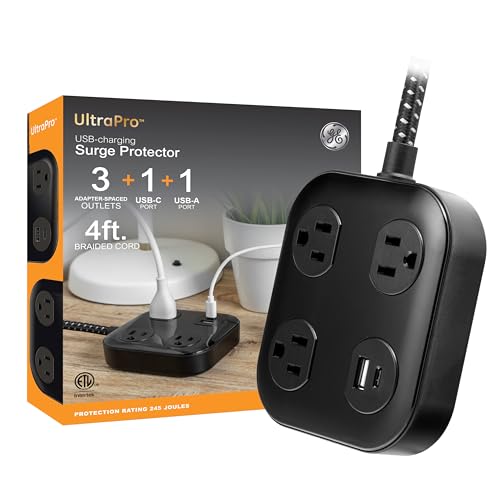
5. GE UltraPro Surge Protector
A mainstream strip with wide-set outlets for bulky plugs. It is a practical choice when a freezer cord and a microwave cord share the same strip.
Suits: large plugs. Strengths: spacing for chunky adapters. Weaknesses: fewer extras than premium strips. Skip it if you need appliance-specific logic.


Best for tight budgets
6. Amazon Basics Surge Protector Power Strip
A store-brand strip with a modest build and a range of outlet counts. It suits light-duty use where a fridge shares power with small items.
Suits: tight budgets. Strengths: simple, widely available design. Weaknesses: less detail on protection features. Skip it if you want a premium metal case.

Care and Setup
- Plug the refrigerator directly into the protector, not into another strip.
- Test the status light after any storm.
- Replace the protector after a major surge or a few years of use.
- Keep the cord clear of the back of the fridge, away from heat.
Mistakes to Avoid
- Using an extension cord with no surge protection at all.
- Chaining one strip into another.
- Overloading a strip with a fridge and a space heater.
- Ignoring the manufacturer’s note on appliance use.
What a Surge Really Does to a Refrigerator, and What a Protector Can and Cannot Do
A power surge is a short spike in voltage above the normal level, caused by lightning, utility switching, large motors cycling on and off or faults in the grid. Refrigerators contain a compressor motor and often a control board, sensors and a display, and these electronics can be damaged by a sharp spike or by a series of smaller ones over time. A surge protector works by diverting excess voltage away from the connected appliance, usually through components that wear out as they absorb events.
It helps to understand the limits. A surge protector does not provide backup power, so it will not keep food cold during an outage. It does not correct low voltage, known as a brownout, unless the product specifically offers that function. And it cannot protect against a direct lightning strike or a catastrophic event on the line, since no plug-in device is guaranteed to survive every scenario. The maker’s claims are limited to what is stated on the listing and the packaging.
The kind of protection you want depends on how exposed your home is and how much your appliance is worth. Homes with frequent storms, older wiring or unreliable power are more at risk. Newer refrigerators with electronic controls and displays are more sensitive than very simple ones. A whole-house protector at the panel provides a first line of defense and can be combined with a point-of-use protector at the wall, but that is a decision to discuss with an electrician.
Amp Ratings, Joule Ratings and Matching the Protector to the Load
A refrigerator is a motor load, and it draws more current when the compressor starts than when it is running. The protector must be rated to handle that load. Check the nameplate on the inside of your refrigerator or in the manual for the amperage, and compare it with the amp rating of the surge protector. A 15 amp protector is common for household use, but the protector’s rating should be equal to or above what the appliance needs, and the circuit must support it.
Joule ratings indicate how much energy the protector can absorb before it fails. A higher number generally means more absorption capacity and a longer lifespan, but the number alone does not tell the whole story. Look at the clamping voltage, which describes the level at which the protector starts diverting the surge, where lower is better, and the response time. Check for recognized safety listings on the packaging or listing, and be cautious about extravagant claims that are not backed by clear specifications.
Some protectors are marketed as suitable for large appliances, while many general-purpose strips are intended for electronics and may have warnings about motor loads. Read the listing and the manual for guidance on refrigerators, freezers and other heavy loads. Avoid plugging high-wattage heaters, microwaves or other heavy appliances into the same strip as the refrigerator, because the combined load can exceed the rating and trip or overheat the device. If you are unsure, consult an electrician.
Delay Circuits, Restart Protection and Power-Cut Behavior
When power returns after an outage, the compressor in a refrigerator can restart before the pressure in the system has equalized, which stresses the motor. Some protectors include a delay timer that holds power for a few minutes after the voltage returns and then reconnects, giving the pressure time to balance. This feature is often described as a compressor delay or a restart delay, and it is more common in appliance-specific protectors than in general strips.
Brief power flickers can also cause repeated restarts, so a delay device can reduce wear if your area experiences them. Some units also cut off power if the voltage is too high or too low and reconnect when it returns to a safe range. Check the listing for what the protector actually does, as the terms are not used consistently, and look for clear statements of the voltage range and delay time.
Keep in mind the maker’s guidance on your refrigerator. Some appliance manuals recommend plugging directly into a dedicated, grounded outlet and advise against extension cords or power strips; others permit a protector designed for appliances. Check your manual and follow it. A delay circuit may cause the refrigerator to be off for several minutes after an outage, which is normal, but make sure it does not make you think the appliance has failed. Keep the door closed during outages to protect food.
Installation and Placement: Cords, Outlets and Heat
The way you install the protector matters as much as the product. Plug it directly into a grounded wall outlet, and plug the refrigerator into the protector. Avoid daisy-chaining one strip into another, avoid extension cords and do not use outlets that look worn, discolored or loose. A loose plug can arc and overheat, which defeats the purpose of protection. If the outlet is ungrounded or behind the refrigerator where it is hard to see, have an electrician look at it.
Choose a cord length that lets you place the protector where you can see it. Many units have a status light that shows whether protection is active, and you want to be able to check it. If the outlet is behind a tight cabinet, a protector with a right-angle plug or a flat plug can help you push the fridge back without crushing the cord. Do not pinch the cord between the refrigerator and the wall, and do not let it run over hot parts at the back.
Keep the protector off the floor if you are in a damp location, away from water sources like ice-maker lines and away from heat sources. Allow airflow around the device, and do not cover it with fabric or boxes. In a garage or basement, make sure the outlet is protected as required by local codes and that the protector is rated for the environment. Label or note the date you installed it so you remember to check or replace it later.
Monitoring, Testing and Knowing When Protection Has Ended
A surge protector is a consumable item, and its internal components degrade each time they absorb a spike. Most models include a light that shows whether protection is active, and some also show whether the outlet is properly grounded. Check the light regularly and after every storm or outage. If the light is off, flashing in a way the manual describes as a warning or the unit smells burnt or feels hot, unplug it and replace it.
Because the wear is hidden, a protector can look normal while no longer providing much protection. Many makers suggest replacing units after a major surge or after a number of years, though the time varies by product, so check the listing and manual. Keep the receipt and the warranty paperwork. Some makers provide connected equipment warranties, which have terms and exclusions, so read the conditions rather than assuming they cover the appliance.
Pair protection with sensible habits. Keep the refrigerator’s coils clean, leave space for airflow, avoid overloading the circuit and know where your breaker panel is. Consider a plan for long outages, such as keeping ice or frozen packs on hand and a thermometer in the fridge and freezer to check temperatures. After an outage or surge, check the display, listen for normal compressor sounds and verify food temperatures. If the refrigerator behaves oddly, such as repeated clicking, error codes or failure to cool, contact the maker or a technician.
Following the Appliance Manual and Calling an Electrician
Surge protection sounds like a simple plug-in job, but the electrical side of a kitchen deserves respect. Begin with the refrigerator’s own manual. Many makers say whether the appliance should be plugged straight into a wall outlet, whether an extension cord or power strip is acceptable and what the electrical requirements are. If the manual says to avoid adapters or strips, that guidance comes first, and a dedicated appliance protector designed for a single outlet may be the only suitable option.
Questions about the circuit itself, such as a tripping breaker, a loose or warm outlet, an outlet without a ground connection or a need for new wiring, belong to a licensed electrician. A whole-house protector installed at the panel is likewise a job for a qualified professional and local rules.
- Check the manual for cord and outlet requirements
- Look at the protector’s own instructions for appliance use
- Call an electrician for outlet, wiring or panel questions
- Do not use a damaged protector, cord or outlet
Quick Comparison of Protector Formats
Surge protectors come in a few shapes, and the shape affects where they fit and what else they can power. A single-outlet appliance unit plugs into the wall and gives the refrigerator one protected socket. A multi-outlet strip offers several sockets, which can help in a pantry or utility area but is not always suitable for a refrigerator. A tabletop or wall-mount strip with a long cord can reach awkward outlets, though a longer cord is another thing to think about.
| Format | Typically suits | Consider |
|---|---|---|
| Single-outlet appliance unit | One large appliance on its own outlet | Match its stated load figure to the appliance |
| Multi-outlet strip | Pantry or utility area with several devices | Check whether the fridge maker permits strips |
| Wall-mount or tower unit | Tight spaces behind furniture | Ensure it does not hang or strain the plug |
No matter which format you prefer, confirm that the protector’s stated electrical load covers the refrigerator’s needs, and read the instructions printed on the product itself.
Reading a Protector Listing Closely
Marketing language on surge protector pages can blur the facts that matter most. Look beyond bold claims and find the specification block, which should list the maximum current, the joule figure, the number of outlets and the cord length. Look for statements about safety certification from a recognized testing organization, which are usually printed on the product or in its documentation, and be cautious when a listing gives no information at all.
Some listings mention indicator lights that show whether protection is active. That detail is useful, because protection can wear out over time and a light is one way of knowing. Read the maker’s guidance on what the light means and when to replace the unit.
Finally, check the warranty or support terms in the listing for anything connected to the protector. Terms vary and sometimes come with conditions, so read the full text before relying on them.
A little record keeping helps too. Write the date you installed the protector on a small label or in your phone, and note the model number so you can look up the maker’s guidance later. After a major storm or a noticeable electrical event, check the indicator light and the instructions, and replace the unit if the maker says protection may have been used up. Keep the original box or manual in a drawer so details are not lost.
- Record the install date and model number
- Check indicator lights after storms
- Keep the manual where you can find it
How to Narrow Down the Picks for Surge protectors for a refrigerator
With several strong options in this guide, the fastest way to a good decision is to stop comparing everything at once. Start by removing any pick whose basic format does not suit your space or routine, using the descriptions above. Then compare what remains on the two or three points that will affect you weekly, such as size in daily use, the controls you will touch every time and the cleaning the surge protector will ask of you. Features you will use twice a year should never outvote the ones you will use twice a day.
Read the honest limitation in each review as carefully as the strengths. A limitation that touches something you rarely do is a fair trade; a strength that serves a habit you do not have is worth nothing to you. This is why the same guide can honestly serve different households with different answers. Your job is not to find the best surge protector in the abstract, but the one whose strengths and weaknesses line up with your life with the fewest daily frictions.
Before you order, do a final reality check on the exact listing for the model you have chosen. Listings change, similar model names differ in small details, and the version in front of you is the one that will arrive. Confirm the dimensions, the requirements and what is included, and keep a note of what you checked. That five-minute habit prevents most disappointments, and it costs nothing but attention at the moment when attention matters most.
Choosing Surge protectors for a refrigerator: The Details That Decide Daily Satisfaction
Judge a protector by the job in front of it, which is standing between one large appliance and the wall outlet without adding clutter or heat. Start with fit: the shape has to suit the outlet position behind or beside the refrigerator, and the cord, if there is one, has to reach without strain or a sharp bend. A protector that forces the refrigerator further from the wall or presses its plug at an angle is the wrong shape, however strong its specification looks on paper.
Then look at how the protector behaves when power drops and returns. A refrigerator compressor does not enjoy being restarted the instant power flickers back, so any delay or restart behaviour described in the listing or manual is worth understanding properly. Read what the maker says the device does during an outage, during a surge and during normal running, and do not assume two protectors with similar shapes behave the same way once the lights come back on.
Indicators matter because protection is not permanent. A light or signal that shows the device is still protecting is only useful if you can actually see it once the refrigerator is in place, so think about where the protector will sit and how you will check it. If checking it means moving a heavy appliance every time, choose a format you can inspect from the side or plan a sensible routine for looking behind the cabinet safely.
Finally, treat the protector as one layer rather than a promise. It cannot keep food cold in a blackout, repair a faulty outlet or replace proper electrical work in an older home. If your supply is unreliable, if breakers trip, or if you are unsure about the outlet, an electrician is the right next step. The protector handles a defined job; the wiring behind the wall is a separate question and deserves a separate answer.
Real-Life Situations and How to Match Them
In a home where storms regularly interrupt the supply, the value of a protector shows in the moments after power returns, when appliances restart together and the supply settles. In a quieter area with a stable supply, the same device is mostly cheap insurance that sits unnoticed, which is exactly why an indicator you can check matters: unnoticed should not mean unchecked for years on end.
For a second refrigerator in a garage or utility room, conditions are harder. Dust, cold, damp and distance from your daily routine all make inspection less likely, so a simple, robust format with a clear status signal suits that setting. For the main kitchen refrigerator, access and cord routing usually decide the matter, because the outlet is often awkward and the space behind the cabinet is tight. Match the format to the room, not just to the appliance.
If the same outlet area serves other equipment, resist the temptation to treat the refrigerator protector as a general power point. The refrigerator deserves a dedicated arrangement that will not be disturbed when someone unplugs something else. Keeping its protection separate, labelled and undisturbed is a small discipline that prevents the most avoidable failure of all: a protector that was moved, switched off or unplugged during a tidy-up and never put back.
Setup, First Use and Building Good Habits
Before fitting anything, switch off safely, pull the refrigerator out only as far as you can manage without straining the floor or the water line if one is fitted, and inspect the outlet and plug for damage, discolouration or looseness. A protector cannot fix a worn outlet, and a plug that does not sit firmly needs attention first. If anything looks scorched or feels loose, stop and get the outlet checked rather than covering the problem with a new device.
Fit the protector as its manual directs, route any cord so it is not pinched by the cabinet, trapped under a foot or pressed against a warm surface, and make sure the refrigerator plug seats fully. Push the cabinet back slowly, watching that nothing is crushed behind it. Afterwards, confirm the refrigerator is running, note the date you fitted the protector somewhere you will find it, and make a habit of glancing at its indicator when you clean behind or around the appliance.
Write down which protector you fitted and when, and keep its instructions with your appliance paperwork. If you later add a whole-house device or change the refrigerator, that note tells you what is already in place. Protectors are easy to forget precisely because they ask for nothing day to day, so a dated note and a visible indicator do the remembering for you.
Cleaning, Care and Keeping It Working Well
There is little daily care, but the routine checks matter. Look at the indicator whenever you have access, keep the area free of dust and spills, and never let the protector sit in a puddle from a defrost or a leaking line. If the refrigerator is moved for cleaning or decorating, refit everything carefully afterwards and confirm the protector is back in service before the cabinet goes fully home.
If a storm or a known power event has occurred, check the indicator before assuming you are still protected. Some devices sacrifice themselves doing their job, and a protector that has taken a serious hit may pass power while no longer protecting. Follow the maker’s guidance on replacement, and when in doubt, replace rather than guess, because there is no reliable way to judge remaining protection by looking at the outside of the device.
Keep cords in good condition as part of the same routine. A cable that has been repeatedly pinched behind a heavy cabinet can be damaged out of sight. When the refrigerator is out for cleaning, look along the cord and the protector body, and replace anything cracked, crushed or discoloured. Electrical protection only works as a chain, and the weakest link is usually the part nobody has looked at for years.
Mistakes to Avoid and Problems Worth Knowing
The classic mistake is plugging a refrigerator into an ordinary power strip that was never intended for a large appliance, or into an extension lead as a permanent arrangement. Another is buying by a single headline figure and ignoring fit, indicators and restart behaviour. A protector that cannot be checked, does not suit the outlet, or leaves the plug under strain fails on practical grounds before its specification is ever tested.
Buyers also forget the protector exists. Years pass, the indicator is never checked, and a device that stopped protecting long ago is still trusted. Put a reminder with your appliance records. Finally, do not expect protection against every problem: a protector does not help in a long blackout, does not cool food and does not fix house wiring. Knowing its limits is part of using it well, and it keeps attention on the wiring and habits that matter just as much.
Comparing the Picks in This Guide, One by One
Supco SPP6 Appliance Surge Protector is worth a closer look when the strengths described in its review above line up with the job you do most often. Read its entry again with your own routine in mind rather than its position in the list, and ask whether its particular balance of size, style and upkeep suits your household. If the honest limitation mentioned in its review touches something you do daily, take that seriously and look again at the neighbouring picks before deciding.
With Tripp Lite Isobar 6 Surge Protector, the decision is about fit for your habits. Its review above sets out who it suits and where it falls short, so test those claims against your busiest week rather than your most ambitious one. A surge protector that handles your ordinary days gracefully will satisfy you far more than one chosen for an occasional special case, and the limitation that matters least in your real life is the one you can happily accept.
Treat APC Performance SurgeArrest as the answer to a specific question: which household, cooking in which way, will be glad of this every week? Its entry above gives you the material to answer honestly. Compare its strengths with the pick before and after it in this guide, because the contrasts between neighbours are usually where the right choice reveals itself. Decide by the difference that will still matter to you in a year.
Belkin Surge Protector Power Strip rewards buyers who read its review for character rather than for a single standout point. Notice what it asks of you in return for its strengths, in space, attention or upkeep, and decide whether that exchange suits your home. Every pick in this guide makes such an exchange, and none of them is free. The buyers who end up happiest are the ones who chose their compromise deliberately instead of discovering it after delivery.
If GE UltraPro Surge Protector is on your shortlist, do one final practical check before deciding: re-read its listing details for the exact version on offer, confirm the dimensions and requirements against your space, and picture it in place on an ordinary evening. That small discipline catches the mismatches that reviews cannot, because listings change and model variations differ in details that matter. A pick that survives that check has earned its place in your home.
For Amazon Basics Surge Protector Power Strip, weigh the everyday experience its review describes: how it will feel to load, clean, open, empty or operate when you are tired and the meal matters more than the appliance. First impressions fade quickly, but the daily experience repeats for years. Choose the pick whose daily experience you would recommend to a friend in your situation, and you will rarely go wrong with the final decision.
One habit improves results with almost any surge protector: slow down at the decision points. Measure before you buy, prepare before you start, check before you assume something is finished, and clean before residue becomes a project. None of that requires talent or extra equipment. It is simply the difference between using an appliance and fighting it, and it shows in the results far more reliably than any single feature on a specification list.
Keep a small notebook, paper or digital, for the first month with a new surge protector. Note what worked, what surprised you and what you would do differently, in a sentence or two each time. Memory is generous to itself and quietly rewrites early struggles, while honest notes stay accurate. By the end of the month you will own a personal guide to your own equipment and habits, which is the most useful manual you will ever read.
When something disappoints, change one variable at a time. A different position, a smaller batch, a longer rest, a cleaner surface: single changes teach you cause and effect, while changing everything at once teaches you nothing and usually wastes food or money. This patient, experimental approach is how experienced cooks and careful owners actually improve, and it works for every appliance and ingredient in this guide.
Teach the other people in your household the basics of any shared surge protector. Most damage and most disappointing results come from someone who meant well but did not know the routine: the wrong setting, the wrong cleaner, the door left open, the part forced instead of fitted. A two-minute explanation and a note where it will be seen prevent more problems than any warranty, and they make the appliance a shared pleasure rather than one person’s responsibility.
Buy accessories and extras only after the basic routine is working. The right tray, tool or spare part, chosen to solve a problem you actually have, is money well spent. A drawer of hopeful gadgets bought on the first day is usually money parked. Live with the surge protector for a few weeks, let its real needs reveal themselves in use, and then equip it deliberately. Restraint at the start almost always leads to a better-equipped kitchen in the end.
Seasonal changes affect kitchens more than most people expect. Summer heat, winter cold, holiday quantities and everyday term-time routines all ask different things of the same surge protector. A quick review at the change of each season, checking cleanliness, storage, supplies and the habits that have drifted, keeps performance steady all year. It takes minutes, and it prevents the slow decline that owners often mistake for an appliance wearing out.
Finally, judge your choice by a fair standard after a month of real use. Not by the first attempt, which is always partly rehearsal, and not by the most ambitious occasion of the year, but by ordinary Tuesdays. If the surge protector handles those with ease, fits your space and habits, and asks only for care you are happy to give, you chose well, whatever any list, including this one, ranked first.
Read the current listing for your chosen surge protector one final time on the day you order, and save a copy of the details that decided you: the exact model name, the dimensions or size, what is included and the delivery and returns terms. Listings are edited, bundles change and similar versions sit side by side, so the version you checked is the version you should confirm. If anything has changed since your research, pause and re-check rather than assuming the difference is trivial.
Think about delivery and installation as part of the purchase, not as an afterthought. Who brings the surge protector into the home, what access do they need, and what happens to the packaging and, where relevant, the old appliance? Preparing the space, the route and the paperwork before the day turns a stressful event into a routine one. Keep the delivery note and check the item carefully before signing anything, because damage and missing parts are easiest to resolve at the door.
If you are buying the surge protector as a gift, choose for the recipient’s habits rather than your own taste, and include the receipt arrangements they would need for an exchange. A model that suits your kitchen, garden or routine may be entirely wrong for theirs. Practical gifts succeed when they fit the other person’s space and life, and a short conversation beforehand, however much it spoils the surprise, usually produces a gift that is used for years instead of stored for months.
Consider the end of the surge protector’s life before the beginning. Appliances and tools eventually need parts, repair or responsible disposal, and brands differ in how easy those are to arrange. Keeping the manual and model details, registering a product if the maker offers it and knowing where your local recycling or disposal point is all belong to ownership. A purchase that can be maintained and eventually retired responsibly is a better purchase than one that cannot.
When two picks remain tied after all your comparisons, let the tie be broken by your household rather than by a coin. Ask the people who will share the surge protector which they would rather use, clean and live with, and weigh the answer of whoever will use it most. Shared equipment succeeds when the main user is enthusiastic and everyone else is content. That small consultation prevents the quiet resentment that builds around an appliance only one person wanted.
Set a simple review point a month after buying your surge protector. By then the novelty has gone, the routine has formed and any real friction has shown itself clearly. Small adjustments made at that point, a different position, a better accessory, a changed habit, usually fix what the first impressions promised would be a bigger problem. Owners who review once, early, tend to stay satisfied for years, because they correct course while correction is still easy.
Refrigerator Surge Protector FAQ
Does a fridge need a surge protector?
It is not mandatory, but many owners add one to protect the control board and compressor from spikes.
Can I use a regular power strip?
Check the listing and the amp rating. Some strips are not made for motors and large loads.
How long does a protector last?
They wear with each surge, so many indicator lights tell you when protection has ended.
Does the protector need to be replaced after a storm?
Many units sacrifice parts of their protection when they absorb a big spike. If the status light goes out or the unit feels hot, replace it right away.
Can a protector keep food cold in a blackout?
No. It guards against voltage spikes, not outages. Keep doors closed during a power cut and consider a backup plan for long outages.
Should I plug a refrigerator into a power strip?
Check your refrigerator's manual. Many makers advise a dedicated, grounded outlet and warn against ordinary strips or extension cords. If you use a protector, choose one rated for the appliance load and plug it directly into the wall.
What does a joule rating mean?
It shows how much surge energy the protector can absorb before it fails. A higher number generally means more capacity, but it is only one part of the picture alongside clamping voltage and response time.
Will a surge protector save my food during a blackout?
No. It guards against voltage spikes, not outages. Keep doors closed, use a thermometer to monitor temperature and plan for backup cold storage for long outages.
Why does my refrigerator take a while to restart after power comes back?
If the protector or the refrigerator has a restart delay, it waits a few minutes so pressure can equalize before the compressor starts. This is normal and protects the compressor.
Can I use the same protector for the fridge and a microwave?
It depends on the combined load and the protector's rating. High-wattage appliances can overload a strip, so check the ratings and consider separate outlets.
Do I need a whole-house protector as well?
It can add a first line of defense at the panel, and it works alongside point-of-use protectors. Discuss installation with a licensed electrician.
How do I know the protector is working?
Look at the status light and read the manual for what it means. If the light is off, flashing as a warning or the unit is hot or smells burnt, replace it.
Where is the best place to fit a protector for a refrigerator?
Fit it at the outlet the refrigerator uses, positioned so the plug seats fully, any cord is not pinched or strained, and the indicator can be checked without moving the appliance more than necessary. The area should be dry and clear of anything that could leak onto it. If the outlet itself is damaged, loose or discoloured, have that dealt with first, because a protector is not a repair for faulty wiring.
Can a protector share an outlet with other appliances?
A refrigerator is best served by a dedicated arrangement that will not be disturbed. Sharing invites someone to unplug or overload the setup for another purpose, and other appliances may not belong on the same device. Keep the refrigerator’s protection separate, simple and labelled if needed, so that everyone in the household knows it is not a spare socket for general use.
What should I do with a protector after a major storm?
Check its indicator as soon as it is safe to do so. If the indicator shows protection has ended, or the maker advises replacement after such an event, replace it rather than assuming it still works because power is flowing. Passing power and providing protection are two different things, and a protector that has done its job in a serious event may have nothing left to give.
Does a protector need any maintenance?
Very little, which is exactly why it gets forgotten. Glance at the indicator whenever you clean around the refrigerator, keep the area dry and dust-free, and note the date it was fitted so its age is never a mystery. If you move the refrigerator for decorating or cleaning, refit the protector carefully afterwards and confirm it is back in service before the cabinet is pushed fully home.
Can I test a protector myself?
You can check that its indicator behaves as the maker describes, but there is no home test that proves how much protection remains inside. That is why the indicator and the maker’s replacement guidance matter so much. If the device gives any sign that protection has ended, or it has been in service far longer than the maker suggests, replacing it is the sensible course rather than testing your luck.
Should renters fit a protector for a refrigerator?
A plug-in protector is usually a renter-friendly step because it does not alter the wiring, but check your tenancy terms if you are unsure, and never attempt electrical work that belongs to the landlord. If the outlet is faulty, report it rather than working around it. When you move, take your protector with you or leave the arrangement clearly explained for the next occupant.
What happens to the refrigerator while a protector delays restart?
The refrigerator simply waits, with its doors closed, while the delay runs its course, and a short wait makes little difference to food inside a closed cabinet. Avoid opening the doors to check during that time, because the cold you keep in is worth more than a look. Once power is stable and the protector allows the restart, the refrigerator resumes its normal cycle on its own.
Is a protector still useful in a new home with modern wiring?
Modern wiring and protective devices in a consumer unit reduce some risks, but they do not make plug-in protection pointless, because disturbances can still arrive through the supply. Think of the protector as one layer aimed at the appliance you care about. It is a modest, specific safeguard, and it sits alongside good wiring rather than replacing it or competing with it.
The Short Version
For an appliance-only guard, the Supco. For a rugged strip, the Tripp Lite Isobar. For a home setup, the APC. For brand variety, the Belkin. For bulky plugs, the GE UltraPro. For a basic option, the Amazon Basics.
Related Guides
- How to Choose the Best RV Surge Protectors: Buyer's Guide (2026)
- How to Choose the Best Whole House Surge Protectors (2026 Guide)
- 6 Best Corner Protectors for Coffee Tables and Furniture (2026)
- 6 Best Waterproof Mattress Protectors: Queen Size (2026)
- 6 Best Pillow Protectors: Zippered Queen Cotton Sets (2026)