An under cabinet range hood mounts beneath the cabinet above your cooktop and pulls smoke, steam and grease out of the air. It is the most common hood style in standard kitchens because it needs no wall or ceiling work. The best under cabinet range hoods move air well, run at a tolerable volume and are easy to clean.
The six models below mix ducted and ductless designs from well-known and value-focused brands. We have not used these products ourselves, so confirm width, mounting height, duct size and filter type on the current listing before buying. Match the hood to your cooktop width.
As an Amazon Associate we earn from qualifying purchases. Links below are affiliate links, and they do not change the product information we give.
What to Look For
| Feature | Why it matters |
|---|---|
| Width | Choose a hood at least as wide as the cooktop for the best capture |
| Ducted or ductless | Ducted hoods vent outside, while ductless models recirculate air through filters |
| Airflow and noise | Higher airflow clears smoke faster, but louder fans can be tiresome |
| Filters | Dishwasher-safe baffle or mesh filters make grease cleanup easy |
| Lighting | Bright LED lights help you see the pan clearly |
| Mounting height | Check the minimum and maximum clearance above the cooktop for safe, effective use |
In this guide
Specs at a Glance
| Model | Type | Size class | Notes |
|---|---|---|---|
| Broan-NuTone 413004 | Ductless or ducted | 30 inch class | Basic under cabinet |
| COSMO 5U30 | Ducted or ductless | 30 inch class | Stainless steel body |
| Winflo Under Cabinet Range Hood | Ducted or ductless | 30 inch class | Push-button controls |
| Ancona Slim Under Cabinet | Ducted or ductless | 30 inch class | Slim profile |
| ZLINE Under Cabinet Range Hood | Ducted | 30 inch class | Stainless finish |
| Hauslane Chef Series Under Cabinet | Ducted or ductless | 30 inch class | Dishwasher-safe filters |
The 6 Best Under Cabinet Range Hoods

Top pickBest for standard kitchens and replacements
1. Broan-NuTone 413004 Under Cabinet Range Hood
A basic and widely used under cabinet hood that can be set up for ducted or ductless use. It keeps the design simple, with a light and an easy-clean filter.
Suits: standard kitchens and replacements. Strengths: a familiar brand and simple setup. Weaknesses: few premium features. Skip it if you want a statement hood.

Best for stainless kitchens
2. COSMO 5U30 Under Cabinet Range Hood
A stainless steel under cabinet hood with multiple fan speeds and a built-in light. It aims for a clean, modern appearance on a modest footprint.
Suits: stainless kitchens. Strengths: a stylish finish and several fan speeds. Weaknesses: check the listing for noise levels. Skip it if you prefer a very quiet hood.
View COSMO 5U30 Under Cabinet Range Hood on Amazon
Best for everyday cooking
3. Winflo Under Cabinet Range Hood
A stainless steel hood with push-button controls and a ducted or ductless setup. It aims at home cooks who want a clean look without a complicated install.
Suits: everyday cooking. Strengths: simple controls and a metal body. Weaknesses: filters may need frequent washing. Skip it if you cook heavy, high-heat meals.
View Winflo Under Cabinet Range Hood on Amazon
Best for tight spaces and short users
4. Ancona Slim Under Cabinet Range Hood
A slim-profile hood intended to sit tightly under the cabinet and keep the cooking area open. It suits kitchens where headroom is limited.
Suits: tight spaces and short users. Strengths: a low-profile body. Weaknesses: a smaller capture area. Skip it if you need heavy-duty ventilation.
View Ancona Slim Under Cabinet Range Hood on Amazon

Best for those who want a more premium look
5. ZLINE Under Cabinet Range Hood
A stainless steel hood from a brand that focuses on range hoods and kitchen appliances. It is designed for a ducted install with a polished finish.
Suits: those who want a more premium look. Strengths: a solid finish and a ducted design. Weaknesses: installation needs ductwork. Skip it if you want a ductless setup.

Best for frequent cooks
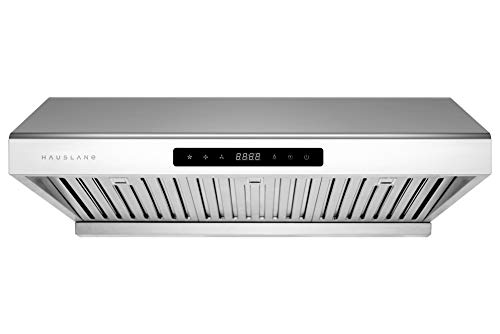
6. Hauslane Chef Series Under Cabinet Range Hood
A stainless steel under cabinet hood with dishwasher-safe filters and touch or push-button controls on common versions. It targets cooks who value easy cleaning.
Suits: frequent cooks. Strengths: easy-clean filters and a good finish. Weaknesses: versions vary, so check the listing. Skip it if you want a basic hood.

View Hauslane Chef Series Under Cabinet Range Hood on Amazon
Care and Setup
- Wash the filters on the schedule the manual suggests.
- Clean the hood surface with a non-abrasive cleaner.
- Replace charcoal filters on ductless models when they are saturated.
- Run the fan during and shortly after cooking.
- Keep the light bulb type noted in the manual so replacements are quick to find.
Mistakes to Avoid
- Choosing a hood narrower than the cooktop.
- Forgetting to confirm duct size and routing.
- Mounting the hood too high.
- Ignoring noise ratings.
- Buying on appearance without checking the fan speed settings.
Sizing Airflow to Your Cooking Style
Airflow is usually listed in cubic feet per minute, and it is tempting to chase the biggest number. A better approach is to match the fan to how you cook. Light cooking such as boiling, simmering and baking creates modest steam and odor, so a basic hood is often enough. Frequent frying, searing, wok cooking or using a high-output gas range produces more heat, smoke and grease, and calls for a stronger fan.
Remember that the stated figure is a maximum under the maker’s test conditions, and real performance depends on the duct run, the number of bends and the exhaust cap. A long duct with several elbows reduces airflow, so a hood with a modest rating on a short, straight run may perform better than a stronger hood on a crooked path. Read the listing to see how the maker presents airflow, and check whether it describes the duct size needed to reach that number.
Capture area also matters. A hood that is at least as wide as the cooktop catches more of the plume, and a deeper hood reaches over the front burners. Slim designs help in tight kitchens but can let smoke escape at the edges. Consider how many fan speeds the hood offers: a low setting for simmering keeps noise down, while a boost setting is useful during searing. If you use a gas range, check the manufacturer guidance for both the range and the hood for recommended ventilation.
Ducted Installs Versus Ductless Recirculation
The biggest practical choice is whether the hood vents outside. A ducted hood sends air through a duct to the exterior, so heat, moisture and odors leave the home. That makes it the stronger option when you cook often, especially with a gas range. It does need a clear duct path, the right duct size and an exterior cap, and the route through cabinets, walls or the roof adds cost and effort. Check the listing for the duct opening size and whether it supports top or rear exhaust.
Ductless, or recirculating, hoods draw air through a filter and return it to the kitchen. They suit apartments, rentals and kitchens where running a duct is impractical. They remove some grease and odor, but they do not remove heat or moisture, and the charcoal filters need replacing on the schedule in the manual. Many models are convertible, meaning they can be set up either way, though the filter or conversion kit may be sold separately.
If you are replacing an existing hood, look at what is already in place. Reusing the same duct run keeps the project simple, but only if the size and route are suited to the new unit. Ask yourself whether you may want to switch later, and choose a model that supports both. Local building rules may govern duct materials and exhaust locations, so check them before work begins.
Mounting Height, Clearance and Electrical Needs
Mounting height affects both safety and performance. Each maker publishes a minimum and sometimes a maximum distance between the cooktop and the bottom of the hood, and these figures also depend on the type of range. Too low and the hood can be a heat or fire concern; too high and it captures less of the plume. Always follow the installation guide for your model and the range manual, and measure from the cooking surface, not the countertop.
Check what is above and around the hood. A hood that mounts under a cabinet needs enough cabinet depth to hold it, and a cabinet with a lip, trim or crown molding may get in the way. Some hoods have an extended front that sticks out past the cabinet, which helps capture but also affects the look and the headroom for tall cooks. Leave space for the filter to slide out or tilt open for cleaning.
Electrical details are just as important. Most under cabinet hoods connect to a standard household circuit, either with a plug or hardwired, and the listing or manual should describe the requirement. If you need to add a new outlet or run wiring inside the cabinet, a licensed electrician is the safe route. Think about the controls, too: buttons on the front are easier to reach than those hidden underneath. Verify that the lights use a bulb type you can easily replace, and read the manual for any maximum wattage.
Filters, Noise and Keeping the Hood Clean
Filters do most of the work of catching grease, so their material and design affect how easy the hood is to live with. Mesh filters are common on basic hoods and can be washed, though they clog more easily with heavy frying. Baffle filters are usually sturdier and designed to channel grease away. Dishwasher-safe filters save effort, but read the care instructions, since some finishes can darken in a dishwasher. Charcoal filters in ductless setups are generally replaced rather than washed.
Cleaning on a schedule keeps airflow strong and reduces the chance of grease buildup. Many makers suggest a regular wash for the metal filters, and the frequency depends on how much you cook. A greasy filter lowers performance and can be a nuisance. Wipe the hood body with a non-abrasive cleaner that suits stainless or painted finishes, and always wipe in the direction of the grain.
Noise is subjective. Listings may provide sound ratings, but the actual experience depends on the room, the duct and the fan speed. If you talk or watch TV while cooking, a lower-speed setting that you can live with matters more than the top speed. Some people prefer a hood with several speeds so they can match the fan to the task. Finally, check what comes in the box, such as filters, hardware and the damper, and ask whether a separate duct transition is needed for your setup.
A Quick Checklist Before You Measure for a Hood
An under cabinet range hood has to fit the cabinet above your cooktop, match the vent path in your wall or ceiling, and cope with the way you cook. Gather these facts first and keep them in a note.
- Width of the cooktop or range, since hoods are usually chosen to match or exceed it.
- Width, depth and height of the cabinet above, and the clearance to the cooktop surface.
- Whether a duct already exists, where it exits, and what diameter it is.
- Whether the home allows venting to the outside, or you need a ductless recirculating setup.
- The type of cooktop: gas, electric or induction.
- Where the electrical connection sits, and whether a plug or a hardwire connection is expected.
- Any lighting you want over the cooking surface.
Write these details on one page and take it with you when comparing listings. The best hood on paper is the one whose dimensions and installation requirements match your kitchen.
Ducted or Ductless: A Comparison
| Question | Ducted hood | Ductless hood |
|---|---|---|
| Where air goes | Outdoors through a duct | Filtered, then returned to the kitchen |
| Installation | Needs a duct path and an exit point | Easier to place, no exterior vent needed |
| Filters | Usually grease filters, washable | Grease plus carbon filters that need replacing |
| Fits best | Homes with an existing duct | Rentals, apartments, tricky layouts |
Some hoods can run either way, and the maker will supply a conversion kit if one is needed. Read the product page to see what is included.
Reading Fan Numbers and Noise Claims
Hood fans are usually described in cubic feet per minute, which measures airflow, and in sones, which describe loudness. A higher airflow figure can help with heavy frying or strong smells, but it also requires adequate ducting and sometimes a source of replacement air in a tight home. Noise figures depend on how they were measured, so treat them as a rough guide.
- Compare airflow at the speed settings you would actually use, not just the top speed.
- Check the duct size recommended by the maker, since a narrower duct can reduce performance.
- Look at how many speed settings exist, and whether a quiet low setting is available.
- Consider whether the controls are easy to use with messy hands.
- Check how filters are removed and washed.
For gas cooktops, follow the maker’s instructions and local codes regarding ventilation and clearance. Matters involving gas, ducting through walls or electrical wiring should be handled by a licensed professional.
Mistakes That Reduce Performance
- Choosing a hood narrower than the cooktop, which lets steam escape around the edges.
- Installing it at the wrong height, too high to capture or too low for safe clearance.
- Using a long, twisting duct with many bends, which restricts airflow.
- Forgetting to switch it on before cooking begins and leave it running a short while afterward.
- Skipping filter cleaning, which clogs filters and reduces airflow.
- Placing the cooking on back burners only, while the hood is poorly aligned to capture them.
Small changes such as cooking on the rear burners more often, or turning the fan on a minute early, often give a noticeable improvement.
Installation Notes and When to Hire Help
A hood hangs under a cabinet, so mounting needs to be solid. Follow the maker’s instructions for screw positions and the weight limit, and use a stud finder where the manual asks. Some installers prefer to have two people hold the hood during mounting, since awkward weight can be a hazard.
Hire a qualified installer or electrician if the job involves cutting a new duct hole, working near gas lines, or wiring the unit into the home circuit. Many local codes cover duct materials, exit points and distances from cooktops, and a professional will know the rules for your area. Keep the manual and a note of the model number, as filters and parts are easier to replace when you can name them exactly.
Filters, Lights and Controls: Everyday Details
Once the size and venting are settled, small features decide how pleasant a hood is to live with every day. Look at the filter type first. Metal mesh or baffle filters can usually be washed and reused, following the maker’s instructions, while carbon filters in ductless models are replaced on a schedule the maker describes. Check that the replacement filters are available and note the part number.
- Lighting: look for the bulb type and whether replacements are easy to find and install.
- Controls: buttons, sliders and touch panels all feel different with wet or greasy fingers.
- Cleaning: smooth surfaces and removable parts are easier to wipe down.
- Finish: stainless steel, black or white finishes show fingerprints and splashes differently.
- Depth and projection: make sure it does not interfere with the cabinet doors or your head when you lean over the stove.
It also helps to check how much of the hood hangs out beyond the cabinet. A hood that covers the front burners well captures more steam, but one that protrudes a lot can bump heads. Look at the diagrams in the manual and mark the hood outline on the wall with painter’s tape to see how it will sit.
How to Choose in Practice: A Step-by-Step Decision Sequence
Most shoppers start with a shortlist of models and a handful of features, but a more reliable way to choose an under cabinet range hood is to work through a short sequence of practical decisions in order. The sequence below is built around a dependable under-cabinet hood for everyday cooking. Each step removes some options from contention, so by the end you are comparing a small number of genuinely suitable picks from the reviews above rather than trying to rank everything at once.
Step one: start with the space, not the product
Measure first and shop second. For this category, that means checking the width of your cooktop, cabinet depth and height, mounting height in the manual, duct route and diameter where ducting is planned, and electrical access. Write the numbers down and keep them beside you while you read listings, because nominal sizes in product names are rounded and do not always match the space a hood actually needs once ducts, dampers and wiring are accounted for. Allow for the way the hood projects from the cabinet and the way you stand at the stove: a hood that technically fits but bumps your head or fails to cover the front burners will frustrate you on every cook. If your space is between sizes, favour the option that keeps the maker’s stated clearances rather than the one that fills every gap.
Step two: list your three most common uses
Next, be honest about what the hood will handle most weeks. In this category the everyday work usually includes everyday frying, searing, boiling and steaming, and clearing lingering odours after cooking. Write down your own three most frequent cooking styles, in order, and judge every pick against those three first. A hood that captures well for the cooking you do daily is worth far more than one chosen for a dish you make twice a year. This single habit prevents the most expensive buying error in the category: paying for headline airflow you will not use while putting up with noise or controls that annoy you every day.
Step three: match handling to the people who will use it
Consider who else cooks in this kitchen: a partner, older children, grandparents or housemates. Controls should be readable and reachable, usable with greasy hands, and understandable without a lesson each time. The light switch and fan speeds should be obvious in a hurry, mid-cook, with a pan already smoking. If one person does most of the cooking and cleaning, their routine should carry extra weight in the decision. A hood that only one person operates confidently tends to be left off by everyone else — and a hood that is off captures nothing.
Step four: plan the upkeep and the installation before you buy
Every option in this guide asks for some routine care, and the differences matter. In general that means washing or replacing filters on the schedule in the manual, wiping the canopy and underside to remove grease film, cleaning light covers carefully, and checking that dampers move freely. Ask yourself how easily the filters come out, whether replacements are straightforward to obtain for that brand, and who will do the duct and electrical work. Before you commit, also confirm what the hood needs from your home: a duct route to outside where planned or a ductless setup with the right filters, a suitable electrical supply, and the clearances the manual requires. Some of this work needs licensed professionals, and arranging that help is part of the real timetable of the purchase.
Real Households, Real Use Cases
The same range hood can be an excellent buy for one kitchen and a poor one for another. The scenarios below describe how the choice plays out in common situations, so you can find the one closest to your own life and borrow its priorities.
Busy weeknights
When time is short, the priorities are capture that starts the moment cooking starts, controls you can hit without looking, and filters that are quick to clean. For a dependable under-cabinet hood for everyday cooking, that usually means favouring several speeds, so a low quiet setting handles boiling while a higher setting is there for searing. It also means keeping the hood ready to use: filters clean, lights working, and nothing stored against the intake. If weeknights are your main use, judge the picks in this guide by how they behave during an ordinary midweek meal, not during a rare banquet.
Weekends, guests and larger cooking
Occasional bigger cooking tests capture area and endurance rather than basic performance. Think about how the hood handles several burners at once: whether its width and depth cover the pans where they actually sit, whether steam from a tall stockpot still reaches the intake, and whether you can run it at a sociable noise level while guests are nearby. Planning helps here — lids on boiling pots, the biggest pans on the burners the hood covers best, and the fan started before the first pan heats. If you entertain often, weigh width and capture heavily; if you rarely do, do not let them override daily quietness.
Replacements and kitchen refreshes
Many under-cabinet hoods are bought to replace a tired unit rather than for a new kitchen, and that changes the priorities. The existing duct position, wiring and cabinet fixings become the starting point: a replacement that matches them can be a short job, while one that does not can turn into duct and electrical work. Measure the old hood and photograph its connections before removing it. If the old unit underperformed, decide whether the cause was the hood itself, a clogged duct, or simply filters that were never cleaned — a new hood on a blocked duct will disappoint in exactly the same way.
Getting the Best from It Day to Day
Good results with a range hood depend as much on small habits as on the model you choose. The guidance here is general good practice for the category; always follow the manual for your specific product where the two differ.
Start with the basics of operation: switching the hood on before cooking starts, using higher speeds for frying and searing and lower speeds for simmering, and letting it run for a short while after cooking to clear remaining steam and odours. The first few weeks are a learning period. Note which speed suits which dishes, how the kitchen smells an hour after cooking at each setting, and whether grease is appearing on nearby cabinets — a sure sign capture needs help. Most disappointment in this category comes not from faulty products but from fans started too late, filters left clogged, or a duct run that quietly strangles a decent fan.
Think about what is happening at the stove. Steam and smoke rise, spread and cool as they climb, so a pan at the front edge or a very tall pot changes what the hood can catch. Use lids where the dish allows, keep the busiest burners under the deepest part of the hood, and avoid leaning pans or boards against the intake area. If a meal has several stages, start the fan at the first stage and let it run through the last, rather than switching it on and off with each pan.
Finally, keep safety habits automatic. Never leave high-heat cooking unattended, keep the area around the burners clear of towels and packaging, and treat grease build-up as the fire risk it is. If the hood behaves unusually — a new rattle, a burning smell that is not the food, lights flickering — switch it off, let things cool, and consult the manual or a qualified technician rather than pushing on.
Cleaning, Care and Storage: Keeping It Working Well
Regular care is the cheapest performance upgrade available for any range hood. The core routine is: washing or replacing filters on the schedule in the manual, wiping the canopy and underside to remove grease film, cleaning light covers carefully, and checking that dampers move freely. Done little and often, these jobs take minutes. Left for months, the same jobs become slow and unpleasant, because grease film hardens, filters clog until airflow collapses, and the hood starts dripping what it should have captured.
Set a rhythm that matches how often you cook: a quick wipe of the underside after a greasy cook, filters washed on a regular cycle suited to your frying habits, and a periodic check of the duct cap outside and the damper’s movement on the schedule the manual suggests. Tie the routine to something you already do — a weekly kitchen reset, a monthly shop — so it happens without willpower, and keep the mild cleaner and soft cloths you need near the stove rather than in another room.
Be careful with finishes and parts. Use the cleaning products and tools the maker allows for that surface — stainless steel wiped along its grain, no abrasive pads — and check whether filters may go in a dishwasher before assuming they can, since some finishes darken there. Let filters dry fully before refitting them, and never run the hood with filters removed. Keep the manual, the duct details and your purchase records in one place, because a future service visit goes much faster when the installer can see what was fitted and where the duct runs.
Signs it is time for attention
Learn the early warning signs in this category: weak capture from running the hood too late or too low, noise that discourages use, rattles from loose fittings, and grease dripping back from neglected filters. Any of these is a prompt to clean, check the manual’s troubleshooting section, and confirm you are using the hood as directed — starting with the filters, which cause most everyday problems. Persistent problems after basic checks are a reason to contact the maker or a qualified service provider, especially while the product is still within its warranty period. A short note of when a problem started and what you tried will make any support conversation far more productive.
Comparing the Picks in This Guide, Side by Side in Words
The reviews above present each pick for a slightly different kitchen, and the fairest comparison is not to declare one winner for everyone. It is to match the description, the stated strengths and the stated limits of each option to your own priorities for a dependable under-cabinet hood for everyday cooking. Read the notes below together with the detailed reviews earlier in this guide, and use them to narrow the list to one or two finalists before you check a current listing.
Broan-NuTone 413004 Under Cabinet Range Hood: who it fits in this line-up
As the guide describes it, this is a basic and widely used under cabinet hood that can be set up for ducted or ductless use, keeping the design simple with a light and an easy-clean filter, and it suits standard kitchens and replacements. Its stated strengths are a familiar brand and simple setup; its stated weakness is few premium features, so the guide suggests skipping it if you want a statement hood. In practice, it is the shortlist pick for a straightforward replacement where the existing duct and wiring should be reused with minimum fuss.
COSMO 5U30 Under Cabinet Range Hood: who it fits in this line-up
As the guide describes it, this is a stainless steel under cabinet hood with multiple fan speeds and a built-in light, aiming for a clean, modern appearance on a modest footprint, and it suits stainless kitchens. Its stated strengths are a stylish finish and several fan speeds; its stated weakness is that you should check the listing for noise levels, so the guide suggests skipping it if you prefer a very quiet hood. In practice, it fits a kitchen refresh where the hood is part of the look as well as the ventilation.
Winflo Under Cabinet Range Hood: who it fits in this line-up
As the guide describes it, this is a stainless steel hood with push-button controls and a ducted or ductless setup, aimed at home cooks who want a clean look without a complicated install, and it suits everyday cooking. Its stated strengths are simple controls and a metal body; its stated weakness is that filters may need frequent washing, so the guide suggests skipping it if you cook heavy, high-heat meals. In practice, it is the uncomplicated everyday pick, provided you are happy to keep its filters on a regular wash cycle.
Ancona Slim Under Cabinet Range Hood: who it fits in this line-up
As the guide describes it, this is a slim-profile hood intended to sit tightly under the cabinet and keep the cooking area open, and it suits tight spaces and short users. Its stated strength is a low-profile body; its stated weakness is a smaller capture area, so the guide suggests skipping it if you need heavy-duty ventilation. In practice, it earns its place where headroom and an open feel above the stove matter more than maximum capture for heavy frying.
ZLINE Under Cabinet Range Hood: who it fits in this line-up
As the guide describes it, this is a stainless steel hood from a brand that focuses on range hoods and kitchen appliances, designed for a ducted install with a polished finish, and it suits those who want a more premium look. Its stated strengths are a solid finish and a ducted design; its stated weakness is that installation needs ductwork, so the guide suggests skipping it if you want a ductless setup. In practice, it is the pick when a duct route exists and you want the hood to look like a deliberate part of the kitchen rather than an appliance swap.
Hauslane Chef Series Under Cabinet Range Hood: who it fits in this line-up
As the guide describes it, this is a stainless steel under cabinet hood with dishwasher-safe filters and touch or push-button controls on common versions, targeting cooks who value easy cleaning, and it suits frequent cooks. Its stated strengths are easy-clean filters and a good finish; its stated weakness is that versions vary, so the guide suggests checking the listing carefully and skipping it if you want a basic hood. In practice, it fits households that cook often enough that filter cleaning is a weekly reality — and who will actually use the dishwasher to do it.
Compare the finalists on total fit rather than on a single headline figure. The right under cabinet range hood is the one that fits your cabinet, covers your cooktop, vents the way your home allows, and asks for a level of filter cleaning you will genuinely keep up. A well-matched hood you run every time serves a kitchen better than a stronger one you avoid because of its noise.
Mistakes to Avoid, Expanded
Measuring once, casually
A single quick measurement is how hoods end up returned or badly mounted. Measure the space twice, at its narrowest points, and include the width of your cooktop, cabinet depth and height, mounting height in the manual, duct route and diameter where ducting is planned, and electrical access. If your numbers are close to a product’s stated size or clearance, treat that as a warning, not a pass — and remember to measure the old hood and its duct position if you are replacing one.
Choosing by headline figure alone
A single impressive airflow number can hide ordinary daily handling. Judge the whole routine — reaching the controls mid-cook, removing and washing filters, wiping the underside, replacing bulbs — because you will perform that routine for years. A figure you love should survive contact with that routine; if the hood is too loud to use or its filters are a fight to remove, its value falls quickly. The same applies to the manual: read at least the safety, clearance and care sections before ordering, because requirements differ between models in small but important ways.
Neglecting the duct and the small parts
Most hoods in this category perform best with the duct the maker describes: the right diameter, short and straight where possible, with sealed joints. Undersized, kinked or over-long ducts quietly undo a strong fan. At the same time, inspect the small parts — filters, dampers, light covers and fixings — when you clean. They do much of the real work, they are usually the first things to wear or clog, and a stuck damper or saturated filter is far cheaper to deal with early than after a season of poor capture.
More Questions Buyers Ask
How do I know if an under cabinet range hood is the right size for my cooktop?
Start with coverage rather than with the largest option available. Think about the width of your cooktop, cabinet depth and height, mounting height in the manual, duct route and diameter where ducting is planned, and electrical access. Then compare that with how you cook in a typical week: a hood at least as wide as the cooktop, mounted at the maker’s stated height, covers most home cooking well. A bigger hood mounted too high can capture less than a correctly fitted smaller one.
What should I check in my home before I order?
Check the exact place it will live — the cabinet space directly above the cooking surface — and confirm the duct route, the electrical supply and the cabinet’s condition and strength. Photograph the space, and the old hood’s connections if you are replacing one, and write the measurements down so you can compare them directly with the product dimensions given by the seller. Doing this before ordering avoids most returns and installation surprises.
How much upkeep does an under cabinet range hood need in normal use?
Expect a light routine rather than occasional deep rescue jobs: washing or replacing filters on the schedule in the manual, wiping the canopy and underside to remove grease film, cleaning light covers carefully, and checking that dampers move freely. Small, regular care keeps airflow up, prevents grease becoming a hazard, and makes faults easier to spot early. Follow the manual for your exact model, because filter types, cleaning methods and care intervals differ between designs.
Can I install a new hood myself?
That depends on the model and on what the work involves. Swapping a like-for-like hood on existing duct and wiring may be manageable for a competent owner if the manual describes it. Anything involving new electrical circuits, ductwork through walls or roofs, or cabinet cutting should be handled by a qualified professional, both for safety and to protect your warranty. When in doubt, ask an installer before the unit arrives, not on delivery day.
What should I do in the first week with a new range hood?
Use the first week to learn its habits on familiar dishes. Try your most common cooking first — everyday frying, searing, boiling and steaming — and note which speed clears each one without excessive noise. Check for rattles, weak capture, lights that flicker or anything that differs from the manual, while returning or exchanging is still straightforward. Note your filter-cleaning date somewhere visible, so the routine starts as a habit rather than a rescue job months later.
Planning Notes: Keeping a Simple Record of the Installation
Keep a brief record with the manual: the date the hood was installed, who fitted it, the duct route and diameter used, the filter type and size, the bulb type, and the dates you clean or replace filters. This sounds minor, but it pays off every time you order a part, book a service visit, or wonder whether weaker capture came from the hood, the duct or a filter that has quietly clogged. Ventilation problems develop slowly, and memory is a poor guide to when a filter was last washed or which way a duct actually runs behind a cabinet. A written record turns those questions into a quick glance at a page, and it gives any future installer or electrician a head start instead of an investigation.
Planning Notes: Delivery Day and First Setup
Before the delivery or the first use, clear the route from your door to the kitchen and protect the cooktop and counters below the cabinet, because a hood is an awkward, wide object to carry through a home. Unpack carefully, check the hood, filters, fixings and manual against the contents list before discarding packaging, and keep the packaging until the hood is fitted and working as described. Have a second person available for the lift into place if the manual recommends it. If anything is damaged or missing, contact the seller promptly rather than installing around the problem, and keep all fittings and paperwork together in one labelled place.
Under Cabinet Range Hoods FAQ
Is ducted better than ductless?
Ducted hoods usually clear heat, steam and odors more completely because they vent outside. Ductless hoods are easier to install.
How high should an under cabinet hood be?
Follow the maker installation guide for the mounting height above the cooktop.
Can I replace the filters myself?
Yes on most models. Check the listing and manual for the filter type.
Do I need a professional to install it?
Simple replacements can be a DIY job, while new ductwork or wiring may need a professional.
What width should an under cabinet hood be?
It should be at least as wide as the cooktop for the best capture. Check the listing for the exact width and compare it with your range and cabinet opening.
Do I need a damper in the duct?
Many installations use a backdraft damper to keep outside air from flowing back in. Check the hood manual and local requirements for what your setup needs.
How often should I clean the filters?
It depends on how often and how heavily you cook. Follow the manual, and wash them sooner if you see grease buildup or notice reduced airflow.
Can I convert a ductless hood to ducted later?
Some models are convertible, but others are not. Check the listing and manual for conversion options and any parts you may need.
Are LED lights replaceable?
It varies by model. Some use replaceable bulbs and others use integrated modules, so read the manual to find out how to service them.
Will a ductless hood remove cooking heat?
No. A recirculating hood filters some grease and odor but returns air to the kitchen, so heat and moisture remain.
What if my cabinet is too shallow for the hood?
Check the depth in the listing before ordering. A slimmer model or different mounting approach may be needed, so follow the installation guide.
Is professional installation worth it?
For ductwork, new wiring or cutting into cabinets, a professional is a sensible choice. A simple swap onto existing connections may be a DIY job if you follow the manual.
The Short Version
For a basic hood, the Broan-NuTone 413004. For a stainless look, the COSMO 5U30. For simple controls, the Winflo. For a slim profile, the Ancona Slim. For a polished ducted hood, the ZLINE. For easy-clean filters, the Hauslane Chef Series.