Apartment kitchens often have a tight alcove, a narrow doorway and a tricky delivery path. A top freezer refrigerator is a sensible fit because it is simple, tends to be narrower than side-by-side designs and has fewer parts that can fail.
The six models below lean toward compact, apartment-friendly sizes from well-known and value-focused brands. We have not used these products ourselves, so confirm exact width, height, door swing and capacity on the current listing and measure your space and entry path before ordering.
As an Amazon Associate we earn from qualifying purchases. Links below are affiliate links, and they do not change the product information we give.
What to Look For
| Feature | Why it matters |
|---|---|
| Width and height | Measure the alcove, the doorway and the stairs before you buy |
| Door swing | Reversible doors let you match the opening to your layout |
| Capacity | Choose enough fridge room for weekly shopping without blocking vents |
| Noise | Open-plan apartments benefit from a quiet compressor |
| Delivery and landlord rules | Some buildings limit appliance size, so ask about elevators and approved models |
| Interior layout | Adjustable shelves and tall door bins make a compact fridge far more useful |
In this guide
Specs at a Glance
| Model | Type | Size class | Notes |
|---|---|---|---|
| Danby Designer Top Freezer | Top freezer | Compact | Apartment-friendly design |
| Midea Top Freezer Refrigerator | Top freezer | Compact to mid | Reversible door |
| Galanz Retro Top Freezer | Top freezer | Compact | Retro look |
| Hisense Top Freezer | Top freezer | Mid-size | Straightforward layout |
| Insignia Top Freezer | Top freezer | Compact to mid | Basic shelves and bins |
| Avanti Top Freezer | Top freezer | Compact | Narrow-space friendly |
The 6 Best Top Freezer Refrigerators for Apartments
Top pickBest for studios and small flats
1. Danby Designer Top Freezer Refrigerator
A compact two-door refrigerator from a brand known for small-space appliances. The simple layout of fridge below and freezer above suits studios and one-bedroom units.
Suits: studios and small flats. Strengths: a compact body and a familiar layout. Weaknesses: limited storage space. Skip it if you buy bulk groceries.
View Danby Designer Top Freezer Refrigerator on Amazon

Best for a first apartment
2. Midea Top Freezer Refrigerator
A budget-friendly mid-size option from a large appliance maker. It uses a standard top freezer layout with adjustable shelving and a reversible door, according to common listings.
Suits: a first apartment. Strengths: a flexible door swing and basic features. Weaknesses: plain styling. Skip it if you want a built-in ice maker.

Best for style-minded renters
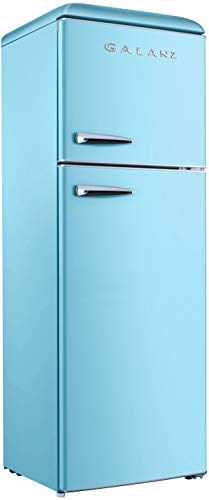
3. Galanz Retro Top Freezer Refrigerator
A retro-styled refrigerator with rounded lines and colorful finishes. It adds a decorative touch to an apartment while keeping the top freezer layout.
Suits: style-minded renters. Strengths: a distinctive look and a compact size. Weaknesses: retro styling can show fingerprints. Skip it if you prefer stainless steel.

Best for small households
4. Hisense Top Freezer Refrigerator
A conventional top freezer refrigerator from a well-known electronics and appliance brand. It aims at everyday storage with few frills.
Suits: small households. Strengths: a no-nonsense layout and bright interior. Weaknesses: fewer premium touches. Skip it if you want smart features.
View Hisense Top Freezer Refrigerator on Amazon
Best for first-time renters
5. Insignia Top Freezer Refrigerator
A simple top freezer model with adjustable glass shelves and door bins, as described on most listings. It suits apartments that need a dependable fridge without extras.
Suits: first-time renters. Strengths: an easy setup and basic storage. Weaknesses: limited special features. Skip it if you need a very deep fridge.
View Insignia Top Freezer Refrigerator on Amazon

Best for tight alcoves and studios
6. Avanti Top Freezer Refrigerator
A compact top freezer unit from a brand focused on small-space appliances. It is often used in studios, offices and guest rooms.
Suits: tight alcoves and studios. Strengths: a narrow body and simple use. Weaknesses: less capacity than full-size fridges. Skip it if you shop for a large family.

Care and Setup
- Leave the clearance around the sides and back that the manual calls for.
- Level the refrigerator with its feet so the doors close and seal properly.
- Defrost or clean the freezer shelf as the maker advises.
- Wipe the door gaskets now and then so the seal stays clean and tight.
- Keep the refrigerator away from heat sources such as a stove or a sunny window.
Mistakes to Avoid
- Forgetting to measure the entry path as well as the alcove.
- Ignoring door swing in a corner.
- Overstuffing the freezer, which hurts airflow.
- Choosing a model with a narrow fridge section when you mostly need fresh storage.
- Assuming the landlord will accept any appliance without checking the building rules first.
- Skipping a look at the shelf spacing, which decides whether tall bottles actually fit.
Measuring the Space and the Delivery Path
In an apartment the biggest risk is a refrigerator that fits the alcove but not the route to it. Start with the final spot. Measure width, height and depth at several points, since walls and cabinets are rarely perfectly square. Then add the clearances the manual asks for around the sides, back and top. Refrigerators need airflow to release heat, and cramming one into a tight gap can cause the unit to run harder and shorten its life.
Next, measure the path. Check every doorway, hallway turn, staircase and elevator the unit has to pass. Note the narrowest point and compare it to the appliance’s width and depth. Remember that doors can often be removed from their hinges for delivery, which gains a little space, but handles and the box itself still matter. If the path includes stairs, ask the delivery service whether they carry up stairs and what they need from you.
- Write measurements on paper and take them with you when you shop.
- Compare against the dimensions on the product listing, including the door handle.
- Check the swing arc of the fridge door and the freezer door against walls and counters.
- Confirm the floor can bear the weight and is reasonably level.
If the listing gives overall dimensions with and without packaging, use the packaged figure for the path and the unpackaged one for the alcove. If you cannot find a figure, treat that as a reason to ask the seller before purchase. Also confirm the delivery terms, including whether old appliance removal is offered and how the delivery team will handle tight entries.
Capacity and Interior Layout for Small Households
Capacity is listed in cubic feet, and small units can look similar on paper but feel very different in use. For a studio or one-bedroom home, what matters is how the space is arranged. A tall fridge section with adjustable shelves holds bottles, leftovers and produce better than a boxy interior with fixed shelves. Door bins that fit tall items save shelf space, and a crisper drawer protects produce.
Think about how you shop. If you buy groceries a few times a week and cook fresh, a compact fridge section may be enough. If you shop once a week or batch cook, you need more space, and the freezer compartment becomes more important. Top freezer compartments are usually small in compact models, so check that yours will hold what you plan to freeze, such as a few meals and ice trays, without forcing the door shut.
Do not fill every shelf. Air has to circulate to keep temperatures even, and blocked vents can cause warm spots. Leave a little space around items, and avoid pressing food against the back wall.
For households of two or more, or for people who entertain often, a mid-size model may be a better fit even if the alcove is slightly bigger than a compact one would need. The cost of too little capacity is more trips to the store and crowded shelves. Compare the stated fridge and freezer capacities separately, not just the total.
Noise, Placement and Open-Plan Living
In a small apartment the refrigerator is often within a few steps of your bed or sofa, so noise matters more than in a large kitchen. All refrigerators make some sound: a compressor hum when it runs, a fan whir, occasional clicks and gurgles as refrigerant moves. Listings may state a decibel figure, but a number alone does not describe how a sound feels, so treat it as a rough guide and read the owner feedback with caution.
Placement affects noise. A unit sitting on an uneven floor can rattle, so adjust the feet or leveling legs until it is stable. Keep the back from touching the wall, since vibrations transfer through contact. A rug or mat under the appliance can reduce floor noise, but do not block ventilation underneath if the design needs it.
- Avoid putting the refrigerator beside the oven or in direct sun.
- Leave the clearance the manual requests.
- Let a new refrigerator stand upright for the time the manual advises before plugging it in.
- Set the temperature controls as the manual suggests and adjust gradually.
Ask your landlord or building manager about rules too. Some buildings approve certain sizes only, require installers or limit moving times. Others supply the refrigerator, so confirm whether you need to buy one at all. If you own the appliance, ask who is responsible for repairs and whether the lease addresses it.
If the noise level is a major concern, consider asking about return policies before you buy so you can swap it if the sound disturbs you.
Running Costs, Moving and Renter Considerations
A refrigerator runs around the clock, so energy use adds up over years. Look for the energy label on the listing, which shows estimated yearly use. Compare labels between models of similar size, and be aware that the figures come from standard testing conditions, so real use depends on your kitchen temperature, door openings and how full the fridge is. A more efficient model may cost more up front, so weigh that against how long you plan to stay.
Renters should think about portability. A refrigerator you buy may need to move with you, so a reversible door and a manageable size help you fit it in the next place. Check that the door hinges can be swapped without special tools or a technician, and keep the manual and any small parts in a labeled bag.
Warranty and service are part of the cost. Read what the warranty covers, how long it lasts and how claims are handled. Ask who services the model in your area, since a refrigerator that is hard to repair becomes a larger expense when it breaks.
Signs it is time to replace a refrigerator include food spoiling sooner than usual, frost that returns quickly after defrosting, a seal that no longer closes tightly, a compressor that runs constantly or condensation that keeps building inside. Have a technician check first, because a simple fix may restore it. If the repair cost approaches the price of a new unit, replacement is usually the better choice.
A Measuring Checklist for Apartment Refrigerators
Apartment kitchens rarely give you extra room, so a fridge that is a few inches too wide or deep can become a daily annoyance. Before you look at features, gather the measurements that decide whether a model can live in your space.
- Width, height and depth of the space where the fridge will stand.
- Clearance needed at the back and sides for airflow, as stated in the manual.
- Door swing: which direction the door opens, and whether it can be reversed.
- The width of every doorway, hallway and elevator the fridge must pass through.
- Turns in corridors or stairs where a tall appliance might get stuck.
- The location of the outlet and the length of the power cord.
- Any rules from the building about deliveries, elevators or appliance haul-away.
Write these numbers on a card and keep them with you while you compare. A model that is a good fit on paper may still need a tilt or door removal to get inside, and the maker’s delivery guide explains how.
Top Freezer Compared With Other Layouts
| Layout | Strengths | Trade-offs |
|---|---|---|
| Top freezer | Simple, common, usually narrower and easier to fit | Fresh food sits at lower height, bending is needed |
| Bottom freezer | Fresh food at eye level | Freezer needs a drawer, often wider |
| Side by side | Both sections reachable at eye level | Narrow shelves limit wide items |
| Compact all-in-one | Fits tight spaces | Small capacity, freezer compartment limited |
For a small kitchen, a top freezer layout is a practical choice because it keeps the width modest and the controls simple. It is a workhorse design for good reason.
Capacity and How Much Food You Really Store
Capacity is listed in cubic feet, and a bigger number is not always better. A fridge that is too large for your habits wastes energy and space, and one that is too small leads to extra shopping trips. Think about how you shop: do you buy for a week or pop in for fresh items every few days? How many people share the kitchen? Do you meal prep in containers?
- Estimate how many containers and bottles you keep at once.
- Think about tall items, such as large bottles and pizza boxes.
- Check the shelf spacing and whether shelves can be moved.
- Look at the door bins, which hold more than they appear to.
- Consider whether the freezer is large enough for the way you use it.
Capacity numbers are measured with the maker’s method and are indicative. Compare similar models by the same maker, and look at the interior layout, not only the headline number.
Door Swing, Reversibility and Tight Layouts
In small kitchens, the door swing can decide whether the fridge is comfortable to use. Check whether the door can be reversed to open from the other side, and whether the kit is included or you need a tool. Look at what the door will hit when it opens fully: a wall, a counter or a cabinet. Many models can be opened at about ninety degrees, which is enough to slide drawers in and out in some cases but not others.
If your fridge will stand next to a wall, check how far the door opens before it hits it. Some models include stops or special hinges. If in doubt, the manual’s diagrams show the required space.
Noise, Temperature and Everyday Operation
In an apartment, a fridge is a few feet from where you sleep or relax. Compressor sounds are normal, but some models are quieter than others. Check what the maker says about noise, and look for notes on how quickly the fridge cools after being filled.
Place a thermometer inside to check that temperatures stay steady, and adjust the control gradually, waiting a day between changes. Avoid placing the fridge next to a stove or radiator, and leave the clearance specified. Do not overload shelves or block the vents, since cold air needs to circulate.
Cleaning, Defrosting and Seasonal Care
Most modern top freezer fridges defrost automatically, but some compact models need manual defrosting. Check the specification, because manual defrosting means switching off the unit, emptying it and letting ice melt. Wipe spills quickly, and clean shelves and door seals with a mild solution. Vacuum dust from the back or the base grille if the manual says it is accessible.
If you go away for a while, empty and clean the fridge, and leave the door slightly open to stop odors. For moving, empty the fridge and secure doors and shelves, and follow the maker’s advice on how long to wait before switching it on after transport.
Delivery, Haul-Away and Building Rules
Ask the seller whether delivery includes carrying the fridge up stairs, installing it and removing the old one. Check your building’s policy on delivery times and elevator use, and arrange any required access in advance. Keep your delivery paperwork and take photos of the fridge before you accept it, so any transit damage is documented.
How to Narrow Down the Picks for Top freezer refrigerators for apartments
With several strong options in this guide, the fastest way to a good decision is to stop comparing everything at once. Start by removing any pick whose basic format does not suit your space or routine, using the descriptions above. Then compare what remains on the two or three points that will affect you weekly, such as size in daily use, the controls you will touch every time and the cleaning the refrigerator will ask of you. Features you will use twice a year should never outvote the ones you will use twice a day.
Read the honest limitation in each review as carefully as the strengths. A limitation that touches something you rarely do is a fair trade; a strength that serves a habit you do not have is worth nothing to you. This is why the same guide can honestly serve different households with different answers. Your job is not to find the best refrigerator in the abstract, but the one whose strengths and weaknesses line up with your life with the fewest daily frictions.
Before you order, do a final reality check on the exact listing for the model you have chosen. Listings change, similar model names differ in small details, and the version in front of you is the one that will arrive. Confirm the dimensions, the requirements and what is included, and keep a note of what you checked. That five-minute habit prevents most disappointments, and it costs nothing but attention at the moment when attention matters most.
Refrigerators in Apartments: Space, Noise and Landlords
Apartment living adds three questions to any refrigerator choice: will it fit the building’s doors, lifts and stairs; how will it sound in a home where the kitchen is close to where you sleep and relax; and what does your tenancy allow. Measure the whole route from the street, not just the kitchen alcove, and check delivery terms for stairs before you order. A refrigerator that hums or clicks noticeably matters more in a studio than in a large house, so value calm running and doors that close without a slam. Keep the landlord’s rules in mind for water connections and for removing an existing appliance, and photograph the space before and after delivery. Within those limits, a top freezer layout is often an apartment natural: straightforward, space-efficient and easy to organise for one or two people’s shopping.
Choosing Top freezer refrigerators for apartments: The Details That Decide Daily Satisfaction
Start with the space, not the showroom appeal. Measure the opening in more than one place, because older cabinets and floors are rarely perfectly square, and then measure every doorway, corner and stair turn on the delivery path. A model that fits the alcove but cannot turn into the kitchen is not a fit at all. Write the figures down and compare them with the listing for the exact model you are considering, including the depth with doors and handles, rather than relying on a rounded figure in a headline.
Next, think about how your household actually shops and cooks. A household that buys fresh food several times a week uses a refrigerator differently from one that does a single large shop and freezes meals in batches. Look at where tall bottles, wide platters, leftovers in flat containers and bulky freezer items will live. Door bins, adjustable shelves and drawers only help if they match the shapes you store, so picture a normal week of food in the cabinet before you judge the layout.
Temperature stability matters more in daily use than a long list of extra features. Doors that seal well, shelves that do not wobble and drawers that glide without sticking all shape how the refrigerator feels after the first month. If a model offers extra modes or smart functions, ask what they require from you in return, such as filter changes, app accounts or more surfaces to clean. Choose the level of complexity your household will genuinely keep up with.
Finally, plan for ownership rather than delivery day. Check how the doors come off if they ever need to, where the water connection sits if the model uses one, and whether local service covers the brand in your area. Keep the manual, the model details and your proof of purchase together. A refrigerator is a long-term appliance, and the easiest model to live with is usually the one whose upkeep, parts and service you understood before it arrived.
Real-Life Situations and How to Match Them
For a busy family kitchen, the deciding factor is often how quickly several people can load and find food without leaving the doors open. Wide fresh-food shelves, clear bins and a freezer that separates everyday items from longer storage make weekday cooking calmer. For a smaller household, a simpler layout with fewer compartments can be easier to keep organised, because food is less likely to disappear into the back of a deep drawer and be forgotten.
In a rental or a first apartment, flexibility carries extra weight. A layout that copes with shared shelves, labelled containers and frequent turnover of food is more useful than a specialised drawer nobody uses. In a kitchen where the refrigerator stands near a wall or an island, door swing becomes a daily issue rather than a footnote, so walk the route with a tape measure and imagine opening both doors while someone stands at the counter beside you.
If you entertain often, think about platters, drinks and desserts at the same time. A shelf that adjusts or folds away for a tall item can matter more than a small gain in overall capacity. If you batch cook, freezer organisation matters just as much: flat containers, dated labels and a shelf you reserve for cooling food before freezing will do more for you than any headline feature. Match the cabinet to the habit you repeat every week.
Setup, First Use and Building Good Habits
Before the new refrigerator arrives, clear the path, protect the floor if the delivery team asks you to, and decide exactly where the old food will wait so it stays cold. Once the unit is in place, level it as the manual describes so the doors close properly, leave the clearances the maker specifies for airflow, and let it settle and cool before loading it fully. Loading a warm cabinet with a full shop makes it work harder and can leave food warmer than you expect.
In the first week, set up zones rather than filling shelves at random. Keep drinks and everyday items where they are easy to reach, raw ingredients low and contained, and leftovers where you will see them first. A small weekly tidy, moving older items forward as you unload shopping, prevents the slow build-up of forgotten food at the back. That simple habit improves any layout, whatever size cabinet you chose.
Keep a note of anything that seems off in the early days, such as doors that need a push to seal, unusual noises when the compressor runs, or frost appearing where it should not. Small issues are easiest to raise while delivery and warranty details are still fresh. Photograph the model label before the refrigerator is pushed fully into place, because you may need those details later and the label can be awkward to reach afterwards.
Cleaning, Care and Keeping It Working Well
Wipe spills as they happen, because sticky residue hardens on glass shelves and makes drawers stick. Wash removable shelves and bins in warm soapy water, dry them fully before returning them, and never use abrasive pads on coated surfaces. Clean the door seals gently and check that nothing is trapped in the fold, since a seal that does not sit flat lets cold air escape and makes the motor work harder than it should.
Keep the area around the refrigerator free of dust build-up, and follow the manual for any coil or vent care your model needs. If your refrigerator uses a water filter, change it on the maker’s schedule rather than waiting for the flow to slow. Rotate food as you shop, keep a simple list of what is frozen and when, and clear out anything past its best promptly. Good storage habits protect flavour, reduce waste and make the cabinet easier to clean.
Every few months, check the doors still close with a gentle push, the drawers still glide, and the interior light and controls respond as they should. Catching a cracked bin or a tired seal early is far easier than dealing with a cabinet that has been running warm. If temperatures seem uneven, check that vents inside are not blocked by packaging before assuming a fault, because crowded shelves can stop cold air circulating properly.
Mistakes to Avoid and Problems Worth Knowing
The most common mistake is ordering by capacity alone and discovering the shelves do not suit the food you buy. Another is forgetting the delivery path and facing a doorway problem on the day. Buyers also overlook door swing against walls and islands, leave too little clearance for airflow, and load a new cabinet before it has cooled. Each of these is easy to avoid with a tape measure, a short checklist and a little patience during the first day.
A quieter mistake is treating every compartment as interchangeable. Raw ingredients stored above ready food, leftovers pushed to the back and forgotten, and heavy bottles crowded into one door bin all create problems that have nothing to do with the model itself. Set zones on day one and keep them. If a problem appears, work through the simple causes first: level, seals, blocked vents, overfilled shelves and doors left ajar during a big unload.
Comparing the Picks in This Guide, One by One
Danby Designer Top Freezer Refrigerator is worth a closer look when the strengths described in its review above line up with the job you do most often. Read its entry again with your own routine in mind rather than its position in the list, and ask whether its particular balance of size, style and upkeep suits your household. If the honest limitation mentioned in its review touches something you do daily, take that seriously and look again at the neighbouring picks before deciding.
With Midea Top Freezer Refrigerator, the decision is about fit for your habits. Its review above sets out who it suits and where it falls short, so test those claims against your busiest week rather than your most ambitious one. A refrigerator that handles your ordinary days gracefully will satisfy you far more than one chosen for an occasional special case, and the limitation that matters least in your real life is the one you can happily accept.
Treat Galanz Retro Top Freezer Refrigerator as the answer to a specific question: which household, cooking in which way, will be glad of this every week? Its entry above gives you the material to answer honestly. Compare its strengths with the pick before and after it in this guide, because the contrasts between neighbours are usually where the right choice reveals itself. Decide by the difference that will still matter to you in a year.
Hisense Top Freezer Refrigerator rewards buyers who read its review for character rather than for a single standout point. Notice what it asks of you in return for its strengths, in space, attention or upkeep, and decide whether that exchange suits your home. Every pick in this guide makes such an exchange, and none of them is free. The buyers who end up happiest are the ones who chose their compromise deliberately instead of discovering it after delivery.
If Insignia Top Freezer Refrigerator is on your shortlist, do one final practical check before deciding: re-read its listing details for the exact version on offer, confirm the dimensions and requirements against your space, and picture it in place on an ordinary evening. That small discipline catches the mismatches that reviews cannot, because listings change and model variations differ in details that matter. A pick that survives that check has earned its place in your home.
For Avanti Top Freezer Refrigerator, weigh the everyday experience its review describes: how it will feel to load, clean, open, empty or operate when you are tired and the meal matters more than the appliance. First impressions fade quickly, but the daily experience repeats for years. Choose the pick whose daily experience you would recommend to a friend in your situation, and you will rarely go wrong with the final decision.
One habit improves results with almost any refrigerator: slow down at the decision points. Measure before you buy, prepare before you start, check before you assume something is finished, and clean before residue becomes a project. None of that requires talent or extra equipment. It is simply the difference between using an appliance and fighting it, and it shows in the results far more reliably than any single feature on a specification list.
Keep a small notebook, paper or digital, for the first month with a new refrigerator. Note what worked, what surprised you and what you would do differently, in a sentence or two each time. Memory is generous to itself and quietly rewrites early struggles, while honest notes stay accurate. By the end of the month you will own a personal guide to your own equipment and habits, which is the most useful manual you will ever read.
When something disappoints, change one variable at a time. A different position, a smaller batch, a longer rest, a cleaner surface: single changes teach you cause and effect, while changing everything at once teaches you nothing and usually wastes food or money. This patient, experimental approach is how experienced cooks and careful owners actually improve, and it works for every appliance and ingredient in this guide.
Teach the other people in your household the basics of any shared refrigerator. Most damage and most disappointing results come from someone who meant well but did not know the routine: the wrong setting, the wrong cleaner, the door left open, the part forced instead of fitted. A two-minute explanation and a note where it will be seen prevent more problems than any warranty, and they make the appliance a shared pleasure rather than one person’s responsibility.
Buy accessories and extras only after the basic routine is working. The right tray, tool or spare part, chosen to solve a problem you actually have, is money well spent. A drawer of hopeful gadgets bought on the first day is usually money parked. Live with the refrigerator for a few weeks, let its real needs reveal themselves in use, and then equip it deliberately. Restraint at the start almost always leads to a better-equipped kitchen in the end.
Seasonal changes affect kitchens more than most people expect. Summer heat, winter cold, holiday quantities and everyday term-time routines all ask different things of the same refrigerator. A quick review at the change of each season, checking cleanliness, storage, supplies and the habits that have drifted, keeps performance steady all year. It takes minutes, and it prevents the slow decline that owners often mistake for an appliance wearing out.
Finally, judge your choice by a fair standard after a month of real use. Not by the first attempt, which is always partly rehearsal, and not by the most ambitious occasion of the year, but by ordinary Tuesdays. If the refrigerator handles those with ease, fits your space and habits, and asks only for care you are happy to give, you chose well, whatever any list, including this one, ranked first.
Read the current listing for your chosen refrigerator one final time on the day you order, and save a copy of the details that decided you: the exact model name, the dimensions or size, what is included and the delivery and returns terms. Listings are edited, bundles change and similar versions sit side by side, so the version you checked is the version you should confirm. If anything has changed since your research, pause and re-check rather than assuming the difference is trivial.
Think about delivery and installation as part of the purchase, not as an afterthought. Who brings the refrigerator into the home, what access do they need, and what happens to the packaging and, where relevant, the old appliance? Preparing the space, the route and the paperwork before the day turns a stressful event into a routine one. Keep the delivery note and check the item carefully before signing anything, because damage and missing parts are easiest to resolve at the door.
If you are buying the refrigerator as a gift, choose for the recipient’s habits rather than your own taste, and include the receipt arrangements they would need for an exchange. A model that suits your kitchen, garden or routine may be entirely wrong for theirs. Practical gifts succeed when they fit the other person’s space and life, and a short conversation beforehand, however much it spoils the surprise, usually produces a gift that is used for years instead of stored for months.
Top Freezer Refrigerators for Apartments FAQ
Are top freezer refrigerators good for apartments?
Yes. They are simple, often narrower than other layouts and generally easier to move through tight spaces.
How much capacity do I need?
One or two people can often manage with a compact unit, while three or more should consider a larger model. Check the listing for exact capacity.
Can I reverse the door?
Many models allow it. Check the product page and manual before ordering if your layout needs it.
Do top freezers use less energy than other layouts?
Many simple top freezer designs are efficient, but compare the energy label on the current listing for each model.
How much clearance does a top freezer refrigerator need?
Clearance varies by model, so read the manual or listing. Most need some space at the back, sides and top for airflow.
Can I remove the doors to get the refrigerator through a narrow doorway?
Often the doors can be taken off the hinges, but the process differs by model. Check the manual and consider asking the delivery team or a technician.
Should I wait before plugging in a new refrigerator?
Many makers advise letting it stand upright for a period after delivery. Follow the instructions in the manual.
Why does my refrigerator make noise?
Compressors, fans and refrigerant flow all produce sounds. If the noise is loud, rattling or new, check that the unit is level and not touching the wall.
Are compact models good for families?
They suit one or two people best. Larger households usually need more capacity, so compare fridge and freezer sizes against your shopping habits.
What temperature should I set?
Use the setting the manual recommends as a starting point and adjust gradually. Check with a refrigerator thermometer if you want to confirm it.
Does a reversible door cost extra?
It depends on the listing. Check whether the feature is included and whether the swap needs tools or a technician.
What should I ask my landlord before buying?
Ask about size limits, delivery rules, elevator use and who handles repairs. Some buildings also have rules about haul-away of old appliances.
How should I organise a new refrigerator in the first week?
Set up simple zones before you fill it: everyday items where they are easy to reach, raw ingredients low and contained, leftovers where you will see them first, and drinks together so the doors are not opened repeatedly while people search. Move older food forward each time you unload shopping. Zones only work if everyone in the household roughly follows them, so keep the system obvious rather than elaborate, and adjust it after a week of real use.
What should I check if one shelf seems warmer than another?
First check that air vents inside the cabinet are not blocked by packaging or large items, and that the refrigerator is not overfilled. Then confirm the doors are sealing properly and have not been left ajar. If the problem continues after those checks, note exactly where and when it happens and contact the maker or a service engineer with the details, because a clear description helps them diagnose it.
How do I stop bottles and jars rattling in the door bins?
Group similar items together, keep heavier bottles low and avoid leaving a single tall bottle alone in a wide bin where it can tip. If a bin is much wider than its contents, a small washable liner or a simple divider can help. Rattling is often a sign the door is being closed harder than it needs, so check the level of the cabinet as well, because doors on an unlevel refrigerator swing oddly.
Should I keep the packaging and documents that come with the refrigerator?
Keep the manual, warranty details and proof of purchase for as long as you own the appliance, ideally together in one place. Photograph the model and serial label as a backup, because you may need those details for parts or service years later when the label is hard to reach. Delivery paperwork is worth keeping until you are fully satisfied the appliance arrived undamaged and working as described.
How often should I clean behind a refrigerator?
There is no single schedule, but the area behind and beneath collects dust steadily, especially in homes with pets. When the refrigerator is pulled out for any reason, take the chance to clean the floor and check the cord, plug and any water line. Follow the maker’s guidance for your model, switch off safely before moving it, and never pull it further than hoses and cables comfortably allow.
What is the best way to move food into a new refrigerator?
Work in stages so food stays cold: move the most perishable items last and first, keep frozen food together so it holds its temperature, and use cool bags or boxes during the changeover. Let the new cabinet cool properly before loading it, then place food by your planned zones rather than filling shelves at random. A calm transfer is also a good moment to discard anything out of date.
Why does my refrigerator run more often on hot days?
A warmer kitchen makes the refrigerator work harder to hold its temperature, so longer or more frequent running in hot weather is expected. Help it by keeping the doors closed as much as possible, letting hot food cool before it goes in, and making sure the seals are clean and the clearances around the cabinet are not blocked by stored items pushed against it.
Can I change which way the doors open?
Some models allow the doors to be reversed and others do not, and the answer is specific to the exact model. Check the manual or the current listing before you buy if door direction matters in your kitchen, because a door that opens against a wall or into a walkway is a daily frustration. If reversal is possible, it is a job to do carefully, following the maker’s instructions step by step.
The Short Version
For a dependable compact, the Danby Designer. For a flexible first fridge, the Midea. For retro style, the Galanz. For plain storage, the Hisense. For basics, the Insignia. For narrow spaces, the Avanti.

