A stovetop smoker is a lidded metal pan with a rack and a small bed of wood chips. Set it over a burner and the chips smolder, flavoring fish, chicken, vegetables or cheese without a backyard smoker. Handheld smoke infusers and smoker boxes extend the idea to cocktails and grills.
The six picks below mix true stovetop pans, a handheld infuser and the wood and boxes that go with them. We have not used these products ourselves, so confirm sizes, cooktop compatibility and included parts on the current listing before buying. Performance claims are the makers’ own.
As an Amazon Associate we earn from qualifying purchases. Links below are affiliate links, and they do not change the product information we give.
What to Look For
| Feature | Why it matters |
|---|---|
| Material | Stainless steel resists warping and cleans up more easily than thin pans |
| Lid fit | A snug lid keeps smoke in the pan and out of your kitchen |
| Size | Match the footprint to your burner and the cuts you plan to smoke |
| Chip supply | Fine wood chips or dust work best, so check what comes in the box |
In this guide
Specs at a Glance
| Product | Type | Material | Notes |
|---|---|---|---|
| Camerons Original Stovetop Smoker | Lidded pan | Stainless steel | Rack and drip tray included |
| Camerons Mini Stovetop Smoker | Lidded pan | Stainless steel | Smaller footprint |
| Breville Smoking Gun Pro | Handheld infuser | Metal and plastic | Cold smoke for food and drinks |
| Camerons Smoking Wood Chips | Wood chips | Natural wood | Fine grind for stovetop use |
| Weber Stainless Steel Smoker Box | Chip box | Stainless steel | Grill add-on |
| Cuisinart Cast Iron Stove Top Smoker Pan | Pan | Cast iron | Heavier, retains heat |
The 6 Best Stovetop Smokers

Top pickBest for whole fillets and chicken pieces
1. Camerons Original Stovetop Smoker
The best-known stovetop smoker, built from stainless steel with a rack, a drip tray and a sliding lid. It is designed for use on a range burner, a grill or even a campfire.
Suits: whole fillets and chicken pieces. Strengths: a proven, simple design. Weaknesses: smoke can escape if you rush the lid. Skip it if you have no vent hood or window.
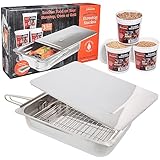

Best for small households
2. Camerons Mini Stovetop Smoker
A smaller version of the same idea, sized for a few fish fillets, a couple of chicken breasts or a small batch of vegetables. It fits easier into a cabinet.
Suits: small households. Strengths: compact storage. Weaknesses: limited room for large cuts. Skip it if you smoke for a crowd.


Best for drinks and finishing touches
3. Breville Smoking Gun Pro
A handheld infuser that sends cool smoke through a hose into a covered glass or dish. It is popular for cocktails, butter, cheese and finished dishes rather than whole-meal smoking.
Suits: drinks and finishing touches. Strengths: cold smoke with no pan needed. Weaknesses: it does not cook the food. Skip it if you want a complete meal from one pot.

Best for refills for the Camerons line
4. Camerons Smoking Wood Chips
Fine wood chips made for stovetop smokers, sold in several wood types such as hickory, apple or mesquite. They suit most lidded stovetop pans.
Suits: refills for the Camerons line. Strengths: a fine grind that smolders steadily. Weaknesses: they are only chips, not a smoker. Skip it if you already have a good supply.
View Camerons Wood Chips on Amazon
Best for gas grill owners
5. Weber Stainless Steel Smoker Box
A small perforated stainless steel box that holds wood chips and sits on gas grill grates. It is a separate way to add smoke flavor when you grill outdoors.
Suits: gas grill owners. Strengths: an inexpensive way to add smoke. Weaknesses: it is made for the grill, not a stove. Skip it if you want to smoke only on the stovetop.
View Weber Smoker Box on Amazon
Best for steady heat
6. Cuisinart Cast Iron Stove Top Smoker
A cast iron pan style smoker made for use over a burner. Cast iron holds heat well, though it is heavy, and the chips need regular monitoring.
Suits: steady heat. Strengths: a sturdy, heat-retaining build. Weaknesses: weight and a longer cleanup. Skip it if you want something light.
View Cuisinart Cast Iron Smoker on Amazon
Care and Setup
- Open a window and run the vent hood before the smoke starts.
- Line the bottom with foil so cleanup is easier.
- Let the pan cool before removing the lid.
- Wash steel parts with a non-scratch scrubber and dry them.
Mistakes to Avoid
- Using coarse chunks that never reach smoldering temperature.
- Smoking in a closed kitchen with no airflow.
- Skipping a dry rub or brine, which helps flavor.
- Lifting the lid too early and letting smoke out.
How a Stovetop Smoker Actually Flavors Food
A stovetop smoker works by trapping a small amount of smoke in a closed pan. Fine wood chips or sawdust sit in the bottom, a drip tray covers them, the food rests on a rack above and a lid keeps the smoke inside while the burner heats the pan. The chips smolder rather than burn, producing smoke that flavors the surface of the food while the pan’s heat cooks it through.
This is a short, intense process compared with a backyard smoker. Rather than hours of low heat, you are usually working in minutes, and the food is cooked by the heat of the pan as much as by smoke. That is why fish, chicken pieces, sausages, vegetables, nuts and cheese suit the method, while large cuts such as brisket or whole shoulders do not. The flavor is real but lighter, without the deep bark or smoke ring of a long cook.
Think of it as a flavor tool, not a replacement for a pit. Many cooks use the pan to smoke a food first and then finish it in the oven or on the grill, or to smoke ingredients for use in other dishes, such as smoked salmon for a dip or smoked vegetables for a soup. Handheld infusers work differently: they produce cool smoke that flavors a drink or dish without cooking it, so they complement rather than replace a pan. Knowing which tool does which job prevents disappointment.
Ventilation, Smoke Alarms and Indoor Safety Planning
Smoking indoors needs more planning than most people expect. Even with a snug lid, some smoke escapes when you slide the lid open or closed, and the pan gives off a strong smell. Run the range hood on high before you start, and open a window or a door to create cross-flow if the weather allows. A hood that vents outside is far more effective than one that recirculates air through a filter.
Consider your smoke detectors. A pan that is smoking can trigger an alarm, particularly if a detector is close to the kitchen. Do not disable or cover an alarm; instead, improve ventilation, use a small amount of chips and keep the lid closed as much as possible. If your detector is very sensitive or the kitchen is small, consider moving the pan outdoors on a side burner or grill, if the maker says the pan is suitable for those uses.
Basic safety rules matter. Never leave the pan unattended while it is heating, keep flammable items such as towels and paper away from the burner, and use mitts when handling the lid and the pan. Do not use chunks or large pieces of wood unless the maker allows it, because they can ignite instead of smolder. Keep a lid or a baking sheet nearby to smother a flare-up, and never use water on a grease fire. If anyone in the household is sensitive to smoke or has breathing problems, an outdoor setup may be a better choice.
Wood Chips, Grind Size and Flavor Pairings
The fuel you choose has a major effect on the result, and the grind matters as much as the wood. Fine chips or sawdust ignite quickly and smolder steadily in a small pan, while coarse chunks may never reach smoldering temperature or may flare up. Many stovetop smokers are designed around a fine grind, so check what the maker recommends and what comes in the box. Chips that are damp can create a sour or steamy smoke, so keep them dry.
Different woods bring different personalities. Fruit woods such as apple and cherry tend to be mild and slightly sweet, which suits fish, poultry and cheese. Hickory and oak are stronger and more traditional with sausages and heartier meats. Mesquite is the most assertive and can overwhelm delicate food, so use it sparingly. If you are unsure, start with a mild wood and a light hand, then adjust on your next batch.
Quantity matters. Many recipes use a tablespoon or two of chips, and more is not always better; too much smoke makes food bitter and acrid. Pair the smoke with the right preparation: a dry brine or a quick cure helps the surface of fish and chicken take smoke, and a light coat of oil or a pat dry helps with an even finish. Note your wood type, amount and time for each cook, so you can repeat the results you like.
Matching Pan Size and Material to Your Cooktop
A stovetop smoker is a pan that sits on a burner, so its fit with your cooktop is critical. A pan with a flat base on a gas grate or an electric coil heats evenly, while a warped or rounded base creates hot spots. Induction needs a magnetic base, which stainless steel or cast iron may or may not provide depending on the alloy and construction, so check the listing and maker’s notes. Glass-top ranges can be scratched by rough bases and may have limits on the weight of the pan.
Size is another consideration. A rectangular pan may overhang a single burner, which can cause uneven heating or put the handles near the flame. Some cooks use two burners under a long pan, if the manual allows it, while others prefer a smaller pan to fit one burner. Measure your burner and compare it with the pan’s footprint. Consider the height too, because a tall lid needs clearance under the hood or cabinet.
Material shapes the experience. Stainless steel is light enough to handle and cleans up with a non-scratch scrubber, while cast iron holds heat steadily but is heavy and needs more care to prevent rust. Thin pans heat quickly but can warp, and a loose lid lets smoke escape. A drip tray and rack that are easy to remove make cleanup easier. Think about where you will store the pan, since a rectangular smoker with a tall lid takes up cabinet space.
Cleanup, Odor Control and Making the Pan Last
Cleanup is the part people dread, but a few habits make it manageable. Line the bottom with foil before adding chips, if the maker allows it, so the burned residue can be lifted out in one piece. Let the pan cool completely before opening the lid or moving it, and dispose of used chips only when they are completely cold, in a metal container, since embers can stay hot longer than they look.
Wash the rack, drip tray and lid with warm soapy water and a non-scratch scrubber. Resinous deposits and smoke stains build up with use and can look worse than they are; a soak in hot water and some patience will remove most of it. Avoid steel wool on stainless steel, which can scratch the surface, and dry cast iron immediately and rub it with a thin layer of oil to prevent rust. Check whether any parts are dishwasher safe before using the machine.
Odors can linger in the kitchen after smoking, so wipe the hood filter and nearby surfaces, let air circulate and consider keeping the window open for a while. Over time, check for warping, loose handles, rust, a lid that no longer fits or a base that has developed hot spots. Replace the pan if it no longer seals properly, because smoke leaks make the kitchen unpleasant and the food less flavorful. Keep a stock of the right chips and a spare drip tray if the maker sells one, so you can smoke whenever you feel like it.
A Simple Session Checklist Before You Light the Burner
Smoking on the stove goes best when the preparation is finished before any heat is applied. A few minutes of setup keeps the session calm and the food predictable, especially the first time you use a new pan or infuser.
- Read the manufacturer instructions for your exact pan, including the recommended burner type and heat level.
- Pat the food dry so the surface takes on flavor instead of steaming.
- Measure out the wood chips and keep a small extra pinch aside rather than overfilling the tray.
- Set up your vent hood or open a window, and keep the area around the cooktop clear of towels and paper.
- Place the rack, close the lid fully and confirm it sits level before turning on the burner.
- Keep a timer nearby and note how long each food took, so the next session is easier to repeat.
Treat the first run as a trial with an inexpensive food such as vegetables or a small piece of fish. That gives you a feel for how much smoke your kitchen handles and how strong the flavor turns out before you commit a larger cut.
Pan, Infuser and Box: How the Three Formats Compare
The products in this guide fall into three families, and each solves a slightly different problem. Choosing the family first narrows the field far more quickly than comparing individual models.
| Format | Best for | Main limit |
|---|---|---|
| Lidded stovetop pan | Fish, chicken pieces, vegetables, cheese | Needs counter space and a burner of the right size |
| Handheld smoke infuser | Cocktails, finished dishes, quick flavor touches | Adds aroma only; it does not cook the food |
| Smoker box for a grill | Adding smoke flavor to a gas grill | Meant for outdoor use, not a kitchen range |
Many households end up happiest with one pan for regular cooking and a small infuser as an occasional extra. If you already own a grill, a smoker box may be all you need, and a pan would be duplicate effort. Wood chips are a consumable, so factor in a steady supply wherever you land.
Which Option Fits Your Kitchen: A Decision Guide by Situation
Instead of asking which product is strongest, ask which one matches the way you cook and the space you have. The situations below cover the common cases.
- Small apartment with a good vent hood: a compact pan is the natural choice, and a mini size saves storage space.
- Family dinners with larger cuts: a full size pan gives the rack room that bigger pieces need.
- Cocktail and dessert hobbyist: a handheld infuser fits, since you are flavoring small servings.
- Gas grill owner who likes backyard cooking: a box for chips is simple and keeps the smoke outdoors.
- Weekend experimenter: consider a pan plus several chip varieties so you can compare flavors side by side.
When two options seem equally good, lean toward the one whose cleaning routine you will actually follow. A pan that is simple to wash gets used more often than a stronger one that sits in a cupboard. And whenever the manual and general advice disagree, the manual wins, since the manufacturer knows how the pan was designed to handle heat. Finally, keep realistic expectations: indoor smoking adds a gentle flavor, and it is not a copy of a long outdoor session, so choose recipes that suit a quick, contained method.
What This Shortlist Is Really Comparing
Indoor smoking is a compromise in the best sense: real wood flavor scaled to a hob and a small household. The picks above include pans, a handheld infuser and a grill box, so decide first which format matches the food and the moments you actually want smoke for. Keep that framing in mind as you read the added sections below, because they are organised around the decisions that follow from it: how you will choose, set up, use, clean and troubleshoot, rather than around another tour of the same feature lists.
Choosing a Stovetop smoker: The Criteria That Matter Day to Day
Start by separating what you will use every week from what only sounds appealing in a listing. With a stovetop smoker, the headline features are the easy part to compare, while the ownership details decide whether the appliance earns its place. Read the reviews above a second time with a notebook open and mark each pick against your own routine: how often you will use it, who you are cooking or storing for, and how much cleaning and attention you will honestly give it between sessions. A model that fits that routine will outperform a more elaborate one that fights it.
Who Gets the Most From a Stovetop smoker: Use Cases in Real Households
The clearest use case is the regular rhythm: salmon fillets, chicken breasts, cheese, vegetables and small cuts that pick up real smoke flavor without lighting an outdoor cooker. If that list sounds like your ordinary week rather than a special occasion, a stovetop smoker stops being a gadget and becomes part of how the household runs. Regular users should weight consistency and easy cleaning heavily when comparing the picks above, because they will feel small inconveniences hundreds of times. They should also think in batches: cooking or storing a little extra when the appliance is already running usually costs no extra effort and pays off on the evenings when nobody wants to start from scratch.
Setting Up a Stovetop smoker and Getting the First Sessions Right
Unpack slowly and inspect everything before the first use. Lay out the parts, read the manual properly rather than skimming it, and wash or wipe the components the maker tells you to prepare. Set the stovetop smoker up centered on a burner that matches the pan base, under the strongest ventilation you have, with windows open and alarms considered before you start. This is also the moment to check that doors, lids, racks or baskets move as they should and that nothing arrived bent, cracked or missing. Photographing the unboxed arrangement sounds excessive until the day you need to repack, return or order a matching part.
Cleaning, Care and Storage for a Stovetop smoker
Little and often beats the occasional deep rescue. After each use of your stovetop smoker, the core routine is simple: wash the pan, drip tray and rack once cool, soak stubborn residue, dry cast iron thoroughly and store chips dry and sealed. Doing this while residues are fresh takes minutes; leaving it until the next session turns the same job into soaking, scraping and detective work about where a smell is coming from. Keep a small kit dedicated to the task, such as a brush, a non-scratch sponge, a cloth and the cleaning products the maker approves, stored together so the routine has no friction.
How the Picks in This Guide Compare With Each Other
Comparing six picks fairly means comparing them against your life, not against each other in the abstract. Each model in this guide was chosen because it serves a recognisable type of buyer, and the reviews above already name the strengths, the honest limitations and the reason to skip each one. The paragraphs below turn those reviews into a shortlist exercise: for each pick, the question to answer before it stays on your list.
When a Stovetop smoker Disappoints: A Calm Troubleshooting Order
Most disappointing results with a stovetop smoker trace back to a short list of causes: bitter flavors from too much smoke, lingering odors, alarms triggered by escaping smoke and food that is flavored but not yet cooked through. Work through them in order of effort, cheapest and quickest first, and change one variable at a time so you actually learn what fixed it. Start with the load itself: quantity, arrangement and starting condition of the food or contents change results more than most settings do. Then check the environment, because room temperature, ventilation, water quality or weather can quietly move the goalposts between one session and the next.
Planning Around a Stovetop smoker: Prep, Timing and Day-to-Day Workflow
Good results with a stovetop smoker are usually decided before it is switched on. Prep ingredients or loads fully before you start, group items by the time or temperature they need, and stage everything within reach of the appliance so the session flows instead of lurching between counter and cupboard. For cooks and bakers this is the classic discipline of having everything ready; for storage appliances it is the equally useful discipline of sorting, labeling and dating before anything goes in. Either way, five calm minutes of preparation reliably save twenty scattered minutes later.
Space deserves slower thinking than it usually gets. Measure where the stovetop smoker will live, then measure the route it takes to get there, including doorways, turns and the clearance needed to open doors, lids or drawers fully. Check the current listing and the manual for the maker’s own clearance guidance rather than guessing, because ventilation and access gaps are part of how the appliance is designed to work. While you measure, think about the working triangle around it: where you will set hot trays, raw ingredients or full containers down, and whether that surface is genuinely within easy reach.
The second use case is the gathering. When friends or family are coming, a stovetop smoker changes the shape of the day: work moves earlier, the kitchen stays calmer, and the cook can be present instead of trapped at the stove or the door. Plan backwards from serving time, allow a genuine buffer for resting, reheating or final organization, and keep the menu narrower than your enthusiasm suggests. The picks above with more room or flexibility will suit hosts better, but only if the space and routine around them can support that bigger cook without turning the whole kitchen into a staging area.
Treat the first session as a rehearsal rather than a performance. Run the stovetop smoker through the empty cycle, seasoning step or simple first cook the manual describes, and pay attention to sounds, smells, steam, smoke or heat patterns while the stakes are low. Keep notes, even if they are only three lines on your phone: what you cooked or stored, the setting you used, and what you would change. Those notes become your personal manual, and they are worth more than any generic chart because they describe your appliance, your ingredients and your kitchen.
On a slower rhythm, give the stovetop smoker a fuller inspection. Look at the wear points the manual highlights, especially racks, drip trays, lids, handles and gaskets where fitted, and replace or service anything that is cracked, warped, stiff or no longer sealing as it should. Wear parts are not a sign of poor quality; they are the designed maintenance points of the appliance, and staying ahead of them prevents the slow decline in results that owners often blame on the machine as a whole. If your water is hard, or your cooking is fatty, smoky or frequent, shorten the interval rather than waiting for performance to dip.
Start with the Camerons Original Stovetop Smoker. Re-read its review above and underline the sentence that describes who it suits; if that sentence does not sound like your household, this pick is probably a detour, however appealing its features look. If it does sound like you, check the listed limitation just as carefully, because living with a limitation you have chosen is easy, while discovering one after delivery is what leads to returns and regret.
Next, check the appliance’s state rather than its settings. A stovetop smoker that needs cleaning, descaling, a fresh consumable or a worn part replaced will often mimic a more serious failure, drifting temperatures, weak output or off flavors included. Consult the manual’s own troubleshooting table before searching the internet, because it sequences the checks for your exact model and flags the points where you should stop and seek service instead. Keep your session notes nearby; a problem that appeared suddenly after weeks of good results usually has a change hiding in them, such as a new ingredient, a new detergent or a moved appliance.
Timing deserves the same respect. Work backwards from when you want to serve, store or finish, and write the buffer in rather than hoping for it: appliances need preheating, cooling, resting, defrosting or simply opening-and-checking time that recipes and routines tend to understate. If you are planning around guests, choose the session that can finish early and hold gracefully over the one that must land perfectly at the last minute. The picks above differ in how forgiving they are here, so let your real schedule, including the chaos in it, guide the final choice.
Finally, judge the running relationship, not just the first week. A stovetop smoker asks for consumables and care such as fine wood chips in mild and strong varieties, foil for lining, and replacement racks or trays where offered. None of that is difficult, but it is recurring, and it is where satisfaction quietly accumulates or drains away. Controls you can understand at a glance, parts you can clean without a struggle and a manual written clearly enough to consult mid-cook are worth real money in daily use. If two picks above still look equal after that test, choose the one whose routine sounds calmer, because calm routines are the ones that survive busy months.
The third use case is the small or occasional household, and it deserves as much respect as the other two. If you will use a stovetop smoker a few times a month, a simpler pick that sets up fast, cleans fast and stores without drama may serve you better than the largest option in this guide. Occasional users should also plan the between-times: where the appliance or its accessories live when idle, how it is protected from dust, damp or knocks, and how quickly you can bring it back into service. A stovetop smoker that is easy to return to is one you will keep using year after year.
Safety habits are easiest to build on day one, before shortcuts feel normal. For this category that means: never leave smoldering chips unattended, keep the lid sealed as directed, and treat indoor smoke as a ventilation problem to solve before it becomes a house problem. Build those habits into the setup itself by placing gloves, trays, thermometers or cleaning cloths where your hands will expect them. A well-arranged station prevents most beginner mistakes, because the cook is not improvising with hot, heavy or dripping items in hand. If something in the manual contradicts a tip you have read elsewhere, the manual wins; it was written for the exact model sitting in front of you.
Storage between uses matters more than most guides admit. The stovetop smoker should rest clean, dry and protected, with cords, hoses, trays or accessories stored in a way that does not bend, crush or trap moisture against them. If it lives in a garage, basement or utility space, check that the environment stays within what the maker allows and that the appliance is not slowly becoming a shelf for unrelated clutter. Before a busy period such as a holiday or a party, run a quick check a few days ahead: clean, complete, working and stocked with the consumables the next session needs.
The Camerons Mini Stovetop Smoker rewards a different question: how will it behave on your most ordinary day, not your most ambitious one? Picture the routine from the sections above, the setup, the session itself and the cleaning afterwards, and ask whether this model makes that routine shorter, calmer or more enjoyable. Where the review above mentions a trade-off, decide now which side of that trade you actually prefer, because there is no version of this category without one.
Know when to stop troubleshooting and protect the food and the machine. If something smells electrical, leaks where it should not, fails a safety mechanism or behaves in a way the manual describes as a fault, switch off, let things cool or stabilize, and follow the maker’s guidance rather than improvising. Food safety follows the same principle: when time and temperature have drifted into doubt, the cautious decision is the correct one, and no single meal is worth arguing with that rule. A stovetop smoker is a long-term tool, and treating early warnings seriously is how it stays one.
Over months, the stovetop smoker will teach you your own patterns if you let it. You will learn which loads you actually run, which features you touch daily and which you have never used, and that knowledge should shape both your next purchase and how you organize the kitchen around this one. Keep the manual, your notes and any spare wear parts together in one place, and review them when seasons change and your cooking or storage habits change with them. That small habit turns a good appliance into a well-run corner of the house.
With the Breville Smoking Gun Pro, focus on fit in every sense. Fit for your space, as measured rather than imagined; fit for the size of your typical load or cook; and fit for the person who will clean and maintain it. The review above gives you the maker’s positioning and the honest weakness, so your job is simply to test that positioning against the measurements and habits you have already written down while reading this guide.
Consider the Camerons Smoking Wood Chips as the long-term option and ask what year two looks like. Wear parts, cleaning access and the availability of the consumables it needs will matter more by then than any first-week excitement. If its review above stresses build, capacity or control, weigh that against how often you will truly use those strengths. A pick that is slightly less exciting but easier to live with usually wins the long game in this category.
The Weber Stainless Steel Smoker Box is best judged by its skip-it-if line in the review above. That line exists because the model makes a clear choice about who it is for, and respecting it saves you from buying a good appliance for the wrong job. If none of the skip conditions apply to you, move it up your list and compare its strengths directly against your current favourite, feature by feature, using only the details given in this guide and the current listing.
Finally, the Cuisinart Cast Iron Stove Top Smoker asks you to think about timing and confidence. If you are new to this category, a forgiving pick that you will use weekly teaches you more than a demanding one reserved for special occasions. If you are upgrading, list the two frustrations with your current setup that you most want gone, and check honestly whether this model’s review answers them. If it answers neither, it is not an upgrade, whatever else it offers.
When the comparison stalls, return to the simplest test in this guide: which stovetop smoker will you still be glad to set up, clean and store on a tired weekday evening? That answer, checked against the measurements and the manual, is more reliable than any single headline feature. Shortlist two, compare their current listings line by line for the details that matter to you, and then commit without continuing to browse; in a mature category like this one, the remaining differences are usually about fit, not quality.
Think about who else will use this appliance and how they learn. Controls that make sense to you may puzzle a partner, a parent or a teenager, and the best household appliances are the ones everyone operates correctly without a briefing. When you compare the picks above, favour clear labeling, forgiving defaults and a manual you can leave nearby for the first month. If a model offers features you love but its everyday controls are fiddly, weigh that honestly, because an appliance only one person dares to touch is only half bought.
Consider the sounds, heat and smells an appliance brings into the home, not just its results. A machine that runs for hours changes the feel of a kitchen or a patio, and neighbours, open-plan living and light sleepers are all part of the real specification. None of the picks above can be judged on this from a listing alone, so read the reviews in this guide for hints about format and placement, then plan the location with the same care you gave the purchase. The right spot often solves a problem that no feature list can.
Build a small practice plan for the first month and you will learn faster than years of occasional guessing would teach you. Repeat one familiar cook or load several times, changing a single variable each session, and keep the notes beside the appliance. By the fourth session you will know its temperament: where it runs hot, where it lags, and which of your habits it rewards. That familiarity is the real difference between owners who love their appliance and owners who quietly stop using it.
Stovetop Smoker FAQ
Can I use a stovetop smoker on an electric range?
Most are made for gas or electric burners, but confirm the maker’s notes. Induction may need a magnetic base.
Do these replace an outdoor smoker?
No. They add a light smoky flavor, not the long cook of a pit or offset firebox.
Which foods work best?
Salmon, trout, chicken pieces, sausages, nuts and cheese suit the short cooks of a stovetop pan.
Is the smoke safe indoors?
Use a vent hood or open window, keep the lid snug and never leave the pan unattended while chips smolder.
How long does it take to smoke fish in a stovetop smoker?
Times vary with the thickness of the fish, the heat and the pan, so follow the maker's instructions or a recipe written for your model. Check for doneness with a thermometer or by flaking the thickest part.
Can I smoke food without a vent hood?
It is not recommended. Without strong ventilation, smoke can linger and trigger alarms. Open windows and use a fan, or move the pan to a safe outdoor spot if the maker approves.
Do I need to soak the wood chips?
Many stovetop smoker makers say not to soak them, because dry fine chips smolder more cleanly. Check the manual for your pan and follow its advice.
Can I use the same pan on a grill or campfire?
Some are designed to work on a grill or open fire, and others are not. Read the maker's guidance on the listing before using it over anything other than a stove.
Why does my food taste bitter?
Too much smoke, a very long smoke time or strong woods such as mesquite can cause bitterness. Use fewer chips, a milder wood and a shorter time, and keep the lid snug.
Is smoked food cooked through?
Not necessarily. Check the safe internal temperature for the type of food, and use a thermometer. Smoke adds flavor but does not guarantee doneness.
Can I reuse the wood chips?
Used chips have already burned and smoldered, so they give little flavor and may taste harsh. Most cooks use fresh chips for each cook.
How do I choose between two very similar models in this guide?
Return to the three tests used throughout this guide: fit, routine and wear. Measure the space again, picture a full ordinary session with each model including the cleaning afterwards, and check which one’s wear parts and consumables suit you better. Then compare the two current listings line by line for the details this guide highlights. If they are still tied, choose the one whose limitation you mind least, because limitations are what you live with daily.
What should I do before using a new appliance in this category for the first time?
Read the manual fully, inspect every part, wash or prepare the components the maker specifies, and run the first empty cycle or simple session the manual describes. Set the appliance up in its real position first, with the clearances and access it needs, so your rehearsal reflects real life. Keep notes from that first session. It feels slow for one day and saves guesswork for years.
How often should I clean an appliance like this?
Light cleaning belongs after every use: the routine described in the care section above takes minutes and prevents most problems. Deeper cleaning and inspection belong on a slower rhythm that depends on how often you use the appliance and, where relevant, on your water quality. The manual gives the maker’s own intervals; treat them as the outer limit, and shorten them if your household cooks, stores or runs loads more often than average.
Can a beginner get good results, or is this category only for enthusiasts?
Beginners get good results in this category every day, provided they start with forgiving sessions and follow the manual closely. Choose simple first projects, change one variable at a time and keep short notes on what worked. The picks in this guide include options aimed at newcomers as well as more demanding models, and the reviews above say plainly who each one suits. Enthusiasm helps, but patience and repetition are what actually teach the skill.
What should I check first if results suddenly get worse?
Check for a change before you blame the appliance: a new ingredient or load pattern, a moved position, a missed cleaning, a worn part or a seasonal shift in room temperature or water. Work through the troubleshooting order in this guide, consult the manual’s own table, and change one thing at a time. If the problem involves leaks, electrical smells or a safety mechanism, stop and follow the maker’s service guidance instead of experimenting.
Is it worth keeping spare parts and consumables at home?
For the items you use weekly, yes, within reason. Having the next set of the consumables and wear parts named in the care section above means a worn gasket, a dull routine or an empty supply never cancels a planned session. Store spares with the manual and your notes, check them when seasons change, and replace them in good time. It is a small, unglamorous habit that keeps an appliance feeling reliable for years.
The Short Version
For a proven pan, the Camerons Original. For a smaller kitchen, the Camerons Mini. For cocktails and finishing, the Breville Smoking Gun Pro. For refills, the Camerons chips. For the grill, the Weber box. For cast iron, the Cuisinart.