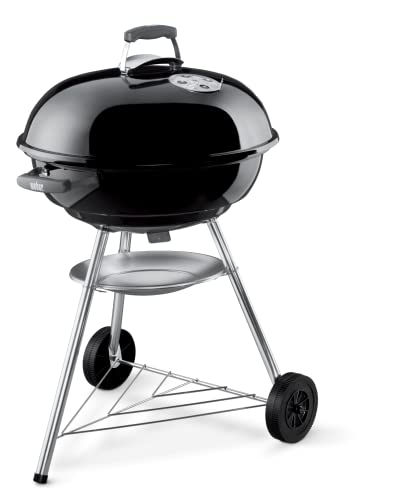
A small charcoal grill gives you the flavor of live fire without needing a big yard. Compact kettles fit on a balcony, folding bowls pack into a car trunk, and cast iron hibachis stay hot for hours. The key is matching the size to the amount of food you cook. Small grills also heat up quickly, which is helpful when you want a fast weeknight cookout.
The six grills below cover a range of designs, from mini kettles to a tabletop barrel-style grill. All of them burn charcoal rather than gas or electricity. Check your building rules before using any charcoal grill on a balcony, since many apartments forbid open flames. For safety, keep any grill on a stable surface and away from anything that can burn. We have not used these products ourselves, so confirm the details on the current listing before buying.
As an Amazon Associate we earn from qualifying purchases. Links below are affiliate links, and they do not change the product information we give.
What to Look For
| Feature | Why it matters |
|---|---|
| Cooking area | A small grate feeds two to four; check the listing for the exact size |
| Vents | Adjustable vents give you control over heat |
| Portability | Locking lids and handles help when you travel |
| Material | Porcelain-enamel and cast iron hold heat and resist rust |
| Stability | Wide legs and a solid base keep a hot grill from tipping |
In this guide
Specs at a Glance
| Model | Type | Size class | Notes |
|---|---|---|---|
| Weber Smokey Joe | Kettle | Small | Compact kettle |
| Weber Jumbo Joe | Kettle | Mid small | Larger grate |
| Weber Go-Anywhere | Portable | Small | Folding design |
| Cuisinart CCG190RB | Portable | Small | Locking lid |
| Lodge Sportsman’s Grill | Hibachi | Small | Cast iron body |
| Char-Griller Akorn Jr. | Kamado style | Small | Insulated shell |
The 6 Best Small Charcoal Grills
Top pickBest for patios and tailgates
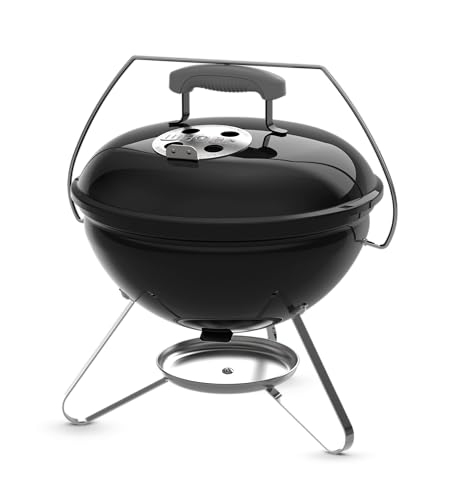
1. Weber Smokey Joe Portable Charcoal Grill
A small kettle-style grill from Weber with a porcelain-enameled lid and bowl. It is lightweight, easy to store and a popular choice for tailgates and patios. Check the listing for the exact grate size on your version.
Suits: patios and tailgates. Strengths: a lid and adjustable vents in a small body. Weaknesses: a limited grate for groups. Skip it if you cook for a crowd.

Best for small families
2. Weber Jumbo Joe Charcoal Grill
A bit larger than the Smokey Joe, with a bigger grate that handles more burgers or a small chicken. It is a step up for those who find mini grills too tight. Review the current listing for the grate diameter and weight.
Suits: small families. Strengths: more cooking room. Weaknesses: a bigger footprint. Skip it if you want the smallest model.


Best for camping and beach trips
3. Weber Go-Anywhere Charcoal Grill
A folding, portable grill designed for camping and picnics. Its legs fold to hold the lid closed so it stays tidy in a bag. Check the listing for the folded size.
Suits: camping and beach trips. Strengths: a folding build. Weaknesses: a simpler lid design. Skip it if you cook on a patio every day.

Best for tabletop grilling
4. Cuisinart CCG190RB Portable Charcoal Grill
A portable charcoal grill from Cuisinart with a locking lid that makes it easier to carry. It targets those who want a tabletop option with a handle. Verify the dimensions and included parts on the listing.
Suits: tabletop grilling. Strengths: a locking lid. Weaknesses: lighter-weight metal. Skip it if you want a heavy build.
View Cuisinart CCG190RB Portable Charcoal Grill on Amazon
Best for a long-lasting tabletop grill
5. Lodge Sportsman’s Grill
A cast iron hibachi-style grill from Lodge that holds heat well and is built to last. It is heavy for its size, so it is better for a permanent spot than travel. Read the listing for the care instructions, since cast iron needs seasoning.
Suits: a long-lasting tabletop grill. Strengths: retains heat. Weaknesses: a heavy body. Skip it if you need a light portable grill.
View Lodge Sportsman’s Grill on Amazon

Best for low and slow cooking in small spaces
6. Char-Griller Akorn Jr. Kamado Charcoal Grill
A smaller kamado-style grill with an insulated shell designed to hold steady heat. It handles grilling and low smoking in a compact body. Check the listing for the size and weight before ordering.
Suits: low and slow cooking in small spaces. Strengths: insulated body and fuel efficiency. Weaknesses: a heavier unit. Skip it if you want a quick, light kettle.

Care and Setup
- Wait until the ashes are cold before emptying them.
- Brush the grate while it is warm.
- Store the grill dry and covered.
- Use a chimney starter to avoid lighter fluid.
- Keep the grill away from walls and railings.
Mistakes to Avoid
- Using a charcoal grill indoors or in an enclosed space.
- Closing the vents fully and snuffing the fire.
- Moving a hot grill.
- Dumping ash into a trash can that is not metal.
Sizing the Grate to Your Household
Grate size is the first decision with a small charcoal grill, and it is easy to get wrong in either direction. A very small grate looks convenient, but it forces you to cook in rounds, and food that is waiting its turn goes cold while the next batch sears. A slightly larger grate costs a little more room on the patio and gives you a cooler edge where you can park finished food.
A practical way to size it is to picture your usual meal. Two people grilling a few burgers or sausages fit on almost any compact grate. Four people with sides such as corn or sliced vegetables need either a larger grate or a plan to cook in two stages. If you like to grill a whole small chicken, remember that it needs room around it as well as under the lid, so look at lid height and not just grate diameter.
Check the listing for the grate diameter and the distance from the grate to the lid. Many buyers compare only the diameter, but a shallow lid can touch thick cuts and block air flow. Also look at how far the grate sits above the coals. If it is fixed and close, you will have little room to manage flare-ups. If it can be raised or lowered, or if the bowl is deep, you gain control.
- One or two people: the smallest portable options are usually enough.
- Small family: look for a mid-small kettle or a model with more grate room.
- Frequent guests: consider whether a compact grill will really keep up, or whether you would be happier with a bigger one.
Finally, think about how you will store it. A grill that is sized for your meals but too awkward to carry out of a closet will end up unused. Match the grate to your cooking and the body to your storage space.
Lump Charcoal or Briquettes in a Small Bowl
Fuel choice matters more in a small grill than in a large one, because there is less space to buffer mistakes. The two common choices behave differently, and neither is wrong. Briquettes are uniform, so they tend to burn at a predictable rate and are easier to measure when you want a long, even cook. Lump charcoal is irregular, usually lights faster and reaches high heat quickly, but the pieces vary in size, so a bag can give uneven results from one cook to the next.
In a compact bowl, a few practical points help. Smaller bowls hold limited fuel, so briquettes that burn steadily can be easier for cooking that lasts more than half an hour. Lump suits quick, hot grilling such as thin steaks, kebabs and vegetables. If you use lump, break very large pieces so they fit the bowl and do not block the vents.
Whichever you choose, read the bag. Some products include added lighting agents or fillers, and the label will tell you what is in them. Flavored or pre-soaked products are not needed for a good fire, and a chimney starter with plain charcoal is a clean way to light.
Store fuel dry, since damp charcoal is slow to light and smoky. Keep the bag closed and off the ground, and avoid leaving it in a damp shed. Burn the amount you need rather than filling the bowl to the brim, because extra lit fuel only wastes charcoal and makes the grill harder to control.
If you plan to use wood chunks for smoke on a kamado-style or kettle-style model, add only a small piece or two, as a compact space fills with smoke quickly and can taste bitter.
Controlling Heat in a Compact Grill
Small grills heat up fast and also swing fast, so learning to read the vents is the skill that pays off most. The bottom vent feeds air to the coals, and the top vent lets heat and smoke out. Opening both raises the temperature, and closing them lowers it. Make small changes and wait a few minutes before adjusting again, because a compact body reacts quickly but still takes time to settle.
Build the fire in a way that gives you two zones. Pile the coals on one side and leave the other side empty. The hot side sears, and the cool side lets thicker foods such as bone-in chicken finish without burning. In a very small bowl, even a narrow cool zone is useful, so keep the pile compact instead of spreading it evenly across the bottom.
Use the lid. Cooking with the lid on and the vents set sensibly cuts down flare-ups, because less oxygen reaches fat that drips onto the coals. It also speeds up cooking. If a flare-up starts, move food to the cool side rather than spraying water, which can throw ash around.
- Light a full chimney only if you need the heat. A half chimney is plenty for a few burgers in a small grill.
- Wait until the coals have a light gray ash before you start cooking.
- Close the vents fully when you finish to smother the fire, then leave the ashes alone until they are completely cold.
For models with insulated walls, such as kamado-style shells, remember that they hold heat longer, so go gently when opening the vents. It is much easier to raise the temperature than to bring it down.
Portable Versus Permanent Spots
Small charcoal grills fall into two broad camps. Some are made to travel, with folding legs, locking lids and lighter metal. Others are heavy and built to sit in one place, such as cast iron hibachis and insulated shells. Many people buy the first type when they really need the second, or the other way around, so decide where it will live before you decide which one to buy.
A travel grill has to be loaded, carried and cleaned up in a hurry. Look at how the lid locks, whether the handles stay cool enough to grip, and whether the legs fold securely. Remember that it must be completely cold before you pack it. Hot ash and embers can burn through a bag or trunk liner, so plan for extra time at the end of a picnic. A metal container for cold ash is a handy item to bring.
A permanent tabletop grill can be heavier, which usually means better heat retention and a sturdier feel. The trade-off is that you will not want to move it often. Place it on a stable, non-flammable surface and keep clear space around it. Do not use any charcoal grill indoors, in a garage, in a tent or in any enclosed area, because charcoal produces carbon monoxide.
If you are unsure, ask yourself these questions:
- Will I carry this more than a few times a year?
- Do I have a safe, level surface at home where it can stay?
- Is weight a problem for me when lifting and storing it?
- Will it be covered in rain, or tucked away dry?
Answering honestly saves you from buying a grill that does not suit how you live.
Cooking Strategies for Small Grates
With limited space, planning the order of the cook matters. Start with foods that take longest and keep them on the cooler side or toward the edge. Add quick-cooking items later, such as sliced vegetables, sausages and thin steaks, so everything is ready together. Let meat rest on a plate while you grill vegetables or buns on the freed space.
Cut food to suit the grate. Smaller pieces cook faster and fit better. Skewers, split chicken thighs, flattened chicken pieces and thin-cut pork chops all do well on compact grills. Very large cuts are harder because they can touch the lid or sit too close to the coals. If you want to cook something big, think about splitting it or using indirect heat with the cool zone and a closed lid.
Prepare before you light. Season food, set out tongs, a brush and a thermometer, and keep a clean plate for cooked food. A small grill leaves little room for improvising once the fire is going.
An instant-read thermometer takes guesswork out of doneness, especially for chicken and thick cuts. Follow trusted food safety guidance for target temperatures for each type of meat.
- Oil the food rather than the grate for cleaner release.
- Do not crowd the grate, since steam from too much food on a hot, small surface slows browning.
- Keep a spare handful of charcoal ready to add if the cook runs long.
Cleaning is easier when you brush the grate while it is still warm and empty the cold ash soon after, so the next cookout begins with fresh airflow.
Choosing a Grill for Where You Will Use It
Small charcoal grills fall into several families, and the place you plan to cook narrows the options quickly. A balcony, a tailgate, a campsite and a patio each ask for something different.
- Kettle-style portables: a lidded bowl on short legs. The lid lets you grill, roast and smoke a little, and the vents give you control over the fire.
- Tabletop barrels and boxes: low and compact, ideal for a picnic table, though they need a heat-safe surface underneath.
- Folding or suitcase designs: collapse flat for a car trunk and suit short trips.
- Hibachi-style cast units: hold heat well and work for small cuts and skewers.
Check your building and local rules before using any charcoal grill on a balcony. Many apartments, housing associations and fire codes restrict open flames, and the rules vary widely.
Cooking Surface and Airflow
Grate diameter tells you how many burgers or skewers fit, but the shape of the fire matters as much. Aim for a two-zone setup by banking coals to one side, giving you a hot area for searing and a cooler area for finishing thicker cuts. Vents at the bottom and top control airflow: open them wider for more heat and close them partly to settle the temperature down. A small grill heats fast and cools fast, so plan your batch so everything is ready at the same time.
Fire Safety and Cleanup Basics
Always follow the maker’s instructions and your local fire guidance. Place the grill on a level, non-flammable surface well away from walls, railings, overhanging branches and dry grass. Never leave a lit grill unattended, keep children and pets back, and have water or a fire extinguisher nearby. Use only lighter methods the manual approves. After cooking, let the coals burn out completely and allow ashes to cool for the time the maker recommends before disposal in a metal container. Brush the grate while warm, empty the ash catcher, and store the grill dry to slow corrosion.
Fuel Options to Consider
Lump charcoal lights quickly and burns hot, while briquettes burn more evenly and for longer. Hardwood chunks add smoke flavor. Keep fuel in a dry, sealed container.
Packing a Small Grill for the Road
For tailgates and campsites, make a short kit list: tongs with long handles, heat-resistant gloves, a metal bucket for ashes, a chimney starter if you use one, a brush, foil and a cooler for raw foods. Let the grill cool before loading it, and wrap it in a bag or a box so soot stays off your seats. Check campground and park rules first, as some areas limit charcoal use during dry weather.
Small Charcoal Grill FAQ
Can I use a charcoal grill on a balcony?
Often not. Check your lease and local rules first.
How much charcoal do I need?
A small grill needs less than a big kettle. Start with a modest pile and add as needed.
Are small grills good for steaks?
Yes, if you build a hot zone and cook in batches.
Do small grills need a cover?
A cover keeps rain and dust out and helps prevent rust.
Is lump charcoal or briquettes better for a small grill?
Neither is better in every case. Briquettes burn evenly and predictably, which suits longer cooks, while lump lights quickly and gets very hot, which suits fast grilling. Read the bag and choose what fits the dishes you cook most.
How do I light a small charcoal grill without lighter fluid?
A chimney starter is a clean method. Fill it with charcoal, light paper or a fire starter under it, and pour the coals into the grill when the top ones are covered in light gray ash. Follow the maker's directions for safe use.
How long should I wait before moving a small grill?
Wait until the grill and all the ash are completely cold, which can take a long time after a cook. Closing the vents helps the fire go out, but never move or pack a grill that still feels warm.
Can I smoke food on a small charcoal grill?
Some models, especially insulated kamado-style ones, can hold lower temperatures for smoking. Others are better for direct grilling. Check the listing for vent design and capacity before expecting long, low cooks.
Why does my small grill run too hot?
Small bowls heat fast, and wide-open vents or too much lit charcoal will push temperatures up. Use less fuel, close the vents partway and keep the lid on to settle the heat.
How do I stop flare-ups?
Trim excess fat, keep a cool zone and use the lid. Move food to the cool side when flames rise instead of spraying water on the coals.
Do I need a thermometer for a small grill?
A lid thermometer is helpful but not essential for burgers. An instant-read thermometer is more useful for checking chicken and thick cuts, and trusted food safety guidance gives the safe temperatures.
How do I clean a cast iron grill?
Follow the maker's care instructions. In general, brush off residue, avoid soaking it, dry it fully and wipe on a thin coat of oil to protect the surface from rust.
The Short Version
For a patio classic, the Weber Smokey Joe. For more space, the Jumbo Joe. For camping, the Go-Anywhere. For tabletop carry, the Cuisinart. For lasting heat, the Lodge. For low and slow, the Akorn Jr.
Choosing for Cooks who want real charcoal flavor from a grill that fits a small space
This guide is written for cooks who want real charcoal flavor from a grill that fits a small space. A small charcoal grill is a deliberate choice: you accept lighting, ash and a little patience in exchange for flavor and heat that small gas and electric grills struggle to match. The space you have, the rules where you live and the number of people you usually feed decide which of these picks makes sense. Keep those three facts in view, because charcoal rewards cooks who plan around them and frustrates cooks who ignore them.
That focus shapes how to read everything that follows. When a section describes a trade-off, weigh it against your own week rather than against an ideal kitchen: your space, your schedule, your tolerance for cleaning and the people you actually cook for. A charcoal grill that fits that reality will be used constantly and without resentment, which is the only definition of a good buy that matters once the novelty wears off.
How the Picks in This Guide Compare, Side by Side
With the criteria above in mind, the picks in this guide separate more clearly than a feature list suggests. Each charcoal grill below was already reviewed on its own terms earlier in this guide; what follows compares them only on what the original reviews themselves state, so you can match a pick to your own priorities without re-reading the whole page.
Weber Smokey Joe Portable Charcoal Grill. The original review positions this pick for patios and tailgates. Its stated strength is a lid and adjustable vents in a small body, and its honest limitation is a limited grate for groups. That combination makes it the natural choice when the strength answers your main problem, and a poor fit when the limitation touches something you do every day. The review’s own advice is to skip it if you cook for a crowd.
Weber Jumbo Joe Charcoal Grill. Choose this one for small families, according to the review above. What it does best is more cooking room; what it does least well is a bigger footprint. In practice that trade-off is worth accepting if your routine plays to the strength, and worth avoiding if your routine runs straight into the weakness. The review’s own advice is to skip it if you want the smallest model.
Weber Go-Anywhere Charcoal Grill. This pick suits camping and beach trips. The review credits it with a folding build, while noting a simpler lid design as the drawback to weigh. Read against the other picks, it is the option for a buyer who values the strength highly enough to plan around the drawback. The review’s own advice is to skip it if you cook on a patio every day.
Cuisinart CCG190RB Portable Charcoal Grill. The original review positions this pick for tabletop grilling. Its stated strength is a locking lid, and its honest limitation is lighter-weight metal. That combination makes it the natural choice when the strength answers your main problem, and a poor fit when the limitation touches something you do every day. The review’s own advice is to skip it if you want a heavy build.
Lodge Sportsman’s Grill. Choose this one for a long-lasting tabletop grill, according to the review above. What it does best is retains heat; what it does least well is a heavy body. In practice that trade-off is worth accepting if your routine plays to the strength, and worth avoiding if your routine runs straight into the weakness. The review’s own advice is to skip it if you need a light portable grill.
Char-Griller Akorn Jr. Kamado Charcoal Grill. This pick suits low and slow cooking in small spaces. The review credits it with insulated body and fuel efficiency, while noting a heavier unit as the drawback to weigh. Read against the other picks, it is the option for a buyer who values the strength highly enough to plan around the drawback. The review’s own advice is to skip it if you want a quick, light kettle.
Two patterns are worth noticing across the list. First, the picks rarely differ by being better or worse overall; they differ by which job they put first, which is why the right choice follows from your routine rather than from any ranking. Second, the limitations are mostly about fit: size against your space, capacity against your batch, or a missing method against a dish you cook often. If a limitation does not touch your life, it is not a reason to reject the pick, and if a strength does not serve your routine, it is not a reason to choose it. Buy for the life you have, and the charcoal grill will feel well chosen every time you use it.
Fire Management Is the Real Feature List
On a small charcoal grill, the features that matter are the ones that help you manage a fire in a compact bowl: vents you can reach and adjust, a grate that sits securely, and a way to add fuel or move coals without dismantling dinner. Read listings with that in mind. A shiny finish or a long accessory list tells you little, while the vent design and the distance between the coals and the grate decide whether you can hold a gentle heat for chicken or build a fierce one for a steak.
Learn your grill’s hot spots deliberately. On an early cook, arrange simple food across the whole grate and note where it browns fastest. Every small grill has a hotter zone, usually near the center of the coal bed or near an open vent, and knowing yours turns guesswork into a plan: sear over the hot zone, then move food to the cooler edge to finish.
Two-Zone Cooking on a Small Grate
Even on a compact grill you can build two heat zones by pushing the coals to one side. The coal side is for searing and for foods that want direct heat; the empty side is a safe harbor where food finishes gently, cheese melts without burning, and finished items wait without overcooking. This one technique solves most small-grill problems, from flare-ups to thick cuts that char outside before they cook through.
- Bank coals before you light them, not after, so the layout is deliberate.
- Keep the lid on for indirect cooking so heat circulates around the food.
- Use the vents to fine-tune: more air means a hotter fire, less air calms it.
- Let the fire settle to glowing coals with a light ash coating before delicate food goes on.
Where a Small Charcoal Grill May and May Not Go
Charcoal brings rules that gas and electric grills do not. Many apartment buildings, balconies and local codes restrict or ban charcoal, so check your lease and local rules before buying, not after the first smoky evening. Never use a charcoal grill indoors, in a garage or in a tent: burning charcoal produces carbon monoxide, which is colorless and odorless and can kill in an enclosed space. That is not fine print; it is the single most important safety fact about this kind of grill.
Choose a stable, non-flammable surface outdoors, away from railings, siding, dry plants and overhangs, and keep water or a fire extinguisher within reach. Think about where the smoke will drift, because a small grill in a tight courtyard shares its smoke with every neighbor’s window.
Ash, Grease and End-of-Season Care
Let ash cool completely before disposal, which can take far longer than people expect, and place it in a metal container rather than a plastic bin or a paper bag. Hot coals hidden in ash have started many avoidable fires. Once cool, removing ash regularly matters for performance as well as safety, because a bowl full of old ash chokes airflow and makes the next fire sluggish and hard to control.
Scrub the grate while it is warm after cooking, wipe or brush out grease, and store the grill covered and dry. A small grill that lives outdoors benefits from a cover that fits it, and from an occasional check for rust on the bowl, legs and fasteners. Catching rust early with cleaning and, where the maker allows, a light protective coating is far easier than rescuing a bowl that has rusted through.
Packing and Moving a Portable Grill
If your grill will travel to parks, campsites and tailgates, judge it by the carry, not the showroom. Legs should lock or fold without wobbling, lids should stay put in transit, and the whole thing should be liftable when it still holds a little ash weight. Plan the extras as a kit kept together: charcoal in a sealed container, a chimney starter if you use one, tongs, a brush, and a small metal container for ash at the site. Leave every site cleaner than you found it, and confirm the fire is fully out and cold before you drive away.
More Charcoal grill Questions, Answered
How do I know when the coals are ready?
Wait until the coals are mostly covered in pale ash and the intense flames have died down. Food cooked over black, flaming coals picks up harsh flavors and cooks unevenly. The exact wait depends on the fuel and the weather, so judge by the look of the coals rather than a fixed number of minutes, and spread or bank them once they are glowing evenly.
Why does my fire keep dying or flaring?
Dying fires usually mean blocked airflow: clear old ash, open the vents, and make sure the coal bed is not smothered. Flares usually mean fat dripping onto hot coals, so trim excess fat, move food to a cooler zone during a flare rather than spraying water, and keep the lid handy to calm flames briefly.
Can I reuse charcoal that did not fully burn?
Pieces that are fully extinguished and dry can sometimes be reused as part of the next fire, mixed with fresh fuel, but they light less predictably and produce more ash. Many cooks prefer to start fresh for an important cook and use leftovers for a casual one. Store any saved fuel somewhere completely dry, and never reuse charcoal that got wet with lighter fluid or rain.
What is the safest way to light charcoal?
A chimney starter with paper or starter cubes avoids lighter fluid entirely and gives evenly lit coals, which is why so many grillers switch to one. Whatever method you use, never add lighter fluid to a fire that is already lit, keep fuel containers away from the grill, and follow the fuel maker’s instructions.
How do I cook for more people than the grate seems to allow?
Cook in waves and use the grill’s zones wisely. Start dense or thick items first, hold finished food on the cooler side or in a warm oven indoors, and choose some dishes that do not need the grill at all. A small grill handles a crowd gracefully when the menu is planned around batches rather than everything at once.
When Something Goes Wrong: A Calm Troubleshooting Order
Every charcoal grill misbehaves eventually, and the order in which you check things decides whether you find a simple cause or chase a phantom fault. Start with the unglamorous basics, because they explain most problems: the plug, the socket, the power switch, and whether the appliance is assembled exactly as the manual shows, with every part seated and every lid, door or basket properly closed. Many modern appliances refuse to start when one part sits slightly wrong, and that refusal is a safety feature doing its job, not a breakdown.
Next, check cleanliness and placement. Blocked vents, crumb-filled trays, greasy seals, overfilled chambers and appliances pushed tight against a wall all produce symptoms that look like faults: weak performance, odd smells, unexpected shut-offs, uneven results. Clean and reposition the charcoal grill, let it cool or rest as the manual directs, and try the simplest job you know well. If it performs that job correctly, the appliance is probably fine and the earlier problem was in the setup, the load or the recipe.
Only then consult the manual’s troubleshooting section, which is written for your exact model and often lists the cause in one line. Keep a note of what you tried and what changed, because that note is gold if you later contact the maker or a repairer. And know the stopping rules: a damaged cord, a cracked safety part, sparks, a strong electrical smell, or a fault that repeats after cleaning and resetting are all reasons to stop using the charcoal grill and contact the maker, not reasons to try once more with your fingers crossed.
- Change one thing at a time, so you learn which change fixed the problem.
- Test with a familiar, simple job before judging the appliance on a new recipe.
- Check whether the problem follows the food, the setting or the appliance itself.
- Keep proof of purchase and the model details with the manual for any support conversation.
Settling In: The First Month of Ownership
The first month with a new charcoal grill sets the pattern for its whole life in your kitchen. In the first week, use it for familiar jobs and stay nearby, learning its sounds, its timing and the way its controls behave when your hands are full. In the second week, try the job you actually bought it for, with your notes from the first week open. By the third and fourth weeks, most owners have a short list of regular uses and a realistic sense of what the appliance will not be asked to do again, and both lists are valuable.
Resist two early mistakes. The first is judging the charcoal grill by an ambitious first attempt: an unfamiliar recipe in an unfamiliar appliance has two chances to go wrong, and neither proves much. The second is neglecting the small maintenance the manual describes because everything is new; habits formed in the first month, such as wiping, drying and storing parts properly, are the ones that keep the appliance pleasant in its second year. A modest routine, repeated, beats an occasional deep effort every time.
Buying Mistakes This Guide Can Help You Avoid
Some mistakes repeat across every category of kitchen appliance, and charcoal grill buyers make all of them. The first is buying for an imagined life: the daily bread baker, the weekly host, the batch cook, when the real life is quicker and simpler. The second is treating the largest or most featured option as the safest choice, when in a small kitchen the safest choice is the one that fits the space, the routine and the washing up. The third is ignoring the manual until something goes wrong, when ten minutes with it on the first day would have prevented the problem entirely.
The fourth mistake is subtler: keeping an appliance that does not suit you because returning or replacing it feels like admitting defeat. A charcoal grill that fights your routine will be used less each month until it is furniture. It is better to recognize a mismatch early, while your options are open, than to spend years working around the wrong tool. The reviews and comparisons in this guide are written to surface those mismatches before the purchase, in plain language about who each pick suits and who should skip it, so take those lines seriously: they are the most honest sentences on the page.
A Short Decision Worksheet Before You Order
Before you order any charcoal grill, spend five minutes on paper with the questions that actually decide satisfaction. First, write down the three jobs you will ask of it most often, in order. Second, write down the space it will live in, with the measurements or limits that space imposes, including access, clearance and any rules your building or household sets. Third, write down the cleaning you are honestly willing to do after a normal use, not after a special occasion. Those three short lists eliminate more wrong purchases than any amount of feature comparison.
Then read the reviews in this guide again with your lists open. For each pick, ask whether its stated strength serves your first job, whether its stated limitation collides with your space or your cleaning tolerance, and whether anything in its description assumes a habit you do not have. The right charcoal grill is usually obvious after that exercise, and if two picks remain tied, choose the one that is simpler to live with: simpler controls, fewer parts, easier cleaning. In small kitchens and busy households, the charcoal grills that get used for years are the ones that ask the least of you on an ordinary day.
- Keep the manual and your own notes together, in the kitchen, not in a drawer in another room.
- After the first week, write down the one thing that surprised you; it is usually the thing a listing never mentioned.
- If a pick needs an accessory to do your main job, count that accessory as part of the decision from the start.
- Check the maker’s returns and support information before you buy, while you still have the choice.
Companion Tools: What Helps, and What You Can Skip
A new charcoal grill often triggers a basket of accessories, most of which a small kitchen does not need. The genuinely useful companions are boring and cheap: a reliable food thermometer for any cooking appliance, heat-resistant gloves or pads sized for your hands, a trivet or board that protects your worktop, and containers that suit the leftovers your household actually produces. For cold appliances, a simple appliance thermometer is the companion that matters, because it turns temperature from a dial position into a fact you can check.
Everything else should earn its place by solving a problem you have already met. Buy the extra rack, basket, liner or lid only after the basic setup has frustrated you in a specific way, not in anticipation of a frustration a listing predicts for you. Accessories bought for a routine you do not have become cupboard clutter, and in a small kitchen clutter is a real cost: it buries the tools you use daily. One careful addition after a month of ownership is worth five speculative ones on the first day.
Living With It Long Term: Care, Spares and Knowing When to Replace
The difference between a charcoal grill that serves for years and one that fades in a season is usually a handful of small habits rather than luck. Keep it clean little and often, dry parts fully before storage, treat seals, coatings and moving parts gently, and fix small issues while they are small: a tired gasket, a wobbling foot, a lid that has started to sit oddly. Check occasionally whether the maker sells the spares your model will eventually need, because a charcoal grill with available spares is a repairable appliance, while one without them is a disposable one waiting for its first worn part.
Replacement has clear triggers, and they are mostly about safety and trust rather than age. Retire a charcoal grill whose cord or plug is damaged, whose safety parts no longer work as the manual describes, whose temperature or timing has become unreliable in ways cleaning does not fix, or whose damaged surfaces shed material or harbor grime you cannot remove. When that day comes, your notes from ownership are the best buying guide for its successor: you will know exactly which of the charcoal grills in a guide like this one suits the life you actually lived with the old one.
Three Habits That Pay Off Immediately
Whatever charcoal grill you choose from this guide, three habits improve results from the very first week. First, read the manual’s safety and cleaning pages before the first use, not after the first problem. Second, keep a small notebook or phone note for settings, times and results, because your own records for your own model beat any general chart. Third, clean and dry the parts you used on the same day, while the job takes a minute, rather than at the weekend, when it takes a soak and a scrub.