A quality range hood does more than glow above the stove. It pulls grease, steam and smoke out of the air, and a good one does that with sturdy metal, filters that clean easily and a motor that keeps going without rattling. Material and fit matter as much as fan strength. A hood that looks good but clatters, or one that is too narrow for the burners, ends up used less than it should be, and a quieter motor and removable filters make daily use far more pleasant.
The six hoods below include under-cabinet models and wall-mount styles from known brands. We have not used these products ourselves, so confirm the width, venting method, duct size and mounting details on the current listing before you buy, and measure your stove and cabinets first.
As an Amazon Associate we earn from qualifying purchases. Links below are affiliate links, and they do not change the product information we give.
What to Look For
| Feature | Why it matters |
|---|---|
| Width | A hood should be at least as wide as the cooktop |
| Venting | Ducted hoods exhaust outdoors; ductless models filter and recirculate |
| Filters | Baffle or mesh filters that are dishwasher-safe save effort |
| Controls and lights | Simple speed controls and bright lights are used every day |
In this guide
Specs at a Glance
| Range hood | Type | Size | Notes |
|---|---|---|---|
| Broan-NuTone 413001 | Under-cabinet hood | 30-inch class | Simple, affordable style |
| Cosmo 5MU30 | Under-cabinet hood | 30-inch class | Stainless steel; multiple speeds |
| Hauslane Chef Series | Wall-mount or under-cabinet | Several widths | Professional style |
| Zephyr Typhoon | Wall-mount hood | Several widths | Stainless steel design |
| Winflo wall mount hood | Wall-mount hood | Several widths | Chimney-style finish |
| Vent-A-Hood | Premium hood | Several widths | Known for heavier builds |
The 6 Best Quality Range Hoods
Top pickBest for simple replacements
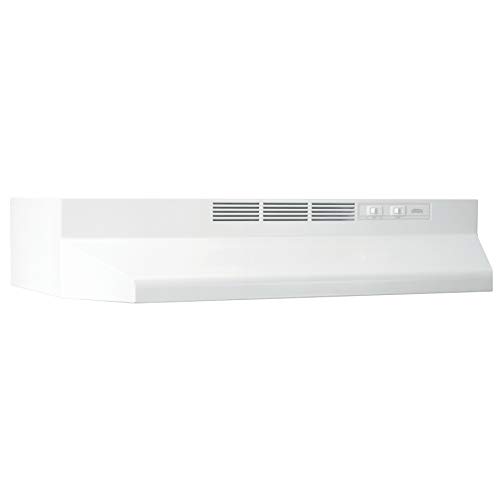
1. Broan-NuTone 413001 Range Hood
A straightforward under-cabinet range hood from the most recognized name in kitchen ventilation. It is a simple, workable choice for replacing a tired hood, and the listing will tell you about the finish and venting options.
Suits: simple replacements. Strengths: a familiar brand and easy fit. Weaknesses: fewer premium touches. Skip it if you want a statement hood.
Best for modern kitchens
2. Cosmo 5MU30 Under Cabinet Range Hood
A stainless steel under-cabinet range hood with multiple fan speeds and lighting. It is aimed at cooks who want a clean look with a bit more capability than the most basic models.
Suits: modern kitchens. Strengths: a stainless build and speed choices. Weaknesses: it is not a wall chimney style. Skip it if you need a custom size.
View Cosmo 5MU30 Under Cabinet Range Hood on Amazon

Best for a serious cooktop
3. Hauslane Chef Series Range Hood
A line of professional-looking hoods that includes under-cabinet and wall-mount versions. They are popular with homeowners who want a robust look, and you should check the listing for the version, size and filter type.
Suits: a serious cooktop. Strengths: a professional build. Weaknesses: variants differ, so read the listing. Skip it if you want the smallest hood.


Best for a design-focused kitchen
4. Zephyr Typhoon Range Hood
A wall-mount stainless steel hood from a brand that specializes in ventilation. Zephyr models are often chosen as design pieces as well as workhorses, so confirm the width, height and duct needs.
Suits: a design-focused kitchen. Strengths: a stylish stainless design. Weaknesses: installation can be demanding. Skip it if you have low ceilings.

Best for wall-mounted installs
5. Winflo Wall Mount Range Hood
A chimney-style wall-mount range hood with a stainless steel finish, offered in a variety of widths. It suits kitchens that need a wall-mounted look without moving up to a high-end brand.
Suits: wall-mounted installs. Strengths: a chimney style at a budget-friendly level. Weaknesses: variants vary. Skip it if you want under-cabinet mounting.
View Winflo Wall Mount Range Hood on Amazon

Best for long-term upgrades
6. Vent-A-Hood Range Hood
A premium ventilation brand that has long marketed its heavy-duty, built-in hoods. Models differ greatly in size and style, so read the listing carefully and confirm the blower and duct details.
Suits: long-term upgrades. Strengths: a heavier construction. Weaknesses: the premium tier. Skip it if you are on a tight budget.

Care and Setup
- Clean the filters regularly, since grease collects quickly.
- Wipe the exterior with a mild cleaner, and dry it to avoid streaks.
- Check the duct outlet for blockages each season.
- Replace the bulbs with the type the maker recommends.
Mistakes to Avoid
- Choosing a hood narrower than the cooktop.
- Using flexible duct where rigid is advised.
- Ignoring the mounting height in the manual.
- Forgetting to check electrical needs before ordering.
Airflow Ratings and Matching the Cooktop
Range hood airflow is usually rated in cubic feet per minute, and a bigger number is not automatically better. What you need depends on the type of cooktop and how you cook. Gas burners and high-heat searing put out more heat and smoke than a light electric cooktop used for simmering. A powerful cooktop paired with a weak hood leaves grease and odors in the room, while an oversized fan can be noisy and may pull more air out than your home can replace.
Check the airflow rating on the listing and read how the maker measures it, since figures are often given at the highest speed and without the resistance of long ducts. Real performance falls when the duct is long, narrow or full of bends. A hood with a decent rating on paper can underperform if the duct run is poor, so treat the listed figure as a ceiling, not a promise.
Think about noise as part of performance. A fan that is too loud to use will end up switched off, so look for multiple speeds and a low setting that is comfortable for everyday cooking. Some listings include sound ratings, which are helpful when compared between models, though methods differ. If you cook with high heat often, your home may need make-up air to replace what the hood removes; local codes can require it for stronger fans, so ask a professional if you are unsure.
Duct Runs, Vents and Installation Planning
A ducted hood is only as good as its duct. Use the size the maker specifies, keep the run as short and straight as practical, and avoid sharp elbows that choke airflow. Rigid metal duct usually performs better than flexible duct, and the manual often says what is required. The outlet should lead outside through a wall or roof cap with a damper, not into an attic or crawlspace.
Before ordering, work out the route. Measure the distance from the hood to the exterior, count the bends and note any joists or beams in the way. Decide whether you will vent through the top or the back, and check that the hood supports the direction you need. If the hood is replacing an old one, look at the existing opening and see whether it matches the new unit. Existing ducts sometimes turn out to be smaller than a new hood requires.
Electrical needs matter too. Confirm the voltage, whether a plug or hardwiring is required and where the power source sits. Mounting height is another key detail: hoods work best when installed within the range the maker states above the cooktop, and too high a position reduces capture while too low a position creates a hazard. If any part of the plan involves cutting walls or wiring, hiring a qualified installer is a sensible step.
Ductless Conversion and Recirculating Filters
Not every kitchen can vent outside. In an apartment or an interior wall kitchen, a recirculating hood pulls air through filters and returns it to the room. This can reduce grease and some odors, but it does not remove heat, moisture or combustion byproducts the way a ducted hood does. It is a compromise, and it works best for light cooking.
Many ducted hoods can be converted to recirculating use with an optional kit, usually involving charcoal filters. Check whether the listing includes the kit or sells it separately, and whether the model is designed for conversion. Charcoal filters wear out and need replacing on a schedule the maker gives, usually depending on how much you cook. A saturated filter does little, so budget for replacements and set a reminder.
If you cook with gas, ask whether a ductless hood suits your setup and safety needs, since combustion gases need proper ventilation. Open a window while cooking when recirculating, especially with heavy frying. If you can run a duct, even a short one, a ducted hood will usually give better results. Weigh the cost of ducting against the ongoing cost and limits of filters before choosing.
Filters, Lighting and Controls in Daily Use
The grease filter is the part you will touch most. Baffle filters are made of stainless steel panels that force air to turn, trapping grease, and they are often dishwasher-safe. Mesh filters are common and effective but can clog and may need more frequent washing. Check how the filters are removed, because a hard-to-reach filter will not get cleaned and a dirty one loses its grease-catching ability. Wash filters on the maker’s schedule, and more often if you fry.
Lighting is easy to overlook. Bright, well-placed lights over the cooktop make cooking safer and easier. Check what type of bulb the hood uses and whether it is replaceable or integrated. LED lights last long and use less power, but if they fail in a sealed unit, repair may be harder. Look for multiple brightness levels if you like a softer glow when the fan is off.
Controls should be simple enough for everyone in the household. Push buttons, rotary dials and touch panels each have advantages; touch panels clean easily but can be fussy with wet hands, while buttons are tactile. Some hoods offer a delay-off feature that clears lingering smoke after cooking, or a timer. Consider whether you want those extras, and whether the controls are reachable when the cooktop is in use.
Style, Finish and Fit With Your Kitchen
Range hoods come in under-cabinet, wall-mount chimney, island and insert styles. Under-cabinet models are compact and fit beneath existing cabinets. Wall-mount chimney hoods are a focal point and need clear wall space and ceiling height. Island hoods hang from the ceiling and need extra support. Inserts sit inside a custom enclosure. Pick the style that matches your layout, then compare models within it.
Measure the width, depth and height carefully. A hood should be at least as wide as the cooktop and a little deeper is better for catching steam. Check the clearance between the cooktop and the underside of the hood, and between the top and the ceiling or cabinets. Chimney styles often come with extensions, so confirm that your ceiling height works with the one you choose.
Finish affects upkeep. Stainless steel resists wear but shows fingerprints and water spots; some finishes hide marks better. Painted or coated surfaces may chip. Clean with the cleaner the maker recommends and wipe along the grain. If you live near the coast or cook with a lot of steam, ask about corrosion resistance in the manual. A hood you like looking at is one you will keep clean, and a well-fitting hood is likelier to do its job for years.
A Measuring and Planning Checklist Before You Order
A range hood is mostly about fit. Many disappointments come from a mismatch of size, height or duct path rather than from the product itself. Walk through this list first.
- Measure the width of your cooktop and compare it with the hood width, since the hood usually matches or exceeds it.
- Note the mounting height recommended by the maker between the cooking surface and the hood bottom.
- Check the ceiling height against the hood and chimney extension length.
- Find out whether the duct leaves through the top or the back, and where it will run.
- Confirm the electrical supply and the control location you will use.
- Decide whether you need a ducted or a recirculating setup and look for the right kit.
Ducting and wiring should follow the maker’s instructions and local building rules. A licensed professional is the right person for anything unfamiliar.
Under-Cabinet, Wall-Mount and Insert Styles Compared
| Style | Best suited to | Things to watch |
|---|---|---|
| Under-cabinet | Kitchens with upper cabinets above the cooktop | Limited depth and height for tall pots |
| Wall-mount chimney | Open walls and statement kitchens | Needs ceiling clearance and a duct path |
| Insert or liner | Custom hood covers | Needs careful matching to the enclosure |
| Island hood | Cooktops without a wall behind them | Support and duct routing from the ceiling |
The listed models lean toward under-cabinet and wall-mount styles, so check that your kitchen layout matches before choosing on looks alone.
Understanding Noise and Controls
Noise is usually described in sones, and a lower number generally means quieter operation, though measuring conditions differ between makers. Listen for the difference between high and low settings in your own kitchen, because rooms with hard surfaces often sound louder. Look at how the controls work. Push buttons, rocker switches and touch panels all behave differently with greasy hands. Built-in lighting is another useful detail, and bulb type matters for replacement.
Filters and Everyday Upkeep
Most hoods use metal mesh or baffle filters that need periodic cleaning, while recirculating models may also use charcoal filters that are replaced. Follow the maker’s schedule and method. Wipe the exterior with a mild cleaner suited to the finish, since stainless steel and painted surfaces react differently to harsh products. Keep a spare filter if the maker sells one so cleaning day does not leave you without ventilation.
How to Read the Specs on the Page
Look past the headline airflow number to the duct size, the number of fan speeds and the dimensions. Remember that a larger fan paired with a small duct will not perform as the number suggests. Check what ships in the box, such as filters, lights and a duct adapter, and whether the listing links to an installation guide you can read first.
A Short Glossary for Hood Shoppers
- CFM: Cubic feet per minute, a measure of how much air a fan can move under test conditions.
- Sones: A unit used to describe how loud a fan seems, with lower values meaning quieter operation.
- Ducted: A system that sends air outside through a duct.
- Recirculating: A system that filters air and returns it to the kitchen.
- Baffle filter: A metal filter designed to catch grease while allowing airflow.
- Make-up air: Fresh air that replaces what a strong hood exhausts, sometimes required by local rules.
- Backdraft damper: A flap that stops outside air from flowing back in.
Cooking Habits That Help Any Hood Work Better
A hood performs best when you use it well. Turn it on before you cook rather than after smoke appears, and leave it running for several minutes once the heat is off. Use the back burners for the smokiest tasks when the hood is shallow, because the plume rises toward the back. Keep a lid on simmering pots when you can, and close nearby windows if they compete with the fan by creating cross drafts. A hood cannot fix everything, but these habits make the most of its capability.
When to Call a Licensed Professional
Hoods involve electrical wiring, ducts through walls or roofs, and sometimes gas appliances beneath them. Follow the maker’s instructions and your local code at every step. If the duct has to pass through exterior walls, joists or roofing, or if you are unsure about circuit capacity, bring in a qualified installer. A hood mounted at the wrong height or ducted poorly can be inefficient and may create other problems, so the extra care pays off. Ask the installer to confirm the final mounting height against the manual before sealing everything up.
Choosing a quality range hood With Your Eyes Open
The shortlist above gives you six starting points, but the right quality range hood is the one that fits your space, your routine and your patience for upkeep. This section slows the decision down and works through it in the order experienced buyers use: how you will actually use the appliance, whether it fits where it has to live, what it asks of you week to week, and how to tell a well-matched model from a merely impressive listing. None of that requires insider knowledge. It requires being honest about your own habits before you spend anything.
Start with the week you actually live
Write down, in plain words, what an ordinary week looks like for this appliance. How many people are you serving, how often will it run, and what is the biggest, most demanding job you will ask of it in a normal month rather than on a holiday? A quality range hood that is perfect for the biggest job of the year can be clumsy, slow to set up or expensive to run for the small jobs that make up most of the year. The picks above are described honestly in terms of who they suit, so match those descriptions to your ordinary week first and let the special occasions come second.
It also helps to name the frustration you are trying to escape. If your current setup is too small, too slow, too loud, too fiddly to clean or too unreliable, that frustration is your best buying criterion, because it tells you exactly what the replacement must fix. Buyers who shop from a clear frustration usually end up satisfied. Buyers who shop from a feature list often end up with an appliance that does many things they never asked for and still leaves the original problem untouched.
Fit, placement and the unglamorous measurements
Measure the space twice and write the numbers down, including the awkward ones: doorways the appliance must pass through, the depth once doors or handles are counted, and the clearance around it that the manual will ask for. Check the supply it needs as well, whether that is an outlet within reach, a fuel connection, ventilation or simply a level, heat-safe surface. Most returns and most installation headaches trace back to a measurement nobody took. Ten minutes with a tape measure is the cheapest insurance in the whole purchase.
Then stand in the space and act out using it. Where will you stand, where will hot or heavy things be set down, and who else needs to move through the room while it is running? A quality range hood lives in a working room, not in a photograph, and the layout questions are far easier to answer before delivery than after. If the honest answer is that the space fights the appliance, a smaller or differently shaped pick from the list above will serve you better than the largest one forced into place.
Running costs and upkeep are part of the price
The purchase is the beginning of the spending, not the end of it. Fuel, filters, replacement parts, accessories and the cleaning products a surface prefers all add up across years of ownership, and they differ more between models than most listings admit. As you compare the picks above, ask what each one will need from you every month and every year, and whether those needs are easy to meet where you live. An appliance whose consumables are simple to find locally is a calmer thing to own than one that depends on a part you have to hunt for.
Upkeep is also time. Some designs wipe clean in a minute and forgive neglect; others reward careful cleaning and punish shortcuts with stains, smells or worn finishes. Neither approach is wrong, but they suit different people. Be honest about which owner you are on a tired weekday evening, because the quality range hood you will still be happy with in its third year is the one whose care routine you never started resenting.
Build quality shows itself in the parts you touch every day: hinges that close without a wobble, dials and buttons that respond the same way every time, handles fixed firmly enough that they never work loose, and surfaces that clean without special products or ceremony. When you compare the picks above, give weight to those everyday details in the descriptions. They are a better guide to living with an appliance for years than any single headline feature.
Support matters as much as construction. Before you buy, check that the brand publishes a real manual you can download, that spare parts and accessories for the model are easy to find, and that warranty terms are written plainly enough to understand without a lawyer. An appliance you can maintain and repair is a different long-term proposition from one that has to be replaced the first time a small part fails, and that difference rarely appears in a product title.
It also helps to buy for the household you actually have. The largest, most feature-heavy model in a category is often the one that fits worst, costs the most to run and spends its life half empty or half used. The descriptions above note honestly who each pick suits and who should skip it; take those notes seriously, because matching the appliance to your routine is most of what satisfaction means a year later.
The Six Picks, Compared Side by Side in Words
Tables are good at specifications and poor at judgement, so here is the same shortlist talked through the way a knowledgeable friend would. Each pick below is summarised using only what this guide already says about it, and each summary ends with the buyer it fits best. Read the whole set before you decide, because the differences between these six are mostly about fit and emphasis rather than a simple ladder from worst to best.
Broan-NuTone 413001 Range Hood
A straightforward under-cabinet range hood from the most recognized name in kitchen ventilation. It is a simple, workable choice for replacing a tired hood, and the listing will tell you about the finish and venting options. As this guide puts it, it suits simple replacements. In practical terms, that makes this pick the natural candidate for the buyer who wants the most rounded starting point and would rather decide by fit than by novelty. If that description sounds like you, this is where to spend your closest reading; if it does not, the honest weaknesses noted above are doing you a favour, and one of the neighbouring picks will almost certainly match your routine better.
Cosmo 5MU30 Under Cabinet Range Hood
A stainless steel under-cabinet range hood with multiple fan speeds and lighting. It is aimed at cooks who want a clean look with a bit more capability than the most basic models. As this guide puts it, it suits modern kitchens. In practical terms, that makes this pick the natural candidate for the buyer who values a familiar, straightforward design and an easy setup over extra features. If that description sounds like you, this is where to spend your closest reading; if it does not, the honest weaknesses noted above are doing you a favour, and one of the neighbouring picks will almost certainly match your routine better.
Hauslane Chef Series Range Hood
A line of professional-looking hoods that includes under-cabinet and wall-mount versions. They are popular with homeowners who want a robust look, and you should check the listing for the version, size and filter type. As this guide puts it, it suits a serious cooktop. In practical terms, that makes this pick the natural candidate for the buyer whose needs are narrower and who benefits most from a focused, simpler option. If that description sounds like you, this is where to spend your closest reading; if it does not, the honest weaknesses noted above are doing you a favour, and one of the neighbouring picks will almost certainly match your routine better.
Zephyr Typhoon Range Hood
A wall-mount stainless steel hood from a brand that specializes in ventilation. Zephyr models are often chosen as design pieces as well as workhorses, so confirm the width, height and duct needs. As this guide puts it, it suits a design-focused kitchen. In practical terms, that makes this pick the natural candidate for the buyer who wants a balance of size, control and everyday convenience in the middle of the range. If that description sounds like you, this is where to spend your closest reading; if it does not, the honest weaknesses noted above are doing you a favour, and one of the neighbouring picks will almost certainly match your routine better.
Winflo Wall Mount Range Hood
A chimney-style wall-mount range hood with a stainless steel finish, offered in a variety of widths. It suits kitchens that need a wall-mounted look without moving up to a high-end brand. As this guide puts it, it suits wall-mounted installs. In practical terms, that makes this pick the natural candidate for the buyer who prefers a traditional approach and proven simplicity to the newest design ideas. If that description sounds like you, this is where to spend your closest reading; if it does not, the honest weaknesses noted above are doing you a favour, and one of the neighbouring picks will almost certainly match your routine better.
Vent-A-Hood Range Hood
A premium ventilation brand that has long marketed its heavy-duty, built-in hoods. Models differ greatly in size and style, so read the listing carefully and confirm the blower and duct details. As this guide puts it, it suits long-term upgrades. In practical terms, that makes this pick the natural candidate for the buyer with the heaviest or most specialised job on the list, who needs the option built for it. If that description sounds like you, this is where to spend your closest reading; if it does not, the honest weaknesses noted above are doing you a favour, and one of the neighbouring picks will almost certainly match your routine better.
Notice what this comparison does not do: it does not crown a single winner for everyone. That is deliberate. The six picks were chosen because they serve six slightly different households well, and the most useful thing a guide can do is help you recognise which household is yours. If two picks still feel tied after this read-through, decide on the practical grounds covered earlier: fit in your space, ease of cleaning, and how simply each one can be maintained and supported where you live.
Getting the Most From It, Day to Day
The first week sets the pattern
Read the manual before the first use, not after the first problem. Manuals for appliances like a quality range hood are short on entertainment and long on the few warnings that genuinely matter, and ten minutes with one will tell you the clearances, the cleaning products to avoid and the small checks to make before each use. Keep the manual somewhere you can find it again, along with a note of the model name exactly as it appears on the appliance itself, because that is the information every spare part, accessory and support conversation will start with.
Start with simple jobs while you learn the appliance’s character. Every quality range hood has its own habits: how quickly it responds, where its hot or cold spots are, which settings you will actually use and which you will ignore. A few easy, low-stakes sessions teach you those habits without an audience or a deadline. By the time you attempt the ambitious job, you will be adjusting from experience rather than guessing, and the results will show it.
Cleaning little and often beats cleaning rarely and hard
Almost every care problem with an appliance like this begins as a small one that was left alone. Wipe spills while they are fresh and the surface is safe to touch, empty and wash the removable parts before residue has a chance to harden or sour, and let everything dry fully before it is put away or closed up. Stored damp, parts and interiors develop smells that are far harder to remove than the original mess was. Stored clean and dry, the same appliance greets you ready for work.
Match your cleaning products to the surfaces you actually have, and be suspicious of anything abrasive near coated, enamelled or polished finishes. Warm water, a soft cloth and ordinary washing-up liquid handle the great majority of everyday cleaning, and they never strip a finish or leave a residue that affects the next use. Save stronger products for the specific problems the manual names, used exactly as it describes, and never mix cleaning chemicals together in search of a stronger effect.
Storing it so it stays ready
Where a quality range hood waits between uses shapes how long it lasts. It wants a dry place, out of direct sun and away from anything that can fall on it, leak onto it or be stacked on top of it. Cords should be looped loosely rather than wound tightly or left dangling where they can be caught. If the appliance will sit unused for a long stretch, clean it thoroughly first, check it over before you put it away, and check it again before you rely on it when it comes back out. Appliances rarely fail in storage; they fail from being stored dirty, damp or damaged and then trusted without a look.
When Something Seems Wrong
Most problems announce themselves early and quietly: a new sound, a smell that was not there before, a result that is suddenly worse than it was last month, or a control that feels different under your hand. Treat those changes as information rather than annoyances. Stop, let the appliance cool or settle as its design requires, and work through the simple causes first: supply, placement, cleanliness and whether anything has been reassembled slightly wrong after cleaning. A remarkable share of faults are one of those four wearing a disguise.
Know where your competence ends. Anything involving gas fittings, internal electrical work, sealed systems or safety devices belongs to a qualified professional, and the manual will usually say so in plain language. There is no saving in a repair that leaves an appliance unsafe, and no embarrassment in calling for help with the parts of a machine that were never meant to be opened at home. Keep receipts and a note of any work done; a simple record makes warranty conversations and future servicing far easier.
One more habit separates satisfied owners from frustrated ones: keep a few honest notes. After the first several uses of your quality range hood, jot down what worked, what took longer than expected and what you would do differently. Appliances reward familiarity, and familiarity fades between uses that are weeks apart. A short note on the inside of a cupboard door or in a phone turns your own experience into a manual written for exactly your kitchen, your ingredients and your schedule, which no manufacturer can write for you.
Think, too, about who else will use this appliance. A quality range hood that only one person in the household understands is a fragile arrangement. Show anyone who will use it the basic routine: how it starts, what never to do, how it should be left when finished and where the manual lives. Five minutes of showing beats a season of small misunderstandings, and it protects the appliance from the well-meant mistakes that cause a surprising share of damage and disappointing results.
Finally, give a new appliance a fair trial before you judge it. The first uses of any quality range hood are partly the appliance learning nothing and you learning everything: timing, quantities, settings and the order of small tasks. Results usually improve noticeably across the first several sessions without anything about the machine changing at all. Judge it on the fifth use rather than the first, and you will be judging the appliance instead of your own learning curve.
Quality Range Hood FAQ
Should my hood be ducted or ductless?
Ducted hoods vent outdoors and handle heavy cooking best. Ductless models filter the air but need replacement charcoal filters.
How wide should a hood be?
At least as wide as the cooktop, and a little wider is better for capturing steam.
Can I install one myself?
Many people can, but ducting and wiring can be tricky. Hire a professional if you are unsure.
How often should I clean the filters?
Monthly for most households, and more often if you fry or sear a lot.
Does a stronger hood always clean the air better?
Not always. Capture depends on size, mounting height and the duct, as well as fan power. A well-matched, properly ducted hood often beats a more powerful one that is poorly installed.
Can I vent a range hood into the attic?
No. Venting should lead outdoors through the proper cap, because moisture and grease inside an attic can cause damage and hazards.
How do I know when to replace charcoal filters?
Follow the maker's schedule, which is usually based on cooking frequency. If odors are no longer reduced, the filter is likely spent.
Is a noisy hood a sign something is wrong?
Some noise is normal at high speeds, but rattling or a grinding sound may point to loose parts, a dirty fan or a damaged blower. Turn it off and check the manual.
Should I leave the hood on after cooking?
Running it for a few minutes afterward helps clear lingering smoke and steam. A delay-off feature can do this for you if the model has one.
What size duct do I need?
It depends on the model, so use the size listed in the manual. Using a narrower duct can reduce airflow and increase noise.
Do I need make-up air?
High-power hoods may need a source of replacement air, and local codes can require it. Ask a qualified installer if your hood is strong or your home is tightly sealed.
How long should a quality range hood last?
There is no honest single answer, because lifespan follows use and care far more than it follows the badge on the front. An appliance that is cleaned regularly, stored properly, used within the limits its manual describes and repaired promptly when small faults appear will outlast a neglected one by years. When you compare picks, treat build quality, available spare parts and clear support as lifespan features, because in practice that is exactly what they are.
What should I check before I order?
Confirm the measurements of your space against the listing, the supply the appliance needs, what is and is not included in the box, and the returns process if it arrives unsuitable. Photograph your space and keep the listing details until the appliance is installed and working. Most disappointment in this category is not about performance at all; it is about a size, a connection or an included accessory that was assumed rather than checked.
Is the most expensive pick always the best one?
No. Higher prices usually buy size, extra features, heavier construction or a quieter, more refined experience, and only some of those will matter to you. The best value in this list is the pick whose strengths line up with your ordinary week. Spending more on capacity or features you will rarely use is not buying quality; it is buying unused potential, and the guides above note plainly where a simpler pick serves just as well.
What should I do on the first day it arrives?
Unpack it where you have room, check it over for damage before anything is thrown away, and keep the packaging until you are sure it is staying. Read the manual, wash or wipe the parts the manual tells you to prepare, and run the simplest possible first job to learn how it behaves. Note the model name and keep the receipt with the manual. That unglamorous first hour prevents most of the problems owners meet later.
How often does a quality range hood need cleaning?
Light cleaning belongs after every use, while residues are fresh and easy to remove; deeper cleaning belongs whenever results, smells or sounds start to change, and before any long period in storage. Exact intervals in the manual outrank any general advice, including this. The pattern that works for most owners is simple: little and often, with stronger cleaning reserved for the specific problems the manual describes.
Can I buy accessories later, or do I need them now?
Start with what the appliance includes and live with it briefly before adding anything. A short period of real use tells you which accessories would solve an actual problem and which would only fill a drawer or a shelf. When you do buy, match accessories to the exact model name, because near-enough fits are a common source of disappointment, and keep the same rule as with the appliance itself: buy for your routine, not for an imaginary one.
When is it worth repairing rather than replacing?
Repair makes sense when the fault is specific, the rest of the appliance is sound, parts are available and the work can be done safely by you or at sensible cost by a professional. Replacement makes sense when faults multiply, when a safety-related part is involved and cannot be put right, or when the appliance no longer fits how you live. Anything involving gas, sealed systems or internal electrics belongs to a professional either way.
Where should I keep the manual and receipts?
Together, in one predictable place, ideally with a photograph of the model label stored on your phone as a backup. That small habit turns every future question about parts, accessories, warranty or servicing from an excavation into a two-minute job. It also helps the next owner if the appliance is ever passed on, which is a kindness that costs you nothing.
The Short Version
For a simple swap, the Broan-NuTone 413001. For a stainless under-cabinet fit, the Cosmo 5MU30. For a professional look, the Hauslane Chef Series. For a design piece, the Zephyr Typhoon. For a wall chimney style, the Winflo. For a premium upgrade, the Vent-A-Hood.
Related Guides
- 6 Best Ducted Range Hoods: Under-Cabinet to Wall Mount (2026)
- 6 Best 30 Inch Range Hoods: Under Cabinet and Wall (2026)
- 6 Best Chimney Hoods for the Kitchen: Wall and Under-Cabinet
- 6 Best Kitchen Exhaust Hoods: Under-Cabinet and Wall (2026)
- 6 Best Vent Hoods for Cooktops: Under-Cabinet and Wall Mount (2026)

