Where to buy
Check the latest price, availability and delivery on Amazon. Orders are placed on Amazon. We may earn a commission from qualifying purchases.
- Best overall: SONGMICS Cube Storage Organizer with Storage Boxes, 12-Cube — Check on Amazon
- SONGMICS Portable Closet, Freestanding Closet Organizer (URYG24BK) — Check on Amazon
- Simple Trending Double Rod Clothing Garment Rack — Check on Amazon
- IRIS USA 3 Drawer Wide Storage Drawer Cart — Check on Amazon
See 2 more Amazon options
- Furinno Reed 5-Tier Closet Organizer — Check on Amazon
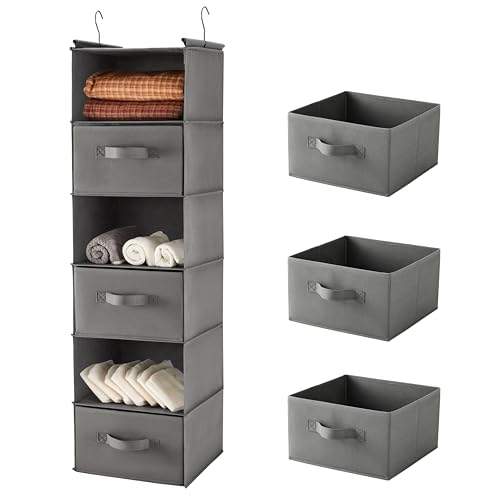
- YOUDENOVA Hanging Closet Organizer, 6-Shelf — Check on Amazon
Read the full guide ↓
Disclosure: As an Amazon Associate, airfryerkitchensupply.com earns from qualifying purchases. Links to Amazon on this page are affiliate links; they cost you nothing extra. Listing details such as price and availability change often, so check the current Amazon listing before you buy.
The best closet organizers for a small bedroom under $75 are not the wall-mounted closet systems in the renovation photos, and this guide will not pretend otherwise. A proper track-and-shelf kit — the ClosetMaid ShelfTrack and Rubbermaid Configurations systems that anchor into studs and reconfigure forever — starts above this budget and climbs from there, which puts every complete wall kit outside this budget. But a small bedroom changes the question anyway. In a small room the scarce resource is not storage in the abstract; it is floor space. Every square foot an organizer stands on is a square foot you cannot walk on, and a closet that measures four feet wide does not forgive a single wasted inch of depth. So the picks below are judged by a stricter standard than capacity alone: how much storage each one buys per inch of floor it takes.
That standard reshuffles the usual winners. Shallow modular cubes that rebuild into a tall, narrow tower suddenly beat wide dresser-style units. A hanging organizer that costs no floor space at all becomes a serious contender rather than a cheap extra. A low shelf unit nine and a half inches deep — sized for the dead strip under hanging shirts — turns out to be the most small-room product in the category. And the two freestanding frames in this guide earn their places only where a small bedroom’s closet is genuinely too small to use, because a frame that stands in the room has to justify every inch it stands on. For most small bedrooms we would begin with the SONGMICS 12-cube organizer, built tall instead of wide, because it arrives with its bins in the box and its 12.4-inch depth is shallower than the closet itself. Below you will find a quick picks table, detailed notes on each of the six products, a comparison table, a buying checklist written for small spaces, the mistakes small-room shoppers make most at this price, and answers to the questions that come up again and again.
In this guide
Quick Picks
Short on time, or comparing several options at once? Each row below names a buyer type and the product that suits it, with a link to the listing.
| Buyer type | Pick | Why it stands out | Link |
|---|---|---|---|
| Best overall | SONGMICS Cube Storage Organizer with Storage Boxes, 12-Cube | Twelve cubes and all twelve bins in one box, rebuildable tall and narrow | Check on Amazon |
| Best when the closet is unusable | SONGMICS Portable Closet (URYG24BK) | A complete closet — two rails plus shelves — in one 44-inch frame | Check on Amazon |
| Best for doubling hanging | Simple Trending Double Rod Clothing Garment Rack | Two tiers of hanging stacked in a 15-inch-deep footprint | Check on Amazon |
| Best drawers | IRIS USA 3 Drawer Wide Storage Drawer Cart | Real drawers on wheels that tuck under the rod and roll out to you | Check on Amazon |
| Best for the dead strip | Furinno Reed 5-Tier Closet Organizer | Only 9.5 inches deep — built for the floor under short hanging clothes | Check on Amazon |
| Best zero-floor-space pick | YOUDENOVA Hanging Closet Organizer, 6-Shelf | Six shelves that hang from the rod you already have, at a budget-tier price — check price on Amazon | Check on Amazon |
How These Picks Were Chosen
The first filter was the budget itself, applied honestly. Every product below is a real Amazon listing that sells at or regularly under $75 in the United States; check the price on Amazon for the current figure on each listing. Anything that called itself a closet organizer but turned out to be a wall-mounted track kit at twice the budget, a single over-door hook strip, or a set of empty bins with nothing to put them in was left out, however good it might be, because it does not answer the search you actually made.
The second filter was footprint, and it is the one that makes this guide different from a general closet roundup. We recorded every pick’s depth and floor area and asked what a small bedroom gets for them. The cube set is 12.4 inches deep — shallower than a standard closet’s interior, so it never eats into the room’s walking space when it stands inside one. The garment rack is 15 inches deep. The drawer cart and the low shelf unit are sized to disappear under clothes that are already hanging. The hanging organizer takes no floor at all. The one pick that spends real floor — the freestanding portable closet, at roughly 44 by 17 inches — is included with its cost stated plainly, because some small bedrooms have a closet so shallow or so oddly shaped that moving the wardrobe out of it is the honest answer.
We did not use these products ourselves. We read the maker listings and specification pages, compared dimensions, materials and stated capacities, and favored products that solve a whole closet job rather than a corner of one. One thing we looked at closely was the load numbers, because at this price they are marketing first and engineering second. A garment rack “rated” to 150 lb and a fabric shelf “rated” to 17.6 lb are both maker claims with no independent test behind them, and the reviews below treat them that way: useful for comparing one listing against another, meaningless as promises. Where a maker publishes a per-part limit — per cube, per rail, per shelf — we print that limit, because it tells you how the product actually wants to be loaded. In a small bedroom there is one more discipline: anything you build tall to save floor must be anchored, and the checklist below says so.
The 6 Best Closet Organizers for Small Bedrooms Under $75
SONGMICS Cube Storage Organizer with Storage Boxes, 12-Cube (ULPC122W01)
Who it suits: Small-bedroom owners whose problem is folded clothes, shoes and clutter — and whose closet floor, or one narrow wall, is the only space available for them.
This is the set that defines the category at this price. You get twelve plastic-panel cubes, each about 11.8 inches on a side, that click together with connectors into the shape you choose. The standard build is three wide by four tall — about 37 inches long, 12.4 inches deep and 49.4 inches high — but in a small bedroom the smarter builds are the other ones: two wide by six tall against a narrow wall, a low bank of six under a hanging rod with the other six stacked beside the door, or an L that turns a dead corner into storage. The panels do not care which shape you pick, and that indifference is the product. Crucially, the box includes twelve collapsible non-woven fabric bins sized to the cubes, which is where most rival sets quietly double their real cost. SONGMICS rates each cube to 22 lb and each bin to 11 lb — maker figures, but sensibly modest ones that match what folded clothes and shoes actually weigh.
For a small room, the number that matters most is the depth: 12.4 inches. A standard reach-in closet is about 24 inches deep, so a cube bank inside it leaves the front half of the closet free for your feet and the door swing; stood in the room itself, a 12.4-inch-deep tower hugs a wall the way a bookshelf does instead of jutting out like a dresser. There are no screws and no wall fixings in the build itself — panels and connectors push together by hand — but a tall, narrow build in a small room should be tied to the wall with a strap or the anti-tip hardware, because a six-high tower of cubes is exactly the shape that a bumped elbow or a climbing child tests. Check the price on Amazon before you buy — cube sets cycle through discounts constantly, so the live listing figure is the one to trust.
- Twelve cubes plus all twelve fabric bins in one box — no second purchase to make it usable.
- Rebuildable panel-and-connector construction: build tall and narrow for a small room, reshape it when the room changes.
- Only 12.4 inches deep — shallower than the closet interior, so it never steals walking space.
- Maker-rated 22 lb per cube and 11 lb per bin, with the limits printed plainly in the listing.
Honest limitation: At 12.4 inches deep the cubes cannot hang anything and do not want heavy loads — a cube stuffed with hardback books or a bin of dumbbells will bow the panel, whatever the rating says. A tall build also needs wall anchoring to be safe.
Choose it if folded storage is the main gap and you have one narrow wall or a closet floor to give it. Skip it if your problem is hanging space, or you want furniture that looks built rather than assembled.

SONGMICS Portable Closet, Freestanding Closet Organizer (URYG24BK)
Who it suits: Small bedrooms whose closet is a token gesture — two feet wide, too shallow for hangers, or given over to the water heater — and anyone renting a room with no usable closet at all.
Where the cube set above organizes the floor, this frame replaces the closet. It is a tube-and-connector metal frame about 44.1 inches long, 16.9 inches deep and 65 inches high, giving you two hanging rails with fabric shelves arranged around them for folded clothes, boxes and shoes. SONGMICS rates each hanging rail to 44 lb and each fabric shelf to 17.6 lb — again maker figures, and the shelf figure is the one to respect, because fabric shelves sag visibly long before a steel rail complains. A thoughtful touch: the middle shelf can be left out so long dresses and coats can hang through, which is the configuration most portable closets forget to allow.
In a small bedroom this pick comes with a condition the general version of this guide does not need: measure the wall it will stand against, and be honest about the exchange. Forty-four by seventeen inches of floor is a real price in a nine-by-eleven room — roughly the footprint of a small desk. It is worth paying when the built-in closet genuinely cannot hold a wardrobe: a closet under 20 inches deep cannot take hangers squarely, and a closet two feet wide holds a week of clothes, not a wardrobe. In that situation the frame is not competing with the closet; it is the closet, and the built-in becomes overflow for luggage and out-of-season boxes. It stands on the floor, assembles without tools from tubes and plastic connectors, and can be broken down flat when you move. The listing’s featured offer has rotated in some of our checks, so check the price on Amazon and confirm a live offer before ordering rather than assuming one is available.
- A complete closet — two rails plus shelves — in one 44-inch freestanding frame.
- No drilling, no studs, no landlord problems; breaks down flat for moving.
- Removable middle shelf lets long garments hang through, a rare allowance at this price.
- At 16.9 inches deep it stands flatter against a wall than most wardrobe furniture.
Honest limitation: It spends about five square feet of your room’s floor, which in a small bedroom is the most expensive currency there is — and the fabric shelves are the weak point, rated by the maker to 17.6 lb each and prone to sagging under heavy stacks.
Choose it if your closet is too small or too shallow to function and you have one wall to give it. Skip it if your closet works and only needs organizing — the cubes, drawers and hanging shelves in this guide fix that for less money and no floor.

Simple Trending Double Rod Clothing Garment Rack
Who it suits: Anyone whose small closet has one rod doing double duty — shirts crushed against coats, trousers folded over hangers — and who needs the hanging doubled without widening the closet.
Small closets waste their height worst of all: one rod at eye level, shirts hanging to mid-thigh, and a tangle of shoes underneath. This rack fixes the geometry by stacking two hanging tiers in the footprint of one. The top rod extends from about 30.5 to 47.5 inches wide, so it can be sized down to a narrow closet or a short stretch of wall — the narrow end of that range is what earns it a place here, because most garment racks start at four feet wide and simply do not fit a small room’s spaces. The middle rod’s height adjusts between roughly 30 and 37 inches: set it high for shirts over trousers, low for a child’s clothes with storage beneath. The frame is 15 inches deep, shallow enough to stand inside many reach-in closets or flat against a wall, and it rolls on casters — in a small bedroom that matters twice, because a rack you can roll aside is a rack you can clean behind and retrieve a dropped shoe from, in a room where you cannot walk around it.
Simple Trending rates the rack to 150 lb, and that number deserves the standard warning: it is a maker claim, not a tested one, and a double rod fully loaded with winter coats is exactly the load that bends light steel tubing over time. Loaded sensibly — everyday clothes across both tiers, the heaviest coats spread rather than bunched — it is a lot of hanging for the money. Check the price on Amazon — this is a product whose price swings hard with promotions, so the live listing figure is the one to go by.
- Two hanging tiers in one footprint — roughly doubles the hanging a single rod gives you, using height a small closet wastes.
- Width extends from about 30.5 to 47.5 inches, so it can be sized down to genuinely narrow closets and walls.
- Only 15 inches deep, and it rolls on casters so it can be moved aside in a room with no spare floor.
Honest limitation: The 150 lb capacity is an unverified maker claim, and light tube steel racks like this one wobble when rolled fully loaded — park it, load it, and roll it empty or nearly so. Inside a closet it also borrows the floor strip under the rod, so check what currently lives there.
Choose it if hanging space is the whole problem and your closet’s height is going to waste. Skip it if you need shelves or drawers as well — the freestanding closet above or the cubes do more jobs.

IRIS USA 3 Drawer Wide Storage Drawer Cart
Who it suits: Small-bedroom owners whose closet has no drawers — which is most small closets — and who cannot spare the floor a real dresser would take.
Every other pick in this guide is open storage: you see everything, and everything sees the dust. This cart is the exception, a plastic chest of three wide drawers on caster wheels, about 21.25 inches wide, 15.75 inches deep and 25.94 inches tall. In a small bedroom its virtues compound. That height slides under a standard closet shelf or beneath a row of short hanging clothes, turning the dead floor zone into the dresser the room has no space for. The drawers are wide enough for folded T-shirts and jeans rather than just small items. And because the unit rolls, it does not need a permanent home: park it in the closet, pull it out to the bed on laundry day, wheel it into the corner when guests come. In a room where every piece of furniture is also in the way of something else, mobility is a feature, not a convenience.
IRIS makes this cart in the United States, and the design is deliberately unglamorous: molded plastic frame, translucent-fronted drawers in the black/clear version, no assembly beyond pushing the casters in. Plastic drawer carts have a known failure mode — drawers that sag and stick when overfilled with heavy loads — so treat each drawer as a home for clothes-weight items, not books or tools, and it will slide happily for years. Check the price on Amazon for the wide cart in the colorway you want — it sits comfortably inside this budget tier.
- Three genuinely wide drawers — the only closed, dust-free storage in this guide, and the dresser a small room cannot fit.
- At about 26 inches tall it fits under closet shelves and short hanging clothes, where floor space is otherwise wasted.
- Rolls on casters, so its home can change by the hour; needs no real assembly; made in the USA by IRIS.
Honest limitation: Molded plastic drawers sag and drag if you overload them; this is a clothes-weight drawer unit, and the translucent fronts show contents rather than hiding them behind a furniture finish. At 21.25 inches wide it also needs a closet at least that wide with a clear floor — measure before assuming.
Choose it if your small closet has no drawers and your small clothes have no home. Skip it if you want a furniture look, or your closet floor is narrower than the cart.

Furinno Reed 5-Tier Closet Organizer
Who it suits: Owners of small reach-in closets whose short clothes hang above a strip of wasted floor — this low, shallow unit is built to occupy exactly that strip, and almost nothing else in the category is.
The Reed is the smallest thinking in this guide, and in a small bedroom that is the highest praise available. It is an open five-cubby shelf unit about 19.5 inches wide, 9.5 inches deep and 31.5 inches tall. Nine and a half inches of depth is the headline: it stands under a row of hanging shirts without the clothes brushing it, fits the shallow closets of older small bedrooms where a standard 12-inch cube would crowd the door, and can even slip into the narrow gap between a closet wall and a dresser that most rooms write off. The five openings take folded stacks, shoe pairs, handbags and small bins, and the design is reversible, so it can be flipped to put the taller opening where you need it. Furinno’s maker rating is about 20 lb per shelf, which is the right scale for what belongs on it. Review coverage of this unit notes the appeal plainly: it is Amazon’s best-selling style of closet add-on because it fits the linen closet, the pantry and the reach-in alike. Its price trail is the softest of the six picks here, so check the price on Amazon and confirm the live figure on the listing before ordering.
What you are buying is particleboard flat-pack furniture, and the review should say so without flinching: it assembles with screws and cam fittings in the usual Furinno way, it will not survive being dragged around loaded, and some buyers report panels arriving with chips — check every piece before you start building, because a return is painless before assembly and annoying after. Set up in place and loaded with clothes-weight items, though, it does the one job it was sized for, and in a small closet it does it in space that was previously holding nothing but shoes and dust.
- The shallowest pick in the guide: about 9.5 inches deep, so it lives under hanging clothes or in narrow gaps nothing else fits.
- Five open cubbies for folded clothes, shoes and bags; reversible orientation for the taller opening.
- Maker-rated about 20 lb per shelf — honest, clothes-scale numbers.
Honest limitation: It is flat-pack particleboard; some buyers report chipped panels out of the box, so inspect before assembling, and do not expect it to survive moves or heavy loads. At 9.5 inches deep it will not take storage boxes or big handbags either.
Choose it if your small closet has wasted floor under short hanging clothes and no depth to spare. Skip it if you need depth for bulky items — the cube set above is the shallow-but-deeper option.

YOUDENOVA Hanging Closet Organizer, 6-Shelf
Who it suits: The smallest closets of all — a single rod in a two-foot alcove — where any product that touches the floor is a product too big, and folded clothes keep ending up in a heap on the shelf or the bed.
Not every closet needs furniture, and in a small bedroom the best organizer may be the one that takes no room at all. This organizer is six fabric shelves, about 12 inches wide, 12 inches deep and 48 inches long overall, that hook over the closet rod you already own and hang down beside your clothes, with side pockets on this version for belts, scarves and small accessories. It takes thirty seconds to install, requires no tools and no floor space — zero, which no other pick in this guide can claim — and when you move it folds flat into a drawer. Each shelf takes a stack of sweaters, T-shirts or jeans, a pair of shoes, or a handbag: the folded half of a wardrobe, given a grid to live in, inside airspace the closet was already paying for.
The trade-offs are the obvious ones for fabric, and in a small closet one of them cuts deeper than usual. The shelves are soft, so they bow under heavy stacks and will not hold books. And the whole organizer borrows about a foot of your rod’s width — in a four-foot closet that is a quarter of your hanging, which is a real price, and the reason this pick ranks last here despite its perfect floor record. Price it honestly against the alternative, though: if your rod has any slack at all, this is a budget-tier pick — check the price on Amazon — and one of the most affordable meaningful closet upgrades there. Buying two — one for clothes, one for shoes and accessories — still leaves most of this guide’s budget unspent, but in a truly tiny closet one, loaded thoughtfully, is the wiser buy.
- Six shelves installed in under a minute — it hangs from the existing rod, no tools, and no floor space whatsoever.
- Side pockets take the belts, scarves and small items that otherwise vanish.
- A budget-tier pick — check the price on Amazon; folds flat when you move.
Honest limitation: Soft fabric shelves bow under heavy stacks, and it consumes about a foot of hanging width — in a very narrow closet, that trade may not be worth it, however free the floor space is.
Choose it if your closet has rod slack and your floor has none. Skip it if your rod is already packed tight, or you need rigid shelves for heavy items.

Comparison Table
| Product | Type | Best use | Link |
|---|---|---|---|
| SONGMICS Cube Storage Organizer, 12-Cube with Bins | Modular cube storage | Folded clothes and clutter, built tall and narrow at 12.4 in deep | Check on Amazon |
| SONGMICS Portable Closet (URYG24BK) | Freestanding closet frame | Replacing a closet too small to use, in one 44-inch frame | Check on Amazon |
| Simple Trending Double Rod Garment Rack | Rolling garment rack | Doubling hanging in a narrow closet, 15 in deep | Check on Amazon |
| IRIS USA 3 Drawer Wide Storage Drawer Cart | Plastic drawer unit | Drawers that tuck under the rod and roll out when needed | Check on Amazon |
| Furinno Reed 5-Tier Closet Organizer | Low open-shelf unit | The wasted floor strip under short hanging clothes, at 9.5 in deep | Check on Amazon |
| YOUDENOVA Hanging Closet Organizer, 6-Shelf | Hanging fabric shelves | Instant compartments with zero floor space | Check on Amazon |
How to Choose a Closet Organizer for a Small Bedroom
- Price the floor, not just the product. In a small bedroom every organizer costs two things: its price and the floor it stands on. A budget unit that takes no floor (the hanging organizer) or nine inches of depth (the Furinno Reed) can be cheaper for your room than a slightly cheaper unit that eats five square feet.
- Measure depth before width. Small closets fail on depth more than any other dimension. A standard reach-in is about 24 inches deep; hangers need roughly 20 inches of it to hang square. Anything you add inside — cubes at 12.4 inches, a rack at 15 — must leave the clothes and the door their share.
- Measure the strip under your hanging clothes. Hang your longest everyday shirt, measure from its hem to the floor, and subtract two inches of clearance. That number chooses between the 26-inch drawer cart, the 31.5-inch shelf unit, and neither.
- Build up, then anchor. Vertical is the small room’s free dimension — a cube tower two wide and six tall stores the same as the wide build on a third of the floor. Anything tall and loaded gets tied to the wall; that is not optional in a small room, where everything tall is also within bumping distance.
- Name the real gap first. Folded clothes, hanging clothes, small items, or shoes — each gap has a different product in this guide, and buying cubes for a hanging problem fixes nothing.
- Read load ratings as maker claims. A headline “150 lb” is untested marketing. The per-part numbers — per cube, per rail, per shelf — are the useful ones, and the lowest of them is your real limit.
- Count the hidden second purchase. Cube sets without bins, racks without shelves, frames without boxes: the anchor pick above was chosen because the box contains the whole system. Price the complete setup, not the frame.
- Leave the rod its share. Hanging organizers and in-closet racks borrow rod width and floor depth from the clothes already there. If the rod is packed end to end, organize the floor and the dead strip first.
- Check the door. Closet doors — swinging or bifold — need their arc. Stand the organizer, close the door, and confirm nothing brushes before you load a single shelf.
Floor Space Is Sacred: Organizing Up Instead of Out
Every storage article tells you to use your vertical space, but in a small bedroom it is not a tip; it is the whole strategy. A nine-by-eleven bedroom has ninety-nine square feet, the bed takes roughly thirty of them, and what remains is a walking path, a door swing and perhaps one wall. An organizer that sprawls — a wide dresser, a deep wardrobe — does not just store your clothes in that room; it evicts you from part of it. The picks in this guide were chosen because they climb instead. The cube set’s standard build is three wide by four tall, but the same twelve cubes stacked two wide by six tall hold exactly the same wardrobe on about twelve square feet less wall and a footprint of roughly 25 by 12 inches. The garment rack doubles hanging by stacking a second rod in the airspace under the first, airspace a small closet was already heating and lighting for nobody. The hanging organizer is the purest version of the idea: six shelves that exist entirely inside the closet’s existing volume, purchased with rod width instead of floor.
Climbing has two honest costs, and a small-bedroom guide should name them. The first is safety: tall, narrow storage must be anchored to the wall, full stop — a six-high cube tower or a loaded frame that can be pulled over by a toddler, a pet or a grabbed sleeve is not a space saving, it is a hazard with good marketing. The second is reach. Storage above about six feet is storage you visit with a step stool, so it belongs to the things you need monthly — out-of-season clothes, spare bedding, the good suitcase — while the daily wardrobe lives between knee and shoulder height. Plan the tower that way when you build it: heavy and daily at the bottom, light and rare at the top. Done in that order, a small closet stops being a smaller version of a big one and becomes a different, taller machine that happens to hold the same clothes.
The Measurements That Decide Everything in a Small Closet
In a large closet, a wrong measurement costs you an awkward gap. In a small one it costs you the product: two inches too deep and the door will not close, two inches too tall and the unit roofs the hanging clothes it was meant to sit under. Three numbers decide nearly every purchase in this guide, and all three take five minutes with a tape measure. The first is interior depth — not the closet’s nominal depth, but the clear depth from the back wall to the inside face of the closed door, minus the swing of a bifold. The second is the under-rod strip: hang your longest everyday shirt on the rod, measure from its hem to the floor, and subtract two inches so clothes do not rest on whatever stands beneath. A standard rod sits about 66 to 68 inches from the floor and shirts hang roughly 38 to 42 inches down from it, which leaves a strip of about two feet — exactly the strip the 26-inch IRIS drawer cart and the 31.5-inch Furinno shelf were sized to argue over. In many small closets the honest answer is under 24 inches, and then neither unit belongs there; the hanging organizer, which spends rod width instead of floor height, or a cube bank on the closet shelf is the real fix.
The third number is rod slack: how many inches of your rod are clothes, and how many are air? A hanging organizer needs about twelve inches of it. A double-rod rack inside the closet needs the floor beneath the rod instead. Knowing which resource your closet actually has spare — height, floor strip, or rod width — is the entire decision, because each pick in this guide spends a different one. Measure all three before you open a single listing, and the right product usually names itself.
When the Closet Is Too Small: Taking Storage Into the Room
Some small bedrooms have a closet that no organizer can save: eighteen inches deep, so hangers jam diagonally; three feet wide, so it holds a week of clothes; or positioned so its door opens into the bed. The honest move then is to stop feeding it and put the wardrobe in the room — carefully, because a small room punishes clutter visually as well as physically. The freestanding SONGMICS frame is the complete version of that move: one 44-inch run against the longest wall, holding the whole wardrobe in the open. The gentler version is a cube tower in the room’s dead corner and the closet demoted to luggage and overflow. Either way, three rules keep room storage from shrinking the room. Keep it shallow — everything in this guide is under 17 inches deep, and that is the ceiling, not a coincidence. Keep it against one wall, so the room reads as a room with a storage wall rather than furniture scattered through it. And keep the tops clear: in a small room, a surface at eye level becomes a shelf by gravity, and a storage unit crowned with clutter makes the whole room feel smaller than the same unit standing clean. The closet you abandon is not wasted, either — it becomes the one place in a small home where bulky, rarely touched things can disappear behind a door.
The Load Numbers Are Marketing: How to Read Capacity Claims
Open any listing in this category and the biggest number on the page is a weight capacity: 150 lb, 200 lb, sometimes an implausible 600 lb. Treat every one of those figures as the maker’s own claim, made under conditions you cannot see — usually a static, perfectly even load on a new unit — and none of them independently tested. That does not make them useless. It makes them comparative: a rack whose maker claims 150 lb is probably built heavier than one claiming 60 lb, and a shelf rated to 17.6 lb is telling you, honestly, that it is a fabric shelf for clothes and not a platform for books.
The numbers that actually predict your experience are the per-part limits and the failure modes behind them. Cubes fail by bowing panels when one cube is stuffed far past its share. Fabric shelves fail by sagging in the middle, which is cosmetic until it dumps a stack sideways. Light steel racks fail by bending at the rod and loosening at the joints when rolled while loaded. Plastic drawers fail by sagging until they stick. None of these failures happen at the headline number; all of them happen at the overloaded part. In a small bedroom there is an extra reason to load honestly: your storage is tall, narrow and close to where you sleep and walk, so a part that fails does not fail into empty space. Load each part the way its own rating suggests, spread heavy items across parts rather than stacking them in one, and a sub-$75 organizer will hold its shape for years.
What $75 Cannot Buy: The Honest Ceiling
It is worth stating plainly what is not in this guide, because shoppers searching at this budget often go looking for it: a complete wall-mounted closet system. The track-based kits from ClosetMaid’s ShelfTrack line and Rubbermaid’s Configurations line — steel rails anchored to studs, reconfigurable shelves and rods, the works — are the right answer for a permanent closet overhaul, and on Amazon they start above this budget and run well above it for the larger kits. No complete kit of that kind verifiably sells under $75, so none is linked here, and any listing that promises a full wall system at this price is selling a single shelf or a starter fragment, not the system in its photos.
The same honesty applies at the furniture end. A wooden dresser, a wardrobe cabinet with doors, or a closet island with real drawers starts above this budget and usually far above it — and in a small bedroom, most of them would be the wrong purchase anyway, too deep and too wide for the floor they would stand on. What $75 genuinely buys — and the six picks above are the proof — is the organization layer: the cubes, drawers, racks and shelves that make the closet you already have work like a system, in footprints a small room can afford. For renters, dorm rooms, kids’ closets that will be rethought in two years, and small spare rooms, that layer is not a compromise version of the real thing. It is the real thing, at the price where it actually sells.
Common Buying Mistakes
- Buying by capacity instead of footprint — ordering the organizer that holds the most, then discovering it takes the floor the room could not spare.
- Skipping the depth measurement and finding the closet door will not close over a cube bank or rack that “looked standard size” in the photos.
- Building a cube tower tall to save floor, then skipping the wall anchor because it “feels sturdy” empty; loaded and bumped is the test it has to pass.
- Trusting the headline load number and stacking a rack or shelf to its “rated” total in one spot, instead of spreading weight across parts.
- Buying cube storage to solve a hanging problem, then wondering why the shirts are still crushed on one rod — cubes are for folded things, full stop.
- Putting the drawer cart or shelf unit under hanging clothes without measuring the strip, so shirts rest on top of it and both the clothes and the unit lose.
- Loading fabric shelves with books, tools or storage boxes of hardware — the sag is permanent and the shelf never recovers.
- Comparing cube sets by cube count alone and missing that one set includes its bins and the other charges extra for them.
- Rolling a fully loaded garment rack across the room; the casters are for positioning it empty, and the joints pay for every loaded trip.
- Filling every surface the new storage creates — in a small room, a cluttered top at eye level makes the whole room feel smaller than before the organizer arrived.
Final Recommendation
- Most small bedrooms: SONGMICS Cube Storage Organizer with Storage Boxes, 12-Cube, built tall and narrow.
- Closet too small to use: SONGMICS Portable Closet (URYG24BK).
- Hanging space only: Simple Trending Double Rod Clothing Garment Rack.
- Missing drawers: IRIS USA 3 Drawer Wide Storage Drawer Cart.
- Wasted floor under shirts: Furinno Reed 5-Tier Closet Organizer.
- No floor to give at all: YOUDENOVA Hanging Closet Organizer, 6-Shelf.
Our top two are the SONGMICS 12-cube set for anyone whose closet needs compartments and the SONGMICS portable closet for anyone whose closet is too small to be one, because between them they cover the two searches that bring most small-bedroom owners to a guide like this: organizing the closet you have, and replacing the one that cannot be organized. If your problem is narrower — only hanging, only drawers, only the dead floor under your shirts, only a rod with slack and a floor with none — the matching single-purpose pick above will serve you better than either. None of these products will turn a small reach-in into a boutique dressing room, and they do not try to. They are the organization layer, honestly priced and honestly sized: measure your depth, your under-rod strip and your rod slack, respect the per-part load limits, anchor anything tall, check the live price on the listing, and order the one that spends the space your room actually has spare.
Frequently Asked Questions
Can you really organize a small closet for under $75?
Yes — small closets are where this budget goes furthest, because the space to organize is small too. One cube set, or a hanging organizer plus a drawer cart, covers the folded clothes, small items and shoes in most small reach-ins for less than this budget. What $75 will not buy is a wall-mounted track system; those kits start above this budget. And if the closet is too small to function at all, a single freestanding frame is the whole answer at this price.
What is the best organizer when there is no floor space at all?
The YOUDENOVA hanging organizer in this guide: six fabric shelves that hook over the existing rod and take zero floor. Its price is about a foot of rod width, so it suits a closet with some hanging slack. If the rod is packed too, the fallback is a cube bank on the closet’s top shelf — storage that lives in volume the closet already has.
Are cube organizers strong enough for jeans and shoes?
Yes — that is exactly their load class. The SONGMICS set in this guide is maker-rated at 22 lb per cube and 11 lb per bin, which covers a stack of jeans or several pairs of shoes per cube comfortably. Where cubes fail is concentrated heavy loads: books, tools and gym weights bow the panels. Keep cubes for clothes-weight storage and they hold their shape.
Will a garment rack fit inside a small reach-in closet?
Often, yes. A standard reach-in closet is about 24 inches deep; the Simple Trending rack in this guide is 15 inches deep and can be sized down to about 30.5 inches wide, so it fits inside many small closets with room for the door to close. Measure your closet’s clear depth and door swing first, and remember the rack takes the floor strip under the rod as its price.
Should I trust the weight capacity in a listing?
Treat it as a maker claim, not a tested fact — there is no independent standard behind the headline numbers at this price. Use the per-part ratings (per cube, per rail, per shelf) as your loading guide, spread heavy items out, and expect fabric shelves and plastic drawers to complain by sagging long before anything breaks. If a number looks implausible for the materials, it is.
Is it safe to stack storage high in a small bedroom?
Yes, with one non-negotiable condition: anchor it. A tall cube tower or loaded frame must be tied to the wall with a strap or anti-tip hardware, because in a small room tall storage stands close to beds, children and passing elbows. Load heavy items low and light items high, and a vertical build is the safest way to buy storage without buying floor space.
What if the organizer does not fit my closet?
Measure twice before you order — clear depth, the height under your shelf and rod, and the door swing — and read the return terms on the listing before opening the packaging. Cube systems are the forgiving option here, because a build that does not fit can usually be rebuilt into a shape that does, which is one more reason they anchor this guide.
- Best Closet Organizer Under $30
- Best Closet Organizer Under $75
- Best Closet Organizer For Apartments Under $75
- Best Blackout Curtains For Small Bedrooms Under $75
Related Guides
- Best Closet Organizer For Small Bedrooms Under $30
- Best Closet Organizer For Small Bedrooms Under $100
- Best Closet Organizer For Small Bedrooms Under $200
- Best Closet Organizer For Small Bedrooms Under $400
- Best Closet Organizer For Small Bedrooms Under $700