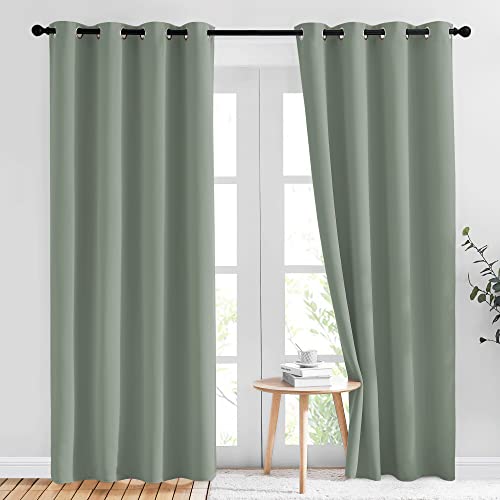
Where to buy
Check the latest price, availability and delivery on Amazon. Orders are placed on Amazon. We may earn a commission from qualifying purchases.
- Best overall: TWOPAGES Liz Linen Custom Curtain with Blackout Lining, 1 Panel — Check on Amazon
- HPD Half Price Drapes Signature Velvet Blackout Curtain, 100″W x 108″L, 1 Panel — Check on Amazon
- Vision Home Pinch Pleated Full Blackout Curtains, 40″W x 84″L, 2 Panels — Check on Amazon
- SwitchBot Curtain 3 (Rod) Automatic Curtain Opener, 1 Motor — Check on Amazon
See 2 more Amazon options
- Topfinel Pinch Pleat 100% Blackout Linen Curtains, 52″W x 90″L, 2 Panels — Check on Amazon
- NICETOWN 100% Blackout Curtains with Black Liner, 52″W x 84″L, 2 Panels — Check on Amazon
Read the full guide ↓
Disclosure: As an Amazon Associate, airfryerkitchensupply.com earns from qualifying purchases. Links to Amazon on this page are affiliate links; they cost you nothing extra. Listing details such as price and availability change often, so check the current Amazon listing before you buy.
Four hundred dollars is the budget where blackout curtain shopping stops being about curtains and starts being about allocation — and in an apartment, allocation has a landlord. Everything this tier sells has to survive two tests a house never applies. The first is the lease: no screwed-in ceiling tracks without permission, a street-facing appearance your building may dictate, hardware you may not be allowed to upgrade, and a tenancy that ends on a date printed in a contract. The second is the move: whatever you hang will one day come down, get packed, and be asked to fit a different window in a different building. The honest starting point is the one this category always reaches — darkness itself is cheap. A lined pair that blocks essentially all the light that hits the fabric sits at the value end of Amazon’s curtain range, and no curtain at any price blocks the light that comes around the edges. So $400 cannot buy a darker rental bedroom than a value-tier pair can. What it can buy is everything around the darkness: two made-to-order panels cut to your exact measurements — with a non-returnable warning that matters twice as much when the window is not yours — a pair of extra-wide velvet panels for the balcony slider, the tailored pleated look repeated across every window in the unit, or the one genuinely new capability at this tier, a battery motor that opens and closes the curtains on a schedule without a single wire, screw or landlord conversation.
So the six picks below are organized as ways to spend, re-judged for rental life. For a renter on a long lease with one architectural window, we would start with the TWOPAGES Liz custom panel ordered with its blackout lining — at this budget the configured pair finally fits inside the tier for one wide or tall window — with the lease test in its review applied before the measuring tape comes out. If darkness is the whole job, the NICETOWN lined pair does it at the value end of the range against any streetlight, and the same budget covers the whole unit several times over. And if the real problem is that the curtains stay open because nobody can be bothered, the SwitchBot motor is the pick that changes the habit rather than the fabric — and the only premium upgrade in this guide that installs with clips and leaves with you. Below you will find a quick picks table, detailed notes on each of the six, a comparison table, a renter’s buying checklist, the lease test for custom panels at this price, an honest account of motorization without wiring, the whole-apartment allocation, the mistakes renters make most at this budget, and answers to the questions that come up again and again.
In this guide
Quick Picks
Short on time, or comparing several options at once? Each row below names a renter type and the product that suits it, with a link to the listing. Note the configuration as you read: two of these picks are sold as a pair, two as a single panel, one as a made-to-order panel cut to your measurements, and one is a motor that moves curtains you hang separately — and in an apartment, which of those you are holding matters again on moving day.
| Buyer type | Pick | Why it stands out | Link |
|---|---|---|---|
| Best overall | TWOPAGES Liz Linen Custom Curtain with Blackout Lining, 1 Panel | Made-to-order size, sewn pinch pleats and your choice of blackout lining; a configured pair for one window fits inside this budget — run the lease test first, and check price on Amazon | Check on Amazon |
| Best velvet, widest windows | HPD Half Price Drapes Signature Velvet Blackout Curtain, 100″W x 108″L, 1 Panel | One extra-wide lined velvet panel per opening — the balcony-slider sweep; check the current price on Amazon | Check on Amazon |
| Best premium ready-made | Vision Home Pinch Pleated Full Blackout Curtains, 40″W x 84″L, 2 Panels | Flocked blackout lining, weighted hems and permanent pleats in sizes to 120 inches long; check price on Amazon | Check on Amazon |
| Best automation | SwitchBot Curtain 3 (Rod) Automatic Curtain Opener, 1 Motor | Clips onto your existing rod — no wiring, no drilling — and opens or closes the curtains on a timer; check the current price on Amazon | Check on Amazon |
| Best tailored look, whole unit | Topfinel Pinch Pleat 100% Blackout Linen Curtains, 52″W x 90″L, 2 Panels | Lined pinch pleats sold as a returnable pair at the value end of this guide, so one pair after another stays well inside the budget — and standard sizes move with you; check price on Amazon | Check on Amazon |
| Best true blackout, whole unit | NICETOWN 100% Blackout Curtains with Black Liner, 52″W x 84″L, 2 Panels | A sewn-in black liner makes even pale colors fully dark; a value-tier pair — check price on Amazon — so the budget covers room after room | Check on Amazon |
How These Picks Were Chosen
The first filter was the budget, applied to the configuration you would actually buy and to the job the money is doing. Every product below is a real Amazon listing whose relevant configuration — a pair, a single panel, a made-to-order panel in a typical bedroom size, or the motors for one window — sells at or under $400 in the United States, and most sell far under it; the guide’s premise is that at this tier the interesting question is how the $400 divides, so each review states plainly what configuration a whole window, or a whole apartment, takes in that product. Curtain listings quote the smallest, plainest version of themselves: the headline price is usually the narrowest width, the shortest drop and, on custom listings, no lining at all. Prices also move with size, colorway and promotion, so this guide does not print figures that would go stale — check the current price on Amazon for the configuration you are actually buying.
The second filter was the word “blackout” itself, which the curtain industry uses loosely enough to be nearly meaningless. Five of the six picks block light by construction: a sewn-in black liner (the NICETOWN), a plush blackout lining behind velvet (the HPD), a flocked blackout lining behind a linen-blend face (the Vision Home), a lined pinch pleat (the Topfinel), or a blackout lining you select on a made-to-order panel (the TWOPAGES). The sixth pick, the SwitchBot motor, blocks no light at all and is here for a stated reason: at this budget the binding constraint on most blackout setups is not fabric but behavior — curtains that are never closed block nothing — and automation is the one purchase in this guide that addresses that directly. Anything whose blackout claim we could not trace to a construction detail was left out, and one famous name we wanted in this guide, TWOPAGES’ Patti panel in genuine 100 percent Belgian flax linen, is discussed by name in the allocation section below and deliberately not linked: its Amazon listing is real, but repeated checks found no featured offer on it, and this series does not link listings it cannot verify.
The third filter was the apartment itself, and it re-ordered this guide. We asked of every pick: Can it hang on the hardware a lease tolerates — the rod that is already there, or one the landlord has approved? Does it need wiring, drilling or a permanent install of any kind? What does the street see when it is closed? And what happens to it at the end of the lease — does it pack flat and fit the next apartment’s standard window, or is it a top-of-budget pair of panels cut for a window in a building you no longer live in? Where a pick fails a renter test, the review says so in plain terms: the best product in this guide is also the only one that cannot be returned, and the most portable premium here is a motor that clips off in a minute and works in the next home unchanged. Weight matters too, and not as a shipping detail: in blackout curtains, weight is most of the mechanism, and it is also what decides whether the rod your landlord installed stays on the wall.
The 6 Best Blackout Curtains for Apartments Under $400
TWOPAGES Liz Linen Custom Curtain with Blackout Lining, 1 Panel
Who it suits: Renters on a long or renewing lease whose window defeats ready-made sizes — too wide, too tall, a sliding door, an arched or angled frame — and who expect to live with that window long enough for a made-to-order pair to pay for itself.
The Liz is the one product in this guide that works the way curtains used to be bought: you give the workroom your measurements and they make the panel. On Amazon’s TWOPAGES storefront you choose the width and length, one of eight header styles (pinch pleat, goblet, tab top, back tab, rod pocket, flat hook and two grommet finishes), and — the decision this guide cares about — the lining. The options run from unlined, which the brand itself says filters only about 60 percent of light, through privacy and room-darkening linings up to blackout and thermal blackout. Order it with the blackout or thermal blackout lining and the Liz becomes a genuine blackout curtain with a linen-blend face in 38 colors, its pleats memory-trained so the folds hang in even columns instead of the crumpled accordion a cheap pleated panel arrives as. At the $200 tier this product was a one-panel decision for a renter; at $400 it becomes a whole-window one — and the window it suits best in a rental is the one ready-made sizes genuinely cannot dress: the wide picture window, the floor-to-ceiling loft glass, the slider with an odd drop. A curtain that fits is a curtain whose edges do not leak, and on the one architectural window a unit often has, fit is the whole game.
The pricing needs the custom caveat stated plainly, because custom pricing is a formula, not a number: the cost builds from a base configuration plus size, header and lining add-ons, times the number of panels. The headline figure on the listing belongs to the smallest, plainest, unlined version — check the current price on Amazon once you have configured the panel you actually want. Configured with the thermal blackout lining this guide recommends, a pair for one wide bedroom window sits at the top of this budget band, with the measuring risk described below as the real cost of admission. Now do the renter’s reasoning on top of it: that is a top-of-budget spend on a window you will hand back. Over a long, multi-year lease it has years to repay itself as the best-dressed window you have ever rented. Over a short remaining term it is a heavy outlay for an object that will fit no window in your next home. Same curtain, same window — the lease is what changes the answer, which is why the lease test section below exists.
- Made to your exact width and length, with eight header styles including pinch pleat and a ceiling-track-friendly flat hook.
- Lining is a real choice: select blackout or thermal blackout and the panel is a true blackout curtain, not a room darkener.
- At this budget the configured pair fits: even with the thermal blackout lining, one window done properly stays inside this tier — check the current price on Amazon for your configuration.
Honest limitation: It is sold per panel, made to order with a production wait, and — as the listing states — returns are not accepted for non-quality issues, so a measuring error is yours to keep. For a renter the sharper edge of the same fact is that a pair cut for this apartment’s window may fit no window in the next one, and at this tier the stranded amount is the whole budget, not a panel’s worth. One install note belongs here too: the most tailored hang, the flat-hook header on a ceiling track, usually means screwing a track to the ceiling — that is a landlord conversation, not a purchase. On rings or a rod, the panel itself violates nothing typical. The headline starting figure also excludes the lining this guide is recommending; budget for the configured panel, not the door-opener version.
Choose it if your lease has years to run, one window matters more than the rest of the unit combined, and you have measured it twice. Skip it if your tenancy is a year or less, you might move soon, or your measurements are a guess — start with a returnable ready-made pair instead, and let the custom pair wait for a home you will stay in.

HPD Half Price Drapes Signature Velvet Blackout Curtain, 100″W x 108″L, 1 Panel
Who it suits: Renters whose bedroom opens onto a balcony or patio through a sliding glass door — the opening apartment bedrooms actually have — and anyone who wants the weight, matte depth and hush of real velvet drapery rather than a printed imitation, on more than one opening, which is what the bigger budget is for.
Half Price Drapes built its name on one idea: drapery fabrics and constructions that used to be trade-only, sold at consumer prices. The Signature Velvet is its flagship — a polyester velvet face with a plush blackout lining behind it, which deal coverage of this exact extra-wide panel describes as 100 percent blackout. The configuration linked here is the statement one: a single panel 100 inches wide by 108 inches long. In an apartment that configuration has a specific job no pair in this guide does as cleanly — it covers a sliding door in one continuous sweep of velvet, with no center meeting point for the door’s light to leak through, and it draws to one side the way a door curtain must. Velvet earns its place in a blackout guide on physics as much as looks: it is the heaviest common curtain fabric, it hangs in straight columns that seal against the wall, and the pile swallows the stray light that flat weaves reflect around a room. The header on this extra-wide version is a grommet top, so it slides open and closed daily without a fight — exactly what a door curtain does twice a day, every day.
This panel sits in the middle of the guide’s price band — check the current price on Amazon, because panels in this line move around within their tier. At the $200 tier, a pair of these was a straddle against the budget line. At $400 the straddle disappears and the allocation opens up: a pair for the slider, plus a standard window dressed in the same velvet family, with room to spare; or two wide openings done in one order. One panel is a purchase; at this budget, the HPD becomes a scheme for the whole glass side of the unit.
- A single 100-inch-wide panel covers sliders and wide windows without a center gap — the balcony-door solution.
- Velvet face over a plush blackout lining — the heaviest, most light-sealing construction in this guide.
- Sits mid-band for a panel of this size and construction — check price on Amazon — so pairs and second openings fit this budget comfortably.
Honest limitation: Sold per panel, and the panel is genuinely heavy, so it wants a properly anchored rod; it will defeat a tension rod and test any hardware a landlord installed casually. The grommet header also leaves the usual row of small light gaps along the top unless the rod is mounted high and wide — a mounting renters may need permission for. A pair plus a second opening can still crowd the budget, so check the current price on Amazon before planning the whole wall. And on moving day this is the bulkiest pack in the guide: a 100 by 108 inch velvet panel wants rolling, not folding, if it is not to arrive creased.
Choose it if your bedroom’s big opening is a sliding door or a genuinely wide window and the rod above it is real. Skip it if your windows are standard width — the standard 50-inch Signature Velvet panels cover those for less — or if your only mounting option is a tension rod that will bow under the weight.

Vision Home Pinch Pleated Full Blackout Curtains, 40″W x 84″L, 2 Panels
Who it suits: Renters who want the tailored pleated look in a ready-made pair with a more finished construction than the value lines — weighted hems, permanent pleats, a flocked blackout lining — and renters whose windows run long, because this line’s size grid reaches where most pairs stop.
Vision Home is the premium end of ready-made on Amazon, and the construction shows where the extra money goes. The face is a linen blend — the listing specifies 90 percent recycled polyester and 10 percent linen — and behind it sits a separate blackout lining with a flocked finish, so the blocking is done by a layer, not by the face fabric’s density. Each panel carries seven permanent pinch pleats and a weighted bottom hem, which is the unglamorous detail that separates curtains that hang in columns from curtains that flare at the bottom like a skirt. Hooks are in the box, the header also offers a back-tab option, and the brand cites independent testing reporting no detected formaldehyde in the fabric or lining — a checkable claim of a kind this category rarely makes. The size grid is the other half of the pick, and the renter’s half: alongside standard pairs, the line runs to 60-inch-wide single panels and lengths up to 120 inches — the tall-window territory of loft conversions and older buildings that usually forces you into custom, here available in a pair you can return.
The linked configuration is the 40 by 84 inch pair, which sits in the lower-middle of this guide’s band — check the current price on Amazon. That positions it precisely for a renter: the most finished ready-made pair in this guide, priced well below the configured custom route, so the budget still covers several windows in it, or a couple of windows plus the motors further down — all of it returnable, standard-sized, and portable to the next unit. One caution keeps it honest: the wide and long configurations are sold per panel, so a 60 by 120 single is a different purchase from the pair linked here — check the price of the configuration you are actually buying, as always in this category.
- Flocked blackout lining behind a linen-blend face — pale colors that genuinely darken, with a tailored pleated hang.
- Weighted bottom hems and seven permanent pleats per panel; hooks included, back-tab option on the same line.
- Size grid runs to 60-inch widths and 120-inch lengths; check the current price on Amazon for the size you need.
Honest limitation: The line’s larger configurations are per-panel — the pair pricing that makes this pick such good value does not apply to the 60-inch singles, so check the price on Amazon for the exact configuration. The recycled-polyester face is also a linen look and feel, not the natural-fiber article. For renters there is one more honest note: the longest lengths are bought for this building’s tall glass, and a 120-inch pair is a less portable purchase than the standard sizes below.
Choose it if you want the most finished ready-made pair here, especially in long lengths your lease’s windows actually need. Skip it if the standard sizes in the Topfinel below fit your windows and your eye — the darkness is the same, and the difference is finish, not light.

SwitchBot Curtain 3 (Rod) Automatic Curtain Opener, 1 Motor
Who it suits: Renters whose blackout curtains fail at the human step — hung perfectly, then left open through a bright morning because closing them is a chore — and anyone who wants the bedroom dark at a set hour and bright at wake-up without touching a panel, in a home where running a wire or drilling for a motorized track is simply not on the table.
This is the one pick in the guide that is not a curtain, and it is included with that stated in the open, because it buys the one thing no fabric at any price can: consistency. The Curtain 3 is a small motorized unit that clips onto an existing curtain rod — the linked version is the rod model — and drives the panel along it. Nothing about the install touches the building: no wiring, because it runs on a rechargeable battery; no drilling, because it clamps to the rod that is already there; no modification a landlord could object to, because at move-out it unclips in a minute and leaves the window exactly as found. The maker’s specifications, as summarized in current review coverage, rate it for curtains up to about 8 kilograms per unit, with a quiet mode for bedroom use; it works over Bluetooth with the SwitchBot app and timers out of the box, and adds voice-assistant and Wi-Fi control if you also own the brand’s hub, sold separately. Set a schedule once — close at bedtime, open gradually at wake-up — and the blackout setup you already own starts performing every day instead of on the days you remember. A pair of panels needs a motor each, which is the configuration to keep in mind when you check the price.
Check the current price on Amazon: a single motor sits in the lower-middle of this guide’s band, and the two-motor pack is the configuration a two-panel window actually needs. Read against this guide’s budget, the allocation is comfortable — a motorized main window, plus the NICETOWN or Topfinel pairs on the remaining windows, lands well under the $400 ceiling, an automated, genuinely dark apartment with budget to spare. For a renter the comparison that matters is with the alternative: a hardwired motorized track is a trade install, with wiring, mounting and a landlord conversation, and it stays in the building when you leave. This motor is the same routine in a clip, and it is the only pick in the guide that is guaranteed to fit the next apartment perfectly, because it fits any rod anywhere. No other pick here changes what the room does while you are asleep; this one does, which is why it earns a slot in a curtain guide despite containing no cloth.
- Clips onto your existing rod and panels — no new curtains, no track installation, no wiring, nothing to ask permission for.
- Timers and light-based routines close the curtains at night and open them at wake-up; maker-rated for curtains up to about 8 kg per unit.
- Check price on Amazon for the single motor, or the two-motor pack a two-panel window needs.
Honest limitation: It blocks no light by itself — it motorizes curtains you must still buy and hang well — and a two-panel window needs two motors, not one. Voice and Wi-Fi control require the brand’s hub at extra cost, and in a rental that hub wants a router you control; on building-provided Wi-Fi, the Bluetooth timers are the dependable route, which is fine, because timers are the feature doing the work. The battery needs periodic recharging, and heavy lined panels near the weight limit on a long rod are the setup most likely to test it.
Choose it if the curtains you already own are good and the routine is what fails — it is the most portable premium in this guide. Skip it if your current curtains are the problem — thin, short or unlined — because motorizing a bad curtain gives you a punctual bad curtain; fix the fabric first with the picks above or below.

Topfinel Pinch Pleat 100% Blackout Linen Curtains, 52″W x 90″L, 2 Panels
Who it suits: Renters furnishing several rooms who want the tailored, pleated-front look — neat columns, no grommet rings — repeated consistently across the whole unit, in a lined, ready-made pair that ships like an ordinary Amazon order and can be returned like one.
The Topfinel is the ready-made answer to the TWOPAGES at the top of this guide: a faux-linen panel with sewn pinch pleats, a blackout lining, and hooks and rings in the box, sold as a pair rather than by the panel. The pleats are the point. A grommet curtain waves; a pinch pleat curtain falls in set columns that make a bedroom look dressed rather than covered, and in a rental that difference is worth money, because it is the difference between a room that looks furnished and a room that looks camped in. This is the product that made that look a mass-market Amazon category — the line ranks among the best sellers in window curtain panels, and home bloggers have been recommending it for two years as the budget stand-in for far pricier pleated drapery. The configuration linked here is the 52 by 90 inch pair in Birch, a warm neutral — and the 90-inch length deserves a renter’s footnote: it suits the nine-foot ceilings of newer apartment buildings, where an 84-inch pair stops visibly short, while still being a standard size that will fit the next standard window. The back-tab alternative in the same listing lets you thread the rod through hidden loops if you prefer the panels to sit still rather than glide on rings.
Its price position is what makes it this tier’s volume pick: this is one of the value pairs in the guide, sold by the brand’s own store — check the current price on Amazon, since Topfinel’s pricing moves by size and by coupon. Now do the $400 arithmetic the renter’s way: at this pair’s value-tier position, the budget stretches across window after window — a whole apartment, and very likely a whole house’s worth of windows, in matching, lined, pleated blackout curtains for roughly what one configured custom window consumes. The difference between this and the TWOPAGES is not the silhouette in a photograph; it is that the Liz is cut to your window with your choice of lining, and the Topfinel comes in the sizes it comes in — which, for a renter, is also its virtue: standard sizes are the ones that move house with you, and a pair bought for this bedroom is a pair that will fit the next bedroom in the next building.
- Sewn pinch pleats with hooks and rings included — the tailored look, ready-made, sold as a returnable pair.
- Lined blackout construction behind a faux-linen face; back-tab hanging option on the same listing.
- A value-tier pair — check price on Amazon — so the budget covers window after window across the whole unit.
Honest limitation: The pleats arrive needing arrangement and a steam, the size grid is fixed — if your window falls between lengths you will hem or puddle — and pinch pleat panels hung on rings sit off the wall, so side light leakage needs the overlap discipline described later in this guide. Renters should also note that the ceiling-track hang that seals pleats best usually needs screws; on a landlord’s rod, rings are the compromise.
Choose it if your windows are standard and there are several of them, in this apartment or the next one. Skip it if one window is an in-between size that matters — that window is the TWOPAGES’ job, on a lease that justifies it — or you want a natural-fiber face; this is a convincing faux linen, and it stays faux under your hand.

NICETOWN 100% Blackout Curtains with Black Liner, 52″W x 84″L, 2 Panels
Who it suits: Day sleepers, night-shift workers, nursery parents and anyone whose bedroom faces a streetlight, a parking-lot flood or a lit courtyard — renters for whom darkness is not a style preference but the entire purchase, in more rooms than one.
Most blackout curtains ask the face fabric to do the blocking, which is why pale colors fail: a beige triple-weave glows at sunrise. NICETOWN’s lined line removes the face fabric from the equation. Each panel is two layers of woven polyester — about 230 GSM apiece, roughly 460 GSM combined in the brand’s construction — with a black liner sewn in between, so the panel blocks light completely regardless of whether the front is white, beige or forest green. That construction is why this line, of all the curtains in this guide, is the one independent roundups keep naming for people who need a room genuinely dark at noon. The configuration linked here is the standard bedroom one — two 52 by 84 panels, grommet top with 1.6-inch rings — check the current price on Amazon.
For apartment life, the color freedom is a lease feature as much as a sleep feature. The black layer is sandwiched between the face and the back, so a pale colorway presents a pale, ordinary curtain to the street — the look building rules and lease clauses tend to ask for — while the room side goes fully dark against light the tenant does not control and cannot switch off: the streetlight at an angle, the courtyard flood, the neighbor’s security light. At this tier the NICETOWN is not a compromise pick; it is an allocation strategy. At its value-tier position, the $400 budget covers pair after pair — every bedroom, the nursery corner, the studio’s sleeping end — with the same total darkness in each. Everything else about this curtain serves that one job. The weight that makes the panels a handful to hang is the same weight that holds them flat against the wall, narrowing the side gaps angled light leaks through. And its price position makes the point this whole guide keeps making from the other direction: if the only thing you are buying is darkness, darkness is cheap, and the rest of this budget is better spent on rods, motors and the one window that deserves the custom treatment than on darker dark.
- A sewn-in black liner delivers full blackout in any color, including the pale colorways a lease prefers on street-facing windows.
- Two-layer construction at roughly 460 GSM combined — the heaviest ready-made pair in this guide, and it hangs like it.
- A value-tier pair — check price on Amazon — so the $400 budget covers pair after pair, every sleeping window in the unit.
Honest limitation: Care is the tax on that liner: the lined panels are hand wash or dry clean only, where unlined curtains go in the machine — in a rental that means a bathtub soak or a dry-cleaning bill, in a building with a shared laundry room. The weight also rules out lightweight tension rods and adhesive hardware; this pair wants a real rod. And the grommet top leaks a dotted row of light along the header on bright mornings unless the rod is mounted well above the frame — the liner blacks out the fabric, not the installation.
Choose it if total darkness in many rooms is the brief, and your windows face light you do not control. Skip it if you want a natural-fiber look, a pleated header, or a curtain you can machine wash without thinking about it — or if there is only one window and it deserves better theatre than a grommet top.

Comparison Table
| Product | Type | Best use | Link |
|---|---|---|---|
| TWOPAGES Liz Linen Custom Curtain | Made-to-order panel, blackout lining option | One important window done the workroom way on a long lease; a configured pair sits at the top of this budget band — check price on Amazon | Check on Amazon |
| HPD Signature Velvet Blackout, 100″W x 108″L | Extra-wide velvet single panel | Balcony sliders and wide windows in one sweep; check the current price on Amazon | Check on Amazon |
| Vision Home Pinch Pleat Full Blackout, 40″W x 84″L | Linen-blend pair, flocked lining | The most finished ready-made pair, in lengths to 120 inches; check price on Amazon | Check on Amazon |
| SwitchBot Curtain 3 (Rod) | Retrofit curtain motor | Automating the main window with no wiring or drilling; check the current price on Amazon | Check on Amazon |
| Topfinel Pinch Pleat Blackout, 52″W x 90″L | Lined pinch pleat pair | The tailored look across the whole unit at the value end of the guide — check price on Amazon — and standard sizes move with you | Check on Amazon |
| NICETOWN 100% Blackout with Black Liner, 52″W x 84″L | Black-lined pair | Total darkness in any color, in every room, at the value end of the guide — check price on Amazon | Check on Amazon |
How to Choose Blackout Curtains for an Apartment Under $400
- Read the lease before the listings. Many leases require a white or neutral face to the street and restrict drilling and hardware changes. A pale-faced or white-lined pick from this guide satisfies the first rule by construction; knowing the second tells you whether you are shopping for motors and tension hardware as well.
- Allocate before you shop. Decide which of the three honest spends this is — one window done perfectly, every window done well, or one window automated — because the right product is a different one in each case, and in a rental the wrong allocation also has a moving day attached to it.
- Run the tenancy test on anything custom or size-specific. A non-returnable pair cut for this window, or a 120-inch pair bought for this building’s tall glass, is a purchase for this apartment. Weigh its cost against the time left on your lease and decide whether the spend still looks sensible.
- Read the configuration before the price. Per panel or per pair, and which width and length? A per-panel price and a per-pair price are not comparable numbers until you know how many panels your window needs and what each one measures.
- Ask what does the blocking. A sewn-in liner — black, white or flocked — blocks light regardless of the face color. An unlined triple-weave blocks by density and works far better in dark colors. If a listing will not say which construction it is, assume the weaker one.
- Treat percentage claims as marketing until they are construction. “Blackout” on a listing can mean anything from 65 to 100 percent. Buy the construction you can verify in the listing’s own specification, not the adjective in its title.
- Buy width at 1.5 to 2 times the window. Curtains pulled flat block the glass and leak at every edge. Fullness is not decoration — the folds are what overlap the frame, meet in the middle and seal the sides, and on an inside-frame hang they are the only side seal you get.
- Measure length from where the rod will actually hang. Mounting high above the frame is the single best light-leak fix where the lease allows it, and it changes the drop you need. Panels should skim the floor, kiss it, or puddle slightly — a two-inch gap at the bottom is a light slot.
- For custom, measure like it is final — because it is, twice over. Made-to-order panels are not returnable for fit, and in a rental they are not returnable to a window you will keep either. Measure the rod, not the window; measure twice, in two places; and if the unit is mid-renovation or the lease is mid-term, buy one returnable ready-made pair first and let the custom order follow the finished room and the renewed lease.
- Weigh the panel, then the rod you are allowed. Lined and velvet panels are heavy — a wide HPD panel is a serious object, and a motorized pair adds its own load limit. A rod anchored into studs or proper wall plugs is part of the purchase; a tension rod under a lined pair is a countdown, and adhesive hooks under either are a deposit risk when they let go.
- Decide the liner color from the street side. Black liners block marginally more and show black through the glass. White and flocked liners look uniform from outside and satisfy most landlords and building rules. In a pale room, a light liner also disappears against the wall.
- Check the care label like it is part of the rent. Lined curtains are frequently hand wash or dry clean only. In a home with its own machines that is an errand; in an apartment with a shared laundry room it is a recurring cost, and a curtain you will not clean is a curtain that gets grimier than a washable one ever will.
The Lease Test at $400: Custom Panels You Cannot Return, in a Home You Do Not Own
Nothing about a custom curtain violates a typical lease. A TWOPAGES Liz panel hangs from a rod like any other curtain, comes down in minutes, and leaves the window exactly as found — with one exception worth naming: its most tailored hang, the flat-hook header on a ceiling track, usually means screwing a track to the ceiling, and that is a landlord conversation, not a purchase. On rings or a rod, the panel itself is as renter-legal as anything in this guide. The lease problem with custom curtains is not legal at all. It is financial, and at $400 it has grown teeth: the panels are made to your measurements and cannot be returned for non-quality issues; they are cut to this window’s width and length; they take a production wait to arrive, spending some of the tenancy they were bought for in a workroom queue; and at this tier the configuration is a pair, so the amount stranded by a wrong guess — or a right guess and a short tenancy — is essentially the whole budget.
So run the test before ordering, and run it with the pair’s cost, not a panel’s. How long is left on the lease, honestly — not the renewal you hope for, the term you have signed? A configured Liz pair in a home you will occupy for years to come has time to repay its cost as a window that finally fits — an easy yes. The same pair with only a short stretch left becomes two beautiful, useless objects in a storage box, because the odds that your next apartment has a window of the same width and drop are poor. Between those poles sits the judgment call, and three questions settle most of them. Is the window genuinely undressable in standard sizes — not merely imperfect, but leaking at every edge in every ready-made configuration, including the Vision Home’s 120-inch lengths? Is this the apartment’s one important window, the bedroom you sleep in daily, rather than a spare room? And is the lease long, signed and likely to renew? Custom money in a rental earns its keep only when all three answers are yes. When any answer is no, the Topfinel pair and the Vision Home pair — both far below the configured custom route — deliver most of the look and all of the darkness, in sizes that move with you, with receipts you can act on if the color is wrong.
The second discipline is ordering order, and it is stricter in a rental than in a house. Custom panels should be the last thing bought for a room, not the first: after the rod is mounted where the landlord allows it, after the bed is placed, after the paint color is final, and — the renter’s addition — after the lease renewal is signed rather than merely expected. The shoppers who regret custom curtains almost never regret the curtains; they regret the sequence: panels ordered to a planned rod position that moved four inches during installation, or to a tenancy that ended a year earlier than planned. At $400 the stakes are exactly the budget. Buy a value ready-made pair for this month, live with the room, measure the finished reality, confirm the tenancy, and let the custom order be the reward for patience rather than the punishment for haste.
Motorized Curtains Without Wiring: The One Premium a Lease Cannot Object To
Every other premium in this guide asks something of the building. Custom panels ask for a rod position that stays put. Velvet asks for anchored hardware. A ceiling track asks for screws. The SwitchBot motor asks for nothing: it clips onto the rod that is already there, runs on a rechargeable battery, and communicates over Bluetooth with timers that live in the device itself. There is no wire to run, no junction box to open, no hole to fill at move-out — and that makes it, for a renter, the most permission-proof upgrade in this guide and the only one whose value is completely indifferent to whose walls surround it. The hardwired alternative is instructive: a motorized track from the trade channel is a wired install, mounted permanently, priced like a fixture — and when the lease ends, it stays in the building, a gift to the next tenant. The clip-on motor goes in the moving box and opens the curtains in your next bedroom on the same schedule.
The rental details are worth stating plainly, because they are the ones product pages assume away. The hub that adds Wi-Fi and voice control wants a router; if your building provides shared Wi-Fi you do not control, skip the hub and run the motors on Bluetooth timers, which cover the actual job — closed at bedtime, open at wake-up — without any network at all. The battery needs recharging on a cycle of months, which in a rental means a cable to the nearest outlet a few times a year, not an electrician. And the motor’s roughly 8-kilogram-per-unit rating meets the renter’s reality check: the heavy lined pairs in this guide are exactly the curtains worth motorizing, and a two-panel window takes two motors, one per panel, each well within its rating on a standard rod. Motorization is the mid-priced item in this guide — check the current price on Amazon — sitting above any pair of curtains and below the configured custom pair, and it is the only spend here that buys a behavior instead of an object. Blackout curtains only work when they are closed; for the renter who cannot rebuild the window, paying for the closing is the most rational premium at this tier.
Covering the Whole Unit: The Renter’s $400 Allocation, the Street Side, and Moving Day
A homeowner spending $400 on curtains is usually dressing one window properly. A renter spending $400 faces a different arithmetic, because an apartment’s darkness problem is rarely one window — it is the bedroom window facing the parking lot, the studio’s second window, the balcony slider, and the tall glass in the converted living room, all in one open plan with no door to close. Priced as coverage, this budget is generous. The first allocation is concentration: two TWOPAGES Liz panels in the thermal blackout lining, configured for the unit’s one architectural window, consume essentially the whole budget on one opening, defensible only on a long lease, as the lease test above sets out. The second allocation is coverage: at the Topfinel pair’s value-tier position the budget covers window after window of lined pinch pleats; the NICETOWN’s black-lined pairs stretch it furthest of all; and even the Vision Home’s more finished construction covers several windows over. A unit where every sleeping window goes properly dark, in matching pleats, is a genuinely premium outcome that spends its premium on repetition. The third allocation is the hybrid, and for many renters it is the best one: a SwitchBot two-motor pack on the main bedroom’s rod, plus Topfinel or NICETOWN pairs on the remaining windows, lands comfortably inside the budget — the main room closes itself at bedtime and opens itself at wake-up, every day, including the days you come home too tired to care, and everything in the plan is returnable, portable, and leaves no trace at move-out.
Whichever allocation you choose, an apartment window has two audiences, and this tier’s picks serve them differently. From the street, many leases, condo rules and HOA documents require window coverings to present a white or neutral face — a clause usually aimed at bedsheets and foil, but written broadly enough to cover a dark curtain hanging face-out. The Vision Home’s flocked lining and any white-lined construction are the safe builds here: the street sees a uniform pale panel whatever the room side does. The NICETOWN lined pair in a pale colorway hides its black layer between its face and back layers, so it also presents light to the street. The exposed picks are the dark velvets: a deep HPD pair reads as a dark window from outside, which most buildings tolerate and some do not — check the clause before ordering a building’s worth of color. The second street-side fact is light direction: a streetlight or parking-lot flood hits the glass at an angle, and angled light exploits edges rather than fabric. That is why the heavy picks earn their keep in rentals — weight holds a panel flat against the wall, and flat panels leak less at the sides.
It is also worth knowing where the market above this budget lives, because renters are often told custom is the only grown-up option. Above the TWOPAGES tier, Amazon’s curtain offer effectively ends: TWOPAGES’ own Patti panel, in true 100 percent Belgian flax linen, sits on Amazon as a listing we could verify — but repeated checks found no featured offer on it, so it is named here without a link as the marker of that ceiling. The genuine designer end of drapery — custom workrooms and direct-to-consumer brands selling made-to-order linen and velvet at prices well above this tier — sells through its own sites and showrooms entirely. And moving day applies the final test to whatever you chose. Curtains are nearly the only home upgrade that is fully portable: they unhook in minutes, wash flat, and pack in a box without protection. But portability has a size clause. The standard pairs in this guide — the Topfinel at 90 inches, the NICETOWN at 84, the Vision Home in its standard sizes — will fit most windows in most future rentals. The HPD panel is portable in size but the bulkiest pack in the guide, and velvet wants rolling rather than folding. The SwitchBot motors are perfectly portable, fitting any rod in any building. And the TWOPAGES pair is the honest extreme: perfectly portable as an object, stranded as a fit. None of this argues against buying any of them. It argues for knowing, at the moment of purchase, whether you are buying for this apartment or for your life as a renter — because at $400 the difference between those two purchases is most of the money.
Common Buying Mistakes
- Ordering a custom, non-returnable pair on a short lease — the panels are cut for a window you will hand back, and at this tier the stranded amount is the whole $400, discovered at the next apartment, not this one.
- Spending the whole $400 on one standard window because the budget was there — when a value-tier pair delivers the same darkness and the unit needed a rod, a motor and three more windows instead.
- Reading a per-panel price as a pair price, and receiving half a window’s worth of curtain.
- Comparing headline prices across different sizes — the shorter pair costs less because it is a different, smaller product, not because it is a deal.
- Screwing in a ceiling track or a high-and-wide rod without asking, then meeting the lease clause — and the deposit deduction — at move-out. Small holes are often permitted; permission is the difference.
- Hanging a heavy lined or velvet panel on a tension rod or adhesive hooks, and meeting it on the floor a week later.
- Buying a dark curtain for a street-facing window in a building that requires a white face to the street, when a white-lined or flocked-lined pair would have satisfied the clause and the sleeper.
- Motorizing curtains that are themselves the problem — thin, short or unlined — and ending up with a bad curtain that opens itself.
- Buying one motor for a two-panel window, or skipping the weight check and asking a motor to drag a lined pair it was not rated for.
- Measuring one window and ordering for the whole apartment; rental windows vary, and the second window is usually a different size — in a studio, it is usually the bigger problem.
- Expecting curtains to fix a light problem that is actually an edge problem, and replacing good curtains instead of re-hanging them.
- Forgetting the move at the moment of purchase: the 120-inch pair and the configured custom pair are bought for this building’s windows, and their cost only makes sense weighed against the time you will actually live behind them.
Final Recommendation
- Most renters, long lease, awkward window: TWOPAGES Liz Linen Custom Curtain with Blackout Lining — one window, done properly.
- Wide windows and balcony sliders: HPD Half Price Drapes Signature Velvet Blackout Curtain, 100″W x 108″L.
- The most finished ready-made pair: Vision Home Pinch Pleated Full Blackout Curtains, 40″W x 84″L, 2 Panels.
- Curtains that close themselves, no wiring: SwitchBot Curtain 3 (Rod) Automatic Curtain Opener.
- The tailored look, whole unit: Topfinel Pinch Pleat 100% Blackout Linen Curtains, 52″W x 90″L, 2 Panels.
- Pure darkness against streetlight, every room: NICETOWN 100% Blackout Curtains with Black Liner, 52″W x 84″L, 2 Panels.
Our top two are the TWOPAGES Liz and the HPD Signature Velvet, because between them they cover the two honest reasons to spend real money on a single window: an opening that standard sizes cannot dress, and a fabric with genuine presence. The Liz is the workroom option — your measurements, your lining, sewn pleats — and at this budget it finally covers the pair, not just the panel; in a rental it earns that money only behind a signed, long lease. The HPD is the material option, a sweep of lined velvet wide enough for the balcony door most rental bedrooms actually have, priced so the budget covers it twice over. But the finding of this guide, stated as plainly as we can state it, is that most renters should allocate before they admire. The NICETOWN and Topfinel pairs, both at the value end of this guide, deliver the darkness and the tailored look respectively; a run of them delivers the whole unit; a SwitchBot pack delivers the routine without touching a wire or a wall; and the Liz delivers the one window that deserves it, for the tenant who will be there long enough to be repaid. Run the lease test on anything custom, measure your windows honestly, price the full configuration rather than the headline, mount only what you are allowed to mount, and spend the $400 where the apartment — and the tenancy — ask for it.
Frequently Asked Questions
Can I put custom curtains in a rental apartment?
Almost always, yes — a custom panel hangs from a rod like any other curtain and leaves nothing behind. The exception is hardware: a ceiling track for a flat-hook header usually needs screws, which is a landlord conversation. The real risk is financial rather than legal: the pair is non-returnable and cut to this window, so the question is not whether the lease allows it but whether the lease is long enough to repay it — with a configured pair sitting at the top of this budget, weigh it against the term you have actually signed for.
Do blackout curtains really block 100 percent of light?
A lined curtain can block essentially all the light that hits the fabric — that is what the black, white or flocked liner is for, and it works in any face color. What no curtain blocks by itself is the light that travels around it: over the top, in at the sides, under a short hem. In practice, “100 percent blackout” describes the panel, and the room only gets there when the installation — width at 1.5 to 2 times the window, a high and wide rod where the lease allows it, panels that meet and touch the floor — closes the edges.
What does $400 actually buy that $200 does not?
Combinations and quantities, not darker fabric. At $200 the custom option was one panel and the velvet pair was a straddle; at $400 the configured custom pair fits whole, the velvet scheme extends to a second opening, ready-made coverage reaches window after window, and a motorized main window enters the budget as a realistic line item. The darkness ceiling was reached at the value end of the range, with an ordinary lined pair; everything above it is fit, fabric, coverage and automation.
Can I motorize curtains in a rental without wiring or drilling?
Yes — that is exactly the retrofit motor’s design brief. The SwitchBot Curtain 3 clips onto the rod you already have, runs on a rechargeable battery, and follows timers over Bluetooth with no network and no installation at all; it unclips at move-out and works on the next apartment’s rod unchanged. A two-panel window needs two motors — check the current price on Amazon for the pack. Voice and Wi-Fi control are the only features that ask for more: the brand’s hub, and a router you control.
Why do so many curtain listings say “1 panel”?
Because panels are the unit of manufacture, and premium curtains are traditionally sold the way a workroom sells them: one panel at a time, priced by its size. Ready-made pairs like the Topfinel, NICETOWN and Vision Home in this guide are the exception that proves the rule. Before comparing prices, convert everything to the same sentence: the number of panels your window needs, at your width and length, with your lining.
Will these curtains fit my next apartment?
The standard pairs will, most likely: 84- and 90-inch pairs in mainstream colors fit the windows of most rentals, and a surplus pair becomes the next place’s second-window pair. The SwitchBot motors fit anywhere, unconditionally. The Vision Home’s longest lengths and the HPD’s slider panel are bought for specific openings that many buildings do have — tall glass, balcony doors — but not all. The TWOPAGES custom pair is the honest no: it was cut for one window’s measurements, and the chance the next apartment shares them is small. That asymmetry is exactly why custom belongs on long leases.
What will my landlord or building see from the street?
Whatever your curtain’s back side shows. A white or flocked liner — the Vision Home construction — presents a uniform pale panel, which is what most lease uniformity clauses ask for. The NICETOWN lined pair hides its black layer between its face and back layers, so a pale colorway also presents pale. Dark velvet pairs present dark. If your lease has a window-appearance clause, choose the construction that satisfies it before choosing the color you like.
Is a custom pinch pleat curtain worth it over a ready-made pair?
For one window that ready-made sizes fit badly — extra wide, extra tall, or a sliding door — and a lease with years to run, yes: the TWOPAGES Liz is cut to the opening, with the lining and header you choose, and at this budget the configured pair fits where the $200 tier could only stretch to a panel. For a standard window, or a tenancy measured in months, no: a lined ready-made pinch pleat pair like the Topfinel or the Vision Home delivers the same silhouette and the same darkness for a fraction of the configured custom cost, can be returned if the color is wrong, and moves with you.
- Best Blackout Curtains Under $200
- Best Blackout Curtains Under $700
- Best Blackout Curtains For Apartments Under $200
- Best Blackout Curtains For Small Bedrooms Under $400
- Best Bedside Lamp For Apartments Under $400
- Best Bed Sheet Set For Apartments Under $400
Related Guides
- Best Blackout Curtains For Apartments Under $30
- Best Blackout Curtains For Apartments Under $75
- Best Blackout Curtains For Apartments Under $100
- Best Blackout Curtains For Apartments Under $200
- Best Blackout Curtains For Apartments Under $700