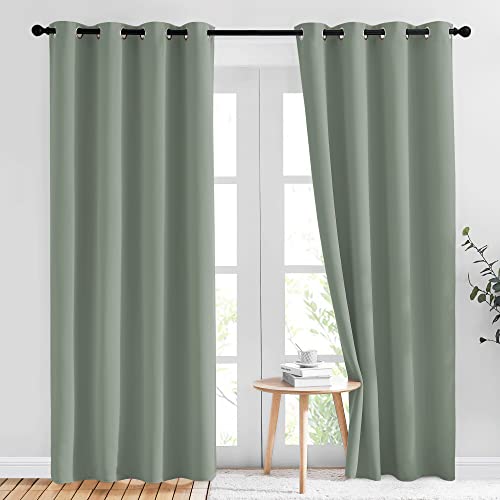
Where to buy
Check the latest price, availability and delivery on Amazon. Orders are placed on Amazon. We may earn a commission from qualifying purchases.
- Best overall: NICETOWN Full Blackout Curtains, 52″ x 84″, Set of 2 — Check on Amazon
- Sun Zero Nordic Theater Grade Extreme 100% Blackout Curtain Pair — Check on Amazon
- Deconovo Blackout Curtains, 52″ x 84″, Set of 2 — Check on Amazon
- BGment White Blackout Curtains, 52″ x 84″, Set of 2 — Check on Amazon
See 2 more Amazon options
- MIULEE 100% Blackout Linen Curtains, 52″ x 84″, Natural — Check on Amazon
- H.VERSAILTEX 100% Blackout Curtains, Rod Pocket, 52″ x 84″, Grey — Check on Amazon
Read the full guide ↓
Disclosure: As an Amazon Associate, airfryerkitchensupply.com earns from qualifying purchases. Links to Amazon on this page are affiliate links; they cost you nothing extra. Listing details such as price and availability change often, so check the current Amazon listing before you buy.
A guest room is judged twice: once from the doorway, when your guest sets down a bag and takes in the room, and once at 6 a.m., when the sun comes up three hours before your guest planned to. Most spare rooms pass the first test and fail the second. The bed is made, the towels are folded — and the window is dressed in whatever thin curtain was left over from another room, glowing like a lampshade from first light. Your guest will not complain. Guests almost never do. They will simply sleep badly, surface early, and remember the visit as slightly more tiring than it should have been.
The good news is that a guest room is the easiest room in the house to make properly dark, because the host does all the work exactly once. You measure, you mount the rod high and wide, you seal the edges, and after that no guest ever has to adjust, troubleshoot or even think about the curtains again. Seventy-five dollars is comfortably enough to do it properly: every pair in this guide is a pair of two 52-by-84-inch panels — the standard bedroom configuration — and every pair sits comfortably inside that budget, leaving room for the sturdy rod and the wide mounting that turn a good curtain into a dark room. For most guest rooms we would start with the NICETOWN full-blackout pair: real darkness, easy laundering between guests, and a size range that fits almost any window — check price on Amazon for the current listing. If your guests keep holiday hours and sleep past sunrise, the Sun Zero theater-grade pair below is the maximum-darkness answer. And for hosts dressing a guest room that has to look the part as well as sleep the part, the white, linen-look and rod-pocket picks each solve a specific version of the problem.
In this guide
Quick Picks
Short on time, or comparing several options at once? Each row below names a hosting situation and the product that suits it, with a link to the listing. All picks are for a pair of 52″ x 84″ panels unless a review says otherwise.
| Buyer type | Pick | Why it stands out | Link |
|---|---|---|---|
| Best overall | NICETOWN Full Blackout Curtains, Set of 2 | Heavy lined blackout pair — check price on Amazon — easy to launder between guests | Check on Amazon |
| Best for sleeping in | Sun Zero Nordic Theater Grade Extreme Blackout Pair | Theater-grade construction with a lab-tested 100% claim — check price on Amazon | Check on Amazon |
| Best budget | Deconovo Blackout Curtains, Set of 2 | Triple-weave budget pairs, with pricing that varies by color — check price on Amazon | Check on Amazon |
| Best in white | BGment White Blackout Curtains, Set of 2 | White face, dark backing — a bright guest room that still goes dark; check price on Amazon | Check on Amazon |
| Best linen look | MIULEE 100% Blackout Linen Curtains, Set of 2 | Natural linen texture with a blackout build; check price on Amazon | Check on Amazon |
| Best traditional look | H.VERSAILTEX 100% Blackout Curtains, Rod Pocket | Gathered rod-pocket pair with a white liner; check price on Amazon | Check on Amazon |
How These Picks Were Chosen
The first filter was the budget, applied to a stated configuration. Curtain pricing is a shell game — a listing can show a pair in the photograph, price a single panel in the headline, and charge by the size you actually need — so every pick here is judged on the same configuration: two panels, each 52 inches wide by 84 inches long, the pair that dresses a standard bedroom window. Prices change often on Amazon, so each review points you to the live listing to check the current price for the exact variant. Anything we could not tie to a real listing was left out, however famous the name.
We did not hang these curtains ourselves. We read maker listings and specification pages, compared construction — triple-weave fabric versus a separate blackout liner or coated backing — and cross-checked prices against independent price tracking and dated roundup coverage. Then we applied the guest test, which shaped the ranking: could a host install this pair once, before arrival, and never think about it again — and would a guest, sleeping in an unfamiliar room, stay in the dark until they chose to wake up? That test favors curtains that block light in a liner or backing rather than in a weave alone, curtains that survive the washing machine between visits, and curtains heavy enough to hang still against the wall instead of billowing away from it every time the heating cycles.
One thing we weighed heavily is color, because in this category color is a performance specification. In a triple-weave curtain the light is stopped by a black yarn woven into the fabric, and dark colors genuinely block more than pale ones — Deconovo’s own listing material states its blocking by shade, topping out around 95% in the darkest colors and falling from there. Pale curtains that truly block light do it a different way, with a dark or coated backing behind a light face, and two picks below exist precisely for hosts who want a white or natural guest room that still goes properly dark. If a listing promises a pale triple-weave curtain with total blackout and no liner, it is promising something the construction cannot deliver — and in a guest room, where the sleeper is already sleeping lightly in a strange bed, that gap shows up at dawn.
The 6 Best Blackout Curtains for Guest Rooms Under $75
NICETOWN Full Blackout Curtains, 52″ x 84″, Set of 2
Who it suits: Most guest rooms, most hosts — the host who wants the darkness problem solved once, properly, and the curtains to disappear into the room’s routine afterward.
NICETOWN sells several blackout lines, and the distinctions matter more than the brand name. This is the heavier full-blackout pair: grommet-top panels with a lined, thermal-insulated build, sold as two 52-by-84-inch panels — check price on Amazon for the current listing. For a guest room, the specification that matters most is the one that never appears in the headline: this pair machine washes on a cold gentle cycle per the maker’s care guidance for the line. Guest-room curtains live a different life from master-bedroom curtains — they are washed between visitors, after flu season, after the grandchildren’s sticky-fingered weekend — and a lined pair that goes through the machine and hangs straight again is worth more to a host than a marginally fancier pair that wants professional cleaning.
The size range is the second hosting superpower. The same line comes in widths and drops well beyond the standard pair, in dozens of colors, so the curtain that dresses the guest room can match the one over the landing window or in the room your own family sleeps in, and a replacement panel ordered in three years will still be the same product. The brand’s blackout listings between them carry a deep review base, which is the closest thing this category has to a proven track record. The honest caveats are about claims, not about the curtain. NICETOWN’s own listings state different light-blocking figures for different lines — room darkening for the lightest, full blackout for this one — so judge this pair by its construction, a heavy lined panel, which is the build that actually delivers darkness. And the fabric weight has a hardware consequence: a lined 52-by-84 pair is heavy enough that a sagging tension rod will bow, so a proper wall-mounted rod is part of the real cost — a cost a host pays once, before the first guest, and never again.
- A pair of 52″ x 84″ lined blackout panels — check price on Amazon.
- Machine washable cold and gentle per the maker’s guidance — the between-guests laundry test, passed.
- The deepest size and color range in this guide — the same line fits almost any window in the house.
Honest limitation: NICETOWN’s blackout percentages vary across its own listings and are maker claims, not measurements; the heavy lined fabric also wants a sturdy, wall-mounted rod rather than a tension rod.
Choose it if you want the default answer for a guest room — real darkness, easy care, any size. Skip it if your guests sleep well past sunrise after long travel days and need the absolute maximum darkness, where the Sun Zero’s theater-grade build below is the stronger tool, or if your heart is set on a pale color, where a backed construction serves you better.
Sun Zero Nordic Theater Grade Extreme 100% Blackout Curtain Pair, 52″ x 84″
Who it suits: Guests who sleep in — the friend on holiday hours, the grandparent who naps after lunch, the visitor recovering from a long travel day in a dark room of their own schedule.
A guest room’s darkness is tested at the opposite end of the night from your own bedroom’s. You need your room dark at 10 p.m.; your guest needs it dark at 9 a.m., when the sun is fully up, the house is awake, and the whole point of the visit is that nobody has to be anywhere. Sun Zero grades its own range, and the Nordic sits at the top of it: Light Block Level 5, “Theater Grade Extreme” in the brand’s language, sold as a pair of 52-by-84-inch grommet panels (104 inches of combined width) — check price on Amazon; it is the premium pick in this guide, still inside the budget. What that premium buys is mass and a claim with a laboratory behind it: Sun Zero states the fabric is third-party lab tested to block 100% of outside light, a stronger form of words than any other maker in this guide offers. The same listing family carries the brand’s thermal and noise claims — up to 50% less energy lost through the window, per the maker — and those should be read exactly as that: maker figures, plausible in direction for a heavy lined curtain, unverified in size.
Mass is the whole story here, including its costs, and in a guest room the costs mostly fall on the host — which is where they belong. These are thick, heavy panels: they hang with a formal, straight fall rather than soft folds, they want a rod and brackets rated for real weight and screwed into studs or solid anchors, and they are the pair in this guide we would least want to launder at home, with care instructions that deserve a read before the first wash rather than after. A host does that work once, on a free Saturday, and the guest never knows it happened; what the guest knows is that the room stayed dark until they woke up on their own. Mount the pair wide and high so the edges overlap the frame, and it is the closest thing to a hotel-grade dark room that $75 buys on Amazon.
- Theater-grade pair — check price on Amazon — the maximum-darkness pick in this guide.
- Maker states third-party laboratory testing behind its 100% light-blocking claim.
- Heavy, lined construction that also takes the chill off a cold guest-room window (energy figures are the maker’s).
Honest limitation: The weight is real: these panels need a strong, well-anchored rod, hang stiffly rather than softly, and are the least home-laundry-friendly pair here. The 100% figure is the maker’s lab claim, reported as such, not independently verified by us.
Choose it if your guests sleep in, nap, or arrive worn out from traveling, and you can mount hardware properly once. Skip it if you rent and cannot anchor a rod, or you want soft, flowing drapes; the NICETOWN above hangs kinder, washes easier and costs less.

Deconovo Blackout Curtains, 52″ x 84″, Set of 2
Who it suits: Hosts furnishing a guest room on a real budget — a first spare room, a rental, or a house with several guest windows to dress at once.
Deconovo is the budget anchor of every honest blackout comparison, and its classic grommet listing shows why: two panels per package, a triple-weave polyester build at around 230 GSM by the listing’s figures, and a size run of 52-by-63, 52-by-84 and 52-by-95 inches that covers most bedroom windows. Pairs in this listing at the 52-by-84 size are priced by color — check price on Amazon for the color you want, because the color you want may not be the one on offer. As the budget pick in this guide, Deconovo makes dressing several windows at once practical: for a host, that value is the pick — the guest room and the nursery, or both guest windows, dressed in one order without stretching to a mid-range pair elsewhere.
The candor paragraph matters more here than the praise. A triple-weave curtain blocks light with its weave, and the weave’s performance is color-dependent: Deconovo’s own material puts the darkest shades at up to roughly 95% blocking, with pale colors passing noticeably more. Ninety-five percent is a dark room by most standards — it is not the cave-like totality the Sun Zero aims at, and a guest sleeping lightly in a pale grey Deconovo will see a faint glow at midday that the same guest behind the black colorway would not. For most guest rooms that is an acceptable trade: guests are on holiday hours, not night shifts, and a genuinely dark room at a budget-tier price beats a perfect room that never gets bought. Deconovo’s listings also disagree with each other about care — one says hand wash, siblings say machine washable — so the label inside the actual curtain you receive outranks anything printed online, ours included. Buy it in a dark color, hang it wide, and it is the best budget darkness in this guide.
- Budget-tier pairs at 52″ x 84″, with pricing that varies by color — a practical pick for dressing several guest windows at once.
- Triple-weave polyester, grommet top, sold two panels per package in three useful lengths.
- Dark colorways block up to roughly 95% of light by the maker’s own color-by-color figures.
Honest limitation: Blocking is color-dependent and tops out below true total blackout; pale colors glow faintly at midday, which a light-sleeping guest will notice. Care instructions conflict between Deconovo’s own listings — trust the sewn-in label.
Choose it if you want real darkness cheaply, especially in a dark color, or you are dressing several guest windows at once. Skip it if your guest room faces east into full morning sun and your guests are light sleepers — that job belongs to the lined constructions above.

BGment White Blackout Curtains, 52″ x 84″, Set of 2
Who it suits: Hosts whose guest room should look bright and welcoming by day — the white, Scandinavian-style spare room — while still going properly dark for the person sleeping in it.
A guest room is the room where the white-curtain problem bites hardest, because the room has two shifts: it must look fresh and inviting when your guest arrives in daylight, and it must go black when they sleep. White is the hardest color in this category, because the two easy constructions both fail it: a white triple-weave passes too much light, and a white curtain with a white coating reflects some of it straight through. BGment’s answer is the honest one — a white face fabric with a dark backing doing the blocking behind it — and the pair is sold as two 52-by-84-inch panels — check price on Amazon. The front stays properly white in daylight, the backing stops the light, and the listing adds the usual thermal-insulated claims, which are the maker’s own and should be weighed as such. Machine washable per the listing — a practical necessity for a white curtain in a room that hosts a rotating cast of guests, coffee cups and suitcases.
Two cautions come with the construction, and both are host jobs to settle before arrival. The first is that a dark-backed white curtain is only as good as its coverage: light that misses the fabric — over the top, around the sides — shows up more starkly against a white panel than against a dark one, so the mounting advice in the halo section below is not optional with this pick; mount wide, mount high, and let the panels overlap the wall. The second is a listing-discipline point: BGment sells near-identical white curtains under several listings and header styles, grommet and rod pocket among them, and the brand’s room-darkening lines sit one click away from its blackout lines. Confirm that the variant in your cart is this blackout pair, in the header you want, before you pay — the name alone will not do it.
- White face with a dark light-blocking backing — the pale-color construction that actually works.
- Pair of 52″ x 84″ panels — check price on Amazon.
- Machine washable per the listing — a practical necessity for a white curtain between guests.
Honest limitation: Edge leak shows up more against white fabric, so this pick demands careful mounting; BGment’s many similar listings and header variants make it easy to order the wrong sibling by mistake.
Choose it if the guest room must stay bright-looking by day and dark by night. Skip it if the guest window is hard to cover fully — wide frames, awkward radiators — where a dark curtain forgives gaps that a white one advertises.

MIULEE 100% Blackout Linen Curtains, 52″ x 84″, Natural, Set of 2
Who it suits: Hosts whose guest room is part of the house’s presentation — the spare room visitors see, styled around natural fibers and matte finishes, that still has to sleep like a cave.
Most blackout curtains look like what they are: smooth, slightly shiny polyester. MIULEE’s linen line is the exception that justifies this whole slot — a natural, textured linen-look face over a blackout build, sold as two 52-by-84-inch panels — check price on Amazon for the current listing. This pick has been offered as a limited-time deal for Prime members at times, so check the live listing for any current deal and for the everyday price before you buy. The texture is the point of the purchase. In a guest room, where the curtain is a large part of what the room looks like from the doorway, these panels read as part of the furniture rather than as sleep equipment — the difference between a guest room and a room with a guest bed in it, hung at the window. And because the blocking is done by the build behind the face, the compromise between looks and darkness mostly disappears.
The limitations are the linen category’s own, and in a guest room they are all one-time host costs. A textured face shows creases from the package more than a smooth polyester does, and wants a steamer or a patient iron before the first hang — budget the twenty minutes once, before the first guest, and the panels hang relaxed for years. The natural colorway linked here is a light tone, which makes it a backed construction doing the work, with the same edge-leak discipline the BGment above demands. And linen-look fabrics across this market vary in how convincingly they imitate the real fiber; this one is a polyester-based textured weave wearing linen’s appearance, not a natural linen curtain, and hosts for whom the actual fiber matters should know that before the box arrives.
- Natural linen-textured face over a blackout build — the design pick of the six.
- Pair of 52″ x 84″ panels — check price on Amazon for the current listing and any Prime deal.
- The relaxed, matte look suits guest rooms where smooth blackout polyester looks out of place.
Honest limitation: This pick has appeared as a Prime-only limited-time deal, so the everyday price on an ordinary day may differ; check the live listing. The textured face also arrives creased and wants steaming before it hangs well.
Choose it if the guest room’s appearance is the point and you refuse the shiny-polyester look. Skip it if you want a budget-tier pick in a pale tone — and see the sources note on the NICETOWN linen pair that competes directly with this slot.

H.VERSAILTEX 100% Blackout Curtains, Rod Pocket, 52″ x 84″, Grey, Set of 2
Who it suits: Traditional guest rooms — the spare room with the good furniture and the plain rod — where the window treatment should be felt rather than noticed.
Five of the six picks in this guide hang from grommets, and grommets are a look: eight metal rings marching across the top of the window, sliding beautifully and announcing themselves doing it. This H.VERSAILTEX pair is the alternative — a rod-pocket header that gathers the fabric directly onto the rod, behind a white blackout liner, sold as two 52-by-84-inch panels in grey — check price on Amazon. The gathered pocket gives the soft, traditional column folds that grommets cannot, and hides the rod entirely. In a guest room that trade runs in the host’s favor more often than anywhere else: the host gathers the panels onto the rod once, arranges the folds once, and the curtain then spends its life mostly closed or mostly open — guests rarely work a guest-room curtain the way a family works a living-room one. The white liner is the correct pale-room construction too: it presents a uniform white face to the street, which some leases and HOAs require and which dark-backed curtains cannot offer, so the house looks consistent from outside while the guest sleeps in the dark inside.
The trade is mechanical, and it should be chosen with open eyes. A rod pocket grips the rod along its whole length, so these curtains bunch and resist when drawn — they are curtains the host sets in the morning and sets again at night, not curtains a guest flicks open one-handed with a coffee in the other. For a guest room, where the curtains are arranged before arrival and the guest’s only job is to close them at bedtime, that is a fair price for the look. The second caution is brand discipline: H.VERSAILTEX sells blackout lines at several levels, including room-darkening versions well below 100%, under very similar names. The listing linked here is the white-lined 100% line; if the price on the page you land on looks too good for that description, check that you are looking at the same line and not its lighter sibling.
- Rod-pocket header for a gathered, traditional look with the rod hidden.
- White blackout liner — a uniform white face to the street, useful under lease and HOA rules.
- Pair of 52″ x 84″ panels — check price on Amazon.
Honest limitation: Rod pockets slide stiffly and bunch on the rod, so drawing them takes two hands; the brand’s lighter room-darkening lines are easy to confuse with this 100% line at a glance.
Choose it if you want the classic gathered look, a hidden rod, or a white face to the street. Skip it if your guests open and close curtains constantly — every other pick here glides on grommets.

Comparison Table
| Product | Type | Best use | Link |
|---|---|---|---|
| NICETOWN Full Blackout, Set of 2 | Lined blackout pair, grommet top | The all-rounder; real darkness, easy laundering between guests | Check on Amazon |
| Sun Zero Nordic Theater Grade Pair | Heavy theater-grade blackout pair | Maximum darkness for guests sleeping in | Check on Amazon |
| Deconovo Blackout, Set of 2 | Triple-weave polyester pair | Budget pick for genuine darkness, several windows at once | Check on Amazon |
| BGment White Blackout, Set of 2 | White face, dark backing pair | A bright-looking guest room that still blacks out | Check on Amazon |
| MIULEE 100% Blackout Linen, Set of 2 | Linen-look blackout pair | Natural texture for a styled guest room | Check on Amazon |
| H.VERSAILTEX 100% Blackout, Rod Pocket | White-lined pair, rod pocket | Traditional gathered look, hidden rod, white face to the street | Check on Amazon |
How to Choose Blackout Curtains for a Guest Room Under $75
- Choose the construction before the color. Triple-weave curtains block light in the fabric and work best in dark colors; lined or backed curtains block it in a separate layer and are the only honest route to total darkness in pale colors. A guest sleeping lightly in a strange bed notices the difference at dawn, so decide which construction the room needs, then pick a color it can actually deliver.
- Check the price for the pair, at your size, never the headline. Listings photograph pairs and sometimes price singles, and the price changes with every size. Check the live price on Amazon for the variant in your cart: two panels, your width, your drop.
- Buy width for fullness, not coverage. Panels should total at least one and a half times the window’s width — twice is better — so the closed curtain falls in folds instead of stretched flat. A flat-stretched curtain leaks at every edge and looks cheap doing it; in a guest room it also reads as unfinished from the doorway.
- Measure the drop from the rod, not the window. Mount the rod 4–6 inches above the frame and let the panels end at the sill, just below it, or at the floor. An 84-inch drop is the standard guest-room answer; tall windows and high rods want 95 or 96 inches, and this budget covers those sizes in most of these lines.
- Install like a host, not a renter. The guest room is the one room where you can do this properly once: a wall-mounted rod screwed into studs or solid anchors, mounted wide so the panels overlap the wall. Heavy lined pairs will bow a tension rod, and a guest will not report the gap it leaves — they will just wake early.
- Plan the wash before the purchase. Guest-room curtains get laundered between visitors. Triple-weave pairs like the Deconovo and lined pairs like the NICETOWN generally machine wash cold and gentle; coated and lined constructions are less forgiving, and foam-style backings can crack in hot water or a hot dryer. The sewn-in label outranks the listing — check it before the first wash, not after a ruined one.
- Pick the header for who moves the curtain. In a guest room, mostly nobody does — the host arranges the panels before arrival and the guest closes them at bedtime. Grommets glide and suit any pattern of use; a rod pocket’s gathered look costs stiff, two-handed drawing, which a guest room forgives and a living room does not.
- Treat thermal and noise figures as comfort claims. A heavy curtain genuinely takes the chill off a cold guest-room window and dulls street noise a little — mass and an air gap do real work, and a guest room that sits empty and cold between visits benefits most. The specific percentages on listings are the makers’ own numbers; buy the weight and the fit, not the percentage.
- Keep curtains clear of heat. Leave real space between panels and portable heaters or radiators — safety guidance puts at least three feet between space heaters and drapes — and never let a long panel rest against a heat source, in a room that may sit unoccupied for weeks.
- Spend the leftover on the rod. Every pair in this guide sits inside the budget, which leaves room in that budget on a single window. A sturdy, wide-mounted — ideally wrap-around — rod does more for a guest’s darkness than upgrading from a good curtain to a marginally better one.
The Halo Problem: Fixes the Host Does Before Arrival
Here is the experience that generates most one-star blackout reviews: a buyer hangs a genuinely good curtain, stands back at noon, and sees a bright outline glowing around all four edges. The fabric is fine. The light is not coming through the curtain — it is coming around it, and the fix is geometry, not shopping. In your own bedroom you might live with a halo for months, half-noticing it on bright mornings. In a guest room there is no such probation: the first morning is the review, and a guest who wakes at dawn in a glowing room will not troubleshoot your window treatment — they will simply be awake.
The fixes are all host jobs, done once, before the first guest. Mount the rod high — four to six inches above the frame — so the top gap closes. Mount it wide, extending several inches past the frame on each side, so the panels overlap the wall rather than ending at the glass edge. Give the panels enough width to overlap each other in the middle and still fall in folds; a curtain stretched drum-flat to just meet in the center will gap every time the house settles. What remains after good mounting is a thinner line of light at the sides, and the category’s best answer is a wrap-around or return rod, which curves the curtain back to the wall at each end and closes the side gap mechanically — the single most effective upgrade in this entire guide, and the best use of the budget left over after any of these pairs. Heavier, layered curtains also seal better than light ones simply because their weight holds them against the wall through the night.
One more host habit completes the system, and it costs nothing: the night before guests arrive, close the curtains, turn the room lights off in the middle of the day, and look at the window the way your guest will at 7 a.m. Whatever glows is what they will wake to. Fix it then — an inch more overlap, a panel re-centered — while the fix is still yours to make.
Dark Past Sunrise: Hosting Guests Who Sleep on Holiday Hours
Your own bedroom has one darkness job: keep the room dark until your alarm. A guest room has a harder one. Your guests are on holiday hours, or crossing time zones in spirit if not in fact, or simply enjoying the rarest luxury of a visit — sleeping until they wake up. That means the room must stay dark not at midnight, when any curtain manages it, but at eight, nine, ten in the morning, when the sun is high, the household is up, and light is arriving at full strength from a fully risen sun. Morning light is also directional in a way evening light is not: an east-facing guest room takes the sunrise directly on the glass, and a south-facing one is bright from mid-morning on. The same pair of curtains that feels perfectly dark in a north-facing master bedroom can merely dim an east-facing guest room.
This is where the construction decision in this guide stops being academic. Through-the-fabric darkness — the layered and lined pairs — is what survives a bright morning; a triple-weave’s honest 95% reads as a soft glow by nine o’clock, fine for most guests and genuinely insufficient for the one who has traveled all day to reach you. It is also where coverage earns its keep twice over: at high sun angles the halo around a badly mounted curtain is at its widest and brightest, so the wide, high, overlapping mount described above is a morning feature, not a finishing touch. Judge your guest room’s darkness at the hour your guests will actually test it — late morning, curtains closed, house awake — and buy and mount for that hour. A room that passes that test delivers the thing guests praise on the drive home, usually without knowing why: they slept until they were done sleeping.
The Hotel Test: What Makes a Guest Room Window Look Finished
Hotels do not use better curtains than the pairs in this guide; mid-range hotel blackout drapes are commodity lined panels, much like the NICETOWN at the top of it. What hotels use is discipline. The panels are wide enough to close in deep folds rather than stretched flat. They are steamed, so they hang in clean columns instead of wearing the creases of their packaging. They match the room instead of arguing with it, and they present one calm, uniform face — often a white liner — to the street. A guest room at home gets judged by the same standard the moment your guest walks in, and the window is the largest single surface in most spare rooms: get it right and the room reads as prepared; get it wrong and the best bed in the house still sleeps in a room that looks borrowed.
The encouraging news is that the hotel look is mostly free. Fullness costs one size decision — panels totaling one and a half to two times the window width — and, as the budget pick, a second Deconovo pair for a wide window remains a budget-friendly way to add fullness. Steaming costs twenty minutes, once, and the MIULEE’s textured face is the only pick here that truly insists on it. Matching costs nothing but choosing the curtain for the room you have: the BGment’s white for the bright spare room, the H.VERSAILTEX’s gathered rod pocket for the traditional one, the linen look for the styled one. What the hotel test actually measures is whether the host finished the job — rod anchored, panels steamed, edges sealed — and that is work, not money. This budget covers all of it.
Common Buying Mistakes
- Buying the pair in the photograph and the single panel in the box — never checking the pack count and size on the variant actually in the cart.
- Dressing the guest room with the household’s leftover curtains and assuming guests will not notice a glowing window; they notice at dawn, and say nothing.
- Ordering a pale triple-weave curtain and expecting total darkness, when the construction only delivers that in dark colors; pale guest rooms need a liner or backing.
- Sizing to the glass instead of the wall: panels exactly as wide as the window stretch flat, gap at the edges, and leak the halo described above.
- Believing the percentage on the listing. Apart from Sun Zero’s lab-tested claim, the figures in this category are the makers’ own, and “100% blackout” on a room-darkening line is a label, not a measurement.
- Confusing a brand’s blackout line with its room-darkening line — NICETOWN, BGment and H.VERSAILTEX all sell both, under near-identical names and photographs.
- Hanging heavy lined pairs on a tension rod or a sagging bracket, then blaming the curtain for the bowed, gapping result your guest wakes up to.
- Washing a coated or lined curtain hot, or tumble-drying it, and cracking the very layer that made it blackout — discovered, inevitably, the day before guests arrive.
- Judging the guest room’s darkness at night. The test that matters is late morning, sun up, curtains closed — the hour your guests are actually trying to sleep through.
Final Recommendation
- Most guest rooms: NICETOWN Full Blackout Curtains — real darkness, easy laundering between guests, every size — check price on Amazon.
- Guests who sleep in: Sun Zero Nordic Theater Grade Extreme pair.
- Tightest budget or several guest windows: Deconovo Blackout Curtains, in a dark color.
- Bright, white guest rooms: BGment White Blackout Curtains.
- Styled, natural-texture guest rooms: MIULEE 100% Blackout Linen Curtains.
- Traditional rooms and plain rods: H.VERSAILTEX 100% Blackout Curtains, rod pocket.
Our top two are the NICETOWN full-blackout pair, because it solves the ordinary guest room completely — darkness, washability, any window — with the least fuss, and the Sun Zero Nordic pair, because when a guest’s sleep is the point of the visit, its theater-grade build is the strongest tool this budget reaches. Between those poles the rest of the guide sorts by the two decisions that actually govern a guest room: construction first (a layer for pale colors and late sleepers, a weave for dark colors and easy care), and installation second (wide, high, overlapping, anchored — done once by the host, enjoyed silently by every guest). Hosts furnishing the whole room will find the tighter-budget version of this guide in Best Blackout Curtains Under $30 and the next tier up in Best Blackout Curtains Under $200. Get those two decisions right and any of the six will give your guests a dark room; get them wrong and no curtain at any price will save the purchase.
Frequently Asked Questions
Will blackout curtains really help guests sleep in?
They remove the main thing that ends a guest’s sleep early: morning light. A properly dark room lets guests wake on their own schedule instead of the sun’s, which on holiday hours can mean hours more rest. These are comfort products, not sleep treatments — they will not fix a lumpy mattress or a noisy house — but darkness is the one part of a guest’s sleep entirely in the host’s control, and a layered pair, mounted wide and high, delivers it.
Do blackout curtains really block 100% of light?
The best layered constructions come very close through the fabric itself — Sun Zero states its theater-grade fabric is third-party lab tested to block 100% — but a room is only as dark as its edges. Light leaking over the top and around the sides of any curtain will keep a room from true blackout, which is why mounting wide and high matters as much as the panel you buy. Triple-weave curtains, honestly labeled, block up to roughly 95% in dark colors and less in pale ones.
What size blackout curtains does a guest room need?
Measure the window, then buy for the wall: total panel width of at least one and a half times the window width (twice is better for full, hotel-style folds), and a drop that runs from a rod mounted 4–6 inches above the frame to the sill, just below it, or the floor. A pair of 52-by-84-inch panels — the size every pick in this guide uses — dresses a typical guest-room window up to about 55–65 inches wide with proper fullness.
Are blackout curtains sold as pairs or single panels?
Both, and the listings are not always quick to tell you. Every pick in this guide is sold as a pair — two panels in the package — at the size stated in its review. Elsewhere on Amazon, many listings price a single panel while showing a pair in the photograph. Check the pack count and the per-panel dimensions on the exact variant before you pay.
Can white or light-colored curtains really black out a guest room?
Yes — if they are built for it. A pale triple-weave cannot, because the weave itself passes light. A pale face over a dark backing or a proper liner can, which is the construction behind the BGment white pair and the white-lined H.VERSAILTEX in this guide. With pale curtains, careful mounting matters even more, because edge leak shows against a light panel — and a guest room is where you can take the time to mount them properly, once.
How do I wash guest room blackout curtains between visitors?
Follow the sewn-in label over anything you read online, including this guide — brands in this category print conflicting care advice across their own listings. As a rule, triple-weave pairs machine wash cold on gentle; lined and coated constructions want cold, gentle handling and no hot tumble drying, which can crack a coating. Steam or warm-iron creases out of textured faces like the MIULEE linen rather than pressing them hard, and give the panels time to hang before guests arrive.
Do blackout curtains help with heat, cold and noise in a spare room?
Somewhat, and honestly. A heavy, well-fitted curtain adds an insulating layer over cold glass — the US Department of Energy advises closing curtains at night in winter to reduce the chill from windows — and takes the edge off street noise through sheer mass, both of which matter in a guest room that sits empty and cold between visits. The specific percentages printed on listings are the makers’ own claims. No curtain is insulation or soundproofing in the building sense; buy the weight and the fit, and treat the numbers as direction, not measurement.
- Best Blackout Curtains Under $75
- Best Blackout Curtains Under $30
- Best Blackout Curtains For Apartments Under $75
- Best Bedside Lamp For Guest Rooms Under $75
- Best Bed Sheet Set For Guest Rooms Under $75
Related Guides
- Best Blackout Curtains For Guest Rooms Under $30
- Best Blackout Curtains For Guest Rooms Under $100
- Best Blackout Curtains For Guest Rooms Under $200
- Best Blackout Curtains For Guest Rooms Under $400
- Best Blackout Curtains For Guest Rooms Under $700