An offset grill smoker is a charcoal barrel grill with a small fire box bolted to one side. You can sear over coals in the main chamber, or burn wood and charcoal in the side box and let heat and smoke drift across the meat. It is the classic backyard way to get both burgers and brisket from one cooker.
The six models below are steel combos from well-known grill makers, ranging from a compact barrel to a larger rig with a wider cooking area. We have not used these products ourselves, so confirm the details on the current listing before you buy. Treat every note as a starting point, and check the exact cooking area, grate material and shipping details on the page.
As an Amazon Associate we earn from qualifying purchases. Links below are affiliate links, and they do not change the product information we give.
What to Look For
| Feature | Why it matters |
|---|---|
| Fire box seal | Gaps leak smoke and heat, so a snug fit holds temperature better |
| Steel thickness | Thicker steel holds heat longer and resists warping |
| Cooking area | Match it to how many guests you usually feed |
| Dampers and vents | Good airflow control is the key to steady smoking |
In this guide
Specs at a Glance
| Smoker | Material | Size | Notes |
|---|---|---|---|
| Char-Griller Smokin Pro | Steel body | Mid-size barrel | Side fire box; lower shelf |
| Char-Griller Grand Champ XD | Steel body | Larger barrel | Side fire box; extra room |
| Char-Griller Outlaw | Steel body | Mid-size barrel | Side fire box; wheels |
| Royal Gourmet CC1830S | Steel body | Compact barrel | Offset box; side table |
| Oklahoma Joe’s Highland | Heavy-gauge steel | Large offset | Firebox grate; thermometer |
| Realcook Offset Smoker Grill | Steel body | Barrel class | Offset chamber; side shelf |
The 6 Best Offset Grill Smokers

Top pickBest for backyard cooks who want a classic combo
1. Char-Griller E1224 Smokin Pro Charcoal Grill with Side Fire Box
A long-running steel barrel charcoal grill with a side fire box. It is built for owners who want one cooker that can grill over coals or smoke low and slow, and it has a storage shelf below.
Suits: backyard cooks who want a classic combo. Strengths: a familiar design and plenty of owner advice online. Weaknesses: the steel is thin in places, so sealing gaps with high-heat gasket helps. Skip it if you want heavy commercial-grade steel.

Best for bigger families and party hosts
2. Char-Griller E16620 Grand Champ XD Charcoal Grill
A larger take on the same idea, with a side fire box and a roomy barrel for feeding a crowd. Look closely at the listing to see how the cooking area is described.
Suits: bigger families and party hosts. Strengths: more grilling room than the entry models. Weaknesses: it is bulky to move and store. Skip it if you have a small patio.
View Char-Griller Grand Champ XD on Amazon
Best for first-time offset buyers
3. Char-Griller Outlaw Charcoal Grill and Smoker
A barrel grill from the same maker that pairs a charcoal chamber with an attached side fire box, often chosen as a budget-friendly way into offset-style cooking.
Suits: first-time offset buyers. Strengths: a simple layout that is easy to learn. Weaknesses: fit and finish can vary, so expect some tuning. Skip it if you want a tight, precision build.
View Char-Griller Outlaw on Amazon

Best for small yards and casual cookouts
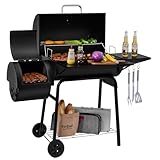
4. Royal Gourmet CC1830S Charcoal Grill with Offset Smoker
A barrel charcoal grill with an offset smoker box that is popular for small patios. It has a side table and a bottom shelf, which makes prep easier.
Suits: small yards and casual cookouts. Strengths: a compact footprint with prep space. Weaknesses: limited room for large cuts. Skip it if you smoke whole briskets often.

Best for those ready for serious smoking
5. Oklahoma Joe’s Highland Reverse Flow Offset Smoker
A true offset smoker with a large firebox, a side-mounted grill surface for direct heat and a built-in thermometer. It is a step up in cooking space and heft.
Suits: those ready for serious smoking. Strengths: an extra cooking surface over the fire box. Weaknesses: it is large and heavy. Skip it if you only grill weeknight meals.


Best for buyers comparing alternatives
6. Realcook Charcoal BBQ Smoker Grill with Offset Smoker
A barrel-style charcoal grill with an offset smoker chamber from a lesser-known but widely sold brand. Confirm the cooking area and grate type on the page.
Suits: buyers comparing alternatives. Strengths: a combination layout at a friendly size. Weaknesses: less brand history than the big names. Skip it if you want long-term parts support.

Care and Setup
- Burn off the new grill for a first seasoning session with a thin coat of oil on bare steel.
- Empty the ash after each cook to protect airflow.
- Cover the cooker and keep it dry to slow rust.
- Check hardware tightness after a few uses.
Mistakes to Avoid
- Opening the lid too often during a smoke session.
- Using wet or green wood instead of seasoned splits.
- Filling the fire box too full and choking the airflow.
- Skipping a gasket when the fire box leaks.
Understanding Airflow and Fire Management
An offset smoker lives or dies by airflow. Fresh air enters through a vent on the fire box, feeds the fire, and the hot air and smoke travel across the main chamber and out through the chimney. Controlling how much air enters and how freely it leaves is how you control temperature. The intake damper on the fire box mainly sets how hot the fire burns, and the exhaust damper on the chimney sets how fast the smoke moves through the chamber.
Many beginners close the vents too much, thinking it will slow the cook. A starved fire produces thick, bitter smoke instead of the thin, clean kind most cooks want. A common approach is to keep the chimney damper open and adjust the intake vent in small steps, waiting several minutes after each change to see the effect. A fire that is small, hot and burning cleanly usually works better than a large smoldering one.
Build the fire with care. Start with lit charcoal, then add small splits of seasoned wood as needed to keep a steady temperature. Add fuel before the fire dies down, not after, since recovering from a drop wastes time. Place wood so air can pass between pieces, and avoid packing the fire box so tightly that air cannot move. Expect to tend the fire throughout a long cook. Learning your cooker’s habits takes practice, so keep notes on vent positions, fuel amounts and how the temperature responded.
Thermometers and Temperature Control
Temperature control is the heart of smoking, and the thermometer built into the lid may not tell the whole story. A lid gauge measures air near the top of the chamber, which can differ from the temperature at the grate where the food sits. On budget cookers, the gauge may also be inaccurate. Many cooks add a second thermometer at grate level to see what the meat actually experiences.
Chambers on offset cookers often run hotter near the fire box and cooler at the chimney end, so the cooking zone is uneven. Learn where the hot spots are, and arrange food accordingly, placing thicker or tougher cuts nearer the heat and delicate items farther away. Rotating food during the cook is a common way to even things out, though it means opening the lid, so do it sparingly.
- Use a probe thermometer in the meat to track internal temperature, since time alone is a poor guide.
- Check your thermometers in ice water before the season starts.
- Keep a log of temperatures, fuel use and results so you can repeat what worked.
- Wind, cold weather and an open lid all change how the cooker behaves, so allow for them.
Heat-retention upgrades such as gasket tape on seams, a heat deflector plate or an insulating blanket in cold weather help some cookers, though results vary by model. Check the manual and owner experience for your specific cooker before modifying it.
Fuel Choices: Charcoal and Wood
Offset smokers burn solid fuel, and the choices affect flavor, temperature and effort. Lump charcoal burns hot and ignites quickly, leaving less ash, while briquettes burn more uniformly and last longer for steady temperatures. Many cooks use charcoal as a base for heat and add wood splits or chunks for flavor, while others burn mostly wood for a traditional approach, which demands more skill with the fire.
Wood type changes the character of the smoke. Milder woods such as fruit woods give a lighter flavor, while stronger woods like hickory or mesquite give a more pronounced taste. Choose wood that is seasoned, meaning dried for a period, since damp wood creates heavy smoke and uneven temperatures. Avoid treated or painted wood, scraps from construction and softwoods with heavy resin, which can impart harsh flavors and may be unsafe. Buy fuel from sources you trust, and store it dry.
Think about supply and cost over time. A long cook can use more fuel than expected, especially on thin-walled cookers that lose heat quickly. Keep extra fuel on hand, and start with a plan for how much you need. Stack splits so they are accessible but away from the fire box to prevent accidental ignition. If you cook often, buying wood in bulk can be easier than small bags. Remember that the same cooker can produce different results with different fuels, so experiment gradually and change one variable at a time.
Planning a Cook From Start to Finish
A successful cook starts before the fire. Trim and season the meat, plan the timeline and gather tools: thermometers, gloves, tongs, a spray bottle if you use one, foil or butcher paper, and a cooler or towels for resting. Light the fire early enough to stabilize the temperature before the meat goes on. Rushing at the start leads to temperature swings that are hard to correct.
Different foods suit different approaches. Ribs, chicken pieces and sausages tend to cook in a few hours, while large cuts such as brisket and pork shoulder take much longer. Time estimates are only guides, since size, temperature and weather all matter. Use internal temperature and tenderness, not the clock, to decide when meat is done. Large cuts often go through a period where the temperature stalls, which is normal, and patience is required.
Plan for food safety. Keep raw meat cold until it goes on the cooker, avoid cross-contamination and bring poultry to the safe internal temperature recommended in your region. Rest large cuts after cooking so juices settle, which also gives you a buffer for serving. For parties, allow extra time for delays, and keep sides ready so the meal does not depend on the exact finish time of the meat. If it is your first time, start with a forgiving cut and short cook to learn the cooker before taking on a large one.
Safety, Placement and Longevity
An offset smoker burns live fire, so placement is a safety decision. Set it on level, non-combustible ground, well away from the house, fences, overhanging branches and anything that could catch fire. Never use charcoal or wood cookers in a garage, under a covered porch or in any enclosed space, because they produce carbon monoxide. Keep children and pets back, and have a fire extinguisher or water source nearby. Check local rules, since some areas restrict open fires during dry conditions.
Handle ash with care. Hot coals can stay dangerous for hours, so let ash cool completely and dispose of it in a metal container, not a plastic bin. Wear heat-resistant gloves when adjusting dampers or adding fuel, and use long tools.
For longevity, protect the steel from moisture. Rust is the main enemy of these cookers, particularly on thinner steel. Keep the cooker covered when not in use, store it somewhere dry if possible and re-oil bare metal as the manual suggests. Clean grease from the chamber and chimney, since built-up grease can smell and burn.
- Check bolts and fasteners periodically, as heat cycles can loosen them.
- Inspect the fire box for burn-through and the wheels and legs for stability.
- Touch up flaked paint with high-heat paint made for grills.
- Replace worn grates, seals and hardware before they fail.
A cooker that is cared for may serve for years, but thin steel will wear faster, so check for parts and warranty support.
A Checklist for Choosing an Offset Smoker
Offset smokers reward patience but ask for some knowledge. Use this checklist while comparing the six models above, and be realistic about how much time you want to spend tending a fire.
- Check the cooking chamber size and the firebox size, as both affect heat and fuel use.
- Look at the thickness of the steel and the quality of the seals around doors.
- Note the air intake and chimney arrangement.
- See whether the unit has a built-in thermometer, and plan on adding another.
- Check for shelves, wheels and a way to remove ash.
- Read the maker guidance on assembly and the first burn-in.
An offset smoker can double as a charcoal grill in some designs, which gives it versatility. Think about whether you plan to smoke low and slow most of the time, or want flexibility for quick grilling too.
Traditional Offset, Reverse Flow and Combo Grill Compared
Offset smokers come in different layouts. The table compares the usual types.
| Design | Heat and smoke path | Notes |
|---|---|---|
| Traditional offset | Smoke travels straight across the chamber | Hotter near the firebox; needs rotation of food |
| Reverse flow | Smoke passes under a plate, then returns over the food | More even temperature |
| Combo grill and offset | Charcoal grill with a side firebox | Flexible but can leak heat |
Reverse flow designs tend to cook more evenly but are heavier, while combo units are popular for their value and versatility. Traditional layouts give you the classic experience but ask for more fire management.
Steps for Your First Cook
Take your time with the first cook and expect to learn. These steps follow general practice, and the manual should guide you on details.
- Place the smoker outdoors on a level, non-flammable surface, well away from buildings.
- Season or burn in the smoker according to the maker instructions.
- Light your fuel with a safe method, and let the fire settle before adding food.
- Adjust the vents slowly, waiting a few minutes between changes.
- Place the food, close the lid and monitor the temperature with a reliable thermometer.
- Check the fire every so often, adding fuel in small amounts.
Always use charcoal and wood appliances outdoors in the open air, keep a safe distance from flammable material, and follow the maker guidance for handling hot ash. Keep children and pets away from the cooker, and follow official fire safety guidance.
Learning the Fire: Habits That Build Skill
Good offset cooking is about steady heat, not big flames. Aim for a small, clean fire that burns hot enough to produce a thin, pale smoke. Use dry, seasoned wood and keep extra pieces beside the firebox to preheat before adding them.
Keep notes on each cook: the weather, the fuel, the vent settings and the results. After a few sessions you will recognize patterns, such as how wind affects the temperature. Clean the smoker regularly and cover it when it is cool to protect it from rain.
Patience is the most important tool, and every session teaches you something new about how your smoker behaves.
Maintenance That Prevents Rust and Grease Fires
Offsets live outdoors and build up grease, so a steady maintenance habit matters. After the smoker cools, remove ash and scrape grease from the grates and the bottom of the chamber, following the maker guidance. Wipe the interior lightly with cooking oil to protect bare metal if the manual advises it.
Check the door seals, hinges and bolts a few times each season, tighten what has loosened and replace worn parts. Use a fitted cover in rainy months, and store charcoal in a dry container. A clean, well kept smoker heats more evenly, uses fuel more efficiently and lasts far longer than one that is left to weather.
Weather, Placement and the Backyard Setup Around the Smoker
An offset smoker lives outdoors, and the outdoors has opinions. Wind is the biggest variable: a gusty day can pull heat through the firebox, spike temperatures and burn fuel at twice the expected rate, while a still, cold day asks for more patience at every stage. Positioning the smoker so the firebox is sheltered — without ever compromising safe clearances from fences, walls and overhangs — makes a measurable difference, as does keeping the cooking chamber out of driving rain that cools the steel.
Think about the ground, too. A level, non-combustible surface keeps the smoker stable, protects decking and grass from heat and grease, and gives you a safe place to set hot grates and coal tools. Keep a metal bucket for ash, a spray bottle for flare management in the firebox area, and a clear path between smoker and kitchen so you are not carrying a finished brisket across a dark, cluttered garden at midnight.
Finally, plan for the smoker’s off-duty life. A cover that fits, a dry spot for fuel, and a routine of emptying ash once it is completely cold will keep steel in good condition far longer. Ash left in a firebox absorbs moisture and encourages corrosion, which is why the small clean-out habits in the care section above matter as much as any cooking technique.
Matching the Picks Above to the Way You Will Actually Cook
The smokers in this guide differ in ways that map onto cooking habits more than onto bragging rights. Char-Griller E1224 Smokin Pro Charcoal Grill with Side Fire Box deserves its place at the top of many shortlists because of how it balances the fundamentals the reviews describe, but the better question is which chamber size, firebox arrangement and grate layout fit your typical cook. A household smoking one pork shoulder at a time has different needs from a cook who fills every grate for neighbourhood gatherings, and unused capacity is not free: larger chambers take more fuel and more time to settle.
Char-Griller E16620 Grand Champ XD Charcoal Grill and Char-Griller Outlaw Charcoal Grill and Smoker illustrate the other directions a buyer can go — toward a different balance of grilling versus smoking, a different footprint on the patio, or features that make long sessions more comfortable. Read the individual reviews with your last few outdoor cooks in mind: how much food was on the grate, how long did you tend the fire, and where did the old setup frustrate you? The smoker that answers those frustrations is the right one, even if it is not the largest or the most elaborate in the line-up.
If you also plan to grill directly, be honest about the split. Some cooks keep a separate kettle or gas grill for weeknight speed and reserve the offset purely for low-and-slow weekends, which lets each tool do what it does best.
A Calm Routine for Long Cooks, From Lighting to Resting
Long cooks reward a routine. The day before, confirm fuel, check the chamber and firebox are clean, and prepare rubs and trims so the cooking day starts with the fire rather than with errands. Light earlier than feels necessary; an offset that has cruised at a steady temperature for a while before the food goes on behaves far better than one still settling. Put the food on cold from the fridge if your method calls for maximum smoke uptake, and then settle into a rhythm of periodic fire checks rather than constant adjustment.
During the cook, work in trends. A single thermometer reading means little; a gentle fall across half an hour means it is time for a split. Keep the exhaust damper working as your fine control and the firebox intake as your coarse control, changing one thing at a time so you learn what each adjustment does. If a stall arrives — the long plateau familiar to anyone who has cooked brisket or pork shoulder — recognise it as normal evaporation physics, not a failure, and decide in advance whether your method pushes through it or wraps the meat.
Resting is part of the cook, not an afterthought. Budget time for meat to rest, held safely, before slicing, and use that window to clean grates while they are still warm. Cooks who build the rest into the schedule serve better food with less stress than cooks who try to carve the moment the thermometer gives them permission.
Learning Fire Management on an Offset, Step by Step
Every offset smoker in this guide is ultimately a fire-management tool, and the cooks who enjoy them most treat the first season as an apprenticeship. Start with forgiving cooks: sausages, chicken pieces and pork shoulder all tolerate the temperature swings of a learning cook far better than a brisket asked to run perfectly overnight. Keep a simple notebook for each session — what fuel you used, how the dampers were set, what the weather was doing, and how the food turned out. Patterns appear quickly, and that notebook becomes more valuable than any single tip.
Build your fire on a proper coal bed rather than chasing temperature with fresh splits alone. A steady bed of glowing coals, refreshed with a split when the temperature trend — not a single reading — begins to fall, gives the smooth, clean heat that offset cooking is famous for. Thin, pale smoke is the goal; thick white smoke usually means the fire is smouldering, and food cooked in it picks up a harsh flavour that no sauce can rescue.
Resist opening the cooking chamber to admire progress. Every lift of the lid dumps heat and extends the cook, and offsets recover more slowly than most grills. Trust your thermometer, watch the smoke, manage the firebox, and let the chamber do its work undisturbed for long stretches.
Fuel Choices: Charcoal, Splits and Everything Between
Fuel is an ingredient in offset cooking, not just a heat source. Lump charcoal burns clean and hot and makes an excellent base, while briquettes offer a steadier, more predictable burn that many beginners find easier for long sessions. Wood splits layered over that coal bed provide the smoke flavour; the species matters, with oak as a reliable all-rounder, hickory bringing a stronger bacon-like note suited to pork, and fruit woods such as apple or cherry giving a gentler sweetness that flatters poultry and fish.
Whatever you burn, it must be properly dry. Green or damp wood smoulders, produces dirty smoke and fights your temperature control for hours. Store splits off the ground, under cover, with air able to move through the stack, and bring the next few splits to warm beside — never inside — the firebox so they catch quickly and burn clean when added. Warm wood igniting fast is one of the quiet secrets behind the steady temperatures experienced cooks seem to achieve effortlessly.
Plan fuel quantities generously for long cooks. Running short mid-brisket and substituting whatever is at hand is a classic route to off flavours and temperature chaos, so the checklist habit described later in this guide includes fuel alongside food and tools.
From Smoker to Table: Slicing, Saucing and Serving Well
The final ten percent of a barbecue is presentation and judgement, and it deserves the same care as the fire. Slice brisket and other large cuts against the grain, which you can identify by the direction of the fibres before cooking if you mark the raw meat with a small notch. Keep slices at a thickness that holds together but yields easily — pencil-width is the traditional guide for brisket flat — and serve promptly, because sliced meat dries and cools faster than any other form.
Sauce is a condiment, not a cover-up. Well-cooked barbecue needs little, and the cook’s job is to offer sauce warm, on the side, in a style that suits the meat: thinner and tangier for rich pork, something with a little sweetness for chicken, and a restrained hand for beef, where many eaters prefer the meat and its rub unadorned. Offering two sauces costs nothing and respects the table’s different tastes.
Rest the meat, keep it warm safely, and carve only what the table will eat in the next few minutes, keeping the rest whole. Leftovers kept in large pieces reheat far better than slices, which is tomorrow’s lunch quietly taken care of.
Storing, Covering and Putting the Smoker Away Properly
An offset’s worst enemy is not use but neglect between uses. Once the smoker is completely cold, remove ash from the firebox — ash holds moisture against steel and is the fastest route to corrosion — and scrape the cooking grates clean or leave them lightly oiled from the last cook, according to their material. Check that grease from the cook has drained or been cleaned rather than left to turn rancid in the chamber, where it will flavour the next session unpleasantly.
A cover that fits well is worth having, but only over a clean, dry smoker; sealing damp steel under a cover manufactures rust. If the smoker lives in the open, position it so rain does not pool on flat surfaces, and consider the prevailing wind when choosing which way the firebox faces, both for cooking and for keeping driven rain out of openings.
Once a season, walk around the smoker like an inspector: hinges, latches, thermometer accuracy against a known reference, the condition of any gaskets, and the state of wheels and legs. Fifteen minutes of attention then prevents the mid-cook discoveries that ruin a Saturday.
Side Dishes That Cook Themselves While the Smoker Runs
A running offset smoker is an invitation to cook more than the main event, and the side dishes that suit it share one trait: they forgive irregular attention. Beans in a cast-iron pot, set where the heat is gentle, absorb a whisper of smoke and improve for hours of neglect. Cabbage wedges, whole onions and heads of garlic roasted in their skins ask for nothing but time. Potatoes tucked where the chamber runs cooler emerge with crisp skins and soft centres, ready for butter and salt.
Timing is the only skill involved. Dense, sturdy sides go on early alongside the meat; quicker items — corn, peppers, a pan of cornbread where your method and equipment allow — join later so everything lands together. Keep a rough written timeline for a big cook, because a smoker full of food is no place to rely on memory, and the cook who writes times down is the cook who serves everything hot at once.
Serve some sides straight from the smoker while the meat rests. That sequencing, built into the routine described earlier in this guide, turns the resting period from dead time into the moment the table fills up.
Choosing Wood Like an Ingredient, Not a Fuel
Once fire management feels comfortable, wood selection becomes the cook’s signature. Oak is the reliable backbone: clean, medium-strength, and hard to overdo. Hickory is bolder and traditional with pork, but a heavy hand turns it bitter, so many cooks blend it with oak rather than burning it alone. Pecan sits between the two, rounded and slightly sweet. Fruit woods — apple, cherry, peach where available — are the gentle end of the spectrum, ideal for poultry, fish and anything where smoke should be a seasoning rather than the headline.
The form matters as much as the species. Splits are the offset’s natural fuel, sized to the firebox so they catch quickly and burn clean; oversized logs smoulder, and tiny scraps vanish before they contribute. Whatever you choose, the wood must be dry and seasoned, bark is a matter of taste rather than dogma, and resinous softwoods have no place in a cooker at all.
Keep a small stock of two woods rather than a museum of six. Learning how oak behaves across a whole season teaches more than a single experimental cook with something exotic, and consistency is what lets you season food confidently, knowing what the smoke will bring.
How Char-Griller E1224 Smokin Pro Charcoal Grill with Side Fire Box Fits Into a Thoughtful Final Decision
If Char-Griller E1224 Smokin Pro Charcoal Grill with Side Fire Box is on your shortlist, give it a fair final test on paper. Write down the three jobs you will ask of it most often, the space it will live in, and the care routine you are genuinely willing to keep. Then read its review above one more time, checking each of those points against what the review actually reports — its strengths, its handling, and its stated limitation. A pick that survives that exercise is rarely a disappointment, because the decision was made against your life rather than against an advertisement.
Do the same for one alternative — the pick whose limitation bothered you least or whose strengths matched your second priority — and compare the two written summaries rather than the two products in the abstract. If they still tie, decide on the practicalities: availability of parts and support, how the product fits your storage, and which one you would rather clean on a tired evening. Those tiebreakers sound mundane and decide real satisfaction.
Then commit. Endless comparison after a sound decision only manufactures doubt, and the cooks who enjoy their equipment most are the ones who buy carefully once and then get on with cooking.
A Short Pre-Purchase Conversation to Have With Your Household
The most underrated step in buying anything shared is a five-minute conversation with the people who will share it. Who will use it most? Who will clean it, honestly? Where will it live, and what gets moved to make room? Are there features one person loves that another will find fiddly every single day? Surfacing those answers before purchase prevents the quiet resentment of a product that suits one household member and burdens the rest.
Agree the care routine in the same conversation, while it is still theoretical and therefore easy to discuss. The routine in this guide is deliberately modest, but it only works if it belongs to everyone rather than to the person who happened to read the manual. Households that share the small tasks — the wipe-down, the check, the cover — keep equipment in better condition with less friction than households where care is one person’s invisible job.
And agree what success looks like: the meals, drinks or gatherings this purchase is really for. When the first of those happens and goes well, the purchase is justified; everything after that is dividend.
Long-Term Ownership: What Changes After the First Year With Your Choice
The first month with an offset smoker is about novelty; the first year is about fit. By the end of it you will know which of the promises in the reviews above actually shaped your routine and which turned out to be decoration. Features that sounded minor at purchase — a handle that stays comfortable, a lid that is easy to store, a control that can be read at a glance — tend to become the reasons a product is still loved, while headline capabilities that did not match your habits quietly stop being mentioned. That is normal, and it is why this guide weighs everyday behaviour so heavily.
Year one is also when maintenance habits either settle or slip. The owners who are happiest at the two-year mark are rarely the most meticulous; they are the ones with a small routine attached to each use, so care never becomes a backlog. If your routine has slipped, the answer is a reset — one thorough clean and check, following the care guidance earlier in this guide — rather than guilt. Products recover remarkably well from a single honest reset, and the reset is a good moment to re-read the manual’s key pages with experienced eyes.
Finally, keep your proof of purchase and any registration details somewhere findable. Support, spare parts and warranty conversations all go faster with paperwork in hand, and the middle of a problem is the worst time to discover where yours went.
The Mistakes Experienced Owners Warn Beginners About
Ask experienced owners what they would tell their earlier selves and the same themes recur for an offset smoker. The first is impatience at the start: rushing the first uses, skipping the setup and care steps in the manual, and judging the product on a debut performance that says more about the learning curve than about the equipment. The second is its opposite — neglect once the novelty fades, when small cleaning and checking tasks are postponed until they become big ones.
The third theme is buying twice: choosing on a single headline feature, discovering that everyday fit matters more, and replacing the product within a couple of years. The reviews in this guide are structured to prevent exactly that, by spending as much time on handling, care and honest limitations as on strengths. If you are wavering between two picks, re-read their limitation notes rather than their praise; the limitation you can live with happily is the better buy.
The fourth is ignoring the environment the product lives in — the space, the weather, the storage, the people who will also use it. Equipment does not fail in the abstract; it fails in a particular kitchen, garden or household, and most of those failures are visible in advance to a buyer who pictures real life honestly.
Offset Grill Smoker FAQ
Can I use an offset grill smoker as a regular grill?
Yes. Spread lit charcoal under the main grate and cook as you would on any kettle or barrel grill.
How much does a fire box matter?
A bigger, better-sealed fire box makes it easier to hold a steady low temperature for long cooks.
Do these need modifications?
Many owners add gasket tape and a thermometer. Search for tips on your model before you start.
How hot should an offset smoker run for low and slow cooking?
Many recipes use a range around the low hundreds of degrees Fahrenheit, but targets differ by cut and cook. Follow a trusted recipe, and use thermometers at grate level and in the meat.
Why is my temperature uneven across the chamber?
Offset cookers are hotter near the fire box and cooler at the chimney end. Rotate food, shift items between zones and consider baffles or deflectors if the maker or owners recommend them.
Should I use wood chunks or splits?
Small splits suit a live fire in the fire box, while chunks often go on charcoal. Use seasoned wood either way, and add pieces gradually to keep a clean burn.
Can I use an offset smoker in the rain?
It is possible, but moisture, wind and cold make temperature control harder, and wet fuel burns poorly. Protect the cooker and fuel, and never use it under a cover or in an enclosed space.
How do I stop bitter smoke?
Use dry, seasoned wood, keep the fire burning cleanly with enough air and avoid a smoldering, starved fire. Thin, pale smoke is usually better than thick, white smoke.
How often should I clean an offset smoker?
Brush the grates and remove ash after each cook. Do a deeper clean of grease buildup periodically, and check for rust and wear.
Is an offset smoker good for beginners?
It can be rewarding but requires fire management and attention. Starting with simple cooks and keeping notes helps you learn the cooker.
What is the difference between burning splits and using only charcoal?
Charcoal alone gives heat with a mild flavour, while wood splits add the distinctive smoke character that defines offset cooking. Many cooks combine them: a charcoal base for stability, with splits added for flavour and to maintain the coal bed. The balance can shift with the food — stronger for beef and pork, gentler for poultry and fish.
How do I stop food tasting bitter or overly smoky?
Bitter flavours usually come from dirty smoke — a smouldering fire, damp wood, or a chamber opened and fiddled with too often. Burn dry wood on a healthy coal bed, wait for thin pale smoke before the food goes on, and keep the exhaust open enough for smoke to flow through rather than linger. Clean smoke in, clean flavour out.
Where should ash go when the cook is finished?
Only ever into a metal container, and only once it is completely cold, which can take far longer than it looks. Ash can hide live embers for many hours. Once cold, it can go out with household waste according to local rules; never tip ash onto soil, decking or into a plastic bin while there is any doubt about heat.
How long does it take to learn temperature control on an offset?
Most cooks feel noticeably more confident after a handful of sessions, especially if they keep notes and start with forgiving meats. The learning curve is real but enjoyable: each cook teaches you how your particular smoker responds to fuel, dampers and weather, and that local knowledge transfers to every recipe you try afterwards.
Can I use an offset smoker in winter?
Yes, with adjusted expectations. Cold air and wind draw heat from the steel, so cooks take longer and burn more fuel. Sheltering the smoker from wind, keeping the lid closed, and allowing extra time all help. Many cooks enjoy winter smoking precisely because tending the fire is a pleasant reason to be outside.
How do I keep a long cook relaxed rather than stressful?
Prepare like a host, not like a hero. Trim and season the meat the day before, lay out tools, fuel, thermometers and serving platters before the fire is lit, and write a rough timeline with the expected milestones and the resting period included. During the cook, check the fire on a schedule rather than constantly, keep drinks and a chair near the smoker, and remember that small temperature drifts are normal and self-correcting. The cooks who look calm at serving time are not more talented; they simply moved every decision they could to the day before the fire.
The Short Version
For a classic combo, the Char-Griller Smokin Pro. For more room, the Grand Champ XD. For a simple entry point, the Outlaw. For a small patio, the Royal Gourmet. For serious smoking, the Oklahoma Joe’s Highland. For an alternative brand, the Realcook.
Related Guides
- 6 Best Grill and Smoker Combos: Gas, Charcoal, Pellet (2026)
- 6 Best BBQ Grills and Smokers: Pellet Grill Combos (2026)
- 6 Best Charcoal Grills and Smokers: Offset, Bullet, Drum (2026)
- 6 Best Commercial Smokers: Pellet, Charcoal and Offset (2026)
- 6 Best Smokers: Charcoal, Electric and Offset Models (2026)


