A mini smoker is a compact cooker built to hold low heat and wood smoke in a small space. Some are charcoal bullets, some are pellet-fed tailgating units and others are small electric cabinets, and all are meant for balconies, patios and campsites with limited room. Smaller smokers use less fuel and heat up faster, but they hold less food, so the main trade-off is capacity versus convenience. They are a good way to learn smoking before moving to a large offset or pellet cooker.
The six models below span charcoal, pellet, kamado-style and electric options. We have not used these products ourselves, so confirm dimensions, fuel type and rack space on the current listing before buying. Cooking capacity and temperature claims are the makers’ own. Fuel type affects effort. Charcoal needs more tending, pellets add convenience and electric units are the easiest but give a milder smoke. Think about space, fuel access and local rules about open flames, especially if you live in an apartment or condo.
As an Amazon Associate we earn from qualifying purchases. Links below are affiliate links, and they do not change the product information we give.
What to Look For
| Feature | Why it matters |
|---|---|
| Fuel | Charcoal, pellets and electric differ in effort and smoke flavor |
| Capacity | Rack area decides how much meat fits at once |
| Portability | Compact bodies and handles help for camping and tailgating |
| Heat control | Vents or a controller keep low temperatures steadier |
In this guide
Specs at a Glance
| Model | Fuel | Size class | Notes |
|---|---|---|---|
| Weber Smokey Mountain Cooker 14-inch | Charcoal water smoker | 14-inch class; confirm listing | Two cooking grates and a water pan |
| Pit Barrel Cooker Junior | Charcoal drum smoker | Compact drum; confirm listing | Hang-style cooking with hooks |
| Traeger Ranger | Wood pellet grill | Compact portable; confirm listing | Cast-iron style body on many versions |
| Char-Griller Akorn Jr | Charcoal kamado-style | Compact kamado; confirm listing | Insulated steel body |
| Camp Chef Smoke Vault 18 | Propane vertical smoker | About 18 inches; confirm listing | Multiple racks and a gas control |
| Cuisinart COS-118 | Electric vertical smoker | 18-inch class; confirm listing | Digital control on many versions |
The 6 Best Mini Smokers
Top pickBest for small patios and beginners
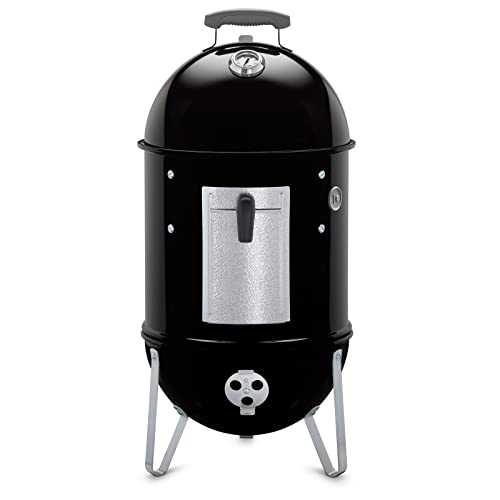
1. Weber Smokey Mountain Cooker 14-inch
A compact charcoal bullet smoker with a water pan and stacked cooking grates. It is a long-running design that many beginners start with.
Suits: small patios and beginners. Strengths: steady heat and a proven design. Weaknesses: charcoal tending. Skip it if you want plug-in convenience.

Best for campsites and small yards
2. Pit Barrel Cooker Junior
A small drum smoker that cooks with hooks and a simple setup. It focuses on easy, repeatable results without many controls.
Suits: campsites and small yards. Strengths: simple use and good portability. Weaknesses: limited rack space. Skip it if you need to cook for a crowd.


Best for travel and small patios
3. Traeger Ranger
A compact pellet grill from a large pellet brand. It is meant for tailgates and small spaces, and it needs a power outlet or compatible source.
Suits: travel and small patios. Strengths: pellet convenience. Weaknesses: needs electricity and pellets. Skip it if you want pure charcoal flavor.


Best for small decks and flexible cooking
4. Char-Griller Akorn Jr
A compact kamado-style cooker that holds heat well. It can smoke or grill, which adds flexibility for a small deck.
Suits: small decks and flexible cooking. Strengths: insulated body and low fuel use. Weaknesses: a modest cooking area. Skip it if you want a large smoker.

Best for yards with a propane supply
5. Camp Chef Smoke Vault 18
A vertical gas smoker with several racks. It uses propane for steady heat while holding wood chips for smoke.
Suits: yards with a propane supply. Strengths: easier heat control than charcoal. Weaknesses: needs a propane tank. Skip it if you prefer charcoal only.
View Camp Chef Smoke Vault 18 on Amazon

Best for balconies and beginners
6. Cuisinart COS-118
An electric vertical smoker with a compact cabinet. It suits people who want simple operation and have an outlet nearby.
Suits: balconies and beginners. Strengths: plug-in simplicity. Weaknesses: milder smoke. Skip it if you want a strong smoke ring.

Care and Setup
- Season new cookers according to the maker’s instructions.
- Clean the ash and grease after each use to avoid flare-ups.
- Keep the smoker covered and dry between sessions.
- Use a separate thermometer to check food temperature.
Mistakes to Avoid
- Using too much fuel or wood, which makes food bitter.
- Opening the lid again and again, which drops the heat.
- Placing the smoker too close to walls, railings or fences.
- Ignoring local rules for open flames on balconies.
Choosing a Fuel for a Small Smoker
Fuel decides how much attention a smoker needs and what the food tastes like. Charcoal gives classic smoky flavor and a hands-on process. You manage vents to steer the temperature, add wood chunks for smoke and learn how your cooker behaves. It rewards patience but needs more tending, especially in wind or cold. Pellet cookers use a feeder and a controller to maintain temperature, which suits people who want steady heat with less work, though they usually need electricity and the smoke flavor is generally milder.
Electric smokers are plug-in cabinets with a heating element and a tray for wood chips. They are simple to run and good for beginners or small spaces where flame is limited, but they need a nearby outlet and tend to give a lighter smoke flavor. Propane smokers heat with gas and use a chip box for smoke, so they hold temperature easily and work where there is no power. They require tank handling and safe placement.
Choose by thinking about how you will use it. If you cook occasionally on a balcony, electric or pellet may fit better. If you want to learn the craft and do not mind tending a fire, charcoal is rewarding. Check building and local rules too, since some balconies and shared spaces ban charcoal or open flame. The maker’s manual and listing will state the fuel and power needs, so read them carefully before buying.
Rack Space and What Actually Fits
Small smokers come with real limits. Before buying, think about the meats you want to cook, then compare them with the rack area and the height between racks. A rack of ribs may need to be cut or coiled to fit, a whole chicken may fit on a single shelf, and a large brisket or pork shoulder may be too big for some models. Listings sometimes show dimensions, but check the interior measurements rather than the outside size.
Capacity affects cooking too. Packing meat tightly blocks airflow and leads to uneven results, so leave gaps between pieces. Vertical smokers with several racks let you cook different items at once, but the lower racks are closer to the heat source and may cook faster. Drum-style designs use hooks, which suits some cuts but not others. Think about whether you need a separate grill grate or a flat surface for vegetables and sides.
Plan for the biggest cook you will do. If you only cook for one or two people, a small smoker is ideal. If you host, check whether you can cook in batches and hold food warm in a cooler wrapped in towels, a common technique. Also consider how the lid or door opens, since tall racks can be awkward to reach. Match the interior to your routines, not to the longest meat on the packaging.
Controlling Temperature in a Compact Cooker
Low and steady heat is the goal in smoking, and small cookers react quickly to changes. A small fire can swing in temperature with wind, ambient air or a lid opened for a peek. Insulation helps: thicker steel or ceramic-style bodies hold heat better than thin metal, though they weigh more. Check the listing for materials and for features such as a built-in thermometer, vents or a controller.
Do not rely on a lid thermometer alone. Readings can differ from the temperature at the grate, so use a separate probe at the cooking level if you want accurate numbers. A second probe inside the meat shows when it is done, and that matters more than the clock. Learn how the vents affect the fire: opening them raises temperature, while closing them lowers it, and adjustments take time to show.
Shield the smoker from wind and keep the lid closed except when needed. Use dry, quality fuel and avoid over-adding wood, which can create heavy, bitter smoke. Thin blue or nearly invisible smoke is generally preferred over thick white smoke. In cold weather, expect longer cook times and more fuel use. A smoker blanket or windbreak can help if the maker allows it. Practice with forgiving cuts, such as chicken thighs or sausages, while you learn how the cooker behaves.
Siting, Safety and Neighbor Courtesy
Place the smoker on a stable, level, non-flammable surface, away from walls, railings, fences, overhangs and trees. Wood decks need extra protection from sparks and hot grease, so use a heat-resistant mat if the maker or local rules suggest it. Keep a clear zone around the smoker, and do not leave it unattended while burning. Children and pets should stay back.
Never use charcoal or gas smokers indoors, in a garage or in an enclosed porch, because they produce carbon monoxide. Check local regulations and your building or lease rules, particularly for balconies and shared spaces, where open flames may be prohibited. Keep a bucket of sand or a fire extinguisher suitable for grease and charcoal fires nearby, and learn how to shut down the smoker quickly.
Smoke can bother neighbors, so consider wind direction and the timing of long cooks. Avoid positioning the smoker near open windows, and be mindful of smoke drifting across property lines. When finished, let the coals burn out and cool fully, then dispose of ash in a metal container. Do not put hot ash in plastic bins. For gas and pellet units, follow the maker’s shutdown procedure, check hoses and connections regularly, and store propane tanks upright and outside. Good habits keep cooking enjoyable and avoid disputes.
Cleaning, Seasoning and Making It Last
Seasoning prepares a new smoker for food. The process varies, but it usually involves a first burn to remove manufacturing residues and to set a thin protective layer on metal surfaces. Follow the manual exactly, and do not use cooking sprays or oils unless it says so.
After cooking, let the unit cool, empty the ash or pellets, and scrape grease from racks and drip pans. Built-up grease can cause flare-ups or bitter flavors, and it attracts pests. Clean the racks with a brush and warm soapy water, then dry them. Avoid scrubbing off all the dark film inside the cooking chamber, which is generally fine and can even protect the metal, but remove flaking residue.
Protect the smoker from weather. A fitted cover helps, but make sure the smoker is cool and dry before covering it. Moisture can cause rust, especially in humid or coastal areas. Check hinges, latches, vents and seals periodically, and tighten fasteners. If paint is peeling or rust spots appear, treat them with a heat-safe product recommended by the maker. Replace worn gaskets, rusted racks or damaged thermometers. For electric models, inspect the cord and element, and keep electrical parts dry. A smoker that no longer holds temperature, has holes in the body, or shows serious structural damage is ready for replacement.
A Checklist Before You Buy a Small Smoker
Mini smokers bring low-and-slow cooking to patios, campsites and small yards. Before choosing among the six in the guide, think through this list.
- Check the rules where you will use it. Apartments, parks and campgrounds may restrict smokers, charcoal or open flames.
- Measure the space, including clearance from walls, railings and overhead branches.
- Look at the rack size and the number of racks. A small smoker may hold a couple of racks of ribs, a chicken or a few smaller cuts.
- Decide on the fuel: charcoal, pellets, wood chunks or propane, based on what you like and what you can store.
- Check the power needs for pellet models, which may require an outlet.
- Read about temperature control and how easy it is to refuel during a long cook.
- Look at the lid fit and the build of the body.
- Consider transport, if you plan to take the smoker camping.
Fuel Options Compared
The fuel shapes both flavor and effort. The table shows the broad picture.
| Fuel | Effort | Flavor | Notes |
|---|---|---|---|
| Charcoal with wood chunks | Moderate | Classic smoke | Needs vent management and refueling |
| Wood pellets | Low | Light to medium smoke | Needs electricity for the controller |
| Propane | Low | Milder, relies on wood chips | Needs a gas cylinder and care with connections |
| Electric | Low | Light smoke | Needs an outlet and sheltered use |
Charcoal rewards people who like to tend a fire, while pellet and electric models suit people who want fewer chores.
Smoker Terms in Plain Language
- Low and slow: cooking at lower temperatures for a long time.
- Water pan: a pan inside the smoker that adds moisture and steadies heat.
- Smoke ring: the pink layer under the surface of smoked meat.
- Bark: the dark, flavorful crust that forms on the outside.
- Stall: a period when the internal temperature of meat stops rising.
- Probe thermometer: a thermometer that stays in the meat while it cooks.
- Vent: an opening that controls airflow and temperature.
- Wood chunk: a piece of wood added for smoke flavor.
Mistakes That Waste a Good Cook
- Lifting the lid too often, which lets heat and smoke escape.
- Relying only on the lid thermometer instead of using a separate probe.
- Adding too much wood and creating harsh, bitter smoke.
- Overcrowding the racks.
- Ignoring food safety guidance on temperatures and holding times.
- Using the smoker too close to buildings or in enclosed spaces.
Which Mini Smoker for Which Plan
A patio cook who wants weekend ribs
A compact charcoal smoker or pellet model with two racks is a good match. Learn to hold steady heat first.
A camper
Look for a lighter model with a secure lid and a handle. Check campground rules before bringing a smoker.
A small yard with close neighbors
Consider where the smoke drifts, and choose a calmer fuel and a mild wood. Courtesy goes a long way.
A cook who wants a grill too
Some compact models can grill as well as smoke, though they may not do both perfectly.
Follow the maker’s instructions for lighting, fuel storage and cleaning, and use official food safety guidance for temperatures. Never use a smoker inside a garage, tent or enclosed space.
Real Cuts Versus Rack Claims
Capacity claims on small smokers can be optimistic, so think in terms of real cuts. A compact smoker may hold a couple of racks of ribs cut in half, a chicken or two, a small pork shoulder or several sausages. Leave space around each piece for smoke to move. If you cook for a crowd, plan to smoke in batches and hold finished food safely according to official guidance. Measure the interior height as well as the diameter, since a tall cut such as a turkey may not fit.
- Cut ribs into sections that fit the rack.
- Use a rib rack or a rolled approach to save space.
- Keep thicker items near the heat source and thinner ones further away.
- Do not stack meat tightly.
Burn-In, Cleanup and Seasonal Storage
Follow the maker’s instructions for the first burn-in or seasoning, which often means running the smoker empty at moderate heat. After each cook, let it cool, empty ash and grease according to local guidance, and wipe the interior as directed. Cover the smoker and store it somewhere dry. Check for rust, loose handles and worn gaskets, and treat or replace parts as the maker allows. A smoker that is cleaned and covered regularly can last for many seasons.
A final courtesy: tell neighbors when you plan a long smoke, keep the smoker away from shared walls, and put it out properly at the end. A little warning prevents most complaints.
Mini Smoker FAQ
What is the easiest mini smoker for beginners?
Electric and pellet models need the least tending. Charcoal units reward patience and give classic flavor.
Can a mini smoker also grill?
Some, like kamado-style cookers, can do both. Check the listing for grate and vent details.
How much meat fits in a mini smoker?
It depends on rack area. Small models suit a rack of ribs or a couple of chickens, while larger cuts may not fit.
Do I need a thermometer?
Yes. A separate probe is the most reliable way to judge doneness.
How long does it take to smoke ribs or chicken in a mini smoker?
Times vary by cut, temperature and cooker, so rely on a probe thermometer rather than the clock. Check the recipe and the maker's guidance.
Do I need to soak wood chips?
Advice varies. Many cooks use dry chunks for cleaner smoke, but follow the manual for your smoker type.
Can I use a mini smoker on a balcony?
Only if building and local rules allow it. Electric models are more likely to be permitted, but check your lease and regulations.
What wood should I use?
Common choices include fruit woods and hardwoods, used sparingly. Avoid treated, painted or resinous wood.
How do I prevent bitter smoke?
Use dry fuel, avoid too much wood, and keep airflow adequate so the fire burns cleanly. Thin, pale smoke is the goal.
Is a water pan necessary?
Some designs include one to stabilize temperature and add moisture. Follow the manual for your model.
How do I know the meat is done?
Use a food thermometer and follow safe temperature guidance for the meat. Texture and feel are useful secondary clues.
The Short Version
For a proven bullet design, the Weber. For simple drum cooking, the Pit Barrel Jr. For pellet convenience, the Traeger Ranger. For kamado versatility, the Akorn Jr. For propane control, the Camp Chef. For plug-in ease, the Cuisinart.
How the Picks in This Guide Compare, Buyer to Buyer
Specifications only take you so far with mini smokers. What decides satisfaction is how each pick’s strengths line up with your routine, and how much its trade-offs matter in your home. The notes below revisit every pick already reviewed above — no new models, no new claims — and frame each one around the buyer it suits and the compromise it asks for, so you can shortlist with confidence before checking the current listing.
Weber Smokey Mountain Cooker 14-inch: who it really suits
As the review above describes, this pick suits small patios and beginners. Its stated strength is steady heat and a proven design, and that is the quality to weigh first: if that strength answers your main frustration with your current setup, this is probably your pick. The honest limitation given above is charcoal tending, so consider whether that drawback touches your daily routine or only an edge case you rarely meet. The review’s own guidance is to skip it if you want plug-in convenience. View Weber Smokey Mountain Cooker 14-inch on Amazon — in that case, one of the other picks in this guide almost certainly fits better, and the comparison notes here will point you to it.
Pit Barrel Cooker Junior: who it really suits
As the review above describes, this pick suits campsites and small yards. Its stated strength is simple use and good portability, and that is the quality to weigh first: if that strength answers your main frustration with your current setup, this is probably your pick. The honest limitation given above is limited rack space, so consider whether that drawback touches your daily routine or only an edge case you rarely meet. The review’s own guidance is to skip it if you need to cook for a crowd. View Pit Barrel Cooker Junior on Amazon — in that case, one of the other picks in this guide almost certainly fits better, and the comparison notes here will point you to it.
Traeger Ranger: who it really suits
As the review above describes, this pick suits travel and small patios. Its stated strength is pellet convenience, and that is the quality to weigh first: if that strength answers your main frustration with your current setup, this is probably your pick. The honest limitation given above is needs electricity and pellets, so consider whether that drawback touches your daily routine or only an edge case you rarely meet. The review’s own guidance is to skip it if you want pure charcoal flavor. View Traeger Ranger on Amazon — in that case, one of the other picks in this guide almost certainly fits better, and the comparison notes here will point you to it.
Char-Griller Akorn Jr: who it really suits
As the review above describes, this pick suits small decks and flexible cooking. Its stated strength is insulated body and low fuel use, and that is the quality to weigh first: if that strength answers your main frustration with your current setup, this is probably your pick. The honest limitation given above is a modest cooking area, so consider whether that drawback touches your daily routine or only an edge case you rarely meet. The review’s own guidance is to skip it if you want a large smoker. View Char-Griller Akorn Jr on Amazon — in that case, one of the other picks in this guide almost certainly fits better, and the comparison notes here will point you to it.
Camp Chef Smoke Vault 18: who it really suits
As the review above describes, this pick suits yards with a propane supply. Its stated strength is easier heat control than charcoal, and that is the quality to weigh first: if that strength answers your main frustration with your current setup, this is probably your pick. The honest limitation given above is needs a propane tank, so consider whether that drawback touches your daily routine or only an edge case you rarely meet. The review’s own guidance is to skip it if you prefer charcoal only. View Camp Chef Smoke Vault 18 on Amazon — in that case, one of the other picks in this guide almost certainly fits better, and the comparison notes here will point you to it.
Cuisinart COS-118: who it really suits
As the review above describes, this pick suits people who want simple operation and have an outlet nearby. Suits: balconies and beginners. Its stated strength is plug-in simplicity, and that is the quality to weigh first: if that strength answers your main frustration with your current setup, this is probably your pick. The honest limitation given above is milder smoke, so consider whether that drawback touches your daily routine or only an edge case you rarely meet. The review’s own guidance is to skip it if you want a strong smoke ring. View Cuisinart COS-118 on Amazon — in that case, one of the other picks in this guide almost certainly fits better, and the comparison notes here will point you to it.
Read across the six notes and a pattern emerges: there is rarely a single best choice among mini smokers, only a best match. Owners who stay satisfied are the ones who chose by their dominant use — the meal, drink, room or routine that happens every day — and accepted a weakness in an area they seldom touch. Choose the same way, and verify the current listing’s dimensions and features before ordering, because line-ups and details change over time.
Buying Criteria in Depth: Mini Smokers
The short feature table near the top of this guide is the summary; this section is the reasoning behind it. Each criterion below is one of the checks experienced buyers run before ordering mini smokers, explained in the order that matters — fit and function first, features second, ownership costs last. Work through them against your own home and the right pick usually identifies itself.
Fuel decides flavour and workload
Mini smokers run on charcoal, pellets, propane or electricity, and each fuel sets your involvement level. Charcoal gives the classic smoke ring of effort — you manage vents and fuel for the whole cook. Pellet models feed fuel automatically and hold temperature with little attention. Propane and electric models are the set-and-supervise options, steady and simple, with smoke supplied by chips or chunks. None is objectively best: choose the workload you will enjoy on a Sunday, because a long cook you resent produces barbecue you stop making. The picks in this guide span these styles deliberately.
Real capacity: racks, height and the brisket question
Compact smokers quote rack area, but shape decides dinner. Vertical smokers stack racks and suit ribs, wings and several smaller items; barrel and cabinet styles vary in the longest item they accept. Measure with food in mind: a rack of ribs needs length or a rib rack to stand ribs on edge; a small brisket or pork shoulder needs height clearance under the lid. If your ambition is mostly wings, sausages, salmon and the occasional shoulder, a mini smoker is honestly sized. If whole packer briskets are the dream, note which picks here come closest and what compromises they ask.
Temperature control in a small firebox
Small smokers respond quickly to vent changes and weather, which makes them lively teachers. Look for adjustable intake and exhaust vents, a door or lid that seals reasonably, and a thermometer you can trust — or plan to use your own probe thermometer, which most experienced smokers prefer anyway. Thin steel loses heat faster than heavy steel, so wind and cold matter more; a sheltered spot transforms consistency. Judge a mini smoker by how steadily it holds a low temperature for hours, not by how hot it can go, because low and slow is the entire job description.
Water pans, smoke and the bark you want
Many small smokers use a water pan to stabilise temperature and add humidity, which helps bark formation and keeps lean items moist. Learn whether your pick uses one, where it sits and how to refill it mid-cook without dumping the temperature. For smoke itself, a little goes far in a compact chamber: a couple of chunks of seasoned wood on charcoal, or a modest pellet or chip supply, seasons food without the acrid taste that comes from thick, dirty smoke. Clean, thin smoke and patience are the whole secret; the appliance is just the container for both.
Mini Smokers in Real Life: Common Situations
Guides are written in general terms, but buying decisions are personal. The situations below describe the households and routines that mini smokers are actually bought for. Find the one closest to yours and borrow its priorities — it is a faster route to the right pick than comparing every feature on every model.
The weekend pork shoulder
A pork shoulder is the mini smoker’s finest assignment: forgiving, inexpensive and sized to fit most compact racks. Season it the night before, run the smoker steady and low, and plan for the stall — the hours where the temperature plateaus — by wrapping or simply waiting, both respectable schools. Rest the meat well before pulling. A shoulder teaches you your smoker’s fuel consumption, vent behaviour and true capacity in one cook, which is why so many owners recommend it as the first serious project on any new unit.
Ribs for a small gathering
Ribs suit compact smokers beautifully when you use the space cleverly: rib racks stand slabs on edge, doubling what a small grate holds, and halved slabs fit where whole ones cannot. Baby backs cook faster and fit easier; spare ribs bring more fat and forgiveness. Keep the smoke clean, spritz if that is your style, and judge doneness by bend and probe tenderness rather than the clock. For a gathering of four to six, a mini smoker loaded thoughtfully produces a centrepiece that feels anything but miniature.
Fish, cheese and gentle smokes
Small smokers excel at delicate work: salmon fillets, trout, nuts, chillies and cheeses on the coolest settings your model manages. These cooks are short, the smoke should be light, and temperature discipline matters more than duration. If your model runs hot, use minimal fuel, ice in the water pan where the method suits, and smoke in the cool of the morning. This gentle end of the craft is where compact smokers often outshine big ones, because a small chamber fills with smoke evenly and wastes little fuel on a modest batch.
Tailgates, campsites and small gardens
Portability is the mini smoker’s party trick: a unit one person can carry brings real barbecue to a campsite, a beach pitch or a small garden where a full offset would be absurd. Plan fuel and time realistically — low and slow still takes hours wherever you are — and set the smoker on stable, non-flammable ground away from tents, with ash and grease contained. Check site rules about fires before you travel. Arriving with the meat already seasoned and the smoker’s quirks already learned at home makes the away cook feel easy.
Setup, Care and Keeping It Working Well
Ownership is the longer half of any appliance purchase. The guidance below covers the setup habits, routine care and storage practices that keep mini smokers performing as they did on the first week — all of it general practice for this type of product, with the maker’s manual for your exact model always taking precedence where the two differ.
(‘Seasoning and the first burns’, ‘New steel smokers benefit from a seasoning burn: coat the interior lightly with cooking oil as the maker directs, run the empty smoker at cooking temperature for a few hours, and let a layer of seasoning build that protects the metal and mellows future smoke. The first real cooks will still taste faintly of the workshop if you skip this, so do not. After that, the interior should look seasoned rather than spotless — scrape racks and knock loose ash out, but leave the protective patina on the walls alone.’)
(‘Ash, grease and creosote management’, ‘Empty ash after every cook once it is completely cold, because ash holds moisture against the steel and corrodes it quietly. Keep the grease path clear: drip pans emptied, grease cups checked, and any build-up inside the lid scraped before it can flake onto food. Heavy creosote — the shiny, tarry layer from dirty fires — makes food bitter; it is prevented by burning clean fires with good airflow rather than by scrubbing afterwards. If the interior smells acrid when cold, a hot clean burn and a scrape usually restore it.’)
(‘Storage and the off-season’, ‘Store the smoker dry and covered, ideally under a roof, with vents cracked so the interior cannot sweat and rust. In humid climates, a light oil wipe on bare steel parts pays for itself. Before the first cook of a new season, inspect for rust, clear any nests from vents and burners on gas-assisted models, run a hot empty burn to freshen the chamber, and check your thermometer against boiling water. A compact smoker stored well gives many seasons; one left wet and full of ash gives about two.’)
More Questions Buyers Ask About Mini Smokers
How long does food take in a mini smoker?
About as long as in a full-size smoker — low and slow is about the meat, not the box. Shoulders and briskets take many hours, ribs several, fish and wings much less. Small smokers can run slightly less steadily in wind or cold, which adds variance rather than a fixed penalty. Cook to tenderness and temperature, not to the clock: use a probe thermometer, learn the feel of a finished rib bend or a probe sliding into a shoulder, and build generous resting time into every plan.
What wood should I use in a small smoker?
Use seasoned hardwood in whatever form your smoker takes — chunks for charcoal, chips for many electric and propane models, pellets for pellet models. Fruitwoods such as apple and cherry are mild and suit poultry, pork and fish; oak and hickory are stronger and suit beef and lamb. In a compact chamber, start with less wood than you think you need: you can add smoke next time, but you cannot remove it from an over-smoked cook. Never use softwood, treated timber or anything painted or glued.
Why is my smoke bitter or my food acrid?
Bitter smoke usually means a dirty fire: fuel smouldering without enough air, too much wood at once, or heavy creosote build-up in the chamber. Aim for a clean burn — good airflow, modest fuel, thin pale smoke rather than thick white clouds. Let the smoker settle at temperature before the food goes in, keep the exhaust vent open enough to draw, and scrape any flaky build-up from the lid. Most acrid results are a fire-management lesson, not an equipment failure.
Do I need a water pan?
Many mini smokers are designed around one: it buffers temperature swings in a small firebox and adds humidity that helps bark and moisture. If your model has one, use it as designed, keep it topped up on long cooks and line it with foil to make cleaning painless. Some cooks fill it with other liquids or leave it empty and covered for a crisper bark on certain items; experiment once you know the baseline behaviour. If your model has no pan, spritzing and careful vent work achieve a similar steadiness.
Can I use a mini smoker in winter?
Yes, with adjustments. Cold wind steals heat from thin steel, so shelter the smoker, expect higher fuel use, open the door as little as possible, and allow extra time. Some owners insulate with a welding blanket kept clear of fireboxes and vents, following safety guidance carefully. Winter smoking is genuinely enjoyable — the cook is outdoors briefly and the results taste like an achievement — as long as you plan for the conditions rather than being surprised by them.
How do I know when smoked meat is done?
By tenderness and temperature together. A probe thermometer gives the temperature; the probe’s feel — sliding into a shoulder or brisket with little resistance — gives the truth. Ribs pass the bend test, lifting and cracking the bark without breaking apart. Colour alone misleads, because smoke darkens surfaces early. Rest meat wrapped and warm for a meaningful period before slicing or pulling: the rest is part of the cook, and skipping it undoes hours of patience in fifteen minutes.
Keep a smoke log for your first dozen cooks: fuel used, vent positions, weather, timings and results. Small smokers are individuals, and your notes convert their quirks into knowledge faster than any video. By the second season the log becomes a recipe book written in your own hand for your own equipment.
Buy the thermometer before the accessories. A reliable dual-probe thermometer — one probe for the chamber, one for the meat — improves results more than any rack, gadget or rub. Knowing the real temperature at grate level, which often differs from the lid gauge, explains almost every mystery a new smoker owner meets.
Plan cooks backwards from the table. Decide when you want to eat, allow the rest, then the longest plausible cook time, then the smoker’s start. Low and slow forgives finishing early — wrapped meat holds warm happily — but it does not forgive starting late, because there is no speeding up a shoulder without changing what it is.
Finally, match the project to the box without apology. A mini smoker producing superb ribs, shoulders, salmon and wings for your household is not a compromise; it is the right tool at the right scale, using a fraction of the fuel and garden of the big rigs.
A Practical Decision Framework for Mini Smokers
When several picks in a guide all look capable, decide in three passes. First, eliminate on fit: any model whose dimensions, capacity or installation style cannot work in your space is out, however attractive its features. Second, rank the survivors by your dominant use — the job this appliance will do most weeks — using the comparison notes above, because a pick that excels at your everyday task beats one that excels at a task you perform twice a year. Third, break any remaining tie with ownership factors: cleaning effort, availability of spare parts, control simplicity for everyone in the household and how the design will age in your kitchen or garden. Three passes, in that order, resolve most shortlists of mini smokers without regret.
It also helps to write down, before you look at any listing, the three things your current setup does worst. Buyers shop most successfully when they shop against a named frustration — too small, too slow, too loud, too fiddly to clean — rather than against an abstract idea of the best. Hold each candidate among mini smokers up against those three frustrations in turn. The right pick is the one that removes at least two of them without introducing a new one you will meet daily. If no pick removes any of them, the honest conclusion is that your current appliance is better than you thought, and the money is better kept.
Checking the Current Listing Before You Order
Models in any guide to mini smokers are revised quietly over time: capacities are restated, accessories move in or out of the box, and control layouts change between production runs. Before ordering, read the current listing for the exact dimensions including handles and doors, the included accessories, the electrical or fuel requirements and the warranty terms for your region. Confirm that the version described matches the version reviewed here, and check what the maker’s own page says where the two differ — the maker is the authority on their current production. This five-minute check prevents the most common disappointment in appliance buying, which is not choosing the wrong model but receiving a different variant of the right one.
Delivery and installation deserve the same attention as the product itself. Measure the route the appliance must travel, confirm who is responsible for positioning and connecting it, and know the returns process before you need it. For anything involving gas, water or fixed electrical work, use qualified professionals and follow local rules; for plug-in and countertop items, confirm the socket, circuit and surface are suitable. Keep all packaging until the appliance has run through its first full cycle or cook successfully, because returns without packaging are a misery nobody needs.
Accessories and Extras: What Is Worth Having
Every category of appliance gathers an ecosystem of accessories, and the pattern is consistent: a small number prove genuinely useful, and the rest fill a drawer. With mini smokers, buy the basics that protect the appliance and make its main job easier — the right cleaning tools, any cover or storage the setting demands, and the one or two working accessories your routine clearly calls for, such as a thermometer where temperature decides results. Add the rest only when a real task asks for it. An accessory bought for a named, recurring job earns its space; one bought for an imagined future usually becomes clutter that makes the appliance itself feel more complicated than it is.


