A dorm room microwave needs to be small, simple and easy to move. Counter space in a residence hall is limited, so a compact model with clear controls is usually the best fit. It should handle ramen, popcorn, leftovers and a mug of cocoa without fuss. A good dorm model also keeps noise low, so you do not disturb a roommate who is trying to study or sleep.
The six microwaves below are compact models from familiar brands. We have not used these products ourselves, so confirm dimensions and capacity on the current listing before buying. Many campuses have rules on appliances, such as wattage limits or approved models, so check your residence hall policy first. Before you pay, check the weight, the footprint and the electrical rating, because dorm outlets and circuits can be limited.
As an Amazon Associate we earn from qualifying purchases. Links below are affiliate links, and they do not change the product information we give.
What to Look For
| Feature | Why it matters |
|---|---|
| Size | A small footprint saves precious desk and shelf space |
| Wattage | Check your dorm’s limit on appliance power |
| Controls | Simple dials or buttons are quick to learn |
| Weight | A lighter unit is easier to carry up the stairs |
| Style | A color that suits your room is a nice extra |
In this guide
Specs at a Glance
| Microwave | Type | Size class | Notes |
|---|---|---|---|
| Comfee EM720CPL-PMB | Compact countertop microwave | Compact, around 0.7 cubic feet | Push-button door; presets |
| BLACK+DECKER EM720CB7 | Compact countertop microwave | Compact, around 0.7 cubic feet | Digital controls; turntable |
| Toshiba EM925A5A-BS | Compact countertop microwave | Compact, under 1 cubic foot | Stainless look; presets |
| Galanz GLCMKA07BER-07 | Retro compact microwave | Compact, around 0.7 cubic feet | Retro styling; mechanical dials |
| Danby Designer 0.7 Cu Ft Microwave | Compact countertop microwave | Compact, around 0.7 cubic feet | Compact; simple controls |
| Commercial Chef Countertop Microwave 0.7 | Compact countertop microwave | Compact, around 0.7 cubic feet | Compact; color choices |
The 6 Best Microwaves for Dorm Rooms

Top pickBest for small dorm rooms
1. Comfee EM720CPL-PMB
A popular compact microwave from Comfee with presets and a push-button door. Its small body is a common fit for dorm rooms and small apartments.
Suits: small dorm rooms. Strengths: compact size and simple use. Weaknesses: a small interior. Skip it if you cook large dishes.

Best for students wanting simple controls
2. BLACK+DECKER EM720CB7
A BLACK+DECKER compact microwave with digital controls and a turntable. It is a long-running choice for students who want a small, plain oven.
Suits: students wanting simple controls. Strengths: a familiar brand and compact size. Weaknesses: modest capacity. Skip it if you want a large plate to fit.
View BLACK+DECKER EM720CB7 on Amazon
Best for tidy small spaces
3. Toshiba EM925A5A-BS
A Toshiba compact microwave with a stainless look and presets. It brings a recognizable brand to a dorm-friendly footprint.
Suits: tidy small spaces. Strengths: a stainless look in a small size. Weaknesses: a modest interior. Skip it if you need big capacity.
View Toshiba EM925A5A-BS on Amazon

Best for style-conscious students
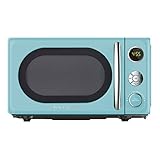
4. Galanz GLCMKA07BER-07
A Galanz retro-style microwave with a vintage look and simple dials. It is an appealing choice for a student who wants personality as well as function.
Suits: style-conscious students. Strengths: retro looks and simple dials. Weaknesses: vintage style may not suit all rooms. Skip it if you want a modern design.

Best for compact appliances
5. Danby Designer 0.7 Cu Ft Microwave
A Danby compact microwave aimed at small spaces. Danby is known for compact appliances, which makes this a natural fit for dorms.
Suits: compact appliances. Strengths: a brand focused on small spaces. Weaknesses: modest capacity. Skip it if you want a bigger oven.


Best for small shelves and desks
6. Commercial Chef Countertop Microwave 0.7
A compact Commercial Chef microwave that comes in several colors. It offers a lightweight option for tiny kitchens and dorm rooms.
Suits: small shelves and desks. Strengths: choice of colors and a small size. Weaknesses: fewer features. Skip it if you want advanced cooking modes.

Care and Setup
- Wipe the cavity after popcorn or spills.
- Use microwave-safe bowls and covers.
- Leave space behind and above for vents.
- Unplug it before moving out.
- Pack it in its original box at the end of the year.
- Wipe up spills before they dry.
Mistakes to Avoid
- Not checking your dorm’s appliance rules.
- Using metal containers or foil.
- Putting it on a flimsy shelf.
- Cooking popcorn for far too long.
- Leaving popcorn unattended.
- Plugging several high-power devices into one outlet.
Wattage and Cooking Times
Wattage affects how long food takes, and compact microwaves tend to sit at the lower end of the range. Packaged foods print their cooking times for a stated wattage, often for a higher-powered oven than a small dorm model. If your microwave has less power, the same food may need more time, so read the label and adjust. The listing or the label inside the door usually gives the cooking power, and the manual may include a conversion note.
The practical approach is to start with the time on the package and add short intervals, checking the food between them. Stir or turn the dish partway through, because small microwaves can heat unevenly, especially near the edges of the turntable. Let food stand for a minute or so after cooking, since heat continues to spread through it.
- Check the label for the power rating and compare it with your dorm’s limit on appliance power.
- Use the presets as a starting point, not a guarantee, and adjust for your food.
- Cook in smaller portions if the oven seems to leave cold spots.
- Do not guess when heating meat, eggs or leftovers; make sure they are hot throughout.
A lower wattage is not a defect. It is a tradeoff for the smaller size and lower electrical load that many dorms prefer.
Residence Hall Rules and Fire Safety
Residence halls often have specific appliance policies, and breaking them can lead to confiscation or fines. Some halls allow only microwaves under a set wattage or size, some require listed safety certification, and some limit appliances to shared kitchens. Look for the policy in your housing guide or website, and email the housing office if it is unclear. Do this before ordering, because return windows can be short.
Dorm rooms also have fire safety concerns. Smoke detectors can be sensitive, and burnt popcorn is a common cause of false alarms. Set the cooking time carefully, stay nearby and never put in a bag for a longer cycle than the package states. Keep the microwave away from curtains, bedding and papers.
- Plug the microwave straight into the wall outlet if allowed, and avoid daisy-chained power strips.
- Do not share a circuit with a space heater or other high-power device.
- Know where the nearest shared kitchen and fire extinguisher are.
- If food catches fire in the microwave, keep the door closed, turn it off and unplug it if safe. Follow your hall’s procedure.
If your hall has a shared kitchen microwave, consider whether a personal one is worth the space and the hassle.
Interior Size and What Actually Fits
Cubic feet tell you the volume, but the shape of the interior decides what fits. A compact microwave may have a turntable too small for a full dinner plate, so a plate can catch on the cavity wall and stop rotating. Check the listed turntable diameter, if given, and measure your favorite bowl and plate. Height matters for tall mugs, microwave popcorn bags and container lids.
It is also worth considering whether you can remove the turntable. Some models let you take it out for large dishes, though the food may then heat unevenly. A flatbed model does not have this issue, but compact dorm models often use a turntable.
- Choose microwave-safe containers that are low and wide, so they heat evenly and fit under the ceiling of the cavity.
- Look for containers that vent steam, and keep lids slightly open.
- Keep one wide microwave-safe bowl and one mug that you know fit.
- Avoid dishes with metal trim or foil, which can spark.
Before buying, picture your usual meals, such as noodles, soup, frozen entrees, oatmeal and a mug cake, and check that your containers fit in the cavity.
Cooking Well in a Small Oven
A compact microwave can do more than reheat pizza if you use a few techniques. Cover dishes loosely to trap steam, which keeps rice, vegetables and leftovers from drying out. Stir halfway through soups and sauces, and add a splash of water to rice or pasta before reheating. For frozen meals, poke the film and follow the instructions, as steam builds up in sealed packages.
Some foods need caution. Whole eggs in the shell can burst, and cooking an egg in a mug requires piercing the yolk and following a trusted method. Liquids can become superheated and splash when they are moved, so heat water in short bursts and let it sit before you remove it. Grapes, hot peppers and sealed containers can also cause problems.
- Use a plate or paper towel as a splatter cover.
- Use oven mitts for hot bowls, because steam and heat travel through the dish.
- Do not heat plastic takeout containers unless they are marked microwave-safe.
- Check the manual for any foods the maker says to avoid.
These habits matter more in a small space where an accident is more disruptive.
Move-In, Storage and Resale
A dorm microwave has to survive moving in, moving out and perhaps summer storage. Keep the box and the foam inserts if you can, since they make transport easier and protect the door and controls. When you set it up, choose a stable surface that can carry the weight, with space around it for ventilation. A cluttered shelf or a spot beside a radiator makes the microwave run hotter.
At the end of the term, clean the interior, wipe the door seal, empty the turntable and let everything dry before packing. If you are leaving it with a roommate or selling it, check that the cord and plate are included and mention any quirks, such as a sticky door or dim display.
- Do not store a damp microwave in a closed box for weeks.
- Remove the turntable and roller ring and wrap them separately.
- Take photos of the model label so you can find the manual later.
- Check campus swap groups before buying new at the start of term, or selling at the end, but inspect used units for a damaged door or seal.
A little care keeps a small oven working through several years of student life.
Check Your Residence Hall Rules Before You Buy
Before comparing models, read your school’s housing guidelines. Many residence halls limit the wattage, the size or even the type of appliances allowed in rooms, and some require that microwaves be placed in common kitchens. Buying one that breaks the rules can mean returning it or paying a fine. Find the official list on the housing office website or in the move-in handbook.
Check these points:
- Whether microwaves are allowed in rooms at all.
- Any limit on wattage or power draw.
- Whether the unit needs to carry a safety listing mark.
- Whether you can bring a microwave if you also bring a mini fridge, and how the two share outlets.
- Whether you share the room and need to agree with a roommate on a single unit.
If anything is unclear, email the housing office and keep the reply. It is far easier to ask than to reorganize a room after move-in.
Sharing a Small Room: A Quick Planning Table
A microwave in a dorm room has to live with a bed, a desk and a roommate. The table lays out common concerns and practical ways to handle each.
| Concern | Why it matters | What to do |
|---|---|---|
| Space | Floor and shelf space are limited | Measure the spot and include the door swing and ventilation room |
| Outlets | Rooms have few outlets, and circuits can be shared | Plug the microwave directly into the wall, not a crowded strip |
| Noise | Beeps and humming carry in small rooms | Choose a model with a way to mute the beep, if possible |
| Smells | Strong food can linger | Cover food and open a window or door |
| Cost sharing | Two people may use the same unit | Agree on who buys it and who keeps it afterward |
A quick conversation with your roommate before arriving helps prevent two microwaves from showing up.
What Fits Inside: Plates, Mugs and Bowls
Compact microwaves have smaller cavities, and not every plate will rotate freely. Measure the dishes you plan to use, especially the dinner plate. A turntable that cannot turn because a plate catches the sides gives uneven heating and may lead to an error.
- Check the turntable diameter and the interior height listed by the maker.
- Use microwave-safe bowls and mugs, and avoid containers not marked for microwave use.
- Cover food with a vented lid or a microwave-safe cover to prevent splatter.
- Do not use metal containers or foil unless the manual explicitly says it is acceptable.
- Stir and let food stand briefly so heat spreads evenly.
For food safety, follow package directions and official guidance when reheating leftovers.
Quick Cleaning Habits for Shared Spaces
Microwaves in dorms attract splatters and burnt popcorn smells. A weekly wipe prevents buildup. Heat a bowl of water with a slice of lemon for a short time, then wipe the interior with a damp cloth, if the maker allows it. Be careful, as the bowl and steam can be hot. Remove and wash the turntable by hand as the manual advises.
If popcorn burns, open the door, unplug the unit if there is smoke and ventilate the room. Report persistent smoke or sparking to the maker and, if needed, to residence staff. Never run the microwave empty or with metal inside.
Moving Out and Storing It for Next Term
When term ends, clean the interior, let it dry with the door open and wrap the cord. Pack the microwave upright in its original box if you still have it, or pad it with blankets. Check whether your housing has storage options, or arrange a spot at home. Keep the manual and receipt together, in case you need warranty help.
A Short Glossary of Microwave Terms
- Wattage: the power output, which affects how fast food heats. Lower wattage means longer times.
- Turntable: the rotating plate that helps food heat evenly.
- Cavity: the interior space where food goes.
- Child lock: a setting that prevents the controls from being used accidentally.
- Defrost function: a setting that thaws food using low, pulsed power.
- Presets: buttons that set times for foods like popcorn or beverages.
- Mute option: a way to turn off the beeping sound.
If a recipe or package gives times for a different wattage than your microwave, expect to adjust and check often. Package directions are the best first guidance for reheating prepared food.
Cooking and Reheating Habits for Dorm Life
A microwave can handle more than instant noodles. Think about simple meals that are quick and easy to clean up: oatmeal, steamed vegetables, scrambled eggs in a mug, baked potatoes and reheated leftovers. Use containers that are labeled microwave safe, cover food loosely and stir halfway through for even heating.
- Keep a small stack of microwave-safe bowls and a plate cover.
- Use oven mitts or a towel for hot containers.
- Do not heat sealed containers or eggs in their shells.
- Clean spills as they happen so they do not harden.
- Follow official guidance on storing and reheating leftovers safely.
Dorm Life: Rules, Sharing and Small-Room Etiquette
Before any dorm microwave is unboxed, the residence rules come first. Many halls limit the wattage or size of appliances allowed in rooms, some require specific safety features, and some provide shared kitchen microwaves instead of allowing personal ones. Read the housing agreement and check with residence staff, because a microwave that breaches the rules helps nobody when it is confiscated in the first month. If there is a shared kitchen option, weigh it honestly: a personal unit is convenient, but a shared one costs nothing to buy, store or move at the end of term.
Sharing a small room shapes the practical details. Agree with your roommate on where the oven lives, who cleans it and what happens with strong-smelling foods at odd hours, because most microwave friction in shared rooms is social rather than technical. A mute function or a beeper you can cancel quickly earns its keep during late-night study sessions and early lectures. Keep a trivet and a microwave-safe mug and bowl as dedicated dorm kit so nobody is tempted to use unsuitable containers borrowed from elsewhere.
Plan the whole life of the purchase, including the end of term. A compact oven has to be stored, sold or carried home, so keep the box if you have room, note the model’s details for resale listings, and clean it properly before storage so it does not develop odours in a cupboard over the summer. Bought thoughtfully and looked after, a dorm microwave often serves several students in succession, which makes choosing a sturdy, simple model a kindness to its next owner as well as to you.
Comparing the Picks Above, Side by Side in Practice
With the individual reviews read, the useful question is how the 6 picks differ in daily use. Comfee EM720CPL-PMB, BLACK+DECKER EM720CB7 and Toshiba EM925A5A-BS sit at the start of the list because they cover the most common version of this need, while Galanz GLCMKA07BER-07, Danby Designer 0.7 Cu Ft Microwave and Commercial Chef Countertop Microwave 0.7 each tilt towards a more specific situation described in their reviews. Rather than hunting for a single winner, match the situation in each review to your own kitchen, your counter space and the dishes you heat most often, and let that match eliminate all but two of the picks.
Between your final two, decide on the practical checks: measure your largest plate and tallest container against the interior dimensions and turntable figures on each listing, compare the control styles as they would feel to everyone in the household, and read what each listing says about noise, lighting and the door action. These details are stated or shown on the listings themselves, so verify them there rather than assuming two ovens of similar size behave alike. Small differences in controls and cavity shape are what you will live with several times a day.
Finally, weigh the ownership details that listings and maker pages state plainly: warranty length, what is covered, and whether replacement turntables, plates and other parts are easy to obtain in your area. A model that is simple to support locally is often the wiser buy than a marginally larger cavity shipped from further away. Whichever pick you choose, run the first-week routine described elsewhere in this guide, note your proven timings, and the oven will quickly stop being a new appliance and become part of the kitchen furniture in the best sense.
Wattage, Time and Why Package Directions Need Adjusting
Almost every frustration with microwaves for dorm rooms traces back to wattage. Package directions and recipes are written for a particular power level, and an oven with different wattage will undercook or overcook the same food on the same timing. The fix is a habit rather than a formula: when you try a new food, start with the shortest suggested time, check, and add short bursts while you learn how your oven behaves. Within a few weeks you will know instinctively how your model treats soup, rice, leftovers and frozen meals, and that personal knowledge beats any conversion chart taped to a cupboard door.
Power levels deserve more use than they get. Full power is right for boiling water and reheating soups, but gentler levels cook far better for melting, softening, defrosting and reheating delicate foods such as fish, eggs and creamy sauces. Using a medium setting for a little longer gives heat time to spread through the food instead of blasting the edges while the centre stays cold. If the picks above differ in the power levels and preset programmes they offer, match those controls to the foods you actually prepare, not to the longest feature list.
Standing time is part of the cooking, not an afterthought. Microwaves heat unevenly by nature, and a minute or two of standing with the door closed lets hot and cold spots equalise. Stirring halfway through, rotating a dish that does not sit on a turntable and arranging food in a ring with the thickest parts outward all reduce the gap between scorched edges and a cold middle. Build these small steps into your routine and the same oven suddenly seems far more capable.
Even Heating: Stirring, Arranging and Covering Food Properly
Microwave energy penetrates food only so far, which is why the centre of a deep bowl lags behind its edges. Shallow layers heat faster and more evenly than deep ones, so spread food in a wide, flat dish when you can, and separate portions rather than stacking them. Dense items such as potatoes and thick pieces of meat benefit from being turned partway through, while liquids should be stirred, because a still liquid can look calm while holding very hot pockets.
Covering food is a tool with several jobs. A vented cover or a plate traps steam that helps heat reach the middle, keeps splashes off the cavity walls and stops the surface drying out. Leave a gap for steam to escape so pressure does not build and lift the cover off. Paper towels suit greasy foods that benefit from absorbing fat, while microwave-safe lids suit soups and sauces. Whatever you use, confirm it is labelled microwave safe, and lift covers away from your face so the rush of steam does not scald you.
Resting and checking complete the technique. Use a food thermometer when reheating leftovers that matter, especially meat and rice dishes, and make sure reheated food is steaming hot throughout rather than warm at the edges. If one part lags, let the dish stand longer before adding more power, because repeated blasts overshoot quickly once the food is nearly there. These habits cost seconds and rescue more meals than any upgrade in oven size.
Containers, Covers and What Should Never Go Inside
Choosing the right container is a safety decision as much as a cooking one. Glass and ceramic dishes labelled microwave safe handle most jobs, and many plastics are suitable when they carry the microwave-safe mark, though fatty or sugary foods get hot enough to warp unsuitable plastic. Never put metal inside unless the oven and its manual specifically allow it for a particular mode: metal reflects microwaves, can spark and can damage the oven. That includes foil trim on plates, twist ties and takeaway containers with metal handles or linings.
Everyday items cause quiet confusion. Brown paper bags, newspapers and some recycled paper products are not made for cooking and can contain materials that should not be heated with food. Eggs in their shells can burst from steam pressure, and whole chillies and sausages benefit from being pierced so steam can escape. Sealed containers should be opened or vented before heating, because pressure builds fast in a small space. When in doubt, transfer food to a dish you trust; decanting takes seconds and removes the guesswork.
Combination models add a second rulebook. Ovens that also grill, roast or air fry use conventional heat in those modes, and cookware rules change with the mode: metal racks and trays supplied with the oven belong in the modes the manual specifies, not in plain microwave mode. Read the mode-by-mode guidance once, carefully, when the oven arrives, and keep the supplied accessories together so nobody guesses later. Most combination-oven damage stories begin with the right accessory used in the wrong mode.
Placement, Ventilation and Electrical Basics
Where a microwave lives affects its performance and its lifespan. Countertop models need the clearances the manual specifies around the sides, back and top so cooling air can circulate, and they should sit on a level, sturdy surface that can take the weight of the oven plus a heavy casserole. Avoid placing one where steam from kettles and pans constantly bathes it, and keep the cord from trailing across hot hobs or hanging where a child or a passing sleeve can catch it.
Electrical common sense matters because a microwave draws substantial power. Plug it directly into a wall outlet where possible rather than an extension lead or a multi-way adapter shared with other hungry appliances, and if a circuit trips repeatedly, treat that as information and have an electrician check the circuit rather than working around it. Built-in, drawer and over-range models have their own installation requirements, and those jobs belong to qualified installers working to the manual and local codes, not to optimistic weekend improvisation.
Think about the human geography too. The oven should be reachable without stretching over hot pans, low enough that a heavy, hot dish can be lifted out safely at elbow height, and close to the surface where you will set that dish down. In households with children, consider the reach of curious hands and the visibility of the control panel. A microwave placed thoughtfully gets used confidently for years; one squeezed into an awkward corner becomes a daily small annoyance.
Cleaning the Cavity and Keeping Odours Away
A microwave is easiest to clean little and often. Wipe spills while they are fresh and they lift away with a damp cloth; leave them through several more cooking sessions and they bake into a project. For a deeper clean, heating a bowl of water, with a slice of lemon if you like, until the cavity steams will soften dried splashes so they wipe off without harsh scrubbing. Remove the turntable and its support ring and wash them as the manual allows, and dry the cavity before replacing them so moisture does not linger in the seams.
Odours usually come from residue rather than the oven itself. Fish, curries and burnt popcorn leave their mark in splashes on the walls and ceiling of the cavity, so a thorough wipe after strong-smelling foods prevents flavours migrating into the next meal. The door seal and the area around the latch deserve attention too, because grime there can affect how cleanly the door closes. Avoid abrasive pads and harsh chemicals inside the cavity unless the maker approves them, since the interior surfaces are part of how the oven works safely.
Treat the exterior and controls gently. A soft cloth with mild detergent handles fingerprints and cooking film, and keeping the vents clear of dust and grease helps the cooling system do its job. If the oven ever sparks, smells of electrical burning or behaves erratically, stop using it and have it assessed rather than cleaning hopefully and carrying on. Door damage in particular is a stop-and-ask issue: the door and its seals are central to safe operation, and they are not a do-it-yourself repair.
Reading a Listing: Cavity Size, Turntable and Controls
Listings for microwaves for dorm rooms lead with capacity figures that need translating into your dishes. Interior capacity tells you volume, but the shape of that volume and the diameter of the turntable decide whether your dinner plates, your tallest mug or your favourite casserole actually fit. Measure the dishes you use most and compare them with the interior dimensions and turntable size on the listing, and remember that a dish needs room to rotate without catching the walls if the turntable is to do its job.
Controls shape daily satisfaction more than most buyers expect. Keypads with express-start buttons suit households that mostly reheat drinks and ready meals, while dials can be quicker for adding time in simple steps and easier for users who dislike menus. Sensor programmes promise to judge food automatically, and they work well for standard jobs such as jacket potatoes and reheating plates, provided the cavity and sensors are clean. Think about who will use the oven, including guests, older relatives and children, and favour controls they can operate without a tutorial.
Noise, lighting and small features add up. An interior light that actually shows the food, a beep that can be muted for early mornings, a child lock where small children roam and a door that opens smoothly without dragging the oven across the counter all matter across thousands of uses. When the picks above look similar on paper, these everyday details, plus warranty terms and the availability of replacement turntables and parts, are the honest tie-breakers.
Everyday Routines: Defrosting, Reheating and Planning Ahead
Defrosting is where microwaves quietly save more meals than any other function. Use the defrost setting or a low power level, separate pieces as soon as they loosen, and remove portions that have thawed so they do not start cooking while the centre of the batch is still icy. Turn and shield thinner edges of large items as the manual suggests, and always allow standing time afterwards so temperatures equalise. Food defrosted this way should be cooked promptly, and anything that has warmed unevenly deserves extra care to bring it fully and safely to temperature when cooked.
Reheating rewards the same patience. Sprinkle a little water over rice and pasta, cover the dish, use medium power for dense foods and stir or rearrange partway through. Leftovers should be reheated until steaming hot throughout, and only reheated once as a matter of good practice. Batch cooking on a weekend, portioning meals into shallow containers and labelling them with dates turns the microwave into the last step of a system rather than a gamble, and it is where a reliable mid-sized oven earns its place in a busy household.
Finally, keep a short list of your oven’s proven timings on the inside of a cupboard door: the mug of milk, the standard rice portion, the usual soup bowl, the frozen peas. Every oven has its own character, and your notes capture it better than package averages. Add new entries as you learn them and cross out the failures. It sounds old-fashioned, and it works, because the second time you cook anything in your own oven should always be better than the first.
One often-overlooked check is the door. It should close with a positive, even action, sit flush and open without the oven sliding towards you. On a countertop model, rubber feet and sensible weight help stability; on any model, a door that feels flimsy in a showroom will not improve at home. If you are choosing between two similar picks above, small differences in door feel, handle comfort and display readability are legitimate reasons to decide, because you will touch them every single day.
It is also worth planning for the food you cook at celebrations and busy seasons, not just ordinary Tuesdays. A dish for guests, a large casserole or a queue of mugs at a family breakfast all test capacity and patience in ways a solo supper never does. If those moments matter to you, favour the pick whose interior shape suits your largest regular dish, and accept a slightly larger footprint as the price of calm hosting. If they never happen, the compact choice will serve you better and give counter space back.
Dorm Microwave FAQ
What size microwave is best for a dorm?
A compact model of about 0.7 cubic feet is a common fit, but check your space and rules. Check the listing for exact dimensions and compare them with your shelf.
Are there power limits in dorms?
Some residence halls limit appliance wattage. Check your housing guide before buying. Your housing office can tell you the rules, so email them before you buy.
Can I share a microwave with a roommate?
Yes, and splitting the purchase is common. Agree on cleaning rules from the start. Share the load and set simple cleaning rules to keep the peace.
What can I cook in a compact microwave?
Popcorn, noodles, soups, steamed vegetables and reheated meals all work well. A small oven still handles most student meals if you cook in portions.
Does a lower wattage microwave cook slower?
Generally yes. Food may need more time than a package states, so cook in short intervals and check. The wattage is on the label or the listing.
Can I plug a microwave into a power strip?
Many halls and makers advise against it. Plug directly into a wall outlet if the rules allow, and avoid sharing the circuit with other high-power appliances.
What should I do about popcorn setting off the alarm?
Follow the package time, do not use extra time and stay close. If alarms are a problem, switch to a different snack or use a shared kitchen with better ventilation.
Do I need a microwave-safe label on bowls?
Yes, use containers marked microwave-safe and avoid metal trim. If a container does not have a label, check with the maker.
Is it safe to heat water in a mug?
Heat in short bursts and let it rest before removing it, since water can become superheated and splash. Use a mug that is marked microwave-safe.
Will a compact microwave fit a full dinner plate?
It depends on the turntable size. Check the listing and measure your plate before buying, and remember that a plate must be able to turn freely.
Where should I put the microwave in a small room?
On a sturdy, level surface with clear space around the vents, away from curtains, bedding and sources of moisture.
How do I clean after burnt popcorn?
Let the oven cool, wipe it with a damp cloth and mild soap and leave the door open to air out. A bowl of water with lemon can help loosen residue, but follow the manual.
Why does food heat unevenly, and how do I fix it?
Microwaves penetrate food only a short distance, so edges heat faster than centres and dense parts lag behind liquids. Spread food in shallow, even layers, stir or turn it partway through, cover it to trap steam and always allow standing time so temperatures equalise. If your oven has a turntable, keep it turning and size dishes so they can rotate freely. Persistent cold centres in large portions usually mean the portion is too deep, not that the oven is broken.
Can I put metal in my microwave?
In plain microwave mode, no, unless the oven manual specifically provides for a particular supplied accessory in a particular programme. Metal reflects microwaves, can spark and can damage the oven, and that includes foil decorations, twist ties and containers with metallic linings. Combination ovens are different in their grill or convection modes, where the maker supplies racks and trays for those modes. The safe habit is simple: know which mode you are in and follow that mode’s cookware rules.
How do I convert a recipe written for a different wattage?
Treat published times as a starting estimate and adjust by observation. If your oven is less powerful than the recipe assumes, expect to add time in modest increments; if it is more powerful, check early. Change one thing at a time and note the result, because your own notes for your own oven quickly become more useful than any conversion table. Foods with obvious cues, such as boiling, melting or steaming, are easier to convert than delicate items that can overcook invisibly.
Is it safe to stand in front of a microwave while it runs?
A microwave in good condition with an undamaged door and seals is designed to be used in a normal kitchen while you stand nearby. The door, its mesh and its interlocks are safety components, which is why door damage is a stop-using-it issue rather than a cosmetic one. Keep the door and seals clean so it closes properly, never operate the oven empty or with the door obstructed, and have any door or latch problem assessed by a professional rather than adjusted at home.
Why does my microwave trip the breaker or dim the lights?
A microwave draws a lot of power, and on a shared or older circuit that demand can show. Plug the oven directly into its own wall outlet where possible, avoid running other heavy appliances on the same circuit at the same time, and do not use extension leads or multi-way adapters as a permanent solution. If tripping repeats on a dedicated outlet, have an electrician inspect the circuit and the outlet. Repeated tripping is information about your wiring, not an inconvenience to work around.
How should I defrost meat safely in the microwave?
Use the defrost programme or a low power level, turn and separate pieces as they loosen, and remove thawed portions so they do not begin to cook while the rest thaws. Keep raw meat in a dish that catches drips, cook it promptly after defrosting, and wash hands, dishes and surfaces that touched the raw juices. If part of the meat has started to cook at the edges, that is a sign the power was too high or the pauses too few; slower defrosting gives a better result.
What do I do if something sparks inside?
Stop the oven immediately using the controls or by switching off at the outlet, and leave the door closed while you assess what happened. Common causes are metal that should not be there, a damaged interior surface, or food cooked with no moisture in an unsuitable container. Remove the cause once everything is cool, inspect the cavity as the manual directs, and if sparking happens again with plain food in a proper dish, stop using the oven and have it checked professionally.
How long should a microwave last, and when should I replace it?
Lifespan depends on build quality and how heavily it is used, but the decision points are practical: uneven performance that technique cannot fix, a door or latch that no longer closes properly, unusual noises or smells, rust or damage inside the cavity, or controls that fail. Door and safety issues mean stop and replace or have it professionally assessed, not persevere. When you replace, recycle the old unit through the routes your area provides for electrical appliances rather than general waste.
The Short Version
For a popular compact pick, the Comfee EM720CPL-PMB. For simple digital controls, the BLACK+DECKER EM720CB7. For a stainless look, the Toshiba EM925A5A-BS. For retro style, the Galanz. For a small-space brand, the Danby. For color choices, the Commercial Chef. Check your housing rules before you order.

