Pressure cookers speed up braises, beans, stocks and tough cuts by raising the pressure in a sealed pot. Electric models manage the pressure for you, while stovetop pots need a bit more attention but heat fast and last for years.
The six picks below mix the best-known Instant Pot with electric rivals and a stovetop pot, so you can choose the format that fits your cooking. Always read the manual, since pressure cooking has its own safety rules. We have not used these products ourselves, so please confirm details on the current listing before buying.
As an Amazon Associate we earn from qualifying purchases. Links below are affiliate links, and they do not change the product information we give.
What to Look For
| Feature | Why it matters |
|---|---|
| Format | Electric cookers are hands-off; stovetop pots are fast and durable |
| Capacity | Choose by household size and batch cooking needs |
| Extra functions | Air fry, slow cook and sous vide add flexibility |
| Safety features | Lid locks and pressure release valves are essential |
| Cleanup | Dishwasher-safe parts save time |
In this guide
Specs at a Glance
| Cooker | Type | Standout feature | Notes |
|---|---|---|---|
| Instant Pot Duo | Electric | Multi-cooker | Seven functions |
| Ninja Foodi OP302 | Electric | Pressure and crisp | Two lids |
| Presto 01781 | Stovetop | Canner | Large pot |
| Cuisinart CPC-600N1 | Electric | Stainless | Presets |
| Breville Fast Slow Pro | Electric | Precise | Premium build |
| T-fal Clipso Minute | Stovetop | Stainless | One-hand lid |
The 6 Best Instant Pots and Pressure Cookers

Top pickBest for most households
1. Instant Pot Duo 7-in-1
The well-known multi-cooker that handles pressure cooking, slow cooking, rice, steaming and sauteing. Check the listing for sizes, because this model comes in several capacities.
Suits: most households. Strengths: a proven design. Weaknesses: basic panel. Skip it if you want air frying.

Best for crisp finishes
2. Ninja Foodi Pressure Cooker OP302
An electric pressure cooker with an air crisp lid, allowing you to pressure cook and then crisp the surface. Check the listing for the size and the accessories included, since the lid system adds to the storage needs.
Suits: crisp finishes. Strengths: a crisping lid. Weaknesses: a larger body. Skip it if you want the simplest cooker.
View Ninja Foodi Pressure Cooker OP302 on Amazon

Best for home canners
3. Presto 01781 23-Quart Pressure Canner and Cooker
A large aluminum pressure canner and cooker for canning and big-batch cooking on the stove. Because it is a canner, read the maker’s guide closely and follow tested canning recipes.
Suits: home canners. Strengths: a big capacity. Weaknesses: heavy and bulky. Skip it if you want a countertop cooker.

View Presto 01781 23-Quart Pressure Canner and Cooker on Amazon
Best for those who like the brand
4. Cuisinart CPC-600N1 Electric Pressure Cooker
An electric pressure cooker from a long-established kitchen brand with a stainless steel build and several presets. Check the listing for capacity and program details before buying.
Suits: those who like the brand. Strengths: a stainless steel build. Weaknesses: fewer extras than top multi-cookers. Skip it if you want app control.
View Cuisinart CPC-600N1 Electric Pressure Cooker on Amazon

Best for serious cooks
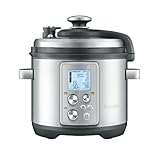
5. Breville Fast Slow Pro
A high-end electric pressure cooker with a well-regarded interface and flexible programs. Check the listing for capacity and settings, as this premium cooker has a longer program list.
Suits: serious cooks. Strengths: precise controls. Weaknesses: a higher level of purchase. Skip it if you want a no-frills cooker.
Best for stovetop fans
6. T-fal Clipso Minute Pressure Cooker
A stovetop pressure cooker that locks easily with a one-hand lid design, offered in various sizes. Check the listing for sizes and compatibility with your stove, including induction.
Suits: stovetop fans. Strengths: simple, durable stovetop cooking. Weaknesses: needs more attention than electric. Skip it if you want automatic control.
View T-fal Clipso Minute Pressure Cooker on Amazon
Care and Setup
- Wash the lid and gasket after every use.
- Keep vents clear of food.
- Check the gasket for cracks.
- Store with the lid off to prevent odors.
Mistakes to Avoid
- Overfilling the pot.
- Releasing pressure too quickly.
- Ignoring the manual’s minimum liquid rule.
- Using a damaged gasket.
How Pressure Cooking Works and Why It Is Fast
A pressure cooker traps steam in a sealed pot, which raises the pressure and lets the liquid inside reach a temperature above the usual boiling point. Hotter cooking conditions break down connective tissue in tough cuts, soften dried beans and extract flavor from bones much faster than a simmering pot. That is why chuck roast, shanks, stock, chickpeas and whole grains are common choices. The time saved is mostly in the cooking itself. Remember to add the time it takes the pot to come up to pressure and to release it afterwards, which can be substantial with a full pot.
Not everything benefits from pressure. Delicate foods such as fish, leafy greens and quick-cooking vegetables can turn mushy, and crisp textures are lost. Many cooks use the pot for the long-cooking part of a dish and finish it with a quick sear, a sauce reduction or added fresh vegetables. Pressure cooking also does not brown food by itself, so sauteing before sealing the lid adds flavor, and the browned bits on the bottom should be scraped up with a little liquid.
The cooker needs liquid to build steam. Each model sets a minimum amount, and recipes written for it respect that rule. Thick sauces, dairy and starchy mixtures can sit on the bottom and scorch or block the pot from reaching pressure, so layer them near the top and stir them in after cooking.
- Good fits: tough meats, beans, stocks, whole grains, braises.
- Poor fits: delicate fish, leafy greens, anything meant to stay crisp.
- Brown first, layer thick ingredients on top and keep to the minimum liquid.
Choosing the Right Size for Your Household
Capacity is listed in quarts or liters, and it describes the total volume of the inner pot, not the amount of food you can cook. Pressure cookers should never be filled to the brim. Manuals set a maximum fill line, typically lower for foods that expand, such as beans, rice and grains, or that foam, such as pasta and some soups. That means a pot’s usable space is smaller than the headline figure.
A smaller pot suits one or two people, side dishes and small batches. A mid-size pot is the usual choice for families, covering a roast, a pot of chili or a big batch of rice. A larger pot suits meal preppers, entertainers and anyone cooking for a crowd, but it takes more counter and storage space, and it can be awkward to lift and clean. Remember that a large pot cooking a small amount of food can work but may take longer to come up to pressure and may not reach the minimum liquid depth for some recipes.
Think about the foods you want to cook. A whole chicken or a large roast needs room, while stock-making may call for a taller pot. Check the inner pot’s dimensions on the listing and compare them with your cabinet and your largest cookware. Also check whether accessories such as steamer racks and trivets fit the model you choose.
- Plan for the maximum fill line, not the total volume.
- Match the size to the largest dish you cook regularly.
- Check storage space and the weight of the pot when full.
Pressure Release Methods and Safe Habits
How you release pressure changes the result and the safety of the process. Natural release means letting the pot cool and the pressure drop by itself, which takes longer but is gentle on foods that foam or splash, such as beans, soups and large cuts of meat. Quick release means opening the valve to let steam out, which is faster and suits vegetables and other foods that overcook easily. A hybrid approach is to wait a set time and then release the rest. The recipe or manual usually says which to use.
Always keep your hands and face away from the steam vent when releasing, and use a utensil or a mitt if the manual suggests. Never force a lid open. If the lid is locked, pressure remains inside and you should wait. Do not cover the vent or tamper with the valve, and do not use a damaged lid or a cracked gasket.
A few more safety habits matter:
- Check that the sealing ring and valve are clean and properly seated before every cook.
- Do not overfill, particularly with foods that expand or foam.
- Place the cooker on a flat, heat-resistant surface with space above it for steam.
- Read the manual’s guidance on foods that should not be cooked under pressure, such as certain thick or foamy items.
- Stovetop cookers need attention to heat: lower it once pressure is reached so the pot holds steady.
If the pot hisses constantly, sputters liquid from the valve or will not seal, stop and check the gasket, the valve and the liquid level before trying again.
Electric and Stovetop Compared in Daily Use
The two formats feel different to use. Electric models manage temperature, timing and pressure for you, so you select a program, set a time and walk away. They also double as slow cookers, rice cookers and steamers in many cases, and they keep food warm afterwards. That convenience comes with a larger countertop footprint, a power cord, a lid with sealing parts and electronics that may eventually fail. They also tend to come to pressure more slowly, since they heat from the bottom with a lower-wattage element.
Stovetop models use the burner to create pressure and rely on you to adjust the flame. They generally heat up faster, reach higher pressure on many designs and can be used to brown food directly in the pot. They often have simpler construction with fewer electronics, which suits cooks who prefer a long-lasting pan. The trade-off is that you need to watch the heat and learn the sound and feel of the valve. Check compatibility with your cooktop, particularly if you have induction, and check that the base is made for your stove type.
Consider the questions below when choosing:
- Do you want to set it and walk away, or are you comfortable managing heat?
- Do you want extra functions like slow cook, sous vide or air crisp?
- How much counter and cabinet space do you have?
- Do you want to can food? Only a proper pressure canner and tested recipes should be used for that.
Either format works well once you learn it. The best one is the one you will actually take out of the cabinet.
Gaskets, Valves and Long-Term Upkeep
A pressure cooker’s safety depends on small parts. The sealing ring, or gasket, creates the seal between lid and pot. Over time it can stretch, crack or absorb odors, and a worn gasket can leak steam or prevent the pot from reaching pressure. Remove the gasket after each cook, wash it, let it dry and check it for damage. Many owners keep a spare and consider using separate rings for savory and sweet dishes to prevent flavor carryover.
The pressure valve and vent need regular checks too. Food bits can clog small openings, so clear them according to the manual. Some models let you remove the valve for rinsing, and the lid itself may be dishwasher-safe or hand-wash only, depending on the model. Check the inner pot for scratches and warping, as a warped base can heat unevenly. Do not use abrasive pads on stainless steel that the maker says should be cleaned gently.
For electric models, keep the heating base dry and wipe it clean. Check the cord and plug for damage and look at the rim where the lid sits for debris. For stovetop pots, check the lid handle and the locking mechanism for looseness.
Signs that it is time to replace parts, or the cooker, include:
- A gasket that is cracked, stretched or permanently smelly.
- Steam leaking around the lid when it should be sealed.
- A valve that sticks or fails to move freely.
- A warped lid or pot, or a damaged handle.
- An electric unit that fails to heat, trips breakers or has a damaged cord.
Use only replacement parts made for your model, and contact the maker if you are unsure.
Pressure Cooker Terms Worth Knowing
The vocabulary around electric pressure cookers can feel like its own language. This short glossary helps you read a listing with confidence.
- Quart capacity. The marked size of the inner pot. The usable amount is smaller, since pressure cooking requires headroom.
- Natural release. Letting pressure fall on its own after cooking ends, which can take a while.
- Quick release. Opening the valve to let steam escape sooner, as the maker’s manual directs.
- Sealing ring. The silicone gasket in the lid that keeps pressure inside, and which may hold onto odors.
- Sealing and venting positions. The two valve settings that govern whether the unit builds or releases pressure.
- Saute function. A browning mode used before or after pressure cooking, with the lid off.
Not every model has every feature, so check which modes are listed before assuming a multi-cooker can also slow cook, steam or make yogurt.
Which Size Suits Which Household
Capacity is where most people over- or under-buy. A smaller pot is easier to store and quicker to heat, yet it limits big batches. A larger pot suits meal prep and gatherings but takes up more shelf and counter room.
| Household | Sizing direction |
|---|---|
| One or two people | A compact pot is often plenty |
| Family of three to five | A mid-size pot gives room for stews and roasts |
| Large family or batch cooks | A larger pot, if the storage space allows |
Check the footprint and height with the lid on, since you may want to keep the cooker under a cabinet, and leave space around the vent for steam to escape.
When to Follow the Manual and When to Call Support
Pressure cooking involves steam and sealed lids, so use the manual as your rulebook. It will tell you the minimum liquid, the maximum fill line, how to inspect the lid and valves and when to replace the ring. Never force a lid open, and do not modify any safety part.
For cleaning, remove the inner pot and wash it as the manual recommends. Take the lid apart as directed to clear the vent and rinse the ring. If a unit leaks steam, will not seal, or shows an unfamiliar error, stop using it and contact the maker’s support before trying again.
Everyday Habits That Make It Easier
Keep a shallow dish near the cooker for the lid and spoon. If you buy a spare ring, keep one for savory dishes and one for sweeter recipes so flavors stay separate. Store the lid placed loosely so air can circulate, and wipe the outside of the base with a damp cloth once it has cooled.
A Quick Checklist Before You Order
Run through this short list to make sure the cooker you choose fits your kitchen and your cooking.
- Confirm the interior pot is stainless steel or coated, and read how the maker says to clean it.
- Look for a clearly printed fill line so you never guess.
- Check that spare parts such as rings and lids are available from the maker.
- Count the preset buttons you will actually use. Many people rely on three or four.
- Find the cord length and plan an outlet position that keeps steam away from the wall.
- Look at the weight, since you may lift it for washing and storage.
Beans, rice, soups and tougher cuts of meat are the dishes most people reach for, so think about those meals when you decide on size and settings.
Pressure, Two Ways: Reading a Mixed Guide With Confidence
This guide sets electric multi-cookers and stovetop pressure cookers side by side, and the comparison is fairer than it first looks, because both are answers to the same question: how should this household cook under pressure? The electric answer is delegation: load, seal, choose a programme, and let the machine manage pressure, timing and release warnings while you do something else. The stovetop answer is participation: you bring the pot to pressure on your hob, you judge the hiss and the heat, and in exchange you get a vessel that also serves as your largest pan, works in any kitchen with a hob, and can outlive its owner with gasket care.
Capacity means different things across the divide and deserves care. Electric sizes are tidy numbers that include the housing’s logic; stovetop sizes run to canning volumes that dwarf any countertop unit, and the biggest of them exists for preserving as much as for cooking. A household whose pressure ambitions include preserving a garden’s surplus should read the stovetop picks with particular attention, because that is a job the electrics in this guide are not built to do. A household whose ambitions are weeknight dinners should compare working capacities and footprints, not the largest number on either side.
Safety, often raised as the dividing line, is better understood as two different systems. Modern electric cookers layer sensors and locks so the machine supervises itself; modern stovetop cookers use weighted or sprung valves, indicators and gaskets that are simple, visible and maintainable, and their safety depends on those parts being kept sound and the cook following the manual. Both systems have long, honourable records when respected. The honest question is which supervision style suits your temperament: the machine that watches itself, or the instrument you watch.
Cost across a lifetime completes the comparison. Electric cookers concentrate their value in convenience and programmes, and their lifespan is set by electronics and parts support; stovetop cookers spread their value across decades, asking only for gaskets and care. Neither arithmetic is wrong. Decide which currency your household prefers to pay in, attention or money, match the size to your real batches, and either side of this guide will serve you with the speed and tenderness that made pressure cooking endure.
Choosing a Multi-Cooker or Pressure Cooker Around Size and Method
Size is the first decision, and it should be made in servings and storage, not in headline volume. A pressure cooker never fills to the brim in use, because it needs headroom for pressure and for foods that expand, so the working capacity is always well below the number on the box. A small household cooking rice, stews and soups for two or three needs a different pot from a family batch-cooking for the freezer, and both need room for the appliance on the counter or in a cupboard, with its lid open and its cord reaching a socket. Choose for your ordinary week, and let the occasional feast borrow a second batch rather than dictating a giant pot that lives in the way.
Electric and stovetop designs divide the field by temperament. An electric multi-cooker manages its own pressure and timing, offers programmes for grains, yoghurt and slow cooking, and asks mainly to be loaded and left alone, which suits busy households and nervous beginners. A stovetop cooker reaches pressure on your hob, responds to your hand on the control, lasts for decades with gasket changes, and suits cooks who like direct control and who may also can or cook in very large volumes. Neither is the advanced choice; they are different relationships with the same physics, and the guide above shows which of the picks takes which path.
Functions deserve a sceptical read. A long programme list is only worth having if your cooking will use it, and the core jobs, pressure cooking, slow cooking, rice, steaming and sauteing, cover most households’ real weeks. Air-frying lids, sous vide and smart connectivity each add cost, parts and cleaning, so they should be bought for a named purpose, not for completeness. What matters more is how the core jobs are controlled: clear pressure settings, a saute function that actually browns, a keep-warm that does not wreck a stew, and a lid and valve arrangement you can clean without a diagram every time.
Materials and parts decide the long term. A stainless inner pot tolerates metal utensils, browns well and shrugs off staining, while a nonstick pot releases rice and porridge beautifully and asks for gentle tools and eventual replacement. Sealing rings, valves and gaskets are consumables on every design, so check they are available for the model you choose and budget for a spare ring early, because a ring absorbs flavours and a second one lets you keep a savoury and a sweet ring apart. A cooker is a pressure vessel; buy from a maker whose parts and manuals will still exist when you need them.
Pressure Cooking Well: Liquid, Timing and Release
Pressure cooking needs liquid, because steam is the working medium, but it needs less than conventional cooking since almost none escapes. Start from the manual’s minimum and the recipe’s guidance, and remember that ingredients give up their own liquid as they cook, so a pot that looks dry at the start can be generous by the end. Layer thoughtfully: liquids and aromatics below, foods that foam or expand kept within their limits, and thick sauces thinned or added after cooking, because a thick, starchy liquid at pressure can scorch on the base and trigger a burn warning on electric models.
Timing begins when pressure is reached, not when the cooker is switched on, and the climb to pressure varies with how full and how cold the pot is. This is the most common beginner confusion, and it explains most early disappointments. Build the routine of noting, for your regular dishes, the total time from switch-on to finish in your pot, and recipes become reliable in your kitchen rather than on paper. Cut food to even sizes so it finishes together, and accept that delicate vegetables often belong in after the pressure phase, cooked briefly on saute or steam with the lid ajar.
Release is a cooking decision, not an afterthought. Letting pressure fall naturally suits meats, beans and foamy foods, keeps juices where they belong and avoids a sputtering valve; releasing quickly suits vegetables and anything that overcooks in minutes. The manual for your cooker describes its release method and its cautions, and they should be followed exactly, with hands and face clear of the steam path and the valve handled with a utensil rather than bare fingers if the design invites that. Never force a lid, never open against pressure, and treat any cooker that behaves oddly at the valve as a stop-and-check problem, not a quirk.
Converting ordinary recipes becomes straightforward once you respect three adjustments: less liquid, shorter time at pressure, and seasoning checked at the end, because pressure concentrates some flavours and mutes others. Dairy, thickeners and delicate herbs generally go in after the pressure phase. Pasta and grains have their own rules about liquid and release that repay learning once. Keep a short notebook for your first months; the cooks who love these appliances are the ones whose second attempt at a dish is informed by the first.
Cleaning, Gaskets and Long-Term Upkeep
Wash the inner pot as its material requires, and pay attention to the lid, which does more work than any other part. The sealing ring should be removed and washed regularly, dried fully and refitted correctly; a ring seated badly is the usual reason a cooker will not come to pressure. The steam valve and its cover collect starchy residue and need the cleaning the manual describes, and the rim and condensation channels of an electric cooker should be wiped after each use, because yesterday’s drips become today’s smells and, eventually, today’s faults.
The sealing ring is the part you will replace, and knowing its signs saves frustration: persistent odours that survive washing, a loose or stretched fit, visible cracks or stiffness, and steam leaking at the rim all point to a new ring. Keep a spare from the start and rotate if you cook both fiery curries and delicate desserts. Float valves and anti-block shields should move and sit as the manual shows; if any small part is lost or damaged, replace it with the maker’s part rather than improvising, because these small pieces are the safety system.
Store the cooker with the lid resting so the ring is not compressed and sealed in with cooking smells, many owners keep the lid upside down on top for exactly this reason. Keep the cord dry, the exterior wiped, and the manual with its part numbers somewhere findable. If a stovetop cooker’s handles loosen, its gasket hardens or its pressure indicator behaves oddly, service or replace the parts before the next use; pressure equipment does not reward optimism. Looked after this way, these are among the longest-lived appliances in the kitchen, and the upkeep is measured in minutes per month.
Mistakes That Make Pressure Cooking Disappoint
The first mistake is overfilling, especially with foods that foam or expand, which can block the valve and will certainly defeat the cooking. Respect the maximum lines for ordinary food and for grains and beans, which are stricter. The second is too little liquid, or liquid that is all thick sauce, which scorches and stops the show. The third is judging time from switch-on and concluding the method is slow or the recipe wrong, when the cooker was still climbing to pressure. The fourth is releasing pressure violently on foods that needed a gentle fall, spraying the kitchen and toughening the meat in one move.
Owners also neglect the ring and valve until the cooker will not seal, stir dairy and thickeners in at the start and meet the burn warning, and try to hurry a lid that is not ready to open. Each has the same remedy: read the manual for your model once, properly, and follow its fill lines, its cleaning routine and its release guidance. Pressure cooking is fast, economical and remarkably forgiving of cheap cuts and busy schedules, but it asks in return that its few firm rules be treated as firm.
Putting the Picks Side by Side
With six options in this guide, the fastest way to narrow the field is to match each pick to the job described in its review above, rather than chasing the longest feature list. Every pick here earned its place for a different kind of buyer, and the review sections spell out who each one suits, what it does well and where its limits sit. The notes below simply restate that positioning in one place, so you can compare the instant pots and pressure cookers options without scrolling back and forth. Nothing here adds new claims about any model; it is a map of what the guide already says, organised around the decision you are actually making.
The Instant Pot Duo 7-in-1 is positioned in this guide for most households. If that description sounds like your household, it deserves a close look; if it does not, its strengths are unlikely to matter much in daily use, however appealing they look on a listing. Re-check its review above for the stated strengths and the honest limitation, and confirm the current details on the listing itself, because included accessories and exact configurations can change over time.
The Ninja Foodi Pressure Cooker OP302 is positioned in this guide for crisp finishes. If that description sounds like your household, it deserves a close look; if it does not, its strengths are unlikely to matter much in daily use, however appealing they look on a listing. Re-check its review above for the stated strengths and the honest limitation, and confirm the current details on the listing itself, because included accessories and exact configurations can change over time.
The Presto 01781 23-Quart Pressure Canner and Cooker is positioned in this guide for home canners. If that description sounds like your household, it deserves a close look; if it does not, its strengths are unlikely to matter much in daily use, however appealing they look on a listing. Re-check its review above for the stated strengths and the honest limitation, and confirm the current details on the listing itself, because included accessories and exact configurations can change over time.
The Cuisinart CPC-600N1 Electric Pressure Cooker is positioned in this guide for those who like the brand. If that description sounds like your household, it deserves a close look; if it does not, its strengths are unlikely to matter much in daily use, however appealing they look on a listing. Re-check its review above for the stated strengths and the honest limitation, and confirm the current details on the listing itself, because included accessories and exact configurations can change over time.
The Breville Fast Slow Pro is positioned in this guide for serious cooks. If that description sounds like your household, it deserves a close look; if it does not, its strengths are unlikely to matter much in daily use, however appealing they look on a listing. Re-check its review above for the stated strengths and the honest limitation, and confirm the current details on the listing itself, because included accessories and exact configurations can change over time.
The T-fal Clipso Minute Pressure Cooker is positioned in this guide for stovetop fans. If that description sounds like your household, it deserves a close look; if it does not, its strengths are unlikely to matter much in daily use, however appealing they look on a listing. Re-check its review above for the stated strengths and the honest limitation, and confirm the current details on the listing itself, because included accessories and exact configurations can change over time.
Two habits help when you compare the instant pots and pressure cookers picks. First, decide your non-negotiables before you compare anything else: the space you have, the people you cook for and the one job this appliance must do well. Second, treat every other feature as a bonus rather than a reason to buy. A pick that fits your space, your habits and your cleaning tolerance will serve you better than a more elaborate model that fights your routine. When two picks both fit, choose the one whose stated limitation bothers you least, because limitations are what you live with every day, while strengths are what you notice in the first week.
More Practical Notes Before You Decide
Consider the cooker’s place in your energy habits. Pressure cooking’s short times and a multi-cooker’s insulated body make it one of the more economical ways to cook the long, slow dishes that otherwise occupy an oven or a hob for hours. Households that move their braises, beans and stocks into the cooker often notice the difference in a warm kitchen in summer as much as on a bill: the heat goes into the food, briefly, rather than into the room, all afternoon. It is a quiet argument for the category that rarely appears on a box.
Build a small house repertoire before chasing variety: five dishes your household loves, cooked repeatedly until their timings, liquids and releases are written down and automatic. A multi-cooker with five mastered dishes is a working appliance; one with fifty attempted recipes and no settled routine is a hobby that competes with dinner. The repertoire will grow on its own once the foundation exists, and the notebook that holds it becomes one of the most valuable documents in the kitchen.
Think about who else cooks. A cooker whose controls and lid make sense to everyone in the household multiplies its value, because the weeknight load can be shared and a teenager can start dinner safely with a written routine. Spend one session teaching the household’s second cook the sealing check, the release and the cleaning of the ring, and the appliance stops being one person’s machine. Shared competence is the real family-size feature, and no box lists it.
Whatever you choose from this guide, give the unboxing and first setup the same care as the purchase. Check the appliance over before anything is plugged in, read the manual’s safety and setup pages properly rather than skimming for the quick-start, and keep the packaging until the first successful uses are behind you, in case a return is needed. Register the product if the maker offers it, and keep the receipt and the model details together in one place. These small acts take minutes and are the difference between a smooth first week and an avoidable argument with a retailer.
Measure your space one final time before ordering, and measure the route as well as the destination: doorways, cupboard openings, the turn into the kitchen and the shelf or counter where the appliance will live. More good purchases are defeated by a centimetre at a doorway than by any flaw in the product. If the appliance will share a circuit with other heavy loads, note that too, and plan which appliances will take turns. A purchase that arrives to a prepared home starts its life being used; one that arrives to surprises starts its life in a corner.
Build the appliance’s care into an existing routine rather than inventing a new one. The wipe that happens while the kettle boils, the check that happens when the bins go out, the descale or filter change tied to a date you already mark: habits attached to habits survive, while special rituals fade by the second month. Decide now which existing moment will carry this appliance’s small regular tasks, and write the first occurrence on the calendar before the appliance arrives. Ownership is mostly this: tiny attentions, reliably repeated.
Pressure Cooker FAQ
Are electric or stovetop pressure cookers better?
Electric is hands-off and convenient. Stovetop heats faster and often lasts longer.
Is canning safe in a pressure cooker?
Only with a proper pressure canner and tested recipes.
What size should I pick?
Six quarts suits most households. Check the listing.
Do I need special recipes?
Many standard recipes adapt well, but follow pressure cooker guidance for timing.
Is a pressure cooker hard to learn?
Not really. Learn the lid, valve and release steps first, and start with a simple recipe such as rice or beans.
Can I cook frozen meat in a pressure cooker?
Often yes, with extra time, but follow the maker’s guidance and check that the food reaches a safe temperature before serving.
What accessories are worth buying?
A steam rack, a spare gasket and a silicone mitt are useful. A glass lid can also turn the pot into a slow cooker.
What does natural release mean?
It means turning the heat off and letting the pressure drop on its own, which can take a while. It is gentler on foods that foam or splash, such as beans and soups.
Why is my pressure cooker not coming to pressure?
Common causes include too little liquid, a poorly seated or worn gasket, a lid that is not fully closed or a blocked valve. Check each of those before trying again.
Can I open the lid while it is under pressure?
No. The lid should stay locked until pressure drops, and you should never force it. Wait for the pressure to release by the method your manual describes.
Do I brown food before pressure cooking?
Many recipes do, and browning adds flavor that pressure cooking does not create. Use the saute function or the stovetop burner, then deglaze the pot before sealing.
Can I cook pasta or rice in the pot?
Yes, in many cases, but these foods expand and can foam, so respect the fill line and the liquid ratios in your manual or recipe.
How often should I replace the sealing ring?
There is no fixed schedule, so inspect it regularly and replace it if it is cracked, stretched or no longer seals. Some makers give guidance in the manual.
Will a pressure cooker work on an induction cooktop?
Only if the pot's base is made for induction, which is usually described on the listing. Electric models are not affected by your cooktop.
Why does my electric cooker show a burn message?
The pot’s base got too hot with too little free liquid, usually because the liquid was thick, starchy or sugary, the pot was overfilled with absorbing ingredients, or something stuck before pressure built. Cancel, release pressure safely as the manual directs, open and stir, scraping the base, add a little more thin liquid, and restart with thickeners saved for the end. Recipes written for other models may need this adjustment in yours; note it once and the dish behaves next time.
Can I leave a multi-cooker unattended?
Electric models are designed to manage their own cooking and keep food warm, and most owners reasonably leave the room, but prudence still applies: set the cooker on a clear, stable surface with its steam path unobstructed, keep the cord safe, and do not leave the house with any cooking appliance running if you can avoid it. Stovetop cookers should never be left unattended at pressure; they are instruments under your supervision by design, and their cooking times are short enough that the supervision is no hardship.
Why did my beans stay hard after pressure cooking?
Age, water and timing are the usual causes: older dried beans take longer, hard water slows softening, and acidic ingredients added at the start, tomatoes and vinegar especially, firm the skins against softening. Soak where the recipe suggests, give old beans more time, and add acidic ingredients after the beans are tender. Altitude also lengthens pressure cooking, which manuals address. Beans are the classic case for the notebook: one recorded success ends the guesswork for your kitchen’s beans.
Is it normal for the sealing ring to hold cooking smells?
Yes, silicone rings absorb odours, especially from spices, garlic and onions, and washing and airing reduce but do not always erase them. Many owners keep two rings, one for savoury cooking and one for mild or sweet dishes, and swap them in seconds. Store the cooker with the lid resting unsealed so the ring is not compressed in a closed, scented space. A ring that is cracked, stiff or loose fitting needs replacing for sealing reasons, whatever it smells of.
Can I use a pressure cooker for canning?
Only specific stovetop models designed and rated as pressure canners, used exactly as their manuals and current preserving guidance direct. Electric multi-cookers in this guide should not be used for pressure canning unless the maker explicitly states the model is approved for it, because safe canning depends on verified pressure and temperature behaviour. If preserving is part of your plan, choose a rated canner and follow tested recipes from a current preserving authority rather than adapting cooker recipes.
The Short Version
For a proven everyday cooker, the Instant Pot Duo. For pressure cooking and crisping, the Ninja Foodi OP302. For large batches and canning, the Presto 01781. For a well-known electric rival, the Cuisinart CPC-600N1. For precise controls and a premium build, the Breville Fast Slow Pro. For a stovetop alternative, the T-fal Clipso Minute.
Related Guides
- 6 Best Instant Pot Cookers: Pressure, Air Fry and Smart (2026)
- 6 Best Instant Pressure Cookers: Electric and Stovetop (2026)
- 6 Best Instant Cookers: Multi-Cookers for Every Kitchen (2026)
- 6 Best Small Slow Cookers: Mini Crocks and 3-Quart Pots (2026)
- 6 Best Countertop Cookers: Pressure, Rice and Slow (2026)