Induction cooking is quick because the heat starts in the pan itself and responds almost instantly when you change the setting. That makes it a good fit for searing, stir-frying and getting dinner on the table without waiting for a coil to warm up.
The six cooktops below mix portable and commercial-style options with strong heat output and good control. For fast cooking, a flat heavy pan and a preheat step matter as much as the cooktop itself, so plan your cookware too. We have not used these products ourselves, so please confirm details on the current listing before buying.
As an Amazon Associate we earn from qualifying purchases. Links below are affiliate links, and they do not change the product information we give.
What to Look For
| Feature | Why it matters |
|---|---|
| Power range | A high top setting sears quickly, while low settings simmer |
| Response time | Immediate changes make fast cooking safer |
| Temperature control | Fixed temperature settings help with frying and sous vide |
| Build | A sturdy body suits frequent use |
| Cookware | Flat, heavy magnetic pans give the best contact |
In this guide
Specs at a Glance
| Cooktop | Type | Zones | Notes |
|---|---|---|---|
| NuWave Gold | Portable | One | Presets |
| Breville Control Freak | Portable | One | Temperature probe |
| Duxtop 9100MC | Portable | Two | Separate controls |
| Cuisinart ICT-60 | Portable | Two | Glass surface |
| Vollrath Mirage Pro | Commercial portable | One | Rugged build |
| Duxtop 8100MC | Portable | One | Digital controls |
The 6 Best Induction Cooktops for Fast Cooking
Top pickBest for precise, repeat cooking
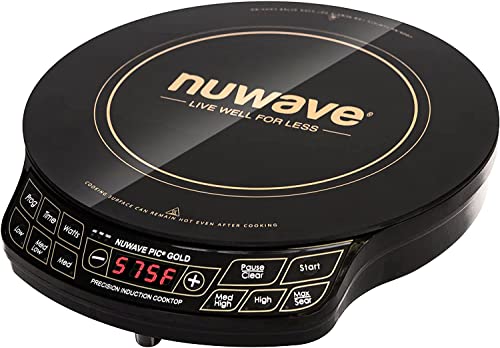
1. NuWave Gold Precision Induction Cooktop
A portable burner with detailed temperature steps and programmable presets, so you can sear hot and drop back to a gentle simmer quickly. Its presets let you repeat a recipe the same way each time without guessing at the dial.
Suits: precise, repeat cooking. Strengths: fine temperature control. Weaknesses: more settings to learn. Skip it if you want a basic dial.


Best for enthusiasts
2. Breville Control Freak Induction Cooktop
A countertop induction cooktop with a built-in probe that holds a pot or pan at an exact temperature. It targets cooks who want precision. The built-in probe is the standout idea here, since the cooktop reacts to the pan temperature itself.
Suits: enthusiasts. Strengths: a precise probe and fast response. Weaknesses: a premium class of purchase. Skip it if you want a simple burner.

Best for family meals
3. Duxtop 9100MC Double Induction Cooktop
A two-burner portable unit with separate power controls, so you can brown meat on one zone and sauce a side on the other. Check the combined power on the listing, because two zones sharing power may slow down when both run hard.
Suits: family meals. Strengths: two fast zones. Weaknesses: uses counter space. Skip it if you cook only for yourself.
View Duxtop 9100MC Double Induction Cooktop on Amazon
Best for extra burners
4. Cuisinart ICT-60 Double Induction Cooktop
A portable two-zone cooktop with simple controls and a glass surface, handy for quick cooking when you need extra burners. Check the listing for the power figures and whether power is shared between the two zones.
Suits: extra burners. Strengths: simple controls. Weaknesses: a large body. Skip it if you need a slim unit.
View Cuisinart ICT-60 Double Induction Cooktop on Amazon

Best for serious cooks wanting durable gear
5. Vollrath Mirage Pro Induction Range
A heavy-duty countertop induction range built for professional kitchens, with rapid heat and rugged construction. Because it is made for professional use, confirm the power requirements and plug type before ordering.
Suits: serious cooks wanting durable gear. Strengths: a rugged commercial build. Weaknesses: bulky and heavy. Skip it if you want a lightweight burner.

Best for everyday quick cooking
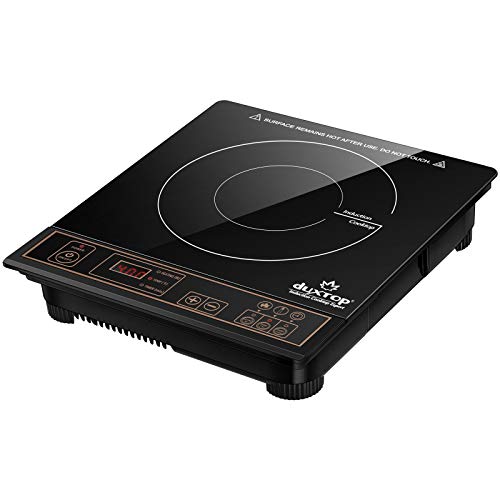
6. Duxtop 8100MC Portable Induction Cooktop
A compact single burner with digital controls and several power levels, a popular choice for fast stovetop cooking. Check the listing for the full list of power levels, as smaller steps give better control of fast heat.
Suits: everyday quick cooking. Strengths: a compact body and dependable heat. Weaknesses: basic features. Skip it if you want a double burner.
Care and Setup
- Preheat the pan on medium before turning the power up.
- Wipe the glass after each meal once cool.
- Use a splatter guard for high-heat searing.
- Check the fan vents for dust.
Mistakes to Avoid
- Searing in a thin pan that warps.
- Turning the dial to maximum and walking away.
- Using non-magnetic cookware.
- Forgetting that glass stays hot after cooking.
How Induction Heats the Pan Directly
An induction cooktop uses a coil under the glass to create a changing magnetic field. When a suitable pan sits on top, the field makes electrical currents in the metal, which heats the pan itself. The glass is not the heat source, although it warms from contact with the hot pan. Because the heat starts in the cookware, the response is fast, and turning the setting down reduces heat almost at once.
This is why induction suits quick cooking. A pot of water can come to a boil sooner than on many other types of cooktop, and a pan can reach searing heat quickly. Exact times depend on the cooktop power, the cookware and the amount of food, so treat any claim as relative and confirm what the maker states.
The speed has a learning curve. A pan can overheat if left empty, oil can reach its smoke point rapidly and food can scorch if you walk away. Cook with your attention on the pan, and start at moderate settings until you learn how your cooktop responds. Many units have protective features that limit temperature or shut off if a pan overheats, but they are not a substitute for watching the food.
Power Levels, Boost Modes and What They Mean
Cooktops describe output in watts or power levels, and a higher top setting means faster heating. Many offer a boost mode that temporarily raises output for a burst, useful for boiling water or searing. Boost modes usually run for a limited time and may reduce power to other zones, so read the manual on how they share power.
On cooktops with multiple zones, total output is often shared between them. Running two zones at full power at once may cause one to drop its output. If you cook several dishes at the same time, check how the maker describes power sharing. On portable single-zone units, the power is available to one pan but depends on the household outlet and circuit.
Lower settings matter as much as higher ones. Look for fine adjustment steps so you can simmer sauces and melt chocolate without scorching. Some cooktops cycle on and off at low settings, which can create small temperature swings, while others modulate power. A cooktop that offers a temperature mode lets you hold a set temperature for frying or sous vide-style cooking. Choose based on how you cook rather than the highest number on the box.
Pan Selection for Searing, Stir-Frying and Frying
Cookware decides how well an induction cooktop sears. Pans must be magnetic, and flat bottoms give the best contact. A thick, heavy base holds heat and resists warping at high output, which keeps food browning evenly. Thin pans heat quickly but can create hot spots and may warp when heated and cooled rapidly. Cast iron and heavy stainless steel with a magnetic base are common choices.
Match pan size to the zone. A pan that is much smaller than the zone may not heat efficiently or may not be detected. A pan that overhangs far over the edge may leave the outer ring cool. Check the manual for the recommended pan diameter range.
- Test cookware with a magnet; if it sticks firmly to the base, it should work.
- Use flat-bottomed pans for the best contact, and avoid warped bases.
- Round-bottomed woks may need a flat induction wok or a special cooktop.
- Lift pans rather than sliding them to avoid scratching the glass.
For searing, preheat the pan on medium before raising the heat, add oil just before the food and dry the surface of the meat for better browning.
Electrical Requirements and Placement
High power means electrical needs. Portable cooktops plug into standard outlets, but some draw a lot of current, and other appliances on the same circuit may trip the breaker. Check the cooktop’s power rating against your circuit, and avoid extension cords and power strips unless the maker approves them. Built-in cooktops usually need a dedicated circuit and professional installation, so confirm the requirements before you buy.
Placement matters for portable units. Set the cooktop on a stable, heat-tolerant, level surface with space around it for airflow, since the electronics are cooled by fans. Keep it away from water, and do not place it on a metal surface that could heat up from the magnetic field. Do not put magnetic items such as knives or foil on the glass while it is on.
For built-in models, check the cutout dimensions, the depth beneath the counter and the clearance for ventilation. A range hood or good ventilation helps with searing smoke. People with pacemakers or other implanted devices should consult their doctor and the manufacturer’s guidance about using induction cooking.
Glass Care and Lasting Performance
The glass is durable but not indestructible. Avoid dropping heavy items, and do not slide rough-bottomed pans across it. Let it cool before cleaning, since sugary spills can bond to hot glass. Wipe it with a soft cloth and a cleaner recommended in the manual, and use a scraper made for glass cooktops on burnt-on residue if allowed. Abrasive pads can leave scratches that dull the surface over time.
Keep vents clear of dust and crumbs, since overheating can reduce performance and trigger protective shut-offs. Clean the fan intake and filters if the model has them, and keep the cooktop dry and away from steam sources. Check the cord and plug on portable models for damage.
Warning signs include error codes that persist, a cooktop that shuts off repeatedly, buzzing or clicking beyond normal fan noise, cracks in the glass and controls that do not respond. A cracked surface should not be used, since liquid can reach the electronics. Check the warranty terms and use the model number when contacting support. A well-cared-for cooktop can serve for years, and gentle handling is the best protection.
A Short Glossary of Induction Cooking Terms
Induction cooking uses a magnetic field to heat the pan directly, which brings its own set of terms. Here are the ones you will see most often on a portable cooktop page.
- Induction compatible cookware: pots and pans made from a material that responds to the magnetic field, usually described by the maker as induction ready.
- Power level: the preset heat steps on the control panel. Some units show watts, while others show levels from low to high.
- Temperature mode: a setting that aims to hold a set temperature. How it works varies between models, so read the manual.
- Boost or booster: a short burst of higher power, available on some units for fast heating.
- Pan detection: a safety feature where the unit senses whether a suitable pan is present before heating.
- Auto shutoff: a feature that stops heating after a set period or if the unit overheats.
- Residual heat indicator: a light or message showing that the glass surface is still warm after cooking.
- Hob or cooktop zone: the marked ring on the glass where the pan should sit.
Terms vary between makers, so rely on each model’s own manual for how a feature works.
Mistakes That Waste Induction Speed
Induction is quick, which also means mistakes show up fast. Avoid these and your cooking improves immediately.
- Using an unsuitable pan. If the cookware is not induction compatible, the unit will not heat it. A simple check is whether a magnet sticks firmly to the base, though the maker’s guidance matters most.
- Using a warped or tiny-based pan. A pan that does not sit flat or that is much smaller than the zone may heat unevenly or fail to be detected.
- Walking away at high heat. Because water boils so quickly, pans can boil over or scorch in moments.
- Sliding pans across the glass. Lift pans instead of dragging them, to avoid scratching the surface.
- Blocking the vents. Portable units need air flow to stay cool. Keep the vents clear, following the manual.
- Treating the temperature display as exact. It is an estimate. Use a thermometer when the result matters.
Learn how your unit responds to each level, and then use a lower level than you think you need for delicate foods.
Matching Cookware Type to Induction: A Table
The following table gives general tendencies. Always check the cookware maker’s page for an explicit statement of induction compatibility.
| Cookware material | Induction tendency | Note |
|---|---|---|
| Cast iron | Generally works well | Heavy and rough bases can scratch glass, so lift rather than slide |
| Magnetic stainless steel | Usually works | Look for an induction mention from the maker |
| Enameled cast iron | Generally works | Take care with the base and the glass surface |
| Plain aluminum | Does not work on its own | Needs a magnetic base layer |
| Copper | Does not work on its own | Needs a magnetic layer or an interface disk made for induction |
| Glass and ceramic | Does not work on its own | Not suitable unless the maker says otherwise |
Many people find they already own several suitable pans, which makes the switch less costly than expected.
Electrical and Setup Notes: Follow the Manual
A portable induction cooktop draws substantial power, so it is worth reading the maker’s instructions before the first use.
- Plug the unit into a suitable outlet as the manual specifies. Avoid sharing the circuit with other high-power appliances.
- Do not use extension cords or adapters unless the maker explicitly approves them.
- Place the unit on a stable, heat-resistant surface with clearance around it, as the manual describes.
- Keep metal objects, cards, and anything sensitive to magnetic fields away from the cooktop while it runs.
- People with implanted medical devices should consult a healthcare professional and the device maker’s guidance about using induction equipment.
- If a unit shows an error code or behaves oddly, switch it off, unplug it, and contact the maker.
For a built-in installation, hire a licensed electrician and follow the maker’s installation instructions.
Cleaning and Care of the Glass Surface
An induction surface stays cooler than a traditional burner, so spills are less likely to bake on. Even so, clean it after use, once it has cooled and been unplugged. Wipe with a damp cloth and a mild cleaner that the maker permits. Avoid abrasive pads, harsh powders, and steel wool, which can scratch the glass. If sugar or something sticky spills, follow the manual’s advice for removing it, since certain residues need prompt attention.
Store the unit upright or flat in a dry place, away from heavy objects that could crack the glass.
A Decision Guide by Kitchen Situation
A dorm, an RV, or a small apartment
A single-zone portable unit is easy to store. Check the power draw against the circuit you will use.
A busy family kitchen with a full range
A double-zone unit can add extra capacity beside your regular cooktop for holiday meals.
A cook who values temperature control
Look at the way the unit describes its temperature mode and read the manual to understand how precise it claims to be.
Check your cookware first. If your pans already work, the rest of the decision comes down to power, zones, and controls.
Fast-Cooking Habits That Suit Induction
Because the pan heats almost immediately, preparation matters more than usual. Chop vegetables, measure sauces, and set out oils before you switch the unit on. Add oil to the pan only once the surface is warm, and watch for the first shimmer rather than waiting a fixed number of minutes. For searing, let the pan reach heat before the food goes in, and avoid crowding it, which drops the temperature quickly.
When you need gentle heat for sauces or eggs, drop the power level a step or two sooner than you would on a gas burner. The response is rapid in both directions, so small adjustments make a visible difference.
Fast Cooking Beyond Boiling: Searing, Stir-Frying and Speed With Control
Fast cooking is not the same as fast boiling. A stir-fry, a seared chop or a pan of vegetables asks for heat that arrives instantly, recovers the moment food lands, and can be dropped just as instantly when the pan is a second from too far. Induction’s direct response is what this category is really about: the pan is the heating element, so a change of level is a change of temperature now, not after a ring has cooled or a pan of oil has settled. The picks in this guide differ in how much power they bring to that responsiveness and how finely they let you steer it.
Technique adapts to the speed. On a conventional hob, a cook can chop while a pan warms; on induction at full power, the pan is ready before the second onion is sliced, and the cooking itself runs at a pace that punishes wandering attention. Fast-cooking households learn to complete all preparation first, to keep ingredients in order by the hob, and to treat the first minute of any dish as a performance that has been fully rehearsed in the mise en place. That discipline is not a burden once learned; it is what makes fast cooking feel calm rather than frantic.
Pan choice matters here even more than for boiling. A pan for searing and stir-frying on induction needs a flat, magnetic base that will not warp under fierce heat, enough mass to hold temperature when food lands, and sides shaped for the tossing or turning the dish requires. Thin, light pans heat fastest but shed their heat into the food and then cycle wildly; very heavy pans respond a touch slower but cook with a steadiness that suits thicker cuts. Most good fast cooks settle on one pan of each character and know exactly which dishes belong to which.
Judge the cooktops in this guide by their behaviour across the whole fast-cooking repertoire: the sprint to searing heat, the recovery after a cold load, the honesty of the middle levels where most finishing happens, and the low end that keeps a sauce from catching while the rest of dinner catches up. A unit that is merely powerful will impress once; a unit that is powerful and steerable will quietly become the reason your weeknight cooking gets faster and better at the same time.
Choosing an Induction Cooktop Around Pans, Power and Format
Induction only works with cookware it can couple to, so the first check is your own pans, not the cooktop. A magnet that sticks firmly to a pan’s base means the pan should work; a weak grip or no grip means it will not, whatever the pan’s marketing said. Flat bases matter too, because contact governs how evenly the pan heats, and warped or heavily ridged bases perform poorly. Before choosing a cooktop, line up the pans you use daily and the one or two you would be willing to replace. A cooktop that fits your existing cookware is a bargain; one that quietly demands a new set is a much larger purchase than its listing suggests.
Format is the second decision. A single portable burner suits small households, students, and anyone adding one flexible zone to a kitchen, and it stores away when the counter is needed. A double portable unit covers most everyday cooking for couples and small families and still moves for cleaning or events. Built-in hobs suit a settled kitchen and a cook who wants the worktop clear and the controls fixed. None is superior in the abstract; the question is whether induction is an extra tool in your kitchen or the main way you cook, and how permanent you want the installation to be.
Power should be read with your home’s wiring in mind. A portable unit plugs into an ordinary socket and shares that circuit with everything else on it, so its full output may not be available alongside a kettle or microwave on the same run. Built-in hobs are wired in properly and can offer more across several zones, but the zones often share a total budget, so four pans at maximum together may each receive less than expected. This is normal induction behaviour, not a fault. What matters for daily cooking is strong, controllable heat in the one or two zones you use most, plus a low end gentle enough for sauces and melting, which is where cheap units often disappoint.
Controls and safety features shape daily satisfaction. Touch controls look clean and wipe clean, but can be fussy with wet or floury fingers and may respond to a pan being dragged across them; knobs are instantly understandable and work with gloves or damp hands. Timers, pan detection, child locks and automatic switch-off all earn their keep in busy kitchens, while boost settings are best treated as a short sprint for boiling rather than a cooking level. Consider also the cooling fan: induction units breathe, and fan noise varies between models and matters in open-plan rooms where the cooktop sits near where people talk and eat.
Cooking Well on Induction: Habits That Make It Feel Effortless
Match the pan to the zone. A small pan on a large zone wastes nothing like it would on gas, but the cooktop may struggle to detect very small pans, and a huge pan on a small zone heats unevenly at the edges. Centre the pan, because induction fields are centred on the zone’s markings, and use lids: induction brings a lidded pan to temperature strikingly fast, and the lid is the cheapest speed upgrade in the kitchen. When you move a pan, lift it rather than sliding it, to protect the glass and to avoid confusing touch controls mid-cook.
Learn the levels by cooking, not by the numbers. Induction responds instantly, so the adjustment you make happens now, not in half a minute, and most cooks overshoot at first by treating it like a conventional hob. Start lower than instinct suggests for frying and sauces, and step up in small moves. Use boost only to reach a boil or a sear, then drop back to a working level, because holding maximum power scorches sauces, spits fat and can trip protection systems. For delicate work like melting chocolate or holding a custard, induction’s fine low control, sometimes with a double-boiler arrangement for the most delicate jobs, is where it quietly beats every other hob type.
Expect some new sounds and do not mistake them for faults. Pans may hum or buzz at high power, especially lightweight or layered pans, and the note changes as you adjust the level; this is the pan responding to the field and is usually harmless. The cooling fan may run on after you switch off, which is the unit looking after its own electronics. Error codes and a refusal to start almost always mean the pan is absent, unsuitable or off-centre, so check the pan before assuming the cooktop has failed. The manual lists the codes for your model and is worth five minutes before any call for help.
Build your everyday routines around the speed. A pan of water for pasta can be started when the sauce is nearly ready rather than at the beginning; eggs and stir-fries need everything chopped and within reach before the pan heats, because there is no gentle warm-up period in which to catch up. Keep a cloth handy for spills, since the glass around the pan stays comparatively cool and spills there do not bake on, one of induction’s great daily mercies. Wipe as you go and the hob will look new for years.
Care, Cleaning and Keeping the Glass Like New
The glass surface is tough but not invulnerable, and its two enemies are impact and abrasion. Do not drop heavy pans onto it, store anything above it that could fall, or use it as extra chopping or work surface. Clean spills promptly with a soft cloth once the surface is cool enough to touch safely; sugary spills deserve particular speed because they can pit the glass if left through a heating cycle. For everyday marks, a damp cloth and a little washing-up liquid suffice, and for stubborn rings, a cleaner made for ceramic glass and a non-scratch pad, used as the maker directs.
Avoid sliding rough-based pans, dragging cast iron, or using the hob under a heavy canner or oversized pan beyond the maker’s stated limits. Keep the area beneath a portable unit clear so its fan can breathe, and never operate a portable cooktop on a soft or heat-sensitive surface. The touch controls should be wiped with the unit locked or switched off if it offers a cleaning lock, so your wiping does not change settings. Dry the surface after cleaning, because water spots on black glass show every time the light catches them.
Long-term, the cooktop asks for little beyond observation. Note if zones begin to cycle oddly, if the fan grows loud, or if cracks or chips appear at the edge of the glass; a cracked top is a stop-using-it fault, not a cosmetic one. Keep the manual, because error codes, cleaning guidance and any recalibration steps are model-specific. With suitable pans, lifted rather than slid, and spills wiped the same day, an induction surface is one of the easiest in the kitchen to keep handsome, which is a fair part of its appeal.
Mistakes That Make Induction Seem Worse Than It Is
The classic mistake is blaming the cooktop for pans it cannot see: aluminium, copper or glass pans without a magnetic base will never heat, and a magnet test at the buying stage prevents the whole misunderstanding. The second is using maximum power as a default, then concluding induction is fierce and uncontrollable, when the middle levels are where its precision lives. The third is expecting a shared-zone built-in hob to run every zone at full output together and feeling cheated by the power management that all such hobs use.
Owners also slide heavy pans across the glass, leave sugary spills to bake through several meals, block a portable unit’s vents with tea towels and clutter, or run a portable unit on an extension lead or a circuit already carrying other heavy appliances. Each is a habit with a simple opposite. Test pans with a magnet, learn the middle levels, respect the vents and circuits, wipe spills early, and induction becomes the hob most cooks in this guide’s audience say they would not give back.
Putting the Picks Side by Side
With six options in this guide, the fastest way to narrow the field is to match each pick to the job described in its review above, rather than chasing the longest feature list. Every pick here earned its place for a different kind of buyer, and the review sections spell out who each one suits, what it does well and where its limits sit. The notes below simply restate that positioning in one place, so you can compare the induction cooktops for fast cooking options without scrolling back and forth. Nothing here adds new claims about any model; it is a map of what the guide already says, organised around the decision you are actually making.
The NuWave Gold Precision Induction Cooktop is positioned in this guide for precise, repeat cooking. If that description sounds like your household, it deserves a close look; if it does not, its strengths are unlikely to matter much in daily use, however appealing they look on a listing. Re-check its review above for the stated strengths and the honest limitation, and confirm the current details on the listing itself, because included accessories and exact configurations can change over time.
The Breville Control Freak Induction Cooktop is positioned in this guide for enthusiasts. If that description sounds like your household, it deserves a close look; if it does not, its strengths are unlikely to matter much in daily use, however appealing they look on a listing. Re-check its review above for the stated strengths and the honest limitation, and confirm the current details on the listing itself, because included accessories and exact configurations can change over time.
The Duxtop 9100MC Double Induction Cooktop is positioned in this guide for family meals. If that description sounds like your household, it deserves a close look; if it does not, its strengths are unlikely to matter much in daily use, however appealing they look on a listing. Re-check its review above for the stated strengths and the honest limitation, and confirm the current details on the listing itself, because included accessories and exact configurations can change over time.
The Cuisinart ICT-60 Double Induction Cooktop is positioned in this guide for extra burners. If that description sounds like your household, it deserves a close look; if it does not, its strengths are unlikely to matter much in daily use, however appealing they look on a listing. Re-check its review above for the stated strengths and the honest limitation, and confirm the current details on the listing itself, because included accessories and exact configurations can change over time.
The Vollrath Mirage Pro Induction Range is positioned in this guide for serious cooks wanting durable gear. If that description sounds like your household, it deserves a close look; if it does not, its strengths are unlikely to matter much in daily use, however appealing they look on a listing. Re-check its review above for the stated strengths and the honest limitation, and confirm the current details on the listing itself, because included accessories and exact configurations can change over time.
The Duxtop 8100MC Portable Induction Cooktop is positioned in this guide for everyday quick cooking. If that description sounds like your household, it deserves a close look; if it does not, its strengths are unlikely to matter much in daily use, however appealing they look on a listing. Re-check its review above for the stated strengths and the honest limitation, and confirm the current details on the listing itself, because included accessories and exact configurations can change over time.
Two habits help when you compare the induction cooktops for fast cooking picks. First, decide your non-negotiables before you compare anything else: the space you have, the people you cook for and the one job this appliance must do well. Second, treat every other feature as a bonus rather than a reason to buy. A pick that fits your space, your habits and your cleaning tolerance will serve you better than a more elaborate model that fights your routine. When two picks both fit, choose the one whose stated limitation bothers you least, because limitations are what you live with every day, while strengths are what you notice in the first week.
More Practical Notes Before You Decide
Think about induction as a teaching hob. Its instant response makes cause and effect visible to new cooks: turn it down and the boil dies now; turn it up and the pan answers now. Households teaching teenagers or partners to cook often find induction shortens the learning curve for exactly this reason, and its cool surround forgives the spills and wandering tea towels of beginners. If your kitchen is a teaching kitchen, that responsiveness deserves a vote alongside power and price in the comparison above.
Consider the two-cooktop household as a legitimate endpoint rather than a compromise: a strong portable single or double unit now, kept when a future kitchen gains a built-in hob, where it becomes the overflow, the outdoor-kitchen and the power-cut-resilient spare. Portable induction units have second lives that few appliances match, which softens the cost of buying a good one now. Judge the picks in this guide partly by that second life: build, cord and controls that will survive being moved, stored and lent.
Keep a note of your first month’s discoveries with the new hob: the level that holds your simmer, the setting your favourite pan likes for eggs, the boil time for your pasta pan. Induction levels are not standardised between brands, and your own numbers, once recorded, make the cooktop feel calibrated to your kitchen rather than generic. The note takes minutes, lives on the fridge, and is the difference between a hob you operate and a hob you know.
Whatever you choose from this guide, give the unboxing and first setup the same care as the purchase. Check the appliance over before anything is plugged in, read the manual’s safety and setup pages properly rather than skimming for the quick-start, and keep the packaging until the first successful uses are behind you, in case a return is needed. Register the product if the maker offers it, and keep the receipt and the model details together in one place. These small acts take minutes and are the difference between a smooth first week and an avoidable argument with a retailer.
Measure your space one final time before ordering, and measure the route as well as the destination: doorways, cupboard openings, the turn into the kitchen and the shelf or counter where the appliance will live. More good purchases are defeated by a centimetre at a doorway than by any flaw in the product. If the appliance will share a circuit with other heavy loads, note that too, and plan which appliances will take turns. A purchase that arrives to a prepared home starts its life being used; one that arrives to surprises starts its life in a corner.
Build the appliance’s care into an existing routine rather than inventing a new one. The wipe that happens while the kettle boils, the check that happens when the bins go out, the descale or filter change tied to a date you already mark: habits attached to habits survive, while special rituals fade by the second month. Decide now which existing moment will carry this appliance’s small regular tasks, and write the first occurrence on the calendar before the appliance arrives. Ownership is mostly this: tiny attentions, reliably repeated.
Fast Cooking Induction FAQ
Is induction good for searing?
Yes, with a flat heavy pan. The power is high and responds quickly.
Does induction cook food faster?
Often yes, since heat goes directly into the pan. Actual time depends on the cooktop and the pan.
Can I use cast iron?
Yes. Cast iron works well, but lift it rather than sliding it to protect the glass.
Do I need a high-power outlet?
Most portable models run on a standard outlet, but check the amperage on each listing.
Should I preheat the pan?
Yes. A short preheat on medium lets the pan spread heat evenly, and then you can raise the power for the sear.
Why does my induction cooktop make noise?
Fan sounds and a faint hum or buzz are common, especially at high power or with certain cookware. Loud or unusual noise may signal a problem, so check the manual.
Can I use glass or aluminum cookware?
Not on their own, because the pan must respond to the magnetic field. Some aluminum or copper pans have a magnetic base layer, so check the packaging and test with a magnet.
Does induction work during a power cut?
No, it needs electricity. If outages are common, keep a backup cooking method in mind.
Is the glass hot after cooking?
It can be, because heat transfers from the pan to the glass. Many cooktops show a hot surface indicator, and you should wait until it clears before touching.
Can I use a wok on induction?
A flat-bottomed wok works on a standard cooktop. A round-bottomed wok needs a cooktop with a concave surface designed for it.
What happens if I place an empty pan on the cooktop?
An empty pan can overheat quickly. Many cooktops have protective features, but you should never turn on a zone with an empty pan.
Why does my pan buzz on an induction cooktop?
A light hum or buzz at high power is common and usually harmless: the magnetic field makes the pan itself vibrate minutely, and layered or lightweight pans sing more than heavy, solid ones. The note often changes with the power level and fades as the pan heats. A pan that sits flat and matches the zone usually sounds quieter. Loud, new or worsening noises paired with poor heating are worth a check, but ordinary humming is the sound of the technology working.
Can I use my favourite non-magnetic pan with an adapter plate?
Adapter discs exist, but they surrender much of induction’s point: the disc heats like a conventional ring and then heats the pan, losing the speed and response you bought the cooktop for, and some makers advise against them or exclude any resulting damage. The honest options are to keep that pan for another heat source, or to replace it with a magnetic equivalent. Test your pans with a magnet before buying, and the dilemma usually shrinks to one or two pieces.
Why will the cooktop not detect my small pan?
Induction zones have a minimum pan size they can sense, and a very small pan, or one placed off-centre, may not register. Centre the pan on the zone markings and check its base is magnetic and flat. If a small pan is essential to your cooking, a smaller zone or a unit designed for small pans is the real answer. The manual states the minimum for your model, and it is worth knowing before the morning a small milk pan refuses to heat.
Is induction safe with a pacemaker or other medical device?
This is a question for your clinician and the device’s manufacturer, not for a buying guide. Induction cooktops create a magnetic field close to the surface, and guidance for particular medical devices varies. If anyone in the household has an implanted device, raise it with the relevant medical team before choosing induction, and follow any distance guidance they give. It is a simple check to make in advance and not one to improvise around afterwards.
Why does the fan keep running after I switch off?
The fan is cooling the electronics, and it is meant to. Induction units manage significant power in a small space, and the fan runs on until the inside reaches a safe temperature, then stops by itself. Blocking the vents with cloths or clutter makes the fan work harder and longer, so keep the area around and beneath a portable unit clear. A fan that never stops, or grows suddenly loud, is worth a conversation with the maker.
The Short Version
For precise fast cooking, the NuWave Gold. For exact temperature control, the Breville Control Freak. For two zones for weeknight cooking, the Duxtop 9100MC. For a dependable two-burner, the Cuisinart ICT-60. For a commercial-style burner, the Vollrath Mirage Pro. For a quick budget-friendly burner, the Duxtop 8100MC.