Tailgating needs a grill that packs into a vehicle, sets up fast and cooks for a small crowd. Portable propane grills lead the category, and a few tabletop and flat-top models add variety.
The six picks below span different sizes and styles. We have not used these products ourselves, so treat the notes as general guidance and confirm dimensions, fuel type and any lot rules on the current listing and at your venue before buying. Bring a cleaning brush, a lighter and a plan for hot ash or used propane, since lots often have rules.
As an Amazon Associate we earn from qualifying purchases. Links below are affiliate links, and they do not change the product information we give.
What to Look For
| Feature | Why it matters |
|---|---|
| Carry | Handles, folding legs and a lid latch make transport easier |
| Fuel | Small propane cylinders are common for portable grills |
| Setup | Look for quick assembly and an easy light |
| Cooking area | Check how many burgers fit at once |
| Venue rules | Some lots limit flame or charcoal |
In this guide
Specs at a Glance
| Product | Type | Fuel | Notes |
|---|---|---|---|
| Coleman RoadTrip 285 | Portable grill | Propane | Stand-up design |
| Weber Go-Anywhere | Portable grill | Charcoal or gas versions | Folds shut for carry |
| Weber Traveler | Portable grill | Propane | Folds for transport |
| Traeger Tailgater | Pellet grill | Wood pellets | Folding legs |
| Blackstone 17 in Tabletop Griddle | Flat-top griddle | Propane | Flat cooking surface |
| Cuisinart Venture Portable Gas Grill | Portable grill | Propane | Compact body |
The 6 Best Grills for Tailgating

Top pickBest for trunk-side cookouts
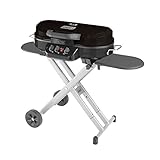
1. Coleman RoadTrip 285 Portable Stand-Up Propane Grill
A well-known portable propane grill with a stand, wheels and a design built for camping and tailgates. Check the listing for the included accessories. It is a familiar choice for campers and fans alike.
Suits: trunk-side cookouts. Strengths: a stand and wheels. Weaknesses: a bulkier fold than some rivals. Skip it if you want a tiny tabletop unit.
View Coleman RoadTrip 285 Portable Stand-Up Propane Grill on Amazon

Best for light, simple tailgates
2. Weber Go-Anywhere
A small folding grill that locks shut for carrying. It is sold in charcoal and gas styles, so check which version the listing shows. Its latching shape keeps the inside clean while it rides in a bag or trunk.
Suits: light, simple tailgates. Strengths: an easy fold-and-carry shape. Weaknesses: a small surface. Skip it if you cook for many people.

Best for groups of several people
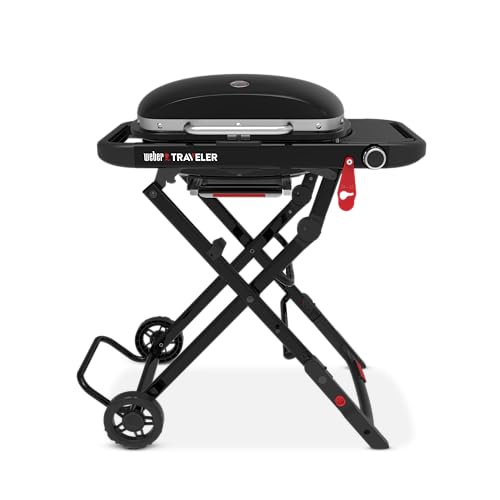
3. Weber Traveler Portable Gas Grill
A larger portable propane grill that folds down for transport, with room to cook for a small group. Check the listing for the cart and burner details. Its fold-down legs and wheels, if shown on the listing, help with loading.
Suits: groups of several people. Strengths: a stronger cooking surface. Weaknesses: a heavier carry. Skip it if you want the lightest option.


Best for smoke flavor at the lot
4. Traeger Tailgater Pellet Grill
A portable pellet grill with folding legs, built for people who want smoky flavor away from home. It needs pellets and power for its fan. Pellets and a power source are needed, so plan ahead for the lot.
Suits: smoke flavor at the lot. Strengths: folding legs and pellet taste. Weaknesses: it needs power at the venue. Skip it if you only want a quick gas grill.


Best for flat-top cooking
5. Blackstone 17 inch Tabletop Griddle
A flat-top propane griddle that sits on a table. It is good for breakfast, smash burgers and sausages rather than traditional grill marks. It is great for eggs, bacon and sliders before the game.
Suits: flat-top cooking. Strengths: a smooth griddle surface. Weaknesses: no open-flame grilling. Skip it if you want grill marks.


Best for casual couples and small groups
6. Cuisinart Venture Portable Gas Grill
A compact propane grill made for travel, with a lid and a modest cooking area. It is aimed at casual use on picnics and tailgates. It is easy to stow in a trunk between events.
Suits: casual couples and small groups. Strengths: an easy carry. Weaknesses: a modest surface. Skip it if you cook large batches.

Care and Setup
- Let the grill cool before packing it.
- Wipe grease off the surface and drip tray.
- Store propane upright, away from heat.
- Pack a lighter and a cleaning brush.
- Pack a small bag with tongs, a brush and wipes for quick cleanup.
Mistakes to Avoid
- Forgetting to check the lot rules on flames.
- Bringing too little fuel.
- Packing the grill while it is still hot.
- Choosing a grill that is too big to carry.
- Setting a grill up on a slope or near vehicles.
Lot Rules and Venue Etiquette Before You Go
Every venue sets its own tailgating rules, and they change by event. Some allow propane and charcoal, some restrict open flames, some limit grill size, and others ban cooking entirely on certain lots. Check the venue’s website or contact the organizer before you pack, and look for rules on fuel storage, spacing between vehicles, ash disposal and alcohol. Keep a copy of the rules on your phone.
Etiquette matters too. Park so smoke blows away from neighbors, leave room between your setup and the next group, and keep walkways clear. Do not set up beneath low branches or beside vehicles with open fuel caps. If you need to leave early, wait until the grill is cool and everything is cleaned up. Offer a hand if a neighbor is struggling with their setup.
Plan for ash and waste. Charcoal ash must be fully cooled and put in a metal container, never dumped on grass or into regular trash bins unless allowed. Propane cylinders should go home with you unless the venue offers disposal for empties. Bring trash bags and take everything out with you. Being a good guest at the lot helps keep tailgating allowed for everyone. Finally, consider weather and plan an alternative if it rains or the wind is strong, since cooking in these conditions adds risk.
Matching Grill Size to the Crowd
The right size depends on how many people you feed and how fast. A small portable grill suits a handful of friends, but you will cook in batches, which means someone is always watching the grill. A larger portable unit lets you cook more at once, but takes more space in the vehicle and more fuel.
Think in terms of food rather than people. Burgers, hot dogs, sausages and chicken pieces cook quickly, so a modest grate area can serve many people over a long afternoon if you keep cooking in rounds. Larger cuts like whole chickens and ribs need longer and more room. Decide on a menu that matches the grill, and prep it at home: pre-formed patties, marinated chicken and sliced vegetables in bags or containers.
Consider holding space. A tailgate often runs longer than the actual cook time, so you need a way to keep cooked food warm and safe, such as an insulated carrier or a warm zone on the grill. Check how many burners the grill has, since two burners offer a hot and a cooler zone. If your group is large, two smaller grills can be easier to transport than one large one, and they give you flexibility if one runs out of fuel or has a problem.
Fuel Planning and Transport Safety
Running out of fuel mid-cook is a common problem. Estimate how long you will cook and bring a spare cylinder or extra charcoal and pellets. Small propane cylinders are convenient but run out quickly on high heat, so a larger tank with an adapter hose may suit long events if the grill supports it and rules allow. Check the cylinder’s fill level before you leave, and keep a way to test it.
Transport cylinders upright and secured so they cannot roll, in a ventilated part of the vehicle, away from heat and not in the passenger cabin if you can avoid it. Never leave cylinders in a hot closed car for long. Check hoses, connections and the regulator before each trip, and test for leaks with soapy water, never a flame. Pack a lighter or igniter spare.
For charcoal, bring a chimney starter and a safe way to light it, and avoid heavy lighter fluid that gives off fumes. Pellet grills need a power source for the fan, so check whether a battery, inverter or outlet is available, and bring pellets in a sealed container. Keep fuel away from the grill when it is hot, and store it out of direct sun. Always carry a fire extinguisher or a fire blanket suited to grease fires, and know how to use it.
Food Safety in a Parking-Lot Kitchen
Raw meat and warm weather are a risky mix. Keep raw meat in a cooler with ice or ice packs until it goes on the grill, and use a separate cooler for drinks, since it is opened more often. Pack raw and cooked foods separately, and use clean plates and tongs for cooked food. Do not use the platter that held raw meat for cooked items.
Use a food thermometer. Burgers, sausages and chicken should reach safe internal temperatures according to current food safety guidance, and color alone is not a reliable guide. Do not leave cooked food out for long, especially in heat. Keep hot food hot and cold food cold, and discard items that sat out too long. Bring wipes or hand sanitizer and a jug of water and soap if no facilities are nearby.
Plan cleanup too. Wipe tools and surfaces, and wash or wrap used items to take home. Bring a bag for raw meat packaging so it does not drip in the vehicle. Pack condiments in squeeze bottles or small containers instead of leaving large jars open. Think about allergies among your guests and label dishes accordingly. A little planning prevents foodborne illness and keeps the day enjoyable.
Packing, Setup Speed and Post-Event Care
A tailgate runs smoothly with a checklist. Besides the grill and fuel, bring tongs, a spatula, a thermometer, a brush, heat gloves, paper towels, foil, trash bags, a lighter, a folding table and a cooler. A small bin keeps tools together. Load heavy items first, and keep fuel and food in separate spots.
Set up on a level, stable surface away from vehicles, tents and flammable items, and check for wind. Open the lid before lighting a gas grill. Let it preheat while you set out food. Keep the cooking area free of guests, especially children and pets. Use the lid to retain heat in small grills, and avoid leaving the grill unattended.
When the event ends, let the grill cool before packing it. Scrape the grates, empty drip trays and wipe grease. Close propane valves, disconnect carefully and store cylinders upright. At home, give the grill a deeper clean, check hoses and burners and dry everything before storing it. Signs it is time to repair or replace include burners that clog or light unevenly, rust on the firebox, latches that no longer close for transport, loose or wobbly legs and hoses that crack. Replace damaged parts with ones approved by the maker.
A Tailgate Packing Checklist
Most tailgate frustrations come from the small things you forgot, not from the grill itself. A good packing routine saves arguments and makes the day relaxed. Build your own list from the points below and keep it in your phone so that it is ready for every event.
- The grill, its fuel and any regulator, igniter or lighter the maker names, packed together so nothing gets left behind.
- A sturdy, level surface such as a folding table or a flat patch of ground that the grill suits.
- Long-handled tongs, a spatula, a brush and heat-resistant gloves.
- A thermometer, since guessing doneness in a crowded lot is not a plan.
- Coolers with a clear divide between raw items and ready-to-eat food.
- Plates, napkins, a trash bag and wipes for cleaning hands and tools.
- A fire extinguisher or other safety item if the venue or the maker advises one.
- Cleaning supplies and a container for ash or grease, depending on your fuel.
Tick the list as you load the car, and tick it again as you pack up at the end of the day.
Portable Gas and Charcoal Compared
Two fuel types dominate the tailgate scene, and each leaves its own mark on the day. The table below gives a general overview. The details will vary with the model, so use it alongside the maker’s specifications.
| Question | Portable gas | Charcoal |
|---|---|---|
| Time to get going | Usually quick once connected | Takes longer to light and settle |
| Control | Knob adjustments | Vents and coal placement |
| Flavor | Clean, lighter smoky note | Classic charcoal flavor many people prefer |
| Cleanup | Grates and drip tray | Ash disposal needs a plan |
| Venue fit | Often easier where rules are strict | Check the lot rules before bringing coals |
How to Read a Portable Grill Listing
A tailgate grill spends much of its life in the trunk, so numbers about size and weight matter. Look for the folded dimensions, the cooking area and the weight, and imagine lifting it from the car to the table. Check the fuel type, the connection it needs, and whether the listing includes a regulator or igniter or sells them separately. Find out whether legs fold, whether there is a carry handle and whether a lid latches securely for transport.
Photos can mislead. A grill shown on a stand may be a tabletop model, and accessories pictured nearby may not be included. Compare the picture with the written contents.
Planning a Menu That Suits a Small Grill
A compact grill rewards simple, fast food. Items that cook quickly and hold well, such as sausages, burgers, skewers and vegetables, keep the line moving. Marinate or pre-form items at home, and bring them in sealed containers kept cold. Plan batches so that one tray is cooking while another is resting, and decide in advance who is in charge of the grill so that it never gets crowded.
Keep side dishes cold or pre-cooked so that the grill does not have to do everything at once.
When to Follow the Manual and the Venue Staff
For fuel connections, leak checks, lighting steps and shut-down, the maker’s manual is the authority. For rules about open flames, where you can set up and how to dispose of coals, the venue or the event staff have the last word. If you smell gas, notice damage to a hose or regulator, or are unsure how something connects, stop and ask a qualified person before using the grill.
Setting Up in a Parking Lot: A Step-by-Step Routine
A repeatable routine takes the stress out of arriving at a crowded lot. Follow the same order each time and it becomes automatic. First, choose a spot that is level and clear of other vehicles, tents and anything that could catch fire or tip. Second, set up the table or stand and check that it does not wobble. Third, place the grill and confirm that it is stable before you connect any fuel. Fourth, follow the maker’s lighting instructions in order, without hurrying. Fifth, set out your tools and a clean tray for cooked food, and keep raw and cooked items apart.
- Keep the grill away from car bumpers, awnings and flammable materials.
- Position it so wind carries smoke away from the crowd and your food.
- Keep a clear zone around the grill so nobody bumps it.
- Assign one person to watch the grill at all times while it is lit.
At the end of the day, let everything cool completely before packing. Follow the maker’s instructions for turning off the fuel and for handling hot parts. Dispose of ash and grease according to venue rules, and leave the space cleaner than you found it.
Reading the Picks Side by Side: A Deeper Comparison
The quick picks and individual reviews earlier in this guide give you the facts on each option for grills for tailgating. What they cannot do in a short format is slow the decision down and show how the picks differ when you imagine them in your own kitchen, on your own schedule, doing the jobs you actually repeat every week. This section does that. It uses only the products already covered above, and it adds no new models, so use it as a way of comparing the shortlist you already have rather than as a second list competing with the first. For each pick, the useful questions are the same: who is this design really for, what should you double-check on the current listing before you commit, and what kind of owner tends to be happiest with this style of grill over months rather than minutes.
Who Should Shortlist the Coleman RoadTrip 285 Portable Stand-Up Propane Grill
Put the Coleman RoadTrip 285 Portable Stand-Up Propane Grill on your shortlist if its style, as described in its review above, matches the way you already cook and the space you already have. Read that review again with your own routine in mind: the meals you make most often, the number of people you usually feed, and the storage or counter space the grill will occupy every day, not just on the day it arrives. Before buying, confirm the current listing still shows the same model name, the same included accessories and the same care requirements described earlier in this guide, because line-ups change quietly over time. If two picks seem equal, the tie-breaker is rarely a headline feature; it is usually which design removes a small daily friction, such as awkward cleaning, a door or lid that fights your layout, or controls nobody in the household enjoys using. A pick that fits your habits will be used constantly, and regular use is what turns any grill from a purchase into a genuinely good buy.
Who Should Shortlist the Weber Go-Anywhere
Put the Weber Go-Anywhere on your shortlist if its style, as described in its review above, matches the way you already cook and the space you already have. Read that review again with your own routine in mind: the meals you make most often, the number of people you usually feed, and the storage or counter space the grill will occupy every day, not just on the day it arrives. Before buying, confirm the current listing still shows the same model name, the same included accessories and the same care requirements described earlier in this guide, because line-ups change quietly over time. If two picks seem equal, the tie-breaker is rarely a headline feature; it is usually which design removes a small daily friction, such as awkward cleaning, a door or lid that fights your layout, or controls nobody in the household enjoys using. A pick that fits your habits will be used constantly, and regular use is what turns any grill from a purchase into a genuinely good buy.
Who Should Shortlist the Weber Traveler Portable Gas Grill
Put the Weber Traveler Portable Gas Grill on your shortlist if its style, as described in its review above, matches the way you already cook and the space you already have. Read that review again with your own routine in mind: the meals you make most often, the number of people you usually feed, and the storage or counter space the grill will occupy every day, not just on the day it arrives. Before buying, confirm the current listing still shows the same model name, the same included accessories and the same care requirements described earlier in this guide, because line-ups change quietly over time. If two picks seem equal, the tie-breaker is rarely a headline feature; it is usually which design removes a small daily friction, such as awkward cleaning, a door or lid that fights your layout, or controls nobody in the household enjoys using. A pick that fits your habits will be used constantly, and regular use is what turns any grill from a purchase into a genuinely good buy.
Who Should Shortlist the Traeger Tailgater Pellet Grill
Put the Traeger Tailgater Pellet Grill on your shortlist if its style, as described in its review above, matches the way you already cook and the space you already have. Read that review again with your own routine in mind: the meals you make most often, the number of people you usually feed, and the storage or counter space the grill will occupy every day, not just on the day it arrives. Before buying, confirm the current listing still shows the same model name, the same included accessories and the same care requirements described earlier in this guide, because line-ups change quietly over time. If two picks seem equal, the tie-breaker is rarely a headline feature; it is usually which design removes a small daily friction, such as awkward cleaning, a door or lid that fights your layout, or controls nobody in the household enjoys using. A pick that fits your habits will be used constantly, and regular use is what turns any grill from a purchase into a genuinely good buy.
Who Should Shortlist the Blackstone 17 inch Tabletop Griddle
Put the Blackstone 17 inch Tabletop Griddle on your shortlist if its style, as described in its review above, matches the way you already cook and the space you already have. Read that review again with your own routine in mind: the meals you make most often, the number of people you usually feed, and the storage or counter space the grill will occupy every day, not just on the day it arrives. Before buying, confirm the current listing still shows the same model name, the same included accessories and the same care requirements described earlier in this guide, because line-ups change quietly over time. If two picks seem equal, the tie-breaker is rarely a headline feature; it is usually which design removes a small daily friction, such as awkward cleaning, a door or lid that fights your layout, or controls nobody in the household enjoys using. A pick that fits your habits will be used constantly, and regular use is what turns any grill from a purchase into a genuinely good buy.
Who Should Shortlist the Cuisinart Venture Portable Gas Grill
Put the Cuisinart Venture Portable Gas Grill on your shortlist if its style, as described in its review above, matches the way you already cook and the space you already have. Read that review again with your own routine in mind: the meals you make most often, the number of people you usually feed, and the storage or counter space the grill will occupy every day, not just on the day it arrives. Before buying, confirm the current listing still shows the same model name, the same included accessories and the same care requirements described earlier in this guide, because line-ups change quietly over time. If two picks seem equal, the tie-breaker is rarely a headline feature; it is usually which design removes a small daily friction, such as awkward cleaning, a door or lid that fights your layout, or controls nobody in the household enjoys using. A pick that fits your habits will be used constantly, and regular use is what turns any grill from a purchase into a genuinely good buy.
Compared as a group, the picks above fall into natural camps rather than a single ladder from worst to best. Some are built for speed and convenience, some for capacity, and some for the cook who enjoys the process as much as the result. Ranking them without knowing your priorities would be misleading, which is why the reviews describe each one on its own terms. Your job is to name your top two priorities honestly, whether that is easy cleaning, a small footprint, generous room, simple controls or a particular cooking style, and then notice which camp keeps matching them. Most buyers find the decision becomes obvious at that point, and the remaining differences are preferences rather than problems.
Choosing for Your Real Routine, Not an Ideal One
Guides to grills for tailgating are usually read in a hopeful mood, imagining weekend projects and relaxed meals. The better test is a tired Tuesday. Picture the grill being used when you are short of time, the kitchen is already messy and nobody wants a complicated clean-up afterwards. If the design still sounds appealing under those conditions, it is probably right for you. If it only appeals in the best-case version of your life, keep looking at the other picks. This honest test prevents the most common disappointment in kitchen buying, which is not poor quality but a poor match between a good product and the wrong household.
For Busy Weeknights
On weeknights, the winning qualities are fast setup, forgiving operation and a clean-up that takes minutes rather than a project. Favour the pick whose controls you can understand at a glance and whose parts you can wash without a strategy meeting. Think about who else will use it: a design that only one confident person in the house can operate will sit idle whenever that person is out. Simplicity also compounds over time, because an grill that is easy on a Tuesday gets used on Saturdays too, while a demanding one gradually becomes furniture. When you compare the reviews above, underline every mention of setup, preheating, monitoring and washing, and let those practical details carry as much weight as the cooking results themselves.
For Weekends, Guests and Bigger Projects
Weekend cooking makes different demands: more capacity, more control and more tolerance for a longer session. If you regularly cook for guests, cook in batches or like learning a technique properly, the pick that offers room to work and steady, adjustable performance will reward you far more than the smallest or simplest option. Think through the whole event, from preparation space to where finished food rests, to how the grill behaves when it is opened, loaded or checked repeatedly. Also consider noise, smoke, heat or steam in the space where people will gather, because a wonderful result served from an uncomfortable kitchen is only half a success. The right choice supports the occasion instead of becoming the occasion’s main challenge.
For Small Kitchens and Shared Spaces
Space is not only about the footprint on the day of delivery. It is about the cupboard the accessories live in, the clearance the lid or door needs, the route from storage to counter, and whether the grill can stay out permanently or must be moved for every use. Measure honestly, including the awkward realities such as low cabinets, narrow doors and sockets in inconvenient places. In shared homes, also think about how the appliance affects other people: heat, smells, noise and how long it monopolises a shared surface. A slightly less ambitious pick that lives happily in the space will outperform a larger one that is resented, squeezed in and rarely used. The reviews above note the style and form of each pick; match those notes against your measurements before you fall for any particular model.
Setup and First Use, Step by Step in Practice
Start by reading the assembly and safety pages of the manual that comes with your model, even if the design looks familiar, because vent placement, regulator connections and lid clearances differ between brands. Assemble or position the grill on a level, non-combustible surface away from siding, fences and overhangs, and check every connection before the first lighting. For a gas model, brush soapy water over the hose connections and look for bubbles that would signal a leak. For charcoal or pellet models, do a first empty burn or seasoning run if the maker recommends one, so manufacturing residues burn off before food ever touches the grates. Keep a spray bottle of water, long tongs and a clean tray within reach before you light anything, and decide in advance where raw food, cooked food and utensils will each sit so the cook stays organised from the first minute.
During the first few uses, resist the temptation to judge the grill by a single ambitious attempt. Start with something simple and familiar so the only new variable is the equipment itself, and pay attention to the small things: how long preparation really takes, where you naturally stand, what you wish you had within reach and how the clean-up feels. Adjust one thing at a time in the next session. Owners who treat the first week as a short learning period almost always end up happier than owners who expect mastery on day one, because most kitchen equipment has a personality that reveals itself through use rather than through its description. Write down what you learn while it is fresh; a few honest notes are worth more than a month of vague impressions when you later wonder which setting, position or routine produced your best result.
Cleaning, Care and Storage in Detail
Let the grates cool until they are warm rather than scorching, then brush or scrape away residue while it is still soft enough to release easily. Empty ash or grease only once it is completely cold, and store ash in a metal container away from anything flammable. Wipe exterior surfaces with a damp cloth rather than harsh chemicals, check the grease tray or cup before it overflows, and inspect hoses, igniters and vents at the start of each season. A fitted cover helps when the grill lives outdoors, but lift it occasionally after wet weather so trapped moisture does not sit against the finish. Grates that are cleaned little and often rarely need aggressive scrubbing, and a grill that is put away clean lights faster and cooks more evenly the next time you use it.
Storage deserves the same thought as cleaning. Keep the grill and its accessories together so nothing essential is missing when you come to use it, store cords loosely rather than tightly wound, and never put a unit away while it is still warm or damp inside. If space forces you to store it in a cupboard or garage, check that the spot is dry and that heavier items will not be stacked on top of it. Once a season, do a slightly deeper review: look for wear, check moving parts and seals, confirm accessories are complete and reread any care notes in the manual you may have forgotten. This light rhythm of daily wiping, weekly tidying and seasonal checking is what keeps kitchen equipment working well for years without ever demanding a dramatic rescue effort.
Troubleshooting: Working Through Common Problems Calmly
Uneven cooking usually traces back to heat management rather than the food itself: preheat fully, keep the lid closed as much as the recipe allows, and learn where your own grill runs hot by cooking a simple test batch and watching which pieces brown first. If flare-ups keep happening, move food to a cooler zone instead of spraying the flames, trim excess surface fat before cooking, and check that grease is not pooling where it can ignite. Trouble lighting often means an empty fuel supply, a blocked burner or vent, or damp fuel, so work through those basics before assuming a part has failed. When a problem involves gas connections, damaged hoses or electrical parts, stop using the grill and follow the maker’s guidance or call a qualified technician rather than improvising a repair.
Whatever the problem, change one thing at a time and observe the result, because changing three things at once teaches you nothing and often creates a new problem on top of the old one. Keep a short record of what you tried; patterns that are invisible in a single session become obvious across three or four. Also remember the limits of troubleshooting: anything involving damaged cords, gas, persistent electrical faults, cracked critical parts or a safety feature that is not working is a reason to stop and get professional help, not a challenge to improvise around. Most owners find that the great majority of frustrations are small, repeatable and fixable with setup, cleaning or technique, and that is genuinely good news, because those are the variables fully within your control.
Planning the Purchase Around Your Home and Budget
Because this guide deliberately avoids fixed prices, which change constantly, plan the budget side in a more durable way. Decide what the grill must do, what would merely be nice, and what you will never use, then let the must-do list set your tier. Remember the full cost of ownership includes the accessories you will genuinely need, any installation or professional help the design requires, replacement filters or parts where they apply, and the storage it will occupy. None of that argues for buying the cheapest option or the most expensive one; it argues for buying the option whose total picture you understand. Check the current listing for what is included in the box, what is sold separately and what the return options are, and keep your order details and the manual together after purchase.
Finally, give yourself a decision deadline and a shortlist of at most two or three of the picks above. Endless comparison feels thorough but usually produces confusion rather than confidence, because the differences between good options are smaller than the difference between a decision made and a decision endlessly postponed. Re-read the reviews of your finalists, check the measurements and the included accessories one last time, and choose the one that best fits the routine you described honestly at the start of this section. That is the process that leads, reliably, to an grill you will still be pleased to own long after the excitement of delivery has passed.
Tailgating Grill FAQ
Can I use charcoal at a tailgate?
Many venues allow it with limits, but rules vary, so check ahead and bring a safe way to dispose of ash.
How big a grill do I need?
A small group does well with a portable propane unit, while larger crowds need a bigger cooking area.
Is propane safe to carry?
Store cylinders upright and secure, and follow the maker guidance.
What should I pack besides the grill?
Bring fuel, a lighter, tongs, a thermometer, a cooler for raw meat, and wipes for your hands and tools.
How early should I arrive to set up?
Arrive with enough time to find a spot, set up safely and preheat. Check venue hours and rules, since some lots open only at set times.
How do I keep food warm for a long tailgate?
Use an insulated carrier or a low zone on the grill, and watch food safety guidance on how long cooked food can sit. Reheat or discard as needed.
Can I cook in the rain?
It is risky. Wet conditions affect lighting, electrics and footing, and a tent or canopy near a grill is a fire hazard, so consider rescheduling or a different menu.
What should I do with leftover charcoal?
Let it cool completely, then put it in a metal container. Follow the venue's rules and never dump hot ash on the ground or in plastic bins.
Do I need a table?
A stable table makes prep and serving easier. Make sure it can hold the grill's weight and heat if you place the grill on it.
How do I pre-prep to save time?
Form patties, marinate meat, chop vegetables and pack them in labeled containers on ice at home. Bring sauces and toppings in squeeze bottles.
Is a flat-top or a grate better for a tailgate?
A grate gives grill marks and works for classic burgers and sausages, while a flat top is suited to breakfast items and smash burgers. Choose by menu.
How long should I expect a good grill to last?
Longevity depends far more on care and frequency of use than on any single feature. An grill that is cleaned after use, stored dry, and used within the limits its maker describes will usually serve a household for years, while the same design neglected after every session will age quickly. Treat the manual’s care schedule as part of the product you bought, keep accessories together so nothing is lost or forced into service as a substitute, and deal with small signs of wear early. When a safety-related part wears out, replace or retire the item rather than stretching its life; with ordinary parts and consumables, following the maker’s replacement guidance keeps performance close to how it felt when new.
What is the most common mistake new owners make?
The most common mistake is expecting the first session to go perfectly and blaming the grill when it does not. Almost every design in this category has a short learning curve involving setup order, timing, quantities or positioning, and the first few uses are best treated as practice with forgiving food or simple tasks. The second most common mistake is skipping the unglamorous steps: not reading the manual, not measuring the space, and not cleaning promptly afterwards. Owners who slow down for the first week, take a few notes and build a small routine around setup and clean-up almost always end up rating the same product far more highly than owners who rushed, because the product did not change; the ownership did.
Should I buy accessories at the same time?
Only the accessories you already know you will use belong in the first order. A basic tool that supports the way you already cook, such as the right tray, tongs, thermometer or storage cover for your situation, earns its place immediately, while elaborate kits bought in a burst of enthusiasm often end up as cupboard clutter. Live with the grill for a few weeks first, notice what you actually reach for and what genuinely slows you down, and then buy to fill those specific gaps. Check compatibility with your exact model on the current listing before ordering any accessory, because similar-looking parts are not always interchangeable, and keep the included accessories until you are sure a replacement suits you better.
How do I know if a pick is too big or too small for us?
Judge size against your largest regular job, not your largest imaginable one. If you size for a rare feast, you will live every day with an grill that is heavier to move, slower to prepare and harder to store than your routine needs, while sizing for an ordinary day and occasionally cooking in two batches is usually painless. Measure the space where it will live and where it will be used, including clearance for lids, doors and your own hands, and compare those numbers with the dimensions on the current listing. Then be honest about portions: count the people you feed most weeks, not at holidays. The picks above span different styles and capacities precisely so that both small households and generous hosts can find a sensible match.
Is it worth paying more for a premium version?
It can be, when the extra money buys things you will feel every week: sturdier construction, controls that are pleasanter to use, easier cleaning, better support from the maker or a design that fits your space more gracefully. It is not worth it when the premium buys only features you will rarely touch. The practical test is to list what the step-up pick actually adds, using its review above, and ask how many times a month each addition would matter in your home. If the honest answer is often, the upgrade tends to justify itself over years of use. If the answer is almost never, the simpler pick is not a compromise; it is the correct choice, and the money saved is better kept for accessories or ingredients you will genuinely enjoy.
The Short Version
For a stand-up propane choice, the Coleman RoadTrip. For a light fold-up, the Weber Go-Anywhere. For a larger portable, the Weber Traveler. For smoky pellet flavor, the Traeger Tailgater. For flat-top cooking, the Blackstone. For a compact gas grill, the Cuisinart Venture.


