A backyard grill and smoker combo is a cooker that can sear a quick dinner and then run for hours at low heat for ribs and brisket. The best ones keep temperature steady, so you spend the weekend with guests instead of tending the fire.
The six cookers below lean toward pellet, gravity-fed and controller-driven designs that suit a typical patio. We have not used these products ourselves, so please confirm the fuel type, cooking area and electrical needs on the current listing before buying. Performance claims are the makers’ own.
As an Amazon Associate we earn from qualifying purchases. Links below are affiliate links, and they do not change the product information we give.
What to Look For
| Feature | Why it matters |
|---|---|
| Fuel and controls | Pellets and gravity-fed charcoal both use digital controllers |
| Cooking area | A larger grate fits a full brisket or several racks of ribs |
| Portability | Wheels and a stable cart matter on a patio |
| Power needs | Most automatic models need a nearby outlet |
In this guide
Specs at a Glance
| Cooker | Fuel | Style | Notes |
|---|---|---|---|
| Camp Chef Woodwind Pro | Wood pellets | Pellet grill | Sear box option |
| Masterbuilt Gravity Series 560 | Charcoal | Gravity-fed | Digital controller |
| Z Grills Pellet Grill | Wood pellets | Pellet grill | Budget-friendly line |
| Weber SmokeFire EX4 | Wood pellets | Pellet grill | Weber ecosystem |
| Recteq Bullseye Deluxe | Wood pellets | Compact pellet grill | Stainless build |
| Pit Boss Pro Series | Wood pellets | Pellet grill | Many sizes |
The 6 Best Backyard Grill and Smoker Combos
Top pickBest for cooks who like both styles
1. Camp Chef Woodwind Pro Pellet Grill
A pellet grill from Camp Chef that adds a smoke control feature and an optional sear box attachment, according to the maker. It is designed for people who want sear and smoke from one machine.
Suits: cooks who like both styles. Strengths: sear box options and smoke control. Weaknesses: a premium step up in size and weight. Skip it if you want a basic pellet grill.
View Camp Chef Woodwind Pro Pellet Grill on Amazon
Best for charcoal fans who want control
2. Masterbuilt Gravity Series 560 Digital Charcoal Grill and Smoker
A charcoal cooker that feeds fuel down a hopper and uses a digital controller to hold temperatures. It aims to combine charcoal flavor with set-it-and-forget-it ease.
Suits: charcoal fans who want control. Strengths: charcoal flavor with automation. Weaknesses: it needs power and a heavy build. Skip it if you want a portable grill.
View Masterbuilt Gravity Series 560 Digital Charcoal Grill and Smoker on Amazon

Best for first-time pellet buyers
3. Z Grills Wood Pellet Grill and Smoker
A pellet grill from a brand known for approachable, budget-friendly models. Check the current listing for the exact cooking area and series.
Suits: first-time pellet buyers. Strengths: a modest entry point. Weaknesses: fewer premium features. Skip it if you want a premium brand name.

Best for weber loyalists
4. Weber SmokeFire EX4 Wood Fired Pellet Grill
A pellet grill from Weber that targets people who like the brand’s grill design and want pellet cooking. It uses Weber’s own app and controller system.
Suits: Weber loyalists. Strengths: a well-supported brand ecosystem. Weaknesses: connected features need Wi-Fi. Skip it if you want to avoid apps.
View Weber SmokeFire EX4 Wood Fired Pellet Grill on Amazon

Best for small patios
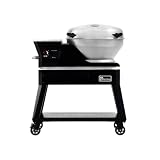
5. Recteq Bullseye Deluxe Pellet Grill
A compact pellet grill made of stainless steel in the maker’s description, with Wi-Fi control. It is built for small patios where space is tight.
Suits: small patios. Strengths: a compact, sturdy build. Weaknesses: a small cooking area. Skip it if you cook for large groups.
Best for families and weekend cooks
6. Pit Boss Pro Series Pellet Grill
A pellet grill series from Pit Boss, sold in several sizes, with a digital controller and a flame broiler. Check the listing for the size you are considering.
Suits: families and weekend cooks. Strengths: many size choices. Weaknesses: the build varies by model. Skip it if you want a premium finish.
View Pit Boss Pro Series Pellet Grill on Amazon
Care and Setup
- Empty the firepot and clean it before each long cook.
- Store pellets in a dry, sealed container to avoid swelling.
- Wipe grease from the drip tray and bucket often.
- Cover the cooker when it is not in use.
Mistakes to Avoid
- Letting pellets sit in a hopper in wet weather.
- Skipping the burn-in on a new cooker.
- Leaving grease to build up, which raises fire risk.
- Buying more cooker than your patio can hold.
Pellet or Gravity-Fed: Choosing Your Fuel Style
The cookers in this guide share one idea: a controller and a fan manage the fire so you do not have to. They get there in different ways. A pellet grill uses an auger to feed small wood pellets into a firepot, and the controller adjusts the feed rate to hit a set temperature. A gravity-fed cooker, like the Masterbuilt here, holds charcoal in a hopper and lets it drop toward the fire as fuel burns, with a fan and controller regulating airflow.
Pellets are easy to store by the bag, easy to measure, and offer a range of wood flavors, though the smoke is typically lighter than that of a stick burner or charcoal fire. Gravity-fed charcoal brings a charcoal character and can usually run hotter for searing, but it takes a little longer to come up to temperature and the fuel and ash handling is messier. Pellets need a dry hopper, while a charcoal hopper needs reliable lighting.
Think about your priorities. If you want simple, repeatable low-and-slow results with minimal fuss, a pellet grill is the more common choice. If you prefer charcoal flavor and higher heat, consider the gravity-fed style. Check each listing for the temperature range the maker states, how the cooker lights, and what fuel it expects, since using the wrong fuel can cause poor burning or damage.
Sizing the Cooking Area to Your Menu
Cooking area is usually quoted in square inches, but the number alone can mislead. Part of the total may be an upper rack, a warming shelf or an awkward corner that is not useful for large cuts. Look at the main grate dimensions and picture the food on it. A whole brisket needs a grate with enough length, or you must cut it in half. Several racks of ribs often cook best when they lay flat, or when stood in a rack, which a roomy grate permits.
Think about your typical crowd. Cooking for a household of two to four rarely needs a huge cooker, and a compact model heats up faster and uses less fuel. If you host often, a larger grate saves you from cooking in batches. Remember that you also need airflow space around the food, so do not fill every inch.
Bigger cookers also mean bigger footprints, weight and hopper capacity. Measure the spot you plan to use, including space to open the lid fully and room to walk around it. Check the cooker’s weight and wheel design if you plan to move it. A compact option may be better than a large one that you dread rolling out. Choose a size that fits your cooking most weekends, not the largest party you may host once a year.
Power, Placement and Patio Safety
An automatic cooker needs electricity for the fan, igniter and controller, so placement starts with an outlet. Use an outdoor-rated outlet and, if you need an extension cord, one rated for outdoor use and the cooker’s load, per the manual. Route the cord so nobody trips on it and keep it clear of hot surfaces and standing water. A ground-fault protected outlet is a common outdoor safeguard.
Set the cooker on a level, non-combustible surface, away from walls, fences, overhanging branches, deck railings and siding. The manual will list minimum clearances; follow them. Hot grease, embers and the heat of a long cook can damage vinyl siding and wood decks. Wind affects temperature, so pick a sheltered spot but not an enclosed one, as smoke and carbon monoxide need open air.
- Never operate any of these cookers in a garage, porch with walls or under a covered structure that traps smoke.
- Keep children and pets away from the hot body and the chimney.
- Keep a fire extinguisher or a hose rated for your fuel type nearby, and know where your shutoff is.
- Use heat-resistant gloves for the grate and handles.
Check local rules and any homeowners association restrictions on smokers before you buy.
Getting Good Smoke From an Automatic Cooker
Automatic cookers make temperature easy, but flavor still depends on how you use them. Smoke production is usually highest at lower temperatures, so many cooks start meat at a low setting, then raise the heat to finish. Some models include a smoke boost or smoke control feature, such as the one the maker describes for the Camp Chef, so read the manual to see what yours does.
Pellet choice affects flavor. Hardwood pellets come in a range of woods that suit different meats, and quality varies. Use dry, fresh pellets, because damp ones can jam the auger. Some cooks use a smoke tube or box accessory for extra smoke; check that the maker allows it.
Keep the lid closed as much as possible. Every peek lets out heat and smoke and lengthens the cook. Use a leave-in meat probe rather than opening the lid to check. The built-in thermometer measures air near the controller and may not match grate temperature, so a second probe for the grate is worthwhile.
Let the cooker preheat fully, and finish the startup cycle before adding food. Clean smoke, which looks thin and pale blue, tastes better than thick white smoke, which often means the fire is struggling for air. Keep the vents and flue clear and the firepot clean to help the fire burn well.
Cleaning Schedule and When to Replace Parts
Grease and ash are the two things that shorten the life of an automatic cooker. Excess grease in the cooking chamber is also a fire risk, so make a habit of removing it. After every few cooks, scrape the drip tray or heat deflector, empty the grease bucket and brush the grate. Vacuum ash from the firepot before each long cook so the igniter and fan can do their job.
Do a deeper clean a few times a season, depending on how often you cook. Remove the grates, wipe down the interior walls, clean the chimney and check the hopper for stuck or damp pellets. Always let the cooker cool fully and unplug it before cleaning. Do not spray water on electrical parts or the controller.
Know the wear parts. Igniters, temperature probes, fans and augers can wear out, and some makers sell replacements. Signs include trouble lighting, wide temperature swings, error codes and unusual noises. Rust on the firepot or the body, loose legs and a cracked seal on the lid are reasons for repair. Cover the cooker when idle and store pellets in a sealed container. Check the warranty term on the listing and register the product if the maker asks you to, so parts are easier to get.
Grill and Smoker Combo Terms
Combination cookers blend two styles of outdoor cooking into one body, and the listings borrow terms from both. The glossary below explains the words you will see, so you can compare combos on how they work instead of on their marketing.
- Dual-fuel: a unit that burns two fuel types, for example gas for grilling and charcoal or wood for smoking. Check the maker’s description of how the two sides work.
- Offset firebox: a side chamber where wood or charcoal burns, sending smoke across the main cooking area.
- Cooking chamber: the main area where the food sits.
- Cooking area: the surface of the grates, usually given in square inches. Compare it with how much food you cook at once.
- Damper and chimney: controls for airflow and smoke exit.
- Heat baffle: a plate that spreads heat evenly across the cooking chamber.
- Cart and shelves: the frame, wheels and surfaces that support prep and tools.
Who Benefits Most From a Combo
You want to grill on weeknights and smoke on weekends
A combo gives you both styles in one footprint. Check how easy it is to switch between modes.
You have limited space in the backyard
One body can replace two separate cookers. Measure your patio, and remember that the side firebox adds width.
You like to host gatherings
A large cooking area lets you cook for a crowd, and side shelves give you space for tools. Look at the capacity and the layout of the grates.
You are new to smoking and want to learn
A combo can be a gentle introduction because you can use the grill side for familiar tasks while you practice smoking.
Combos and Dedicated Cookers Compared
| Question | Combo | Separate grill and smoker |
|---|---|---|
| Space | One footprint | Two footprints |
| Flexibility | Both styles available | Each specialized |
| Performance | A good all-around compromise | Each can be tuned to its job |
| Setup effort | One assembly | Two assemblies |
Safety and Placement
A combo cooker involves fire, smoke and often gas, so follow the maker’s instructions precisely. Use it outdoors only, on a stable, non-flammable surface, with the clearances the manual specifies from walls, fences, eaves and trees. Do not use it in a garage, under a covered patio or in any enclosed space. For the gas side, check connections for leaks following the manual, and have a licensed professional connect any fixed gas line.
Keep children and pets away, and never leave a lit cooker unattended. Handle charcoal and ash with care, and dispose of ash only when it is fully cool, following local guidance. Check local rules about open flames, especially during dry seasons.
Learning to Run Both Sides
Treat the first few cooks as practice. Grill simple foods such as sausages or vegetables to learn how the burners and grates heat. Then try a small smoke session with chicken pieces to learn how the firebox and vents behave. Use a thermometer at grate level, since built-in gauges can be off. Take notes on fuel quantity, vent positions and timing.
Keep the lid closed during smoking, and manage the fire with small adjustments. Over time, you will build a feel for each mode, and you will know when to use gas for convenience and when to use wood for flavor.
Reading a Combo Listing
Check the cooking area, the construction thickness and the fuel types. Look at the materials, the wheels, the shelves and the cover. Read what the maker says about assembly, since combos are large and may need two people. See whether the listing includes accessories such as a thermometer or a charcoal tray, and read the warranty summary. Finally, check the return terms, as bulky products are difficult to ship back.
Mistakes to Avoid With a Combination Cooker
A combo cooker can be wonderful, but certain slips cause frustration. Cramming the grates with too much food blocks heat and smoke, so leave room around each item. Opening the lid too often during smoking lets heat escape and extends cooking time, so rely on a thermometer instead of peeking.
Another mistake is neglecting cleaning. Grease and ash build up in both the grill and the firebox, which can affect flavor and increase fire risk. Clean according to the manual after each cook, and do a deeper clean at the end of the season. Finally, avoid skipping the cover. Outdoor weather can damage a cooker over time, so a fitted cover, as the maker advises, protects the investment and keeps the unit ready for the next cookout.
Take your time to learn the quirks of each side, and make notes after every cook. A small logbook of fuel amounts, vent settings and results will make your next session smoother.
Backyard Grill and Smoker Combo FAQ
Do pellet grills sear well?
Some do with a direct-flame feature or an add-on. Check the listing to see how each model sears.
Is gravity-fed charcoal different from pellets?
It uses lump or briquette charcoal in a hopper, giving a charcoal flavor with a controller similar to a pellet grill’s.
Do these need electricity?
Most automatic models do, for the fan and controller. Plan for an outdoor-rated outlet and a cord path that does not cross a walkway.
What size is right for a family?
Look for a grate that fits the largest cut you cook, then add some room for guests.
How long does it take to preheat one of these cookers?
It varies by model and fuel, and the maker's manual will give guidance. Pellet and gravity-fed units generally need a few minutes for the startup cycle plus time to reach temperature. Plan on waiting before adding food.
Can I use any wood pellet in a pellet grill?
Use pellets designed for cooking, not heating pellets, and check the maker's recommendations. Keep them dry, since damp pellets can swell and jam.
Do I need Wi-Fi for these cookers?
No. Wi-Fi lets you monitor and adjust from a phone, but the controller works without it. Check whether connected features are optional on the model you choose.
Can I cook in the rain or cold?
Many people do, but wind, cold and moisture affect temperature and fuel use. A cover, a sheltered spot and extra fuel help. Follow the manual for weather guidance.
What is a burn-in or seasoning run?
It is a first run at high heat that burns off manufacturing residue and cures the finish. Follow the manual's steps before cooking food.
Why does my temperature swing?
Wind, a dirty firepot, damp fuel and a probe in the wrong place are common causes. Some swing is normal for these controllers, so compare against a second thermometer.
Can I use a pellet grill for fast weeknight searing?
Some models sear with a direct-flame feature or add-on, as the post notes. Check the listing, since results vary.
Choosing Backyard Grill Smoker Combos With More Care: The Details That Decide
The picks above give you the shortlist. This section slows the decision down and looks at the details that separate grill smoker combos for the backyard you will enjoy for years from the ones that quietly end up at the back of the cupboard. None of these points require specialist knowledge; they ask you to match the product to your grill, your food and your habits, which is where good purchases are actually made. Work through them with your own cooking in mind, especially ribs, pulled pork, burgers and grilled vegetables, and the right pick usually identifies itself.
Automatic Versus Hands-On Fire Control
Pellet and gravity-fed designs hold temperature with minimal tending; manual charcoal designs ask for damper work and reward it with involvement. Neither is better in the abstract. Choose by your honest appetite for tending a fire at intervals across a ten-hour cook. To judge it on a listing, look past the headline claim and find the detail that proves it: a stated dimension, a named material, or a clear photo of the part you will actually handle. If the page stays vague on this point, treat that as information in itself and weigh the grill smoker combos for the backyard that explain it clearly more heavily.
Cooking Area in Each Mode
Manufacturers quote total area; you need the split. How many racks of ribs lie flat in smoke mode, and how many burgers fit in grill mode, are the numbers that predict your Saturdays. Diagram your largest regular cook on the stated grate dimensions before buying. In daily use this matters most on the third or fourth cook, not the first. The first session with new grill smoker combos for the backyard almost always goes well; it is the repeated heating, washing and storing that reveals whether this detail was designed properly or just described well. Buy for the routine you will repeat all season, not for the unboxing.
Power and Placement Needs
Automatic combos need electricity at the grill, which means an outdoor socket, a safe cable route and a plan for rain. Manual designs need only space and clearance. Your patio’s infrastructure is part of the product choice, so audit it first. A practical way to test the claim before you commit is to compare it against the grill smoker combos for the backyard you already own or have used. Note what frustrated you there, then check whether this option genuinely fixes that frustration or simply moves it somewhere else. Improvements you can point to concretely are worth more than long feature lists.
Build Weight and Heat Retention
Heavier construction usually means steadier temperatures and longer life, at the cost of delivery and positioning effort. Thin units heat fast, cool fast and work their fuel harder. For smoking especially, mass is a feature you can feel in the temperature graph’s calmness. There is usually a trade-off hiding inside this point, and honest listings make it visible. More of one quality tends to mean less of another, whether that is weight, space, speed or simplicity. Decide which side of the trade-off suits your cooking before you shop, so the comparison between grill smoker combos for the backyard stays anchored to your priorities.
Cleaning Systems
Ash management, grease routing and removable trays decide whether the tenth cook starts clean. Systems you can empty in minutes get emptied; systems needing tools and disassembly get postponed. Inspect the cleaning path in photos or in person as carefully as the cooking path. Match this criterion to the foods you cook most, which here means ribs, pulled pork, burgers and grilled vegetables. A feature that shines with one kind of food can be irrelevant, or even a nuisance, with another. The strongest choice is rarely the one with the longest specification list; it is the one whose strengths line up with your regular menu.
Backyard Grill Smoker Combos in Real Life: Four Situations Worth Planning For
Product pages describe features; households live in situations. Here is how grill smoker combos for the backyard behave in the situations that actually come up around a family backyard, and what to do in each so the equipment helps rather than hinders.
Saturday Low and Slow
The combo’s flagship day: pork shoulder on early, temperature settled, the cook free for the garden or the game while the unit holds its line. Check in at intervals, spritz if that is your style, and let the bark form. The machine minds the fire; you mind the day. The routine that makes this work is preparation: have everything cut, seasoned and within reach before the heat is on, because once cooking starts there is rarely a spare moment to go back inside. A small tray or board beside the grill turns a scramble into a sequence you can repeat.
Friday Night Grill Session
After the week’s work, the same unit grills steaks and vegetables hot and fast. Combos that grill convincingly keep weeknight cooking outdoors all summer. Keep the grill-side tools and the smoking accessories in separate tubs so each mode sets up in minutes. Timing is the skill to practise here. Foods finish at different speeds, so start the slowest items first and add the quicker ones in stages rather than loading everything at once. That single habit does more for the result than any accessory, and it is free.
Teaching a Teenager or a Beginner
An automatic combo is a kind classroom: set the temperature, watch the probes, learn timing and resting without fire drama. Beginners produce genuinely good barbecue early, which is how the next generation of cooks gets hooked. Keep notes the first few times, even if only mentally: what the heat felt like, how long each item took, and what you would move earlier or later next time. Backyard Grill Smoker Combos reward cooks who adjust in small steps instead of changing everything at once.
Holiday Cooks for a Full House
Turkey or ham in smoke mode, sides grilled in batches, the oven indoors freed for everything else. The combo becomes the second kitchen holidays demand. Plan the sequence the day before, because a written timeline is what separates a feast from a fire drill. For serving, plan the landing zone before you start: a clean platter, resting space and somewhere safe for hot tools. Good results are often lost in the last two minutes, when cooked food waits around getting cold or overcooks in its own residual heat because nothing was ready for it.
Using, Cleaning and Storing Your Backyard Grill Smoker Combos: A Working Routine
Long life from grill smoker combos for the backyard is mostly routine, not luck. The steps below follow the order of a real cook, from before the heat goes on to the moment everything goes away, and they apply whichever pick from the list above you choose. Adapt the details to your model’s manual where the two differ, since the maker’s instructions always win on safety and warranty questions.
Burn It In and Learn the Controls
Season the unit as directed, then run one empty or cheap-meat cook purely to learn: how fast it heats, where it settles, how it recovers after opening. This tuition cook pays for itself at the first important meal. Make it a habit rather than a project: two minutes of attention straight after cooking replaces an hour of soaking and scrubbing later, and it keeps every part working the way it did on day one.
Keep Fuel Dry and Flowing
Pellets and charcoal both fail when damp: pellets swell and jam, charcoal lights reluctantly and burns dirty. Store fuel sealed and dry, keep hoppers and bins only as full as your usage justifies, and clear old fuel that has sat through a wet season. Always let hot parts cool enough to handle safely before you start, and keep water away from anything electrical or still holding serious heat. A cracked surface or a warped part often traces back to one impatient cleaning session.
Empty Ash and Grease on Schedule
Automatic systems still make ash and move grease. Follow the maker’s intervals, sooner in heavy use, and always with the unit cold for ash work. A clean combo holds temperature better, which owners often misread as the unit ageing well; it is the cleaning ageing well. Dry everything fully before it goes away. Trapped moisture is the quiet cause of rust, odours and sticking, and it does its damage in storage where nobody notices until the next cook.
Check Probes and Seals
Test temperature probes in iced and boiling water occasionally, inspect door seals for gaps, and keep hinges moving freely. Small accuracies compound across a long cook: a probe reading low by a margin is a brisket sliced early and judged harshly. Use the mildest tool that does the job first, and step up only if residue survives. Aggressive scrubbing solves today’s mess by creating tomorrow’s sticking problem, especially on coated or seasoned surfaces.
Cover and Shelter the Electronics
Control panels, augers and fans dislike weather more than steel does. Use the cover religiously, keep vents as the maker intends, and in severe climates give the unit a roof. Electronics replaced out of warranty cost more than every cover you will ever buy. Store the piece where air can move around it and where it will not be knocked, stacked under heavy pans or left at the damp end of a cupboard or garage. Storage conditions decide lifespan as much as build quality does.
How the Picks Above Compare When You Cook Side by Side
Read as a group, the six picks in this guide are not six attempts at the same product; they are six answers to six slightly different questions. The comparison that matters is therefore not which one is best in the abstract, but which one’s strengths land on the cooking you do most. The guide’s own summary positions them as follows, and it is worth translating those positions into everyday terms before you decide.
The Camp Chef is the pick put forward for sear and smoke. In practice that makes it the natural shortlist-topper if that description sounds like your household, and the one to pass over if it clearly does not, however strong its other qualities are.
The Masterbuilt is recommended for charcoal flavor with control. Treat that as a statement about fit rather than rank: it will feel like the best product on this page to the cook it was chosen for, and like an odd compromise to anyone else.
The Z Grills covers the case for an entry point. If that case is your default weeknight rather than an occasional event, weight this pick heavily; if it happens twice a year, let one of the more general picks win instead.
The SmokeFire is the answer for the Weber world. Notice that this is a different promise from the picks around it, which is exactly why the guide keeps all six: most households recognise one of these descriptions immediately as their own situation.
The Recteq is positioned for small patios. The honest way to use that is as a filter: say yes to it if the description matches your grill, your space and your menu, and do not let a feature you will never use argue you out of the match.
The Pit Boss rounds out the list for size choices. For the right buyer it is not a consolation choice at all but the most sensible one here, because buying capacity, size or toughness you never use is its own kind of waste.
When two picks still tie, decide with three questions. Which one fits the equipment you already own without adapters, workarounds or wishful thinking? Which one will you clean without resentment on an ordinary evening? And which one’s main strength addresses the frustration that sent you shopping in the first place? The pick that answers all three is the right one, and it is rarely decided by a single headline feature.
More Mistakes That Trip Up Owners of Backyard Grill Smoker Combos
The mistakes section earlier in this guide covers the classics. These four are the quieter ones, the habits that do not ruin a single meal but steadily shorten the life of grill smoker combos for the backyard or make them less pleasant to use.
Filling Every Centimetre of Grate
Smoke and heat need paths around the food. A combo packed wall to wall cooks unevenly and stretches times unpredictably. Leave breathing room, cook in two relaxed batches, and the results and the schedule both improve. The fix costs nothing: slow down at this one step and check before the heat, the guests or the hunger make the decision for you. Most equipment problems that get blamed on build quality turn out to be this exact moment, repeated.
Chasing Temperature With Constant Adjustments
Automatic and manual systems both lag: adjust, wait, then judge. Cooks who tweak every five minutes create the swings they fear. Settle on a setting, give it twenty minutes, and change one variable at a time like the scientist your brisket deserves. If you recognise your own habit here, change the routine rather than the product. A written or mental checklist at the grill sounds excessive until the first time it saves a meal; after that it just becomes how you cook.
Ignoring Wind and Weather
Wind strips heat from one side and feeds oxygen to fires; cold weather lengthens every cook. Position the unit sheltered, allow more time and fuel in winter, and do not judge a combo by a cook attempted in a storm. This mistake also compounds. One rushed session leaves residue, damage or bad seasoning behind, and the next session starts from a worse position, which makes the same shortcut tempting again. Breaking the cycle once, with a proper reset, is usually enough.
Storing It Dirty Between Seasons
A combo put away with ash, grease and food residue corrodes, smells and hosts pests. The end-of-season deep clean, ash out, grease scraped, interior oiled as directed, is what makes spring’s first cook a pleasure instead of an excavation. It is worth saying out loud to anyone you share the equipment with, too. Shared grill smoker combos for the backyard suffer most from inconsistent habits, where one careful owner undoes another person’s shortcut, or the other way round.
More Backyard Grill Smoker Combos Questions, Answered
Buyers ask a second round of questions once the first cook is done and the equipment has to earn its place week after week. Here are the ones that come up most often for grill smoker combos for the backyard, answered in the same spirit as the rest of this guide: practical, and honest about what depends on your model.
Do pellet combos grill as well as they smoke?
They grill convincingly for most foods, with maximum temperatures and grate design deciding how hard a sear you get. If steakhouse crust is your top priority, examine the grill-mode specifics closely; if it is a weekly pleasure among many, a good combo satisfies.
How much electricity does an automatic combo need?
A standard outdoor socket suffices for the controls, fan and auger, but the route matters: no trailing cables across walkways, weatherproof connections, and a plan that keeps water away. If your patio lacks power, that fact alone may steer you to a manual design.
Can I use wood chunks or chips in a combo?
In charcoal designs, yes, as part of the fuel craft. In pellet designs, the pellets are the wood, and adding chunks belongs only where the maker provides for it. Improvised additions inside automatic fire systems risk jams and damage, so follow the manual’s fuel rules.
Why does my combo overshoot temperature after I open it?
Opening dumps heat, the control system responds with fuel or air, and then the returning heat overshoots. Minimise openings, work quickly when you do open, and let the system settle before judging. It is control lag, not necessarily a fault.
What is the first thing to smoke in a new combo?
Pork shoulder: forgiving, affordable and happy across a range of temperatures while you learn the unit. Chicken teaches smoke balance, ribs teach timing, and brisket is the graduation exam. Sequence your learning and every cook tastes like progress.
How long will a backyard combo last?
With covered storage, regular cleaning and seal and probe care, years of regular use is a fair expectation, with wear parts like grates, igniters and gaskets replaced along the way. Units left uncovered and uncleaned age in dog years by comparison.
Ownership Notes: Getting More From Your Backyard Grill Smoker Combos
One underrated step before buying any of the grill smoker combos for the backyard above is to measure the space it has to live in, not just the space it cooks on. Check the working area, the storage spot and the path between them, because equipment that is awkward to reach for gets used less, whatever its merits on paper. A tape measure and five honest minutes prevent the most common return reason of all: it simply did not fit the way the household actually works.
Read the manual that comes with your pick, even if you have owned similar grill smoker combos for the backyard before. Makers differ on seasoning, maximum heat, dishwasher safety and which parts can be immersed, and the warranty usually assumes you followed their version. Ten minutes with the booklet protects both the equipment and your claim if something fails early, and it often reveals a small feature or warning that the product page never mentioned.
Plan a low-stakes first cook with your new purchase. Choose forgiving foods, keep the group small and treat the session as calibration: learning how this piece behaves with heat, timing and cleanup in your own a family backyard. A relaxed trial run teaches more than any guide, and it means the first important meal, the one with guests and expectations, is cooked with knowledge instead of hope.
Think about the season as a whole when you judge value. Backyard Grill Smoker Combos that get used weekly for months should be chosen for durability and easy cleaning above almost everything else, while a piece bought for one annual event can reasonably trade some toughness for price or compact storage. Matching the purchase to the real frequency of use is the simplest way to spend the right amount in the right place.
Keep a simple ownership routine on the calendar: a quick inspection at the start of the season, a proper clean before storage, and a mid-season check of the parts that wear, loosen or corrode. Small checks catch small problems while they are still cheap and easy, and they mean the equipment is ready on the first warm weekend instead of needing rescue work.
Safety deserves a line of its own. Work on a stable, level surface, keep handles and cords where nobody brushes past them, and give hot equipment a clear landing zone away from children, pets and paper or cloth clutter. None of this is complicated, but it has to be arranged before the cooking starts, because mid-cook is the worst moment to improvise it.
If you are choosing between two finalists among the grill smoker combos for the backyard above and going in circles, decide by cleanup. When cooking performance is close, the piece you will happily wash on a tired weeknight is the one that gets used, and used equipment is always better value than excellent equipment that lives in a cupboard. Honest self-knowledge about your own habits is a legitimate buying criterion.
Before you buy, check that replacement parts and accessories for the model are easy to find: the wear items specific to grill smoker combos for the backyard, such as the parts that heat, move, seal or take the scrubbing. A product whose consumables are unavailable becomes disposable the first time a small part fails, however solid the rest of it is. Five minutes checking parts availability has saved more good equipment than any warranty.
Read the warranty terms with the same care as the feature list, because the two describe different products: the features describe the best day, the warranty describes the worst one. Note what is covered, for how long, and what care the maker requires from you to keep the cover valid. File the details with the manual so a problem in year two starts with information, not archaeology.
The Short Version
For sear and smoke, the Camp Chef. For charcoal flavor with control, the Masterbuilt. For an entry point, the Z Grills. For the Weber world, the SmokeFire. For small patios, the Recteq. For size choices, the Pit Boss.


