A grill knife is a long, thin slicing or carving knife used to cut brisket, steaks, roasts and chicken once they come off the heat. A narrow blade glides through the meat in one stroke, which keeps the slices neat and the juices where they belong.
The six knives below range from a plain working blade to forged German steel. We have not used these knives ourselves, so please confirm the blade length, handle material and what is included on the current listing before buying. Edge and steel claims are the makers’ own.
As an Amazon Associate we earn from qualifying purchases. Links below are affiliate links, and they do not change the product information we give.
What to Look For
| Feature | Why it matters |
|---|---|
| Blade length | Longer blades slice a whole brisket in fewer strokes |
| Edge type | Plain edges give clean cuts; hollow-ground dimples reduce sticking |
| Handle | A grippy, textured handle stays secure when your hands are greasy |
| Flexibility | A flexible tip follows bones; a stiff blade holds a straight line |
In this guide
Specs at a Glance
| Knife | Type | Blade | Notes |
|---|---|---|---|
| Victorinox Fibrox Pro Slicer | Stamped steel slicer | Long, narrow | Textured Fibrox handle |
| Dalstrong Gladiator Slicer | Slicing and carving knife | Long, hollow-ground edge | Heavy-duty handle |
| Wusthof Classic Carver | Forged carving knife | Long, tapered | Full tang, riveted handle |
| Mercer Genesis Carver | Forged carving knife | Long, narrow | Santoprene handle |
| Zwilling Pro Carver | Forged carving knife | Long, tapered | Curved bolster |
| Shun Classic Slicer | Slicing knife | Long, narrow | D-shaped wood-style handle |
The 6 Best Grill Knives

Top pickBest for brisket and roasts
1. Victorinox Fibrox Pro Slicing Knife
A long, narrow slicing knife with a stamped steel blade and the textured Fibrox handle that many pitmasters and butchers favor. It is a plain, dependable workhorse rather than a showpiece.
Suits: brisket and roasts. Strengths: a no-nonsense build and a grippy handle. Weaknesses: a utilitarian look. Skip it if you want a forged blade.

Best for large cuts of meat
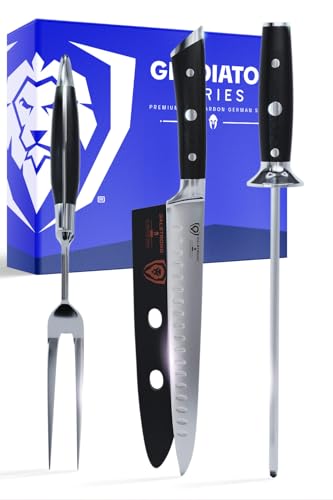
2. Dalstrong Gladiator Series Slicing Carving Knife
A slicing and carving knife from Dalstrong, sold with a sheath. The listing describes a hollow-ground edge meant to reduce sticking and a sturdy handle. Check the current listing for the exact blade length.
Suits: large cuts of meat. Strengths: a presentation-ready look. Weaknesses: several size options can confuse buyers. Skip it if you prefer a quieter design.

View Dalstrong Gladiator Series Slicing Carving Knife on Amazon

Best for serious cooks
3. Wusthof Classic Carving Knife
A forged German knife with a full tang and a riveted handle, made in the long, tapered carving style. It sits in the premium tier of home knives and is meant to last for years.
Suits: serious cooks. Strengths: forged construction and balance. Weaknesses: a heavier feel. Skip it if you want a light utility blade.

Best for busy weekend grilling
4. Mercer Culinary Genesis Forged Carving Knife
A forged carving knife with a non-slip Santoprene handle and a tapered blade. It is aimed at working kitchens and sits between stamped and premium forged knives.
Suits: busy weekend grilling. Strengths: a secure handle and forged steel. Weaknesses: a plain look. Skip it if you want a decorative handle.
View Mercer Culinary Genesis Forged Carving Knife on Amazon
Best for precise slicing
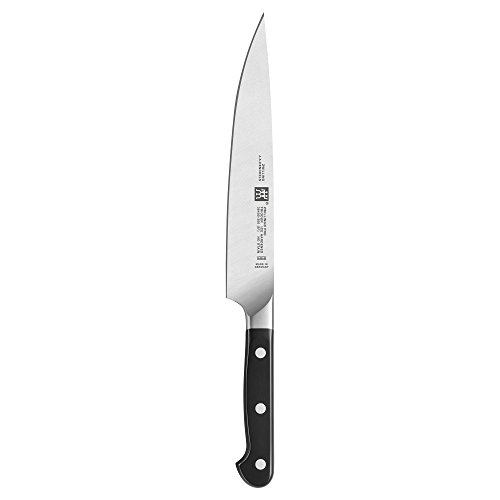
5. Zwilling Pro Carving Knife
A forged carving knife from Zwilling with a curved bolster that encourages a pinch grip, and a long, tapered blade made for thin slices.
Suits: precise slicing. Strengths: comfortable control. Weaknesses: premium care needs. Skip it if you want a dishwasher-safe knife.

Best for thin, precise slices
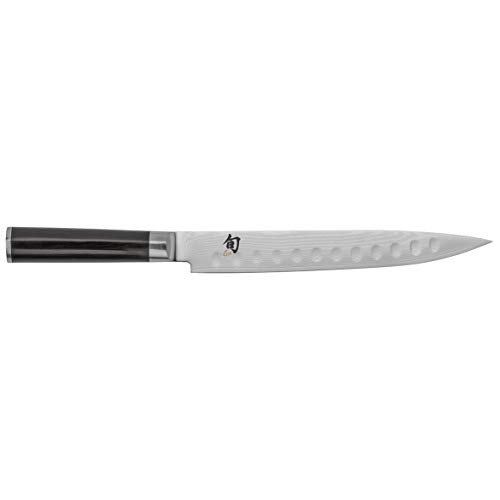
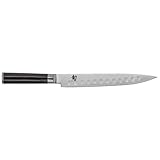
6. Shun Classic Slicing Knife
A Japanese-style slicing knife with a long, narrow blade made for thin, even slices of roast and brisket. It sits in the premium tier and rewards careful hand washing.
Suits: thin, precise slices. Strengths: a refined edge and elegant design. Weaknesses: a premium-tier cost and gentler care. Skip it if you want a rugged workhorse.
Care and Setup
- Hand wash and dry the blade right after slicing to protect the edge.
- Use a wood or plastic board so the edge stays sharp.
- Hone before each cookout and sharpen when slicing needs force.
- Store the knife in a sheath or block, never loose in a drawer.
Mistakes to Avoid
- Using a short chef knife on a whole brisket.
- Slicing meat straight off the grill without resting it.
- Cutting with the grain instead of across it.
- Buying without checking blade length and any sheath on the listing.
Slicer, Carver or Chef Knife: Which Blade Does the Job
People use the words slicer and carver loosely, and the difference is mostly about proportions. A slicer is long and narrow, often with a rounded or blunt tip, built to pull through a large, boneless piece such as brisket, ham or a roast in one smooth stroke. A carver is usually a bit shorter and slightly wider, with a pointed tip that helps work around joints and poultry bones. Many knives in this guide sit between the two.
A chef knife can slice meat, but it is a compromise. Its blade is shorter and taller, so a wide brisket needs several strokes and the slices come out ragged. Its curved belly is designed for rocking cuts, not long drawing cuts. That is why a dedicated slicer earns room in a barbecue kit.
Think about what you carve most. Brisket and pork loin favor a long, narrow blade with a stiff or semi-stiff spine. Whole chicken, turkey and bone-in roasts favor a carver with a pointed tip and a bit of flex. Steaks sliced against the grain after resting suit either. If you cook one kind of meat most of the time, choose for it; if you cook everything, a mid-length slicer with a rounded tip is a safe all-rounder.
Edge Styles and Blade Geometry Explained
The edge does much of the work, and the listing wording hides some useful detail. A plain, or straight, edge cuts cleanly and can be resharpened at home with a honing rod and a stone. A hollow-ground or dimpled edge, like the one described for the Dalstrong, adds scalloped indentations along the blade meant to reduce sticking, according to the maker. These can help with moist meat, but they also make resharpening a little less simple.
Look at the blade shape beyond the edge. A thinner blade glides through meat with less resistance and gives neater slices, while a thicker one feels sturdier but pushes more material aside. A blade that tapers toward the tip tends to be nimble, and a full-height heel gives knuckle clearance over the board.
The tip matters for safety and use. A rounded tip, common on slicers, lets you slide along a bone or glide on a board without poking. A pointed tip is useful for working near joints but needs more care. Blade flex is another trade-off: a flexible blade follows contours and bones, while a stiff blade holds a straight line through a thick roast. Rather than chasing a steel name, ask how the knife feels in your hand and whether its geometry fits the meat you serve most.
Forged or Stamped Construction Compared
Construction is one of the biggest differences across this list. A forged blade is made by shaping heated steel, usually giving it a thicker spine, a bolster between blade and handle, and a heavier, more balanced feel. A stamped blade is cut from a sheet of steel, so it tends to be lighter and thinner, and often costs less.
Neither is automatically better. Forged knives, like those from Wusthof and Zwilling here, appeal to cooks who like weight and a premium feel, and they often come with a full tang running through the handle. Stamped knives, like the Victorinox, are favored in busy kitchens because they are light, easy to maintain and quick to replace. Heavier knives can tire the hand during a long carving session, while lighter ones can feel less authoritative on a big brisket.
Consider upkeep. Premium steels may hold an edge longer but can be harder to sharpen, and some are more prone to chipping if misused. Softer steels sharpen quickly but need honing more often. Check the maker’s stated care instructions, including whether the knife is dishwasher-safe, which for most quality blades it is not. Set your budget tier by how often you will use the knife and how much care you are willing to give it.
Handles, Grip and Comfort for Greasy Hands
Barbecue slicing is messy, and a slick handle is a safety issue. Look for textured or contoured handles that stay secure when wet or covered in fat. Rubbery materials such as the Santoprene mentioned for the Mercer and the textured handle on the Victorinox are designed with this in mind. Wood-style or polished handles look handsome but may feel slippery unless you keep them dry.
Size the handle to your hand. A handle that is too thin forces you to squeeze, which tires the hand, and one that is too thick can limit control. If possible, hold the knife in a pinch grip near the bolster, as this gives the best control for slicing. A bolster that curves toward the heel can make this more comfortable, but some cooks prefer a flat handle with no bolster at all.
Check balance, too. A knife that feels blade-heavy can pull forward during long strokes, and a handle-heavy one can feel unwieldy. Riveted handles are secure and traditional; some molded handles are sealed and easy to clean. Left-handed users should confirm the edge is symmetrical, since some blades are ground on one side. Finally, think about guard and finger clearance, so your knuckles stay off the board and away from hot meat.
Sharpening, Storage and When to Replace
A long slicer is only as good as its edge, and the habits that preserve it are simple. Hone the blade on a rod before each use to realign the edge. When honing stops helping and slicing needs force or tears the meat, it is time to sharpen with a stone or a guided system, or to have a professional do it. Use light pressure and consistent angles; check the maker’s guidance for the recommended angle.
Store the knife where the edge cannot bump other tools. A sheath, a block or a magnetic strip works, while a loose drawer dulls the edge and can cut fingers. A long blade needs a slot sized for it, so confirm any block you own can take the length. Wipe the blade after each use, dry it fully and avoid leaving it in water.
Replace or retire a knife when the blade is bent, the tip is broken, the handle loosens or cracks, rust pits form that sharpening will not remove, or the edge no longer holds after sharpening. A chipped edge can often be ground out by a professional, but significant damage may not be worth it. Also check that any sheath still fits and protects the blade.
A Checklist for Carving at the Grill
Slicing meat that has just come off the fire is a different job from slicing at the kitchen counter. The meat is hot, the surface may be uneven, and everyone is watching and hungry. A few preparations make the whole moment smoother.
- Let the meat rest on a board with a juice groove before you cut it.
- Place the board on a stable, level surface, with a damp cloth underneath.
- Have a clean plate or platter ready for the slices.
- Keep a second towel at hand for wiping the blade and your hands.
- Check that the knife is clean and dry, and the handle is not slippery.
- Make sure that bystanders are clear of the cutting area.
Any of the listed knives, from the Victorinox Fibrox Pro and Dalstrong Gladiator to the Wusthof Classic, Mercer Genesis, Zwilling Pro and Shun Classic, will do better with this kind of organization. A good knife helps, but a calm setup helps more.
Which Blade Length Suits Which Meat
Blade length influences how cleanly you can carve long cuts in a single pass. This table suggests general matches, though your comfort should guide your final choice.
| Meat | Blade length direction | Reason |
|---|---|---|
| Brisket and large roasts | Longer blade | One long stroke gives cleaner slices |
| Whole chicken or turkey | Medium blade | Easier to maneuver around bones |
| Steaks and chops | Medium or short blade | Control for portions |
| Ribs | Sturdy medium blade | Needs to cut between bones |
| Sausages and small items | Short blade | Less clumsy |
If you only want one grill knife, a medium to long slicer with a flexible but sturdy blade covers a broad range of tasks.
Mistakes That Tear Meat and Dull Edges
Carving errors are common even for confident cooks. Avoid these habits and your slices will look better.
- Cutting too soon. Juices run out when meat has not rested. Follow official food safety guidance on temperatures and resting.
- Sawing back and forth. Use long, smooth strokes from heel to tip.
- Cutting with the grain. Slice across the grain for more tender bites.
- Using the grill grate as a cutting surface. It damages the edge.
- Leaving the knife in a wet sink. Wash it by hand and dry it right away.
- Using a dull knife. A dull blade requires more force and increases the risk of slipping.
Hold the knife with a firm pinch grip and keep your other hand behind the blade path.
Safety Habits Around Hot Meat and Sharp Blades
A knife near a hot grill needs extra care. Keep the blade away from your body, cut on a stable surface, and do not rush. Use a fork or tongs with a heat-resistant grip to steady the meat, and keep fingers back from the edge. If you cook outdoors in low light, set up proper lighting so you can see your hands.
Follow the maker’s instructions for the knife and the grill. For food safety, rely on official guidance on internal temperatures and holding times. If you are cut, apply first aid as recommended by a trusted health authority and seek professional care if the wound is deep.
Keeping Edges Sharp Between Cooks
A honing rod helps keep an edge aligned between sharpenings, and a whetstone or professional service restores it when it gets dull. Follow the maker’s advice on the sharpening angle and the right tool. Wash the blade after each cook, dry it, and store it in a sheath or block so the edge does not knock against other tools.
Reading a Knife Listing Closely
Product descriptions use terms such as forged, stamped, granton edge and full tang. Look for the actual blade length, the steel type, the handle material and the weight. A granton edge, with its hollow scallops, is meant to reduce sticking when slicing. Photos can exaggerate the size, so rely on the measurements. Check the care instructions and note whether the knife is dishwasher safe, since many are not.
Handles and Grip When Hands Are Greasy
Barbecue is messy, and a knife handle that feels fine in a shop may be slippery with fat. Look for textured or contoured handles, and consider a guard or bolster that keeps your fingers from sliding forward. Wipe your hands before you pick up the knife, and put it down on the board rather than holding it while you talk.
Storage and Transport for Outdoor Cooks
Grill knives often travel to the patio, the campsite or a friend’s yard. A blade guard or sheath protects both the edge and your hands in a bag, and a small roll or case keeps the knife, a honing rod and a cloth together. Do not toss a loose knife into a cooler or a drawer of utensils.
Wash and dry the blade soon after the meal, since salt and marinades can mark the steel. At home, keep it in a block or on a wall strip. A little consistent care means the knife is ready the next time the grill lights up.
Grill Knife FAQ
What is the best length for a grill knife?
Long enough to cross the meat in one stroke. Many cooks choose a blade longer than the widest cut they usually serve.
Should I buy a forged or stamped knife?
Forged knives usually feel heavier and more balanced, while stamped knives are lighter. Both can slice well.
Do I need a special knife for brisket?
A long, narrow slicer helps, but any sharp carving knife can work.
How often should I sharpen it?
Hone before each use and sharpen once or twice a year, or sooner if the blade starts to tear instead of slicing cleanly.
Is a longer blade always better?
Not always. A long blade lets you cut a wide piece in one stroke, but it is harder to store and control. Choose a length a little greater than your widest cut.
What is the difference between a slicer and a carver?
A slicer is generally longer and narrower and suits large boneless cuts. A carver is often shorter with a pointed tip for joints and poultry. Some knives blend both.
Are scalloped or hollow-ground edges worth it?
They can reduce sticking on moist meat, according to makers. They can be harder to resharpen at home, so weigh that against your needs.
Can I put a good carving knife in the dishwasher?
Most makers advise against it. Heat, detergent and knocking against other items can damage the edge and handle. Hand wash and dry it.
Should I slice meat hot off the grill?
Rest it first so juices redistribute. Resting time varies with size, so follow a reliable cooking guide for your cut.
What board is best for slicing brisket?
A large wood or plastic board with a juice groove works well and protects the edge. Avoid glass, stone and ceramic boards, which dull blades quickly.
Do I need an electric knife instead?
Not necessarily. Some people like them for large amounts of carving, but a sharp, long knife works for most home cooks.
Choosing Grill Knives With More Care: The Details That Decide
The picks above give you the shortlist. This section slows the decision down and looks at the details that separate grill knives you will enjoy for years from the ones that quietly end up at the back of the cupboard. None of these points require specialist knowledge; they ask you to match the product to your grill, your food and your habits, which is where good purchases are actually made. Work through them with your own cooking in mind, especially brisket, tri-tip, roasts and ribs, and the right pick usually identifies itself.
Blade Length and Shape for the Meat You Slice
Long, gently curved slicers suit brisket and roasts; shorter, stiffer blades suit portioning chops and chicken. A blade that is too short saws; too long wanders on a small board. Match the blade to the largest cut you serve regularly, not the largest you can imagine. To judge it on a listing, look past the headline claim and find the detail that proves it: a stated dimension, a named material, or a clear photo of the part you will actually handle. If the page stays vague on this point, treat that as information in itself and weigh the grill knives that explain it clearly more heavily.
Edge Style: Smooth, Granton or Serrated
Smooth edges give the cleanest slices and sharpen at home. Dimpled granton edges help release sticky slices. Serration cuts crust aggressively but tears tender meat and cannot be maintained with a simple steel. For most grill carving, a smooth edge you keep sharp beats a serrated edge you cannot. In daily use this matters most on the third or fourth cook, not the first. The first session with new grill knives almost always goes well; it is the repeated heating, washing and storing that reveals whether this detail was designed properly or just described well. Buy for the routine you will repeat all season, not for the unboxing.
Steel and How It Sharpens
Harder steels hold an edge through a whole brisket and take more skill to restore; softer steels dull sooner but steel back in seconds at the grill. Decide by your sharpening habits, honestly. A knife you maintain beats a superior knife you neglect, every single service. A practical way to test the claim before you commit is to compare it against the grill knives you already own or have used. Note what frustrated you there, then check whether this option genuinely fixes that frustration or simply moves it somewhere else. Improvements you can point to concretely are worth more than long feature lists.
Handle Grip With Wet, Greasy Hands
Carving happens with slick hands over a board swimming in juice. A handle with shape and texture that locks the hand, without hot spots over a long slicing session, is a safety feature. Test the grip thinking of the last slice, when everything is greasiest. There is usually a trade-off hiding inside this point, and honest listings make it visible. More of one quality tends to mean less of another, whether that is weight, space, speed or simplicity. Decide which side of the trade-off suits your cooking before you shop, so the comparison between grill knives stays anchored to your priorities.
Balance and Weight
A carving knife should feel neutral, letting the edge travel in long strokes without the wrist fighting the blade. Heavier knives help through dense crusts; lighter ones give control on delicate work. There is no universal right answer, only the balance your hand stops noticing. Match this criterion to the foods you cook most, which here means brisket, tri-tip, roasts and ribs. A feature that shines with one kind of food can be irrelevant, or even a nuisance, with another. The strongest choice is rarely the one with the longest specification list; it is the one whose strengths line up with your regular menu.
Grill Knives in Real Life: Four Situations Worth Planning For
Product pages describe features; households live in situations. Here is how grill knives behave in the situations that actually come up around a grill-side carving board, and what to do in each so the equipment helps rather than hinders.
Slicing Brisket at the Table or Board
Rest the meat properly, anchor with a fork without shredding, and use long, single strokes, letting the blade’s length work. A sharp slicer glides; if you are sawing, the knife or the technique needs attention before the next slice, not more force. The routine that makes this work is preparation: have everything cut, seasoned and within reach before the heat is on, because once cooking starts there is rarely a spare moment to go back inside. A small tray or board beside the grill turns a scramble into a sequence you can repeat.
Carving Roasts and Whole Birds
For roasts and poultry, the knife alternates between slicing and working around joints, so a slightly more versatile blade earns its place. Plan the cuts before the first one: presentation slices from the centre, end pieces for the cook, and keep the board stable on a damp cloth. Timing is the skill to practise here. Foods finish at different speeds, so start the slowest items first and add the quicker ones in stages rather than loading everything at once. That single habit does more for the result than any accessory, and it is free.
Trimming Before the Cook
Grill knives often double as trimming knives, removing fat and silverskin before seasoning. A blade you trust for trimming must be sharp in the tip half and easy to clean thoroughly afterwards, since raw and cooked work must never share an unwashed blade. Keep notes the first few times, even if only mentally: what the heat felt like, how long each item took, and what you would move earlier or later next time. Grill Knives reward cooks who adjust in small steps instead of changing everything at once.
Serving a Crowd From a Carving Station
When slices must flow, set the station properly: board, sharp knife, steel for touch-ups, a tray for slices and a towel for the handle. The knife is one part of a system; a great blade at a badly arranged station still serves slowly. For serving, plan the landing zone before you start: a clean platter, resting space and somewhere safe for hot tools. Good results are often lost in the last two minutes, when cooked food waits around getting cold or overcooks in its own residual heat because nothing was ready for it.
Using, Cleaning and Storing Your Grill Knives: A Working Routine
Long life from grill knives is mostly routine, not luck. The steps below follow the order of a real cook, from before the heat goes on to the moment everything goes away, and they apply whichever pick from the list above you choose. Adapt the details to your model’s manual where the two differ, since the maker’s instructions always win on safety and warranty questions.
Hone Little and Often
A few passes on a steel before each carving session keep a smooth edge aligned and cutting. Honing is not sharpening; when steeling stops restoring the bite, the knife needs a proper sharpen on a stone or system you trust, or a professional’s wheel. Make it a habit rather than a project: two minutes of attention straight after cooking replaces an hour of soaking and scrubbing later, and it keeps every part working the way it did on day one.
Wash and Dry by Hand
Dishwashers batter edges against racks and dull them with heat and detergent. Wash the knife by hand, dry it immediately, and put it away before the meal if you can. A knife left in a sink of water is a cut waiting for someone’s hand. Always let hot parts cool enough to handle safely before you start, and keep water away from anything electrical or still holding serious heat. A cracked surface or a warped part often traces back to one impatient cleaning session.
Store the Edge Protected
A sheath, a block slot, a magnetic strip or an edge guard, anything except loose in a drawer with other tools. Drawer rattle dulls edges and endangers fingers. If the knife travels to the grill, a guard is not optional. Dry everything fully before it goes away. Trapped moisture is the quiet cause of rust, odours and sticking, and it does its damage in storage where nobody notices until the next cook.
Cut on Boards, Not on Metal or Stone
Grill-side trays and metal platters destroy edges in one service. Carve on wood or a quality plastic board, and slice resting meat there too. The board is part of the knife’s care system, not just a serving choice. Use the mildest tool that does the job first, and step up only if residue survives. Aggressive scrubbing solves today’s mess by creating tomorrow’s sticking problem, especially on coated or seasoned surfaces.
Know When an Edge Is Done
If a knife tears rather than slices after proper sharpening, or the blade is chipped, bent or loose in the handle, retire or professionally repair it. Forcing a dead knife is how cuts happen, to meat and to hands. Store the piece where air can move around it and where it will not be knocked, stacked under heavy pans or left at the damp end of a cupboard or garage. Storage conditions decide lifespan as much as build quality does.
How the Picks Above Compare When You Cook Side by Side
Read as a group, the six picks in this guide are not six attempts at the same product; they are six answers to six slightly different questions. The comparison that matters is therefore not which one is best in the abstract, but which one’s strengths land on the cooking you do most. The guide’s own summary positions them as follows, and it is worth translating those positions into everyday terms before you decide.
The Victorinox is the pick put forward for a no-fuss slicer. In practice that makes it the natural shortlist-topper if that description sounds like your household, and the one to pass over if it clearly does not, however strong its other qualities are.
The Dalstrong is recommended for a bold look. Treat that as a statement about fit rather than rank: it will feel like the best product on this page to the cook it was chosen for, and like an odd compromise to anyone else.
The Wusthof or the Zwilling covers the case forged German steel. If that case is your default weeknight rather than an occasional event, weight this pick heavily; if it happens twice a year, let one of the more general picks win instead.
The Mercer is the answer for a working kitchen. Notice that this is a different promise from the picks around it, which is exactly why the guide keeps all six: most households recognise one of these descriptions immediately as their own situation.
The Shun is positioned for a Japanese-style edge. The honest way to use that is as a filter: say yes to it if the description matches your grill, your space and your menu, and do not let a feature you will never use argue you out of the match.
When two picks still tie, decide with three questions. Which one fits the equipment you already own without adapters, workarounds or wishful thinking? Which one will you clean without resentment on an ordinary evening? And which one’s main strength addresses the frustration that sent you shopping in the first place? The pick that answers all three is the right one, and it is rarely decided by a single headline feature.
More Mistakes That Trip Up Owners of Grill Knives
The mistakes section earlier in this guide covers the classics. These four are the quieter ones, the habits that do not ruin a single meal but steadily shorten the life of grill knives or make them less pleasant to use.
Sawing With a Short, Dull Blade
Sawing shreds bark, squeezes out juice and exhausts the cook. The fix is a blade long enough for one-stroke slices and sharp enough to glide. If you change one thing about your carving, change this. The fix costs nothing: slow down at this one step and check before the heat, the guests or the hunger make the decision for you. Most equipment problems that get blamed on build quality turn out to be this exact moment, repeated.
Carving Straight Off the Grill
Meat cut unrested bleeds its juices onto the board. The knife gets blamed for dry slices that the clock caused. Rest the meat, tent loosely, and let the knife arrive when the juices have settled back. If you recognise your own habit here, change the routine rather than the product. A written or mental checklist at the grill sounds excessive until the first time it saves a meal; after that it just becomes how you cook.
Using the Carving Knife as a Grill Tool
A fine edge is not a spatula, a lid lifter or a pry for stuck grates. Grill-side improvisation chips edges and bends tips. Keep the knife for cutting and let sturdy tools do the rough work. This mistake also compounds. One rushed session leaves residue, damage or bad seasoning behind, and the next session starts from a worse position, which makes the same shortcut tempting again. Breaking the cycle once, with a proper reset, is usually enough.
Storing It Wet in a Sheath
A knife put away damp in a tight sheath corrodes quietly, especially at the edge. Dry fully before sheathing, and store sheathed knives somewhere dry. Check the edge when it comes out, not when the brisket is waiting. It is worth saying out loud to anyone you share the equipment with, too. Shared grill knives suffer most from inconsistent habits, where one careful owner undoes another person’s shortcut, or the other way round.
More Grill Knives Questions, Answered
Buyers ask a second round of questions once the first cook is done and the equipment has to earn its place week after week. Here are the ones that come up most often for grill knives, answered in the same spirit as the rest of this guide: practical, and honest about what depends on your model.
What size knife do most grill cooks need?
One mid-to-long slicer covers most roasts and briskets, and a smaller utility blade handles trimming and portioning. Measure against your board and your largest regular cut. Two knives that fit your food beat a block of sizes you never touch.
How do I test sharpness safely?
A sharp knife bites into a tomato’s skin or slices paper cleanly with its own weight; a dull one skates and tears. Test away from the meal, on something expendable. Never test with a fingertip dragged along the edge.
Is a granton edge worth it?
For sticky, juicy slicing, the dimples genuinely reduce drag and help slices fall away instead of clinging. They do not make a dull knife sharp or a short knife long. Treat the feature as a bonus on a blade that already suits you.
Can I sharpen a serrated grill knife at home?
Not easily or well with basic tools; serrations need shaped files or professional equipment. That maintenance reality is why many cooks keep serration for bread and choose smooth edges for meat. If you own one, a professional service restores it best.
How should I hold the knife for long slices?
Grip the handle firmly with the thumb and forefinger pinching the blade just ahead of the handle for control, keep the tip low, and draw the blade back in one smooth stroke using its full length. Let sharpness do the cutting; your arm just guides.
When should a grill knife be replaced?
When the blade is damaged beyond a normal sharpening, the handle is cracked or loose, or the steel is pitted along the edge. A sound knife lasts for years, so replacement is usually about damage or a shape that never suited your food, not age alone.
Ownership Notes: Getting More From Your Grill Knives
One underrated step before buying any of the grill knives above is to measure the space it has to live in, not just the space it cooks on. Check the working area, the storage spot and the path between them, because equipment that is awkward to reach for gets used less, whatever its merits on paper. A tape measure and five honest minutes prevent the most common return reason of all: it simply did not fit the way the household actually works.
Read the manual that comes with your pick, even if you have owned similar grill knives before. Makers differ on seasoning, maximum heat, dishwasher safety and which parts can be immersed, and the warranty usually assumes you followed their version. Ten minutes with the booklet protects both the equipment and your claim if something fails early, and it often reveals a small feature or warning that the product page never mentioned.
Plan a low-stakes first cook with your new purchase. Choose forgiving foods, keep the group small and treat the session as calibration: learning how this piece behaves with heat, timing and cleanup in your own a grill-side carving board. A relaxed trial run teaches more than any guide, and it means the first important meal, the one with guests and expectations, is cooked with knowledge instead of hope.
Think about the season as a whole when you judge value. Grill Knives that get used weekly for months should be chosen for durability and easy cleaning above almost everything else, while a piece bought for one annual event can reasonably trade some toughness for price or compact storage. Matching the purchase to the real frequency of use is the simplest way to spend the right amount in the right place.
Keep a simple ownership routine on the calendar: a quick inspection at the start of the season, a proper clean before storage, and a mid-season check of the parts that wear, loosen or corrode. Small checks catch small problems while they are still cheap and easy, and they mean the equipment is ready on the first warm weekend instead of needing rescue work.
Safety deserves a line of its own. Work on a stable, level surface, keep handles and cords where nobody brushes past them, and give hot equipment a clear landing zone away from children, pets and paper or cloth clutter. None of this is complicated, but it has to be arranged before the cooking starts, because mid-cook is the worst moment to improvise it.
If you are choosing between two finalists among the grill knives above and going in circles, decide by cleanup. When cooking performance is close, the piece you will happily wash on a tired weeknight is the one that gets used, and used equipment is always better value than excellent equipment that lives in a cupboard. Honest self-knowledge about your own habits is a legitimate buying criterion.
Before you buy, check that replacement parts and accessories for the model are easy to find: the wear items specific to grill knives, such as the parts that heat, move, seal or take the scrubbing. A product whose consumables are unavailable becomes disposable the first time a small part fails, however solid the rest of it is. Five minutes checking parts availability has saved more good equipment than any warranty.
Read the warranty terms with the same care as the feature list, because the two describe different products: the features describe the best day, the warranty describes the worst one. Note what is covered, for how long, and what care the maker requires from you to keep the cover valid. File the details with the manual so a problem in year two starts with information, not archaeology.
Share the care routine with everyone who uses the equipment, in plain terms, at the grill rather than by message. Shared grill knives fail early when each user assumes someone else cleaned, dried or checked them. A two-minute demonstration, plus the checklist kept with the tools, aligns the whole household’s habits and quietly doubles the equipment’s life.
Keep a short note of what works with your setup: the settings, timings and arrangements that produced your best results with brisket, tri-tip, roasts and ribs. Memory edits itself kindly over a season; a note does not. Three lines after a good cook, kept on a phone or a card in the drawer, turn next season’s first cook into a repeat of your best rather than a fresh experiment.
The Short Version
For a no-fuss slicer, the Victorinox. For a bold look, the Dalstrong. For forged German steel, the Wusthof or the Zwilling. For a working kitchen, the Mercer. For a Japanese-style edge, the Shun.