Rain, snow, wind and strong sun are all hard on a grill. A good cover keeps water out of the burners and off the grates, slows rust on the lid and keeps debris from settling inside. In heavy weather, fit and fabric weight matter more than any extra feature.
The six covers below include heavy-duty fabrics, branded covers made for specific grill families and straps for windy sites. We have not used these products ourselves, so confirm the dimensions, the fabric and the fit for your exact grill on the current listing before buying.
As an Amazon Associate we earn from qualifying purchases. Links below are affiliate links, and they do not change the product information we give.
What to Look For
| Feature | Why it matters |
|---|---|
| Fabric | Heavier fabrics resist tears and hold up to sun and cold |
| Fit | A close fit keeps wind from lifting the cover |
| Straps and vents | Buckles resist gusts, and vents reduce trapped moisture |
| Backing | A waterproof backing keeps rain out of the grill |
In this guide
Specs at a Glance
| Cover | Fabric | Fit | Notes |
|---|---|---|---|
| Weber Premium Grill Cover | Heavy polyester | Sized to Weber models | Straps and vents |
| Traeger Full-Length Grill Cover | Heavy polyester | Sized to Traeger models | Made for pellet grills |
| Classic Accessories Veranda Grill Cover | Polyester | Several sizes | Water-resistant, vented |
| KingKong Heavy-Duty Grill Cover | Heavy polyester | Several sizes | Sun and weather focus |
| Char-Broil Performance Grill Cover | Polyester | Sized to Char-Broil grills | Fit by model |
| Hisencn Heavy-Duty Waterproof Grill Cover | Heavy polyester | Several sizes | Straps included |
The 6 Best Grill Covers for Heavy Weather

Top pickBest for owners of a Weber grill
1. Weber Premium Grill Cover
A cover made by the grill brand itself, with straps to hold it down in wind. Weber sells versions sized for each of its grill lines, so match the cover to your model on the listing. The straps matter most when gusts hit the deck.
Suits: owners of a Weber grill. Strengths: made-for-model fit and straps. Weaknesses: you must pick the right size. Skip it if you own another brand.


Best for owners of a Traeger pellet grill
2. Traeger Full-Length Grill Cover
A full-length cover for Traeger pellet grills, made to protect the hopper, the lid and the legs. A close fit helps keep wind from catching the fabric, which matters on open patios. Pellet grills have tall hoppers, so a made-for-model size avoids gaps.
Suits: owners of a Traeger pellet grill. Strengths: covers the whole grill. Weaknesses: sized for specific Traeger models. Skip it if you own a different pellet grill.

Best for a common mid-size gas grill
3. Classic Accessories Veranda Grill Cover
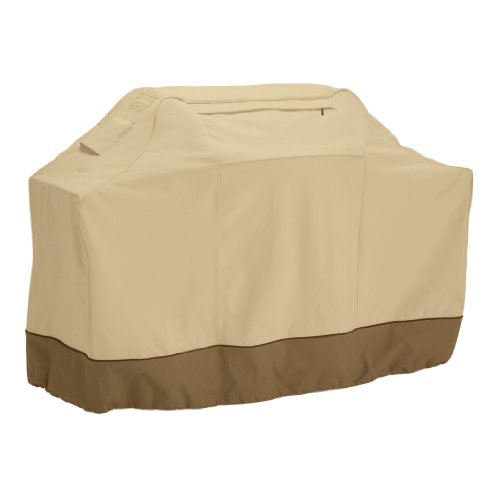
A vented, water-resistant cover sold in several sizes. The vents help reduce trapped moisture under the fabric, which helps prevent a damp smell in humid weather. It is a practical choice for covered porches and breezy decks.
Suits: a common mid-size gas grill. Strengths: vents and a size range. Weaknesses: lighter than the heavy-duty options. Skip it if you face severe storms.

Best for harsh climates and open decks
4. KingKong Heavy-Duty Grill Cover
A heavier cover from a brand that focuses on grill covers, with a thicker fabric aimed at sun, rain and snow. Check the listing for the stated dimensions and compare them with your grill. Heavier fabric also tends to last more seasons in strong sun.
Suits: harsh climates and open decks. Strengths: thick fabric and several sizes. Weaknesses: the fit is universal rather than made-for-model. Skip it if you want a branded fit.
View KingKong Heavy-Duty Grill Cover on Amazon
Best for owners of a Char-Broil grill
5. Char-Broil Performance Grill Cover
A fitted cover from a major grill brand, sold in sizes for its own grill lines. It is a good match when your grill is a Char-Broil, and it protects against dust and rain. Look for the sizing chart to pick the right cover.
Suits: owners of a Char-Broil grill. Strengths: a close fit by model. Weaknesses: not made for other brands. Skip it if you want a heavy fabric.
View Char-Broil Performance Grill Cover on Amazon

Best for exposed patios in rainy climates
6. Hisencn Heavy-Duty Waterproof Grill Cover
A heavy-duty cover with a waterproof coating and straps, sold in a range of sizes. It aims to handle wind and rain on exposed patios. Measure with a tape before ordering to avoid a baggy fit.
Suits: exposed patios in rainy climates. Strengths: straps and a waterproof coating. Weaknesses: measure your grill with care. Skip it if you want a model-specific fit.

Care and Setup
- Let the grill cool completely before covering it.
- Shake off snow and standing water after storms.
- Dry the cover if it is soaked, and let the grill air out.
- Use the straps in wind, and tighten them after each use.
Mistakes to Avoid
- Covering a warm grill and trapping moisture.
- Buying a cover that is too large and flaps.
- Skipping the straps.
- Never cleaning off bird droppings and sap.
Fabric Weight, Coatings and Seam Construction
When a cover is described as heavy-duty, the word on its own tells you little. What matters is how the fabric is built. Look for the stated fabric weight or denier on the listing, which is a rough guide to thickness. A higher figure generally means a stiffer, more tear-resistant material, though it also means a bulkier cover that is harder to fold and pull on over a tall grill. Makers do not all measure the same way, so use the number to compare covers from one maker rather than across different brands.
Next, check the backing. Many covers use a polyester shell with a coating on the inside that sheds water. A coated backing is what keeps rain from soaking through, but coatings can crack with age and sun. Look for language about UV resistance and cold-crack resistance if your winters are hard. Fabric that stiffens in freezing temperatures can split along folds.
Seams are where leaks and wear start. Stitched seams can let water seep through the needle holes unless they are taped or sealed, so see whether the listing mentions sealed or welded seams. Also look at the hem. A hem with a drawcord or elastic helps the cover stay snug, and reinforced corners resist chafing against sharp grill edges and handles.
- Check the fabric weight or denier on the listing.
- Look for a waterproof backing and UV protection.
- Prefer taped or sealed seams over bare stitching when rain is frequent.
- Check for reinforced corners and a strong hem.
A heavier cover is not always the right answer. If you will be putting it on and off several times a week, a mid-weight fabric that you can handle easily may last longer simply because you will use it correctly every time.
Measuring Your Grill for a Close Fit
Fit is the single biggest reason covers fail in storms. A cover that is too loose catches wind like a sail, flaps against the grill and wears through at the corners. One that is too tight strains the seams and may not reach the bottom edge, leaving the base exposed. Taking five minutes to measure avoids both problems.
Measure the width from the outer edge of one side shelf to the other with the shelves in the position you use when the grill is stored. Then measure depth from the front edge of the cart or handle to the back of the grill, and height from the ground to the highest point, which is often the lid handle or a chimney. If you keep a side burner or a smoke stack attached, include it. Write the numbers down and compare them with the dimensions on the listing, not with the product title alone.
Many listings give a cover size as a length figure only. Treat that as one dimension and look for width and height as well. If your measurements fall between two sizes, a snug fit is usually better than a roomy one in windy areas, provided the cover still closes over the handles without pulling on the lid.
Branded covers made for a grill family are cut to that shape, which can help, but model lines change over time. Confirm that your exact model is listed. If you own a grill that has a pellet hopper, a rolling cart with large wheels or a folding side table, check how the cover handles each of those parts. Where a listing is vague, check the product questions section or contact the seller before you order.
Securing a Cover Against Wind, Snow and Ice
Wind is hardest on a cover that is only draped over the grill. A buckle strap that runs under the cart, or a drawcord that cinches the hem, holds the fabric down. Check how many straps the cover has and where they sit. A single strap at mid-height may keep the cover on but still leave the lower edge free to flap. Two straps, or a strap plus a cinch hem, spread the load better.
Vents help in a different way. When a gust pushes under a sealed cover, it can lift it like a balloon. Vents let that air escape, and they also let moisture out so condensation does not collect inside. The vents should sit high on the cover where rain is less likely to enter, and they should be covered by a flap.
Snow adds weight, and ice can freeze a cover to the lid or cart. Brush off heavy snow with a soft broom before it freezes on the surface. If the cover is stuck, do not pull hard on it, since frozen fabric can tear. Let it warm a little or free it with your hand around the edges.
- Tighten straps after each use, as they loosen over time.
- Lock the wheels or move the grill against a wall if gusts are common.
- Remove the cover from the grill and bring it indoors ahead of a severe storm warning if you can.
Also think about where the grill stands. A spot beside a wall, away from open fields and rooflines that shed snow, makes any cover last longer.
Sun Exposure and Off-Season Storage
Heavy weather is not only storms. Constant sun breaks down fabric and coatings, causing fading, chalky surfaces and cracks. A cover in strong sun for months can lose its waterproofing well before it shows holes. If your grill sits in direct sun, choose a cover that states UV resistance and expect to replace it sooner than one used in shade.
For long off-season storage, the best approach depends on your space. A grill kept in a garage or shed needs only a light dust cover. A grill that must stay outside through winter is better off with a fitted, heavier cover and a few preparations first.
- Clean the grates and burn off residue, then oil the grates lightly.
- Remove ash, grease trays and pellets, and store pellets and charcoal in sealed containers.
- Disconnect the gas tank and store it upright outdoors in a ventilated place, never indoors.
- Check that the grill is fully dry before covering.
During the off season, lift the cover now and then on a dry day to let the grill air out and to look for damp spots, rust or pests. A cover that stays wet against metal for weeks can cause more corrosion than no cover at all, which is why vents and dry-before-covering habits matter.
Clean the cover itself at season end with mild soap and a soft brush, rinse well and let it dry completely before folding. Store it away from rodents, which will chew soft fabric if they can get to it.
When to Replace a Cover and Which Tier Fits Your Climate
Even a good cover wears out. Signs that it is time for a new one include a chalky or sticky feel on the coating, visible light through the fabric, cracks along fold lines, seams that have pulled open and straps or buckles that no longer hold. If water now soaks in at the lid or you find rust spots forming under the cover, replace it before the grill takes damage. A grill is usually the more expensive item, so a cover is a small cost to protect it.
Think of covers in three broad tiers rather than chasing a single best one. Basic covers use thinner fabric and suit mild climates, covered patios or short-term protection. Mid-range covers add heavier fabric, vents and straps, and work for most households that see regular rain and sun. Premium or heavy-duty covers use thick fabric, sealed seams and better hardware, and suit exposed sites with strong wind, snow or constant sun.
Questions to ask before buying:
- What is the exact size of my grill including shelves and handles?
- How windy, wet or sunny is the spot where it will sit?
- Do I need the cover for a few months or all year?
- Can I put it on and take it off easily by myself?
- What warranty does the listing describe, and what does it cover?
Check warranty terms on the current listing, since coverage varies. Keep the cover clean, dry it before storage and fasten the straps, and even a mid-range model can serve you well for several seasons.
Measuring Your Grill So the Cover Actually Fits
A cover that is too small leaves the base exposed, while one that is far too big flaps in wind and collects water. Take three measurements: the width from side to side including side shelves, the depth from front handle to back, and the height with the lid closed and any chimney in place. Add a small allowance and compare the figures to the cover’s stated dimensions. If you have a side burner, a smoker box or a rotisserie motor, measure those as well, since they often add inches.
- Wait until the grill is fully cool and measure it at its widest points.
- Include handles, shelves and any fittings that stick out.
- Compare against the cover’s listed size, not just a name like “large.”
- Choose a cover with a drawstring or straps for a snug hold.
Fabric, Seams and Features That Matter in Rough Weather
Heavy rain, strong sun and hard wind each stress a cover in a different way. Look beyond the word “waterproof” and check what the material really is, how thick it is, and how the seams are finished. Taped or welded seams keep water from seeping through stitching. UV-resistant coatings slow fading and cracking under sun, and a soft lining helps protect the grill’s finish.
| Weather concern | Feature to look for |
|---|---|
| Heavy rain | Water-resistant fabric and sealed seams |
| Strong sun | UV-resistant coating to limit fading |
| High wind | Straps, buckles or elastic hems that keep the cover down |
| Snow and ice | Sturdy fabric that does not crack in cold |
| Trapped moisture | Vents that let humid air escape |
Using and Caring for the Cover Day to Day
Always let the grill cool fully before covering it. A hot grill can melt or damage most fabrics and trap heat, and wet or greasy surfaces can encourage mildew. Brush off the cooking surfaces, wipe up spills, and keep the cover dry underneath. If water pools on top, tip it off so the weight does not stretch the fabric.
Clean the cover with mild soap and water and a soft brush, following the care label, and let it dry completely before folding it or putting it back on. Store a spare cover indoors in the off season if you can. Check straps and seams from time to time, and if a cover has torn or lost its coating, replace it before the next storm rather than after it.
- Cool, clean and dry before covering.
- Secure the straps ahead of windy weather.
- Remove the cover occasionally to air out the grill.
Common Cover Problems and Quick Fixes
Even a well-made cover can misbehave. If it keeps blowing off, tighten the straps and add a second tie-down under the cart. If water collects in a dip on top, prop up the middle with a rolled towel or use a cover with a stiffer shape. Mildew smells usually point to covering the grill while damp, so wipe and air it first.
Grill Cover FAQ
How do I pick the right size?
Measure your grill’s width, depth and height, then compare with the listing’s dimensions.
Do covers stop rust completely?
They help slow it, but a cover does not replace cleaning and oiling.
Is a waterproof cover better?
A waterproof backing keeps water out, but vents are important so that moisture can escape.
Do I need straps?
In windy places, yes. Straps keep the cover from lifting.
Can I leave a cover on all winter?
You can if the grill is dry and cool when you cover it and the cover has vents. Lift it on a dry day now and then to check for dampness or rust underneath.
Why does my cover keep blowing off?
The usual causes are a loose fit, no tightened straps or a missing cinch at the hem. Choose a snug size, fasten the straps under the cart and move the grill to a more sheltered spot if you can.
Should the cover reach the ground?
A cover that reaches the base protects the wheels and lower frame, but one that drags on the ground gets dirty and wears faster. Aim for a hem just above or at the bottom of the cart.
How often should I wash the cover?
Wash it once or twice a season, or sooner if sap, droppings or mildew build up. Use mild soap and a soft brush, rinse well and dry it completely before putting it back.
Is a darker or lighter cover better?
Color matters less than UV protection and fabric quality. Lighter colors may stay a bit cooler in strong sun, but check what the listing says about sun resistance.
Will a cover protect against hail?
A fabric cover reduces scuffs and keeps debris off, but it is not made to stop large hail or falling branches. Move the grill to a sheltered place when severe weather is forecast.
Choosing Grill Covers for Heavy Weather With More Care: The Details That Decide
The picks above give you the shortlist. This section slows the decision down and looks at the details that separate grill covers for heavy weather you will enjoy for years from the ones that quietly end up at the back of the cupboard. None of these points require specialist knowledge; they ask you to match the product to your grill, your food and your habits, which is where good purchases are actually made. Work through them with your own cooking in mind, especially the grill itself, through every season, and the right pick usually identifies itself.
Fabric Weight and What It Really Means
Heavier fabric resists tearing, abrasion and wind-whipping, but it is also stiffer to handle in cold weather. Judge weight alongside the coating and seam quality rather than as a lone number. In genuinely rough climates, fabric that feels almost excessive in the shop feels right by the second winter. To judge it on a listing, look past the headline claim and find the detail that proves it: a stated dimension, a named material, or a clear photo of the part you will actually handle. If the page stays vague on this point, treat that as information in itself and weigh the grill covers for heavy weather that explain it clearly more heavily.
Seams, Stitching and Weak Points
Covers fail at seams first. Look for sealed or well-finished seams, reinforced corners and stitching that does not perforate a waterproof layer carelessly. Corners over handles and side shelves take the strain, so reinforcement there matters more than an extra feature elsewhere. In daily use this matters most on the third or fourth cook, not the first. The first session with new grill covers for heavy weather almost always goes well; it is the repeated heating, washing and storing that reveals whether this detail was designed properly or just described well. Buy for the routine you will repeat all season, not for the unboxing.
Straps, Buckles and Wind Security
In heavy weather the strap system is the cover. Wide straps with solid buckles at several points, plus a hem adjustment, keep the cover on and stop it flapping itself to death. Velcro alone in a storm zone is optimism, not a fastening strategy. A practical way to test the claim before you commit is to compare it against the grill covers for heavy weather you already own or have used. Note what frustrated you there, then check whether this option genuinely fixes that frustration or simply moves it somewhere else. Improvements you can point to concretely are worth more than long feature lists.
Venting Against Condensation
A waterproof cover that traps moist air against the grill trades rain damage for rust damage. Vents that shed rain while letting vapour escape are the mark of a cover designed by someone who has owned a grill. In humid climates this criterion jumps to first place. There is usually a trade-off hiding inside this point, and honest listings make it visible. More of one quality tends to mean less of another, whether that is weight, space, speed or simplicity. Decide which side of the trade-off suits your cooking before you shop, so the comparison between grill covers for heavy weather stays anchored to your priorities.
Fit Over Your Grill’s Awkward Parts
Chimneys, side burners, shelves and hopper boxes decide fit more than the headline dimensions. Measure height at the tallest point and width at the widest, including handles. A cover that strains over a shelf seam will tear exactly there, mid-storm, at night. Match this criterion to the foods you cook most, which here means the grill itself, through every season. A feature that shines with one kind of food can be irrelevant, or even a nuisance, with another. The strongest choice is rarely the one with the longest specification list; it is the one whose strengths line up with your regular menu.
Grill Covers for Heavy Weather in Real Life: Four Situations Worth Planning For
Product pages describe features; households live in situations. Here is how grill covers for heavy weather behave in the situations that actually come up around an exposed backyard or patio, and what to do in each so the equipment helps rather than hinders.
Storm Season With High Winds
Before a forecast storm, snug every strap, lower or fold side shelves if the cover fits better that way, and move the grill out of the wind’s favourite corridor if you can. Afterwards, check for pooled water and wind-lifted corners before the next round arrives. The routine that makes this work is preparation: have everything cut, seasoned and within reach before the heat is on, because once cooking starts there is rarely a spare moment to go back inside. A small tray or board beside the grill turns a scramble into a sequence you can repeat.
Snow Load and Freeze-Thaw
Brush snow off rather than letting it melt and refreeze on the fabric, and never drag a frozen cover off a grill; let it thaw or flex it gently. Ice in seams and buckles is where winter damage happens, so a mid-winter inspection pays. Timing is the skill to practise here. Foods finish at different speeds, so start the slowest items first and add the quicker ones in stages rather than loading everything at once. That single habit does more for the result than any accessory, and it is free.
Intense Sun and Heat
In hot climates the enemy is ultraviolet and baked air. A vented cover in a light-deflecting finish, on a grill parked out of the very worst afternoon sun, protects both cover and grill. Covers themselves age in sun, so expect a shorter service life and inspect for brittleness. Keep notes the first few times, even if only mentally: what the heat felt like, how long each item took, and what you would move earlier or later next time. Grill Covers for Heavy Weather reward cooks who adjust in small steps instead of changing everything at once.
Coastal Salt Air
Salt spray reaches everywhere, and a cover is your grill’s only coat. Rinse the cover itself occasionally, keep vents clear, and inspect the grill underneath more often than inland owners, because salt plus trapped moisture is aggressive. The cover slows corrosion; it does not cancel it. For serving, plan the landing zone before you start: a clean platter, resting space and somewhere safe for hot tools. Good results are often lost in the last two minutes, when cooked food waits around getting cold or overcooks in its own residual heat because nothing was ready for it.
Using, Cleaning and Storing Your Grill Covers for Heavy Weather: A Working Routine
Long life from grill covers for heavy weather is mostly routine, not luck. The steps below follow the order of a real cook, from before the heat goes on to the moment everything goes away, and they apply whichever pick from the list above you choose. Adapt the details to your model’s manual where the two differ, since the maker’s instructions always win on safety and warranty questions.
Cool and Dry Before Covering
Never cover a warm or wet grill. Heat plus trapped moisture steams the finish and invites rust, and a cover put away damp grows mildew. Let the grill cool fully, wipe standing water, then cover. Two patient minutes protect better than any fabric upgrade. Make it a habit rather than a project: two minutes of attention straight after cooking replaces an hour of soaking and scrubbing later, and it keeps every part working the way it did on day one.
Fit It the Same Way Every Time
Pull the cover down evenly, align it over the tall parts first, then fasten straps in a consistent order. A cover thrown on crooked strains one seam and leaves one corner flapping, and flapping is what wears fabric out. Always let hot parts cool enough to handle safely before you start, and keep water away from anything electrical or still holding serious heat. A cracked surface or a warped part often traces back to one impatient cleaning session.
Clean the Cover Itself
Brush off leaves and dirt, wash with mild soap and water when grime builds, and let it dry completely before refitting or storing. Abrasive cleaners and pressure washers damage coatings. A clean cover also slides on without grinding grit across the grill’s finish. Dry everything fully before it goes away. Trapped moisture is the quiet cause of rust, odours and sticking, and it does its damage in storage where nobody notices until the next cook.
Store It Properly Off-Season
If the cover comes off for summer, store it dry, loosely folded, out of sun and away from rodents looking for nesting material. Sharp creases held for months crack coatings, so fold differently each time or roll it. Use the mildest tool that does the job first, and step up only if residue survives. Aggressive scrubbing solves today’s mess by creating tomorrow’s sticking problem, especially on coated or seasoned surfaces.
Inspect After Every Big Storm
Walk the checklist: straps still tight, no new tears at corners, no water pooled on top, grill dry underneath. Small storm damage repaired early, with a patch or a strap replacement, stops the tear that ends a cover’s life. Store the piece where air can move around it and where it will not be knocked, stacked under heavy pans or left at the damp end of a cupboard or garage. Storage conditions decide lifespan as much as build quality does.
How the Picks Above Compare When You Cook Side by Side
Read as a group, the six picks in this guide are not six attempts at the same product; they are six answers to six slightly different questions. The comparison that matters is therefore not which one is best in the abstract, but which one’s strengths land on the cooking you do most. The guide’s own summary positions them as follows, and it is worth translating those positions into everyday terms before you decide.
The Weber Premium is the pick put forward for a Weber. In practice that makes it the natural shortlist-topper if that description sounds like your household, and the one to pass over if it clearly does not, however strong its other qualities are.
The Traeger is recommended for a pellet grill. Treat that as a statement about fit rather than rank: it will feel like the best product on this page to the cook it was chosen for, and like an odd compromise to anyone else.
The Classic Accessories covers the case for a vented mid-range pick. If that case is your default weeknight rather than an occasional event, weight this pick heavily; if it happens twice a year, let one of the more general picks win instead.
The KingKong is the answer for thick fabric. Notice that this is a different promise from the picks around it, which is exactly why the guide keeps all six: most households recognise one of these descriptions immediately as their own situation.
The Char-Broil is positioned for a Char-Broil. The honest way to use that is as a filter: say yes to it if the description matches your grill, your space and your menu, and do not let a feature you will never use argue you out of the match.
The Hisencn rounds out the list for waterproof coating. For the right buyer it is not a consolation choice at all but the most sensible one here, because buying capacity, size or toughness you never use is its own kind of waste.
When two picks still tie, decide with three questions. Which one fits the equipment you already own without adapters, workarounds or wishful thinking? Which one will you clean without resentment on an ordinary evening? And which one’s main strength addresses the frustration that sent you shopping in the first place? The pick that answers all three is the right one, and it is rarely decided by a single headline feature.
More Mistakes That Trip Up Owners of Grill Covers for Heavy Weather
The mistakes section earlier in this guide covers the classics. These four are the quieter ones, the habits that do not ruin a single meal but steadily shorten the life of grill covers for heavy weather or make them less pleasant to use.
Buying by Grill Brand Instead of Measurements
Model names change and dimensions vary between years. A cover bought by badge alone often fits like a borrowed coat. Measure your grill’s widest, deepest and tallest points and buy to those numbers, with a little room for shelves and handles. The fix costs nothing: slow down at this one step and check before the heat, the guests or the hunger make the decision for you. Most equipment problems that get blamed on build quality turn out to be this exact moment, repeated.
Leaving Water Pooled on Top
A sagging top that holds a puddle is slowly stretching fabric and stressing seams, and in winter that puddle becomes ice. Prop a ball or an upturned bowl under the cover at the low spot, or adjust the fit so water sheds. If you recognise your own habit here, change the routine rather than the product. A written or mental checklist at the grill sounds excessive until the first time it saves a meal; after that it just becomes how you cook.
Covering and Forgetting for Months
A covered grill still needs airing and inspection, especially in humid weather. Lift the cover on a dry day each month, check for moisture, pests and rust starting, and refit. Ten minutes prevents the spring discovery nobody wants. This mistake also compounds. One rushed session leaves residue, damage or bad seasoning behind, and the next session starts from a worse position, which makes the same shortcut tempting again. Breaking the cycle once, with a proper reset, is usually enough.
Dragging the Cover Over Sharp Edges
Shelf corners, thermometer stems and handle ends snag and cut fabric from inside. Lift the cover over obstacles rather than pulling it past them, and pad any genuinely sharp point. Most tears are handling damage, not weather damage. It is worth saying out loud to anyone you share the equipment with, too. Shared grill covers for heavy weather suffer most from inconsistent habits, where one careful owner undoes another person’s shortcut, or the other way round.
More Grill Covers for Heavy Weather Questions, Answered
Buyers ask a second round of questions once the first cook is done and the equipment has to earn its place week after week. Here are the ones that come up most often for grill covers for heavy weather, answered in the same spirit as the rest of this guide: practical, and honest about what depends on your model.
Can a cover stay on all winter?
Yes, that is its job, provided it is vented, well fitted and checked occasionally. Brush off heavy snow, confirm the grill stays dry underneath after thaws, and air the setup on a dry day when you can. Winter is a long shift; supervision is light but not zero.
Why is my grill damp under a waterproof cover?
Condensation. Warm days and cool nights wring moisture from the air trapped inside, and ground moisture rises too. Venting, covering only a cool dry grill, and parking on a hard surface rather than wet grass all reduce it. A breathable inner environment matters as much as a waterproof outer one.
How do I stop mice nesting under the cover?
Keep the area clean of food residue, check regularly, and close gaps where the cover meets the ground without sealing it airtight. A grill cleaned before covering smells less like a restaurant to wildlife. If nesting is persistent, store the cover indoors between uses for a while.
Should the cover touch the ground?
A hem near the ground sheds rain better but can wick moisture and shelter pests. Most owners do best with the hem just clear of the surface, straps snug, and the grill on a hard standing. In driving-rain climates, a slightly longer hem with good venting is the compromise.
When is a heavy-weather cover worn out?
When fabric cracks or flakes, seams open, straps tear away, or it no longer keeps the grill dry in ordinary rain. Cosmetic fading alone is not failure. Judge it by a wet-week test: if the grill underneath stays dry, the cover still works.
Can I repair a torn cover?
Small tears and seam splits can be patched with fabric repair tape or a sewn patch and seam sealant, ideally before they grow. Damage at strap anchors or long storm tears usually means replacement is the honest answer, because those areas carry the load in the next storm.
Ownership Notes: Getting More From Your Grill Covers for Heavy Weather
One underrated step before buying any of the grill covers for heavy weather above is to measure the space it has to live in, not just the space it cooks on. Check the working area, the storage spot and the path between them, because equipment that is awkward to reach for gets used less, whatever its merits on paper. A tape measure and five honest minutes prevent the most common return reason of all: it simply did not fit the way the household actually works.
Read the manual that comes with your pick, even if you have owned similar grill covers for heavy weather before. Makers differ on seasoning, maximum heat, dishwasher safety and which parts can be immersed, and the warranty usually assumes you followed their version. Ten minutes with the booklet protects both the equipment and your claim if something fails early, and it often reveals a small feature or warning that the product page never mentioned.
Plan a low-stakes first cook with your new purchase. Choose forgiving foods, keep the group small and treat the session as calibration: learning how this piece behaves with heat, timing and cleanup in your own an exposed backyard or patio. A relaxed trial run teaches more than any guide, and it means the first important meal, the one with guests and expectations, is cooked with knowledge instead of hope.
Think about the season as a whole when you judge value. Grill Covers for Heavy Weather that get used weekly for months should be chosen for durability and easy cleaning above almost everything else, while a piece bought for one annual event can reasonably trade some toughness for price or compact storage. Matching the purchase to the real frequency of use is the simplest way to spend the right amount in the right place.
Keep a simple ownership routine on the calendar: a quick inspection at the start of the season, a proper clean before storage, and a mid-season check of the parts that wear, loosen or corrode. Small checks catch small problems while they are still cheap and easy, and they mean the equipment is ready on the first warm weekend instead of needing rescue work.
Safety deserves a line of its own. Work on a stable, level surface, keep handles and cords where nobody brushes past them, and give hot equipment a clear landing zone away from children, pets and paper or cloth clutter. None of this is complicated, but it has to be arranged before the cooking starts, because mid-cook is the worst moment to improvise it.
If you are choosing between two finalists among the grill covers for heavy weather above and going in circles, decide by cleanup. When cooking performance is close, the piece you will happily wash on a tired weeknight is the one that gets used, and used equipment is always better value than excellent equipment that lives in a cupboard. Honest self-knowledge about your own habits is a legitimate buying criterion.
Before you buy, check that replacement parts and accessories for the model are easy to find: the wear items specific to grill covers for heavy weather, such as the parts that heat, move, seal or take the scrubbing. A product whose consumables are unavailable becomes disposable the first time a small part fails, however solid the rest of it is. Five minutes checking parts availability has saved more good equipment than any warranty.
The Short Version
For a Weber, the Weber Premium. For a pellet grill, the Traeger. For a vented mid-range pick, the Classic Accessories. For thick fabric, the KingKong. For a Char-Broil, the Char-Broil. For waterproof coating, the Hisencn.