Teppanyaki is cooking on a hot flat steel or non-stick plate, often at the table, and home cooks can get a similar result with an electric griddle. A big flat surface handles fried rice, noodles, vegetables, steak and shrimp. The best electric teppanyaki grills for home are even-heating, roomy and easy to clean.
The six models below are electric griddles and flat-top grills that suit hibachi-style cooking. We have not used these products ourselves, so confirm the cooking area, plate material and power rating on the current listing before buying. Some are made for countertops, others for tabletops.
As an Amazon Associate we earn from qualifying purchases. Links below are affiliate links, and they do not change the product information we give.
What to Look For
| Feature | Why it matters |
|---|---|
| Surface | Non-stick is easy to clean; bare steel gives deeper sear and needs seasoning |
| Size | A larger plate suits family meals; a smaller one suits tabletop use |
| Heat control | Removable probes or dials help keep a steady temperature |
| Grease | A drip tray or a tilt design keeps grease managed |
| Storage | A flat shape or detachable cord helps with tidy storage |
| Warranty | Check what the listing says about coverage and replacement parts |
| Power | A higher wattage heats faster and recovers heat when you add cold food |
In this guide
Specs at a Glance
| Griddle | Surface | Size note | Notes |
|---|---|---|---|
| Zojirushi Gourmet Sizzler | Non-stick plate | Large countertop size | Removable control |
| Presto 07061 Griddle | Non-stick plate | Large | Drain tray |
| Blackstone E-Series 22-Inch | Flat-top | Tabletop | Electric heat |
| Cuisinart Griddler Five | Reversible plates | Medium | Open or contact mode |
| Hamilton Beach Griddle | Non-stick plate | Large | Drip tray |
| BELLA Griddle | Ceramic coat | Large | Removable control |
The 6 Best Electric Teppanyaki Grills for Home
Top pickBest for dedicated home cooks
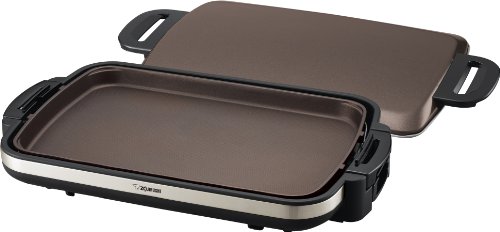
1. Zojirushi Gourmet Sizzler Electric Griddle
A premium electric griddle from Zojirushi with an even flat plate and a removable temperature control. It is well-liked among teppanyaki fans.
Suits: dedicated home cooks. Strengths: a high-quality build and even heat. Weaknesses: a higher spend. Skip it if you want a budget-friendly pick.

Best for big families
2. Presto 07061 Tilt’n Drain Griddle
A large non-stick electric griddle from Presto with a drain feature and a removable heat control. It is a long-running pick for family breakfasts and hibachi-style dinners.
Suits: big families. Strengths: large cooking area. Weaknesses: a bulky shape. Skip it if you have little counter space.
View Presto 07061 Tilt’n Drain Griddle on Amazon
Best for patio cooks who like flat-top style
3. Blackstone E-Series 22-Inch Electric Tabletop Griddle
A tabletop flat-top from Blackstone with a steel-style cooking surface and electric heating for patio or balcony cooking. It brings the outdoor griddle look to a plug-in format.
Suits: patio cooks who like flat-top style. Strengths: a steel-style surface. Weaknesses: needs seasoning. Skip it if you want a coated plate.
View Blackstone E-Series 22-Inch Electric Tabletop Griddle on Amazon

Best for those wanting a grill and a flat plate
4. Cuisinart Griddler Five
A multi-use countertop griddle and grill from Cuisinart with reversible plates and a contact grill mode. It can lie flat for griddling.
Suits: those wanting a grill and a flat plate. Strengths: flexible use. Weaknesses: smaller flat area. Skip it if you need a huge plate.

Best for budget-friendly everyday use
5. Hamilton Beach Electric Griddle
A big electric griddle from Hamilton Beach with a non-stick surface and a drip tray. It is a budget-friendly pick that handles pancakes and stir-fry alike.
Suits: budget-friendly everyday use. Strengths: a large surface and a drip tray. Weaknesses: simple build. Skip it if you want a premium feel.
View Hamilton Beach Electric Griddle on Amazon
Best for fans of coated cooking surfaces
6. BELLA Electric Ceramic Titanium Griddle
A ceramic-coated electric griddle from BELLA with a large surface, a removable heat control and a cool-touch handle.
Suits: fans of coated cooking surfaces. Strengths: a ceramic-style non-stick coat. Weaknesses: coatings wear over time. Skip it if you plan to use metal tools.
View BELLA Electric Ceramic Titanium Griddle on Amazon
Care and Setup
- Wipe the plate with a soft sponge once cool.
- Use silicone or wooden tools on non-stick surfaces.
- Season a steel plate with a thin layer of oil if the maker advises it.
- Empty and wash the drip tray after use.
- Heat the plate before adding oil so food does not stick.
Mistakes to Avoid
- Overcrowding the plate so food steams.
- Using sprays that burn onto non-stick coatings.
- Preheating too briefly.
- Dunking the heat control in water.
- Moving the griddle while the plate is hot.
Plate Materials and What They Mean for Searing
The cooking surface decides what the griddle does best, so it deserves more attention than the headline features. Non-stick plates make cleanup easy and need little oil. They work well for eggs, pancakes, fried rice and delicate fish, but they are not ideal for very hot searing, and the coating is vulnerable to scratches and wear. Use wooden or silicone tools, and avoid cooking sprays that can build a sticky film.
Bare or seasoned steel gives a deeper sear and handles higher heat. It takes seasoning, which is a layer of baked-on oil that builds a naturally slick surface over time. The trade-off is that it needs more care to prevent rust, and you should keep it dry and oiled between uses. Steel is a better fit for cooks who want a crusty steak or crisp vegetables.
Ceramic-style coatings sit between the two. They are marketed as non-stick without some traditional coating materials, and can be easy to clean. They usually wear over time, so treat them gently and follow the maker’s care instructions.
Think about thickness too. A thicker plate holds heat more steadily, which helps when you add cold food. A thin plate reacts quickly but may cool and develop hot spots. Check the listing for any detail about the plate material and construction.
Power, Heat Zones and Evenness
Teppanyaki-style cooking depends on a hot, even surface that recovers quickly. Wattage gives a rough guide to how fast the griddle heats and how well it copes with a load of cold food, though design matters as much as the number. Heating elements that are spread evenly under the plate give more uniform results than ones concentrated in a few places.
Check how the temperature is controlled. A removable probe-style control with a dial allows a range of settings, while a simple on-off thermostat gives less precision. Fixed controls built into the body may be harder to clean. Look at the temperature range stated on the listing and check whether it reaches the heat you need for searing.
Some griddles offer two or more zones, so one side can be hot for meat while the other stays warm for vegetables or for keeping food warm. This flexibility is useful for hibachi-style meals, where you cook several things at once. A single-zone plate can still work, but you will cook in batches.
Before relying on any griddle, test it. Heat it, sprinkle a few drops of water or lay down slices of bread to see if the heat is even, and note any cool areas. Rotating food through hot spots is an easy fix.
Size, Footprint and Where to Use It
The cooking area is the headline number, but your counter and your guest list decide what is practical. A larger plate cooks more at once and suits families, but it is also bulky to store. A smaller tabletop griddle is easier to handle, and it fits on a dining table for communal cooking.
Measure your space. Allow for the full footprint including handles, cord and controls, and leave a safe clearance around the griddle. Check whether the legs are stable and whether the unit is meant for a countertop or a table. If you plan to cook at the table, make sure the cord reaches a safe outlet without crossing a walkway.
Think about the surface underneath. A hot griddle can damage countertops, so use a heat-resistant mat or trivet if the manual recommends it. Keep the unit away from the edge, and keep children and pets at a distance.
Consider storage. Some griddles have a detachable cord and controls and store flat, while others are bulky. If cabinet space is tight, choose a model that stores easily, or one that can stand upright.
- Family meals: a larger plate and a good drip tray.
- Small kitchen: a compact or flat-storing model.
- Table cooking: a stable, low-profile unit with a secure cord.
Technique for Hibachi-Style Meals
Good teppanyaki cooking is about preparation and sequence. Cut all ingredients into similar sizes before you start so they cook at the same pace. Keep everything within reach, because the cooking is fast, and have sauces, oils and tools ready. Cold ingredients straight from the refrigerator cool the plate, so let meat sit out briefly if food safety allows.
Heat the plate fully before you start. A fully heated plate prevents sticking and gives a good sear. Add a small amount of oil with a high smoke point, spread it thinly, and place the food on the surface. Do not crowd the plate, or the food will steam instead of sear. Cook in batches if necessary and keep finished items warm to one side.
A sensible order helps. Start with items that take longer, such as meat or dense vegetables, and add quick-cooking items later. Cook rice or noodles on the plate once the proteins are done, so they absorb flavor. Add sauces toward the end, since sugary sauces burn on a hot plate.
Use a spatula and scraper to move food, and use a lid or a dome briefly to melt cheese or steam vegetables. Practice simple techniques, such as chopping with two spatulas, only if you have the space and a safe approach.
Cleaning, Seasoning and Long-Term Care
How you care for a griddle depends on the plate. Allow it to cool before cleaning, and unplug it. For non-stick plates, wipe with a soft sponge and mild soap, and avoid steel wool and scouring powders. Dry the plate completely before storing. If a coating shows scratches or flaking, retire the griddle, since flaking material should not end up in food.
For steel plates, scrape off residue while the plate is still warm. Wipe with a cloth and a little oil, and avoid soaking or long periods of water contact. Re-season as needed by heating a thin layer of oil until it darkens, following the maker’s guidance. A well-seasoned surface improves with use.
Never immerse the heating element, the control or the cord in water. If the control is removable, clean it according to the manual and keep it dry. Empty and wash the drip tray each time to prevent grease buildup and odors.
Check the cord and the plug for damage regularly. Replace or repair the unit if the cord is frayed or the housing is cracked. Other signs it is time to replace include persistent cool spots, a warped plate that no longer sits flat, a thermostat that fails to hold temperature and a coating that has worn through. Careful use and cleaning will extend the life of any griddle.
A Quick Checklist for Electric Teppanyaki Buyers
An electric teppanyaki grill brings flat-top cooking indoors, and a few practical questions decide whether it earns a permanent spot on your counter. Think through the following before you compare the models above, and write your answers down so you can check each listing against them.
- How many people do you usually cook for, and how large is your biggest group?
- Do you plan to cook on the counter, on a dining table or on a rolling cart?
- How much space can you leave around the unit for ventilation and safe distance?
- Which foods will you cook most: meat, vegetables, rice, eggs, pancakes or seafood?
- Do you want a drain for grease, a tilt design or a drip tray?
- Will you wash the plate in the sink, or does it need a gentle wipe only?
Your answers shape the ideal size and style. A compact plate suits two people, while a large plate that spans two burners of heat is better for a crowd.
How to Read a Griddle Listing
Pages for electric griddles quote wattage, cooking surface area and temperature range. Wattage hints at how fast the plate heats and recovers when cold food lands on it, though design matters as much as the number. Cooking surface is given in square inches, so convert it into something real by picturing how many burger patties, pancakes or strips of bacon would fit.
Look at how the temperature is controlled. A removable probe with a dial is common, and some units have fixed thermostats or digital controls. Read about the coating on the plate, such as nonstick layers or ceramic finishes, and follow the maker’s directions for utensils and cleaning. Check whether the plate is removable, because a removable plate makes washing easier, and note whether it is safe for the dishwasher.
Finally, check the cord length and the position of the power inlet, which affect where the unit can sit safely.
Comparing Plate Styles
| Style | Strength | Keep in mind |
|---|---|---|
| Nonstick coated plate | Easy release, simple cleanup | Needs gentle utensils and care |
| Ceramic finish | Smooth surface, easy to wipe | Follow the maker on heat limits |
| Cast or heavy metal plate | Strong heat retention | Heavier, may need seasoning |
| Reversible grill and griddle plate | Two cooking surfaces in one | More parts to store |
Choose according to your cooking and cleaning habits. If you prefer low effort, a coated plate is attractive, while a heavy plate suits those who like searing.
More on Technique for Hibachi-Style Meals
The charm of teppanyaki is cooking in stages on one surface. Begin with firm vegetables like onions and zucchini, then move them to one side. Add proteins in bite-size pieces so they cook quickly. Finish with rice or noodles, tossing them with the juices from the plate. Keep ingredients prepped and within reach, since the cooking goes quickly once the plate is hot.
Use a thin layer of oil, and let the plate come to temperature before adding food. Avoid overcrowding, which lowers the surface temperature and causes steaming instead of searing. Use a thermometer and official guidance to confirm that meat and poultry reach safe temperatures.
Safe Setup and Cleaning
Place the unit on a stable, heat-resistant surface, away from walls and anything that could burn. Do not use an extension cord unless the maker allows it, and keep the cord out of walkways. Never leave the grill unattended while hot, and keep children and pets back. Let it cool fully before washing, and follow the instructions about immersing parts in water. Wipe the plate with a soft cloth or sponge, and store it dry.
More on Mistakes to Avoid
Using metal tools on coated plates, cooking with a cold plate, ignoring the grease tray and overloading the surface are the usual problems. If you notice damage to the cord or the plate, stop using the grill and contact the maker.
Heat Zones, Size and Where to Set Up
Flat griddles often heat unevenly, with the center hotter than the edges, so learn your plate before cooking for guests. Warm it up, scatter a layer of flour or a few slices of bread across the surface, and watch where they brown first. You can then place foods that need high heat in the hot spot and keep delicate items toward the cooler edges.
Think about where the grill will sit. A dining table setup is lovely for sharing, but it needs a heat-resistant mat, plenty of space and safe cord routing. Keep the grill away from the table edge so nobody pulls the cord, and be cautious around children. A counter near an exhaust hood handles smoke from fatty foods more comfortably.
- Use a dedicated outlet and avoid overloading the circuit with other appliances.
- Keep paper towels, curtains and other flammable items away.
- Prepare a landing tray for cooked food.
- Have long, heat-safe spatulas ready.
With a little planning, the grill becomes a social centerpiece rather than a hazard.
Choosing a Electric teppanyaki grill Around How You Really Cook
Choosing a electric teppanyaki grill is mostly about cooking area, heat, and where the cooking will happen for cooking at home. Start with the surface. Measure it against the food you cook most: a breakfast for four needs room for eggs, bacon, and pancakes at once; a hot pot needs a stable, deep vessel and room around it for plates of raw ingredients; a patio grill needs enough grate space that food is not crowded into steaming itself. The picks above describe their surfaces in their own terms, so translate those descriptions into your actual meals rather than comparing numbers in the abstract.
Heat and control come next. Flat-top cooking rewards even heat across the surface, because pancakes brown unevenly on a griddle with hot and cold patches. Grills benefit from enough power to sear rather than stew, and from lids or covers where the design includes them. Hot pots need steady, adjustable simmering rather than raw power. Look at how each pick handles temperature: dials are intuitive, digital controls can be precise, and both are fine as long as adjustment is easy while your hands are busy and possibly greasy.
Then think about the unglamorous logistics. Grease has to go somewhere: drip trays, grease channels, and removable plates decide whether cleanup takes two minutes or twenty. Cord length decides where an indoor model can sit. Weight and handles decide whether a patio or tabletop model gets moved easily or stays where it first landed. A electric teppanyaki grill that is pleasant to clean and easy to place will be used weekly; one that is awkward becomes a special-occasion chore.
Finally, match the appliance to the cook you are, not the cook you might become. If your real routine is weekend breakfasts and grilled sandwiches, a superb griddle beats a mediocre all-rounder. If you host hot pot nights or teppanyaki-style dinners where everyone gathers around, the social shape of the appliance matters as much as its heat. The descriptions above make clear which job each pick is built for, so let them guide the match.
Where a Electric teppanyaki grill Earns Its Keep
Family breakfasts
Pancakes, eggs, bacon, and toast-adjacent jobs are where a big flat surface shines, because everything cooks at once and arrives at the table together. Set up a simple order of operations: items that tolerate holding go on first, eggs go on last, and a low corner of the surface acts as a warming zone. This is the use case that converts most sceptics, because the alternative is three pans and a traffic jam.
Grilling where outdoor flames are not an option
Balconies, patios with restrictions, and indoor kitchens all benefit from electric grilling: no fuel to store, no open flame, and heat that starts with a dial. You will not replicate the smoke of charcoal, and honest expectations help, but good browning, grill marks, and the convenience of cooking steps from the kitchen are a fair trade for many households.
Shared hot pot and tabletop cooking
Hot pot turns dinner into an event: a simmering broth in the middle, plates of thinly sliced ingredients around it, and everyone cooking their own. An electric hot pot keeps the broth at a steady simmer without a portable burner, and a divided pot, where a pick offers one, lets a spicy and a mild broth share the table. Plan seating, cord routing, and small dishes for sauces before the broth boils.
Weeknight dinners and meal preparation
Flat grills and griddles cook chicken pieces, vegetables, burgers, and wraps quickly and in batches, which makes them quietly useful for preparing several days of lunches at once. The large surface that looks like a weekend luxury on Saturday becomes a batch-cooking tool on Sunday evening.
Setup, Placement and Safety Basics
Set up your electric teppanyaki grill on a flat, stable, heat-resistant surface with ventilation above it, because grilling and griddling produce steam and cooking smells even without smoke. Keep the cord routed so nobody brushes it while carrying plates, and never position a tabletop unit where the cord dangles for a child or pet to catch. If the model has removable plates, trays, or a drip system, fit them before heating and confirm they sit correctly, because grease management only works when every part is in place.
Wash the cooking surfaces and accessories before the first use as the manual directs, then heat the appliance empty briefly if instructed, to clear new-appliance odours. For non-stick surfaces, note the utensil guidance from the start: the coating will last far longer if wood, silicone, or heat-safe plastic tools become your habit rather than metal tongs and forks.
Do a small first cook rather than a feast. A couple of pancakes, a few vegetables, or a single batch of burgers teaches you where the hot spots are, how the thermostat cycles, and how the surface behaves with oil. Every flat-top has its own map of warmer and cooler zones, and learning yours deliberately turns that map into a feature: searing in the hot zone, holding in the cool one.
Getting the Best From It Day to Day
Preheating is the whole game with flat-top and grill cooking. Give the surface time to reach a stable temperature before food goes on, because food added to a still-climbing surface steams and sticks instead of browning. Use a light film of a suitable cooking oil on surfaces that need it, applied to the food or the surface as the manual suggests, and avoid aerosol sprays on non-stick coatings if the manufacturer warns against them, since the propellant residue builds up and turns sticky.
Give food room and leave it alone. Crowding drops the surface temperature and traps steam, so cook in batches that fit comfortably. Once food is down, resist moving it until it releases naturally and has taken on colour; food that is ready to turn lets go of the surface, while food that is forced tears and sticks. Work in zones: a hotter area for searing, a gentler area for holding finished items and cooking delicate foods such as eggs or fish.
Manage grease and moisture as you go. Scrape residue toward the grease channel between batches on a griddle, keep an eye on the drip tray during fatty cooks, and wipe splashes before they bake on. For hot pot cooking, skim the broth occasionally, top it up with hot water rather than cold so the simmer does not die, and keep raw and cooked ingredients on separate plates with separate utensils throughout the meal.
Cleaning, Care and Storage
Clean the electric teppanyaki grill while it is warm but not hot, once it is switched off, because residue lifts far more easily before it cools and sets. Removable plates and trays usually wash in hot soapy water, and some are described as dishwasher safe in the picks above, but confirm for your model. Non-stick surfaces need soft sponges only; scouring pads trade a clean surface today for a ruined coating over the season.
Grease systems need emptying every session, not every few sessions. A drip tray left to accumulate becomes a smell, a mess, and eventually a hazard. Wipe the exterior and the area around the controls with a damp cloth, keeping water away from electrical connections and never immersing a base unit that the manual says must stay dry. If your model has a detachable cord or probe-style control, store it with the unit so it is not lost.
Storage is simple but specific: store the appliance clean and fully dry, with the cord loosely coiled, and protect non-stick surfaces from having heavy pans stacked on them. If the unit lives on a patio, keep it covered and dry between uses and bring detachable electrical parts indoors. A quick wipe before the first use after storage removes dust and any film that has settled.
How the Picks in This Guide Compare
The six picks above are not six versions of the same idea, and comparing them well means comparing them against your own routine rather than against each other in the abstract. Work through them in the order presented, and for each one ask the same three questions: does its style and size fit my space, does the way it works fit the food I cook most, and would its cleaning and storage routine fit my patience? A electric teppanyaki grill that scores well on all three for your household is a better buy than one that wins on a single headline feature.
Consider the Zojirushi Gourmet Sizzler Electric Griddle. Its description above sets out who it suits and where its limits lie, so measure it against your biggest regular cooking occasion and your smallest everyday one. If it handles the big occasion comfortably but feels oversized for the everyday, decide which of those two days matters more to you, because that judgement, not the feature list, is what owners end up living with.
Consider the Presto 07061 Tilt’n Drain Griddle. Its description above sets out who it suits and where its limits lie, so measure it against your biggest regular cooking occasion and your smallest everyday one. If it handles the big occasion comfortably but feels oversized for the everyday, decide which of those two days matters more to you, because that judgement, not the feature list, is what owners end up living with.
Consider the Blackstone E-Series 22-Inch Electric Tabletop Griddle. Its description above sets out who it suits and where its limits lie, so measure it against your biggest regular cooking occasion and your smallest everyday one. If it handles the big occasion comfortably but feels oversized for the everyday, decide which of those two days matters more to you, because that judgement, not the feature list, is what owners end up living with.
Consider the Cuisinart Griddler Five. Its description above sets out who it suits and where its limits lie, so measure it against your biggest regular cooking occasion and your smallest everyday one. If it handles the big occasion comfortably but feels oversized for the everyday, decide which of those two days matters more to you, because that judgement, not the feature list, is what owners end up living with.
Consider the Hamilton Beach Electric Griddle. Its description above sets out who it suits and where its limits lie, so measure it against your biggest regular cooking occasion and your smallest everyday one. If it handles the big occasion comfortably but feels oversized for the everyday, decide which of those two days matters more to you, because that judgement, not the feature list, is what owners end up living with.
Consider the BELLA Electric Ceramic Titanium Griddle. Its description above sets out who it suits and where its limits lie, so measure it against your biggest regular cooking occasion and your smallest everyday one. If it handles the big occasion comfortably but feels oversized for the everyday, decide which of those two days matters more to you, because that judgement, not the feature list, is what owners end up living with.
If you are torn between two of the picks, choose by the routine you will repeat most often: the setup you will do weekly, the parts you will wash, and the space the electric teppanyaki grill will occupy when it is not in use. Features impress on the first day; routines decide satisfaction in the sixth month.
Problems Worth Knowing About
Food sticks to the surface
Sticking usually means the surface was not fully preheated, the food was moved too soon, or the coating is being undermined by metal utensils or spray residues. Preheat properly, use a little oil where the design expects it, and let food release in its own time. If everything sticks everywhere, inspect the coating for damage.
Uneven browning
All flat-tops have warmer and cooler areas, but dramatic patchiness often comes from crowding or from a surface that was still heating. Cook smaller batches, rotate food between zones deliberately, and use the cooler zone for holding rather than treating it as a fault.
Excessive smoke during grilling
Fatty food on a very hot surface will smoke; that is physics, not failure. Trim excess fat, keep the drip tray empty so old grease is not reheating, clean residue from previous sessions, and improve ventilation. Persistent smoke at modest temperatures usually means yesterday’s grease is still on the appliance.
The broth will not hold a simmer, or the surface cycles oddly
Check that the pot or plate is seated correctly on the base and that the control is set as the manual directs. For hot pots, a lid returns the broth to a simmer far faster than turning the dial up and down. If a thermostat cycles, give it a full cycle to settle before judging.
Two Habits That Make the Biggest Difference
Accessories change how these appliances feel day to day more than extra heat settings do. A good spatula that suits the surface, a tray that fits the cooked food, and a splatter screen for fatty indoor grilling all earn their drawer space. When you compare the picks above, note what each includes and what you would need to add, because the true cost of the appliance includes the tools that make it pleasant.
If two picks look evenly matched, decide by cleanup. Stand in your kitchen and imagine the end of the meal: which design lets you lift out a tray, wash a plate, and wipe a surface in a few minutes? The appliance that is easy to clean is the one that comes out for a Tuesday, not just a celebration, and Tuesday use is where these tools really pay for themselves.
A Slower, More Careful Way to Decide
There is a slower way to choose a electric teppanyaki grill that works better than comparing feature lists, and it starts with a week of honest observation. Notice what you cook, how many people you cook for, and where the friction appears: the pan that never fits, the breakfast that takes three batches, the cleanup that puts you off starting. Write those moments down, because they are the specification that matters. A electric teppanyaki grill chosen against your real friction points will satisfy you in a way that one chosen against an idealised version of your cooking never will, and the picks above can then be read as answers to specific problems rather than as a league table.
Next, walk the physical reality of your space with a tape measure and your phone camera. Record the dimensions, the position of sockets, the clearance above and around the counter or patio, and anything that would complicate delivery or installation. Photograph the area where the cooking surface, grease channel and drip tray will need attention, because that is where ownership is won or lost: the part you must clean, fill, empty, or store decides whether the appliance stays pleasant. Compare those photographs and measurements against the descriptions in this guide before you order, and most of the classic disappointments in this category simply never happen.
Then think about the second year, not the first week. In the second year the novelty has gone, and what remains is the routine: how long setup takes when you are tired, whether spare parts and replacement pieces for the cooking surface, grease channel and drip tray are easy to obtain, and whether the appliance still suits a household that may have changed around it. Designs that age well share a pattern: few parts, obvious controls, cleaning that does not need special products, and a manual that answers questions plainly. When two picks above look equal, the one with the calmer second year is usually the right choice.
Making the First Sessions Count
For your first sessions, keep the stakes deliberately low and cook a family breakfast rather than the most ambitious dish you know. The first outings teach you the appliance’s temperament: how it heats, how it responds when you adjust it, and what its normal sounds and smells are. Treat anything unexpected as information, check it against the manual, and adjust one thing at a time on the next attempt. Cooks who rush to a celebration meal on day one often blame the appliance for what is really unfamiliarity, while a couple of low-pressure practice runs turn the same appliance into a trusted tool.
Finally, build the small routine that keeps the appliance ready: a fixed home for it and its accessories, a two-minute tidy after each use rather than a monthly excavation, and a note of the settings and timings that worked for your regular dishes. Readiness is the hidden feature in this whole category. A electric teppanyaki grill that is clean, complete, and where you expect it to be gets used on ordinary Tuesdays, and ordinary Tuesdays are where good kitchen equipment quietly earns back its cost many times over.
Electric Teppanyaki Grill FAQ
Can an electric griddle replace a teppanyaki grill?
For home use, yes. It will not match a restaurant’s plate size or heat, but it handles fried rice, steak and vegetables well.
What oil is best?
A neutral oil with a high smoke point, such as avocado or canola, works well for hot griddle cooking.
Do I need a lid?
A lid is not required, but it helps melt cheese and steam vegetables on the plate.
Can I use one indoors?
Most griddles are made for indoor countertops. Use good ventilation, especially for high-heat searing.
How do I clean a steel flat top?
Scrape off residue while warm, wipe with a little oil and avoid harsh soaps that strip seasoning.
Is steel or non-stick better for teppanyaki cooking?
Steel gives a stronger sear and tolerates higher heat, but needs seasoning and care. Non-stick is easier to clean and good for delicate foods. Choose based on how you cook.
How do I stop food from sticking?
Preheat the plate fully, use a thin layer of oil and avoid moving the food too early. On steel, a well-seasoned surface helps greatly.
Can I cook seafood and meat on the same plate?
Yes, but cook in separate areas or clean the plate in between to avoid mixing flavors. Cook raw meat and seafood fully and keep utensils separate.
What utensils should I use?
Silicone or wooden tools suit non-stick plates. On steel, metal spatulas and scrapers are usually fine. Check the manual for your plate type.
How do I reduce smoke indoors?
Use oil with a high smoke point, do not overheat the plate and turn on the kitchen vent. Avoid sugary sauces until the end.
How much oil should I use?
A thin film is enough for most cooking. On non-stick plates you may need very little.
Is it safe to leave the griddle plugged in when not in use?
It is better to unplug it after cooling. Always follow the manual's guidance.
Can I use metal utensils on an electric griddle or grill?
Only if the manufacturer says the surface allows it. Most non-stick plates and griddles ask for wood, silicone, or heat-safe plastic tools, and following that guidance is the single biggest factor in how long the coating lasts. Cast iron or bare metal surfaces are more forgiving, but check the manual for your model.
How do I get better browning without smoke?
Dry the surface of the food before it goes on, preheat fully, avoid crowding, and keep the appliance clean so old residue does not burn. Browning comes from a hot, dry surface; smoke comes from fat and residue overheating, so managing those two things separately is the trick.
Is an electric grill suitable for an apartment balcony?
Often yes, and it is a common reason people choose one, but check your building or local rules first, since some restrict all grills regardless of fuel. Electric models avoid open flame and fuel storage, which is what many rules are concerned about, but the rule that applies is the one where you live.
How do I clean a burnt-on patch without damaging the surface?
Let the surface cool, soak the area with a damp cloth, and use the cleaning method the manufacturer recommends. A paste or scraper designed for the surface type works better than force. Burnt patches usually come from sugary marinades, so wipe those spills during cooking when you can.
What size should I choose for a family?
Think in meals, not numbers: picture your biggest regular breakfast or grill session laid out on the surface described in the listing. If the food fits in one comfortable batch with room to move, the size is right. If you would need three batches, go larger or accept the rhythm of batch cooking.
Can I cook frozen food on a griddle or grill?
Thin items cope reasonably, but thick frozen pieces cook unevenly, chilling the surface and steaming rather than browning. Thawing first gives better results and more predictable timing. If you do cook from frozen, use a moderate temperature and allow considerably longer.
How long should a electric teppanyaki grill last?
That depends far more on use and care than on the badge. Appliances in this category that are cleaned as the manual directs, used within their intended job, and stored dry and complete generally serve for years, while neglected ones fail early regardless of quality. Treat the care routine in this guide as part of the purchase, and judge any pick above by whether you will actually keep that routine.
What should I do on the first day I use my new electric teppanyaki grill?
Read the manual’s setup and safety pages, wash the parts it identifies, and run the simplest version of the job the appliance exists for. Keep the session short, note what surprised you, and resist judging the purchase on a single first attempt. Familiarity over the next few sessions is a fairer test, and most early frustrations turn out to be technique that a little practice fixes.
The Short Version
For a premium plate, the Zojirushi. For a big family surface, the Presto 07061. For a patio flat-top, the Blackstone E-Series. For a grill and griddle mix, the Cuisinart Griddler Five. For an everyday griddle, the Hamilton Beach. For a ceramic coat, the BELLA.