A tabletop griddle is a flat cooking surface that sits on a counter, picnic table or camping bench instead of a full cart. Gas models run on a small propane canister and suit the patio or campsite, while electric models plug in and stay in the kitchen. Both handle pancakes, eggs, bacon and smash burgers.
The six griddles below split between portable propane flat tops and electric countertop designs. We have not used these products ourselves, so confirm cooking size, fuel type and included parts on the current listing before buying. Heat and durability claims are the makers’ own.
As an Amazon Associate we earn from qualifying purchases. Links below are affiliate links, and they do not change the product information we give.
What to Look For
| Feature | Why it matters |
|---|---|
| Fuel | Propane suits outdoors; electric suits kitchens and balconies with no open flame |
| Surface | Rolled steel needs seasoning; nonstick surfaces are easier but less tolerant of metal tools |
| Footprint | Measure your table or counter before choosing a larger cooking top |
| Grease control | A rear or side grease trap keeps cleanup manageable |
In this guide
Specs at a Glance
| Griddle | Fuel | Surface | Notes |
|---|---|---|---|
| Blackstone 22 inch Tabletop Griddle | Propane | Rolled steel | Portable two-burner style |
| Blackstone 17 inch Tabletop Griddle | Propane | Rolled steel | Smaller footprint |
| Cuisinart Portable Gas Griddle | Propane | Steel | Compact patio option |
| Camp Chef Flat Top Grill 14 | Propane | Steel | Camp stove style |
| Presto 22 inch Electric Tilt-n-Fold Griddle | Electric | Nonstick | Folds for storage |
| Little Griddle Sizzle-Q | Electric | Stainless steel | Compact built-in thermostat |
The 6 Best Tabletop Griddles

Top pickBest for cookouts and tailgates
1. Blackstone 22 inch Tabletop Griddle
A two-burner portable flat top that runs on small propane canisters. Its rolled steel cooktop has a generous footprint for a big breakfast or several burgers at once.
Suits: cookouts and tailgates. Strengths: a good amount of cooking space. Weaknesses: it needs seasoning and drying after use. Skip it if you want a nonstick pan with zero upkeep.


Best for small spaces
2. Blackstone 17 inch Tabletop Griddle
A smaller portable griddle from the same brand, made for camping trips, small patios and households that cook for two or three people.
Suits: small spaces. Strengths: easier carrying and storage. Weaknesses: less room than the larger model. Skip it if you cook for a crowd.

Best for casual patio meals
3. Cuisinart Portable Gas Griddle
Cuisinart sells compact propane griddles that suit tabletops and camp use. The flat steel top works for breakfast, stir-fry and sandwiches.
Suits: casual patio meals. Strengths: portable propane convenience. Weaknesses: steel needs seasoning, and fuel adds weight. Skip it if you want to cook indoors.
View Cuisinart Portable Gas Griddle on Amazon
Best for campsites
4. Camp Chef Flat Top Grill 14
A small flat top from a camping cookware brand, designed to sit on a table or pair with a camp stove frame. It offers a compact surface and a rugged look.
Suits: campsites. Strengths: a well-known outdoor brand. Weaknesses: the cooking area is modest. Skip it if you cook for many people.
View Camp Chef Flat Top Grill 14 on Amazon

Best for kitchen use
5. Presto 22 inch Electric Tilt-n-Fold Griddle
A long-running electric griddle with a nonstick surface and a design that tilts for draining grease and folds up for storage. It is a classic for pancakes and eggs.
Suits: kitchen use. Strengths: easy cleanup and compact storage. Weaknesses: it needs an outlet and cannot sear as hard as steel. Skip it if you want to cook outdoors.


Best for smash burgers and breakfast
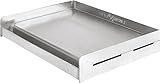
6. Little Griddle Sizzle-Q
A compact electric flat top with a stainless steel surface and a built-in temperature control. It is aimed at a small household that wants real griddle cooking.
Suits: smash burgers and breakfast. Strengths: a durable steel cooking top. Weaknesses: smaller area than a full-size unit. Skip it if you cook for large groups.
Care and Setup
- Season a steel top with thin coats of oil after each wash.
- Scrape grease into the trap while the top is warm.
- Disconnect propane before storing the griddle.
- Cover the unit to keep rust and dust away.
Mistakes to Avoid
- Pouring water on a hot steel top, which can warp it.
- Using metal tools on a nonstick surface.
- Cooking on an unlevel table, which pushes grease to one side.
- Running a gas unit in a closed garage.
Propane Canisters, Connections and Leak Checks
Portable gas griddles usually run on small disposable propane canisters, and some can connect to a larger tank with a hose and adapter. Check the listing for the fuel connection and what is supplied. If you want to use a larger tank, confirm that the model supports it and that the hose and regulator are suitable. Using the wrong parts is a safety risk, so follow the maker’s manual.
Before the first use, and at the start of each season, check the connection for leaks. A common method is to brush or spray soapy water on the fittings and hose with the gas turned on but the burners off, then look for bubbles that grow or form. If you see bubbles, turn the gas off and tighten or replace the part. Do not look for leaks with a flame. If you smell gas, turn it off at the source, move away and do not use the griddle until it has been checked.
- Connect and disconnect canisters outdoors, away from flames and sparks.
- Inspect hoses for cracks and wear.
- Store canisters upright in a cool, ventilated place, never in a hot car or an enclosed living space.
- Follow local rules for storing and transporting propane.
Never use a gas griddle indoors, in a tent or in a garage, and keep a safe distance from walls, awnings and overhanging branches. Burners produce carbon monoxide and need open air.
Heat Zones and Temperature Technique
A flat top does not heat evenly everywhere. Gas griddles often run hottest above the burners and cooler at the edges, while electric models vary with the design of the heating element. A good habit is to preheat the surface for several minutes and then test it by flicking a few drops of water on it: they should skitter and evaporate quickly. Over time, you learn the hot and cool spots of your griddle and arrange food accordingly.
Use zones to your advantage. Cook items that need high heat, such as smash burgers and seared vegetables, over the hotter area, and keep a cooler section for toasting buns, warming tortillas or holding finished food. With multiple burners, set one higher than the other, and with a single burner, move food around the surface. Avoid overcrowding the surface, because too much cold food drops the temperature and makes food steam rather than brown.
Oil the surface lightly before cooking, as the recipe requires. Use a spatula with a firm edge for scraping and flipping, and keep tools within reach. Fatty foods such as bacon release grease, which should flow toward the trap, so make sure the griddle is level or slightly tilted as designed.
- Preheat before adding food.
- Cook in batches instead of crowding.
- Use a thermometer if you want precise surface temperatures.
- Move finished food to a cooler zone to keep it warm.
Cleaning, Rust Prevention and Reseasoning
A steel griddle top gives you a natural nonstick surface when it is looked after, and it rusts when it is neglected. After cooking, scrape food bits and grease into the trap while the surface is still warm. Wipe with a paper towel, and for stuck-on bits, add a splash of water to the warm surface and scrape, then wipe dry at once. Do not leave water standing on the steel. Finish by rubbing a thin film of cooking oil across the whole top, which protects it from moisture.
If rust appears, it can usually be removed. Scrub the spots with a scouring pad or a grill stone, wipe off the debris, rinse if the maker allows, dry fully and then reseason by applying thin layers of oil and heating until the surface darkens. The seasoning process is the same one used for the first time: thin coats, heat until the oil stops smoking, and repeat a few times. Thick coats of oil turn sticky, so keep layers thin.
Avoid soaking the surface or using strong soap on seasoned steel unless the manual says it is fine. Nonstick and stainless steel surfaces have different care needs, and the manual will explain the right method, including which tools to use.
- Dry the surface completely after cleaning.
- Apply a thin coat of oil before storing.
- Cover the griddle in damp weather.
- Replace the cover if it traps moisture.
Electric Models: Power, Outlets and Placement
Electric griddles are convenient but draw a lot of power. Check the wattage on the listing, and plug the griddle directly into a wall outlet rather than a thin extension cord or a power strip that other appliances share. Kitchen circuits can trip if a griddle runs alongside a kettle, toaster or microwave, so spread appliances across outlets where you can.
Placement matters. Put the griddle on a stable, heat-resistant surface, with space around it for steam and splatter. Keep the cord short and clear of the edge of the counter so nobody catches it. Many electric griddles have a removable temperature probe or control that plugs into the side, so follow the manual and ensure it is fully seated and dry before use. Do not immerse the control in water.
If the surface is nonstick, use wooden, plastic or silicone tools. Let the griddle cool before cleaning, and wipe with a damp cloth or sponge, following the manual for cleaning the plate. Some plates are removable and dishwasher safe, but check the listing and do not assume. A tilt or drain feature helps clear grease into a tray, so empty it when cool.
- Check the wattage and outlet capacity.
- Keep the control dry and clean.
- Do not use an electric griddle on a wet surface.
- Unplug it when finished.
Stability, Wind and Portability
A tabletop griddle needs a table that is level, solid and heat resistant. Check that the table can support the weight of the griddle and that the legs are secure. Some griddles can scorch wood or melt plastic tables, so use a heat-resistant mat or a metal table if the maker advises it. Leave clearance at the back and sides, and do not push the unit up against a wall or fence.
Wind affects gas griddles because it can blow out flames and cool the surface unevenly. Choose a sheltered spot, or use a windscreen if the maker supplies or approves one. Do not block the vents or the air intake. At campsites, keep the griddle on a stable table and away from tents and dry grass.
Think about carrying and storing it. Measure the unit and the space in your car or storage area, and check the weight. Models with folding legs or a carry handle are easier to move, and lids or covers protect the surface in transit. Let the griddle cool completely and disconnect the canister before you pack it, and keep grease trays emptied and clean to avoid leaks in the car.
- Check the level with a small spirit level or by placing a drop of oil.
- Use a windbreak where permitted.
- Keep children and pets back from the hot surface.
- Let the griddle cool before moving it.
Gas or Electric: Choosing by Where You Cook
A tabletop griddle gives you a large flat cooking surface on a balcony, patio, campsite or kitchen counter, and the fuel type decides where it can go. Gas models use a propane cylinder and suit open outdoor spaces, while electric models plug into a household outlet and can work on a covered patio or indoors where the maker allows.
Gas provides strong heat and the freedom to cook away from outlets, though it requires fuel storage and handling. Electric offers steady, controllable heat and is often easier for beginners, but needs a suitable outlet and a safe route for the cord. Read the manual for any restrictions on indoor use, and never use a gas model in an enclosed space.
A Simple Comparison
| Point | Gas | Electric |
|---|---|---|
| Where it works | Outdoors with ventilation | Near a suitable outlet, as the maker permits |
| Heat control | Burner knobs with visible flame | Thermostat dial or digital control |
| Portability | Needs a fuel cylinder | Needs power access |
| Setup | Connection checks before use | Plug in and preheat |
Surface Size and Plate Material
Surface area decides how many pancakes, burgers or fried rice servings you can cook at once. A small plate suits one or two people, while a larger one handles a family breakfast. Check the dimensions and compare them with your table or counter so there is room around the griddle for handles, spatulas and plates.
Plate material changes how the griddle behaves. Rolled steel and cast iron hold heat well and develop a seasoned surface over time, while nonstick coated plates are easier to clean but need gentler tools. Whatever the surface, follow the maker’s instructions for the first-use preparation, whether that means seasoning or a simple wash.
Grease Management and Cleanup
Grease control keeps the cooking area tidy. Look for a trough, a drip tray or a removable cup, and empty it after cooling. After cooking, scrape residue while the plate is warm, wipe it down and let it cool before final cleaning.
- Use a flat scraper rather than abrasive pads on seasoned steel.
- Dry the surface thoroughly and add a thin coat of cooking oil if the maker advises.
- Keep paper towels and a heat-safe holder close by.
- Dispose of grease according to local guidance, not down the drain.
Menu Ideas That Use the Whole Surface
A griddle shines at breakfast, with eggs, bacon, pancakes and hash browns cooking side by side. It also handles smash burgers, quesadillas, stir-fried noodles, fried rice and sliced vegetables. Cook foods that need more time first, and keep a cooler zone for resting or warming. Practice a few simple recipes so you learn how your griddle heats.
Safety Around a Hot Flat Surface
The plate stays hot for a while after cooking, so keep children and pets away and place the griddle on a stable, heat-resistant surface. Never move it while hot, and follow the maker’s instructions for cooling and storage.
Seasoning a Steel Plate Without the Guesswork
Many steel griddle plates arrive bare and need seasoning before they cook well. Seasoning is simply a thin layer of oil that is heated until it bonds with the metal, creating a slick surface that grows better with use. Begin by washing the plate as the maker directs, drying it fully and applying a very thin coat of a suitable cooking oil across the whole surface. Heat the plate until the oil stops smoking, let it cool, and repeat a few times.
Avoid thick layers, because they turn sticky rather than smooth. After each cook, scrape, wipe and add a light film of oil. If the plate looks dull or food begins to stick, repeat the process. Follow the maker’s instructions for any specific oils or temperatures, and keep the cooking area well ventilated while you do it.
How to Narrow Down the Picks for Tabletop griddles
With several strong options in this guide, the fastest way to a good decision is to stop comparing everything at once. Start by removing any pick whose basic format does not suit your space or routine, using the descriptions above. Then compare what remains on the two or three points that will affect you weekly, such as size in daily use, the controls you will touch every time and the cleaning the griddle will ask of you. Features you will use twice a year should never outvote the ones you will use twice a day.
Read the honest limitation in each review as carefully as the strengths. A limitation that touches something you rarely do is a fair trade; a strength that serves a habit you do not have is worth nothing to you. This is why the same guide can honestly serve different households with different answers. Your job is not to find the best griddle in the abstract, but the one whose strengths and weaknesses line up with your life with the fewest daily frictions.
Before you order, do a final reality check on the exact listing for the model you have chosen. Listings change, similar model names differ in small details, and the version in front of you is the one that will arrive. Confirm the dimensions, the requirements and what is included, and keep a note of what you checked. That five-minute habit prevents most disappointments, and it costs nothing but attention at the moment when attention matters most.
Choosing Tabletop griddles: The Details That Decide Daily Satisfaction
Begin with the cooking surface and the food you actually make. A wide, flat plate suits breakfasts, sandwiches and batches of vegetables, while a smaller surface is easier to store and heat for one or two people. Look at how the surface is made and finished, because that decides how you clean it, which utensils you can use and how forgiving it is when food sticks. The listing for each pick in this guide describes its surface, so match that description to your habits rather than to a meal you might cook once a year.
Heat control is the second decision. Even heating across the plate matters more than a high top setting, because griddle food cooks in a thin layer and shows hot spots quickly as uneven browning. If a model offers separate zones, think about whether you will really cook two foods at different heats side by side, or whether one simple control you learn well will serve you better. Simplicity you master beats features you fumble with while food is already on the plate.
Then consider the unglamorous details: grease management, rim height, and where the fat goes while you cook. A shallow rim makes sliding a spatula under food easier but lets splatter travel further. A grease channel or tray you can empty safely matters on a fatty cook. Check the footprint on your counter with the tray open or removed, and decide where the griddle will live between uses, because an appliance that is awkward to store tends to be left out or left unused.
Finally, think about who is cooking. Long handles, stable feet and controls you can read at a glance make a tabletop griddle friendlier for less confident cooks. If several people will use it, a model whose cleaning routine is obvious will stay in better condition. The best choice is the one whose size, surface and upkeep all match the meals your household repeats, from weekday eggs to weekend sandwiches.
Real-Life Situations and How to Match Them
For a family breakfast, the griddle earns its place by cooking pancakes, eggs and bacon in overlapping batches without a parade of pans. Lay out the order before you start: foods that hold well can go first, quick items last, and the plate stays productive the whole time. For a smaller household, the same appliance shines with grilled sandwiches, reheated flatbreads and vegetables cooked in a single layer with proper browning.
Street-food style cooking at home is another strong use. Flatbreads, quesadillas, smashed burgers and seared halloumi all want direct contact with a hot, even surface. A griddle also handles a batch of onions or mushrooms beautifully while the main dish cooks elsewhere, which makes it a useful second surface during bigger meals. Think of it as a flexible extra hob that happens to sit on the counter and pack away afterwards.
If you cook for mixed tastes, zones and timing become your tools. Keep milder items away from strongly seasoned ones, cook vegetables before meat if you want to avoid flavour transfer, and give the plate a quick scrape between batches. A griddle rewards an organised cook: ingredients prepared, utensils ready and a landing tray beside the plate, so finished food comes off at its best instead of waiting while you hunt for a plate.
Setup, First Use and Building Good Habits
Set the griddle on a stable, heat-safe surface with room around it for trays and utensils, and let it preheat fully before food goes down. A plate that is still climbing in temperature will steam food instead of browning it. Lightly prepare the surface as the maker directs for your model, and have everything ready before you start, because griddle cooking moves quickly once the plate is hot and there is little time to chop or search mid-batch.
Work in a single layer with space between pieces. Crowding drops the surface temperature and traps steam, which is why a batch that looks efficient often browns worse than two smaller ones. Turn food once it releases easily rather than forcing it, and use the time on the plate to scrape away residue between batches so the next round starts on a clean, hot surface instead of on burnt leftovers.
When you finish, let the plate cool to a safe point before cleaning, following the guidance for your surface. Scrape residue while it is still warm if the maker allows it, empty the grease tray once it is safe to handle, and dry everything before storing. A griddle put away clean and dry is ready to preheat next time without old flavours or sticky patches waiting for you.
Cleaning, Care and Keeping It Working Well
Cleaning habits decide how long a griddle stays pleasant to use. Wipe or scrape the surface after every cook, wash removable parts as directed, and avoid flooding electrical parts with water. If your surface needs seasoning or gentle treatment, follow that routine consistently rather than scrubbing hard once a month. Built-up residue insulates the plate, creates smoke and makes food stick, so little-and-often cleaning is the real secret to an easy griddle.
Store the griddle dry, with its cord loosely coiled and nothing heavy stacked on the cooking surface. If it lives in a cupboard, protect the plate from knocks that could chip a coating or warp a thin base. Check the grease tray and channels regularly, because old fat is the source of most lingering smells. A quick inspection of feet, handles and controls each time you put it away catches small problems while they are still small.
If food starts sticking where it never used to, look first at residue and heat rather than blaming the surface. A thorough clean and a proper preheat solve most cases. If a coating is damaged, follow the maker’s advice rather than improvising repairs. Treat the surface as the working heart of the appliance and it will keep browning evenly for a long time.
Mistakes to Avoid and Problems Worth Knowing
The most common griddle mistake is impatience: food goes on before the plate is hot, gets moved too soon and sticks, or is crowded so tightly that it steams. The second is heat that is too high for delicate items, scorching the outside while the middle catches up. Learn your model’s temperament with simple foods first, and adjust in small steps rather than swinging between settings.
Neglect after cooking causes the rest of the problems. Grease left in the tray, residue baked on over several cooks and water left on a surface that should be dried all shorten the appliance’s good life. Metal tools on a surface that was not made for them can do lasting damage in a single meal. Read what your surface allows, keep the right utensils beside the griddle, and clean up while the memory of the meal is still warm.
Comparing the Picks in This Guide, One by One
Blackstone 22 inch Tabletop Griddle is worth a closer look when the strengths described in its review above line up with the job you do most often. Read its entry again with your own routine in mind rather than its position in the list, and ask whether its particular balance of size, style and upkeep suits your household. If the honest limitation mentioned in its review touches something you do daily, take that seriously and look again at the neighbouring picks before deciding.
With Blackstone 17 inch Tabletop Griddle, the decision is about fit for your habits. Its review above sets out who it suits and where it falls short, so test those claims against your busiest week rather than your most ambitious one. A griddle that handles your ordinary days gracefully will satisfy you far more than one chosen for an occasional special case, and the limitation that matters least in your real life is the one you can happily accept.
Treat Cuisinart Portable Gas Griddle as the answer to a specific question: which household, cooking in which way, will be glad of this every week? Its entry above gives you the material to answer honestly. Compare its strengths with the pick before and after it in this guide, because the contrasts between neighbours are usually where the right choice reveals itself. Decide by the difference that will still matter to you in a year.
Camp Chef Flat Top Grill 14 rewards buyers who read its review for character rather than for a single standout point. Notice what it asks of you in return for its strengths, in space, attention or upkeep, and decide whether that exchange suits your home. Every pick in this guide makes such an exchange, and none of them is free. The buyers who end up happiest are the ones who chose their compromise deliberately instead of discovering it after delivery.
If Presto 22 inch Electric Tilt-n-Fold Griddle is on your shortlist, do one final practical check before deciding: re-read its listing details for the exact version on offer, confirm the dimensions and requirements against your space, and picture it in place on an ordinary evening. That small discipline catches the mismatches that reviews cannot, because listings change and model variations differ in details that matter. A pick that survives that check has earned its place in your home.
For Little Griddle Sizzle-Q, weigh the everyday experience its review describes: how it will feel to load, clean, open, empty or operate when you are tired and the meal matters more than the appliance. First impressions fade quickly, but the daily experience repeats for years. Choose the pick whose daily experience you would recommend to a friend in your situation, and you will rarely go wrong with the final decision.
One habit improves results with almost any griddle: slow down at the decision points. Measure before you buy, prepare before you start, check before you assume something is finished, and clean before residue becomes a project. None of that requires talent or extra equipment. It is simply the difference between using an appliance and fighting it, and it shows in the results far more reliably than any single feature on a specification list.
Keep a small notebook, paper or digital, for the first month with a new griddle. Note what worked, what surprised you and what you would do differently, in a sentence or two each time. Memory is generous to itself and quietly rewrites early struggles, while honest notes stay accurate. By the end of the month you will own a personal guide to your own equipment and habits, which is the most useful manual you will ever read.
When something disappoints, change one variable at a time. A different position, a smaller batch, a longer rest, a cleaner surface: single changes teach you cause and effect, while changing everything at once teaches you nothing and usually wastes food or money. This patient, experimental approach is how experienced cooks and careful owners actually improve, and it works for every appliance and ingredient in this guide.
Teach the other people in your household the basics of any shared griddle. Most damage and most disappointing results come from someone who meant well but did not know the routine: the wrong setting, the wrong cleaner, the door left open, the part forced instead of fitted. A two-minute explanation and a note where it will be seen prevent more problems than any warranty, and they make the appliance a shared pleasure rather than one person’s responsibility.
Buy accessories and extras only after the basic routine is working. The right tray, tool or spare part, chosen to solve a problem you actually have, is money well spent. A drawer of hopeful gadgets bought on the first day is usually money parked. Live with the griddle for a few weeks, let its real needs reveal themselves in use, and then equip it deliberately. Restraint at the start almost always leads to a better-equipped kitchen in the end.
Seasonal changes affect kitchens more than most people expect. Summer heat, winter cold, holiday quantities and everyday term-time routines all ask different things of the same griddle. A quick review at the change of each season, checking cleanliness, storage, supplies and the habits that have drifted, keeps performance steady all year. It takes minutes, and it prevents the slow decline that owners often mistake for an appliance wearing out.
Finally, judge your choice by a fair standard after a month of real use. Not by the first attempt, which is always partly rehearsal, and not by the most ambitious occasion of the year, but by ordinary Tuesdays. If the griddle handles those with ease, fits your space and habits, and asks only for care you are happy to give, you chose well, whatever any list, including this one, ranked first.
Read the current listing for your chosen griddle one final time on the day you order, and save a copy of the details that decided you: the exact model name, the dimensions or size, what is included and the delivery and returns terms. Listings are edited, bundles change and similar versions sit side by side, so the version you checked is the version you should confirm. If anything has changed since your research, pause and re-check rather than assuming the difference is trivial.
Think about delivery and installation as part of the purchase, not as an afterthought. Who brings the griddle into the home, what access do they need, and what happens to the packaging and, where relevant, the old appliance? Preparing the space, the route and the paperwork before the day turns a stressful event into a routine one. Keep the delivery note and check the item carefully before signing anything, because damage and missing parts are easiest to resolve at the door.
If you are buying the griddle as a gift, choose for the recipient’s habits rather than your own taste, and include the receipt arrangements they would need for an exchange. A model that suits your kitchen, garden or routine may be entirely wrong for theirs. Practical gifts succeed when they fit the other person’s space and life, and a short conversation beforehand, however much it spoils the surprise, usually produces a gift that is used for years instead of stored for months.
Consider the end of the griddle’s life before the beginning. Appliances and tools eventually need parts, repair or responsible disposal, and brands differ in how easy those are to arrange. Keeping the manual and model details, registering a product if the maker offers it and knowing where your local recycling or disposal point is all belong to ownership. A purchase that can be maintained and eventually retired responsibly is a better purchase than one that cannot.
When two picks remain tied after all your comparisons, let the tie be broken by your household rather than by a coin. Ask the people who will share the griddle which they would rather use, clean and live with, and weigh the answer of whoever will use it most. Shared equipment succeeds when the main user is enthusiastic and everyone else is content. That small consultation prevents the quiet resentment that builds around an appliance only one person wanted.
Set a simple review point a month after buying your griddle. By then the novelty has gone, the routine has formed and any real friction has shown itself clearly. Small adjustments made at that point, a different position, a better accessory, a changed habit, usually fix what the first impressions promised would be a bigger problem. Owners who review once, early, tend to stay satisfied for years, because they correct course while correction is still easy.
Keep the packaging of a new griddle until you are certain it is staying. Boxes and inserts protect it if it must be returned, moved or stored, and they take up less room flattened or nested than the regret of having discarded them too early. Once the first weeks have passed and the routine is proven, recycle what you no longer need and keep only what genuinely protects the item in storage or transit.
Tabletop Griddle FAQ
Is gas or electric better?
Gas gives stronger heat and portability. Electric is simpler, quieter and safer for indoor use.
How big a griddle do I need?
A 17 inch top fits two or three people; a larger top suits families and parties.
Do tabletop griddles need seasoning?
Rolled steel does. Nonstick and stainless surfaces do not, though a light oil film helps.
Can I use a gas griddle indoors?
No. Open flame and exhaust belong outdoors with good ventilation.
What can I cook besides breakfast?
Stir-fry, fajitas, cheesesteaks, quesadillas and fried rice all suit a wide flat surface, as long as the heat is kept steady and the surface is clean.
Can I cook for a group on one?
Yes, if you plan the order: start with items that hold well, such as sausages or vegetables, and finish quick items like eggs last so everything arrives warm.
How do I test whether the griddle is hot enough?
Flick a few drops of water onto the surface. If they skitter and evaporate quickly, the surface is hot, and you can start with oil and food.
Why is my food sticking?
Common causes include a surface that is not preheated, too little oil, or a seasoning layer that needs work. Preheat well, use enough oil and reseason if needed.
How do I remove rust from a steel top?
Scrub the rust with a scouring pad or grill stone, wipe clean, dry and reseason with thin layers of oil. Prevent it by drying and oiling after each use.
Can I use soap on a seasoned griddle?
Many makers advise against strong soap on seasoned steel, so check the manual. Scrape, wipe and rinse as directed instead.
How do I check for gas leaks?
Brush soapy water on the connections with the gas on and burners off, and look for growing bubbles. Never use a flame, and turn the gas off if you see bubbles or smell gas.
Why does my griddle have hot and cool spots?
Burner or element layout and thickness of the steel cause uneven heat. Use the hot areas for searing and cooler areas for holding food.
Can I use an extension cord with an electric griddle?
Electric griddles draw a lot of power, so plug directly into a wall outlet where possible. If you must use a cord, check that it is rated for the load, following the manual.
How should I store a griddle between uses?
Clean and oil the surface, let it cool, disconnect any fuel and cover it in a dry place. Keep it away from damp and heat.
How do I know the griddle is ready for food?
Let it preheat fully rather than judging by the first warmth you feel from the plate. A simple test is how a small drop of water behaves on the surface, but the surest guide is experience with your own model: cook something simple first and note the timing. Food that goes onto a properly heated plate browns and releases cleanly, while food on a cold plate sticks and steams, so patience at this stage decides the whole batch.
Why does food stick even on a non-stick style surface?
Usually the plate was not fully hot, the food was moved too soon, or residue from earlier cooking was left on the surface. Food releases more easily once a crust has formed, so give it time before turning. A thorough clean and a proper preheat solve most sticking. If a surface is damaged or worn, follow the maker’s advice rather than scrubbing harder, which makes matters worse.
Can I cook frozen items on a griddle?
Thin frozen items that are intended for grilling or frying usually cook well, but they release moisture as they thaw, which cools the plate and delays browning. Give them space, expect a longer cook and turn them once the first side has firmed up. Thick frozen items are better thawed first, because the outside can scorch while the centre is still cold. When in doubt, thaw and dry the surface of the food before it meets the plate.
How do I keep pancakes and eggs from spreading into each other?
Work in smaller batches with clear space between items, and let each one set before adding the next beside it. A plate that is level and fully preheated helps batters hold their shape. Pour decisively rather than drizzling, and resist adjusting a pancake before its surface shows it is ready to turn. Space is the griddle cook’s main tool, and crowding is the cause of most merged breakfasts.
What should I cook first as a beginner?
Start with forgiving foods that teach you the plate: grilled sandwiches, quesadillas, sliced vegetables and pancakes. They show you where the hot spots are, how quickly your model browns and how its controls respond, without the cost or pressure of expensive ingredients. Keep notes for the first few cooks. Once you know your griddle’s temperament, eggs, fish and delicate items become much easier to judge.
How do I deal with smoke while cooking fatty food?
Fatty food on a hot plate will smoke a little, but heavy smoke usually means the heat is too high, the grease tray needs emptying or residue is burning on the plate. Lower the heat slightly, scrape the surface clean between batches and use your extractor if you have one. Opening a window helps, but prevention through heat control and a clean plate works better than ventilation after the fact.
Can I use a griddle plate on any hob or heat source?
Only if the plate is made for that source, which is a detail to check in the listing and the maker’s instructions rather than assume. A plate designed for one type of heat may warp or perform badly on another. If your griddle is an electric tabletop model, the question does not arise, but placement and ventilation still matter. Always match the equipment to the heat it was designed for.
The Short Version
For a big portable top, the Blackstone 22. For a smaller one, the Blackstone 17. For casual patio meals, the Cuisinart. For camping, the Camp Chef. For indoor use, the Presto. For a compact steel top, the Little Griddle.