An electric pizza oven brings crisp crusts and fast bake times to your kitchen or patio without wood or gas. Some reach very high heat with a stone, while others are simple rotating or countertop ovens. The best electric pizza ovens heat quickly, hold even temperatures and fit your counter.
The six models below include a premium outdoor-capable oven, a countertop pizza specialist and budget-friendly options. We have not used these products ourselves, so confirm the pizza size, power rating and indoor or outdoor use on the current listing before buying. Always follow the maker’s ventilation advice.
As an Amazon Associate we earn from qualifying purchases. Links below are affiliate links, and they do not change the product information we give.
What to Look For
| Feature | Why it matters |
|---|---|
| Heat | Higher heat gives a crisp, leopard-spotted crust |
| Pizza size | Check the stone or tray size against the pizzas you want |
| Indoor or outdoor | Only some ovens are approved for both |
| Preheat time | Faster warm-up means less waiting before dinner |
| Footprint | Measure your counter or patio table first |
| Accessories | A peel, a spare stone or a cover can be handy extras |
In this guide
Specs at a Glance
| Oven | Type | Pizza size class | Notes |
|---|---|---|---|
| Ooni Volt 12 | Stone-based oven | 12-inch class | Indoor and outdoor use |
| Breville Pizzaiolo | Countertop oven | 12-inch class | Stone and presets |
| Presto Pizzazz Plus | Rotating oven | Medium | Spinning tray |
| Waring Pro WPO100 | Countertop oven | Medium | Dual heating controls |
| Wisco 421 | Commercial countertop | Medium | Simple controls |
| Cuisinart Pizza Oven | Countertop oven | Medium | Stone surface |
The 6 Best Electric Pizza Ovens

Top pickBest for enthusiasts who want pizzeria-style results
1. Ooni Volt 12 Electric Pizza Oven
A high-heat electric pizza oven from Ooni designed for indoor and covered-outdoor use, with a stone baking board and dials for the top and bottom elements.
Suits: enthusiasts who want pizzeria-style results. Strengths: a very hot oven in an electric format. Weaknesses: a larger purchase than countertop ovens. Skip it if you only bake frozen pizza.


Best for home cooks who want a dedicated unit
2. Breville Smart Oven Pizzaiolo
A countertop electric pizza oven from Breville that reaches very high heat and uses a pizza stone, with presets for different crust styles.
Suits: home cooks who want a dedicated unit. Strengths: crust-style presets. Weaknesses: a heavy body. Skip it if you have little counter room.


Best for frozen pizza and snacks
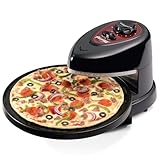
3. Presto Pizzazz Plus Rotating Oven
A budget-friendly rotating oven from Presto that cooks pizza on a spinning tray with top and bottom heat. It also handles snacks and frozen foods.
Suits: frozen pizza and snacks. Strengths: a simple rotating design. Weaknesses: less crisp than a stone oven. Skip it if you want true pizzeria texture.
Best for home pizza makers
4. Waring Pro Professional Pizza Oven
A countertop pizza oven from Waring with a stone-style baking surface and dual dials for the top and bottom elements.
Suits: home pizza makers. Strengths: control of the top and bottom heat. Weaknesses: a shorter product life than ceramic ovens. Skip it if you want a wood-fired taste.
View Waring Pro Professional Pizza Oven on Amazon

Best for small food businesses
5. Wisco 421 Pizza Oven
A compact commercial-style pizza oven sold in the countertop market, with simple controls and a stone-style deck. It is a popular choice for small shops and enthusiasts.
Suits: small food businesses. Strengths: a heavy-duty feel. Weaknesses: plainer controls. Skip it if you want a smart oven.


Best for casual pizza nights
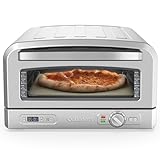
6. Cuisinart Indoor Pizza Oven
A countertop electric pizza oven from Cuisinart with a stone baking surface and straightforward dials. Check the current listing for the exact model and size.
Suits: casual pizza nights. Strengths: a familiar brand. Weaknesses: detail varies by model. Skip it if you want an outdoor-rated unit.
Care and Setup
- Preheat the stone fully before sliding the pizza in.
- Dust the peel with flour or semolina so the dough slides.
- Wipe crumbs off the stone when it is cool.
- Follow the maker’s ventilation guidance for indoor use.
- Keep a small brush nearby for sweeping flour from the deck.
Mistakes to Avoid
- Launching a pizza onto a cold stone.
- Using too much sauce and a soggy crust.
- Overloading toppings so the center stays raw.
- Cleaning a hot stone with water.
- Moving the oven before it has fully cooled.
Heat Source and Baking Style Compared
Electric pizza ovens look similar from the outside but bake in different ways, and the style decides the kind of pizza you will make. A stone-based oven heats a baking surface from below and radiant elements from above, which gives crust that is crisp underneath with browning on top. These are the closest to a pizzeria in an electric format, because the stone transfers heat quickly into the dough.
Countertop ovens with a smaller stone or plate and top and bottom elements are a step down, and they suit thicker crusts and mixed uses. Rotating ovens spin the pizza on a tray under a heating element. They are convenient for frozen pizza and snacks, but the result is generally softer and less crisp than from a stone.
Think about how you want the crust to turn out. Thin Neapolitan-style pizzas need very high heat and short bake times, so look at the stated maximum temperature and what the maker says about it. Thicker pan or frozen pizzas bake well at moderate heat and benefit from even temperatures and a steady bottom.
Controls also vary. Separate dials for top and bottom heat let you tune the bake, giving a crisp bottom without burning the cheese. A single control or presets are simpler but give you less say in the result. Choose the level of control that suits your patience.
Power Draw, Circuits and Indoor Use
Electric pizza ovens are high-draw appliances, and the electrical side should be part of your decision. Look up the wattage on the listing and compare it with the outlet and circuit you plan to use. Many countertop ovens run on a standard household outlet, but a high-power oven on a shared circuit can trip breakers, especially if other appliances are running.
Avoid extension cords and power strips unless the maker explicitly says they are acceptable. A short cord is better than a long, thin one for a high-draw appliance. If the cord is short, plan the position carefully so that it does not stretch across the counter.
Check whether the oven is meant for indoor use, outdoor use or both. Some are suitable for covered outdoor areas but not for rain, and some are for indoor countertops only. Never use an indoor oven outside, and follow the manual’s guidance on moisture and cover.
Ventilation matters indoors. Hot ovens can smoke if flour, oil or cheese drips onto elements, so run the kitchen vent and keep the room ventilated. Leave clearance on all sides, especially the back and top, as recommended in the manual. Place the oven on a heat-resistant, stable surface away from the edge of the counter.
Stones, Peels and Launching Technique
Good gear and technique make a bigger difference than most buyers expect. The baking stone is the heart of a stone-based oven. It should be fully heated before you load a pizza, which can take longer than the air temperature suggests. A thorough preheat gives crisp bottoms and fewer sticking problems.
A peel is the paddle used to launch the pizza. A wooden peel is good for loading dough because it grips lightly, while a thin metal peel is good for turning and retrieving. Dust a wooden peel with a little flour or semolina to help the dough slide. Build the pizza quickly on the peel, because wet dough sticks if it sits too long.
Launch with a quick, confident shake and a forward motion, and avoid hesitating. If the pizza sticks, lift an edge and add flour underneath. Practice with a simple, lightly topped pie before attempting anything elaborate.
- Keep sauce and toppings light, so the dough bakes through.
- Rotate the pizza partway if the oven has hot spots.
- Let the pizza rest briefly on a rack before cutting, so the crust stays crisp.
Check whether your oven comes with a peel, since some do not. If not, choose one sized to the stone, with a handle that fits the space.
Dough, Hydration and Realistic Expectations
An electric oven can make excellent pizza, but expectations should match the machine. Even the hottest home electric models differ from a wood-fired oven that reaches higher temperatures and adds flame and smoke. Judge by the crust you get, not by comparison with a restaurant.
Dough is where you can make the biggest improvement. A well-rested dough that has had time to ferment develops flavor and becomes easier to stretch. Higher-hydration doughs, with more water relative to flour, tend to bake with an open, airy crumb, but are stickier to handle. Start with a moderate hydration until you are comfortable, and then experiment.
The oven’s temperature affects how you handle dough. At very high heat, thin crusts bake in a few minutes, so everything must be ready before you launch. At moderate heat, you can use thicker dough and longer bake times.
Keep a simple routine: make dough ahead, bring it to room temperature, stretch it gently, top lightly and bake. Avoid pressing out all the air at the edge. Take notes on timing and temperature, and adjust settings one change at a time.
If results are disappointing, the cause is often an underheated stone, too much topping or wet ingredients, not the oven itself. Pat wet toppings dry and use cheese that does not release a lot of water.
Cleaning, Stone Care and Signs of Wear
Pizza ovens need some care to stay in good condition. Always let the oven cool completely before cleaning, and unplug it. Brush crumbs and flour off the stone with a dry brush or scraper. Avoid using soap, since a porous stone can absorb it and pass it on to the next pizza. Do not pour water on a hot stone, as thermal shock can crack it.
Stains and dark marks on a stone are normal and usually not a concern. Trying to scrub them away can damage the surface. If residue is stuck, scrape gently with a non-metal tool, and let it burn off during the next heating if the manual allows.
Wipe the interior and exterior with a damp cloth, avoiding the heating elements, and never submerge the unit. Check the elements and the cord for any damage, and keep the vents clear of flour and dust.
Know the signs that something is wrong. A cracked stone should be replaced, as it may break further under heat. Uneven heating that does not improve with cleaning, a heating element that no longer glows, a burning smell that continues after the first few uses, or a door that does not close properly are all signals to stop and check the manual or contact the maker. Replacement parts such as stones are often available, so look for that before replacing the whole oven.
A Checklist for Choosing an Electric Pizza Oven
Electric pizza ovens bring high-heat baking to a countertop, and a few questions can steer you to the right one. Keep the maker’s specification page open while you work through the list.
- Measure your counter space and the clearance above and around the oven, as the manual requires.
- Check the interior size, specifically the diameter of the baking stone, and compare it with the pizzas you plan to make.
- Look at the electrical needs. A high-power appliance may require a dedicated outlet or a circuit that the manual describes.
- Find out whether the unit is meant for indoor use, outdoor use or both, and follow that guidance strictly.
- Read about preheating time, since a stone needs time to come up to temperature.
- Check the controls, including whether top and bottom heat can be adjusted separately.
- Look at the accessories supplied, such as a peel, and what you may need to buy separately.
Styles of Electric Pizza Ovens Compared
| Style | How it works | Considerations |
|---|---|---|
| Countertop stone oven | A heated stone and upper element bake the pizza | Needs space and a strong outlet |
| Compact oven for small pizzas | Smaller chamber that heats quickly | Limits the size of the pizza |
| Multi-function oven | Bakes pizza and other foods | Pizza performance varies by design |
| Plug-in outdoor oven | Designed for patios with a power point | Weather protection matters |
Learning to Launch a Pizza Without Tears
Transferring a raw pizza from a peel to a hot stone is the step that worries beginners most. Dust the peel lightly with flour or semolina, build the pizza quickly and give the peel a gentle shake to make sure the dough moves freely before you add all the toppings. Keep toppings modest, because a heavy load makes the dough stick. Slide the pizza onto the stone with a confident forward motion and a quick pull back of the peel.
Practice with a plain dough round first. If the dough sticks, lift the edge and slide a little more flour underneath. Take care around the hot oven, using the protective gloves or tools that the manual recommends, and keep your face and arms back from the opening as you work.
A Short Glossary for Pizza Oven Pages
- Peel: a flat paddle used to slide pizzas in and out of the oven.
- Stone or steel: the hot surface that gives the base its crispness.
- Hydration: the ratio of water to flour in a dough.
- Leopard spotting: the dark blistered marks that can appear on a crust baked at high heat.
- Cornicione: the raised outer rim of the pizza.
- Preheat time: the time the oven needs before it is ready for baking.
Cleaning the Stone and the Chamber
Let the oven cool completely, then brush off loose crumbs and flour. Stones can absorb moisture and stains, so avoid soaking them and follow the maker’s guidance on cleaning. Marks on the stone are normal and often considered part of a seasoned surface. Wipe the exterior with a damp cloth, and keep water away from controls and electrical parts.
If you notice a persistent burning smell, smoke that does not clear, a damaged cord or a tripped breaker, switch the appliance off, unplug it and contact the maker. Electrical faults should be handled by a qualified technician.
Power Draw and Where to Plug It In
Many electric pizza ovens draw a lot of power, which makes the outlet and the circuit part of the buying decision. Read the electrical specification on the maker’s page, and compare it with the capacity of the outlet you plan to use. Avoid sharing a circuit with other heavy appliances at the same time, such as a microwave or a kettle, because overloading a circuit can trip a breaker or create a hazard. Do not use an extension cord or adapter unless the manual explicitly allows it.
If you are unsure about your home’s wiring, ask a qualified electrician to check the outlet and the circuit before you buy. This is especially wise in older buildings, where wiring may not suit modern high-power appliances. Place the oven on a heat-resistant surface with the clearance the manual specifies, and keep flammable items away from it.
Dough Basics for Home Pizza Makers
A good oven helps, but dough does most of the work. Simple dough needs flour, water, salt and yeast, and time. A longer, cooler rise often develops better flavor, so many home cooks prepare dough a day ahead and keep it covered in the fridge. Let the dough come to room temperature before shaping, and handle it gently so that the air bubbles stay in the crust. Stretch it by hand instead of rolling it flat, which squeezes out the air.
Wetter doughs can be more difficult to handle, so begin with a moderate hydration and work up as you gain confidence. Use a recipe from a trusted source, and expect to make a few adjustments before you find the texture you like.
Choosing a Electric pizza oven Around How You Really Cook
Choosing a electric pizza oven starts with where it will cook and what style you want from it . Dedicated pizza ovens concentrate their heat on the pizza, which is how they achieve the leopard-spotted crusts and fast bakes that enthusiasts chase. Outdoor ovens with a broader brief roast, bake, and sometimes smoke as well as making pizza. If pizza is a weekly ritual, the specialist earns its space. If you want one outdoor appliance that handles a chicken on Sunday and pizzas on Friday, the generalist design is the honest choice, and the picks above make clear which way each one leans.
Heat is the second consideration, and it shapes the crust more than any topping. High, fierce heat bakes a pizza quickly and gives the puffed, blistered edge associated with wood-fired styles. More moderate heat suits thicker bases, deep dishes, and topped family pizzas that need time for the centre to cook through. Think about the pizzas your household actually requests: a specialist at full tilt can overwhelm a heavily loaded family pizza, while a gentler oven will never quite blister a thin Neapolitan-style base. Match the heat character to your regular order.
Fuel and power logistics come next. Electric models need a suitable supply and give push-button consistency. Pellet and other fuel-burning outdoor ovens need dry fuel storage and a little more involvement. Consider where the oven will sit, how smoke or heat will affect neighbours and the house, and whether the surface beneath is stable and heat-safe. An oven that is easy to bring to temperature on a weeknight will be used on weeknights; one that feels like an expedition becomes a party piece.
Finally, size the oven by the pizza, not the promise. Check the pizza diameter each pick is described as handling, and whether your peels, trays, and stones match. A household of two making personal pizzas has different needs from a family feeding teenagers in rotation, where the speed between pizzas matters as much as the size of each one. Recovery time between bakes is a real specification of your evening, even when it is expressed in the listings only through design and heat descriptions.
Where a Electric pizza oven Earns Its Keep
Friday-night family pizzas
The classic use case rewards a routine: dough made or bought ahead, toppings laid out, and pizzas baked in rotation so everyone eats roughly together. An oven that recovers heat quickly between pizzas keeps the rotation moving. Let each person build their own on a floured peel or parchment, and the cook’s job shrinks to launching, turning, and retrieving.
Neapolitan-style and artisan baking
Chasing blistered, airy crusts means high heat, a properly preheated stone or deck, and a dough made to suit. This is the territory of the specialist picks above. Expect a learning curve of several bakes while you learn your oven’s hot spots and timing, and keep notes, because the difference between good and great at these temperatures is measured in small turns and short intervals.
Roasting and baking beyond pizza
Outdoor ovens that hold moderate temperatures well can roast vegetables, bake flatbreads, finish cast-iron dishes, and cook desserts while the main kitchen stays cool in summer. If this broader role appeals, favour the picks whose descriptions emphasise versatility and temperature control over outright maximum heat, and plan the cookware the oven can physically hold.
Entertaining a crowd
Pizza is unusually good party food because guests participate and dietary preferences are easy to handle pizza by pizza. For a crowd, the bottleneck is preparation space and the rhythm of baking, so set up a topping station away from the oven, keep dough portions ready, and accept that the cook eats last or first. An oven with fast recovery turns this from chaos into a production line.
Setup, Placement and Safety Basics
Position your electric pizza oven exactly as the manual directs: outdoors models need a stable, level, heat-safe surface, clearance from walls, fences, and overhanging branches, and a power or fuel arrangement that stays dry and untripped-over. Indoor electric pizza ovens need ventilation and clearance from cabinets, because the heat they produce is serious. Decide the spot before the first bake, and arrange a work surface beside it for peels, toppings, and finished pizzas, because pizza making is an assembly line that fails when the cook has nowhere to put things.
Assemble and season as instructed. Stones and decks sometimes need a first heating cycle, and electric models may produce a new-appliance smell on their first run, which is best burned off without food. Check that the door, if fitted, closes properly, and that any stone sits flat and fully supported. Keep the manual nearby for the first few sessions; the preheat guidance for your specific oven matters more than general advice, because deck material and insulation vary.
Gather the supporting kit before dough day: a peel that fits the oven opening, a turning tool if your style needs one, a brush for sweeping the deck, and trays or racks for finished pizzas. Flour or semolina for launching, an oven glove that protects the wrist, and a timer you can hear over conversation complete the setup. None of this is expensive, and all of it prevents the classic first-night failures.
Getting the Best From It Day to Day
Preheating the deck is non-negotiable. The stone or cooking surface needs to be thoroughly hot, not just the air inside, because the base cooks from the deck while the toppings cook from above, and a cold deck gives a pale, soft base under cooked toppings. Follow your oven’s preheat guidance, and between pizzas give the deck a short recovery rather than launching the next pizza immediately onto a chilled spot.
Launch technique decides whether dinner lands in the oven or folds onto the deck. Keep the dough lightly floured or semolina-dusted, build the pizza on the peel or on parchment if your oven allows it, and use a confident, short shuffle rather than a dramatic throw. Saucing lightly and distributing toppings evenly is not just about flavour: a heavy, wet centre is the main cause of both sticking and a soggy middle.
Watch and turn. In a hot oven a pizza changes quickly, and a turn partway through evens the bake between the hotter and cooler sides of the deck. Judge doneness by the base as much as the top: lift an edge and look for a set, coloured underside. Once out, give the pizza a brief rest on a rack rather than a solid board, so steam escapes and the base stays crisp while the cheese settles.
Cleaning, Care and Storage
Care for a electric pizza oven is mostly about the deck and the residue. Brush crumbs and burnt flour from the stone or cooking surface once it has cooled enough to handle safely, and expect the stone to darken and mark with use; that is normal and not a defect. Never soak a pizza stone or shock it with cold water while hot, and follow the manufacturer’s cleaning method rather than improvised ones, because cracked stones are almost always the result of thermal shock or soaking.
Interior walls and doors collect baked-on splashes. Wipe them when the oven is cool with the products the manual allows, and keep water and cleaning sprays away from electrical elements and controls. For outdoor models, empty ash or residue as directed once completely cold, and store the oven covered and dry, with detachable electrical parts kept indoors where the design allows.
Check the parts that move and seal: door hinges, handles, and any gaskets take the heat cycles hardest. A door that no longer closes square will leak heat and lengthen every bake, so treat changes in baking behaviour as a prompt to inspect the fit. Keep the exterior clean enough that you can see the appliance’s condition at a glance, and store peels and stones dry so they are ready for the next dough day.
How the Picks in This Guide Compare
The six picks above are not six versions of the same idea, and comparing them well means comparing them against your own routine rather than against each other in the abstract. Work through them in the order presented, and for each one ask the same three questions: does its style and size fit my space, does the way it works fit the food I cook most, and would its cleaning and storage routine fit my patience? A electric pizza oven that scores well on all three for your household is a better buy than one that wins on a single headline feature.
Consider the Ooni Volt 12 Electric Pizza Oven. Its description above sets out who it suits and where its limits lie, so measure it against your biggest regular cooking occasion and your smallest everyday one. If it handles the big occasion comfortably but feels oversized for the everyday, decide which of those two days matters more to you, because that judgement, not the feature list, is what owners end up living with.
Consider the Breville Smart Oven Pizzaiolo. Its description above sets out who it suits and where its limits lie, so measure it against your biggest regular cooking occasion and your smallest everyday one. If it handles the big occasion comfortably but feels oversized for the everyday, decide which of those two days matters more to you, because that judgement, not the feature list, is what owners end up living with.
Consider the Presto Pizzazz Plus Rotating Oven. Its description above sets out who it suits and where its limits lie, so measure it against your biggest regular cooking occasion and your smallest everyday one. If it handles the big occasion comfortably but feels oversized for the everyday, decide which of those two days matters more to you, because that judgement, not the feature list, is what owners end up living with.
Consider the Waring Pro Professional Pizza Oven. Its description above sets out who it suits and where its limits lie, so measure it against your biggest regular cooking occasion and your smallest everyday one. If it handles the big occasion comfortably but feels oversized for the everyday, decide which of those two days matters more to you, because that judgement, not the feature list, is what owners end up living with.
Consider the Wisco 421 Pizza Oven. Its description above sets out who it suits and where its limits lie, so measure it against your biggest regular cooking occasion and your smallest everyday one. If it handles the big occasion comfortably but feels oversized for the everyday, decide which of those two days matters more to you, because that judgement, not the feature list, is what owners end up living with.
Consider the Cuisinart Indoor Pizza Oven. Its description above sets out who it suits and where its limits lie, so measure it against your biggest regular cooking occasion and your smallest everyday one. If it handles the big occasion comfortably but feels oversized for the everyday, decide which of those two days matters more to you, because that judgement, not the feature list, is what owners end up living with.
If you are torn between two of the picks, choose by the routine you will repeat most often: the setup you will do weekly, the parts you will wash, and the space the electric pizza oven will occupy when it is not in use. Features impress on the first day; routines decide satisfaction in the sixth month.
Problems Worth Knowing About
The base is soggy while the top is done
The deck was not hot enough, the sauce was too wet or too generous, or the pizza sat built and waiting while the dough absorbed moisture. Preheat longer, sauce lightly, build pizzas just before baking, and check that fresh mozzarella and vegetables are not flooding the base with liquid.
The crust burns before the centre cooks
Too much heat for the style is the usual cause, especially with thick or heavily topped pizzas. Lower the temperature for loaded pizzas, or par-bake a thick base before topping. In a very hot oven, thin pizzas are measured in moments, so stay present rather than setting a timer and walking away.
Pizzas stick to the peel or the deck
Flour or semolina the peel properly, keep the dough moving with a small shake as you build, and avoid letting a built pizza sit. A metal peel launches more easily for many people once the dough is on it, while a wooden peel suits building and launching in one. Practise the motion with a plain dough before guests arrive.
Results vary wildly between pizzas
Variation usually tracks the deck temperature: the first pizza meets a fully charged deck, later ones meet a deck drained by previous bakes. Build recovery pauses into your rhythm, rotate where each pizza lands, and keep notes on timing for your oven rather than chasing consistency by changing the recipe every time.
Two Habits That Make the Biggest Difference
Keep a pizza notebook for the first season: dough recipe, oven setting, preheat length, bake time, and a one-line verdict. Pizza ovens are personal instruments, and your own deck, dough, and climate produce timings that no chart can predict. After a dozen bakes the notebook turns guesswork into a repeatable Friday-night system.
If you are torn between a specialist pizza oven and a versatile outdoor oven from the picks above, count your likely menus honestly. Households that bake pizza weekly get full value from the specialist’s heat and speed. Households that roast and bake outdoors as often as they make pizza will use the generalist more across the year, and the appliance that gets used is always the right purchase.
A Slower, More Careful Way to Decide
There is a slower way to choose a electric pizza oven that works better than comparing feature lists, and it starts with a week of honest observation. Notice what you cook, how many people you cook for, and where the friction appears: the pan that never fits, the breakfast that takes three batches, the cleanup that puts you off starting. Write those moments down, because they are the specification that matters. A electric pizza oven chosen against your real friction points will satisfy you in a way that one chosen against an idealised version of your cooking never will, and the picks above can then be read as answers to specific problems rather than as a league table.
Next, walk the physical reality of your space with a tape measure and your phone camera. Record the dimensions, the position of sockets, the clearance above and around beside the oven, and anything that would complicate delivery or installation. Photograph the area where the deck, door and peel will need attention, because that is where ownership is won or lost: the part you must clean, fill, empty, or store decides whether the appliance stays pleasant. Compare those photographs and measurements against the descriptions in this guide before you order, and most of the classic disappointments in this category simply never happen.
Then think about the second year, not the first week. In the second year the novelty has gone, and what remains is the routine: how long setup takes when you are tired, whether spare parts and replacement pieces for the deck, door and peel are easy to obtain, and whether the appliance still suits a household that may have changed around it. Designs that age well share a pattern: few parts, obvious controls, cleaning that does not need special products, and a manual that answers questions plainly. When two picks above look equal, the one with the calmer second year is usually the right choice.
Making the First Sessions Count
For your first sessions, keep the stakes deliberately low and cook a simple cheese pizza rather than the most ambitious dish you know. The first outings teach you the appliance’s temperament: how it heats, how it responds when you adjust it, and what its normal sounds and smells are. Treat anything unexpected as information, check it against the manual, and adjust one thing at a time on the next attempt. Cooks who rush to a celebration meal on day one often blame the appliance for what is really unfamiliarity, while a couple of low-pressure practice runs turn the same appliance into a trusted tool.
Finally, build the small routine that keeps the appliance ready: a fixed home for it and its accessories, a two-minute tidy after each use rather than a monthly excavation, and a note of the settings and timings that worked for your regular dishes. Readiness is the hidden feature in this whole category. A electric pizza oven that is clean, complete, and where you expect it to be gets used on ordinary Tuesdays, and ordinary Tuesdays are where good kitchen equipment quietly earns back its cost many times over.
Electric Pizza Oven FAQ
Do electric pizza ovens get as hot as wood-fired ones?
Some come close, but many are cooler. Check the listing for the maximum heat and the time it takes to preheat.
Can I cook other food in them?
Yes, many handle flatbread, calzones and small roasts. Follow the maker’s advice for each use.
Is a stone necessary?
A stone gives the best crust, though rotating ovens work for frozen pizza with decent results.
What dough is easiest?
A well-hydrated dough that rests well is forgiving. Keep thin crusts simple so they cook evenly.
How should I clean the stone?
Let it cool, scrape off residue and wipe with a dry cloth. Avoid soap, which a porous stone can absorb.
How long should I preheat an electric pizza oven?
Follow the manual, since times vary by model. Allow the stone to heat fully, which can take longer than the oven's indicator suggests.
Can I bake frozen pizza in a stone-based oven?
Yes, but check the package and the manual. Many frozen pizzas work well, though you may want to adjust the temperature and time.
What flour is best for pizza dough?
Many cooks use bread flour or a finely milled pizza flour for a chewy crust. All-purpose flour also works for a softer result.
Why does my pizza stick to the peel?
Too much sauce, wet dough or a slow build often cause it. Dust the peel with flour or semolina, work quickly and shake the pizza before it goes in.
Can I use parchment paper in the oven?
Some makers allow it at lower temperatures, but it can burn at very high heat. Check the manual before using it.
Do I need to season the stone?
Most stones do not need seasoning. Follow the manual, and let a new stone heat up gradually for the first use.
How do I stop cheese from burning before the crust cooks?
Lower the top heat if you can, use less cheese and make sure the stone is well heated so the bottom cooks quickly.
How long should I preheat a pizza oven?
Until the cooking surface itself is fully hot, which takes longer than the air temperature settling and varies by design. Follow the preheat guidance in the manual for your model, and judge readiness by consistent results on the base of the first pizza rather than by the clock alone.
Can I bake other foods in a pizza oven?
Many models handle flatbreads, roasted vegetables, and cast-iron dishes well, especially those designed as broader outdoor ovens. Stay within the temperatures and cookware the manufacturer describes, and remember that a fiercely hot pizza oven is a specialist tool that needs adapting for gentler jobs.
Why does my dough tear or shrink back?
Dough that fights you is usually too cold or has not rested enough after shaping. Let portioned dough lose its chill and relax before stretching, handle it gently to keep the air in the edges, and avoid over-flouring, which makes the base tough and dry.
Do I need a pizza stone if the oven has a deck?
The deck of a dedicated pizza oven is the cooking surface and serves the stone’s role. For ovens without a purpose-built deck, a stone or steel, where the manufacturer supports one, improves the base. Follow the guidance for your model rather than adding accessories it was not designed around.
How do I keep the oven from smoking out the garden?
Burnt flour and residue on the deck are the usual smoke source, so brush the deck between pizzas and avoid excessive flour. Position the oven with regard to wind and neighbours, and keep toppings off the deck, since spilled cheese smokes far more than a baking pizza.
What is the best first pizza to make in a new oven?
A simple margherita-style pizza with a light hand on sauce and cheese. It teaches you the oven’s heat, timing, and turning needs without hiding the base under heavy toppings, and it is the benchmark every later pizza can be judged against.
How long should a electric pizza oven last?
That depends far more on use and care than on the badge. Appliances in this category that are cleaned as the manual directs, used within their intended job, and stored dry and complete generally serve for years, while neglected ones fail early regardless of quality. Treat the care routine in this guide as part of the purchase, and judge any pick above by whether you will actually keep that routine.
What should I do on the first day I use my new electric pizza oven?
Read the manual’s setup and safety pages, wash the parts it identifies, and run the simplest version of the job the appliance exists for. Keep the session short, note what surprised you, and resist judging the purchase on a single first attempt. Familiarity over the next few sessions is a fairer test, and most early frustrations turn out to be technique that a little practice fixes.
The Short Version
For pizzeria-style heat, the Ooni Volt 12. For presets, the Breville Pizzaiolo. For a budget-friendly rotating oven, the Presto Pizzazz Plus. For dual heat dials, the Waring Pro. For a commercial feel, the Wisco 421. For a simple counter oven, the Cuisinart.