A drawer dishwasher slides out like a cabinet drawer, so you load from above instead of bending down. Two drawers can run separate loads, and a single drawer suits a small household. Compact dishwashers are another way to fit a clean-up machine into a tight kitchen. True drawer dishwashers are a small category, so we have paired two drawer models with four compact dishwashers that suit small kitchens. Measure the space, think about whether you cook for one person or four, and plan where the water and power will come from. Countertop models need an easy faucet connection. Small kitchens reward careful planning. Count how many people you cook for, how often you run a load and whether you would rather hand wash big pots anyway. A compact machine is not meant to replace a full-size model for a large family, but it can cut down on the daily pile of dishes for one or two people. Check the water and power supply, the door swing and the space needed to open a drawer fully before you decide. Think about noise and cycle time as well. In a small kitchen the machine is always close by, so a quiet wash makes a real difference, and a short cycle helps if you only run half loads. Finally, read how the maker describes the warranty on parts and service, because compact appliances can be harder to repair than standard ones.
The six products below include two drawer models and four compact options. We have not used these products ourselves, and sizes, installation needs and features change often, so please confirm every detail on the current listing before buying. We state no prices and no exact capacities.
As an Amazon Associate we earn from qualifying purchases. Links below are affiliate links, and they do not change the product information we give.
What to Look For
| Feature | Why it matters |
|---|---|
| Drawer count | Two drawers run separate loads; one drawer saves space |
| Installation | Built-in models need plumbing; countertop models connect to a faucet |
| Capacity | Compact units hold fewer place settings than full-size ones |
| Noise | Quieter machines suit open-plan small kitchens |
In this guide
Specs at a Glance
| Product | Type | Best for | Notes |
|---|---|---|---|
| Fisher and Paykel DishDrawer Double | Double drawer | Small families | Two drawers run separately |
| Fisher and Paykel DishDrawer Single | Single drawer | Singles and couples | One-drawer design |
| SPT SD-2224DS Countertop Dishwasher | Countertop | Apartments | Needs a faucet hookup |
| Farberware Professional Countertop Dishwasher | Countertop | Studios | Compact footprint |
| Black and Decker Countertop Dishwasher | Countertop | Tiny kitchens | Check the listing for the hookup |
| Danby 18 Inch Built-In Dishwasher | Compact built-in | Small kitchens | Narrow cabinet opening |
The 6 Best Drawer and Compact Dishwashers for Small Kitchens
Top pickBest for small families
1. Fisher and Paykel DishDrawer Double (DD24DCTX9)
A well-known double drawer dishwasher that lets you run one or both drawers. The brand is closely associated with the drawer format.
Suits: small families. Strengths: two separate loads. Weaknesses: higher price tier. Skip it if you only need a basic machine.
View Fisher and Paykel DishDrawer Double (DD24DCTX9) on Amazon

Best for singles and couples
2. Fisher and Paykel DishDrawer Single (DD24SCTX9)
A single-drawer version for small households. It keeps the pull-out loading style in a more compact form.
Suits: singles and couples. Strengths: an easy-to-reach drawer. Weaknesses: small capacity. Skip it if you cook for a crowd.

View Fisher and Paykel DishDrawer Single (DD24SCTX9) on Amazon
Best for apartments
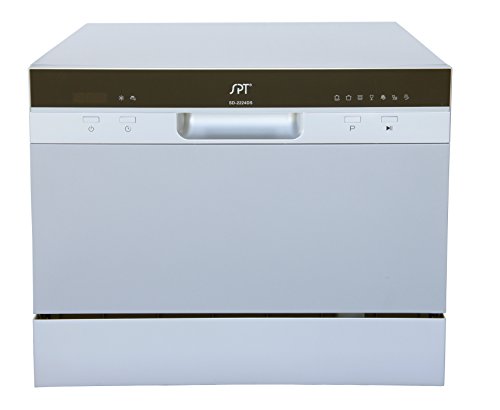
3. SPT SD-2224DS Countertop Dishwasher
A countertop dishwasher that connects to a faucet and does not need a built-in installation. It is popular with renters and apartment dwellers.
Suits: apartments. Strengths: no plumbing work. Weaknesses: takes up counter space. Skip it if you want a built-in look.

Best for studios
4. Farberware Professional Countertop Dishwasher
A countertop dishwasher from a known kitchen brand. It is built for small households that want a no-fuss machine.
Suits: studios. Strengths: a small footprint. Weaknesses: limited capacity. Skip it if you have large pots.
View Farberware Professional Countertop Dishwasher on Amazon
Best for tiny kitchens
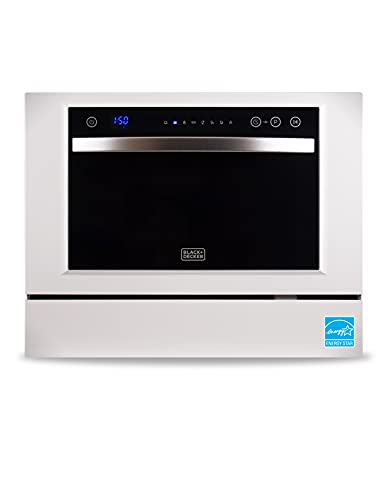
5. Black and Decker Countertop Dishwasher (BCD6W)
A compact countertop dishwasher from a household name. It has a simple design for light loads.
Suits: tiny kitchens. Strengths: an easy setup. Weaknesses: check the listing for details. Skip it if you want a built-in model.

View Black and Decker Countertop Dishwasher (BCD6W) on Amazon
Best for small kitchens
6. Danby 18 Inch Built-In Dishwasher
An 18 inch built-in dishwasher for narrow cabinet spaces. It is a more permanent option for small kitchens.
Suits: small kitchens. Strengths: a narrow cabinet fit. Weaknesses: needs a proper installation. Skip it if you rent and cannot modify cabinets.
View Danby 18 Inch Built-In Dishwasher on Amazon
Care and Setup
- Keep the faucet adapter clean on countertop models.
- Wipe the door seals regularly.
- Clean the filter every few weeks.
- Run a cleaning cycle with a dishwasher cleaner.
Mistakes to Avoid
- Skipping a faucet adapter check.
- Overloading a small tub.
- Ignoring the water pressure requirements.
- Buying without measuring the counter.
Drawer, Countertop or Compact Built-In: Matching Type to Your Space
Small kitchens can use three very different kinds of dishwasher. A drawer model is built into a cabinet and slides out, so you load from above and can often run one or two loads separately. A countertop model sits on the worktop and connects to the faucet, and needs no cabinet space, which is why renters and studio dwellers favor it. A compact built-in, such as an 18 inch unit, replaces a standard cabinet and looks like a mini version of a full dishwasher.
Think about permanence. Drawer and built-in units need plumbing, drainage and electrical connections, and sometimes cabinet modification, so they suit owners or long-term renters who have permission. A countertop unit can move with you, but it takes up valuable worktop space and needs a place to drain the water, usually the sink.
- Drawer: easy loading, separate loads, needs built-in installation.
- Countertop: portable, no installation, uses counter space.
- Compact built-in: permanent, narrow footprint, plumbing needed.
Be honest about your kitchen. If you have no spare counter space and cannot modify a cabinet, none may work, and washing by hand remains the practical choice. Measure first, then match the type.
Capacity, Place Settings and Real-World Loading
Capacity is where small dishwashers differ most from full-size ones, and place-setting numbers need careful reading. A place setting is a standard bundle of plates, bowls, glasses and cutlery, and manufacturers use their own standards. Real life is messier: pots, large mixing bowls and baking sheets take much more room than a place setting suggests.
Before buying, think about how many people use the kitchen and how often you cook. A single person or couple who cooks little may be happy with a countertop unit that washes a small batch every day or two. A family that cooks daily may find a compact model fills too fast and ends up washing large items by hand anyway.
Drawer dishwashers handle different loads in an interesting way. A single drawer is shallow and wide, which suits plates and bowls but may not take very tall items. A double drawer lets you run a small load in one drawer when you only have a few dishes, saving water and energy, and lets you separate delicate items from heavy ones.
- Check the interior dimensions, not only the settings count.
- Measure your biggest items: a large pan or platter may not fit.
- Plan the rack layout: adjustable racks add flexibility.
Treat the capacity as a guide and check the product listing for details.
Installation, Plumbing and Power Checks
Installation is the part that surprises buyers most. A built-in drawer or compact unit needs a hot water supply, a drain connection, and a power connection, usually at the location the installation sheet specifies. These may not sit where your existing connections are, so check the cabinet cutout and utility locations. A licensed plumber or electrician may be needed, and local codes may apply.
Countertop units connect to the faucet using an adapter, usually a quick-connect type that fits standard threads. Not every faucet is compatible: pull-out and some specialty faucets may lack the right thread, and some need a different adapter. Check the faucet thread type and the adapter included with the dishwasher. The drain hose runs to the sink, so confirm the hose length reaches and that it can drain downhill.
Water pressure matters. Compact machines list a minimum and maximum water pressure, and low pressure can cause poor filling or cycle faults. Check the manual. Also check the electrical load: a countertop unit plugs into a normal outlet, but you should avoid sharing the circuit with other heavy appliances.
- Cabinet cutout: match the width, height and depth exactly.
- Faucet adapter: check the thread and the fit.
- Door clearance: a drawer needs room to open fully.
Noise, Water Use and Cycle Options in a Small Space
In a small or open-plan home, a dishwasher runs close to where you live and sleep. Noise matters more than it does in a large kitchen. Makers quote decibel levels, which are their own measurements and should be used to compare models rather than as a promise. Better insulation, a quieter pump and a well-supported installation all help. A countertop unit can vibrate against a hard surface, so a mat may reduce noise.
Water and energy use are worth comparing. Compact machines often use less water per cycle than full-size ones, but they also wash fewer dishes, so it is more useful to compare per load. A double drawer allows a half load, which can save resources compared with running a nearly empty large machine.
Look at the cycle options. A quick or express cycle suits light loads, a normal cycle handles most meals, and an eco cycle saves energy but takes longer. Some machines offer a sanitize option or a delay start, which lets you run it at a convenient time. Check how long the cycles take, because eco modes can run for hours.
- Check the cycle times against your routine.
- Look for a delay start if you want an overnight wash.
- Consider drying: some compact units dry less well, so you may need to open the door.
Caring for a Small Dishwasher and Knowing When to Replace It
Small dishwashers need the same care as large ones, and they have less margin for error. The filter should be cleaned regularly to stop food particles recirculating. Wipe the door seal, since grime and moisture collect there, and clean the spray arms if the holes clog. Run a cleaning cycle with dishwasher cleaner every few months, as the manual suggests.
For countertop models, inspect the hoses and connectors for cracks or leaks. Check the faucet adapter for mineral deposits and clean it as needed. After use, leave the door ajar to let it dry and discourage odors. Empty the tub of any standing water, and do not leave wet dishes inside for days.
Load sensibly. Overloading blocks the spray, leaves dishes dirty and strains the motor. Use detergent designed for your machine, and follow the dose for a small tub, since too much creates suds and residue.
Signs it may be time to replace the machine: persistent leaks, failure to drain, loud grinding noises, heating that no longer works, rust inside the tub, or repair costs that approach the price of a new unit. Check the warranty and the availability of parts before replacing, since a small repair may restore it. When replacing, measure the old space again and compare it with new models.
A Small Kitchen Dishwasher Checklist
Small kitchens leave little room for error, so a dishwasher purchase benefits from careful planning. Whether you are looking at a Fisher and Paykel drawer, an SPT or Farberware countertop unit, a Black and Decker model or the Danby built-in, run through the list below before you order. Taking twenty minutes now can prevent a return later.
- Decide where the machine will live: in a cabinet cutout, on the counter, or beside the sink.
- Measure the width, depth and height of the space, then add the clearance the maker calls for around hoses, doors and drawers.
- Check how far the water supply and drain are from the planned spot, and whether the existing connections can be used.
- Look at the power requirements and note where the nearest outlet is.
- Think about how the door or drawer opens, and whether it will block a walkway or another appliance.
- Count how many people you cook for and how many dishes a normal day creates.
- Read the delivery and installation terms, including whether the seller removes old units.
Drawer, Countertop and Compact Built-In Compared
The table below sets the main formats next to each other. It is a general picture, and individual models vary, so always rely on the specification sheet for exact figures.
| Format | Where it goes | What suits it | Watch for |
|---|---|---|---|
| Single or double drawer | Built into cabinetry | Smaller loads, flexible use of one or two drawers | Needs a proper cutout and connections |
| Countertop unit | On a counter near a sink | Renters and spaces with no cabinet room | Takes up counter space and needs a hose connection |
| Compact built-in | Under a counter, in a narrow opening | Small kitchens that still want a fixed unit | Fewer place settings than a full-size model |
How to Read Capacity and Cycle Details
Capacity on a dishwasher listing is usually expressed in place settings, a standard group of plates, bowls and cutlery. A compact unit holds fewer settings than a full-size machine, and the real number depends on the size of your dishes. Large plates, tall glasses and bulky cookware use more room than the standard setting assumes. If you cook with large pans or sheet trays, check how the racks are laid out and whether a tray fits at all.
Cycle lists matter in a small household too. Look for a quick cycle for light loads, an eco or normal cycle for everyday dishes, and any option for heavier soil. More cycles is not always better, and a simple dial may suit you more than a long menu. Check whether the cycle times and water use are listed by the maker, and compare them with the official energy and water labels for your region.
When to Call a Plumber or Electrician
Water and power connections should follow the installation guide and local code. If a permanent installation needs a new supply line, a drain connection, an air gap or a new circuit, hire a licensed plumber or electrician rather than improvising. The same goes for any cabinet modification that affects the structure or the area near the sink.
Countertop models that attach to a faucet are simpler, but the maker still specifies the adapter and the pressure range, so read the instructions. After installation, run the first cycle empty while watching for leaks. If water appears around hoses, fittings or the door seal, stop the machine, turn off the supply and contact the maker or a professional. Keep the manual, model number and receipt in a folder for future service.
Loading Habits That Make a Small Dishwasher Work Harder
A compact machine rewards good loading habits, because there is little spare room for awkward items. Spend a few days learning how your racks behave, and you will fit more into every cycle without crowding the spray arms.
Scrape food scraps into the bin rather than washing dishes under the tap first, unless the manual says a rinse is needed. Place the largest items on the sides and back so they do not block the spray. Tilt bowls and cups so water drains rather than pools. Keep lightweight plastics on the top rack where they will not drop onto the heating element or shift around. Cutlery usually goes in the basket with a mix of handles up and down so pieces do not nest together.
In a drawer model, think about using one drawer for glasses and light items and the other for heavier dishes. In a countertop unit, make sure the door can close fully and nothing blocks the spray arm. Do not overload, because items that touch tend to come out dirty. If something stays dirty, rearrange it and run the cycle again, then check the filter, which most makers advise cleaning on a regular schedule. The manual shows where it sits and how to remove it.
Drawer Dishwasher FAQ
Are drawer dishwashers worth it?
They are handy for easier loading and separate loads, but they cost more than basic models.
Do countertop dishwashers need plumbing?
Most connect to a faucet, but check the adapter type.
How many place settings do compact models hold?
It varies, so check the listing for capacity details.
Can I use a drawer dishwasher in a small kitchen?
Yes, a single drawer takes little space, but it still needs plumbing and power.
Can a countertop dishwasher be used in a rental?
Often yes, because it needs no installation. It connects to a faucet and drains into the sink. Check your lease and make sure the faucet is compatible with the adapter.
Do drawer dishwashers use less water?
A double drawer lets you run a smaller load in one drawer, which can use less water than a full machine for a few dishes. Check the listing for water use figures.
Can I wash large pots in a compact dishwasher?
It depends on the tub size and rack layout. Tall or wide pots often do not fit. Measure your largest cookware against the interior dimensions.
Do countertop dishwashers need a drain?
They need a way to drain, usually a hose into the sink. Some have a tank that you fill manually. Check how the model in the listing connects.
Is a single drawer enough for two people?
Often yes for light cooking, but it depends on your habits. Think about how many dishes you use each day and how often you want to run a load.
Will a drawer dishwasher fit under my counter?
It depends on the cabinet opening and the model. Compare the cutout width, height and depth with the installation sheet, and check clearances for the drawer.
How long does a compact dishwasher last?
It depends on the model, water quality and care. Check the warranty on the listing, and keep the filter and seals clean.
Choosing a Drawer Dishwasher For A Small Kitchen in Practice: Criteria That Matter Day to Day
The shortlists and specification tables earlier in this guide give you the starting point. What turns a good-on-paper drawer dishwasher for a small kitchen into the right one for your home is how it fits the way you actually live: the daily dishes, mugs, glasses and small pans in compact loads you handle most often, the space in your small kitchen, in a drawer-height cabinet space, and the routines you will repeat every week. Work through the criteria below before you compare names, because they decide whether a model feels effortless or becomes a daily irritation. None of them requires technical expertise — a tape measure, a note of your habits and a careful read of the current listing cover most of it.
Fit and measurements first
Start with the cabinet opening, drawer clearance and your tallest everyday items. Measure twice and write the numbers down, including any skirting, handles, hinges or trim that reduce the usable opening. Allow the ventilation and clearance space the maker asks for, and think about the route into the room as well as the final position — a unit that fits its slot but cannot get through a doorway or around a tight corner is a common and avoidable problem. If you are replacing an older model, do not assume the new one matches its dimensions; designs change, and a small difference can stop an installation or leave an awkward gap.
Capacity judged by your real load
Capacity figures only help when you translate them into your own routine. Picture a typical week: how much of daily dishes, mugs, glasses and small pans in compact loads do you handle at once, and how often does a special occasion stretch that further? Buying far more capacity than you use wastes space and can waste energy, while buying too little means constant juggling. A useful test is to lay out the items from your biggest recent occasion and judge honestly whether they would fit comfortably, with room for air to circulate or for you to reach things at the back without unloading everything else first.
Controls you can use without thinking
You will operate this drawer dishwasher for a small kitchen when you are tired, distracted or in a hurry, so clear controls matter more than a long feature list. Look for markings you can read at a glance, buttons or dials that respond positively, and a layout that groups the everyday settings together. If other people in the household will use it too — teenagers, grandparents, guests — simplicity becomes even more valuable. Before you buy, read how the main functions are selected on the listing and in the manual, and be honest about whether anyone at home would find them confusing.
Noise, heat and everyday comfort
Appliances share your living space, so think about what it will be like to live alongside this one. Consider where the sound and any warm air will go, especially in open-plan rooms or small homes where the small kitchen, in a drawer-height cabinet space is close to where people sit, work or sleep. Placement can soften many issues: a level surface, sensible clearance and keeping the unit away from heat sources all help it run as intended. If noise is a deciding factor for you, compare the information given on each listing rather than relying on reviews written about a different setting.
Running habits and efficiency
How you use a drawer dishwasher for a small kitchen affects running costs as much as the model itself. Sensible habits — keeping seals, filters or vents in good order where they apply, avoiding overloading, and following the maker’s guidance on settings — help any model work efficiently. When you compare listings, look at the energy information the maker publishes and match it to your likely pattern of use, rather than to an idealised one. A model that suits your routine and is used properly will usually serve you better than a nominally more efficient one that fights your habits.
Build details that show in year three
Handles, hinges, shelves, racks, baskets and seals reveal themselves over time. Look for parts that feel sturdy in the maker’s description, surfaces that can be wiped without special products, and consumable or replaceable parts that are easy to source. Check what the warranty covers and how support is reached in your country. These details rarely headline a listing, yet they decide whether a small problem is a quick fix or the start of the unit’s decline, so give them a few minutes of attention before you decide.
Who a Drawer Dishwasher For A Small Kitchen Suits: Four Everyday Situations
The busy household
If your home runs on weeknight deadlines, the best drawer dishwasher for a small kitchen is the one that removes friction from the routine you already have. That usually means straightforward controls, enough room for daily dishes, mugs, glasses and small pans in compact loads without rearranging everything, and cleaning that can be done in minutes rather than as a weekend project. In this situation, prioritise reliability and ease over novelty: the feature you use every Tuesday matters far more than the one you might try twice a year.
The keen cook or host
If you cook for pleasure or regularly feed a crowd, judge a drawer dishwasher for a small kitchen by its biggest day, not its average one. Think about the largest meal you make in a year and whether the layout, capacity and settings support it without workarounds. Flexibility matters here — the ability to handle different loads, sizes or temperatures without constant supervision frees you to enjoy the occasion instead of managing equipment in the small kitchen, in a drawer-height cabinet space.
The small-space household
In a flat or compact home, every centimetre and every decibel counts. Measure honestly, favour designs that use their footprint well, and think about where accessories, spares or supplies will live. A smaller drawer dishwasher for a small kitchen that fits your life neatly will outperform a larger one that dominates the room, blocks access or has to be moved to be used. Also check door, lid or drawer clearance in real life — in tight spaces, how something opens is as important as how big it is.
The careful, long-term buyer
If you buy rarely and expect things to last, focus on the ownership experience: clear documentation, available spare parts, straightforward care and a maker with a track record for the category. Read the manual before you buy if you can; how clearly a company explains setup, care and troubleshooting tells you a lot about living with its products. In this situation, the comparison sections earlier in this guide and the checks below are worth more than any single headline feature.
Comparing the Picks in This Guide Side by Side
This guide covers Fisher and Paykel DishDrawer Double (DD24DCTX9), Fisher and Paykel DishDrawer Single (DD24SCTX9), SPT SD-2224DS Countertop Dishwasher, Farberware Professional Countertop Dishwasher, Black and Decker Countertop Dishwasher (BCD6W), Danby 18 Inch Built-In Dishwasher. Rather than looking for a single winner, compare them against the routine you described for yourself in the sections above. Start by ruling out any pick that fails a hard requirement — the measurements of your small kitchen, in a drawer-height cabinet space, a must-have setting, or a layout that does not suit the daily dishes, mugs, glasses and small pans in compact loads you handle most. What remains is usually a short list of two or three, and the differences between those are about emphasis: one may suit larger loads, another may be simpler to live with in a small space, and another may offer the control layout your household prefers.
Use the detailed reviews earlier in this guide as your evidence. For each pick, note the points the review raises in its favour, the honest limitation it mentions, and who the review says it suits. Then score those notes against your own priorities instead of against an abstract idea of the best. If a limitation touches something you do every day, treat it seriously even if the pick looks strong overall; if it concerns a situation you will rarely meet, it may not matter at all. This is also the moment to re-check the current listing for each finalist, because colours, included accessories and exact specifications can change, and the listing — not any review — is what you are actually buying.
Finally, compare the total ownership picture, not just the appliance. Think about delivery and installation where they apply, the space any accessories will take, how cleaning supplies or replacement parts are obtained, and what happens if you need support. Two picks that look close on features can feel very different to own. Writing these points in a short list for your top two finalists, in your own words, is often the quickest way to a confident decision — and it protects you from being swayed by a single eye-catching feature that your household will seldom use.
Getting the Best From Your Drawer Dishwasher For A Small Kitchen Day to Day
Good results with a drawer dishwasher for a small kitchen come mostly from small, repeatable habits. Set it up exactly as the manual directs before first use, including any levelling, ventilation or preparation steps, and keep the manual somewhere you can find it again. During the first few weeks, pay attention: note which settings you actually use, how you prefer to load or arrange daily dishes, mugs, glasses and small pans in compact loads, and anything that needs adjusting. Most owners develop a personal routine within a month, and the sooner yours settles, the sooner the appliance disappears into the background of daily life, which is exactly where it should be.
Arrange things with access in mind. Keep the items you reach for most where they are easiest to get at, group related items together, and avoid arrangements that force you to move three things to reach a fourth. Label or list contents where that helps, date things where freshness matters, and review what you have before you shop so you buy what you need rather than duplicates. These habits sound simple, but they are the difference between a drawer dishwasher for a small kitchen that genuinely saves time and money and one that quietly wastes both through forgotten, duplicated or badly organised contents.
When something seems off — a result that disappoints, a sound that is new, a smell, a warning light or a change in performance — deal with it early. Check the obvious causes first using the troubleshooting section of the manual: placement, loading, settings and basic cleaning solve a large share of everyday problems. If the manual points to a fault or a safety concern, follow its guidance and contact the maker or a qualified professional rather than experimenting. Catching small issues early keeps them small, protects any food or work involved, and preserves your warranty position.
Cleaning, Care and Storage
Regular care for a drawer dishwasher for a small kitchen centres on cleaning the filter, wiping the drawer seal and keeping the spray arm clear. Little and often beats occasional deep effort: wipe spills when they happen, follow the maker’s schedule for any filters, seals or removable parts, and use only cleaning products the manual allows, since harsh chemicals and abrasive pads can damage surfaces, coatings and seals. Removable parts should be washed, rinsed and dried fully before they go back, and anything electrical must be treated exactly as the manual directs around water.
Build care into moments that already exist. A quick check while you are loading or unloading, a wipe while something else cooks or cools, and a slightly deeper clean on a fixed day each month or each season keeps the appliance hygienic without becoming a chore you dread. While you clean, look over the parts you handle: seals that are splitting, racks or baskets that are damaged, cables that are worn or vents that are blocked are all easier and cheaper to address when spotted early. If the appliance will be stored, moved or left unused for a while, follow the manual’s preparation steps, protect it from dust and moisture, and keep its accessories and manual together so restarting is straightforward.
Keep a simple note of what you have done — when filters or parts were cleaned or replaced, and any service visits. It takes seconds, helps you spot patterns if a problem develops, and is genuinely useful if you ever make a warranty claim or sell the appliance on. Care is also where the maker’s instructions outrank general advice, including anything in this guide: materials and designs differ between models, so where the manual for your specific drawer dishwasher for a small kitchen says something different, follow the manual.
Mistakes to Avoid When Buying and Using a Drawer Dishwasher For A Small Kitchen
Buying on capacity alone
A bigger number is not automatically better. Oversized choices cost more space, can cost more to run, and may perform awkwardly with the smaller loads you handle most days. Match capacity to your real routine, with sensible headroom for your biggest regular occasion.
Skipping the measuring stage
Guessing dimensions is the most common cause of returns and failed installations. Measure the space, the access route and the cabinet opening, drawer clearance and your tallest everyday items, and compare your figures with the listing for the exact model — not a similar one — before ordering.
Ignoring the manual’s setup steps
Levelling, clearances, first-use preparation and correct connections affect performance and safety from day one. Ten minutes with the manual at setup prevents the slow problems — poor results, extra noise, early wear — that owners often blame on the product itself.
Overloading or arranging things badly
Packing too much in, blocking vents, spray or airflow, or stacking things so they cannot be reached leads to disappointing results and forgotten contents. Leave the space the design needs to work, and arrange daily dishes, mugs, glasses and small pans in compact loads so the ones you need first are the ones you can reach first.
Letting cleaning slide
Small residues become smells, stains and hygiene problems, and neglected filters, seals or vents quietly reduce performance. The routine in the care section above — little and often, with the products the manual allows — is far easier than rescuing a neglected appliance.
More Drawer Dishwasher For A Small Kitchen Questions Answered
How do I know which size of drawer dishwasher for a small kitchen is right for my home?
Base the decision on your biggest regular load of daily dishes, mugs, glasses and small pans in compact loads, not on a rare extreme. Lay out or list what that load involves, compare it with the usable capacity described on each listing, and leave sensible working room rather than filling every corner. Then confirm the external fit by measuring your space. If you are between sizes, the one whose layout suits your items usually matters more than a small difference in headline capacity.
What should I check on the listing before I order a drawer dishwasher for a small kitchen?
Confirm the exact dimensions, the capacity in the form the maker states it, what is included in the box, the electrical or fuel requirements where they apply, and the warranty terms. Check delivery and installation details too, especially for larger items. Listings change, so treat the current page for the exact model as the final source and keep a copy of the key details with your order confirmation.
How often does a drawer dishwasher for a small kitchen need cleaning?
Follow the schedule in your manual, and use the routine described in this guide as a guide between deeper cleans: quick attention to spills and residues as they happen, regular checks of seals, filters, vents or removable parts as they apply, and a fuller clean at the interval the maker recommends. Homes that use the appliance daily will need the fuller clean more often than homes that use it weekly.
Can I install or set up a drawer dishwasher for a small kitchen myself?
Many models are designed for straightforward home setup, but the answer depends on whether the installation involves fixed plumbing, gas, a dedicated electrical supply or built-in cabinetry. If it does, use a qualified professional and follow local rules. For straightforward placement, follow the manual step by step, including levelling, clearances and any first-use preparation, and keep the packaging until you are sure everything works as expected.
What is the first thing to check if my drawer dishwasher for a small kitchen is not performing well?
Check the basics in order: the setting selected, how the load is arranged, whether anything is blocking vents, spray, airflow or movement, and whether cleaning is overdue. Consult the troubleshooting section of the manual before assuming a fault. If you find damage, a leak, an electrical issue or anything the manual flags as a safety concern, stop and follow its guidance or contact the maker instead of continuing to experiment.
Is it worth paying more for a drawer dishwasher for a small kitchen with extra features?
Only if the features solve a problem you actually have. List the situations in your routine that frustrate you now, and check whether a feature addresses one of them directly. Features that save daily effort — clearer controls, a more flexible layout, an easier cleaning routine — tend to repay their cost, while novelty settings used a few times a year rarely do. The comparison approach earlier in this guide, scoring each pick against your own priorities, keeps this judgement honest.
How long should a drawer dishwasher for a small kitchen last?
Lifespan depends on the category, build quality and, significantly, on care. Correct setup, sensible loading and the cleaning routine the manual sets out all extend working life, while neglected seals, filters and vents shorten it. Check the warranty length as a signal of the maker’s confidence, register the product if asked, and keep your proof of purchase so support is straightforward if you need it.
Planning around seasons and special occasions
Most households ask the most of a drawer dishwasher for a small kitchen at predictable moments — holidays, celebrations, the start of a school term, a season of preserving, grilling, baking or hosting. Before those peaks, run through a short preparation: clean and check the appliance, confirm you have the accessories and supplies the occasion needs, and think through the order you will handle daily dishes, mugs, glasses and small pans in compact loads so nothing waits longer than it should. Afterwards, do the reset while it is fresh in your mind — clean, reorganise and note anything that ran short or caused friction. Two short sessions a year like this prevent the majority of big-occasion frustrations.
Teaching the household one shared routine
A drawer dishwasher for a small kitchen works best when everyone uses it the same way. Agree the basics together: how things are loaded or arranged, which settings are the household defaults, what gets hand-checked first, and where supplies live. Write the routine on a card kept nearby if that helps, especially in homes with children, guests or several cooks. Shared habits prevent the classic problems — items put in the wrong place, settings changed and forgotten, doors, lids or drawers left ajar — and they make results consistent no matter who was in charge that day.
The Short Version
For two loads at once, the double DishDrawer. For a single drawer, the single DishDrawer. For renters, the SPT. For studios, the Farberware. For tiny kitchens, the Black and Decker. For narrow cabinets, the Danby.

