You do not have to spend a lot to get extra freezer space. Many compact and mid-size chest freezers are widely sold, and they do the same job as higher-end ones: hold food frozen and keep running costs low. The trade-off is usually fewer features and a plainer finish.
The six freezers below are budget-friendly chest and compact models from various brands. We have not used these products ourselves, so confirm the capacity, the dimensions and the features on the listing before you buy. Cooling and efficiency claims are the makers’ own.
As an Amazon Associate we earn from qualifying purchases. Links below are affiliate links, and they do not change the product information we give.
What to Look For
| Feature | Why it matters |
|---|---|
| Capacity | Pick the smallest size that really fits your needs |
| Defrost | Manual defrost keeps cost down, but needs occasional effort |
| Baskets | A removable basket helps sort food |
| Temperature dial | Check the control is easy to read and adjust |
| Warranty | A longer warranty term gives peace of mind on a stored-food appliance |
| Location | Make sure the room suits the unit’s rated temperature range |
In this guide
Specs at a Glance
| Model | Type | Size class | Notes |
|---|---|---|---|
| Arctic King chest freezer | Chest | Compact to mid | Value-oriented |
| Commercial Cool CCFE70W | Chest | Mid-size | Plain, value-oriented |
| Costway chest freezer | Chest | Compact | Light and simple |
| Galanz chest freezer | Chest | Compact to mid | Retro-style models available |
| Avanti chest freezer | Chest | Compact | Small and plain |
| Koolatron chest freezer | Chest | Compact | Compact option |
The 6 Best Budget-Friendly Deep Freezers
Top pickBest for first-time freezer buyers
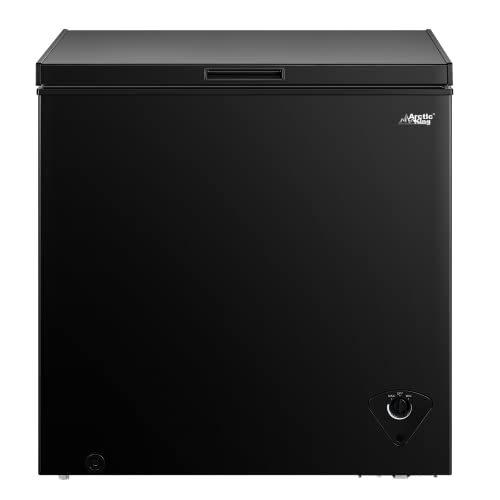
1. Arctic King Chest Freezer
A value-oriented chest freezer sold in several sizes with a manual defrost design. A common pick for people who want extra space without a big outlay, and one of the easiest brands to find in stores and online.
Suits: first-time freezer buyers. Strengths: a simple design with size options. Weaknesses: a basic feature list. Skip it if you want premium finishes.

Best for a garage or basement
2. Commercial Cool Chest Freezer (CCFE70W)
A plain chest freezer in a mid-size class. It does the basics of freezing and storage without extras, and its plain layout makes it easy to organize with bins.
Suits: a garage or basement. Strengths: straightforward storage. Weaknesses: few comforts. Skip it if you want a modern look.
View Commercial Cool Chest Freezer (CCFE70W) on Amazon

Best for a small home
3. Costway Chest Freezer
A compact chest freezer that suits small spaces and light storage needs. The lid and basket are simple, and the light body is easier to move than a larger chest.
Suits: a small home. Strengths: a compact size. Weaknesses: limited capacity. Skip it if you buy in bulk.

Best for a kitchen with style
4. Galanz Chest Freezer
A chest freezer from an established maker, sold in compact and mid-size classes. Some versions have a retro style, which can suit a kitchen or a game room.
Suits: a kitchen with style. Strengths: a known brand with options. Weaknesses: several versions. Skip it if you want one model number.
View Galanz Chest Freezer on Amazon

Best for a tight space
5. Avanti Chest Freezer
A small, plain chest freezer from a brand known for compact appliances. It suits a dorm, a small office or a studio apartment where a full-size chest would not fit.
Suits: a tight space. Strengths: a small footprint. Weaknesses: low capacity. Skip it if you stock up on large cuts.


Best for a camper or office
6. Koolatron Chest Freezer
A compact chest freezer from a brand that makes small cooling products. Check the listing for the exact size and the power cord length, since compact units are often placed far from an outlet.
Suits: a camper or office. Strengths: a compact body. Weaknesses: specs vary. Skip it if you need a large interior.

Care and Setup
- Defrost when frost builds up.
- Keep the seal clean.
- Give the freezer space for ventilation.
- Label what you store and when.
- Check the temperature setting seasonally.
Mistakes to Avoid
- Choosing a size that is too small.
- Placing it where it gets hot.
- Overfilling the basket.
- Ignoring the manual on first start-up.
- Leaving the lid ajar.
What Budget Freezers Usually Leave Out
A budget-friendly freezer does the core job of keeping food frozen, but it gets there with fewer extras. Knowing what is typically missing lets you decide which compromises you can live with and which you cannot.
Features often reduced or absent on entry-level chests:
- Interior lighting: some basic models skip it, which makes a dim garage or basement harder to work in.
- Baskets and dividers: a single basket may be all you get. Extra bins are cheap add-ons.
- Temperature displays and alarms: many budget models use a simple dial with numbered settings, not a digital readout.
- Lid assist: a counterbalanced or spring-assisted lid is more convenient, but not standard on every model.
- Lock: useful with children around, and not always included.
- Finish and insulation detail: exteriors may be plainer, and the overall build can feel lighter.
What should not be compromised: a tight lid seal, a stable cabinet and a clear warranty. Read the warranty terms to see how long coverage lasts, what parts it includes and what you must do to make a claim. Check whether the maker lists a support contact and whether parts are available. A simple freezer with a solid seal and clear support can be a better choice than a feature-heavy one with unclear terms.
Think about which missing features you would actually miss. If the freezer sits in a bright laundry room, lighting hardly matters. If young children are around, a lock may matter more than anything else on the feature list.
Choosing a Size That Keeps Running Costs Low
A budget purchase can become more expensive if the freezer is the wrong size or runs inefficiently. Two habits keep costs down: choose a size that fits your needs and keep the freezer reasonably full.
Work out what you plan to store. Think about how much food you buy at once, whether you batch cook, whether you freeze garden produce or game, and how large your household is. Check the listed capacity and the interior dimensions. A compact unit is easy to place but fills quickly, and a larger one gives breathing room but takes more space and uses more electricity in total.
Look for an energy label or energy information on the listing, and compare similar sizes. Efficiency claims come from the maker, so treat them as a guide and check how they are measured. Ratings of different sizes are not directly comparable, so compare like with like.
Ways to save energy after you buy:
- Place the freezer in a cool, well-ventilated spot away from the oven, direct sun and heating vents.
- Keep the lid closed as much as possible and decide what you need before opening it.
- Fill empty space with containers of water frozen solid, which hold cold and reduce the air to cool.
- Defrost when frost builds up, since a thick frost layer reduces efficiency.
- Keep the gasket clean so the lid seals tightly.
Set the temperature as the manual advises, and use a freezer thermometer to confirm. Colder than necessary wastes energy, while too warm risks food quality.
Compact Freezers, Small Spaces and Mobile Uses
Many budget freezers are compact, and they appeal to people with limited space: apartments, dorms, offices, workshops and campers. Compact units are easier to place and to move, but they bring their own considerations.
Measure carefully. Check the outside dimensions, the height with the lid open and the clearance needed around the sides and back. A freezer wedged tightly into a corner may overheat and struggle to cool. Plan for the power cord too. Compact models often come with short cords, and using extension cords can be a safety problem. Place the freezer within reach of a suitable outlet.
Think about the floor. A level, solid, dry surface matters even for small units. A wobbly floor or a damp spot can cause noise, poor sealing and rust. If the freezer will sit on a carpet, consider a stand or a board that allows airflow.
If you plan to use a freezer in a camper, boat or vehicle, check carefully. A standard household chest freezer is designed for mains power and a stable, level setting. Motion, tilting and power fluctuation can cause problems, and some units are not designed for it. Check the listing and the manual for any statements about portable or mobile use, and ask the maker if the answer is unclear.
Finally, think about noise. A compact freezer in a studio or bedroom is more noticeable than one in a garage, so read product questions for comments about sound.
Inspecting and Setting Up a Budget Freezer
Because budget purchases are often ordered online and delivered in a large box, inspection and setup deserve extra care. A quick check at the door can save a long return process.
On delivery:
- Look over the box for dents, tears and signs of rough handling, and note them with the carrier if you can.
- Unpack carefully and inspect the cabinet, lid, hinges and gasket for dents, scratches and misalignment.
- Check that the lid closes evenly and that the gasket sits flat. A sheet of paper closed in the lid should resist being pulled out.
- Look inside for loose parts, the basket and any manuals or accessories.
- Keep the packaging until you have confirmed the freezer works.
Setup steps from the manual usually include letting the freezer stand upright for a period after transport, cleaning the interior with a mild solution, then plugging it in and letting it cool before adding food. Use a freezer thermometer to confirm the temperature is where you want it, and watch for odd noises or smells during the first day.
Also read the return policy before you order. Large items are expensive and awkward to send back, and some sellers limit returns. If a problem appears soon after delivery, contact the seller and the maker promptly, and keep photos and records. A budget price is only a bargain if the unit works and you can get help when it does not.
Stocking, Organizing and Food Safety on a Budget
A budget freezer pays for itself when you use it well. Stocking it wisely means less waste, and a few low-cost habits make it easier to manage.
Smart ways to use the space:
- Buy sales and bulk selectively: freeze only what you will really use. Food forgotten at the bottom is wasted money.
- Portion before freezing: divide into meal-sized packages so you thaw only what you need.
- Use proper packaging: freezer bags, rigid containers or wrap that limits air, labeled with the item and date.
- Use inexpensive bins: stackable bins or reusable bags create zones for meat, vegetables and prepared meals.
- Keep a list: note what is inside and update it as you use items.
Food safety matters. Keep the freezer cold enough to hold food solid, and use a thermometer to check. If power fails, keep the lid shut and consult food safety guidance from a government agency to decide what is safe. Do not refreeze thawed food unless the guidance says it is safe. Thaw food in the refrigerator or by another approved method, not on the counter.
Know when to replace the freezer. Signs include a lid that no longer seals, frost that returns rapidly, a compressor that runs nonstop, food that softens at the edges, rust inside or on the base and repeated trips for repair. If a repair costs close to a replacement, buying again may be the sensible option.
A Checklist for Choosing a Budget-Friendly Chest Freezer
A chest freezer is a long-term appliance, so a few minutes of planning before you order can save years of annoyance. Use this list as you compare listings.
- Measure the spot where the freezer will sit, then add clearance at the back and sides as the maker specifies.
- Check the lid height when open, so it does not hit a shelf or low ceiling.
- Look at the capacity in cubic feet and think about how much you will freeze, such as bulk meat, garden produce or party food.
- Find out whether the freezer has manual or automatic defrost and how the drain works.
- Check the basket or divider options, which keep food from becoming a jumble.
- Look at the warranty and the maker support page.
The Galanz, Avanti and Koolatron chest freezers in this guide are examples of compact and mid sized units, and each lists its own dimensions and defrost method.
Chest Freezer Against Upright Freezer
| Design | Strengths | Trade-offs |
|---|---|---|
| Chest | Large usable space, holds cold well when opened | Takes floor space and items can pile up |
| Upright | Shelves and doors make items easy to find | Loses more cold air when the door opens |
| Compact chest | Fits small spaces, such as an apartment closet | Limited capacity, so choose with care |
If you rarely open the freezer and store large quantities, a chest is a sensible shape. If you need quick access to many small items, consider an upright.
Placement, Power and Airflow
Put the freezer on a level, firm floor in a spot with steady temperatures. Garages can be fine if the maker says the model is suitable for that environment, but very hot or very cold spaces can affect performance. Plug it directly into a grounded wall outlet rather than a long extension cord, and avoid sharing the circuit with other heavy appliances. Leave space around the freezer so heat can escape.
Organizing So Food Stays Easy to Find
Use baskets, bins or stackable containers to group items by type, and keep an inventory on a clipboard or phone. Label packages with the contents and date, and place new items at the bottom so older ones are used first. A tidy freezer saves electricity because you spend less time with the lid open.
Food Safety and Power Cuts
Follow official food safety guidance on storage times and on what to do after a power cut. Keep the lid closed during an outage, and do not refreeze items unless official guidance says they are safe to do so.
Mistakes That Waste Space and Power
The biggest mistake is buying a freezer that is too large for your needs. An empty freezer wastes energy, and a half empty one cools less efficiently than a well filled one. On the other side, a unit that is too small leads to crammed items and forgotten food. Estimate your needs honestly, and pick a size that gives a little room to grow.
Another mistake is skipping the defrost routine. Manual defrost freezers collect ice over time, and thick frost reduces space and efficiency. Follow the maker instructions on when to defrost and how to drain water. Finally, avoid placing the freezer in a spot with poor ventilation, such as a tight cupboard, since heat buildup strains the compressor.
Take a moment to check the lid seal after setting up. A gasket that lets warm air creep in leads to ice and extra running time. If the seal looks uneven, consult the maker before loading the freezer.
Setting It Up Right on Day One
Many makers advise letting a new freezer stand upright for several hours before plugging it in, then running it empty to reach temperature before adding food. Follow the instructions for your model, and use a thermometer to check that it holds a steady cold temperature.
Choosing Deep freezers in the lower price band: What Actually Matters
Organization is the criterion owners underestimate. A freezer’s value is the food you can find and use, not the food entombed in it. Baskets, dividers, shelves, and a layout that lets you group by type and date turn a cold box into a pantry. Lighting inside, a lid or door that stays open while you load, and an exterior that shows temperature or alarms when it rises are small features with outsized value. Think about the shape of your storage: whole cuts and large joints favor a chest’s open well; labeled flat bags and boxes stack happily in either, if you freeze them flat first.
Running cost and reliability complete the decision, because a freezer runs every hour of its life and holds food worth real money. Efficiency ratings, insulation quality, and the seal’s integrity all compound over years. A temperature alarm or a simple thermometer you check weekly is cheap insurance for a full freezer’s contents. Consider also the practicalities: delivery access to its home, clearance for the lid or door, a suitable socket, and drainage or defrosting arrangements. Manual-defrost models hold temperature very steadily and ask for an occasional defrosting session; frost-free designs trade a little of that steadiness for never asking. Choose the bargain your household prefers.
A deep freezer is a long-term store, so judge it first by how well it protects food over months. Consistent, properly cold temperatures matter more than any feature, and a model that holds its cold through a full load and a warm garage earns its place. Consider where it will live: garages and outbuildings swing in temperature, and not every freezer is rated for an unheated space, so check the maker’s guidance for ambient conditions. Chest and upright designs divide the field: chests are efficient and hold cold when opened, uprights organize and reveal their contents like a cupboard. Your back, your space, and your memory for what is buried should arbitrate.
How Deep freezers in the lower price band Fit Real Routines
Harvests, batch cooking, and seasonal gluts
A deep freezer absorbs abundance: the garden’s bean glut, the orchard’s windfalls, the soup made by the gallon, the bread baked in batches. Blanch vegetables properly before freezing, cool cooked food promptly and freeze it in flat, labeled portions that thaw fast and stack like books. Berries and herbs freeze best spread out first, then bagged, so they pour rather than clump. Seasonal eating becomes practical when the freezer holds summer for winter, and the discipline is all in the labeling: future-you needs the date and the contents, not a mystery bag and a guess.
Households that shop rarely
For rural households, large families, and anyone whose shop is a trip rather than a stroll, the deep freezer is infrastructure. Milk, butter, bread, and backup meals live there alongside the meat, and a power cut or a snowed-in week becomes an inconvenience rather than an emergency. Keep a sensible reserve of the staples your household truly uses, note what runs out between shops, and let the list teach you your real consumption. The freezer’s gift is not hoarding; it is the calm of knowing the house can eat well for weeks from what is already home.
Bulk buying and meat storage
Buying meat in bulk, a side of beef, a lamb, a case of chicken on offer, only saves money if the freezer preserves quality and you actually use what you stored. Wrap or vacuum-seal in meal-sized portions, label with cut, weight, and date, and freeze quickly in a single layer before stacking. Keep an inventory list on the door and cross items off as they leave; the list is what turns bulk buying from a hopeful pile into a system. Rotate honestly, oldest to the front at each restock, and plan one freezer meal a week into the menu so stock turns over at its best.
Judging Value Beyond the Ticket
Value in a freezer is measured over years, not at the checkout. A cheaper model that runs inefficiently, seals poorly, or fails in its fifth year holding a full load of food is expensive in every way that matters. Weigh the running cost, the quality of the insulation and seal, the warranty and the maker’s reputation for parts, and the fit with your space and habits. A freezer that is the right size also saves money quietly: an oversized half-empty unit costs to run and tempts you to store food past its best, while a right-sized one turns stock over at its prime.
The savings a freezer generates depend on your system more than its specification. Buying staples when they are well priced, cooking in batches, and never losing food to forgetting are habits, and the freezer merely enables them. Set it up with zones, labels, and an inventory from day one, plan a weekly freezer meal, and the appliance pays its running costs back in avoided waste and fewer emergency shops. Judge value by the household’s total food bill across a year with the freezer working well, and the right model, at whatever sensible price, identifies itself.
Setup, Daily Use, and Getting the Best Results
Load it with a system from the first day, because systems installed later never quite happen. Zones by category, meat in one area, vegetables in another, cooked meals and bread in a third, with the oldest stock at the front or top. Use baskets or sturdy bags as removable files so you can lift a category out rather than excavating. Start the inventory list immediately, on paper on the door or in a phone note the household shares. Every freezer owner intends to remember what went in; the ones who eat well from their freezers are the ones who wrote it down.
Prepare for the bad day in advance. Know where the freezer’s socket is, what else shares its circuit, and how you would know if it stopped: an alarm, a thermometer you check, a coin balanced on a frozen cup of water whose fall betrays a thaw. Keep the maker’s guidance on how long food stays cold unopened during an outage, typically far longer in a full freezer than an empty one, which is one more reason to keep it reasonably full. A freezer is a store of value; a little contingency thinking protects it.
Site the freezer where it will live for years: level, ventilated as the maker directs, out of direct sun and away from heat sources, on a floor that tolerates its weight and the occasional defrost puddle. Leave room for the lid or door to open fully and for you to stand before it with a box in your arms. Let it stand and settle after delivery before switching on, as the manual directs, then let it reach temperature before loading it with the household’s savings. A thermometer placed inside from day one turns arguments about whether it is cold enough into readings.
Care, Cleaning, and Keeping It Working Well
Ongoing care is a seal, a coil, and a glance. Keep the door or lid seal clean and check that it grips along its whole length, since a leaking seal works the machine harder and frosts the opening. Vacuum dust from accessible coils or the condenser area as the manual allows, especially in garages where dust and pet hair accumulate. Check the temperature weekly, listen for new noises, and keep the area around the freezer dry. None of this takes long, and all of it protects both the appliance and the considerably larger value of the food inside it.
Defrosting, for manual models, is a planned chore rather than an emergency: when frost builds thickly enough to steal space and strain the seal, empty the freezer into insulated boxes, switch off, and let the ice release with time and bowls of warm water rather than chisels, which can pierce a coil and end the appliance. Wash the interior with a mild baking soda solution, dry it thoroughly, and restart it cold before reloading. Frost-free models ask less: keep vents clear of packages and the seal clean, and let the machine run its own cycles undisturbed.
Common Mistakes and How to Avoid Them
Placement and power mistakes follow. A freezer in a space colder or hotter than its rating may stop working precisely when the weather is worst; a lid blocked by stored clutter cannot open fully and will not be loaded properly; a freezer on a circuit that trips silently can cost a season of food. Keep the top clear, the plug visible and sound, and the temperature checked. Finally, do not refreeze thawed raw meat as a habit or keep food forever on the theory that frozen means immortal: freezing pauses decline, it does not reverse it, and quality has a calendar even in the cold.
The costliest freezer mistake is freezing badly: warm food loaded in bulk that raises the temperature for everything, portions too large to thaw sensibly, packaging that admits air and guarantees freezer burn, and no labels, which turns good food into anonymous regret. Freeze in meal-sized portions, cool food first within safe limits, exclude air from packaging, and label with contents and date every single time. The second mistake is the archaeology problem, new food perpetually buried over old, solved only by rotation and an inventory. A freezer should work like a shop’s shelves, not like a dig site.
How the Picks in This Guide Compare
Comparison only makes sense against your own priorities, so use this section as a decision exercise rather than a ranking. The picks above were chosen to cover different needs within deep freezers in the lower price band: different sizes, styles, and strengths for different kitchens. Read across them with your space measurements, your regular recipes, and your cleaning tolerance in hand, and the shortlist usually narrows itself to one or two. What follows revisits each pick in turn and frames the question you should ask of it.
Arctic King Chest Freezer is the pick to study closely if its purpose in this guide matches the job you most need done. Read its section alongside the picks either side of it, and notice the trade-offs the guide describes: every design in this category gives something to get something. If the compromise it makes is one you would happily make too, that is a strong signal. If its strengths answer a problem you do not have, a simpler pick further down the list will probably serve you better.
With Commercial Cool Chest Freezer (CCFE70W), the decision is about fit for your household rather than rank. Its review above explains the cooking it is built for; your task is to be honest about how often that cooking happens in your kitchen. A pick used three times a week at the centre of your routine is worth more than a technically broader one used monthly. Check also the practicalities the review raises, size, handling, and care, because those are the details still shaping your satisfaction a year from now.
Costway Chest Freezer represents one answer to the question this guide is asking, and the other picks represent others. Compare them by the criteria that opened this article: how they fit your space, how they behave in the cooking you repeat, and how they clean and store afterwards. If you find yourself torn between this pick and another, choose by the tie-breaker of daily friction: the one that will be easier to reach for, easier to wash, and easier to live with usually wins the year, whatever wins the afternoon.
Galanz Chest Freezer earns its place in this line-up for the role set out in its review above. When you weigh it against the neighbouring picks, compare what the reviews themselves say about what it does well, where its limits are, and the kind of cooking it suits. The right choice is rarely the most elaborate option; it is the one whose strengths match your weekly routine rather than your most ambitious day, and whose handling and care you will be happy with long after the novelty fades.
Avanti Chest Freezer is the pick to study closely if its purpose in this guide matches the job you most need done. Read its section alongside the picks either side of it, and notice the trade-offs the guide describes: every design in this category gives something to get something. If the compromise it makes is one you would happily make too, that is a strong signal. If its strengths answer a problem you do not have, a simpler pick further down the list will probably serve you better.
With Koolatron Chest Freezer, the decision is about fit for your household rather than rank. Its review above explains the cooking it is built for; your task is to be honest about how often that cooking happens in your kitchen. A pick used three times a week at the centre of your routine is worth more than a technically broader one used monthly. Check also the practicalities the review raises, size, handling, and care, because those are the details still shaping your satisfaction a year from now.
More Practical Notes on Deep freezers in the lower price band
Packaging deserves a paragraph of its own, because it is where quality is won or lost. Portion for the meal, not for the package the food arrived in. Flatten bags of sauces, mince, and soups so they stack and thaw quickly. Double-wrap items destined for long storage, note weights so recipes can be planned from the freezer door, and keep a marker and tape where the freezer lives, because labeling fails when the tools are in another room. These are thirty-second habits that decide whether a six-month-old package is dinner or a disappointment.
Finally, treat the freezer as part of the kitchen rather than an annex of forgetting. Plan from it, shop for it, and cook from it weekly, and review its contents the way you review a pantry. The models in this guide differ in format, size, and defrost style, and the right one is the one that fits your space, your climate, and your household’s real appetite for stored food. A deep freezer kept with a light, steady discipline is one of the most money-saving, stress-saving appliances a home can own.
Do the freezer arithmetic honestly before buying, because the savings story is real but conditional. Bulk prices and seasonal gluts save money only when the food is eaten at quality, the wrapping is done well, and the running cost is counted. A household that plans one freezer meal a week, keeps an inventory, and buys to fill genuine gaps will save steadily; a household that freezes hopefully and excavates rarely will not. The appliance is simple; the system around it is the investment, and it is built from labels, lists, and rotation rather than money.
Read the manual once, properly, before the appliance’s first week is out. Manuals are unfashionable and irreplaceable: they hold the clearances, the cleaning products to avoid, the error signals, and the small capabilities the marketing never mentioned. Keep it, or its digital copy, where the household can find it, and note the model and serial details in the same place. When something behaves oddly in year three, the answer is usually in those pages, and the household that can find its manuals solves problems in minutes instead of weekends.
Energy and water habits around deep freezers in the lower price band are unglamorous and cumulative. Run appliances at their efficient loads rather than in dribs and drabs where the design allows, keep seals, filters, and vents clean so the machine does not labor against its own neglect, and switch off at the socket where the design expects it rather than leaving everything in standby forever. None of this asks for sacrifice; it asks for rhythm. The households that get the lowest bills and the longest appliance lives are rarely the most frugal, just the most consistent.
Teach the whole household the appliance’s few rules and its ordinary routine. Shared appliances fail at the boundaries between users: one person’s shortcut becomes another’s mystery fault. A short conversation, or a note on the fridge door covering what goes in, what never does, and what to do when a cycle ends, aligns everyone. Children old enough to use deep freezers in the lower price band are old enough to learn their care, and guests are happier with a sentence of guidance than with anxious hovering. An appliance the whole house understands is an appliance that lasts.
Keep a small log for the first season: what you cooked or processed, the settings that worked, and the one thing you would change. Appliances have personalities, and published guidance is written for an average kitchen that is not yours. Your own notes, rack positions, timings, doses, and quantities for your regular tasks, become the real manual within a dozen uses. This is the least technological advice in this guide and the most valuable: the difference between owners who love their appliances and owners who tolerate them is usually a page of notes.
Budget Deep Freezer FAQ
Are budget freezers reliable?
Many are, but features and build vary between brands and sizes. Read the listing carefully, check the warranty terms and compare the stated capacity with what you need to store.
How long should a new freezer sit before I fill it?
Many makers suggest letting it stand upright and settle for a while after delivery, then run empty and cool for several hours before loading. Follow the manual for your unit.
Do budget freezers cost much to run?
Chest freezers are generally efficient because the cold stays in when you open the lid, but check the energy label on the listing. Keeping the freezer reasonably full also helps it hold temperature.
Can I use one in a garage?
Only if the maker rates it for that temperature range. Extreme heat or cold in a garage can strain a freezer, so check the manual and consider a shaded, ventilated spot.
Is a manual defrost freezer a problem?
Not really. Manual defrost units need occasional emptying and cleaning, but they are simple and usually hold temperature steadily. Defrost when frost builds up, following the manual.
How can I tell if the lid seals properly?
Close the lid on a sheet of paper and try to pull it out. If it slides out easily, the seal may be weak. Clean the gasket and check that the freezer is level.
Should I buy a bigger freezer than I think I need?
A little extra room is useful, but very large models cost more to run and take more space. Choose a size you can keep mostly full, with room for airflow and growth.
Does a budget freezer need a dedicated outlet?
It helps. A dedicated outlet reduces the chance that other appliances trip the breaker and spoil the food. Plug it directly into a grounded outlet and avoid long extension cords.
What temperature setting should I use?
Follow the manual and verify with a freezer thermometer. Food safety guidance generally recommends keeping food frozen solid, so check the thermometer, not just the dial number.
How long can a freezer stay closed during a power outage?
It depends on how full it is, the room temperature and the freezer. A full freezer holds cold longer than a half-empty one. Keep the lid shut and check government food safety guidance.
Can I put the freezer in an unheated shed?
Only if the maker says it is designed for that temperature range. Very cold or hot spaces can affect performance, so check the manual and consider a more stable location.
Chest or upright freezer: which is better?
Chest freezers are typically more efficient, hold cold better when opened, and offer a large open space for bulky items, but require reaching and organizing discipline. Uprights offer shelving and visibility, easier on the back and better for finding things, with a little less efficiency. The better choice is the one that suits your space, your body, and your organizing habits.
Why is there frost building up inside?
Frost comes from moisture in the air entering when the freezer opens, from warm or uncovered food, or from a seal that no longer closes fully. Check the seal for gaps and cleanliness, make sure the lid or door is not being held ajar by packages, and cover food well. In a manual-defrost model some frost is normal and is managed by periodic defrosting; rapid build-up is the sign to investigate.
What should I do during a power cut?
Keep the freezer closed: a full, unopened freezer holds safe temperatures far longer than an empty or frequently opened one. When power returns, check the temperature and the food’s condition, and follow food safety guidance for anything that has thawed and warmed. Afterwards, note how the freezer behaved, and consider a temperature alarm if outages are common in your area.
How do I prevent freezer burn?
Freezer burn is surface drying caused by air reaching the food. Wrap tightly, exclude as much air as you can, use packaging meant for freezing, and keep portions sensibly sized so they are used while at their best. A consistently cold temperature helps too, since fluctuations draw moisture from food. Properly wrapped food in a well-kept freezer should come out looking like the food you put in.
Can I put a deep freezer in my garage?
Many owners do, but check that the model is rated for the temperature range your garage actually reaches, since some freezers stop working correctly in very cold spaces and struggle in very hot ones. Keep it level, ventilated, out of direct sun, and on a sound circuit, and check its temperature more often through seasonal extremes. A garage-rated model, where offered, removes the guesswork.
How long does frozen meat keep its quality?
Freezing keeps food safe for a long time when held at a properly cold temperature, but quality, flavor, texture, and moisture, declines gradually. Larger, well-wrapped cuts keep their quality longer than small or poorly wrapped items. Labeling with dates and rotating stock so the oldest is used first is the practical answer: eat your freezer’s contents in their prime rather than testing the limits.
Is a bigger freezer better value?
Only if you fill and rotate it. A larger freezer costs more to buy and to run, and a half-empty one wastes both money and the food that lingers too long in it. Choose the smallest size that holds your genuine bulk pattern with a little headroom, and let an inventory habit, not extra cubic space, be your insurance against running out of room.
How can I keep running costs down?
Keep the freezer reasonably full, since cold food holds temperature better than cold air, but leave room for air to circulate. Check the seal grips along its whole length, keep coils and vents dust-free as the manual allows, and site it away from heat sources and direct sun. Set the temperature cold enough for food quality without going colder than needed, and verify with a thermometer.
The Short Version
For a simple start, the Arctic King. For a plain garage pick, the Commercial Cool. For a small home, the Costway. For a brand name, the Galanz. For a tight space, the Avanti. For a camper, the Koolatron.