Crushed ice, often called nugget or pebble ice, is soft and easy to chew. It fills a glass tightly, cools fast and soaks up the flavor of sodas, iced coffee and cocktails. A countertop nugget maker produces it on demand without a bag run or a blender.
The six machines below are nugget-style makers of different sizes and brands. We have not used these products ourselves, so confirm the output, the size and the features on the current listing before you buy. Performance claims are the makers’ own.
As an Amazon Associate we earn from qualifying purchases. Links below are affiliate links, and they do not change the product information we give.
What to Look For
| Feature | Why it matters |
|---|---|
| Ice texture | Nugget ice is soft and chewable; crushed ice is finer |
| Output | Check how much ice a day the machine can make |
| Water supply | A reservoir is easiest; a water line adds convenience |
| Noise | These units can be louder than bullet makers |
| Cleaning | Nugget machines need regular descaling to keep ice tasting fresh |
| Bin size | A larger bin holds more ice before the machine pauses |
In this guide
Specs at a Glance
| Model | Ice type | Water supply | Notes |
|---|---|---|---|
| GE Profile Opal 2.0 | Nugget | Reservoir, optional line | App features; larger and heavier |
| Frigidaire EFIC237 | Nugget | Manual reservoir | Appliance brand; countertop size |
| Ecozy nugget ice maker | Nugget | Manual reservoir | Stainless-style; self-cleaning on many versions |
| Euhomy nugget ice maker | Nugget | Manual reservoir | Compact; budget-friendly |
| Afloia nugget ice maker | Nugget | Manual reservoir | Self-cleaning on many versions |
| Antarctic Star nugget ice maker | Nugget | Manual reservoir | Compact; popular for small counters |
The 6 Best Crushed and Nugget Ice Makers
Top pickBest for a household that loves nugget ice
1. GE Profile Opal 2.0 Nugget Ice Maker
A nugget ice machine from a major appliance brand, widely known for its soft, chewable ice. It is on the larger side and offers extras such as app connectivity.
Suits: a household that loves nugget ice. Strengths: a recognised name and strong feature set. Weaknesses: a big footprint and weight. Skip it if you have limited counter space.
View GE Profile Opal 2.0 Nugget Ice Maker on Amazon
Best for a first nugget machine
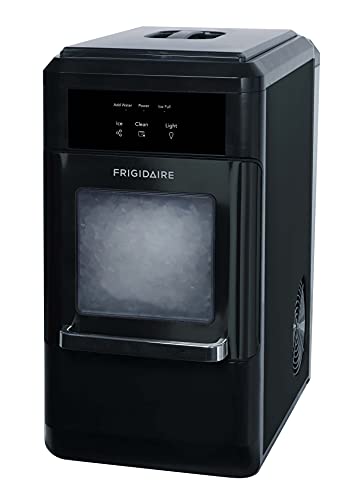
2. Frigidaire Countertop Crunchy Chewable Nugget Ice Maker (EFIC237)
A countertop nugget maker from an established appliance brand, aimed at buyers who want a chewable ice at home without a big machine.
Suits: a first nugget machine. Strengths: a trusted brand and a countertop size. Weaknesses: some owners find it noisy. Skip it if you want almost no sound.

View Frigidaire Countertop Crunchy Chewable Nugget Ice Maker (EFIC237) on Amazon

Best for a stainless look
3. Ecozy Nugget Ice Maker
A stainless-style countertop nugget machine, commonly sold with a self-cleaning function and a scoop.
Suits: a stainless look. Strengths: self-cleaning and a clean design. Weaknesses: specs vary by version. Skip it if you want a legacy appliance brand.


Best for a small kitchen
4. Euhomy Nugget Ice Maker
A compact nugget maker that tends to be chosen as a budget-friendly route to chewable ice.
Suits: a small kitchen. Strengths: a small body and a modest cost. Weaknesses: a plastic-heavy build. Skip it if you want the sturdiest build available.

Best for a household that wants easy cleaning
5. Afloia Nugget Ice Maker
A countertop nugget machine that typically includes a self-cleaning mode and a see-through window to show the ice in the bin.
Suits: a household that wants easy cleaning. Strengths: self-cleaning and a clear window. Weaknesses: several versions are sold. Skip it if you want a single, fixed model.
View Afloia Nugget Ice Maker on Amazon

Best for an office or small kitchen
6. Antarctic Star Nugget Ice Maker
A compact nugget ice maker often found in small kitchens and offices. It keeps controls basic.
Suits: an office or small kitchen. Strengths: a compact body and simple use. Weaknesses: limited capacity. Skip it if you need to fill big coolers.

Care and Setup
- Descale on the maker’s schedule so ice stays clean-tasting.
- Empty the bin if you will not use it for several days.
- Use filtered water to reduce scale.
- Wipe the exterior and scoop regularly.
- Keep the vents clear and leave space around the unit.
- Rinse the bin and scoop with warm water before the first batch.
Mistakes to Avoid
- Ignoring the cleaning prompts.
- Placing the unit where it blocks airflow.
- Chewing ice in bulk and chipping teeth.
- Buying a nugget maker when you really want large cubes.
- Running it without enough water in the tank.
Nugget, Pebble and Crushed Ice: What You Are Actually Buying
The names overlap in shopping listings, so it helps to know what each describes. Nugget ice, also called pebble or chewable ice, is made by freezing water onto a cold surface, scraping the ice off in flakes and compressing it into small soft pieces. It contains tiny pockets of air, which is why it is easy to chew and why it absorbs the flavor of a drink. Crushed ice, in the strict sense, is made by breaking larger cubes, often with a blender or a built-in crusher, giving irregular shards of different sizes.
Other ice styles are worth separating. Bullet ice from small portable machines is hard, cylindrical and made quickly but is not crunchy in the same way. Clear cubes melt slowly and suit spirits. Shaved ice is a fine snow-like texture for desserts and needs a dedicated shaver. If your goal is chewable ice for soda and iced coffee, nugget is the target. If you want ice for cocktails with large cubes, a nugget maker will disappoint you.
Listing wording varies. Check whether the product says it makes true nugget ice, or whether it simply crushes. Descriptions that mention a screw or auger and a compression process point to genuine nugget production. Ask yourself what you will use the ice for: smoothies, hospital or dental recovery, cold packs or just a drink habit. The answer helps you judge how much capacity and speed you need.
Output, Bin Size and How Long You Will Wait for Ice
Daily output figures describe what a machine can make over a day of continuous running, but real use is stop-and-start. What matters more is how quickly it produces the first batch and how much ice the bin holds before the machine pauses. If the bin is small, you can run out during a party or a hot afternoon, while a large bin gives a bigger buffer but takes up more counter space.
Think about your pattern. A household that drinks a few glasses of iced drinks at predictable times may be happy with a modest bin that refills while they work. A family that uses ice all day, or someone who needs it for medical reasons, will benefit from a larger bin and a faster production rate. Remember that ice melts, and the water from melting is usually drained or recycled depending on the design, so a stored batch does not last forever.
- Check how long the first batch takes from a cold start.
- Look at the bin capacity and the scoop access.
- See whether the machine stops automatically when the bin is full.
- Find out if you can add water while it runs.
Production speed claims come from the maker and depend on room and water temperature. A warm kitchen slows ice making, so give the unit a cool spot with good airflow.
Water Source, Drainage and Setup Choices
Countertop nugget makers generally use a manual-fill reservoir. You pour water in, and the machine uses it to make ice. This is the simplest setup, but you need to refill during heavy use. Some models let you connect to a water line for continuous supply, which suits busy households and offices but requires a connection that you or a plumber must install. Check whether a kit is included.
Melting ice must go somewhere. Some machines recycle the melt water back into the reservoir to make more ice. Others send it to a drain tray or a drain hose, and a few use a drain plug you open to empty. Know which applies to your model, because the tray or tank may need emptying often. If a drain is needed, make sure there is a place for the hose to run or a container big enough.
Water quality affects the taste of ice and the life of the machine. Hard water leaves scale on the cooling parts, which slows production and makes the ice taste off. Using filtered or softened water is often recommended. Never use salt water or add flavorings to the tank unless the manual says so. Place the machine on a level, water-resistant surface, and keep it away from the sink splash zone and the edge of the counter.
Cleaning, Descaling and Keeping the Ice Clean
Ice machines sit in a warm, damp environment, and clean water is essential. Many have a self-cleaning cycle that flushes the system with water or a cleaning solution, but this does not replace manual cleaning. Plan to empty the reservoir and bin regularly, wipe them out and dry the surfaces to reduce the chance of mold and slime. Sticky film inside the bin is a sign that cleaning has been overdue.
Descaling removes mineral deposits. Use the cleaner the maker recommends, or follow the manual if a mild acid such as citric acid or white vinegar is allowed. Rinse well with several cycles of clean water so no taste or residue remains, and discard the first batch of ice afterward. How often depends on water hardness and use, and the machine may remind you.
Everyday hygiene counts. Wash your hands before scooping, use the scoop provided and keep it clean and out of the bin. Do not store food or drinks in the bin. Empty the bin if you will not use the machine for several days, and leave the lid open to dry. Wipe the exterior and vents to keep dust from building up. A machine that is cleaned on schedule makes better-tasting ice and tends to last longer.
Noise, Location and Long-Term Ownership
Nugget makers produce noise from the compressor, the auger and falling ice, and sound levels vary between models. A kitchen counter, living room or office will carry that noise differently from a garage or utility room. If you plan to place the unit in a bedroom or quiet workspace, read the listing and the manual about sound, and consider where you will hear it most.
Location also affects performance. The machine needs airflow around its vents, usually several inches of clear space on the sides and back, so do not push it into a cabinet. Keep it out of direct sun and away from heat sources like ovens or toasters. Make sure the surface is level and can support the weight when full. Check the clearance under wall cabinets, taking into account the open lid.
Think about the long term. Ask how long the warranty lasts, what it covers and whether replacement parts such as scoops, reservoirs and filters are available. Check the power rating and the cord length. Signs that it is time to replace include ice that comes out wet or slushy, weak production despite descaling, strange grinding sounds, leaks, and a compressor that runs constantly. A machine with a simple design and easy-to-reach parts is easier to keep running, and a cleaning routine you actually follow is worth more than any extra feature.
A Checklist Before You Order a Nugget Ice Maker
Countertop nugget machines look similar from the front, but the details on the listing help you spot meaningful differences. Work through this list while you compare models.
- Reservoir capacity. A larger water tank means fewer refills, and some units draw from a built-in tank only.
- Storage bin size. Check how much ice the bin holds, and whether the bin is insulated or simply catches ice as it falls.
- Drain options. Find out whether melt water returns to the tank or leaves through a drain plug or hose.
- Dimensions. Measure the height, since many units need clearance above for opening the lid and adding water.
- Controls and indicators. Lights that tell you when water is low or the bin is full save guesswork.
- Cleaning mode. A self cleaning cycle or clear cleaning steps in the manual make upkeep simpler.
- Noise notes. The maker may describe the sound level, and the manual will tell you where to place the unit.
Anything missing from the product page can usually be found in the maker’s manual, so look there before you buy.
Countertop Machine or Built-In Under-Counter Unit: A Comparison
If you are weighing a portable nugget maker against a built-in model, this table lays out the general differences.
| Point | Countertop machine | Built-in under-counter unit |
|---|---|---|
| Installation | Plug in and fill with water | Often needs cabinet space and a water line or drain |
| Portability | Can be moved | Fixed in place |
| Capacity | Moderate | Often larger |
| Water source | Manual refill or reservoir | Plumbed or reservoir |
| Best for | Apartments and rental homes | Kitchen remodels and bars |
For most households the countertop option is enough. Built-in units suit people who entertain often and plan around a dedicated space. Plumbing and electrical work for built-in units should be handled by a licensed professional, following the maker’s installation guide.
Planning Where It Goes in Your Kitchen
Placement affects how often you use the machine. Pick a spot near an outlet and a sink so that refilling the tank is not a chore. Leave the clearance the manual asks for around the vents, and avoid putting the unit directly beside the stove or in a sunny spot where heat could make it work harder.
A level surface is important. If the counter is uneven, the machine may not fill or drain as intended. Place a small mat or tray underneath to catch drips when you empty the bin or remove the water tank.
Also think about where you will keep cups and scoops. A nearby shelf or hook for the scoop keeps the area tidy, and a small towel by the unit helps with quick wipe ups.
A Short Glossary of Ice Maker Terms
- Nugget ice. Small, soft, chewable pieces formed from compressed ice flakes.
- Bullet ice. Hard, hollow, bullet shaped ice produced by many portable makers.
- Reservoir. The tank that holds water for making ice.
- Auger. The rotating screw inside some machines that scrapes and compresses ice.
- Drain plug. A removable plug that lets you empty melt water.
- Descaling. Cleaning to remove mineral buildup from the water path.
Questions to Ask the Seller or Maker
If the listing leaves a gap, a short message can fill it. Ask which parts are replaceable, what the warranty covers and how long it lasts, and what the maker recommends for cleaning. Ask whether the unit can run continuously or needs rest periods. Their answers, and the manual, will tell you far more than marketing copy about how the machine is meant to be used day after day.
Putting Nugget Ice to Work at Home
People often buy a nugget maker for iced coffee and soda, then find other uses. The soft texture absorbs flavor from the drink, so it suits sparkling water with fruit, iced tea, smoothies and cocktails served at gatherings. Many households also use it for a snack, since the pieces are easy to chew.
Think about volume. If you host often, you may want to run the machine ahead of time and move ice into a cooler or insulated bucket, because the built-in bin can hold only so much and ice melts slowly over hours. Follow the maker’s guidance about emptying the bin and how long ice should sit before you discard it.
Keep a scoop that is only used for ice, and store it in a clean container rather than inside the bin unless the manual allows it. Wash your hands before handling ice for others, and keep the lid closed when not in use. These small habits keep the machine and its output clean.
If you travel or leave the home for a while, the manual will explain how to empty and dry the machine. Skipping that step can leave water sitting in the lines, which leads to odors and buildup that you then have to clean before the next use.
Choosing Crushed ice makers: What Actually Matters
Practical design decides daily satisfaction. A water tank that lifts out or opens wide is easier to fill and clean than a narrow neck you fill with a jug and hope. A bin you can see into, a scoop that stores sensibly, and a self-cleaning cycle you will genuinely run all matter more than small differences in output. Consider noise and heat: the machine makes ice with a small refrigeration system and a fan, and it will live on your counter, so its sound becomes part of the room. Drainage matters too; know where meltwater goes and how you will empty and clean the reservoir.
Ice makers are judged first by two numbers you should translate into your own life: how much ice the machine can produce across a day, and how much it can hold at once. Production tells you whether it recovers between uses; storage tells you whether there is ice ready when you want it. A household that fills two drinks each evening needs steady readiness, while a party host needs a full bin plus fast recovery. Remember that most countertop machines store ice in an insulated bin rather than a freezer, so stored ice slowly melts and is recycled into new cubes; the bin is a buffer, not long-term storage.
Ice style is the second decision, and it is a matter of taste and use. Bullet ice is fast and hollow-centered, good for quickly chilling drinks. Nugget ice is soft, chewable, and beloved by people who eat their ice, and it suits sodas and cocktails that benefit from ice that melds with the drink. Clear, dense cubes melt slowly and suit spirits you do not want diluted. Crescent and crushed styles have their own fans and uses, from coolers to blended drinks. There is no best ice in the abstract; there is the ice your household actually enjoys, in the drinks you actually make, and the machine should be chosen for that.
How Crushed ice makers Fit Real Routines
Parties, barbecues, and hot days
Party demand always exceeds the estimate, because ice goes into drinks, coolers, and food displays at once. Start the machine early, harvest into freezer bags as the bin fills, and keep the cycle running through the event so fresh ice replaces what melts. Place the machine where guests are not constantly opening it, since every opening warms the bin, and keep the scoop in use rather than hands, for hygiene and speed. For very large gatherings, treat the countertop machine as the fresh-ice station and bagged ice as the bulk supply; the combination covers both quality and quantity.
Everyday drinks and family use
For daily drinks, the winning habit is treating the machine as a small utility: keep the reservoir filled with fresh water, empty and rinse the bin regularly, and move surplus ice to bags in the freezer if you want a reserve. Ice that sits in the bin for days picks up flavors from the air and the machine, so freshness is a routine, not a feature. Families that drink iced water, tea, and coffee all day often find the machine’s quiet constant production more valuable than any burst speed, and a visible bin level helps everyone pace the last cubes fairly.
Cocktails and considered drinks
Drinks people make ice the second ingredient. Dense, clear ice chills a stirred or spirit-forward drink with slow dilution, while nugget or crushed ice belongs in drinks built to be icy and refreshing. If you entertain with cocktails, plan production ahead: run the machine through the afternoon, bag the harvest into the freezer, and start the evening with both a full bin and a frozen reserve. Rinse the bin and use fresh water for party ice, because ice remembers everything it has sat near. The machine does the volume; your timing does the quality.
Crushed Ice: Where It Shines
Crushed ice is the texture ice: it fills a glass completely, chills almost instantly because of its huge surface area, and turns a drink into something between a beverage and a snow cone. It belongs in juleps, mojitos, tiki drinks, and sodas meant to be sipped through a straw as the ice slowly melds, and it beds a display of seafood or a bowl of fruit like edible snow. A machine that produces crushed ice, or a setup that crushes reliably, serves households whose drinks lean refreshing and whose summers are long. Judge it by the drinks you love, not by novelty.
Working with crushed ice has its own craft. Because it melts faster than cubes, drinks are built colder and a touch stronger or sweeter to land balanced as dilution happens. Fill glasses generously and mound the ice, since it settles; use it immediately rather than letting it sit and fuse in the bin; and keep the machine’s output moving into glasses or into the freezer in thin bags if it must wait. Crushed ice also chills bottles and cans in a cooler with unmatched contact. Its speed is its virtue and its vice, and the cook who plans for the melt gets drinks of real brilliance.
Setup, Daily Use, and Getting the Best Results
Water management is the ongoing routine. Top up with fresh water rather than letting the reservoir sit low and warm, empty and dry the machine if it will sit unused for more than a few days, and never leave old water standing in it between uses. If your model drains by a plug or hose, learn its location before you need it, ideally over the sink. A machine that is emptied, wiped, and restarted fresh behaves like new each season, while one left wet and idle develops the stale taste that owners wrongly blame on the ice style.
Set the machine on a level, stable counter with clearance for its fan vents, because an ice maker is a small refrigerator that needs to shed heat. Before the first batch, clean the reservoir, bin, and scoop as the manual directs, run a cleaning cycle if it has one, and discard the first batches of ice, which clear the system of new-machine tastes. Use fresh, good-tasting water: ice is mostly water, and the machine cannot improve what you pour in. If your tap water is heavily chlorinated or hard, filtered water improves both flavor and the machine’s internal life.
Learn your machine’s rhythm in the first week. Note how long a batch takes once the reservoir and room settle, how the bin’s fullness sensor behaves, and how quickly stored ice melts back on a warm day. These observations let you plan: when to start the machine before guests arrive, how much reserve to bag, and whether the bin will hold enough overnight for morning drinks. Keep the scoop stored cleanly, ideally not loose in the ice, and teach the household the same habit, because the scoop is the one object that touches every serving.
Care, Cleaning, and Keeping It Working Well
Performance changes are messages. Ice that comes out smaller, hollow, or clumped usually points to warm water, a hot room, blocked vents, or scale on the freezing surfaces, all fixable without a technician. A machine that runs but produces slowly may simply be working against a warm kitchen and a frequently opened bin. Off flavors trace to old water, a bin that needs washing, or ice stored too long near strong-smelling foods in the freezer reserve. Work through water, cleanliness, airflow, and scale in that order, and most complaints resolve at the first or second step.
Cleaning decides whether countertop ice stays something you look forward to. Follow the maker’s self-cleaning cycle if fitted, and periodically wash the bin, scoop, and reservoir with warm water and a mild solution the manual approves, rinsing thoroughly so no cleaning taste reaches the ice. Wipe the exterior and the vents, and check the area under the bin for the slime that any constantly damp appliance can grow if neglected. In hard-water homes, descale on the maker’s schedule; mineral build-up slows production and clouds ice long before it stops the machine.
Common Mistakes and How to Avoid Them
Hygiene mistakes are quieter but matter more. Hands in the bin instead of the scoop, a scoop stored on a worktop and returned unwashed, and a reservoir left wet through a holiday all degrade the one thing the machine makes. Treat ice as food, because it is food: clean hands or a clean scoop, a washed bin, fresh water, and a machine dried before storage. Finally, do not run the machine dry or ignore its low-water signal; the pump and freezing system expect water, and a habit of responding to the indicator promptly is cheap insurance for a long working life.
The most common mistake is expecting freezer performance from an insulated bin. Countertop machines keep ice cold enough for service, not for storage, so ice for next week belongs in bags in the freezer. The second mistake is neglecting the water: topping up old water indefinitely concentrates minerals and flavors, and the ice tells on you. Third is placement, pushed against a wall or beside a hot appliance, where the little refrigeration system labors and production drops. Give the machine air, fresh water, and a harvest routine, and it will meet the output it promises.
How the Picks in This Guide Compare
Comparison only makes sense against your own priorities, so use this section as a decision exercise rather than a ranking. The picks above were chosen to cover different needs within crushed ice makers: different sizes, styles, and strengths for different kitchens. Read across them with your space measurements, your regular recipes, and your cleaning tolerance in hand, and the shortlist usually narrows itself to one or two. What follows revisits each pick in turn and frames the question you should ask of it.
GE Profile Opal 2.0 Nugget Ice Maker is the pick to study closely if its purpose in this guide matches the job you most need done. Read its section alongside the picks either side of it, and notice the trade-offs the guide describes: every design in this category gives something to get something. If the compromise it makes is one you would happily make too, that is a strong signal. If its strengths answer a problem you do not have, a simpler pick further down the list will probably serve you better.
With Frigidaire Countertop Crunchy Chewable Nugget Ice Maker (EFIC237), the decision is about fit for your household rather than rank. Its review above explains the cooking it is built for; your task is to be honest about how often that cooking happens in your kitchen. A pick used three times a week at the centre of your routine is worth more than a technically broader one used monthly. Check also the practicalities the review raises, size, handling, and care, because those are the details still shaping your satisfaction a year from now.
Ecozy Nugget Ice Maker represents one answer to the question this guide is asking, and the other picks represent others. Compare them by the criteria that opened this article: how they fit your space, how they behave in the cooking you repeat, and how they clean and store afterwards. If you find yourself torn between this pick and another, choose by the tie-breaker of daily friction: the one that will be easier to reach for, easier to wash, and easier to live with usually wins the year, whatever wins the afternoon.
Euhomy Nugget Ice Maker earns its place in this line-up for the role set out in its review above. When you weigh it against the neighbouring picks, compare what the reviews themselves say about what it does well, where its limits are, and the kind of cooking it suits. The right choice is rarely the most elaborate option; it is the one whose strengths match your weekly routine rather than your most ambitious day, and whose handling and care you will be happy with long after the novelty fades.
Afloia Nugget Ice Maker is the pick to study closely if its purpose in this guide matches the job you most need done. Read its section alongside the picks either side of it, and notice the trade-offs the guide describes: every design in this category gives something to get something. If the compromise it makes is one you would happily make too, that is a strong signal. If its strengths answer a problem you do not have, a simpler pick further down the list will probably serve you better.
With Antarctic Star Nugget Ice Maker, the decision is about fit for your household rather than rank. Its review above explains the cooking it is built for; your task is to be honest about how often that cooking happens in your kitchen. A pick used three times a week at the centre of your routine is worth more than a technically broader one used monthly. Check also the practicalities the review raises, size, handling, and care, because those are the details still shaping your satisfaction a year from now.
More Practical Notes on Crushed ice makers
Finally, match the ice to your drinks with the same care you give the drinks themselves. If your household lives on iced tea, water, and sodas, speed and soft, chewable ice may matter most. If evenings mean carefully made cocktails, dense ice that melts slowly protects the drink you built. The models in this guide differ in ice style, output, and storage, and those differences are the decision. Choose the ice you love, keep the water fresh and the machine clean, and a countertop ice maker becomes one of those rare appliances nobody in the house would give back.
Do the honest arithmetic of your household’s ice before choosing a size. Count a normal day’s drinks, then your biggest regular event, and notice they are different problems: daily life needs readiness, events need reserves. Most households are happiest with a machine sized for the daily pattern plus a freezer-bag habit for events, rather than a large machine that dominates the counter for the sake of two parties a year. Ice is one of the few things a kitchen makes that can be banked ahead cheaply, so let the freezer do the storing and the countertop machine do the making.
Placement shapes both performance and pleasure. An ice maker near the drinks station, glasses, and sink makes service effortless, but it also needs its vents clear and its reservoir reachable for filling without spills. On a bar cart or a side counter it can serve a room without crowding the cooking zone. Wherever it lands, give it a tray or mat if your counter fears water, because filling and harvesting involve drips by nature. A well-placed machine gets used daily; a badly placed one becomes a summer appliance, and its value halves.
Accessories should be bought in the order your frustration dictates. Live with crushed ice makers for a month first, and let real friction, the missing rack, the awkward jug, the pan that does not fit, tell you what to buy. Each accessory should remove a named annoyance from a task you perform weekly; anything bought for an imagined task will join the drawer of good intentions. And when you do buy, measure first and buy once, because the accessory that fits properly and is used daily is cheaper at any price than the almost-right one replaced twice.
Plan for the appliance’s whole life in your home, including its end. Keep the packaging only if storage is free and returns are plausible; register the warranty; note where spare parts and consumables for your model are sold. When performance drifts, work through the simple causes in order, cleanliness, loading, settings, placement, before assuming failure, because most appliance misery is maintenance wearing a disguise. A well-kept machine, honestly assessed, will tell you clearly when it is done; until then, steady care beats anxious replacement.
Consider how crushed ice makers interact with the rest of your kitchen’s cast. The best kitchens are ensembles: each appliance covers the others’ weaknesses, and tasks flow to the tool that does them best rather than the newest one. Let the appliance in this guide take the jobs it is genuinely best at, and resist forcing it to be universal. That division of labor is what makes a kitchen feel calm at the busiest hour, and it is the real destination of every comparison and criterion in this guide: the right tool, in the right place, doing its best work.
Safety around crushed ice makers is mostly a set of small, unbroken habits. Keep the area around the appliance clear and dry, route cords and hoses where they cannot be tripped over or pinched, and let hot parts cool before cleaning or covering. Never defeat a safety feature because it slows you down, and never leave a heating appliance in a state you would not leave a hob. Teach these habits as part of the appliance’s routine rather than as warnings, and they will be followed on the tired evenings when warnings are forgotten.
Crushed Ice Maker FAQ
Is nugget ice the same as crushed ice?
They are similar but not identical. Nugget ice is compressed into soft pellets, while crushed ice is broken from larger cubes. Both chill drinks quickly.
Why is nugget ice so popular?
It is soft, chewable and holds flavor, which suits soft drinks and iced coffee.
Do these need a lot of cleaning?
Yes, regular cleaning is part of owning one. Follow the maker’s steps.
Can it replace an ice crusher?
For soft ice, yes. It makes the pebbles directly, though it will not produce fine snow for shaved-ice desserts.
Will it fit under my cabinets?
Measure the height with the lid raised, and leave clearance behind and beside the unit for ventilation.
What is the difference between nugget and bullet ice?
Nugget ice is soft, compressed and chewable, while bullet ice is harder and made in small cylinders. Choose nugget if you want chewable ice.
How long does the first batch take?
It varies by model and room temperature. Check the listing, and expect it to take longer in a warm kitchen.
Can I use tap water?
Many people do, but hard water causes scale and off flavors. Filtered water is often recommended, so check the manual.
Where does the melt water go?
Some models recycle it to the reservoir, while others send it to a tray or drain. Check which applies to your machine.
How often should I descale?
It depends on water hardness and use. Follow the manual or any cleaning reminder, and rinse thoroughly afterward.
Is nugget ice bad for teeth?
Chewing any ice can chip or crack teeth, and softer nugget ice is gentler than hard cubes but not risk free. Ask a dentist if you are concerned.
Does the ice keep in the bin?
Ice slowly melts in the bin. Use it within a day or so and empty the bin if you will not use it for several days.
How often should I clean an ice maker?
Follow the maker’s schedule, and let your water decide the rest: hard water and heavy use call for more frequent descaling and washing. As a rhythm, wash the bin and scoop regularly, run the cleaning cycle or a manual clean every few weeks in daily use, and always clean and dry the machine before storing it. Ice is food, and the machine deserves food-level hygiene.
Why does the ice in the bin melt?
Most countertop ice makers store ice in an insulated, not refrigerated, bin. The ice slowly melts, and the meltwater returns to the reservoir to be frozen again. This is normal and keeps ice fresh for hours of service, but it means the bin is not a freezer: bag surplus ice into your freezer if you want to keep it for days.
How long does a batch of ice take?
Timing varies with the model, the ice size selected, the water temperature, and the room temperature. The first batches in a warm machine take longest; production speeds up as the system settles. Starting with cool water and giving the machine airflow helps, and for events it is wise to start well ahead and bank ice in the freezer.
Why does my ice taste strange?
Ice takes its flavor from its water and its storage. Old reservoir water, a bin that needs washing, or reserve ice stored near strong-smelling freezer foods are the usual causes. Empty and clean the machine, restart with fresh or filtered water, discard the first batch, and store bagged ice away from pungent foods. Persistent tastes after cleaning point to a deeper descale or service need.
Do I need a water line or drain for a countertop ice maker?
Most countertop models are self-contained: you fill a reservoir by hand and drain it manually when cleaning, so no plumbing is needed. That is their main convenience. The trade-off is your labor: filling, harvesting, and periodic emptying are part of ownership, which is why an easy-fill tank and a simple drain are worth prioritizing when you compare models.
Why are my cubes small, hollow, or stuck together?
Warm starting water, a hot room, blocked vents, or mineral scale on the freezing surface all produce smaller or imperfect ice. Clumping happens when ice sits and partially melts, then refreezes into a slab; break it up gently and use or bag ice sooner. Clean and descale the machine, improve its airflow, and start with cool water, and cube quality usually recovers.
Why does crushed ice water down drinks faster?
Crushing multiplies the ice’s surface area, and surface area is where melting happens. That is exactly why it chills so fast and feels so refreshing. Build drinks slightly stronger or sweeter to allow for the dilution, serve them promptly, and use plenty of ice, because a full glass of crushed ice actually dilutes more slowly than a few pieces swimming in liquid.
Can I store crushed ice for later?
It stores less gracefully than cubes because the small pieces fuse into a slab as they sit and refreeze. If you must store it, freeze it in thin, flat bags and break it up before serving. For gatherings, the better pattern is to make it close to serving time and keep the machine running, using any reserve for coolers where a fused layer matters less.
The Short Version
For top features, the GE Profile Opal 2.0. For an appliance brand, the Frigidaire. For a stainless look, the Ecozy. For a budget pick, the Euhomy. For easy cleaning, the Afloia. For small spaces, the Antarctic Star.
Related Guides
- How to Choose the Best Nugget Ice Makers: Buyer's Guide (2026)
- 6 Best Commercial Ice Makers for Bars: Cube, Nugget and Clear (2026)
- 6 Best Compact Ice Makers: Bullet and Nugget Countertop Units
- 6 Best Pebble Ice Makers: Chewable Nugget Countertop (2026)
- 6 Best Pellet Ice Makers: Nugget and Pearl Ice Machines (2026)