A small patio does not rule out homemade pizza. Compact outdoor pizza ovens sit on a sturdy table and bake a pie in a few minutes once they are hot. The trick is choosing a footprint that fits your space and a fuel that matches how much fuss you can stand.
The six ovens below are compact models in gas, wood and pellet styles. We have not used these products ourselves, so confirm the size, fuel and clearance needs on the current listing before you buy. Heat and speed claims are the makers’ own.
As an Amazon Associate we earn from qualifying purchases. Links below are affiliate links, and they do not change the product information we give.
What to Look For
| Feature | Why it matters |
|---|---|
| Footprint | Measure the table or stand and leave space around the oven |
| Fuel | Gas is easy; pellets and wood add flavor but need tending |
| Weight | A light oven is simpler to move and store |
| Pizza size | Most compact ovens bake a pie around twelve inches wide |
| Safety | Keep the oven clear of walls, awnings and railings |
| Cover | A fitted cover protects the oven between uses |
In this guide
Specs at a Glance
| Model | Fuel | Setup | Notes |
|---|---|---|---|
| Ooni Koda 12 | Gas | Ready to use out of the box | Compact; no stand included |
| Ooni Fyra 12 | Wood pellets | Pellet hopper | Compact; fast to heat |
| Solo Stove Pi Prime | Gas | Flame-fired oven | Compact; angled design |
| Bertello Outdoor Pizza Oven | Wood, charcoal or gas | Multi-fuel | Portable; gas burner sold separately |
| Ninja Woodfire Outdoor Oven | Electric with woodfire flavor | Plug-in | Also bakes and roasts |
| Camp Chef Italia Artisan | Propane | Bench-top oven | Wider hearth |
The 6 Best Countertop Outdoor Pizza Ovens for Small Patios
Top pickBest for a balcony or small patio
1. Ooni Koda 12 Gas Pizza Oven
A compact gas-fired pizza oven that fires up with a dial and no fuel to load. It is a common choice for small patios.
Suits: a balcony or small patio. Strengths: gas convenience and a small size. Weaknesses: needs a gas supply and a table. Skip it if you want wood flavor.
View Ooni Koda 12 Gas Pizza Oven on Amazon
Best for pellet fans
2. Ooni Fyra 12 Wood Pellet Pizza Oven
A compact oven that burns wood pellets from a hopper. It heats fast and gives a smoky taste, though it needs refueling.
Suits: pellet fans. Strengths: a light body and quick heat. Weaknesses: you must add pellets as you cook. Skip it if you want push-button simplicity.
View Ooni Fyra 12 Wood Pellet Pizza Oven on Amazon

Best for a stylish setup
3. Solo Stove Pi Prime Pizza Oven
A gas-fired oven in a compact angled design from a maker known for smokeless fire pits. Built for pizza on a table.
Suits: a stylish setup. Strengths: a compact, modern design. Weaknesses: limited to pizza-style cooking. Skip it if you prefer a pellet or wood fire.

Best for a flexible fuel mix
4. Bertello Outdoor Pizza Oven
A portable oven that burns wood or charcoal, with an optional gas burner sold separately. It is aimed at buyers who want flexibility.
Suits: a flexible fuel mix. Strengths: multi-fuel options and a portable shape. Weaknesses: extras may cost more. Skip it if you want one fuel only.
View Bertello Outdoor Pizza Oven on Amazon
Best for an all-purpose patio cook
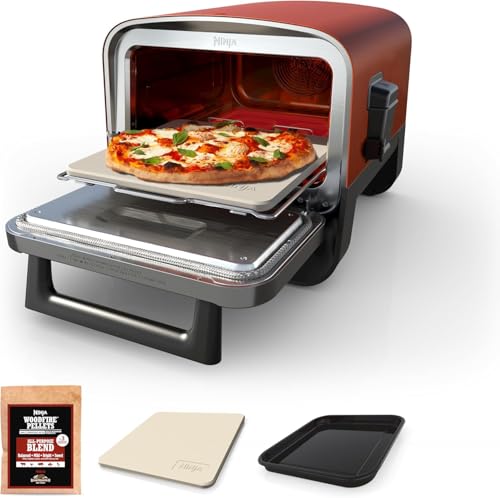
5. Ninja Woodfire Outdoor Oven
An electric outdoor oven that adds wood-fired flavor from pellets. It also bakes and roasts, so it does more than pizza.
Suits: an all-purpose patio cook. Strengths: a plug-in start and extra cooking modes. Weaknesses: needs an outdoor outlet. Skip it if you want a gas flame.

Best for a larger table
6. Camp Chef Italia Artisan Pizza Oven
A propane-fired bench-top oven with a wide hearth for sliding pies in and out easily.
Suits: a larger table. Strengths: a roomy cooking surface. Weaknesses: bigger than most compact ovens. Skip it if you have very little space.
View Camp Chef Italia Artisan Pizza Oven on Amazon
Care and Setup
- Place it on a sturdy, heat-safe surface.
- Let the stone cool before cleaning.
- Use a cover when it is not in use.
- Keep a fire-safe distance from railings.
- Keep a pizza peel and tools within reach before you light it.
- Store gas tanks upright and away from heat.
Mistakes to Avoid
- Setting it on a flimsy table.
- Using it under a low awning.
- Skipping the stone preheat.
- Forgetting to turn off the gas valve.
- Opening the door and losing heat while the stone is still warming.
- Using damp pellets or wood that will not burn cleanly.
Measuring a Small Patio for an Oven
On a small patio, the oven is only one part of the footprint. You also need room for a prep surface, a place to put hot tools and enough clearance for safe use. Start by measuring the table you plan to use, then add the width of the oven plus space on each side for your peel and your arms. Leave extra at the front, where you slide pizzas in and out.
Clearance rules matter more with an open flame. Check the manual for the distance to walls, railings, awnings, plants and furniture. Overhead clearance is just as important, since flames and hot gases rise. Do not use an oven under a low roof, a wooden pergola or an umbrella. If you live in an apartment or a managed building, check your lease and local fire rules on open flames, gas cylinders and balconies, because some prohibit them.
Consider the path you walk. If the oven sits next to a door or a narrow walkway, people may brush against it while it is hot. The outer surfaces of many ovens get hot enough to burn, so keep children and pets away. Think about where you will stand to work. Wind direction also matters, since a breeze can push flame or smoke toward you or blow out a gas burner. Pick a sheltered but ventilated spot, and measure twice before you choose a table or stand.
Fuel Choices and Small-Space Trade-Offs
Fuel changes how you use the oven day to day. Gas is the simplest: you connect a propane cylinder or a gas line where allowed, light the burner and wait for the stone to reach temperature. It needs little tending, and you control heat with a dial. It also needs somewhere to keep a cylinder, upright and away from heat, which can be tricky on a tiny patio.
Wood and pellet ovens add smoky flavor and a more hands-on process. You feed fuel as you cook, and the temperature can swing if you do not tend it. They also produce more smoke and ash, which is a consideration if neighbors are close. Dry, clean fuel burns better than damp fuel, so you need a dry storage spot.
Electric ovens plug into an outdoor outlet and avoid open flame, which may be a plus where fire rules are strict. Check the wattage and the type of outlet the manual requires, and do not run them through a weak extension cord. Multi-fuel ovens offer flexibility but may need extra parts. Think honestly about your habits. If you want a pizza on a weeknight, gas or electric is easier. If you enjoy the process and have the space, wood is rewarding. Check the listing for what is included, since burners, stands and fuel are sometimes sold separately.
Stone, Temperature and Dough Basics
A pizza oven bakes quickly because the stone and chamber are very hot, but that also leaves little room for error. Preheat the oven for the time the maker suggests, so the stone is saturated with heat, not just the air. A stone that is not hot enough produces a pale, soft base, while an overly hot one can scorch the bottom before the top is done.
Use a thermometer if the oven does not have one, and measure the stone surface, not just the air. Dough matters as much as heat. A well-rested, properly hydrated dough stretches without tearing and bakes with a good crust. Flour the peel lightly, or use semolina or cornmeal for easier sliding, but avoid too much, since it burns. Build the pizza quickly, because wet dough sticks to the peel.
Keep toppings light. Heavy, wet toppings produce a soggy center and long bake time. Turn the pizza during baking, as one side is often hotter than the other. Between pizzas, allow the stone to regain heat. Do not put cold stone in a hot oven, and do not spray water on a hot stone, since sudden temperature changes can crack it. Follow the manual for stone care, and expect it to darken with use. That is normal.
Safety Habits Around Hot Outdoor Ovens
An outdoor oven runs much hotter than a kitchen oven, so build good habits from the start. Wear heat-resistant gloves and use long-handled tools. Avoid loose sleeves and dangling fabric near flames. Keep a clear zone around the oven and never leave it unattended while lit. Keep children and pets away until the oven has cooled.
For gas ovens, check hose connections for leaks before each season by following the maker’s method, which usually involves soapy water on the joints. If you smell gas, shut off the supply and move away from the oven. Keep the cylinder upright, outdoors and away from heat, and never use a damaged hose or regulator. For wood and pellet ovens, use only the fuel the maker lists and keep a way to extinguish embers in a safe container.
Have a fire extinguisher or a bucket of sand within reach. Do not use lighter fluid or accelerants. After cooking, let the oven cool completely before covering it, or the cover may melt or trap heat. Follow the manual to shut off gas at the cylinder, not just at the dial. Place the oven on a stable, non-flammable, heat-rated surface. A wobbly table is a real risk with a hot oven. If an oven shows damage to a burner, door or frame, stop using it and contact the maker.
Cleaning, Storage and Weather Protection
Outdoor ovens live outside, so weather is part of the picture. Let the oven cool, then brush loose ash and burnt flour from the stone with a soft brush. Most makers say not to use soap on a pizza stone, since it can absorb. Stubborn residue can often be burned off by heating the oven again. Wipe stainless or painted exteriors with a damp cloth, avoiding abrasive pads.
A fitted cover protects against rain, dust and sun. Make sure the oven is cool and dry before covering. If you cover a damp oven, moisture can cause rust, mold or stone damage. For long periods of non-use, or in freezing climates, consider storing the oven in a garage or shed, and ask the maker whether the stone should be kept dry to avoid cracking.
Check burners and vents occasionally for blockages. Spiders and insects can nest in gas burners, so inspect them after storage. Wipe grease from the door and chimney, since buildup can smoke on the next use. Over time, a stone may crack, a burner may weaken, or a hinge may loosen. Cracks in a stone can sometimes be tolerated as long as the stone remains in one piece, but check the maker’s advice. Replace parts using only those approved by the maker, and keep the manual and serial information handy for any warranty claim.
Space and Placement Checklist for a Small Patio
An outdoor pizza oven makes the most sense when it fits the space you really have. Patios can be tight, and a countertop oven needs more than the footprint listed on the box. Go through this list with a tape measure.
- Measure the table or stand where the oven will sit. It must be sturdy, level and made of a material that can handle the heat the maker describes.
- Note the clearance the manual asks for around the sides, top and back of the oven.
- Check for overhead cover, awnings or branches that could be too close to the flame or chimney.
- Find a spot where wind will not blow directly into the opening.
- Plan where hot tools, peels and fuel will rest while you cook.
Never use a fuel burning oven in a closed space, garage or covered area that is not designed for it. Follow the maker’s instructions and official guidance for outdoor use, and check local rules about open flame near buildings.
Fuel Options Side by Side
| Fuel | What it feels like to use | Think about |
|---|---|---|
| Gas | Quick to heat, easy to adjust | Tank storage and connection steps from the manual |
| Wood | Traditional flavor, hands on fire tending | Dry wood supply and ash cleanup |
| Pellets | Wood flavor with simpler feeding | Keeping pellets dry between sessions |
| Electric | Simple, plug in operation | Outdoor outlet and weather cover |
Gas ovens usually appeal to people who want pizza on a weeknight without much effort. Wood and pellet ovens suit those who enjoy the process and accept a bit more cleanup. Electric ovens suit tight spaces where open flame is a concern, though they may not reach the same temperatures as fuel burning models. Check the maker’s stated heat range and compare it with the style of pizza you want to cook.
Mistakes That Lead to Burnt or Soggy Pizza
Most pizza oven problems come from a few repeated habits. Launching a pizza onto a stone that has not fully heated is the first one. Give the oven the time the manual recommends, and let the stone recover heat between pies. A second mistake is loading the dough with too much sauce or cheese, which weighs it down and makes the center soggy. Keep toppings light and dry ingredients well drained.
Poor dough handling also shows up. Dough that sticks to the peel will tear or fold, so dust the peel with flour or semolina and build the pizza quickly. Rotating the pie often matters because the back of the oven is usually hotter than the front. Finally, keep a close eye on the oven, since high heat cooks a pizza in minutes and a short distraction means a burnt crust. After cooking, let the oven cool fully before covering or moving it.
Care, Storage and Cover Tips
A cooled stone should be brushed clean, not scrubbed with soap, because it can absorb liquid. Keep a fitted cover for rainy seasons and store loose accessories indoors. Check the manual for guidance on how to clean the flue or burner.
How to Read a Pizza Oven Listing
Listings for outdoor pizza ovens lean on a few headline numbers, and it helps to know what each one actually tells you. The maximum temperature suggests how quickly a pizza will bake, but it does not describe how evenly the stone heats or how long it takes to get there. Look for notes about preheat time, since some ovens need much longer than others to be ready.
The cooking surface size tells you the largest pizza that can fit. A twelve inch stone is common for countertop models and suits personal sized pies, while larger formats are less common in compact units. Check the opening height as well, because a low opening keeps heat in but can make it harder to slide a thick crust or a skillet inside.
Weight and portability matter on a small patio. A light oven is easy to carry between storage and the table but may be more affected by wind. A heavy oven stays put but needs a strong stand. Also look at what comes in the box. Some kits include a peel, a cover or a regulator, while others sell those items separately, which changes the overall value. Read the manual or the assembly notes if they are available online, since they describe the safe setup better than a short product summary can.
Choosing Countertop outdoor pizza ovens for small patios: What Actually Matters
A countertop pizza oven succeeds or fails on heat: how hot it gets, how evenly that heat reaches the top and the base at the same time, and how fast it recovers between pizzas. The base, stone, steel, or coated deck, decides the crust’s underside, so look for a base material that absorbs and returns heat steadily rather than flashing hot and fading. The top heat must be strong enough to blister cheese and char edges in the same short window the base needs to crisp. When those two heats are balanced, pizza cooks in minutes; when they are not, you get the classic failures of burnt top and raw base, or crisp base and pale cheese.
Size means pizza diameter, but also working room. An oven that takes a large pizza needs a peel that fits its door, a landing space beside it, and a cook who can launch a topped dough through its opening without drama. Smaller ovens trade diameter for speed of preheat, counter friendliness, and often a more even bake for the personal pizzas most households actually make. Be honest about your format: family pizza night may be four personal pizzas cooked in quick succession, each customized, rather than one giant pie. In that rhythm, recovery time between bakes matters more than maximum diameter.
Controls and construction shape the ritual. A clear temperature setting, a timer you trust, and a door or opening that lets you watch without dumping heat make the short, intense bake manageable. The exterior will get hot, so handles, feet, and clearances matter, especially in a home kitchen. Consider how the base removes for cleaning, because flour and cheese will bake onto it, and how the oven stores, since a pizza oven is often a weekend appliance. The best model is the one whose heat you can learn and whose size fits your counter and your crowd.
How Countertop outdoor pizza ovens for small patios Fit Real Routines
Family pizza night, customized for everyone
Countertop pizza ovens shine when everyone wants something different. Set up a topping station, stretch doughs in advance and rest them on floured parchment or peels, and cook in a steady rhythm, one pizza in while the next is topped. Personal pizzas forgive beginners: a slightly uneven shape still tastes wonderful, and each eater’s pizza is exactly theirs. Keep toppings light and relatively dry, because a small hot oven punishes overloaded, wet pizzas with soggy centers. By the third pizza your hands know the dough, and the evening runs like a small, happy restaurant.
Weeknight pizza from dough to table, fast
With dough ready, from the fridge, a dough ball proofed earlier, or a good bought base, a countertop pizza oven turns pizza into a weeknight food rather than a project. The oven preheats while you prepare toppings, and the bake itself is minutes. The habits that make it work are mise en place and restraint: sauce spread thin, cheese grated and ready, vegetables pre-cooked if they carry much water. A quick salad alongside, and the whole meal is faster than delivery, hotter than delivery, and exactly as crisp as you like it.
Beyond pizza: flatbreads, roasting, and finishing
A very hot small oven is useful beyond pizza. Flatbreads puff and blister, vegetables char at the edges, chicken thighs finish with crisp skin, and gratins and baked pasta get the fierce top heat that makes them golden. Cheese on toast, nachos, and reheated pizza slices all prefer this intense, dry heat to any other appliance. Respect the oven’s power with sturdy pans rated for the temperature and keep sugary or fatty items watched, because minutes matter at these heats. Owners who explore beyond pizza usually find the oven working several times a week.
Pizza Ovens on Small Patios
A small patio concentrates every placement question. The oven needs its clearances from walls, fences, and anything that can burn, a stable surface that is not the wobbliest garden table you own, and a cook’s position that does not trap you between the oven’s heat and a wall. Measure the patio with the oven’s door open and a person standing at it, not just the oven’s footprint. In return, a compact outdoor pizza oven suits a small patio beautifully: it heats fast, cooks in minutes, and its theater turns a tiny outdoor space into the most popular room of the house.
Neighbors and smoke are part of small-patio life, especially in attached homes and flats. Pizza ovens burn hot and comparatively clean at full temperature, but lighting and reloading are smokier moments, so time them considerately and keep the oven’s output away from open windows where you can. Store the oven under its cover or indoors if the patio is exposed, because a small patio rarely offers a sheltered corner. The social math is simple: an oven that is easy to set up, quick to cook on, and quick to put away will be used weekly in a small space; a cumbersome one will not.
Setup, Daily Use, and Getting the Best Results
Place the oven on a stable, heat-resistant surface with the clearances the maker specifies, away from anything that minds fierce radiant heat, and give yourself a landing zone of the same toughness beside it. Run the first heat-up empty as directed to clear new-oven smells, and learn the preheat honestly: the dial or light may say ready before the base has absorbed enough heat, and pizza exposes that difference immediately. Many owners give the base extra minutes beyond the ready signal for the first pizza, then enjoy fast recovery for the rest.
Dough craft matters as much as the oven. Bring dough to room temperature so it stretches without fighting back, use just enough flour or semolina on the peel for the pizza to slide, and build the pizza on the peel only at the last moment so the dough does not stick as it waits. Launch with a confident, short shuffle rather than a push, and resist opening or moving the pizza until the base has set. These are skills of two or three sessions, not talents, and every pizza cook’s first launches are imperfect. The oven forgives; the dough teaches.
Organize toppings and tools before the oven is hot, because the bake will not wait for you to find the basil. A peel that fits, a cutter, a brush for sweeping flour from the base between pizzas, and a cooling rack for finished pies make the rhythm smooth. Sweep or brush the base between bakes once loose flour starts to scorch, since burnt flour flavors the next pizza. Keep a rhythm of small cleanups and the oven stays sweet through a long session instead of accumulating the bitter notes of old, burnt debris.
Care, Cleaning, and Keeping It Working Well
The base is the part to protect. Let it cool before cleaning, brush off flour and debris, and scrape baked-on cheese gently once cold rather than attacking it hot. Most pizza bases should not be soaked or soaped unless the maker says so, because porous materials drink water and detergent and return both as flavors and steam cracks later. The fierce heat is itself a cleaning ally: much of what lands on the base carbonizes and brushes away. Wipe the oven’s other surfaces once cool, and keep vents and the door area free of the flour dust that pizza making generates generously.
Watch performance for the small drifts that matter. If bases brown less than they did, the base may need a longer heat soak, or residue may be insulating it. If tops race ahead, your dough may be thinner, your toppings drier, or the oven simply hotter than your last session’s setting; these ovens are sensitive to their inputs, which is what makes them good. Keep brief notes on dough, temperature, and time for your best pizzas. Pizza rewards record-keeping disproportionately, because the variables are few and the feedback is delicious.
Common Mistakes and How to Avoid Them
Wet toppings are the first enemy. Fresh mozzarella that has not been drained, raw vegetables full of water, and sauce ladled on thick all release moisture into a bake too short to evaporate it, and the center stays soupy while the edges char. Drain, pre-cook, and spread thin. The second enemy is an overloaded pizza, which insulates its own center. In a countertop pizza oven, restraint is not a compromise; it is the technique. Fewer toppings, evenly spread, cook through and let the crust be the main event it should be.
Launching and timing mistakes follow. A pizza built too early on the peel sticks and lands folded; a timid launch tears the base; opening the oven repeatedly in the first minute dumps the heat the crust needed. Build late, launch confidently, and watch through the window or opening rather than intervening. Finally, do not cut the pizza on the oven’s base or a good board with a rocker that damages surfaces, and do not slide a finished pizza onto a cold plate where steam softens the underside: a rack for the first minute keeps the crust you worked for.
How the Picks in This Guide Compare
Comparison only makes sense against your own priorities, so use this section as a decision exercise rather than a ranking. The picks above were chosen to cover different needs within countertop outdoor pizza ovens for small patios: different sizes, styles, and strengths for different kitchens. Read across them with your space measurements, your regular recipes, and your cleaning tolerance in hand, and the shortlist usually narrows itself to one or two. What follows revisits each pick in turn and frames the question you should ask of it.
With Ooni Koda 12 Gas Pizza Oven, the decision is about fit for your household rather than rank. Its review above explains the cooking it is built for; your task is to be honest about how often that cooking happens in your kitchen. A pick used three times a week at the centre of your routine is worth more than a technically broader one used monthly. Check also the practicalities the review raises, size, handling, and care, because those are the details still shaping your satisfaction a year from now.
Ooni Fyra 12 Wood Pellet Pizza Oven represents one answer to the question this guide is asking, and the other picks represent others. Compare them by the criteria that opened this article: how they fit your space, how they behave in the cooking you repeat, and how they clean and store afterwards. If you find yourself torn between this pick and another, choose by the tie-breaker of daily friction: the one that will be easier to reach for, easier to wash, and easier to live with usually wins the year, whatever wins the afternoon.
Solo Stove Pi Prime Pizza Oven earns its place in this line-up for the role set out in its review above. When you weigh it against the neighbouring picks, compare what the reviews themselves say about what it does well, where its limits are, and the kind of cooking it suits. The right choice is rarely the most elaborate option; it is the one whose strengths match your weekly routine rather than your most ambitious day, and whose handling and care you will be happy with long after the novelty fades.
Bertello Outdoor Pizza Oven is the pick to study closely if its purpose in this guide matches the job you most need done. Read its section alongside the picks either side of it, and notice the trade-offs the guide describes: every design in this category gives something to get something. If the compromise it makes is one you would happily make too, that is a strong signal. If its strengths answer a problem you do not have, a simpler pick further down the list will probably serve you better.
With Ninja Woodfire Outdoor Oven, the decision is about fit for your household rather than rank. Its review above explains the cooking it is built for; your task is to be honest about how often that cooking happens in your kitchen. A pick used three times a week at the centre of your routine is worth more than a technically broader one used monthly. Check also the practicalities the review raises, size, handling, and care, because those are the details still shaping your satisfaction a year from now.
Camp Chef Italia Artisan Pizza Oven represents one answer to the question this guide is asking, and the other picks represent others. Compare them by the criteria that opened this article: how they fit your space, how they behave in the cooking you repeat, and how they clean and store afterwards. If you find yourself torn between this pick and another, choose by the tie-breaker of daily friction: the one that will be easier to reach for, easier to wash, and easier to live with usually wins the year, whatever wins the afternoon.
More Practical Notes on Countertop outdoor pizza ovens for small patios
Keep a house dough standard and your pizza nights become effortless. Whether it is a recipe you mix in the morning, dough from a bakery, or a freezer stock of your own balls, consistency in the dough removes the biggest variable and lets you learn the oven itself. Freeze dough in individual portions, thaw in the fridge overnight and then on the counter, and a pizza night can be declared at lunchtime. The oven is the fast part of pizza; the dough calendar is the part worth organizing.
Think about who eats and how they gather when you choose size. A couple making two personal pizzas wants different things from a family of six or a host whose parties run on pizza. Throughput, the pizzas per hour your oven and your hands can sustain, matters more than any single pizza’s diameter for a crowd. Practice your rhythm on a quiet evening before performing it for guests, and set the topping station where guests can build their own, which is both entertainment and labor shared.
Finally, judge the oven after a month of Fridays rather than the first exciting weekend. By then you will know its true preheat, its hot spots, and your dough’s best timing in it, and the pizzas will show it. The models in this guide differ in heat, base material, and size; the right one is the one whose crust you love and whose routine fits your counter and your crowd. Pizza is a craft of small repetitions, and a good countertop oven makes the repetitions a pleasure.
Plan for the appliance’s whole life in your home, including its end. Keep the packaging only if storage is free and returns are plausible; register the warranty; note where spare parts and consumables for your model are sold. When performance drifts, work through the simple causes in order, cleanliness, loading, settings, placement, before assuming failure, because most appliance misery is maintenance wearing a disguise. A well-kept machine, honestly assessed, will tell you clearly when it is done; until then, steady care beats anxious replacement.
Consider how countertop outdoor pizza ovens for small patios interact with the rest of your kitchen’s cast. The best kitchens are ensembles: each appliance covers the others’ weaknesses, and tasks flow to the tool that does them best rather than the newest one. Let the appliance in this guide take the jobs it is genuinely best at, and resist forcing it to be universal. That division of labor is what makes a kitchen feel calm at the busiest hour, and it is the real destination of every comparison and criterion in this guide: the right tool, in the right place, doing its best work.
Safety around countertop outdoor pizza ovens for small patios is mostly a set of small, unbroken habits. Keep the area around the appliance clear and dry, route cords and hoses where they cannot be tripped over or pinched, and let hot parts cool before cleaning or covering. Never defeat a safety feature because it slows you down, and never leave a heating appliance in a state you would not leave a hob. Teach these habits as part of the appliance’s routine rather than as warnings, and they will be followed on the tired evenings when warnings are forgotten.
Finally, judge countertop outdoor pizza ovens for small patios by the standard of your ordinary week. The right choice is the one that makes Tuesday easier: faster to set up, calmer to use, simpler to clean, and reliable enough to be forgotten between uses. Feature lists and first impressions fade; the weekly rhythm is the product. If you choose by fit, by your real loads and recipes, and by the care you will actually give, the appliance will repay you in the only currency that matters in a kitchen, which is good food with less friction, week after week.
Where countertop outdoor pizza ovens for small patios sit in the kitchen deserves the same care as the purchase itself. Appliances earn their keep when they are reachable at the moment of need, with a clear landing space beside them and a socket they do not share with a tangle of other demands. Before committing to a position, walk through the task the appliance serves, from fetching ingredients to setting down something hot, and check the route for obstacles and crossings. Five minutes of this rehearsal prevents the daily irritations, a door that opens against a wall, a cord across the sink, that quietly turn a good appliance into a resented one.
Small Patio Pizza Oven FAQ
Can I use a pizza oven on a balcony?
Check building and fire rules first, and follow the maker’s clearance guidance.
Is gas or wood better?
Gas is easier and steadier. Wood or pellets add flavor but need more tending.
How much space do I need?
Plan for the oven, a prep area and a safe clearance on every side.
What size pizza can I make?
Most compact ovens bake a pie around twelve inches across. Check each listing for the exact baking space.
How long does it take to heat up?
Gas and electric ovens heat in minutes. Wood and pellet ovens usually take a little longer, so follow the maker.
Can I put a pizza oven on any outdoor table?
No. Use a sturdy, level, heat-rated surface that can bear the oven's weight. Check the manual for stand and surface requirements.
How do I know the stone is hot enough?
Follow the preheat time in the manual and use a thermometer on the stone surface if you can. A sprinkle of flour that browns quickly is another rough guide.
Why does my pizza stick to the peel?
The dough may be too wet, the peel may lack flour or semolina, or the pizza may have sat too long. Build the pizza quickly and shake the peel before sliding.
Is it safe to use a pizza oven in a windy spot?
Strong wind can disrupt gas flames and push heat or smoke in unexpected directions. Choose a sheltered location and follow the manual's guidance.
Do I need a cover?
A fitted cover is recommended to protect against weather. Cover it only after it is fully cool and dry.
Can I wash the pizza stone with soap?
Usually no, because the stone can absorb soap. Brush off debris and follow the maker's cleaning advice.
How do I store a gas cylinder safely?
Keep it upright, outdoors, away from heat and ignition sources, and follow local rules. Never store a cylinder inside a living space.
Why is my pizza base soggy in the middle?
The usual causes are a base that was not fully heat-soaked before the first pizza, wet toppings, or too much sauce. Give the oven extra preheat time, drain fresh cheese and wet vegetables, spread sauce thinly, and keep toppings moderate. If later pizzas in a session are better than the first, preheat was the issue, and the fix is patience.
How do I stop the pizza sticking to the peel?
Use a light, even dusting of flour or semolina on the peel, build the pizza quickly once the dough is on it, and give the peel a gentle shake before launching to confirm the pizza moves. If it sticks in a spot, lift the edge and add a pinch of flour beneath. A pizza left sitting on the peel while toppings are debated will stick; timing is part of the recipe.
Can I use store-bought dough and bases?
Yes, and they are a sensible way to learn the oven. Let dough reach room temperature before stretching, and expect bought bases to bake a little faster than fresh dough. Judge doneness by the base’s color and crispness rather than the package time, because a countertop pizza oven’s heat differs from a domestic oven’s.
What else can I cook in a pizza oven?
Flatbreads, roast vegetables, chicken portions, baked pasta and gratins, nachos, and reheated pizza all enjoy the intense top-and-base heat. Use pans rated for the oven’s temperatures, watch fatty and sugary foods closely, and remember that everything cooks faster than in a conventional oven. Start with sturdy foods while you learn your oven’s pace.
How do I clean cheese that has baked onto the base?
Let the oven cool completely, then lift debris with a brush or a gentle scraper. Do not pour water onto a hot base or soak a porous stone unless the maker allows it. Much of what remains will carbonize at the next full preheat and brush away afterwards. Persistent heavy build-up is a sign to sweep the base between pizzas during long sessions.
Why does the first pizza take longer than the rest?
Because the oven’s air reaches temperature before its base has absorbed a full store of heat. The first pizza draws on that store and finds it incomplete. Extra preheat time before the first launch, beyond the ready indicator, is the standard fix, after which the oven’s quick recovery makes subsequent pizzas fast and consistent.
Is a pizza oven safe to use on a small patio or balcony?
Only in a position and on a surface the maker approves, with clearances from walls, railings, and overhangs respected, and never in an enclosed space. Check any rules that apply to your building or tenancy about outdoor cooking appliances. If clearances cannot be met honestly, the oven does not fit that space, whatever its footprint suggests.
How do I store a pizza oven in a small outdoor space?
Let it cool and dry fully, fit its cover, and store it in the most sheltered spot available, or indoors in a garage or cupboard if its size allows. Remove and store accessories separately, and keep fuel dry and apart. A small patio rewards owners who treat setup and storage as part of the ritual rather than an afterthought.
The Short Version
For gas convenience, the Ooni Koda 12. For pellets, the Ooni Fyra 12. For a modern look, the Solo Stove Pi Prime. For flexible fuel, the Bertello. For electric versatility, the Ninja. For a wide hearth, the Camp Chef.