A convection wall oven is a built-in oven set into cabinetry at a comfortable height, with a fan and extra heating element that circulate air for more even roasting and baking. Most home models are electric and made for a standard 30 inch cutout.
The six ovens below come from established appliance makers. We have not used these products ourselves, and wall ovens vary by exact model number, so confirm the cutout size, voltage and features on the current listing before buying. A professional installer is usually needed for the electrical work.
As an Amazon Associate we earn from qualifying purchases. Links below are affiliate links, and they do not change the product information we give.
What to Look For
| Feature | Why it matters |
|---|---|
| Cutout size | Match the width, height and depth to your cabinet opening |
| Convection type | True or third-element convection gives more even results than a fan alone |
| Capacity | Check the cubic feet figure against your largest pans |
| Cleaning | Steam clean and self-clean cycles ease upkeep |
| Smart features | Wi-Fi control is optional, so decide whether you want it |
In this guide
Specs at a Glance
| Oven | Style | Fit | Notes |
|---|---|---|---|
| Bosch 500 Series Single Wall Oven | Built-in single oven | 30 inch cutout | European convection |
| GE Profile Smart Built-In Convection Single Wall Oven | Built-in single oven | 30 inch cutout | True convection with smart features |
| KitchenAid Single Wall Oven with True Convection | Built-in single oven | 30 inch cutout | True convection fan |
| Whirlpool Single Wall Oven with Convection | Built-in single oven | 30 inch cutout | Convection with self-clean |
| Samsung Smart Single Wall Oven | Built-in single oven | 30 inch cutout | Convection with Wi-Fi on some models |
| Frigidaire Gallery Single Wall Oven | Built-in single oven | 30 inch cutout | Convection with self-clean |
The 6 Best Convection Wall Ovens
Top pickBest for a sleek, modern kitchen
1. Bosch 500 Series Single Wall Oven
A built-in single oven from a German-engineered appliance line, with European-style convection. The look is clean and minimal and fits modern kitchens.
Suits: a sleek, modern kitchen. Strengths: a refined look and convection. Weaknesses: a premium feel at a higher cost. Skip it if your budget is tight.

Best for connected-kitchen fans
2. GE Profile Smart Built-In Convection Single Wall Oven
A smart oven from a familiar American brand, with convection and app-based control on supported versions. It targets cooks who like to monitor from a phone.
Suits: connected-kitchen fans. Strengths: smart control and convection. Weaknesses: extra features add complexity. Skip it if you prefer plain dials.
View GE Profile Smart Built-In Convection Single Wall Oven on Amazon
Best for frequent bakers
3. KitchenAid Single Wall Oven with True Convection
A wall oven with true convection, meaning a fan paired with a third heating element. It aims at bakers who want even browning on several racks.
Suits: frequent bakers. Strengths: a true convection system. Weaknesses: a higher price tier. Skip it if you rarely bake.
View KitchenAid Single Wall Oven with True Convection on Amazon
Best for straightforward family cooking
4. Whirlpool Single Wall Oven with Convection
A practical wall oven from a long-running appliance brand. It covers the basics well, with convection and a self-clean option on many models.
Suits: straightforward family cooking. Strengths: a familiar brand and a basic feature set. Weaknesses: fewer premium touches. Skip it if you want smart control.
View Whirlpool Single Wall Oven with Convection on Amazon

Best for tech-focused kitchens
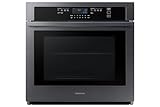
5. Samsung Smart Single Wall Oven
A smart wall oven from a large electronics brand, with convection and app features on many versions. The styling is modern with a touchscreen on some models.
Suits: tech-focused kitchens. Strengths: a modern interface. Weaknesses: features differ by version. Skip it if you want a classic look.
Best for budget-conscious remodels
6. Frigidaire Gallery Single Wall Oven
A value-minded wall oven that adds convection to the Gallery line. It is a sensible choice for a kitchen update that doesn’t need top-tier finishes.
Suits: budget-conscious remodels. Strengths: convection at a modest tier. Weaknesses: fewer premium finishes. Skip it if you want luxury styling.
View Frigidaire Gallery Single Wall Oven on Amazon
Care and Setup
- Wipe spills once the oven has cooled.
- Run self-clean only with the racks removed, as the manual says.
- Check that the door gasket stays intact.
- Keep the manual handy for convection conversion tips.
- Ask an installer to confirm the electrical supply before delivery.
Mistakes to Avoid
- Ordering without measuring the cutout.
- Mixing up single and double oven sizes.
- Assuming every model has true convection.
- Skipping professional installation for the wiring.
- Overlooking the door swing and clearance beside the oven.
- Forgetting to compare the oven depth with your cabinet depth.
Cutout and Cabinet Measurements
A wall oven sits inside a cabinet opening, and a few millimeters can decide whether it fits. Do not trust the label of 30 inch alone, because that describes the nominal width of the oven, not the actual cutout. Find the cutout width, height and depth in the oven’s installation guide, and compare each with your opening. Check that your cabinet depth can hold the full body of the oven and that the opening is not smaller at the back.
Replacing an old oven is easier if the new one has similar dimensions, but models change over the years. Measure the existing opening, take photos and write down the dimensions, including the distance from the floor and the position of the electrical box. A single oven installed in a double-oven cutout needs a filler kit or a new cabinet panel, and a double oven in a single cutout will not fit without carpentry.
Look at the surroundings. Check:
- The height of the oven above the floor and counter, so the door opens comfortably.
- Clearance for the door to open fully without hitting a wall or an appliance.
- Combustible material rules, such as the allowed gap between the oven and the cabinet sides.
- The trim style, because some ovens sit flush while others have a frame that overlaps the cabinet face.
Cabinet makers sometimes build supports for a certain model. Wall ovens are heavy, so the shelf or frame must carry the weight. If you are unsure, consult a cabinet professional before ordering.
Convection Types and How They Cook
Convection means a fan moves hot air around the oven, which reduces hot and cold spots and can speed up cooking. The differences between systems are worth understanding. A basic convection oven has a fan at the back that circulates air heated by the usual elements. True or third-element convection adds a heating element around the fan, so the moving air is heated directly, which many bakers find evens out browning across several racks.
Different modes serve different dishes. Convection baking suits cookies, pastries and sheet-pan meals because dry, moving air helps browning and crisping. Convection roasting suits meats and vegetables, producing browned surfaces. Delicate items such as custards, soufflés and some cakes can be sensitive to moving air, so many cooks use the standard bake mode for them.
When converting recipes, the usual advice is to lower the temperature or shorten the time, but the right adjustment depends on the oven. Check the manual, since some ovens have an auto-conversion setting that does the adjustment for you. Rack position also changes results, so test and take notes.
Ask what modes the oven offers beyond convection, such as air fry, proof, dehydrate or steam assist. Some are helpful and some rarely get used, so match features to how you cook. Check how loud the fan is, how easily racks slide, and whether the cooling fan keeps running after shut-off.
Single, Double and Capacity Decisions
Capacity is listed in cubic feet, but the usable space depends on the shape of the cavity and rack positions. Check the interior width and depth against your largest pans, such as a full-size baking sheet or a roasting pan, and see how many racks can be used at once. A tall cavity helps with large roasts, while a wide one helps with multiple trays.
A single oven is simpler, takes less cabinet space and usually costs less. A double wall oven allows two temperatures at once, which suits big holiday meals, avoids flavor transfer and gives a smaller oven for everyday use. The trade-off is a taller opening and higher cost. Some single ovens come with a second small cavity or a combined microwave, so look at the options available.
Think about your habits:
- Do you often cook more than one dish at different temperatures?
- Do you host large dinners?
- Do you want a second oven for baking while roasting?
- Is your kitchen layout able to hold a double unit?
Door design matters as well. Standard drop-down doors are common and reliable, while side-swing doors give easier access to racks in some models. Check how the door opens in your kitchen and whether you can reach the racks comfortably. Consider the position of controls, the display and the lighting, which help you see inside without opening the door.
Cleaning Features and Everyday Upkeep
Most wall ovens include a cleaning feature, and the types differ. Self-clean cycles use very high heat to burn residue to ash, which you wipe away. They work well but fill the kitchen with strong smells, lock the door for hours and put stress on parts, so ventilate and follow the manual. Steam clean cycles use water and lower heat to soften light soil, and they are faster and gentler but less effective on heavy buildup.
Everyday habits keep ovens cleaner. Wipe spills once the oven has cooled, use a tray or liner under dishes that may bubble over, and avoid covering the oven floor with foil unless the maker allows it. Remove racks before a self-clean cycle if the manual says so, since the finish can discolor. Do not use harsh chemical cleaners unless the maker approves them, and never use them in a self-cleaning oven.
Check the door gasket regularly for tears and gaps, because a poor seal wastes heat and affects results. Keep the cooling vents clear. Replace bulbs with the type listed in the manual, after the oven is off and cool.
If your oven has smart features, keep the software updated and know how to control it manually, in case the network or app fails. A good oven should be fully usable from its own controls.
Installation, Wiring and When to Replace
Wall ovens usually require a dedicated electrical circuit, and the requirements are listed in the installation guide. Voltage, amperage and the type of connection matter, and an old home may not have the right wiring. Have a qualified electrician check the circuit and the junction box before delivery, and never modify wiring yourself unless you are qualified to do so. Many local rules require permits or inspections for this type of work.
Plan delivery and installation. Wall ovens are heavy and awkward, so two people are normally needed, and the cabinet must be ready. Remove the old oven carefully, inspect the cutout for damage and clean the area. Level the new oven, secure it as directed and test the controls, lights and door.
Signs that an existing oven may need repair or replacement include:
- Temperatures that are far from the setting even after calibration.
- A door that does not seal or close properly.
- Elements that do not heat or heat unevenly.
- Control panel failures or error codes that persist.
- A burning smell that does not clear after cleaning.
Before replacing, consider repair cost, parts availability and the age of the unit. When buying new, check the warranty length, the service network and whether replacement parts such as racks, gaskets and bulbs are easy to find.
A Pre-Purchase Checklist for a Wall Oven
A wall oven is more of a renovation decision than an appliance buy, because it has to fit existing cabinetry and electrical supply. Use this list before you click anything.
- Confirm the opening. Cabinet cutouts have a set width, height and depth, so compare these numbers to the specification sheet of the model you want.
- Check the electrical supply. Wall ovens need a dedicated circuit. Ask a licensed electrician to verify that your wiring suits the model.
- Choose single or double. A single saves space, while a double lets you bake two dishes at different temperatures.
- Look at the door style. Side-swing and drop-down doors need different clearance, and a door that opens the wrong way can block a walkway.
- Think about cleaning. Self-clean cycles, steam cycles and smooth interiors all change how you maintain the oven.
- Find the right height. Check where you want the oven door to sit so you are not lifting heavy trays too high.
Having these answers ready also speeds up any conversation with a contractor, who can confirm whether your kitchen suits the oven you are considering.
Convection Terms in Plain Language
Product pages are full of fan terms, and they are not always used the same way across makers. This short guide puts the common ones in context.
| Term | General meaning | Good for |
|---|---|---|
| Convection bake | A fan circulates air while the usual elements heat | Cookies, pastries and sheet pan meals |
| True or European convection | A third element sits behind the fan | Multiple racks and even browning |
| Convection roast | Fan plus higher heat from the top | Poultry and vegetables |
| Conventional mode | No fan, heat rises naturally | Delicate cakes and puddings |
Convection often cooks a bit faster, so many recipes advise trimming time or lowering the dial. Some ovens do this automatically with a conversion setting, while others leave the math to you. Check the maker’s manual for guidance on your own model.
Why Installation Is Not a Weekend DIY
These ovens are heavy and awkward to lift, and the connection is usually hard-wired. Cutting corners can lead to poor fit, damaged cabinets or an electrical hazard. Follow the installation sheet exactly, and hire a licensed electrician or qualified installer for wiring and mounting. Many makers also require professional setup to keep warranty coverage valid, so read those terms carefully.
Once the oven is in, take a moment to run it empty for the first time, following the break-in advice in the manual. A little smoke or odor on first use is common with new heating parts, but if you notice anything unusual, switch the oven off and contact the maker or a technician.
Small Habits That Help a Convection Oven Perform
- Use pans with low sides, which let air flow across the food.
- Leave space between trays so the fan can move air freely.
- Do not line racks with foil in ways that block vents, unless the manual allows it.
- Wipe spills when the oven is cool to keep fans and sensors clean.
- Learn your oven’s hot spots by watching a tray of bread slices brown.
These small routines cost nothing, and they make a noticeable difference in how evenly dishes finish.
Which Oven Fits Which Kitchen: A Decision Guide
Different households lean on their ovens in different ways, so a feature that is a bonus for one cook can be wasted on another. Use the situations below to narrow your search.
- You bake often. Look for true convection with a rear element and multiple rack positions, since baking several trays at once is where fan systems earn their keep.
- You host large meals. A double oven or a wide single with generous capacity lets you roast a main dish and keep sides warm in the same session.
- You like connected features. Smart models let you preheat or check progress from a phone. Check the maker’s notes on app support and software updates before you rely on that.
- Your counters are crowded. A wall oven frees up space that a freestanding range would use, and the raised height can be easier on your back.
- You cook mostly for one or two people. A smaller interior heats faster and may be all you need.
Next, consider the cabinet around it. A trim kit may be offered if you are replacing an older unit with a different size, and the maker can tell you which kit suits your model. Look at how the controls are laid out, too. Touch panels can look sleek but are harder to use with wet hands, while knobs give quick feedback. Think about the lighting inside the cavity, since a bright interior makes it easier to check food through the window without opening the door and losing heat.
A Closer Look at Convection Wall Ovens
A wall oven is a decade-scale decision built into your cabinetry, so the convection system inside it deserves more scrutiny than any other feature. Built-in ovens are cooked in daily, repaired rarely and replaced reluctantly, which means evenness, reliability and controls you will still like in ten years matter more than this season’s novelty. The fan’s job in a full-size cavity is batch evenness: several trays, a roast with vegetables beneath, a holiday load where every shelf is working. As you read this guide, think about your largest real cooking days and whether each pick’s cavity, rack system and cleaning method suit them, and check the installation facts of your cabinetry early. The sections below explore the criteria, technique and care that separate a wall oven you love from one you merely own.
Choosing a Convection Oven in Depth: Airflow, Accuracy and Honest Capacity
Every convection oven moves hot air with a fan, but the quality of that airflow decides whether your food cooks evenly or needs constant turning. When you compare the picks in this guide, look for how the fan and elements are arranged, whether the cavity shape helps air reach the corners, and whether racks can be positioned so trays do not block each other’s airflow. True convection designs, where the fan has its own heating element, generally hold more even temperatures across several racks than designs that simply blow air from a standard element around the cavity. The practical test is batch cooking: cookies on two trays, or vegetables spread across shelves, should finish together rather than in relays.
Temperature accuracy is the second deep criterion. Compact ovens in particular can run hotter or cooler than the dial claims, and fan assistance changes how recipes behave. A clear, fine-grained control, ideally with a display you can trust, makes the oven easier to live with than a vague dial with wide steps. Whatever you choose, an inexpensive oven thermometer used for the first few weeks teaches you your particular unit’s habits, after which you can adjust recipes by instinct.
Capacity deserves scepticism. Quoted volumes count corners you cannot use, and the real questions are tray dimensions, the height between racks, and whether your favourite dishes fit with room for air to circulate. Measure your most-used roasting pan, baking dish and tallest covered pot, handles included, and compare them with the cavity before falling for a generous-sounding figure. Finally, consider cleaning and controls: removable racks, a crumb tray or liner that slides out, and knobs or buttons that work with greasy hands all decide whether the oven is a pleasure in month six, not just week one.
Before You Buy: Measuring Space, Dishes and Power
Convection ovens reward five minutes with a tape measure. For countertop models, measure the footprint plus the clearance the manual will require around and above the unit, check the door or lid opens without fouling cupboards, and confirm the surface beneath tolerates heat. For built-in models, the cabinet dimensions, ventilation path and electrical supply are fixed facts that narrow the shortlist immediately, and they should be verified rather than assumed from the old oven’s paperwork.
Then measure your food, not the marketing. Your widest baking tray, tallest lidded pot and favourite roasting dish, handles included, define the cavity you actually need, with room around each for air to move. Think about the largest batch you honestly cook: two trays of biscuits, a family roast with a tray of vegetables beneath, a deep casserole for six. If the shortlist’s internal dimensions swallow that load comfortably, the oven fits your life; if they only just fit, batch cooking will fight the fan. Checking now prevents the slow disappointment of an oven that is technically large enough and practically always cramped.
Cooking Well With Moving Air: Technique for Convection Ovens
Fan heat cooks faster and dries surfaces more than still heat, so recipes written for conventional ovens need small adjustments. The usual starting points are to reduce the temperature slightly or shorten the time, then check early; your first few cooks with a new oven are calibration, and notes taken then pay off for years. Use shallow, low-sided trays where you want browning, because high sides shelter food from the airflow. Spread food in a single layer with gaps between pieces so the air can do its work; a crowded tray steams, no matter how good the fan is.
Multi-rack cooking is the convection oven’s party trick, but it works best with foods of similar thickness and timing. Rotate trays only if your particular oven shows a consistent bias, and swap rack positions halfway for large batches. Delicate items such as meringues, soufflés and light sponges prefer gentler handling: use the lowest fan setting if one exists, or conventional mode if the oven offers it, because strong airflow can lean a rising cake or dry a delicate surface before the structure sets.
Roasting is where most households will use the fan daily. Vegetables caramelise beautifully if they start dry, so pat them dry and do not salt too far ahead, which draws out water. Whole chickens and joints benefit from a rest while the oven stays on for sides, and the fan crisps skin that a still oven leaves pale. Keep a simple log of your regular dishes with rack position, temperature and time; convection ovens vary more between models than conventional ovens do, and your own record becomes the most reliable recipe book you own.
Your First Week With a Convection Oven: Calibration Cooks
Treat the first week as calibration, not performance. Begin with something revealing and cheap: a tray of pale biscuits or slices of bread spread across the racks shows you the hot spots and the evenness of the fan in one glance. Follow with roast vegetables, the dish most owners will cook weekly, and note the temperature and time that give you colour without scorching. Then bake one familiar recipe, a cake or traybake you know by heart, and compare it honestly with your old oven’s result.
Write down the settings that worked, including rack positions, and keep the note where you cook. By the end of the week you should know three things: how far your oven’s dial strays from reality, which rack is the workhorse, and how much to adjust your standard recipes. That knowledge, not the feature list, is what makes the new oven feel like an upgrade, and every cook after the first week benefits from it.
Comparing the Picks in This Guide, Side by Side
Six products can look similar in a list and feel very different in a kitchen. The comparison below restates what each review in this guide already says about the convection wall ovens, in one place, so you can match each pick to your household before deciding. Read it alongside the full reviews above: the aim is not to crown one winner, but to make the trade-offs impossible to miss.
Bosch 500 Series Single Wall Oven
It is positioned for a sleek, modern kitchen; its stated strengths are a refined look and convection; its honest limitation is a premium feel at a higher cost. As the review notes, skip it if your budget is tight. If that profile matches your cooking, this is the pick to examine first; if the limitation touches something you do every day, one of the other five will serve you better, and the contrast with its neighbours in this list is the quickest way to see why.
GE Profile Smart Built-In Convection Single Wall Oven
It is positioned for connected-kitchen fans; its stated strengths are smart control and convection; its honest limitation is extra features add complexity. As the review notes, skip it if you prefer plain dials. If that profile matches your cooking, this is the pick to examine first; if the limitation touches something you do every day, one of the other five will serve you better, and the contrast with its neighbours in this list is the quickest way to see why.
KitchenAid Single Wall Oven with True Convection
It is positioned for frequent bakers; its stated strengths are a true convection system; its honest limitation is a higher price tier. As the review notes, skip it if you rarely bake. If that profile matches your cooking, this is the pick to examine first; if the limitation touches something you do every day, one of the other five will serve you better, and the contrast with its neighbours in this list is the quickest way to see why.
Whirlpool Single Wall Oven with Convection
It is positioned for straightforward family cooking; its stated strengths are a familiar brand and a basic feature set; its honest limitation is fewer premium touches. As the review notes, skip it if you want smart control. If that profile matches your cooking, this is the pick to examine first; if the limitation touches something you do every day, one of the other five will serve you better, and the contrast with its neighbours in this list is the quickest way to see why.
Samsung Smart Single Wall Oven
It is positioned for tech-focused kitchens; its stated strengths are a modern interface; its honest limitation is features differ by version. As the review notes, skip it if you want a classic look. If that profile matches your cooking, this is the pick to examine first; if the limitation touches something you do every day, one of the other five will serve you better, and the contrast with its neighbours in this list is the quickest way to see why.
Frigidaire Gallery Single Wall Oven
It is positioned for budget-conscious remodels; its stated strengths are convection at a modest tier; its honest limitation is fewer premium finishes. As the review notes, skip it if you want luxury styling. If that profile matches your cooking, this is the pick to examine first; if the limitation touches something you do every day, one of the other five will serve you better, and the contrast with its neighbours in this list is the quickest way to see why.
Notice how the six divide: some trade convenience for control, some trade capacity for compactness, and some trade features for simplicity and price-free virtues like durability and easy cleaning. Your own priority among those trades, stated honestly before you shop, is the most reliable decision tool in this whole guide.
Three Household Scenarios: Matching a Convection Oven to Your Cooking
The batch baker
If you bake in quantity, biscuits by the trayful, bread for the week, cakes for events, your priorities are evenness across racks and a cavity that takes your trays without a fight. Choose the pick whose reviews praise consistent colour on multiple shelves, and expect to rotate less but still check the first batches carefully while you learn the oven. Your calibration notes are production records; keep them with your recipes.
The small household and the second oven
For one or two people, or as a companion to a main oven, the winning qualities are speed to temperature, modest footprint and running costs that make heating it for a single dish feel sensible. A compact pick that preheats while you chop vegetables changes weeknight cooking more than a cavernous model used twice a month. Measure your everyday dishes, choose the size that fits them with air to spare, and enjoy retiring the big oven to Sundays.
The entertainer
Hosts ask an oven to do several things at once: hold a roast, crisp potatoes, warm bread and keep plates of food coming. Multi-rack evenness and a door that opens without drama in a crowded kitchen matter most, along with controls you can set confidently while talking to guests. Choose the pick that handles your largest real gathering, rehearse it once before the big day, and the oven becomes part of the hospitality rather than a source of suspense.
Cleaning and Caring for a Convection Oven
Fan ovens distribute grease as efficiently as they distribute heat, so light, frequent cleaning beats heroic scrubbing. After roasting or other fatty cooking, let the oven cool, then wipe the walls, floor and door glass with warm soapy water and a soft cloth before the residue bakes on again at the next session. Remove racks and trays and wash them in the sink, where you can soak them properly. A paste of bicarbonate of soda left on stubborn spots softens them without harsh chemicals or abrasive pads that damage enamel and coatings.
Pay attention to the fan cover and the door seal. The cover, where removable, collects a film of grease that eventually smokes and scents food; wipe it as the manual directs, never poking tools into the fan itself. The seal keeps heat in and protects the surrounding cabinetry, so keep it clean and check for splits or flattening. If your oven has a self-cleaning or steam-clean function, use it on the maker’s schedule rather than as an emergency rescue, and always ventilate the room during high-heat cleaning cycles.
Everyday habits extend the oven’s life. Line the floor only with liners the manufacturer approves, since foil draped over elements or vents disrupts airflow and can damage the cavity. Wipe spills of sugar and acidic foods promptly, because they attack enamel when reheated. Keep the exterior vents dust-free, avoid slamming the door, and if temperatures start behaving oddly or the fan grows noisy, arrange a repair rather than compensating indefinitely; an oven that cannot hold temperature wastes food as well as energy.
Convection Oven Mistakes and How to Fix Them
The commonest disappointment is food that browns outside before it cooks through. With fan heat this usually means the temperature is too high for the thickness, or the dish is placed too close to the element. Lower the heat a little, move the food down a rack, and give the centre time. The opposite fault, pale and soggy results, points to crowding, wet food or covered dishes trapping steam: spread food out, dry its surface, and leave lids off when you want colour.
Uneven batches frustrate new owners, but the causes are mechanical rather than mysterious. Trays that fill the entire rack block airflow to the food below; pans of very different sizes finish at different rates; and a fan oven loaded cold with a huge mass of food takes time to recover temperature. Load thoughtfully, preheat fully, and accept one tray swap for very large batches. Burned edges on bakes often trace to dark metal pans, which absorb heat eagerly under a fan; lighter pans, or a small temperature reduction, restore balance. Finally, many cooks blame the oven for timing problems that are really recipe-conversion problems. Adjust one variable at a time, write down the result, and within a few weeks the oven’s personality will be familiar rather than frustrating.
Preheating deserves respect in fan ovens. Because the cavity is often smaller than a conventional oven, it heats quickly, and it is tempting to shave the last minutes. Food that enters before the walls and racks are hot starts in a cooler, damper environment and never quite catches up on texture. Give the oven its few minutes while you finish preparing the tray; the consistency is worth it.
Think about what sits beside and above the oven. Fan ovens push out hot, moist air when the door opens, and in compact kitchens that steam heads straight for cupboard doors and smoke alarms. Position and ventilation are part of cooking comfort, and a moment spent arranging the space saves daily annoyance.
When you find a setting combination that works perfectly for a household staple, write it on a card kept near the oven. Convection cooking rewards this kind of household knowledge more than almost any other appliance, because model-to-model variation is real. Your card of proven settings becomes, in effect, the manual you actually use.
Consider where the heat and steam go when the door opens. In compact kitchens a convection oven vents a surprising amount of both, and positioning it so that blast does not hit faces, smoke alarms or the underside of cupboards makes daily use pleasanter. This is part of choosing, not an afterthought: the same oven can feel civilised or chaotic depending on the thirty centimetres around it.
And think about the second year, not just the first week. Racks, trays and liners wear; fans gather grease; seals age. A model whose parts are available and whose cleaning routine you have genuinely adopted will cook in year three exactly as it did in month one. That quiet continuity, more than any programme list, is what owners end up valuing.
One last habit ties everything together: leave the oven cleaner than the meal required. A wiped door glass, an emptied crumb tray and racks returned to their usual positions mean the next cook starts from a known state, with no mystery smoke and no flavours borrowed from last week. Convection ovens reward that tidiness more than most appliances, because the same fan that cooks so evenly will happily redistribute old grease if you let it accumulate.
Convection Wall Ovens FAQ
Is a wall oven the same as a range?
No. A wall oven is installed in cabinetry and has no burners. A range includes the cooktop and oven in one unit.
Do wall ovens need special wiring?
Most need a dedicated electrical connection. Have a qualified installer check the requirements.
What is true convection?
It adds a heating element behind the fan, which usually evens out temperatures across racks.
Can I replace an old wall oven with a new one?
Often yes, if the cutout matches. Compare the new oven’s required dimensions to your existing opening.
Should I lower the temperature when using convection?
Many recipes call for a lower temperature or shorter time with convection. Check your oven manual, since some models convert automatically.
Can I use any cookware in a convection oven?
Most oven-safe cookware works. Low-sided pans let air circulate better, and tall covered dishes may cook differently. Follow cookware guidance.
Is a double wall oven worth it?
It helps if you often cook at two temperatures at once or host large meals. It costs more and needs a taller cutout, so consider your habits.
How do I calibrate an oven?
Use an oven thermometer to compare actual and set temperatures, then follow the manual for any adjustment. Some ovens allow an offset in the settings.
Can I install a wall oven under a counter?
Only models listed for that use. Check the installation guide for the allowed positions and clearances.
Why does my oven smell when new?
New ovens can give off an odor during the first heating from coatings and insulation. Follow the maker's break-in steps and ventilate the room.
Is a smart oven worth it?
It depends on whether you will use remote monitoring or app features. Make sure the oven works fully from its own controls.
Do I always need to reduce the temperature when using convection?
As a starting point, yes: fan ovens usually cook as if they were a little hotter than the dial says, so recipes for conventional ovens often need a modest reduction or a shorter time. Treat the first cooks as calibration, check food early, and note what worked. Once you know your oven’s habits, the adjustment becomes automatic for your regular dishes.
Why does my convection oven cook one side faster than the other?
Most compact fan ovens have a mild bias from the fan’s position, and trays placed hard against one wall exaggerate it. Centre your pans, leave gaps around them for airflow, and turn the tray once halfway through if the bias is consistent. If the difference is dramatic or new, have the fan and element checked, because a failing fan changes airflow noticeably.
Can I bake delicate cakes and meringues with the fan on?
You can, with adjustments. Use the gentlest fan setting available, or a conventional mode if the oven offers one, because strong airflow can dry surfaces and lean rising sponges. Meringues in particular like low, steady, dry heat. Many bakers use convection for biscuits and traybakes, where evenness helps, and stiller heat for their most delicate work.
What pans work best in a convection oven?
Low-sided, sturdy pans that leave room around them for air to circulate. Light-coloured metal gives gentler browning, dark metal gives more aggressive colour, and glass or ceramic suit casseroles and gratins where fierce surface heat is not the goal. Avoid pans so large they touch the walls or door, since blocked airflow defeats the purpose of the fan.
How do I stop roasted vegetables going soggy?
Start with dry surfaces, a properly preheated oven and a single layer on the tray with space between pieces. Crowding is the main cause of sogginess, because the vegetables steam in their own moisture. Use a second tray on another rack rather than piling one deep, and salt at the end if you find early salting draws out water in your oven.
Is a convection oven worth it if I already have a standard oven?
It depends on the model type in this guide and your cooking. Countertop convection ovens add a fast, economical second oven for small meals and overflow; built-in convection improves batch baking and roasting in the main oven. If you regularly cook for a crowd, bake in batches or reheat foods that suffer in a microwave, the fan’s evenness earns its keep quickly.
The Short Version
For a modern look, the Bosch 500 Series. For smart features, the GE Profile. For bakers, the KitchenAid. For the basics, the Whirlpool. For a tech-forward oven, the Samsung. For value, the Frigidaire Gallery.

