Breville builds its toaster ovens around a few ideas: element IQ heating that adjusts power across several quartz elements, a clear control panel, and a range of sizes from small counters to family kitchens. Newer models add air frying, and a few use a convection fan for faster, more even browning.
The six ovens below cover the compact end, the mid-size favorites and the air fryer models. We have not used these products ourselves, so confirm size, wattage and included accessories on the current listing before buying. Model names change over time, so make sure the listing matches the oven you want.
As an Amazon Associate we earn from qualifying purchases. Links below are affiliate links, and they do not change the product information we give.
What to Look For
| Feature | Why it matters |
|---|---|
| Size | Check the interior against the pan or pizza you bake most, and measure your counter and the clearance above it |
| Convection | A fan evens out browning and shortens some cook times |
| Air fry mode | Useful if you want one appliance instead of two, but it needs room around the basket or tray |
| Controls | Dials, a screen and presets each suit a different kind of cook |
| Footprint | These ovens run hot on the outside, so leave space around them |
In this guide
Specs at a Glance
| Oven | Class | Best known for | Notes |
|---|---|---|---|
| Smart Oven Pro | Full size | Roomy interior | Convection; many presets |
| Smart Oven Air Fryer Pro | Full size | Air frying plus baking | Large body |
| Smart Oven Air Fryer | Mid size | Air fry mode on a smaller body | Check the exact interior size |
| Compact Smart Oven | Compact | Small counters | Fewer functions than the Pro |
| Mini Smart Oven | Mini | Tight kitchens | Best for toast and small bakes |
| Joule Oven Air Fryer Pro | Full size | App and screen control | Needs a compatible phone |
The 6 Best Breville Toaster Ovens
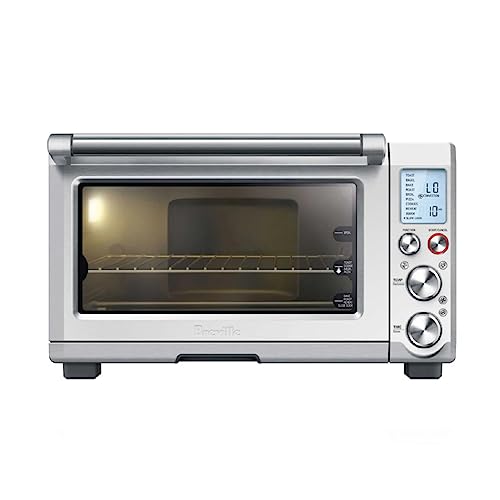
Top pickBest for a household that bakes, roasts and toasts
1. Breville Smart Oven Pro
A long-running full-size model with convection, a backlit LCD and a set of presets for toast, bagels, pizza, roasting and baking. It is the one most buyers think of when they look for a Breville toaster oven.
Suits: a household that bakes, roasts and toasts. Strengths: a roomy interior and a dependable set of presets. Weaknesses: no air fry mode and a sizable footprint. Skip it if you want air frying built in.
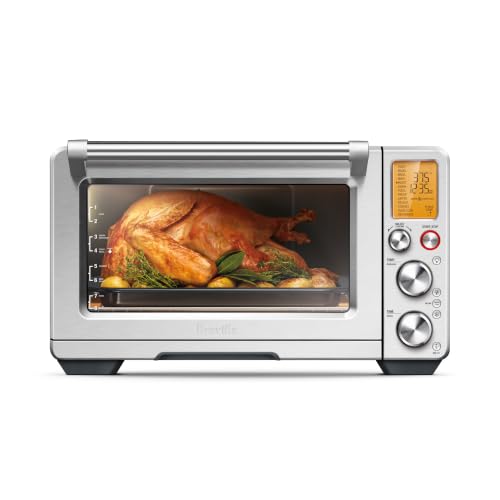
Best for families who want air frying and baking in one
2. Breville Smart Oven Air Fryer Pro
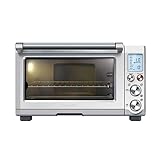
A full-size oven that adds an air fry mode and a wider range of cooking functions to the Smart Oven line. It aims to replace both a toaster oven and a countertop air fryer.
Suits: families who want air frying and baking in one. Strengths: many functions and generous capacity. Weaknesses: a larger body that needs counter space and clearance. Skip it if your counter is small.
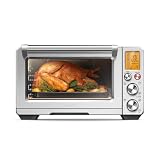
Best for couples and small households
3. Breville Smart Oven Air Fryer
A mid-size Breville that carries air fry mode into a body smaller than the Pro. Check the current listing for its exact interior dimensions and rack count.
Suits: couples and small households. Strengths: air frying in a more modest footprint. Weaknesses: less capacity than the Pro. Skip it if you often cook for a crowd.
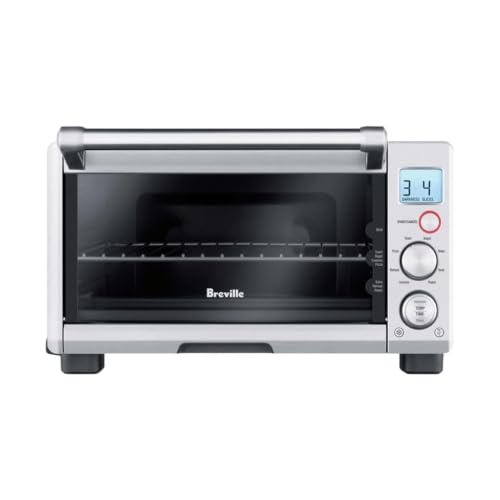
Best for small kitchens and dorms
4. Breville Compact Smart Oven
A smaller Smart Oven for tighter counters, with element IQ heating and several cooking presets. It handles everyday toast, small casseroles and reheating.
Suits: small kitchens and dorms. Strengths: a smaller footprint with real controls. Weaknesses: limited space for large pans. Skip it if you bake on full sheet pans.
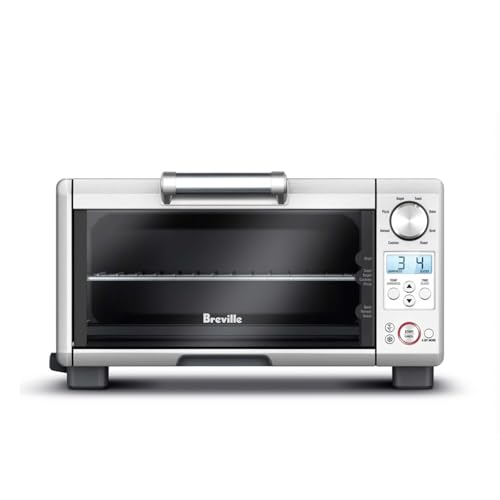
Best for one or two people
5. Breville Mini Smart Oven
The smallest oven here, aimed at toast, bagels and small dishes. It keeps the brand’s heating approach in a body that fits under a cabinet.
Suits: one or two people. Strengths: a tiny footprint and simple use. Weaknesses: little room for a full dinner. Skip it if you want convection or air frying.


Best for cooks who like guided programs
6. Breville Joule Oven Air Fryer Pro
A full-size oven with a screen and app-connected guided cooking, plus air frying and a number of other modes. It is the most tech-forward oven on this list.
Suits: cooks who like guided programs. Strengths: connected features and a large screen. Weaknesses: extra complexity and a steeper learning curve. Skip it if you prefer simple dials.

Care and Setup
- Let the oven cool completely before wiping the interior.
- Empty the crumb tray often so crumbs do not smoke.
- Keep the top and sides clear of cabinets, paper and plastic.
- Use pans that fit with space around them for air flow.
Mistakes to Avoid
- Buying a mini oven when you need to bake sheet pans.
- Ignoring the clearance an oven needs on all sides.
- Lining the rack so heavily that air cannot circulate.
- Skipping the listing’s interior size before ordering.
Fitting the Oven to Your Pans and Recipes
Before comparing models, list what you cook most and the pans you use for it. The interior of a toaster oven is smaller than its outside suggests, because walls, elements and the door take up room. Check the listing for the interior dimensions and for how many rack positions are offered, then compare them with your baking sheet, casserole dish or pizza pan.
A few practical checks help. If you bake on a quarter sheet pan, confirm it fits flat without touching the elements. If you roast a whole chicken or a small cut of meat, check the interior height above the rack. If you make pizza, measure the pie or stone diameter and compare it with the listing. Many people discover too late that a dish fits on the rack but cannot be lifted out because the door or heating elements get in the way.
Think about batch size too. A mini or compact oven suits one or two people and toast, bagels, small bakes and reheating. A mid-size oven handles a small family’s side dishes and a weeknight dinner. A full-size oven makes sense when you want to cover most oven tasks without heating the main range. In each case, look at the maker’s stated capacity as a guide, not a promise, and remember that crowding food reduces air flow and can lead to uneven browning.
If you are unsure, compare your usual pan dimensions with the listing figures and leave some margin around the food. A slightly larger oven that you can use freely is often easier to live with than a tight fit.
Understanding Convection, Element IQ and Presets
The feature names on these ovens describe how heat is delivered, and knowing what each does helps you decide what you need. Element IQ is the brand’s name for a system that adjusts power across several heating elements as the oven works. The aim is to deliver heat where the selected function calls for it, for example more from above for broiling and more balanced heat for baking. Treat this as the maker’s description and check the manual for how each function behaves.
Convection adds a fan that moves hot air around the food. Many cooks use it for roasting and for baking on a single pan, where it can speed up browning and cooking. Recipes written for a standard oven may need a lower temperature or shorter time when the fan runs, and the manual or recipe usually says how to adjust. Delicate batters can behave differently with a fan, so try a function on something low-stakes first.
Presets for toast, bagel, pizza, roast and similar tasks are a starting point. They let you press a button and get a reasonable result, but toast shade, food moisture and quantity change the outcome. Learn what each preset does with your usual food and adjust the time or temperature manually if needed.
Finally, remember that more modes mean more to learn. If you value simplicity, a model with fewer functions and clear dials or buttons may serve you better than a long list you never use.
What Air Fry Mode Does and Does Not Replace
Air fry mode on an oven uses a fan and high heat to crisp food, usually with a mesh basket or perforated tray. It can handle foods such as fries, wings, vegetables and reheated leftovers, and it saves you from buying a separate appliance. It is not identical to a dedicated basket air fryer, so set realistic expectations.
Capacity is the first difference. Food needs to sit in a fairly thin layer with space around it, so a large batch may need two rounds. Preheating, tray placement and shaking or turning food partway through all influence results. Following the manual for rack position and accessories matters, because air flow is blocked if the tray or foil covers too much of the rack.
Another consideration is cleaning. Grease and crumbs collect on trays and the oven floor, and an air fry tray or basket has a lot of surface area to wash. Check whether the accessories are listed as dishwasher safe in the manual, and wipe the interior once it is cool.
If you already own a countertop air fryer you like, an air fry mode may be a bonus rather than a reason to buy. If you have limited counter space and want one appliance for toasting, baking and air frying, a model with the mode can make sense. If you never air fry, a model without the feature avoids paying for something you will not use.
Counter Space, Clearance and Kitchen Safety
Toaster ovens get hot on the outside, so placement matters as much as size. Read the manual for the required clearance at the top, sides and back, and measure the space under your cabinets with the door open. The door often drops down and needs room to open fully, and hot air exhausts from vents that should never be blocked.
Put the oven on a heat-tolerant, stable and level surface away from the edge, and keep it away from curtains, paper towels and plastic containers. Do not store items on top of the oven unless the manual explicitly says it is acceptable. Use the cord as supplied and plug into an outlet suited to the appliance; a high-wattage oven can overload a shared circuit if other heavy appliances run at the same time, so avoid extension cords and power strips unless the maker allows them.
Use oven mitts when removing racks and trays, and pull racks out using the intended handles or tool. Be careful with foil and parchment: loose pieces can touch the elements or block air flow, so secure them under food or the pan.
Think about where the cord reaches and where steam goes when the door opens. If you have children or pets, consider a spot beyond their reach. These checks cost nothing before you buy and prevent most day-to-day problems after.
Accessories, Support and When to Replace
Included accessories vary by model, so read the listing for what comes in the box. Common items include a baking pan, a rack, a broiling tray and, on air fry models, a basket or mesh tray. Confirm that the accessories fit the interior and consider whether you will need extra pans of a specific size. Third-party pans should be checked against the oven’s dimensions and the manual’s advice about materials.
Look at the warranty terms on the manufacturer’s site or the listing, and confirm whether the seller is authorized, since support often depends on that. Keep the receipt, the model number and the manual, and register the product if the maker offers it. Because this brand updates its range over time, make sure replacement parts, if you ever need them, match your exact model.
For ongoing care, wipe the interior after it cools, empty the crumb tray regularly and follow the manual for cleaning the door glass and exterior. Avoid abrasive pads on coated surfaces unless the manual allows them.
Signs that it is time to repair or replace include a door that no longer seals, a heating element that fails to glow evenly, visible damage to the cord or plug, uneven results that persist after cleaning and checking rack position, and any burning smell or smoke that does not come from spilled food. Stop using the oven in that case, unplug it, and contact the maker or a qualified repair service.
Decoding a Breville Model Name on the Listing
Breville names can look alike at a glance, and a single word in the title often separates one oven from another with a different footprint, different cooking modes or a different control layout. Before you add anything to your basket, read the full title slowly and compare it against the model you actually have in mind. Words such as Compact, Mini, Pro and Air Fryer carry real meaning, yet they do not tell you the interior dimensions or the number of heating elements on their own.
Scroll down to the specification block and the item details on the listing page. Look for the product dimensions, the interior capacity, the wattage and the list of included accessories. Sellers sometimes group several versions of one oven under a single page, so confirm that the variation you pick on the page matches the model code you wanted. If something looks inconsistent, the maker’s own documentation is the safest place to settle it.
- Outer size: compare width, depth and height with your counter.
- Included parts: note whether the pan, rack and basket are in the box.
- Power details: compare the wattage with the maker’s guidance.
A Quick Decision Guide by Kitchen Situation
Instead of chasing the biggest model, think about how your kitchen really runs. The table below pairs common situations with the kind of oven that tends to suit them, using only the general categories in this guide. Treat it as a rough guide, then check the exact measurements on the page for the model you like.
| Your situation | What to lean toward | Why it helps |
|---|---|---|
| Small apartment counter | A compact or mini model | Leaves room for a kettle and a toaster nearby |
| Family of four or more | A larger Pro style oven | Fits bigger pans and more slices at one time |
| You crave crisp fries and wings | An air fry capable model | Adds a fan driven mode and a basket or rack |
| You mostly make toast and reheat | A simpler, smaller oven | Fewer settings to learn and less to clean |
| You like to cook with an app | The connected Joule style oven | Offers guided steps from a phone or tablet |
If two rows fit you, pick the one that solves the problem you face every week, not the once a year occasion. A bigger oven that never fits under the cabinet will end up in a cupboard, and a tiny one that cannot hold your favorite pan will frustrate you every time you cook.
Small Habits That Keep the Oven Looking Good
A toaster oven lives on the counter, so crumbs and splashes show quickly. A few steady habits are easier than an occasional big scrub. Slide out the crumb tray when it looks full, wipe the door glass after it has cooled, and keep a damp cloth handy for the outer shell. Always unplug the oven and let it cool fully before you clean, and follow the cleaning section of the instruction booklet for anything that touches the heating elements or the coated interior.
When to Contact the Maker
If a control stops responding, a part looks damaged or the oven behaves in a way the booklet does not describe, stop using it and get in touch with the maker’s support team or a qualified appliance technician. Electrical faults are not a home project.
Breville Toaster Oven FAQ
Which Breville toaster oven is best for a small kitchen?
The Compact Smart Oven or the Mini Smart Oven take the least counter space. Check the interior size against your pans.
Do all Breville toaster ovens air fry?
No. The Smart Oven Pro does not. The Air Fryer and Air Fryer Pro models, and the Joule, do.
Are these ovens easy to clean?
Most have a removable crumb tray and an interior that wipes down once cool. Check the maker’s instructions for any non-stick parts.
Should I confirm the model before buying?
Yes. Breville updates its range, so match the model name and size on the current listing.
How much clearance does a Breville toaster oven need?
It varies by model, so check the manual for the exact figures. In general, leave open space above, beside and behind the oven, and do not place it directly under a cabinet unless the manual allows it.
Does convection change how I use my recipes?
It can. A fan often browns food faster, so many cooks lower the temperature or shorten the time slightly. Check the manual and your recipe, and watch the first batch closely.
Can I use foil or parchment in the oven?
Often yes, but keep it from touching the heating elements or blocking air flow, especially in convection and air fry modes. Follow the manual's guidance for your model.
Will a toaster oven replace my full-size oven?
For small meals, toast, reheating and many bakes, it can. For large roasts, several dishes at once or full sheet pans, a regular oven is still more practical.
Is the Joule model usable without the app?
Check the current listing and manual for how much of the oven works from its own screen. The model is described as app-connected, so confirm which features need a phone before buying.
How do I clean the inside without damaging it?
Unplug the oven, let it cool, then wipe with a soft cloth and mild soapy water. Check the manual before using any cleaner or scrubber, especially if the interior has a coating.
What should I check on the listing besides the model name?
Look at the interior size, rack count, wattage, included accessories and seller. Breville updates its range, so a similar name can still be a different version.
Choosing Breville Toaster Ovens With a Clearer Eye: The Criteria That Actually Matter
Listings for breville toaster ovens tend to lead with the headline feature, but the choice you live with is decided by quieter details: how the oven fits your space, how it behaves on an ordinary weekday, and how much effort it asks from you after the cooking is done. Start by writing down the job you need done most often. A household cooking the same favourite meals every week needs something different from a household that experiments at weekends, and both need something different from someone buying for a second home, a rental or a gift. When the main job is clear, the rest of the comparison becomes much simpler, because features that do not serve that job can be ignored instead of paid for in money, space and upkeep.
Next, measure before you fall in love with a model. Measure the counter where it will sit every day, the access route to it, and the working room you need around it, then compare those figures with the dimensions on the listing and in the manual. Pay attention to electrical supply, counter clearance and ventilation around the cabinet, because a model that fits the gap but cannot be connected, vented or used as the maker intends is not a fit at all. Photographs on a listing can make almost anything look compact or spacious; your own tape measure is the only version of the truth that matters on delivery day.
Finally, judge the everyday details: how the controls feel and read, how the parts you touch daily are made, what is included in the box, and whether replacement parts and accessories are easy to find. Read the description of each pick in this guide again with those questions in mind. The right choice among breville toaster ovens is rarely the one with the longest feature list; it is the one whose size, controls and care routine match the way your household actually cooks, week after week.
Matching the Picks to Real Households and Real Routines
It helps to picture a week of use rather than a single special occasion. The scenarios below follow the descriptions already given for each pick in this guide, so you can line your own routine up against them and see which profile sounds most like your home.
Breville Smart Oven Pro. This pick is presented above as suiting a household that bakes, roasts and toasts, with a roomy interior and a dependable set of presets as its noted strength. Picture it in a household that matches that description and it makes immediate sense: the strength is the thing you will benefit from every time you cook, not just on the first weekend. Keep the honest limitation in view as well, because the guide notes no air fry mode and a sizable footprint. If your routine leans heavily on exactly the thing it does less well, look again at the neighbouring picks before deciding, and remember the guide’s own steer that it is one to skip if you want air frying built in.
Breville Smart Oven Air Fryer Pro. This pick is presented above as suiting families who want air frying and baking in one, with many functions and generous capacity as its noted strength. Picture it in a household that matches that description and it makes immediate sense: the strength is the thing you will benefit from every time you cook, not just on the first weekend. Keep the honest limitation in view as well, because the guide notes a larger body that needs counter space and clearance. If your routine leans heavily on exactly the thing it does less well, look again at the neighbouring picks before deciding, and remember the guide’s own steer that it is one to skip if your counter is small.
Breville Smart Oven Air Fryer. This pick is presented above as suiting couples and small households, with air frying in a more modest footprint as its noted strength. Picture it in a household that matches that description and it makes immediate sense: the strength is the thing you will benefit from every time you cook, not just on the first weekend. Keep the honest limitation in view as well, because the guide notes less capacity than the Pro. If your routine leans heavily on exactly the thing it does less well, look again at the neighbouring picks before deciding, and remember the guide’s own steer that it is one to skip if you often cook for a crowd.
Breville Compact Smart Oven. This pick is presented above as suiting small kitchens and dorms, with a smaller footprint with real controls as its noted strength. Picture it in a household that matches that description and it makes immediate sense: the strength is the thing you will benefit from every time you cook, not just on the first weekend. Keep the honest limitation in view as well, because the guide notes limited space for large pans. If your routine leans heavily on exactly the thing it does less well, look again at the neighbouring picks before deciding, and remember the guide’s own steer that it is one to skip if you bake on full sheet pans.
Breville Mini Smart Oven. This pick is presented above as suiting one or two people, with a tiny footprint and simple use as its noted strength. Picture it in a household that matches that description and it makes immediate sense: the strength is the thing you will benefit from every time you cook, not just on the first weekend. Keep the honest limitation in view as well, because the guide notes little room for a full dinner. If your routine leans heavily on exactly the thing it does less well, look again at the neighbouring picks before deciding, and remember the guide’s own steer that it is one to skip if you want convection or air frying.
Breville Joule Oven Air Fryer Pro. This pick is presented above as suiting cooks who like guided programs, with connected features and a large screen as its noted strength. Picture it in a household that matches that description and it makes immediate sense: the strength is the thing you will benefit from every time you cook, not just on the first weekend. Keep the honest limitation in view as well, because the guide notes extra complexity and a steeper learning curve. If your routine leans heavily on exactly the thing it does less well, look again at the neighbouring picks before deciding, and remember the guide’s own steer that it is one to skip if you prefer simple dials.
Notice how the picks divide the work between them. Some are aimed at smaller households and tighter spaces, some at larger groups and heavier use, and some at buyers who simply want the least complicated route to a good result. There is no single winner for every home, and that spread is deliberate: choosing well means matching the profile to your household, not picking the name you recognise first.
Setup, Placement and the First Week
Good results with any toaster oven start before the first meal. Setup means measuring the counter footprint and the clearance above and behind, removing all packaging from inside the cavity, checking which racks and pans are included, and running it empty the first time if the manual recommends it. None of that is glamorous, but each step prevents a common disappointment: a unit that rocks, a door that will not seal, a control that behaves oddly, or a first cook spoiled by packaging or residue that should have been dealt with beforehand. Keep the manual open during setup rather than relying on habit, because models that look alike often differ in one important instruction.
Placement deserves the same care. Think about where heat, steam, smoke or splashes will travel, what surfaces sit nearby, and whether you can move around the oven safely while carrying hot or heavy food. Think, too, about the unglamorous logistics: where ingredients and tools will wait, where finished food will land, and where you will put hot parts down. A cooking area that works on paper but forces you to cross a busy room with a full, hot load will annoy you every single time you use it.
Use the first week as a gentle trial rather than a test of limits. Cook familiar food, learn how the controls respond, and note anything that surprises you: uneven results, noises, smells from new materials, or parts that feel loose. Check fixings and connections again after the first few uses, because vibration and heat cycles can settle things. If something seems wrong, stop and consult the manual or the maker while the purchase is new, rather than adapting your cooking around a fault.
Everyday Technique: Getting More From the Same Equipment
Technique matters as much as the model you choose. In practice, good everyday use of a toaster oven means choosing the rack position for the food, preheating when the recipe needs a hot start, using the pan or rack the maker intends for fatty foods, and watching the first batch of any new recipe closely until you learn its timing. Those habits sound simple, yet they are where most disappointing results are born: food crowded so it steams instead of browning, equipment used before it is ready, or settings chosen by habit rather than by the food in front of you. Slow down the first minute of any cook and the rest usually follows.
Build a small rotation of reliable meals before you chase ambitious ones. When you know exactly how a familiar dish behaves, you can judge the equipment fairly and adjust one variable at a time: a different position, a little more or less time, a different order of cooking. Keep brief notes, even just on your phone, naming the dish, the setting and the result. After a month those notes are a personal manual that no general guide can match, because they describe your oven, your ingredients and your tastes.
Also plan the cook around the people eating. Work backwards from serving time, allow for resting and for the side dishes, and keep finished food somewhere sensible rather than rushing everything to finish at once. The cooks who seem effortlessly good with equipment like this are rarely doing anything mysterious; they have simply arranged the sequence so that the oven is never the bottleneck and nothing waits long enough to spoil.
Cleaning, Care and Storage That Keep It Working Well
Care is where ownership is won or lost, and for a toaster oven the routine centres on the crumb tray, rack, baking pan, interior walls and door glass. Let everything cool to a safe point first, then clean while residue is still fresh enough to lift easily. Follow the manual on which parts can be immersed, which cleaners are safe and which tools to avoid, because coatings, seals and sensors vary and the wrong scourer or spray can do quiet, permanent damage. A soft cloth, mild soapy water and patience cover most of what everyday cleaning requires.
Make the routine small enough to actually happen. A quick wipe and empty after each use, a slightly deeper clean on a regular rhythm, and a periodic check of the parts that wear, block or perish will prevent the slow build-up that turns a pleasant appliance into a chore. While you clean, look at the equipment as well as at the dirt: seals that are cracking, surfaces that are changing, fixings that have loosened and vents that are clogging all announce themselves early to anyone who is paying attention.
Storage matters too. Keep the oven clean, with the crumb tray emptied, the cord tidy and nothing stacked on top that could block vents or scratch the finish. If it will sit unused for a long period, clean it thoroughly first, because old residue attracts smells and pests and hardens into a much bigger job. Store any removable parts and accessories together with the unit, and keep the manual with it or photographed on your phone, so the next person to set it up is not guessing.
Problems, Causes and Fixes Worth Knowing
Most problems with equipment in this category follow a pattern: the result disappoints, and the cause turns out to be preparation, loading or timing rather than a broken machine. Before concluding that a toaster oven is faulty, repeat the cook with the basics corrected: the right preparation, sensible spacing, the setting the recipe or manual actually specifies, and enough patience to let the process finish. A surprising number of faults disappear at that point, and the ones that remain are much easier to describe accurately to the maker.
Keep a simple order of checks. Is the oven set up as the manual describes, with every part seated and every supply properly connected? Is it clean in the places that affect performance? Are you asking it to handle more, larger or wetter food than it is meant to? Work through those questions in order, change one thing at a time, and note the result. Random changes teach you nothing and can turn one small issue into several confusing ones.
Know, too, when to stop troubleshooting. Burning smells from electrical parts, damaged cords or connections, doors or lids that will not close and seal properly, fuel smells you cannot explain, and any sparking or smoke from places that should not smoke are all stop-and-seek-help signals. Unplug, switch off or disconnect as the manual directs and contact the maker or a qualified professional. No meal is worth pressing on with equipment that is telling you something is wrong.
How the Picks Compare, Side by Side
The table below restates the positioning already given for each pick in this guide, gathered in one place so the trade-offs are easy to scan. It adds no new claims; it simply lines up who each pick suits and what it does best, which is the comparison most buyers actually need.
| Pick | Suits | Strengths | Honest limitation |
|---|---|---|---|
| Breville Smart Oven Pro | A household that bakes, roasts and toasts | A roomy interior and a dependable set of presets | No air fry mode and a sizable footprint |
| Breville Smart Oven Air Fryer Pro | Families who want air frying and baking in one | Many functions and generous capacity | A larger body that needs counter space and clearance |
| Breville Smart Oven Air Fryer | Couples and small households | Air frying in a more modest footprint | Less capacity than the pro |
| Breville Compact Smart Oven | Small kitchens and dorms | A smaller footprint with real controls | Limited space for large pans |
| Breville Mini Smart Oven | One or two people | A tiny footprint and simple use | Little room for a full dinner |
| Breville Joule Oven Air Fryer Pro | Cooks who like guided programs | Connected features and a large screen | Extra complexity and a steeper learning curve |
Read the table by elimination. Cross out any pick whose limitation collides with your most common cook, then compare what remains on the strength that matters most to you. If two picks still look equal, decide on the practicalities: the one that fits your space better, includes what you need in the box, or has the care routine you are most likely to keep. Those everyday factors separate near-equal products far more reliably than any headline feature.
Living With It: Costs, Parts and Knowing When to Replace
The purchase is only the first part of ownership. Over its life a toaster oven asks for consumables, occasional replacement parts and a little of your time, and the picks in this guide differ in how easy those things are to find and fit. Before buying, check that the parts most likely to wear are available for the model you are considering, and keep the model details from your order somewhere safe. A photograph of the nameplate or box label, plus the order confirmation, makes any future conversation with a seller or maker far shorter.
Judge value across the whole period you expect to keep it. A model that suits your routine, cleans easily and has parts available will usually serve you better than a more elaborate one that fights your habits. Equally, replacing a worn part promptly is often the sensible middle path between struggling on and replacing the whole unit: if the body, controls and core function are sound, a fresh wear part can restore the performance you were missing.
Replacement time comes when repairs stop making sense: when the core function has degraded, when safety-related parts are involved, when parts are no longer available, or when your household has simply outgrown the size or style. When that day comes, this same process applies: define the job, measure the space, compare the current picks on the criteria above, and let your notes from the old unit tell you what to prioritise. Experience is the best buying guide there is, and by then you will have plenty of it.
One more check that saves real regret: read the listing photographs as carefully as the description. Photographs show what is actually included, the shape of the controls, the finish of the parts you will handle daily and sometimes accessories that the text mentions only in passing. Compare the photographs with the written list of what is in the box, and if the two disagree, ask the seller before ordering rather than assuming the more generous version is correct. Small mismatches discovered at checkout are trivial; the same mismatch discovered on your counter, with the old equipment already gone, is a genuine problem.
Think about who else will use the equipment, not just who is buying it. A partner, a teenager learning to cook, an older parent or a housemate will each approach the controls differently, and the best choice is one that everyone in the home can use confidently and safely. Clear markings, positive-feeling controls and a manual that explains things plainly matter more in a shared kitchen than in a solo one. If one person will do all the cooking, weight your own habits; if the work is shared, weight clarity and forgiveness, because equipment that only one person understands tends to be used by only one person.
More Questions Buyers Ask About Breville Toaster Ovens
How do I choose the right size for my household?
Think about the largest thing you realistically cook: a whole chicken, a frozen pizza, a batch of toast for the family. Check the interior description and included pans on the listing against those foods, and remember that counter footprint grows with capacity, so measure your counter as carefully as the cavity.
Why does toast brown unevenly at first?
Every oven has hot spots, and the first few uses are when you learn yours. Rotate the rack position, try the convection setting if your model has one, and note which settings suit your usual bread. Most uneven results improve once you match food placement to the oven behaviour.
What is the safest way to clean the interior?
Unplug the oven, let it cool fully, remove the crumb tray and racks, and wipe with a soft cloth and mild soapy water as the manual directs. Avoid harsh scourers and sprays on coated interiors, and never let liquid run into vents or elements.
Can a toaster oven handle weeknight dinners, or just snacks?
For many households it handles both, reheating and cooking smaller portions more quickly than a full-size oven and with less heat in the kitchen. The limit is batch size, so families cooking large trays at once may still prefer the main oven for those meals.
How much clearance does it really need?
Follow the manual figures for your model for the sides, back and top, and treat them as minimums rather than suggestions. Heat and steam need to escape, and cabinetry or walls too close to a hot oven can be damaged over time.
What should I verify about a listing before ordering?
Confirm the exact model name, interior size, included accessories, wattage and seller, because ranges are updated often and similar names can be different versions. Photograph the unboxing and keep packaging until you have tested the basic functions.
The Short Version
For a classic full-size oven, the Smart Oven Pro. For air frying with capacity, the Smart Oven Air Fryer Pro. For a mid-size air fryer, the Smart Oven Air Fryer. For small spaces, the Compact Smart Oven. For the tightest counters, the Mini Smart Oven. For guided cooking, the Joule Oven Air Fryer Pro.