A barbecue grill is the center of most backyard cooking, and the choice usually comes down to fuel. Charcoal kettles give strong smoky flavor and a low entry cost. Gas grills light fast and hold a steady heat. Small portable models fit balconies, campsites and tailgates.
The six grills below cover all three styles from long-running brands, so you can match the grill to your yard and habits. We have not used these products ourselves, so confirm cooking area, size and included parts on the current listing before you buy. Gas models may also need a propane tank or fittings sold separately.
As an Amazon Associate we earn from qualifying purchases. Links below are affiliate links, and they do not change the product information we give.
What to Look For
| Feature | Why it matters |
|---|---|
| Fuel | Charcoal adds flavor; gas is quicker and easier to control |
| Cooking area | Match it to how many people you cook for |
| Build | Thicker steel and a good lid hold heat and last longer |
| Airflow control | Vents or burner knobs let you manage temperature |
| Portability | Small grills travel; large ones stay on the patio |
In this guide
Specs at a Glance
| Grill | Fuel | Size class | Notes |
|---|---|---|---|
| Weber Original Kettle Premium 22-inch | Charcoal | Full size | Classic kettle shape with lid |
| Weber Spirit II E-310 | Propane gas | Mid size, three burners | Side tables; check the listing for fuel type |
| Char-Broil Performance 4-Burner | Gas | Large | Four burners; side burner on some versions |
| Weber Q 1200 | Propane gas | Portable | Uses small cylinders |
| Napoleon Rogue | Gas | Mid to large | Several configurations |
| Weber Smokey Joe | Charcoal | Small, 14 inch class | Travel and balcony friendly |
The 6 Best Barbecue Grills
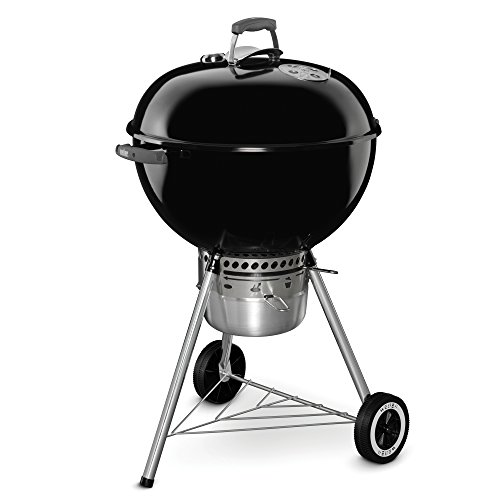
Top pickBest for families who want charcoal flavor
1. Weber Original Kettle Premium 22-Inch
The long-running kettle grill: a round steel bowl, a lid with vents and a simple ash catcher. It handles burgers, chicken and even slow roasts when you set coals to one side. Check the current listing for included extras, which differ between versions.
Suits: families who want charcoal flavor. Strengths: a proven design and wide parts support. Weaknesses: slower to start than gas. Skip it if you want push-button ignition.
Best for weeknight cooks
2. Weber Spirit II E-310
A three-burner gas grill with fold-out side tables and a lidded cooking box. It is a mid-size choice for a family that cooks a few times a week. Confirm whether the listing is for propane or natural gas before ordering.
Suits: weeknight cooks. Strengths: quick heat and a trusted brand. Weaknesses: a larger footprint. Skip it if you have a small patio.
View Weber Spirit II E-310 on Amazon
Best for larger gatherings
3. Char-Broil Performance 4-Burner
A larger gas grill from a long-established maker, with four burners and a cabinet-style base. It offers more room for hosting. Versions differ in extras such as side burners, so read the listing carefully.
Suits: larger gatherings. Strengths: generous cooking space. Weaknesses: needs assembly space. Skip it if you cook for one or two.
View Char-Broil Performance 4-Burner on Amazon
Best for small spaces and travel
4. Weber Q 1200
A compact portable gas grill with a cast aluminum lid and body. It runs on small propane cylinders and suits balconies, camping and tailgates. Check the listing for cooking area and cylinder compatibility.
Suits: small spaces and travel. Strengths: portable and quick to heat. Weaknesses: limited cooking area. Skip it if you often feed a crowd.
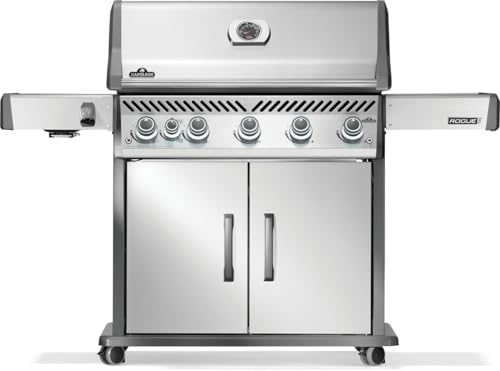
Best for cooks who want a sturdy gas grill
5. Napoleon Rogue Gas Grill
The Rogue series is a range of gas grills with several burner counts and options. It is a step toward premium builds with a lidded steel body. Check the current listing for the exact configuration, burner count and fuel.
Suits: cooks who want a sturdy gas grill. Strengths: varied configurations. Weaknesses: listings differ, so details are easy to mix up. Skip it if you want a simple, low-cost grill.

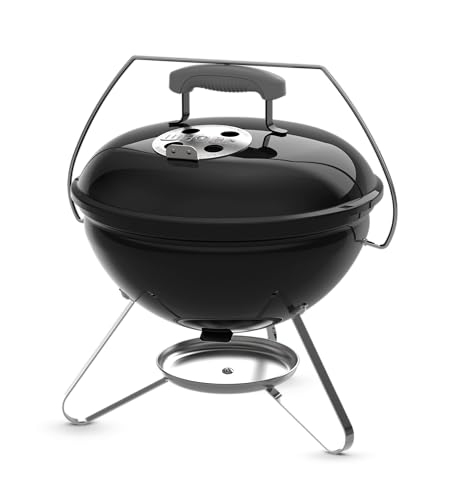
Best for picnics and small balconies
6. Weber Smokey Joe
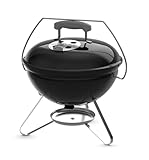
A small charcoal grill in the 14 inch class. It is light, easy to store and cheap to run, and it works for a couple of burgers or sausages. Check the listing for the exact model name, since the line has several finishes.
Suits: picnics and small balconies. Strengths: portable and simple. Weaknesses: tiny cooking area. Skip it if you cook for a family.
Care and Setup
- Scrape the grates while they are warm and oil them lightly after cleaning.
- Empty ash from charcoal grills once they are fully cool.
- Check gas hoses and connections for leaks before each season, using soapy water.
- Use a cover to protect the grill between uses.
- Place the grill on level ground, away from walls and railings.
Mistakes to Avoid
- Cooking with the lid off when the recipe needs steady heat.
- Skipping the preheat.
- Using lighter fluid on hot coals.
- Overcrowding the grates so heat cannot circulate.
- Buying without checking whether fuel and tank are included.
Fuel Types in Depth: Charcoal, Propane and Natural Gas
The fuel you choose shapes how you cook, how much work it is and how the food tastes. Charcoal, either lump or briquettes, takes longer to light and needs time to burn down to even heat. It rewards that effort with a strong, smoky character, and it lets you build a very hot zone for searing. Ash needs to be cleared, and you must keep a supply of charcoal and a way to light it safely, such as a chimney starter.
Propane grills light with the turn of a knob and an igniter, and heat up within minutes. They give fine control over temperature through the burner knobs, and cleanup is easier. You need to refill or exchange propane cylinders, and it is wise to keep track of how much fuel is left before a gathering. Natural gas grills connect to a house line, which removes the need to swap tanks but fixes the grill near the connection and usually requires a professional to install. Not every gas grill can convert between propane and natural gas, so check the listing for the fuel type.
- Pick charcoal if you enjoy the process and want deeper smoky flavor.
- Pick propane if you cook often on weeknights and value speed.
- Pick natural gas if you have a line and want a permanent setup.
- Remember that any grill is for outdoor use only, in an open area away from structures.
None of these fuels is right for everyone, so match the choice to your habits.
Sizing a Grill for Your Cooking
Cooking area is usually listed in square inches, and it helps to translate that number into what will fit. A burger patty takes up a few inches of grate space, and you need room around each piece for heat to circulate and for turning. As a rough guide, plan for a smaller area when cooking for two and a larger one when serving a group. A grill that is too small forces you to cook in batches, while one that is too large wastes fuel and space.
Also think about the layout of the cooking area. Gas grills with multiple burners allow two-zone cooking, with a hot side and a cooler side. Charcoal kettles can do the same by banking coals on one side. A warming rack above the grate gives space for buns or vegetables, but check whether the listed area includes it, since some listings add the two numbers together.
- Consider the biggest meal you cook, not just a typical dinner.
- Check the height under the lid if you plan to roast larger cuts or whole birds.
- Think about storage and footprint, including the side tables folded and unfolded.
- Measure the patio or balcony, and read any local rules on grills near buildings.
It is easier to cook a small meal on a big grill than a big meal on a small one.
Build Quality and What to Check
Two grills can look alike in a photo and behave very differently after a few seasons. Several details show how a grill is built. The thickness and material of the cooking box, lid and grates influence how well it holds heat and resists rust. Porcelain-enameled, stainless steel and cast aluminum bodies each have different strengths. Cast iron grates hold heat well and sear nicely but need seasoning, while stainless rods are lighter and easier to maintain.
Look for a lid that fits closely, vents that open and close smoothly and handles that stay cool in use. On gas grills, check the burners, the igniter and the way the grease tray is accessed. Wheels and casters should roll easily and lock. Legs and frame should be rigid, with no wobble once assembled.
- Read the warranty terms for the burners, the body and the grates.
- Check that replacement parts are available from the maker or from third parties.
- Assembly can take time, so read reviews of the process and set aside space and tools.
- If you buy a floor model, test the lid, wheels and shelves before you buy.
A well-built grill with replaceable parts can stay useful for years, even if individual pieces wear out.
Safety and Placement
Grilling brings open flame and hot surfaces into your yard, so safe habits are essential. Place the grill on a flat, stable, non-combustible surface at a safe distance from the house, fences, railings, trees and overhanging branches. Follow the manual’s clearance advice, and check local rules about grills on balconies and in multi-unit buildings, which may restrict their use.
Never use a grill indoors or in a garage, tent or any enclosed space, since combustion produces carbon monoxide. Keep children and pets away from the cooking area. Have a way to put out a fire, such as a fire extinguisher rated for grease fires, and keep it within reach. Do not use water on a grease fire.
- Check gas connections for leaks with soapy water before each season and after changing a tank.
- If you smell gas, turn off the supply, move away and follow the maker’s instructions.
- Use a chimney starter or approved lighter, not gasoline or lighter fluid on hot coals.
- Clean grease from the tray regularly to reduce flare-ups.
- Let coals and ash cool completely before disposing of them in a metal container.
Store propane cylinders upright, outdoors and away from heat sources, as the manual states.
Accessories Worth Having
A few accessories make grilling easier and safer. Start with a good set of long-handled tools: tongs, a spatula and a grill brush. A reliable instant-read thermometer helps you cook meat to a safe internal temperature without guessing, and it prevents overcooking. A chimney starter is a handy aid for charcoal. A cover protects the grill from weather when it is not in use.
Other items depend on your cooking style. A grill basket holds small vegetables, a cast iron pan or griddle insert adds versatility and a smoker box for gas grills lets you add wood chips for flavor, if the maker allows it. Heat-resistant gloves protect hands when you move hot grates or coals. A side table or a hook for tools keeps things within reach.
- Check whether accessories you plan to buy fit your grill model.
- Choose tools with long handles, so your hands stay clear of the heat.
- Keep a dedicated set of clean tools for raw and cooked food to avoid cross-contamination.
- Replace a worn brush if bristles are loose, since stray bristles can end up in food.
Buy accessories gradually, as you learn what you reach for most.
Deciding Between Charcoal, Gas and Portable Formats
People often ask which grill is best, when the better question is what kind of cooking they want to do. Charcoal offers a smoky flavor and an active routine, gas lights quickly and offers tidy temperature control, and portable grills trade size for convenience. Compare your habits with the table to see which direction suits you.
| Format | Strength | Trade-off |
|---|---|---|
| Charcoal kettle or barrel | Classic flavor and flexible direct and indirect cooking | Takes time to light and requires ash cleanup |
| Gas grill with a cart | Fast lighting and dial control for weeknights | Needs a fuel tank and burner care |
| Portable or tabletop | Small footprint for balconies, camping and tailgates | Limited cooking space |
| Kamado or ceramic | Great insulation for long cooks | Heavy and slower to move |
Think about space at home and local rules. Some apartment buildings restrict open flames, so check lease and fire code information before you buy.
Cooking Surface Area Versus How Many People You Feed
Listings give cooking area in square inches, but the number is only useful when you translate it into food. A small grill handles burgers for a couple, while a family gathering needs room to cook several things at once and keep some food warm.
- Couples and singles: A compact grill with a modest grate is usually enough.
- Families of four: A mid-size grate lets you cook mains and vegetables together.
- Regular hosts: Look for a large main grate plus a warming rack.
- Multi-zone cooks: Choose a grill that allows a hot side and a cooler side.
More space is useful only if you have room to store the grill and fuel to run it.
Features Worth Paying Attention To
Grills advertise many extras. A few matter more than the rest because they affect daily use.
- Lid fit and handle: A snug lid keeps heat steady, and a handle that stays cool helps.
- Grate material: Cast iron holds heat, stainless is easy to clean, and coated grates need gentle care.
- Side shelves: Give you a place for tools and plates.
- Grease management: A removable tray makes cleanup easier.
- Wheels and stability: Check that the cart is steady and rolls over your patio surface.
- Thermometer: Built-in gauges can be off, so many cooks add a separate one.
Safe Setup and Location
Place a grill outdoors on a flat, stable surface away from walls, railings, trees and anything flammable. Follow the maker’s clearance guidance, and never use a grill in a garage or other enclosed space. For gas models, read the manual about connecting the tank and checking for leaks. For charcoal, plan how you will handle hot coals and ash.
Routine Cleaning and Seasonal Care
Brush the grate after each cook, empty grease trays, and wipe the exterior. At the end of the season or before storage, give the grill a deeper clean following the manual. A cover helps keep weather out, though the grill should be fully cool before covering.
Gear That Makes Grilling Smoother
A basic kit includes long tongs, a sturdy spatula, a grill brush, heat-proof gloves and a thermometer. Add skewers, a basket for vegetables and a drip pan as your cooking grows more ambitious. Always follow food safety guidance for cooking temperatures.
Questions to Answer Before You Order a Grill Online
Big boxes bring practical issues that photos never show. Spending a few minutes on logistics prevents delays and surprises, especially with a grill that arrives in many parts or needs a special fuel setup.
- Delivery access: Will the carrier bring it to the door, and can you move a heavy box to the yard?
- Assembly time: Read the manual if the page offers one, and plan for a couple of hours with a helper.
- Fuel supply: Know where you will buy charcoal or refill propane tanks.
- Storage: Decide where the grill will sit in winter, and whether it needs a cover or a shed.
- Return terms: Large items may have different return conditions than small ones.
- Parts support: Confirm that spare grates, burners and igniters are available.
A little planning makes the first cookout much more enjoyable.
Putting the Decision Into Practice: A barbecue grill
The advice earlier in this guide comes together when you apply it to your own space, habits and household. Start by writing down what your patio, deck or garden demands on an ordinary week, not on the best day or the worst one. Most disappointing purchases happen because the decision was made against an imagined routine: the room as it looks in a photo, the household as it behaves when guests are coming, or the cook as they plan to be rather than the one who shows up on a tired weekday evening. A short, honest note about how the space is really used will do more for the outcome than any amount of browsing, because it turns a long list of possibilities into a short list that genuinely fits.
Work through the main criteria one at a time and give each a plain verdict. First, consider the fuel type that suits how you like to cook and how often. Then weigh cooking space relative to the group you usually feed, because the two often pull in opposite directions and the right balance depends on your household. Next, look honestly at how the grill holds and adjusts heat across a long cook; this is the point where many people compromise without noticing, and the compromise only shows up weeks later. After that, check the space you have to cook, store and shelter the grill, and finally cleaning and upkeep, from grates to grease management. When two options still look equal after all five checks, choose the one that is easier to live with on an ordinary day, since that is the day you will meet it most often.
It also helps to separate needs from preferences before you commit. A need is anything that would make the wrong choice fail outright: it does not fit, it cannot be cleaned the way your home requires, it does not suit the people who use it every day, or it fights the layout of the room. A preference is everything else, and preferences can flex when a strong option is weak in one small area. Writing the two lists side by side stops a minor preference from quietly overruling a real need, and it gives you a calm way to compare the picks in this guide without starting the whole search again each time you revisit the decision.
Matching the Choice to Real Households
Consider weeknight grilling for a small household that wants dinner fast. In that situation the priorities reorder themselves: the feature that looked like a nice extra in the abstract becomes the thing that decides whether the choice works at all, while a headline feature may matter far less than expected. Walk the scenario through step by step in your mind, from the first moment of use to putting things away afterwards, and notice where friction would appear. If a candidate handles the awkward moment in the middle of that routine gracefully, it is probably the right shape of answer for you, even if another option looks stronger on paper.
Consider weekend gatherings where the grill works for hours at a time. In that situation the priorities reorder themselves: the feature that looked like a nice extra in the abstract becomes the thing that decides whether the choice works at all, while a headline feature may matter far less than expected. Walk the scenario through step by step in your mind, from the first moment of use to putting things away afterwards, and notice where friction would appear. If a candidate handles the awkward moment in the middle of that routine gracefully, it is probably the right shape of answer for you, even if another option looks stronger on paper.
Consider a small balcony or patio where space and rules both matter. In that situation the priorities reorder themselves: the feature that looked like a nice extra in the abstract becomes the thing that decides whether the choice works at all, while a headline feature may matter far less than expected. Walk the scenario through step by step in your mind, from the first moment of use to putting things away afterwards, and notice where friction would appear. If a candidate handles the awkward moment in the middle of that routine gracefully, it is probably the right shape of answer for you, even if another option looks stronger on paper.
Households also change. Children grow, routines shift, a room gets rearranged, a new hobby arrives, or an older relative comes to stay. A good choice in this category leaves a little room for that change: it can be moved, adjusted, combined with what you already own, or handed a slightly different job without being replaced. When you compare the options above, give quiet credit to that kind of flexibility. It rarely shouts from a product page, but over years of ownership it is often the difference between something that keeps earning its place and something that is worked around, resented and eventually replaced long before it has worn out.
A Step by Step Routine From Day One
Begin before the new arrival is even in use. Clear and prepare the space, and deal with the small jobs that are easy now and annoying later: cleaning the surface it will sit on or hang in, checking the fixings, light, ventilation or access around it, and reading any care guidance that came with it while you are still unhurried. Take a quick photo of the space as prepared, and keep any labels, spare parts or instructions in one labelled place. These small acts take minutes, yet they are the ones people most often wish they had done once the item is in daily service and everything has become harder to reach.
During the first week of use, pay deliberate attention rather than letting habit form by accident. Notice how the choice behaves at the busiest moment of the day, not the quietest. Notice who struggles with it, what gets left undone, and what small adjustment would remove the friction: a different position, a changed order of steps, a supporting accessory you already own, or simply a better place to keep the things that go with it. Small corrections made in the first week tend to stick, and they turn a reasonable purchase into one that feels made for the household rather than merely tolerated by it.
After that settling in period, settle into a simple rhythm of use. Keep the everyday steps light and repeatable, because a routine that depends on effort or special equipment will quietly stop happening. Pair the task with something that already happens, such as a weekly clean, a laundry day or a regular tidy of the room, so it is carried by an existing habit. And keep the standard realistic: the goal is a home that works comfortably and looks cared for, not a showroom that nobody is allowed to disturb. A routine you actually keep beats a perfect routine abandoned by the second month.
Care, Cleaning and Storage That Protect Your Purchase
Long life in this category comes mostly from cleaning grates, managing grease and covering the grill between cooks, done little and often rather than in rare rescue missions. Dirt, moisture, heat and friction do their damage slowly and quietly, so the habits that matter are the small ones: dealing with marks promptly, letting things dry fully before they are put away, keeping the item out of harsh conditions it was never meant for, and checking the parts that move, rub or carry weight before wear turns into damage. None of this needs special products in most homes; it needs attention at the moment when the fix is still small.
Storage deserves the same thought as use. Keep the item and anything that goes with it clean, dry and easy to reach, in a place where it will not be crushed, snagged, faded or forgotten. If it is stored seasonally, check it when it comes out rather than when you next need it urgently, so there is time to clean, repair or replace it calmly. If it lives in daily use, give it a defined home so it is not constantly moved, stacked or balanced somewhere unsuitable. Things that are easy to put away properly tend to be put away properly, and that single fact protects them more than any special treatment.
When something does go wrong, work from the gentlest response upward. Identify what you are actually dealing with before reaching for a product or a tool, test any new approach in a hidden spot, and change one thing at a time so you can tell what helped. Stop and reassess if the problem spreads, the material reacts badly, or the fix would risk more than the fault costs. Many items in this category are replaced over problems that a patient, staged approach would have solved, and many others are damaged by a hurried fix that was stronger than the situation ever required.
Comparing the Picks in This Guide
The picks gathered in this guide, including Weber Original Kettle Premium, Weber Spirit II, Char-Broil Performance, Weber Q, Napoleon Rogue Gas Grill and Weber Smokey Joe, were chosen to cover the main shapes this decision takes rather than to repeat the same answer several times. Read them against your own criteria list rather than against each other in the abstract. The right question is not which pick is strongest overall, but which one’s strengths land on the criteria you marked as needs, and which one’s weaknesses fall only on preferences you can flex. A pick that looks second best in a general comparison is often the best answer for a particular room, household or routine.
Pay particular attention to how each pick handles the middle of the task rather than the beginning or the end. Most options perform well in the moment they are designed to show off; the differences appear in the unglamorous middle: the repeated adjustment, the awkward reach, the cleaning afterwards, the storage between uses. The discussion of each pick above gives you the material to judge that middle honestly. If a pick’s limitation sits exactly in the part of the routine you perform most often, treat that as a serious mark against it, however strong the rest of its case may be.
Finally, decide with a simple rule for breaking ties. If two picks both meet your needs, prefer the one that is easier to care for, easier to store, and easier to adapt when the household changes, in that order. Those qualities compound quietly over years of ownership, while a small edge in a headline feature is usually forgotten within weeks. And once you have decided, stop comparing: continued browsing after a sound decision tends to manufacture doubt rather than improve the outcome, and the energy is better spent on the setup and habits that will make the choice succeed.
Mistakes That Quietly Undermine a Good Choice
The most common mistake in this category is deciding from a single moment: a photograph, a display, a recommendation meant for a different household, or one bad experience with a previous item. Each of those shows you something real, but none of them shows you your own room, your own routine and your own constraints together. The second most common mistake is measuring or judging carelessly at the start and then trying to compensate later with accessories, workarounds and patience. Time spent checking the fuel type that suits how you like to cook and how often properly, before anything is ordered or begun, is almost never wasted.
Another quiet mistake is solving only the visible part of the problem. A choice can look right and still fail because the supporting details were ignored: the surface beneath it, the light or ventilation around it, the storage it needs, or the people who will use it differently from you. When you plan, plan the whole small system, not just the headline item. Equally, avoid overcorrecting from your last experience. The failure of a previous purchase tells you what to check this time; it does not automatically mean the opposite extreme is right for you now.
If the outcome still disappoints after a fair settling in period, diagnose before you replace. Work out whether the problem is the item itself, its position, the routine around it, or an expectation it was never going to meet. Position and routine problems are cheap to fix and surprisingly common; expectation problems are solved by adjusting how the item is used rather than by buying again. Only when the item itself fails a genuine need on your original list is replacement the honest answer, and by then your list will make the next decision faster and far more certain than the first.
How the Choice Holds Up Through the Year
Seasons test choices in this category in ways a single shopping day cannot. Light changes, rooms grow warmer or colder, windows open, guests arrive, and the household’s busiest weeks rarely resemble its quietest ones. A choice that was made with cleaning and upkeep, from grates to grease management honestly in mind tends to absorb those swings without complaint, while one bought for a single season often becomes the thing that is worked around for the other three. As the year turns, watch for the moments when the choice is under strain and note whether the strain comes from the season itself or from a weakness that was there all along. Seasonal strain passes; a real weakness deserves a plan.
It is worth doing one short review each season, taking no longer than a few minutes. Look at how the item has worn, whether the routine around it still happens, and whether the space has changed around it: furniture moved, a new appliance nearby, different people using it, or new habits in the household. Catching a small drift early, whether that means a cleaning habit that slipped, a position that no longer suits the room, or wear that needs attention, keeps the choice performing as it did at the start and postpones replacement far more effectively than any single deep effort once a year.
A Final Walkthrough Before You Commit
Before you finalise anything, walk the whole decision once more in order. Stand in your patio, deck or garden and look at the space with fresh eyes. Confirm the measurements or preparations one last time, because a surprising share of disappointments trace back to a figure written down in a hurry. Run through who will use the result, when they will use it, and what they will do immediately before and after. Check where the item and its companions will live when not in use. If any answer is vague, resolve it now, while resolving it is still free, rather than after delivery, fitting or first use has made it expensive in time and patience.
Keep a few simple notes as you go, and keep them afterwards. Record the measurements you settled on, the criteria that mattered most, what you chose and why, and any care steps that proved important in the first weeks. These notes feel unnecessary on the day everything is new, yet they become quietly valuable later: when a matching item is needed for another room, when a part or companion piece has to be replaced, when a new household member asks how something should be looked after, or when you face the same decision again years from now and cannot remember what you learned the first time. A single page of honest notes, kept where you keep household paperwork or saved with your other home records, turns one good decision into a reusable piece of household knowledge rather than a lesson that has to be relearned from scratch.
Then read the relevant pick in this guide one final time with your criteria list beside it, and mark each need as met, partly met or unmet by what the guide actually says, not by what you hope might be true. A partly met need is acceptable when you have a realistic way to cover the gap with something you already own or a habit you are genuinely willing to keep. An unmet need is a signal to look at another pick rather than to hope. This unglamorous final pass is what separates the households that buy once and settle from those that buy, doubt, return and buy again.
Barbecue Grill FAQ
How long should I expect a careful choice in this category to last?
That depends far more on care and fit than on the item itself. A choice that suits the space, is used as intended and is looked after little and often will usually serve for a long time, while a poor fit wears out patience long before it wears out materials. Judge lifespan by how well the choice matches your routine, and by whether you are willing to keep up the small habits that protect it.
What should I check in the first week of use?
Check the things that are easy to change early: position, setup, the order of your routine, and whether everyone who uses it can do so comfortably. Small frictions noticed in the first week are useful information, not failures. Correct what can be corrected while habits are still forming, and note anything that genuinely fails a need on your original list.
Is it worth keeping a spare or a backup?
For items in daily use, a modest backup often saves real disruption, provided you have somewhere sensible to keep it. For occasional items, a backup usually just becomes clutter. Decide by asking how disruptive a short gap would be, and how likely the item is to be needed again at short notice in your household.
How do I know when it is time to replace rather than repair or adjust?
Replace when the item fails a genuine need, when wear affects how safely or comfortably it can be used, or when you have already adjusted position and routine and the same problem keeps returning. Adjust or repair when the problem is local, recent or clearly caused by setup. A clear original criteria list makes this judgement much easier.
Can one choice serve two different rooms or purposes?
Sometimes, and versatility is worth credit when it is real. Test the idea honestly against both jobs, though: a compromise that serves two purposes poorly helps nobody. If the second use is occasional and undemanding, a shared choice often works well. If both uses are daily and demanding, separate choices usually serve better.
Should I involve the rest of the household in the decision?
Yes, at least briefly, for anything used daily by more than one person. Other users notice different frictions: a reach that is awkward, a step that gets skipped, a preference that changes how the item should be set up. Five minutes of their input before you commit is far cheaper than months of small complaints afterwards, and people look after things better when they helped choose them.
What if my space or needs are unusual?
Then weight the criteria in this guide by your own situation rather than following the general order. Unusual spaces and routines do not need unusual products nearly as often as they need honest measuring, a clear list of needs, and a willingness to test setup and position during the first weeks. The worked scenarios above show how to reorder priorities when your household does not match the average case.
What is the single most useful habit after buying?
Keep the small routine: use the item as intended, deal with marks and mess promptly, let things dry and settle properly, and review the setup once after the first weeks rather than never. That one loop of use, quick care and occasional review prevents most of the problems that lead people to replace items in this category far earlier than they needed to.
Is gas or charcoal better for a first grill?
Gas is easier to start and control. Charcoal gives stronger flavor and costs less to buy.
How big a grill do I need?
For two to four people, a mid-size grill is plenty. Larger groups benefit from more burners or a bigger kettle.
Do these grills come with a propane tank?
Often they do not. Check the current listing for what is in the box.
Can I smoke food on these grills?
A kettle can smoke with coals arranged to one side. Gas models are less suited to it.
Is a gas grill safer than charcoal?
Both are safe when used properly and outdoors. Gas requires checking connections for leaks, while charcoal requires care with hot coals and ash. Follow the manual for either type.
How do I check for a gas leak?
Brush soapy water on hose joints and connections with the gas on. Bubbles indicate a leak. Turn off the gas and fix or replace the part before using the grill.
Do I need to preheat the grill?
Yes, in most cases. Preheating lets the grates get hot enough to sear and reduces sticking. Follow the manual or recipe for how long.
How often should I clean the grates?
Brush them after each cook while they are warm, and do a deeper clean periodically. Clean grates reduce sticking and flare-ups.
Can I use my grill in the rain or snow?
Many people do with care, but wet conditions make surfaces slippery and affect temperature. Never use it under a covered porch or near structures.
How long does a propane tank last?
It depends on the tank size, the burner output and how long you cook. A fuel gauge or a scale helps track it, and it is wise to keep a spare on hand for big events.
What should I do with used charcoal ash?
Let it cool completely, which can take a day, then place it in a metal container with a lid and follow local rules for disposal.
The Short Version
For classic charcoal, the Weber Original Kettle. For everyday gas, the Weber Spirit II. For more room, the Char-Broil Performance. For travel, the Weber Q 1200. For a premium gas feel, the Napoleon Rogue. For tiny spaces, the Weber Smokey Joe.


