A broken air fryer is an electrical item, so it usually belongs at an electronics or small appliance recycling point rather than in household trash. Rules differ by area, so check with your local waste authority. Prepare the unit by unplugging it, cleaning it and removing loose parts.
Why Not Just Throw It Away
Air fryers contain metals, wiring and electronic parts that can be recovered. In many places, electrical items are not accepted in regular bins. Recycling keeps useful materials in use and follows local rules.
An air fryer is also a mix of materials: a metal body or plastic shell, a nonstick basket, a fan motor, a heating element, a control board and a cord. These separate best in a proper facility, where trained staff and the right equipment handle each material.
In this guide
Options for Disposal
| Option | How it works |
|---|---|
| Municipal recycling site | Drop-off for small appliances and electronics |
| Retailer take-back | Some stores accept old units; ask first |
| Maker program | Some makers offer collection; check their site |
| Repair cafe or local workshop | May fix it instead, if it is repairable |
| Bulk collection day | Scheduled collection where available |
Steps to Prepare the Unit
- Unplug it and let it cool fully.
- Remove the basket, tray and any food residue.
- Wipe the body clean and dry.
- Unlink a connected model from any app account.
- Bundle the cord, then place everything in a box for transport.
A Worked Example: Retiring a Unit That Stopped Heating
Suppose your air fryer powers on and the fan runs, but the food never cooks. Here is a calm way to decide what to do and to finish the job.
- Unplug it and let it cool. Check that the drawer or basket is fully closed and that the plug is firm in a working outlet.
- Read the troubleshooting section of the manual. If the guide lists a simple fix, try only what it describes.
- Contact the maker with the model name, which is on the label, and ask whether the fault is covered or repairable. Do not open the housing.
- If repair is not possible, empty and clean the basket and tray, wipe the body and dry everything.
- Look on your local waste authority website for the nearest electronics or small appliance drop-off, and note any limits on size or condition.
- If the unit has an app account or saved settings, unlink it first.
- Box the unit with its cord, put the box in your vehicle, and drop it off at the chosen point.
Keep the label details until the unit has gone, in case a take-back program asks for them.
Quick Troubleshooting Before You Retire It
| Symptom | Likely cause | What to try |
|---|---|---|
| No power at all | Loose plug, tripped breaker, or a fault | Check the plug and outlet; if it persists, contact the maker |
| Fan runs but no heat | Heating part or control fault | Do not open it; ask the maker about repair |
| Unit stops mid-cook | Drawer not seated, or a safety cut-out | Reseat the drawer, let it cool, try again |
| Basket coating flaking | Wear from scrubbing or age | Ask the maker about a replacement basket |
| Burning smell | Grease on the heating area, or a fault | Unplug, cool, clean; if it continues, stop use and contact the maker |
Many of these have simple answers, and a replacement part can extend the life of a unit that is otherwise sound. Only when the maker confirms there is no repair, or the unit is unsafe, does recycling become the right step.
Before You Decide It Is Finished
- Check the manual troubleshooting section for simple fixes.
- Ask the maker about replacement parts such as baskets.
- Consider donating if it still works, as covered in the resale and donation guide on this site.
Do not cut open the housing or try to remove the heating element yourself. Leave dismantling to recyclers. Keep the cord attached unless the recycler tells you otherwise.
Finding the Right Local Option
Search your town or county website for electronics or small appliance recycling. Many areas list accepted items, opening hours and any fees. Call ahead if you are not sure, and ask whether they take items with attached cords and non-removable parts.
If you are replacing the unit at a store, ask whether the retailer will take the old one at the same time. Some do, and it saves a trip. Keep the plan simple: clean, unlink, box up and drop off, so the old unit does not sit in a closet for years.
Finally, remember that reuse often comes before recycling. A friend, a neighbor or a repair group may be glad to have a unit that only needs a new basket or a simple repair.
Keep your receipt and any maker contact details until the unit is gone, as some programs ask for the model name or a short description when you arrange a drop-off.
When you hand over the unit, ask the staff what they need from you. Some sites want the basket kept with the body, while others take the accessories separately, and some ask you to remove batteries from remote controls or connected parts. A short question at the counter prevents a wasted trip. If your area has a collection event for electronics, mark the date on a calendar so the unit does not wait for months.
Common Scenarios
- The unit still works but you have upgraded: offer it to a friend, a community group or a donation point, after a deep clean.
- The nonstick coating is flaking: stop using it for food, and ask the maker about a replacement basket before you scrap the unit.
- The cord is damaged: do not use or repair it yourself. Contact the maker, or recycle it as electronics if repair is not possible.
- You are moving house: sort out old units before the move, since drop-off hours may be limited.
- The unit is a combo with a pressure lid: recycle the whole set together, as the maker or recycler directs.
Mistakes to Avoid
- Putting the unit in household trash. Many areas do not allow it, and the materials are lost.
- Leaving food residue inside. Old grease attracts pests and makes handling unpleasant for others.
- Taking the unit apart. Internal parts include wiring and electronics that should be handled by specialists.
- Forgetting to unlink an app account. A connected model may hold your details or settings.
- Assuming every drop-off takes everything. Some sites limit size, type or condition, so call ahead.
Glossary
- Small appliance: a compact household electrical item such as a toaster, kettle or air fryer.
- Take-back program: a scheme in which a seller or maker collects old products.
- Electronic waste: discarded items with circuits, motors or cords.
- Drop-off point: a site that accepts items for recycling.
- Nonstick coating: the slick layer on baskets, which may follow different recycling rules from the metal below it.
What Counts as Electronic Waste
Many people assume electronic waste means phones and laptops, but the category is much wider. Anything with a plug, a battery, a heating element or a circuit board usually falls into it. An air fryer qualifies on several counts: it has a power cord, a heating coil, a fan motor and, on most models, a control board with a display or buttons.
Local rules differ, so the same unit might be accepted at a collection point in one town and refused in another. Some regions treat small kitchen appliances as part of a broad electrical waste stream, while others sort them with scrap metal. The safest first step is to look up your local waste authority or council website and search for small appliance or electronics recycling. If the page is unclear, a short phone call usually settles it.
Knowing the category matters because it explains why the household bin is rarely the right place. Mixed materials, wiring and metal parts are things recyclers want to separate and recover properly rather than send to general landfill. Treat the appliance like any other electrical item you are retiring and you will usually land on the right route.
Reading the Markings on Your Unit
Turn the appliance over and look at the rating plate and any symbols printed near it. A crossed-out wheeled bin symbol is widely used to show that an item should be taken to a separate collection point instead of general trash. You may also see a model code, a serial number and electrical information, which are handy if a take-back scheme asks for details.
Snap a photo of the label before you hand the unit over. It helps if you need to ask a maker or retailer about their program, and it gives you a record of exactly what you sent for recycling. If the label has worn away, look in the manual or the original box for the same information.
Do not guess at material codes on the basket or tray. Plastic and coating symbols are not always a reliable guide to whether a part can go in kerbside recycling, and the answer depends on your area. Treat the whole appliance as one electrical item unless your local authority tells you to separate specific parts.
Giving the Unit a Second Life First
Recycling is a fine outcome, but reuse comes before it on most waste guidance. If your air fryer works but no longer suits you, someone else may be glad to have it. A household that is moving, a student kitchen, a community group or a charity shop might accept a clean, working unit with its basket and manual.
Before offering it, clean thoroughly and check that the cord and plug show no damage. Be honest about its age and any quirks, such as a button that sticks. If you pass it on privately, mention that the buyer should follow the maker’s instructions for use.
If the appliance is faulty, check whether the maker offers a repair route or spare parts. Sometimes the problem is something simple like a worn basket or a missing tray, and replacing the part gives a good unit a longer life. When in doubt about any electrical fault, leave the repair to the manufacturer or a qualified technician instead of opening the casing yourself.
Wiping Personal Details From Connected Models
Some newer air fryers connect to a phone app or a home network. If yours does, remove it from your account before it leaves your hands. Open the app, find the device list and delete the appliance. Then follow the maker’s guidance on resetting the unit so that saved recipes, network names and settings do not travel with it.
Even basic models can carry personal traces in other ways. A manual may have your handwriting, a warranty card may include your name, and receipts stapled inside the box show purchase details. Collect these and either keep or shred them.
Also think about the cord and plug. If you plan to hand the unit to a collector, it is generally fine to leave the cord attached, since collectors expect appliances in one piece. Do not cut cords unless a local program asks you to, because a cut cable can make a working unit unusable for reuse.
Manufacturer and Retailer Take-Back Options
In many places, sellers of electrical goods are expected to take back an old appliance when you buy a new one, and some offer a free drop-off even without a purchase. Policies vary widely, so look at the store website or ask at the service desk. Makers sometimes run their own return schemes too, and the manual or the support pages may explain how to join them.
- Ask whether the take-back is tied to a new purchase or open to anyone.
- Ask if the unit has to be clean and complete with all its parts.
- Check whether there is a limit on size or number of items.
- Ask what happens to the unit after drop-off, such as repair, reuse or material recovery.
Keep any confirmation or receipt, particularly if the scheme issues one. It is a simple record that the item was handled properly.
Community Drop-Off Sites and Collection Days
Municipal recycling centers, transfer stations and periodic community collection events are the most common routes for small appliances. Centers usually have a marked bay for electrical items, and staff can tell you where yours should go. Collection days often work like a pop-up version of the same service, held in a car park or a municipal yard.
Plan your trip so you do not carry a heavy, dirty unit around for long. Wrap the cord, put the basket inside the body, and place the whole thing in a sturdy box or bag in the boot of the car where it cannot slide around. If the site has opening hours or residency checks, confirm them in advance and bring proof of address if asked.
Some areas also offer scheduled bulky item pick-ups. These may require a booking, and small appliances might need to be grouped with other electricals. Read the local instructions carefully so the crew does not leave your item behind.
Dealing With Coated Baskets and Mixed Materials
An air fryer is not one material but a bundle of metal, plastic, wiring and coatings. The nonstick basket and tray are part of that bundle. Recyclers who handle small appliances generally prefer to take the whole unit and sort it themselves, because their equipment is designed to separate materials safely.
Because of that, resist the urge to dismantle the unit at home. Taking apart the housing can expose wiring and components that are not meant for casual handling. Remove only the parts the maker designed to be removable, such as the basket, tray and any loose accessories.
If the basket is badly worn but the rest of the machine works, you may be able to buy a replacement from the maker. If you prefer to dispose of the old basket separately, ask your local authority whether coated metal can go in the scrap metal bay or whether it should stay with the appliance. When uncertain, keep it with the appliance.
Comparing Your Routes at a Glance
Different routes suit different situations. Use this table as a quick comparison, then confirm the details locally.
| Route | Best when | Effort | Things to confirm |
|---|---|---|---|
| Pass it on or donate | The unit still works well | Low | Cleanliness, undamaged cord, manual included |
| Maker repair or parts | One part has failed | Medium | Availability of parts, support contact |
| Retailer take-back | You are buying a replacement | Low | Whether a purchase is required |
| Recycling center | The unit is broken or very old | Medium | Opening hours, accepted items |
| Community collection day | You can wait for an event | Medium | Date, location, item limits |
| Bulky item pick-up | You have several items to remove | Low | Booking rules, grouping of electricals |
Where to Keep the Unit While You Wait
Sometimes the best option is a collection date weeks away. In that time, the appliance should live somewhere dry and out of reach of children. Unplug it fully, let it cool, and store it in a box or a cupboard where it will not be knocked over or used by mistake.
Put a note on the box that says it is waiting for recycling, so another family member does not plug it in. If a unit stopped working because of a suspected electrical fault, a burning smell or damaged wiring, do not try it again. Keep it unplugged and follow the maker’s instructions or consult a licensed professional if you have concerns.
Avoid leaving the unit outdoors, in a damp garage or beside a heater. Moisture can corrode contacts, and a cluttered area raises the chance of accidents. A tidy shelf is better than a corner of the yard.
A Final Checklist Before Drop-Off
- Unplug the appliance and let it cool completely.
- Wipe away grease and food crumbs from the basket, tray and body.
- Remove it from any connected app and reset it if the manual describes how.
- Gather the basket, tray and cord into one bag or box.
- Take a photo of the label for your records.
- Confirm the drop-off hours and what the site accepts.
- Keep any receipt or confirmation that you are given.
Doing these steps takes only a few minutes and means the person receiving the unit meets a clean, complete item. It also reduces the chance of a rejected drop-off, which is the most irritating way to waste a trip.
Choosing a Replacement With Less Waste in Mind
Once the old unit is on its way out, it is worth thinking about how the next one will end its life. A few habits make an appliance last longer and leave less to dispose of. Buy a size that fits how many people you cook for, because a unit that is too small gets overworked, while one that is far too large often sits unused and is passed on early.
Look for replaceable parts. A basket, tray or handle that the maker sells separately means one worn piece does not condemn the whole machine. Check the product listing for a support page, a manual you can download and a clear contact route. Those are signs that a maker expects its products to be looked after.
Then look after it. Clean the basket after each use with a soft sponge, avoid metal scrapers on coated surfaces, and keep the vents clear of dust. Small habits like these often add years of use, and the longer an appliance works, the later you face the disposal question again.
Explaining the Process to Others in the House
Retiring an appliance is easier when everyone knows the plan. Tell the household that the old air fryer is waiting for recycling, where it is stored and when it will leave. This stops it from being plugged in by someone who assumes it still works, and it prevents a well-meaning relative from putting it in the bin.
If you share a kitchen with flatmates, agree who will take it and when. A short note on the box with a date and a destination is enough. For families with children, treat the stored unit like any other electrical item and keep it out of reach until it goes.
Finally, share what you learned. Neighbours and friends often have a drawer of old kitchen gadgets and no idea where they belong. A quick tip about the local drop-off site helps keep more electrical items out of the general waste stream.

Products Worth a Look
As an Amazon Associate, Air Fryer Kitchen Supply earns from qualifying purchases. These picks come from our guide: 7 Best Air Fryers: Basket, Dual and Oven Styles (2026).
-
Ninja AF101, 4 Quart
-
COSORI TurboBlaze, 6 Quart
 Cosori TurboBlaze Air Fryer
-
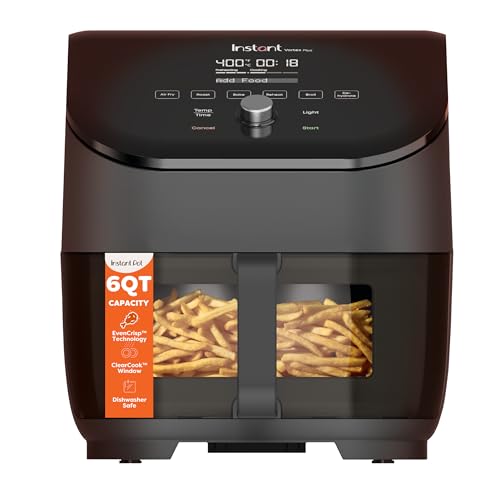
Instant Pot Vortex Plus ClearCook, 6 Quart
 Instant Pot Vortex Plus ClearCook 6 Qt 6-in-1 Air Fryer
Deciding Between Repair, Donation and Recycling First
Before a unit is recycled, it deserves one honest round of questions, because recycling is the last resort of a working life, not the first response to a bad week. Is the unit actually broken, or is it dirty, misassembled, or suffering from a replaceable part such as a basket? Many units are retired for faults that a proper clean, a correctly seated drawer, or a maker’s replacement part would have resolved, and every such unit recycled early is a waste the system did not need.
If the unit works but no longer suits you, recycling is still the wrong door. A working appliance belongs in the reuse stream: offered to family, donated where accepted, or sold honestly, as other guides in this series describe. Recycling a working unit destroys value that another household would happily use, and it floods the waste system with material that did not need to be there. Reserve recycling for units that are genuinely finished: unsafe, unrepairable, or declined by every reasonable reuse route.
When the answer is genuinely recycling, commit to it fully. Half-decisions produce the worst outcome of all, a dead unit stored in a garage for years, slowly becoming harder to move, easier to forget, and no more recyclable at the end than it was at the beginning. Set the date, prepare the unit, and complete the journey while the decision is fresh.
Questions to Ask Any Take-Back or Drop-Off Point
Not every collection point handles every item in the same way, and two minutes of questions before you travel can save a wasted journey with a bulky appliance. Ask whether small electrical appliances are accepted at all, whether there are set collection days or booking requirements, and whether the unit should arrive complete with its cord and basket or separated into parts. Ask, too, what happens to items after drop-off if that matters to you; reputable schemes can usually explain their process in plain terms.
If a retailer offers take-back when delivering a replacement, clarify the details at the time of ordering rather than at the door. Confirm whether the old unit must be disconnected, cleaned and ready at the doorstep, whether accessories should be included, and whether the service covers your type of appliance. Delivery-day surprises help nobody, and an unprepared unit may simply be left behind, turning a solved problem back into a stored one.
Keep a note of where the unit went and when. It sounds bureaucratic, but households that move, rent or manage several appliances benefit from a simple record: what left, by which route, on what date. If a question ever arises later, about a connected account, a warranty, or a deposit, that small record answers it at once.
Transporting the Unit Safely and Cleanly
A retired unit still deserves careful handling on its final journey. Clean and dry it first, as this guide directs, both as courtesy to the people who will handle it and because residue left inside will smell and leak in a warm car. Coil the cord loosely and secure it so it cannot trail, catch or be trapped in a door. Loose accessories belong in a bag inside the unit or carried with it, clearly part of the same item.
Carry the unit upright and stable, on a surface that will not be harmed if any last moisture escapes. A short journey needs little ceremony, but a unit that slides around a vehicle arrives damaged in ways that can make it harder to handle at the other end, and broken plastic and exposed parts help nobody at a busy drop-off point. If the original box survives, it is the perfect final use for it; if not, a sturdy bag or a blanket for protection is enough.
At the point itself, follow the local arrangement rather than improvising. Place the unit where electrical items are directed, not with general waste because the queue is shorter. If nobody is present to ask, read the signage carefully; a unit left in the wrong stream may be landfilled despite your journey, which defeats the entire purpose of making it.
Accessories, Packaging and the Rest of the Clear-Out
Retiring a unit usually reveals its small empire: spare racks, pans, liners, a manual, perhaps the original packaging in a loft. Deal with the empire in the same clear-out, or it will linger as ownerless clutter. Working accessories that fit common models can be passed on with the same honesty as the unit itself, offered to whoever takes a similar appliance, or donated where accepted. Worn accessories whose surfaces have failed belong with appropriate waste, not in a donation bag.
Manuals are worth one moment of thought. If the unit is going for reuse, the manual goes with it, always. If the unit is being recycled, a manual in good condition is plain paper recycling in most places, but check local guidance for anything with plastic covers or bindings. Digital copies, where the maker provides them, make this easier with each generation of appliances, and noting the model details before the paperwork leaves protects you if a question arises later.
Packaging follows its own local rules, which this guide has already outlined. The discipline is simply to finish the job: cardboard flattened and recycled where accepted, films and foams handled as your local service directs, and nothing left in a cupboard as a monument to an appliance the household no longer owns.
Choosing the Replacement With Its Own Ending in Mind
The end of one unit is the best moment to choose the next one well, because the lessons are fresh. Think about what actually failed or frustrated you: a basket coating that wore early, a size that never matched your cooking, a control layout nobody liked. A replacement chosen against that honest list serves longer, and a longer-serving appliance is the single most effective recycling decision available, since the greenest unit is the one that does not need replacing.
Consider, in general terms, the signs of a unit built for a long life: a maker that offers support and replacement parts, a design whose basket and accessories can be renewed without discarding the whole appliance, and instructions that treat care and repair as normal rather than as afterthoughts. You cannot verify every promise, but you can favour makers whose behaviour shows they expect their products to be kept.
Register and record the new unit properly when it arrives. Keep its model details, its manual and its proof of purchase together, and note where you would take it at the end of its life, while the knowledge from this clear-out is current. That small act of administration, done once, turns a future disposal from a research project into a single journey.
When a Household Has More Than One Unit to Retire
Clear-outs, moves and upgrades sometimes retire several small appliances at once, and the batch changes the planning. Sort the items by route before any journey: working items for reuse, failed electrical items for the appropriate collection, and plain materials for their own streams. One organised trip per stream beats several mixed trips, and a vehicle loaded by category unloads quickly and correctly at each point.
Keep each unit’s parts together until the moment of hand-over. Baskets, cords and accessories separated from their units in a general pile become anonymous within minutes, and a reuse organisation or recycling point receiving a complete item can do far more with it than one receiving a body without its drawer. A bag per unit, labelled if necessary, is a small effort that preserves every option until the last moment.
Finally, resist keeping the best of the retired units just in case. A spare that is never used occupies space, gathers dust, and usually reaches the same end a few years later in worse condition and with fewer reuse options. Pass working units on while they are still desirable, and let the clear-out be complete. The space and clarity that follow are part of the reward.
More Questions About Recycling and Disposal
Can I put an air fryer in my household bin if it is small?
Size does not change what the item is. An air fryer is an electrical appliance with wiring, elements and often coated parts, and household bins are not the route for such items in most areas. Use the electrical collection routes described in this guide, and check with your local waste authority if you are unsure which service covers your address.
Should I remove the basket before recycling the unit?
Follow the receiving point’s guidance. Some prefer the unit complete, others separate parts by material. If nobody specifies, keep the unit together; it is easier to transport, easier to identify, and less likely to leave you with an orphaned basket at home that then needs its own separate journey to the correct stream.
What if the unit has a fault that makes it unsafe to move?
Keep it unplugged, handle it as little as possible, and ask your local waste service or the maker how they want it presented. Do not attempt to dismantle it to make it safer; internal parts are not home territory. A clear description of the fault when you ask will get you the right instruction first time.
Is it worth keeping the cord as a spare?
Cords on these appliances are generally part of the unit rather than interchangeable spares, and a detached cord kept in a drawer rarely matches anything safely later. Unless the maker describes the cord as a removable accessory for your model, let it travel with the unit, bundled neatly, and keep your drawer free of electrical maybes.
How do I dispose of a unit in a rented property I am leaving?
The routes are the same, but timing matters: arrange the collection or journey before your final day, when vehicles, access and local services are still easy to organise. Do not leave a failed appliance behind as a problem for the next occupant or the landlord. A property handed over clear, with everything electrical either working or properly removed, is the standard to aim for.
Talking to Children and Teenagers About Why It Is Not Just Rubbish
A retired air fryer is a small, perfect teaching object. It is familiar, it is obviously made of several different materials, and a child can hold the whole problem in two hands. Explaining why it cannot simply vanish into the household bin, why its parts begin different journeys, and why a working unit deserves a second home first, turns an errand into an early lesson in how objects actually leave our lives, which is to say, they do not leave; they go somewhere, handled by someone.
Let younger household members help with the parts that are safe and genuinely useful: cleaning the cooled unit, gathering its accessories, checking the manual is present, carrying the bag of parts. Participation beats lectures. A teenager who has prepared an appliance for drop-off understands the system in a way no poster about recycling can teach, and is noticeably less likely to treat the next appliance as disposable.
Be honest about the limits as well. Not everything can be recovered, systems vary by place, and some material is simply lost. That honesty is more respect-worthy, and more motivating, than a fairy tale in which every atom is reborn. The goal is a household that tries properly because it understands the machinery of disposal as it is, not as anyone wishes it were.
Businesses, Landlords and Shared Properties
Small appliances also retire from shared and commercial corners of life: a staff kitchen, a rented flat’s inventory, a holiday let. In those settings the same principles apply, with an added layer of record-keeping. Who owns the unit decides its route, and that ownership should be established before the clear-out begins, not argued over a dead appliance in a hallway. Landlords replacing inventory items should treat the retired unit exactly as a householder would, through the electrical routes, and keep the paperwork with the property’s other records.
Shared houses benefit from a tiny written convention agreed while everything still works: when a shared appliance fails, who reports it, who replaces it, and who makes the disposal journey. Written in calm times, that convention prevents the familiar outcome in which a broken unit belongs to everyone in theory and is dealt with by nobody in practice, occupying a corner for a year. The fryer that everyone used deserves a decision from everyone, made promptly.
Workplaces have their own facilities routes, and a domestic appliance that lived at work should leave through them rather than through an employee’s car and good intentions. Ask whoever manages the space; there is almost always an established stream for electrical items, and using it keeps records straight and responsibilities where they belong.
Keeping a household disposal note for all small appliances
Consider keeping one short household note, on paper or in a phone, listing where small electrical items go in your area: the collection point, its conditions, and any retailer take-back you have used successfully. Every future retirement, of any appliance, then starts from knowledge instead of research. Update the note when you move or when services change. It is a five-line document that will quietly save hours across the years, and it begins, very often, with the journey of one air fryer.
The Last Journey, Planned Like Any Other Household Task
It helps to strip the disposal of a small appliance of any sense of occasion. It is a household task like any other: decide the route, prepare the item, make the journey, record the fact. Households stall on it because the task is unfamiliar, not because it is difficult, and familiarity is exactly what this guide has been building, section by section, until the steps feel as ordinary as taking glass to its collection point.
So give the task a date and a place in an existing errand run. A unit travelling with other legitimate drop-offs costs almost no additional effort, and bundling errands is how such jobs actually get finished in real lives. Prepare the unit the evening before, clean, dry, cord coiled, accessories bagged, and leave it by the door with the other items, where intention becomes visibility and visibility becomes action.
When it is done, notice the small dividend: a clear space where a dead appliance sat, one less object whose story was unresolved, and a household that knows, now, exactly how electrical things leave it. That knowledge will be used again, for the next appliance and the one after, long after this particular fryer has been forgotten. The unit’s last service to the house is the system it taught on its way out.
What This Small Appliance Teaches About All the Others
An air fryer is, in disposal terms, a complete education in miniature. It contains metals and electronics, coatings and plastics, a motor, an element, a cord, and in connected versions a small store of personal data. A household that has retired one properly has rehearsed every question that the retirement of larger appliances will ever ask, at a scale where the answers are easy to reach and the mistakes are cheap to learn from. The washing machine and the refrigerator, when their days come, will be this same task written larger.
That is worth saying to the person who feels the effort is disproportionate to the object. The effort was never only about the object. It was about building a household reflex: check before discarding, reuse before recycling, prepare before transporting, record before forgetting. Reflexes, once built, apply themselves everywhere, and they compound quietly across every possession that passes through a home. The fryer on its last journey is carrying more than its own materials to the collection point; it is carrying a habit that will outlast every appliance you currently own.
Finding Your Local Route Before You Ever Need It
The best time to learn where electrical items go in your area is on a day when nothing has broken. Ten calm minutes with your local waste authority’s information, whenever you next encounter it, will tell you the collection point, its conditions, and whether collection from home exists for items like this. Save what you learn in the household note this guide has recommended, and the eventual retirement of any appliance becomes a journey you already know rather than a research project begun in frustration.
Share the knowledge sideways as well. Neighbours, family members in the same area and anyone in a shared building all face the same system, and one person’s discovered route saves everyone else’s search. Streets and buildings where this knowledge circulates develop a quiet competence: items move on promptly, nothing electrical lingers in bins or hallways, and the person who does know becomes a small local resource, asked once and thanked often.
Finally, notice how the knowledge changes buying. A household that knows exactly where an appliance will go at the end of its life buys with a longer view, favouring things that will last, that can be repaired, that will be worth passing on. Disposal, understood early, stops being the embarrassing end of consumption and becomes part of choosing well at the start. That is the deepest lesson a retired air fryer can teach, and it is available free to anyone who makes one careful journey to a collection point and thinks, on the way home, about what the journey showed them.
If your area’s arrangements change, as they do from time to time, update the household note the same week you hear of it, while the news is still in your hand. Collection points move, conditions alter, and services are renamed, and a note corrected promptly stays trustworthy for years. A note left stale becomes the kind of confident misinformation that sends a prepared unit to the wrong place on the right day, which is the one outcome all your preparation was meant to prevent.
One updated line in a notebook, made at the right moment, protects every journey that follows it.
FAQ
Can the basket go in the curbside recycling bin?
Coated metal baskets are often not accepted. Ask your local service.
What about the packaging?
Cardboard is generally recyclable, but foam and film may follow different rules.
Is it safe to leave an old unit plugged in?
No. Unplug any unit that has failed, and keep it away from heat until it is dealt with.
Can I sell a broken air fryer?
You can sell or give away a unit only if you describe the fault honestly. If it may be unsafe, recycling is the better route.
Do I need to remove the cord?
No. Keep it attached unless your recycler asks you to detach it. Bundle it loosely so it does not tangle.
The Short Version
Treat an old air fryer as small electronics. Clean it, unlink it, and take it to a proper drop-off or take-back program.

